
Aircraft Sensors Market Report 2026
Global Outlook – By Sensor Type (Temperature, Pressure, Position, Flow, Torque, Radar, Accelerometer, Proximity), By Aircraft Type (Narrow-Body Aircraft, Wide-Body Aircraft, Very Large Aircraft, Regional Aircraft, General Aviation, Helicopter, Military Aircraft, Unmanned Aerial Vehicle (UAV)), By Connectivity (Wired, Wireless), By Application (Engine, Door, Environmental Control), By End Use (Original Equipment Manufacturer (OEM), Aftermarket) – Market Size, Trends, Strategies, and Forecast to 2030
Aircraft Sensors Market Overview
• Aircraft Sensors market size has reached to $5.25 billion in 2025 • Expected to grow to $7.43 billion in 2030 at a compound annual growth rate (CAGR) of 7% • Growth Driver: Surging Production And Delivery Of New Aircraft • Market Trend: Advancements In Aerospace Pressure Sensor Technology For Extreme Environments • North America was the largest region in 2025 and Asia-Pacific is the fastest growing region.What Is Covered Under Aircraft Sensors Market?
Aircraft sensors are electronic devices that detect and measure physical phenomena within an aircraft's environment, such as temperature, pressure, speed, and altitude. It provide real-time data to pilots and flight control systems, ensuring safe and efficient flight operations. These sensors also help monitor the aircraft's performance, and navigation during flight. The main sensor types of aircraft sensors are temperature, pressure, position, flow, torque, radar, accelerometer, proximity, and others. Temperature sensors are devices used to measure temperature variations in a specific environment or object. These are used on aircraft types such as narrow-body aircraft, wide-body aircraft, very large aircraft, regional aircraft, general aviation, helicopter, military aircraft, and unmanned aerial vehicles (UAV) with connectivity options including wired, and wireless. It is used for application in engine, door, and environmental control. Its end use includes original equipment manufacturer (OEM), and aftermarket.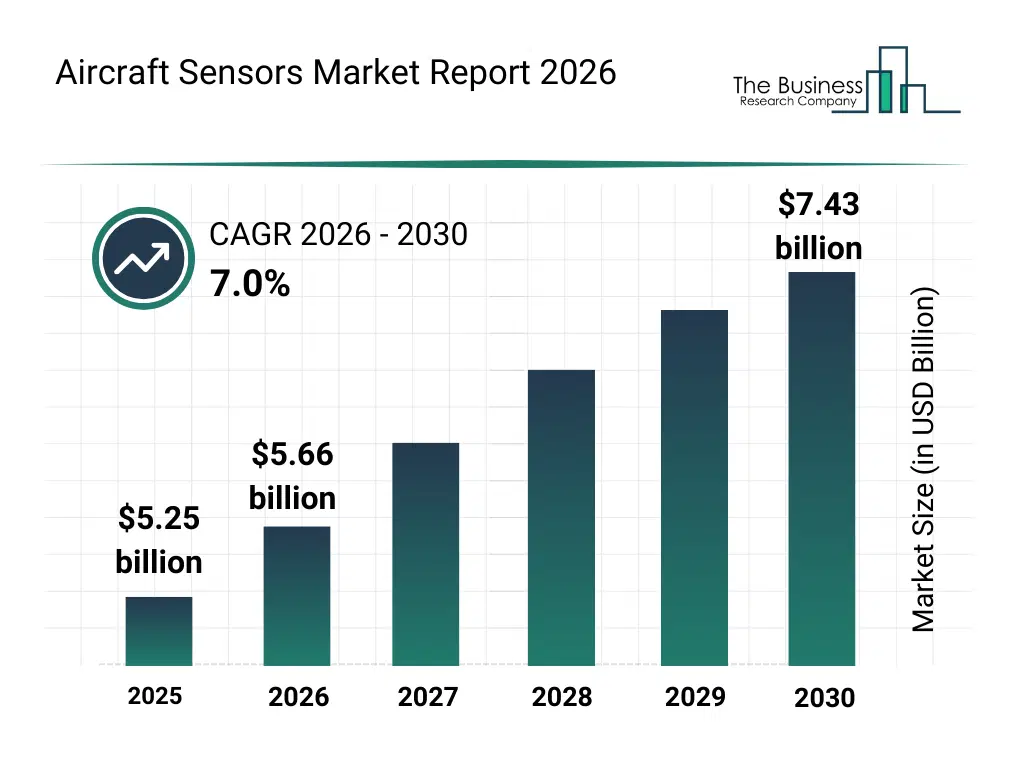
What Is The Aircraft Sensors Market Size and Share 2026?
The aircraft sensors market size has grown strongly in recent years. It will grow from $5.25 billion in 2025 to $5.66 billion in 2026 at a compound annual growth rate (CAGR) of 7.9%. The growth in the historic period can be attributed to rising demand for real-time flight monitoring and control systems, technological advancements in sensor accuracy and reliability, increasing adoption of sensors for aircraft performance and safety monitoring, growth in commercial and military aviation driving sensor integration, early deployment of temperature, pressure, and speed sensors in modern aircraft systems.What Is The Aircraft Sensors Market Growth Forecast?
The aircraft sensors market size is expected to see strong growth in the next few years. It will grow to $7.43 billion in 2030 at a compound annual growth rate (CAGR) of 7.0%. The growth in the forecast period can be attributed to integration of AI and predictive analytics for advanced sensor data processing, rising adoption of lightweight and miniaturized sensors for fuel efficiency, expansion of sensor applications in unmanned and autonomous aircraft, development of multi-parameter and smart sensor systems, increasing demand for sensors to support next-generation avionics and navigation systems. Major trends in the forecast period include miniaturization and lightweight sensor technologies, development of high-precision and high-accuracy sensors, integration of sensor fusion for real-time flight data, wireless sensor networks for aircraft systems monitoring, predictive maintenance using advanced sensor data analytics.
Global Aircraft Sensors Market Segmentation
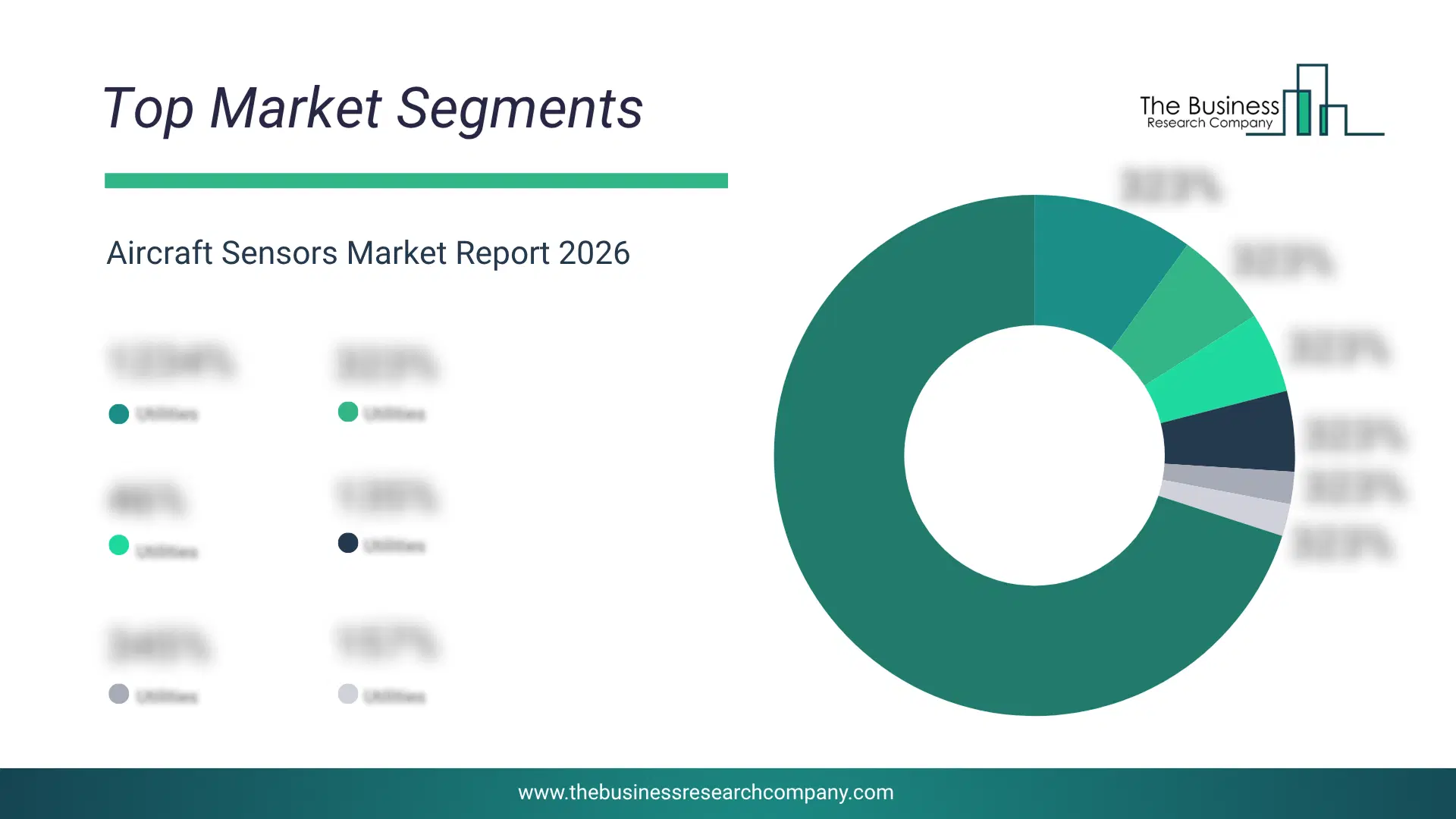
1) By Sensor Type: Temperature, Pressure, Position, Flow, Torque, Radar, Accelerometer, Proximity 2) By Aircraft Type: Narrow-Body Aircraft, Wide-Body Aircraft, Very Large Aircraft, Regional Aircraft, General Aviation, Helicopter, Military Aircraft, Unmanned Aerial Vehicle (UAV) 3) By Connectivity: Wired, Wireless 4) By Application: Engine, Door, Environmental Control 5) By End Use: Original Equipment Manufacturer (OEM), Aftermarket Subsegments: 1) By Temperature: Thermocouples, Resistance Temperature Detectors (RTDs), Infrared Sensors 2) By Pressure: Piezoelectric Pressure Sensors, Strain Gauge Pressure Sensors, Capacitive Pressure Sensors 3) By Position: Linear Position Sensors, Rotary Position Sensors, Displacement Sensors 4) By Flow: Mass Flow Sensors, Volumetric Flow Sensors, Thermal Flow Sensors 5) By Torque: Rotational Torque Sensors, Reaction Torque Sensors 6) By Radar: Ground Proximity Radar, Weather Radar, Airborne Radar 7) By Accelerometers: MEMS Accelerometers, Piezoelectric Accelerometers, Capacitive Accelerometers 8) By Proximity: Inductive Proximity Sensors, Capacitive Proximity Sensors, Ultrasonic Proximity Sensors, Optical Proximity SensorsWhat Is Driver Of The Aircraft Sensors Market?
The increasing production and delivery of new aircraft is expected to propel the growth of the aircraft sensors market going forward. Aircraft are vehicles designed for air travel, including airplanes, helicopters, and drones. The production and delivery of new aircraft are increasing due to growing demand from airlines seeking to modernize fleets, expand routes, and meet rising passenger travel needs globally. Aircraft paint is applied in aircraft production primarily to protect against corrosion and environmental damage and enhance aesthetics. For instance, in January 2024, according to the Airbus SE, a Netherland-based Aircraft manufacturing commercial company, in 2023, Airbus delivered 735 commercial aircraft, marking an 11% rise compared to 2022. Therefore, increasing production and delivery of new aircraft is driving the growth of the aircraft sensors industry.Key Players In The Global Aircraft Sensors Market
Major companies operating in the aircraft sensors market are General Electric Company, United Technologies Corporation, The Raytheon Company, Lockheed Martin Corporation, Honeywell International Inc., BAE Systems, Safran Electronic & Defense, Eaton Corporation, Thales Group, Collins Aerospace, TE Connectivity Ltd., Parker Hannifin Corporation, Amphenol Corporation, Ametek Inc., General Atomics Corporation, Crane Aerospace & Electronics, Curtiss-Wright Corporation, Woodward Inc., Esterline Technologies Corporation, Stellar Technology, Avidyne Corporation, Hydra-Electric Company, PCB Piezotronics Inc., Custom Control Sensors LLC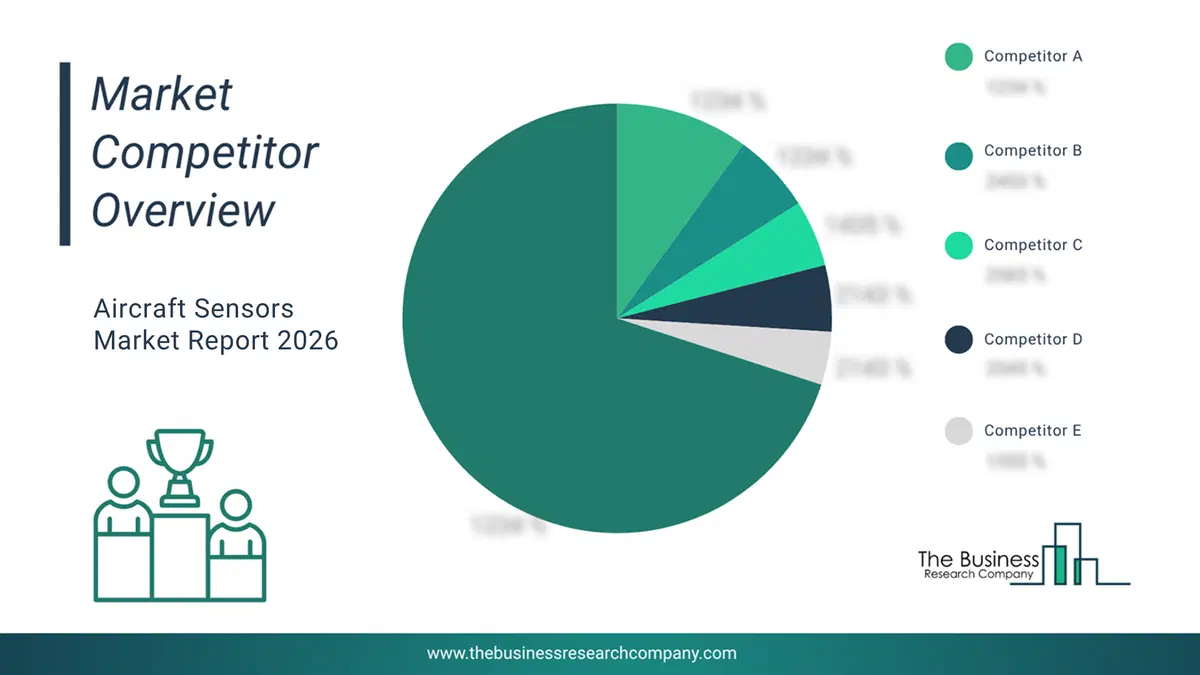
This chart is for illustrative purposes; the full report includes a detailed competitor analysis and comprehensive overview of the top 10 companies in the market.
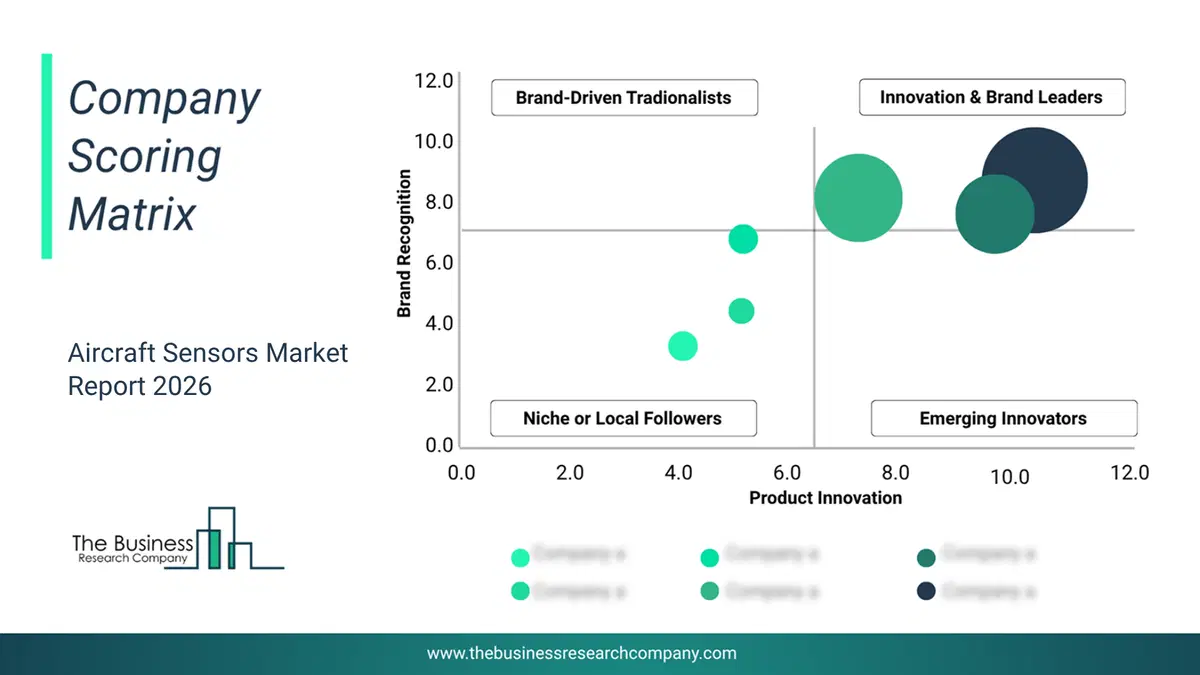
This chart maps companies by product innovation and brand strength, with bubble size indicating relative revenue, helping identify market leaders, challengers, and niche players. This is an illustrative chart; the full report provides a complete and accurate competitive analysis.
Global Aircraft Sensors Market Trends and Insights
Major companies operating in the aircraft sensors market are focusing on developing technological advancements such as the hermetically sealed aerospace pressure sensor to enhance sensor reliability, accuracy, and performance in extreme aerospace environments. A hermetically sealed aerospace pressure sensor refers to a pressure sensor designed for aerospace applications that is completely sealed against gases, moisture, and contaminants, ensuring high reliability and accurate pressure measurements even in extreme temperatures, high altitudes, and harsh environmental conditions. For instance, in June 2023, Baker Hughes Company, a US-based energy technology company, launched a new Druck NG3000 Pressure Sensor designed specifically for the aerospace sector, targeting both commercial and military customers. It offers high accuracy, reliability, and environmental robustness, proven by stringent aerospace qualifications such as RTCA DO-160G and MIL-810 standards. Its main benefits include rapid customization via an online configurator to match diverse aerospace needs, reducing development time and cost, while supporting critical systems such as engines, hydraulics, environmental control, and unmanned aerial vehicles. This enables safer, more efficient flight operations and maintenance in harsh aerospace environments.What Are Latest Mergers And Acquisitions In The Aircraft Sensors Market? Sentech Inc. Acquires Motion Sensors Inc. To Expand Global Industrial, Aerospace, And Military Sensor Solutions Portfolio
In December 2024, Sentech Inc., a U.S.-based manufacturing company, acquired Motion Sensors Inc. for an undisclosed amount. With this acquisition, Sentech aims to invest in and grow its industrial, aerospace, and military sensor solutions portfolio globally by combining complementary technologies to provide more comprehensive and mission-critical sensor solutions. Motion Sensors Inc. is a U.S.-based manufacturing company that offers aircraft sensors.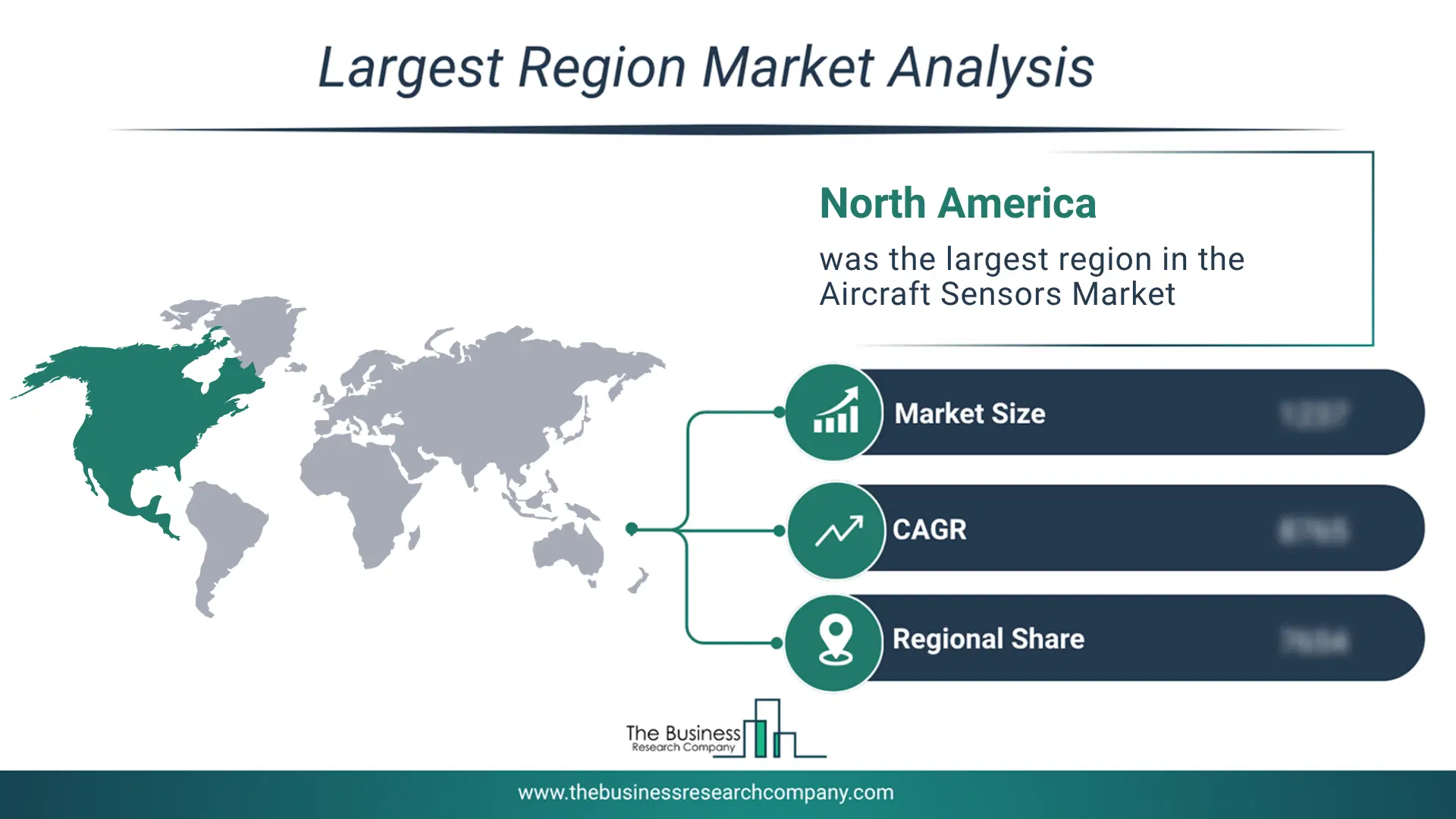
Regional Insights
North America was the largest region in the aircraft sensors market in 2025. Asia-Pacific is expected to be the fastest-growing region in the forecast period. The regions covered in the aircraft sensors market report are Asia-Pacific, South East Asia, Western Europe, Eastern Europe, North America, South America, Middle East, Africa. The countries covered in the aircraft sensors market report are Australia, Brazil, China, France, Germany, India, Indonesia, Japan, Taiwan, Russia, South Korea, UK, USA, Canada, Italy, SpainWhat Defines the Aircraft Sensors Market?
The aircraft sensors market consists of sales of level sensors, and speed used in aircraft. Values in this market are ‘factory gate’ values, that is the value of goods sold by the manufacturers or creators of the goods, whether to other entities (including downstream manufacturers, wholesalers, distributors and retailers) or directly to end customers. The value of goods in this market includes related services sold by the creators of the goods.How is Market Value Defined and Measured?
The market value is defined as the revenues that enterprises gain from the sale of goods and/or services within the specified market and geography through sales, grants, or donations in terms of the currency (in USD unless otherwise specified). The revenues for a specified geography are consumption values that are revenues generated by organizations in the specified geography within the market, irrespective of where they are produced. It does not include revenues from resales along the supply chain, either further along the supply chain or as part of other products.
This chart presents market attractiveness based on a quantitative evaluation of growth, competition, strategic alignment, and risk, offering a clear view of opportunity areas for decision-making. This chart is for illustrative purposes; the full report contains the complete analysis.

This chart highlights the Total Addressable Market (TAM) by estimating the maximum revenue opportunity using an assumption-driven approach, supporting strategic planning and opportunity sizing across markets. The chart is illustrative; the full report provides a more comprehensive analysis.
What Key Data and Analysis Are Included in the Aircraft Sensors Market Report 2026?
The aircraft sensors market research report is one of a series of new reports from The Business Research Company that provides market statistics, including industry global market size, regional shares, competitors with the market share, detailed market segments, market trends and opportunities, and any further data you may need to thrive in the aircraft sensors industry. The market research report delivers a complete perspective of everything you need, with an in-depth analysis of the current and future state of the industry.Aircraft Sensors Market Report Forecast Analysis
| Report Attribute | Details |
|---|---|
| Market Size Value In 2026 | $5.66 billion |
| Revenue Forecast In 2030 | $7.43 billion |
| Growth Rate | CAGR of 7% from 2026 to 2030 |
| Base Year For Estimation | 2025 |
| Actual Estimates/Historical Data | 2020-2025 |
| Forecast Period | 2026 - 2030 |
| Market Representation | Revenue in USD Billion and CAGR from 2026 to 2030 |
| Segments Covered | Sensor Type, Aircraft Type, Connectivity, Application, End Use |
| Regional Scope | Asia-Pacific, Western Europe, Eastern Europe, North America, South America, Middle East, Africa |
| Country Scope | The countries covered in the aircraft sensors market report are Australia, Brazil, China, France, Germany, India, Indonesia, Japan, Taiwan, Russia, South Korea, UK, USA, Canada, Italy, Spain |
| Key Companies Profiled | General Electric Company, United Technologies Corporation, The Raytheon Company, Lockheed Martin Corporation, Honeywell International Inc., BAE Systems, Safran Electronic & Defense, Eaton Corporation, Thales Group, Collins Aerospace, TE Connectivity Ltd., Parker Hannifin Corporation, Amphenol Corporation, Ametek Inc., General Atomics Corporation, Crane Aerospace & Electronics, Curtiss-Wright Corporation, Woodward Inc., Esterline Technologies Corporation, Stellar Technology, Avidyne Corporation, Hydra-Electric Company, PCB Piezotronics Inc., Custom Control Sensors LLC |
| Customization Scope | Request for Customization |
| Pricing And Purchase Options | Explore Purchase Options |