
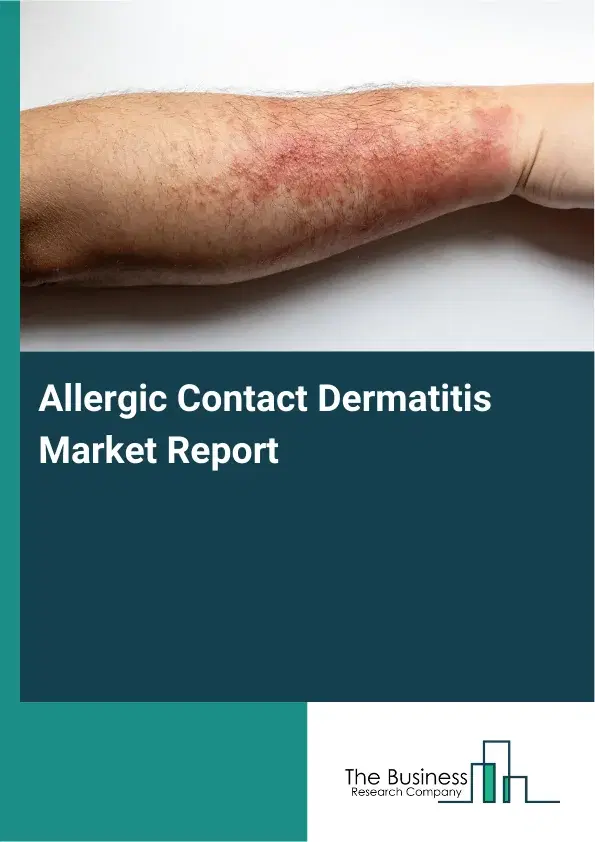
Allergic Contact Dermatitis Market Report 2026
Global Outlook – By Allergen Type (Metals, Chemicals, Latex, Fragrances, Preservatives), By Diagnosis Method (Patch Testing, Clinical Evaluation), By Treatment Type (Topical Corticosteroids, Immunomodulators, Oral Corticosteroids), By Severity Level (Mild, Moderate, Severe), By Patient Demographics (Children, Adults, Elderly) - Market Size, Trends, Strategies, and Forecast to 2030
Allergic Contact Dermatitis Market Overview
• Allergic Contact Dermatitis market size has reached to $3.51 billion in 2025 • Expected to grow to $4.74 billion in 2030 at a compound annual growth rate (CAGR) of 6.1% • Growth Driver: The Increasing Prevalence Of Skin Allergies Is Driving The Market Due To Rising Allergen Exposure And Growing Treatment Needs • Market Trend: Advanced Digital Solutions For Managing Allergic Contact Dermatitis • North America was the largest region in 2025 and Asia-Pacific is the fastest growing region.What Is Covered Under Allergic Contact Dermatitis Market?
Allergic contact dermatitis (ACD) is a delayed immune response triggered by skin contact with an allergen, causing inflammation, redness, itching, and blistering. Understanding and diagnosing ACD helps identify and avoid triggers, preventing flare-ups. Awareness enables better symptom management and informed product choices to minimize exposure. The main types of allergens for allergic contact dermatitis are metals, chemicals, latex, fragrances, and preservatives. Metals, known for their strength, conductivity, and luster, can also trigger allergic contact dermatitis, leading to skin inflammation and irritation. It is diagnosed by various diagnostic methods such as patch testing, clinical evaluation, laboratory tests, and skin prick testing with several treatment types, including topical corticosteroids, immunomodulators, antihistamines, and oral corticosteroids. the severity level, such as mild, moderate, and severe, for various patient demographics, including children, adults, and the elderly.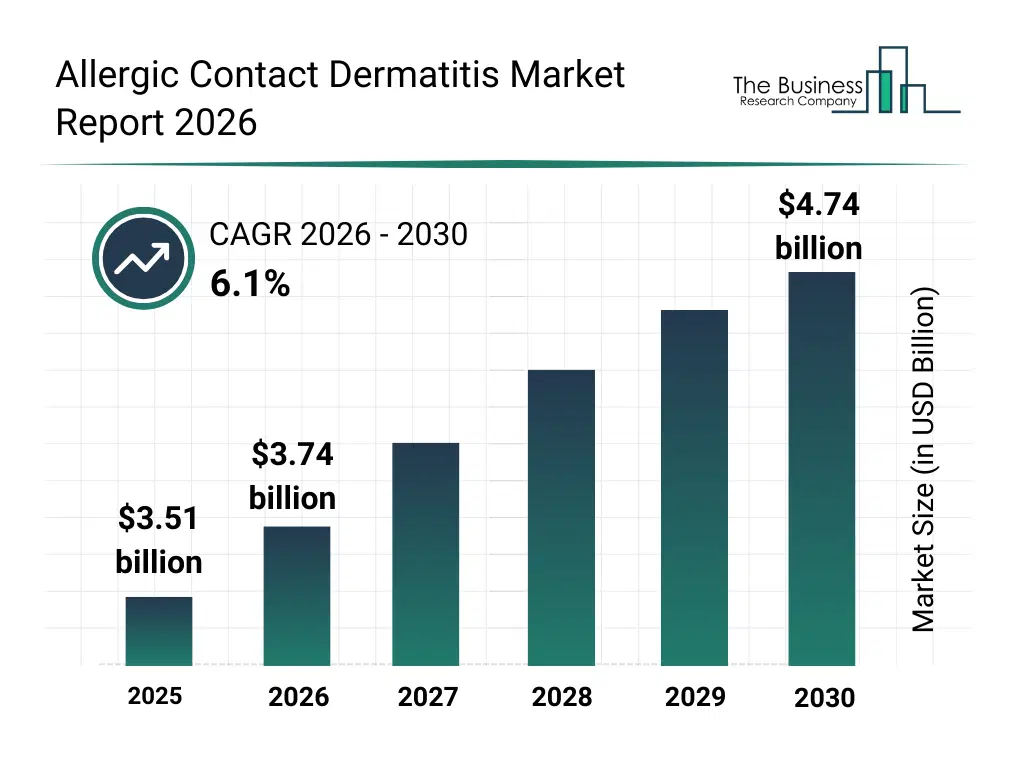
What Is The Allergic Contact Dermatitis Market Size and Share 2026?
The allergic contact dermatitis market size has grown strongly in recent years. It will grow from $3.51 billion in 2025 to $3.74 billion in 2026 at a compound annual growth rate (CAGR) of 6.4%. The growth in the historic period can be attributed to increased exposure to metals and chemicals, limited awareness about skin allergens, growing adoption of patch testing, rising dermatology research initiatives, increasing use of topical corticosteroids.What Is The Allergic Contact Dermatitis Market Growth Forecast?
The allergic contact dermatitis market size is expected to see strong growth in the next few years. It will grow to $4.74 billion in 2030 at a compound annual growth rate (CAGR) of 6.1%. The growth in the forecast period can be attributed to development of advanced immunomodulators, growing awareness of hypoallergenic products, expansion of personalized dermatology treatments, rising prevalence of occupational skin allergies, integration of digital dermatology diagnostics. Major trends in the forecast period include rising prevalence of allergic contact dermatitis globally, increased awareness and diagnosis through patch testing, growth in demand for topical corticosteroids and immunomodulators, expansion of pediatric and geriatric dermatology care, rising preference for natural and hypoallergenic products.
Global Allergic Contact Dermatitis Market Segmentation
1) By Allergen Type: Metals, Chemicals, Latex, Fragrances, Preservatives 2) By Diagnosis Method: Patch Testing, Clinical Evaluation 3) By Treatment Type: Topical Corticosteroids, Immunomodulators, Oral Corticosteroids 4) By Severity Level: Mild, Moderate, Severe 5) By Patient Demographics: Children, Adults, Elderly Subsegments: 1) By Metals: Nickel, Cobalt, Chromium 2) By Chemicals: Pesticides, Solvents, Cleaning Agents 3) By Latex: Natural Rubber Latex, Synthetic Latex 4) By Fragrances: Synthetic Fragrances, Natural Fragrances 5) By Preservatives: Parabens, Formaldehyde Releasers, IsothiazolinonesWhat Is The Driver Of The Allergic Contact Dermatitis Market?
The increasing prevalence of skin allergies is expected to propel the growth of the allergic contact dermatitis market going forward. Skin allergies occur when the immune system overreacts to specific allergens, causing redness, itching, swelling, and rashes. The increase in skin allergy cases is largely driven by heightened exposure to environmental allergens, cosmetic chemicals, and irritants, along with a growing population experiencing sensitive skin and weakened skin-barrier function. Allergic contact dermatitis treatments help manage these conditions by reducing inflammation, relieving itching, preventing recurrent reactions, and restoring the skin barrier through topical agents, antihistamines, and lifestyle measures that minimize allergen contact. For instance, in April 2025, according to the Asthma and Allergy Foundation of America (AAFA), a US-based suburban nonprofit organization, skin and contact allergies affect around 1 in 5 people, with eczema impacting 18.9 million adults and 8 million children in the U.S., highlighting a substantial and rising disease burden. Therefore, the increasing prevalence of skin allergies is driving the growth of the allergic contact dermatitis industry.Key Players In The Global Allergic Contact Dermatitis Market
Major companies operating in the allergic contact dermatitis market are Bausch Health Companies Inc., GlaxoSmithKline plc, Pfizer Inc., Sanofi S.A., AbbVie Inc., Johnson & Johnson, LEO Pharma A/S, Novartis AG, Bayer AG, Eli Lilly and Company, Galderma SA, Astellas Pharma Inc., Ferrer Pharma, Stallergenes Greer International AG, HAL Allergy B.V., Hycor Biomedical Inc., HollisterStier Allergy, Dormer Laboratories Inc., Chemotechnique MB Diagnostics AB, Aesku.Diagnostics GmbH, AllergoTek
This chart is for illustrative purposes; the full report includes a detailed competitor analysis and comprehensive overview of the top 10 companies in the market.
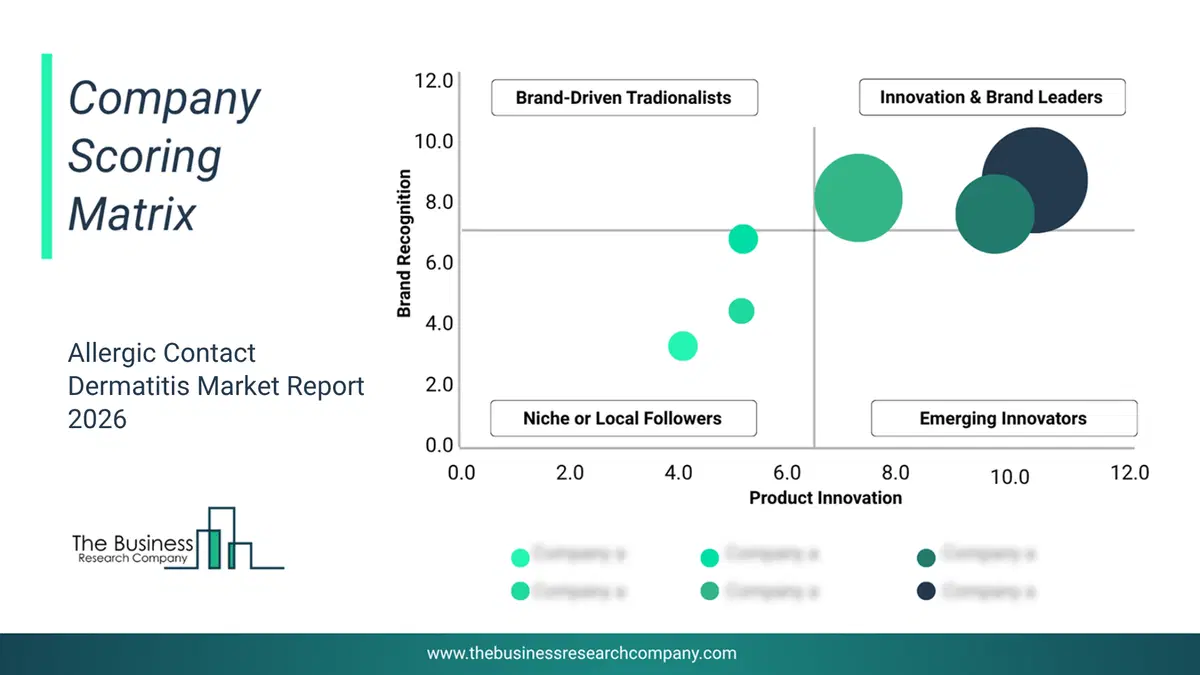
This chart maps companies by product innovation and brand strength, with bubble size indicating relative revenue, helping identify market leaders, challengers, and niche players. This is an illustrative chart; the full report provides a complete and accurate competitive analysis.
Global Allergic Contact Dermatitis Market Trends and Insights
Major companies operating in the allergic contact dermatitis market are focusing on developing advanced web- and app-based resource solutions to facilitate remote consultations with healthcare professionals. A web- and app-based resource solution is a digital platform available on websites and mobile apps, offering tools, information, and interactive features to support patient needs, enhancing patient self-management and treatment adherence. For instance, in November 2024, the American Contact Dermatitis Society, a US-based non-profit organization dedicated to the diagnosis and care of dermatitis through education, research, and advocacy, launched the Contact Allergen Management Program (CAMP) 2.0 to assist patients in managing allergic contact dermatitis. The tool helps patients identify safe products by providing detailed product information and allergen transparency. It features an improved provider interface, allergen search, cross-reactor groupings, and automatic allergen info sheets. Patients can suggest products, rate experiences, submit reports, and scan UPC codes for instant safety feedback. CAMP 2.0 expands with an unsafe list highlighting allergens in bold red and tracks the impact of allergic contact dermatitis on quality of life.What Are Latest Mergers And Acquisitions In The Allergic Contact Dermatitis Market?
In October 2024, Aspire Pharma Limited, a UK-based provider of specialty generic medicines and dermatology products, acquired Canute Pharma Limited for an undisclosed amount. With this acquisition, Aspire Pharma aims to expand its dermatology portfolio by adding contact dermatitis diagnostics, acne treatments, and patient-specific formulations to strengthen its therapeutic reach in the UK market. Canute Pharma Limited is a UK-based provider of haptens, patch-testing chambers, topical dermatology treatments, and specialized patient-tailored products.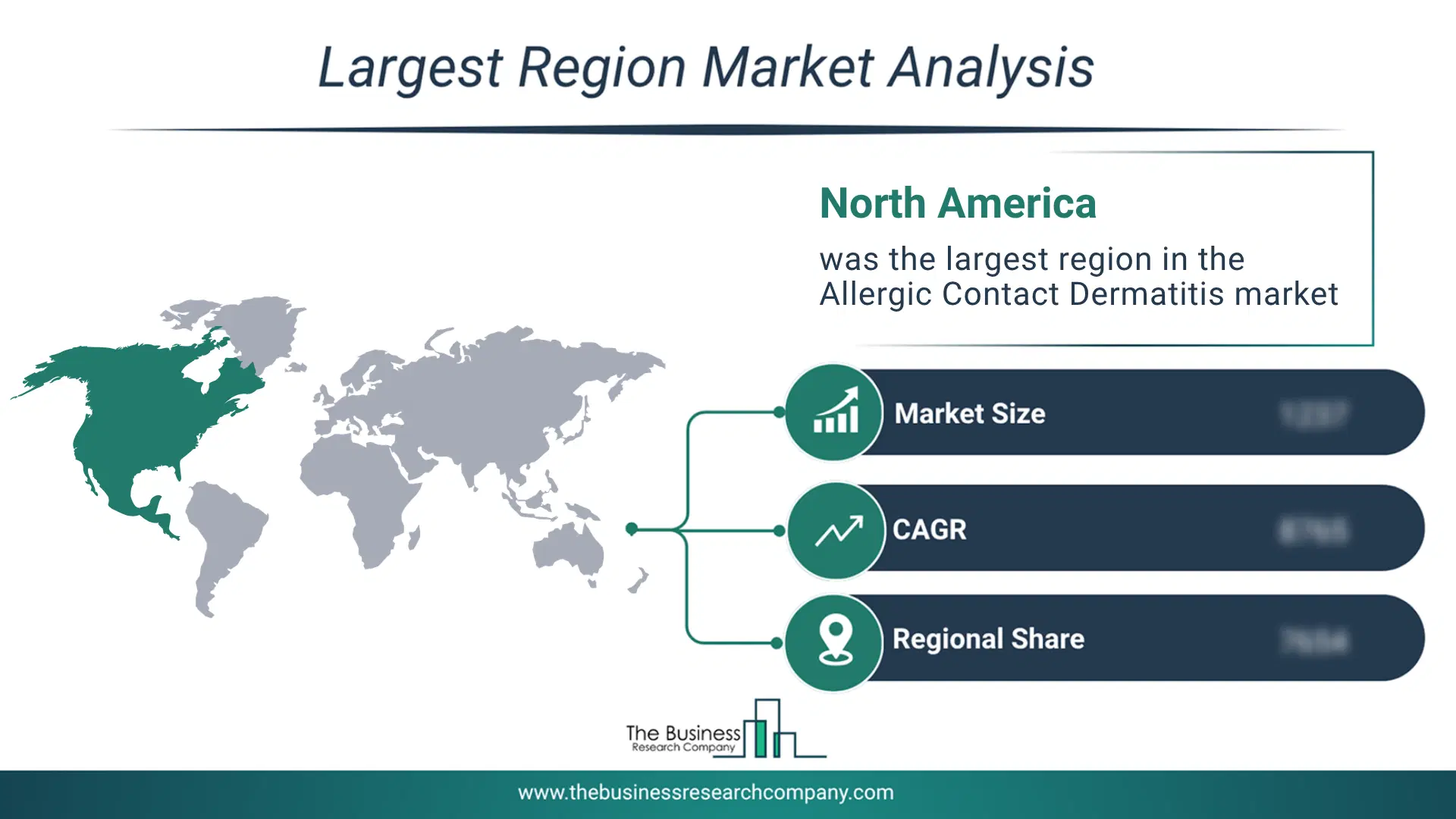
Regional Outlook
North America was the largest region in the allergic contact dermatitis market in 2025. Asia-Pacific is expected to be the fastest-growing region in the forecast period. The regions covered in this market report are Asia-Pacific, South East Asia, Western Europe, Eastern Europe, North America, South America, Middle East, Africa. The countries covered in this market report are Australia, Brazil, China, France, Germany, India, Indonesia, Japan, Taiwan, Russia, South Korea, UK, USA, Canada, Italy, Spain.What Defines the Allergic Contact Dermatitis Market?
The allergic contact dermatitis market consists of revenues earned by entities by providing services such as dermatology consultations, skincare guidance, education & counseling, and workplace and environmental assessments. The market value includes the value of related goods sold by the service provider or included within the service offering. The allergic contact dermatitis market includes sales of moisturizers & emollients, barrier creams, elimination testing, and oatmeal baths. Values in this market are ‘factory gate’ values, that is, the value of goods sold by the manufacturers or creators of the goods, whether to other entities (including downstream manufacturers, wholesalers, distributors, and retailers) or directly to end customers. The value of goods in this market includes related services sold by the creators of the goods.How is Market Value Defined and Measured?
The market value is defined as the revenues that enterprises gain from the sale of goods and/or services within the specified market and geography through sales, grants, or donations in terms of the currency (in USD unless otherwise specified). The revenues for a specified geography are consumption values that are revenues generated by organizations in the specified geography within the market, irrespective of where they are produced. It does not include revenues from resales along the supply chain, either further along the supply chain or as part of other products.
This chart presents market attractiveness based on a quantitative evaluation of growth, competition, strategic alignment, and risk, offering a clear view of opportunity areas for decision-making. This chart is for illustrative purposes; the full report contains the complete analysis.

This chart highlights the Total Addressable Market (TAM) by estimating the maximum revenue opportunity using an assumption-driven approach, supporting strategic planning and opportunity sizing across markets. The chart is illustrative; the full report provides a more comprehensive analysis.
What Key Data and Analysis Are Included in the Allergic Contact Dermatitis Market Report 2026?
The allergic contact dermatitis market research report is one of a series of new reports from The Business Research Company that provides market statistics, including industry global market size, regional shares, competitors with the market share, detailed market segments, market trends and opportunities, and any further data you may need to thrive in the allergic contact dermatitis industry. The market research report delivers a complete perspective of everything you need, with an in-depth analysis of the current and future state of the industry.Allergic Contact Dermatitis Market Report Forecast Analysis
| Report Attribute | Details |
|---|---|
| Market Size Value In 2026 | $3.74 billion |
| Revenue Forecast In 2030 | $4.74 billion |
| Growth Rate | CAGR of 6.1% from 2026 to 2030 |
| Base Year For Estimation | 2025 |
| Actual Estimates/Historical Data | 2020-2025 |
| Forecast Period | 2026 - 2030 |
| Market Representation | Revenue in USD Billion and CAGR from 2026 to 2030 |
| Segments Covered | Allergen Type, Diagnosis Method, Treatment Type, Severity Level, Patient Demographics |
| Regional Scope | Asia-Pacific, Western Europe, Eastern Europe, North America, South America, Middle East, Africa |
| Country Scope | The countries covered in the report are Australia, Brazil, China, France, Germany, India, Indonesia, Japan, Taiwan, Russia, South Korea, UK, USA, Canada, Italy, Spain |
| Key Companies Profiled | Bausch Health Companies Inc., GlaxoSmithKline plc, Pfizer Inc., Sanofi S.A., AbbVie Inc., Johnson & Johnson, LEO Pharma A/S, Novartis AG, Bayer AG, Eli Lilly and Company, Galderma SA, Astellas Pharma Inc., Ferrer Pharma, Stallergenes Greer International AG, HAL Allergy B.V., Hycor Biomedical Inc., HollisterStier Allergy, Dormer Laboratories Inc., Chemotechnique MB Diagnostics AB, Aesku.Diagnostics GmbH, AllergoTek |
| Customization Scope | Request for Customization |
| Pricing And Purchase Options | Explore Purchase Options |