

Allergy Immunotherapy Market Report 2026
Global Outlook – By Allergy Type (Allergic Rhinitis, Allergic Asthma, Food Allergy, Venom Allergy, Allergic Conjunctivitis, Environmental Allergies), By Treatment (Subcutaneous Immunotherapy (SCIT), Sublingual Immunotherapy, Specific Immunotherapy (SIT)), By Channel (Hospital Pharmacy, Retail Pharmacy) - Market Size, Trends, Strategies, and Forecast to 2030
Allergy Immunotherapy Market Overview
• Allergy Immunotherapy market size has reached to $3.16 billion in 2025 • Expected to grow to $5.64 billion in 2030 at a compound annual growth rate (CAGR) of 12.2% • Growth Driver: Allergy Immunotherapy Market Surges With Growing Prevalence Of Allergic Disorders • Market Trend: Artificial Intelligence (AI)-Powered Allergy Component Testing For Advanced Allergy Diagnosis • Europe was the largest region in 2025 and Asia-Pacific is the fastest growing region.What Is Covered Under Allergy Immunotherapy Market?
Allergy immunotherapy refers to a type of therapy used to avoid allergic reactions to things like house dust mites, grass pollen, and bee venom. Immunotherapy includes giving the patient increasingly higher dosages of the chemical or allergen they are allergic to. The main allergy types in allergy immunotherapy are allergic rhinitis, asthma, food allergy, venom allergy, and others. Allergic rhinitis refers to a diagnosis connected to a collection of symptoms that affect the nose. The various treatments involved are immunotherapy (SCIT), sublingual immunotherapy and specific immunotherapy (SIT). The various channels include hospital pharmacy, retail pharmacy and online pharmacy.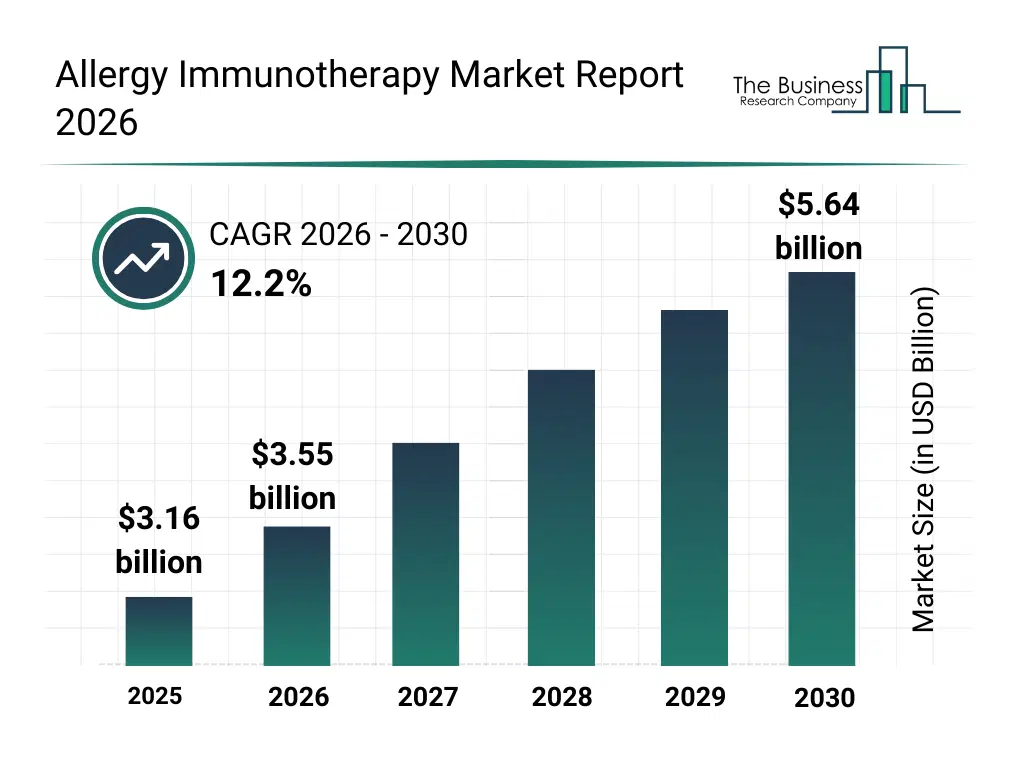
What Is The Allergy Immunotherapy Market Size and Share 2026?
The allergy immunotherapy market size has grown rapidly in recent years. It will grow from $3.16 billion in 2025 to $3.55 billion in 2026 at a compound annual growth rate (CAGR) of 12.3%. The growth in the historic period can be attributed to limited awareness about allergy immunotherapy, rising incidence of seasonal allergic rhinitis, dependency on hospital-based treatment channels, adoption of traditional treatment methods, regulatory approvals for immunotherapy products.What Is The Allergy Immunotherapy Market Growth Forecast?
The allergy immunotherapy market size is expected to see rapid growth in the next few years. It will grow to $5.64 billion in 2030 at a compound annual growth rate (CAGR) of 12.2%. The growth in the forecast period can be attributed to growth in personalized immunotherapy solutions, increasing adoption of online pharmacy channels, expansion of pediatric allergy treatment, rising investment in immunotherapy research, development of combination immunotherapy products. Major trends in the forecast period include increasing adoption of subcutaneous and sublingual immunotherapy, rising prevalence of allergic rhinitis and asthma, expansion of food and venom allergy treatments, growing focus on personalized allergy treatment protocols, enhanced awareness and early diagnosis of allergic conditions.
Global Allergy Immunotherapy Market Segmentation
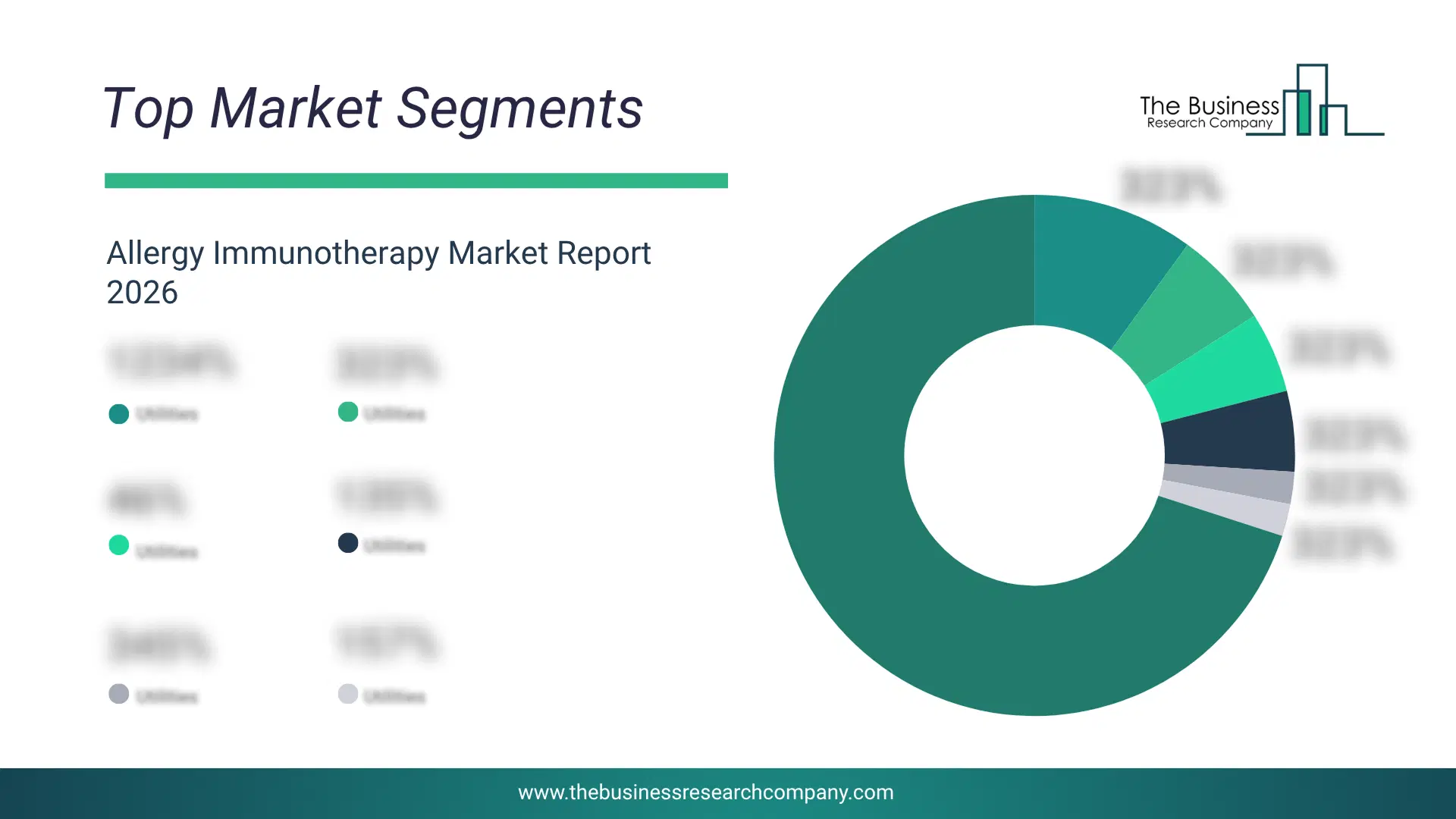
1) By Allergy Type: Allergic Rhinitis, Allergic Asthma, Food Allergy, Venom Allergy, Allergic Conjunctivitis, Environmental Allergies 2) By Treatment: Subcutaneous Immunotherapy (SCIT), Sublingual Immunotherapy, Specific Immunotherapy (SIT) 3) By Channel: Hospital Pharmacy, Retail Pharmacy Subsegments: 1) By Allergic Rhinitis: Seasonal Allergic Rhinitis, Perennial Allergic Rhinitis 2) By Allergic Asthma: House Dust Mite–Induced Allergic Asthma, Pollen-Induced Allergic Asthma, Animal Dander–Induced Allergic Asthma 3) By Food Allergy: Peanut Allergy, Tree Nut Allergy, Milk Allergy, Egg Allergy, Other Food Allergies 4) By Venom Allergy: Bee Venom Allergy, Wasp Venom Allergy, Hornet Venom Allergy, Other Insect Venom Allergies 5) By Allergic Conjunctivitis: Seasonal Allergic Conjunctivitis, Perennial Allergic Conjunctivitis 6) By Environmental Allergies: House Dust Mite Allergy, Pollen Allergy, Mold Allergy, Animal Dander AllergyWhat Is The Driver Of The Allergy Immunotherapy Market?
The rising prevalence of allergic disorders is expected to propel the growth of the allergy immunotherapy market going forward. Allergic disorders refer to excessive immune responses to specific antigens. Immune responses that are inappropriately directed against intrinsic bodily parts (self) result in autoimmune diseases. Allergy immunotherapy is available to atopic people who have allergy disorders like IgE-mediated allergic rhinitis and allergic asthma brought on by inhaled allergens, including pollens and house dust mites (HDMs). For instance, in August 2023, according to the Medicines and Healthcare Products Regulatory Agency (MHRA), a UK-based executive agency published that in 2022-23, English hospitals recorded over 25,000 admissions for allergies and anaphylaxis, more than twice the number seen in the last twenty years. Additionally, in May 2024, according to the Food Standards Agency, a UK-based government department published the Patterns and Prevalence of Adult Food Allergy (PAFA) report that around 6% of adults in the UK are affected by food allergies, which is approximately 2.4 million individuals. Therefore, the rising prevalence of allergic disorders is driving the growth of the allergy immunotherapy industry.Key Players In The Global Allergy Immunotherapy Market
Major companies operating in the allergy immunotherapy market are LETI Pharma, Stallergenes Greer International AG, Allergy Therapeutics plc, ALK-Abelló A/S, HAL Allergy B.V., DBV Technologies, Circassia Pharmaceuticals Inc., Jubilant HollisterStier LLC, Allergopharma GmbH & Co. KG, Biomay AG, Anergis SA, HollisterStier Allergy, Desentum Oy, WOLW Pharma Limited, AllerGenics Inc., Greer Laboratories Inc., Aimmune Therapeutics Inc., Reliant Laboratories Inc., Mylan N.V., Adamis Pharmaceuticals Corporation, Endo Pharmaceuticals Inc., Sun Pharmaceutical Industries Ltd., Cipla Ltd.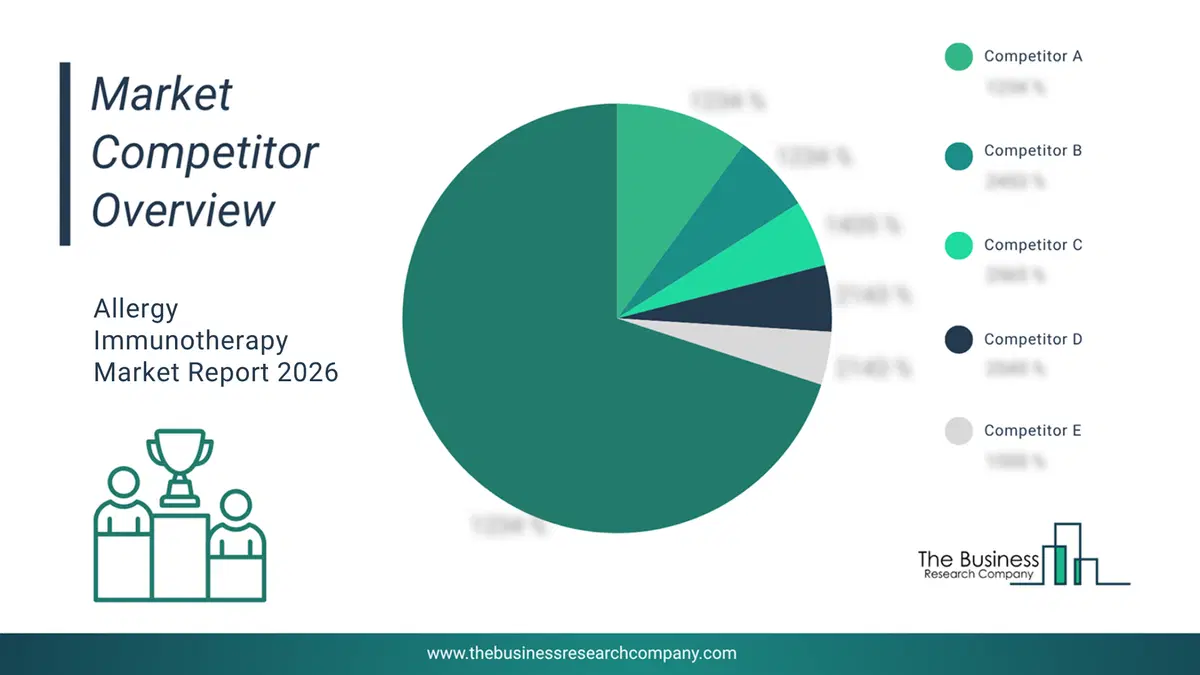
This chart is for illustrative purposes; the full report includes a detailed competitor analysis and comprehensive overview of the top 10 companies in the market.
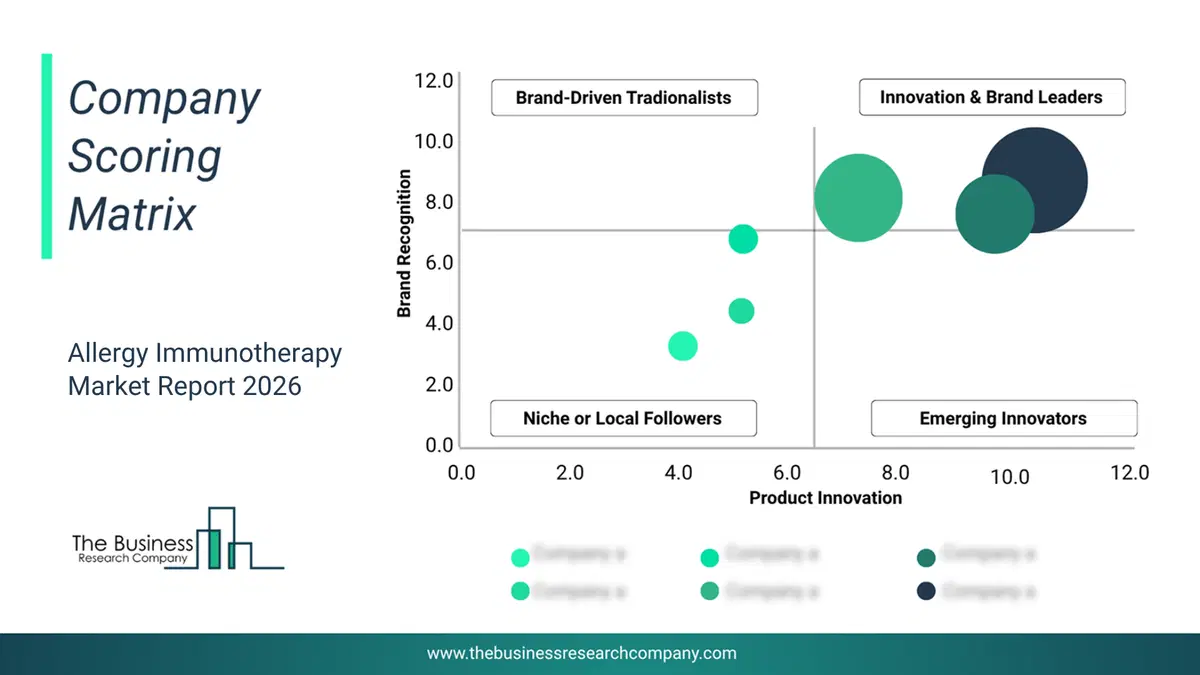
This chart maps companies by product innovation and brand strength, with bubble size indicating relative revenue, helping identify market leaders, challengers, and niche players. This is an illustrative chart; the full report provides a complete and accurate competitive analysis.
Global Allergy Immunotherapy Market Trends and Insights
Major companies operating in the allergy immunotherapy market are innovating technological products, such as the artificial intelligence (AI)-powered allergy component testing, to sustain their position in the market. Artificial intelligence (AI)-powered allergy component testing is a novel testing platform based on component resolved diagnostics (CRD) for diagnosing various forms of allergies. For instance, in May 2023, Metropolis Healthcare Limited, an Indian-based Medical laboratory company launched artificial intelligence (AI)-powered allergy component testing. Artificial intelligence (AI)-powered allergy component testing is a fourth-generation allergy testing technology that uses Artificial Intelligence (AI) to assist clinicians in making clinical decisions. It provides great insights, selecting, and optimizing the course of treatment for allergic diseases. It is also capable of predicting the effectiveness of immunotherapy for allergy vaccinations which are effective or not.What Are Latest Mergers And Acquisitions In The Allergy Immunotherapy Market?
In January 2024, Inimmune Corporation, a US-based biotechnology company, entered into a strategic collaboration with Intrommune Therapeutics, Inc., to advance a next-generation immunotherapy solution for food allergies. Through this partnership, the companies aim to develop a rapid, long-acting oral mucosal allergy immunotherapy for the treatment of peanut allergy, combining Inimmune’s proprietary rapid desensitization technology with Intrommune’s oral mucosal immunotherapy platform. Intrommune Therapeutics, Inc. is a US-based company specializing in food-allergy immunotherapy solutions designed to deliver allergen desensitization through oral mucosal exposure.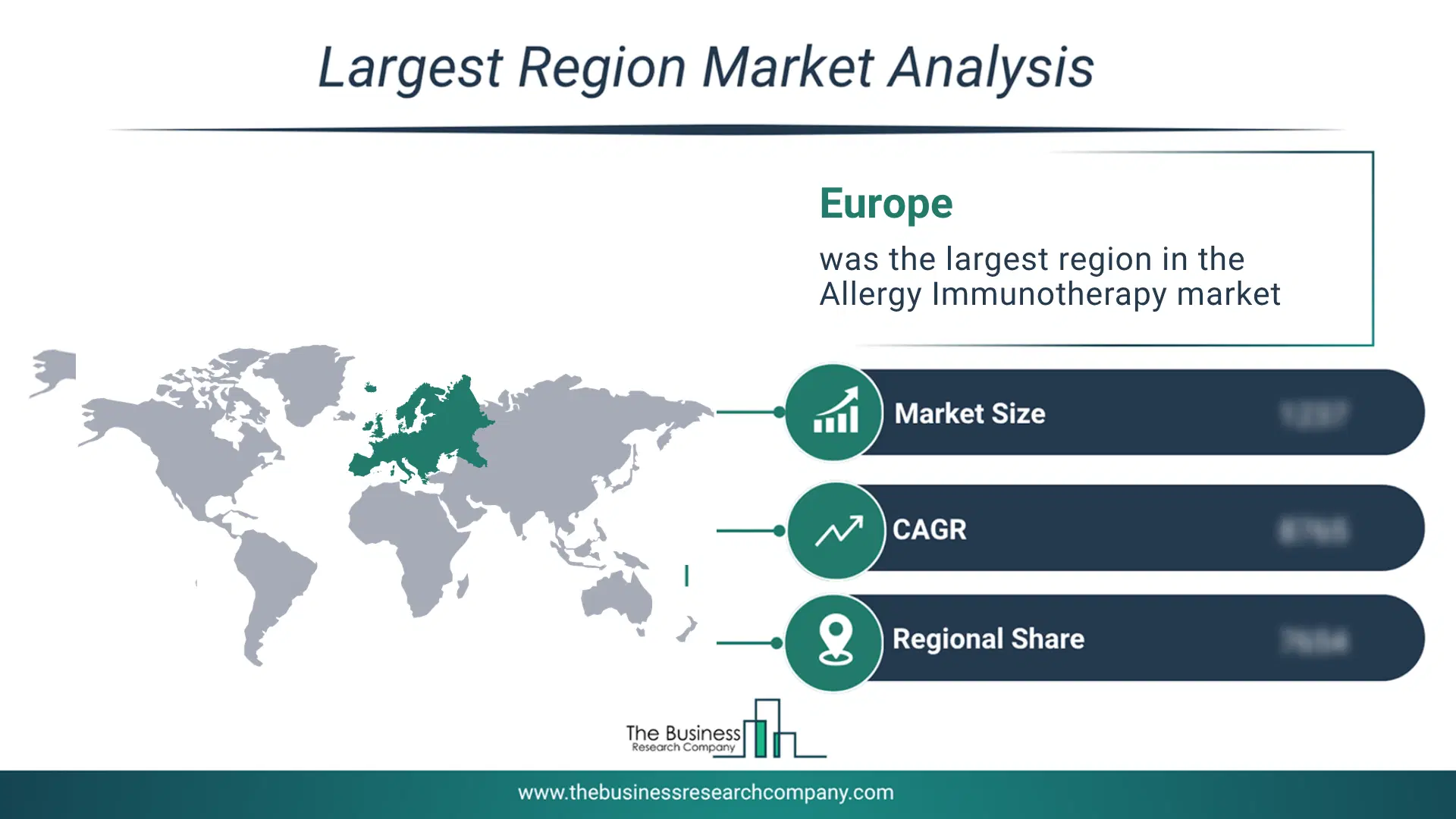
Regional Outlook
Europe was the largest region in the allergy immunotherapy market in 2025. Asia-Pacific is expected to be the fastest-growing region in the allergy immunotherapy market report during the forecast period. The regions covered in this market report are Asia-Pacific, South East Asia, Western Europe, Eastern Europe, North America, South America, Middle East, Africa. The countries covered in this market report are Australia, Brazil, China, France, Germany, India, Indonesia, Japan, Taiwan, Russia, South Korea, UK, USA, Canada, Italy, Spain.What Defines the Allergy Immunotherapy Market?
The allergy immunotherapy market includes revenues earned by entities by providing monoclonal antibodies and immune checkpoint inhibitors therapy. The market value includes the value of related goods sold by the service provider or included within the service offering. Only goods and services traded between entities or sold to end consumers are included.How is Market Value Defined and Measured?
The market value is defined as the revenues that enterprises gain from the sale of goods and/or services within the specified market and geography through sales, grants, or donations in terms of the currency (in USD unless otherwise specified). The revenues for a specified geography are consumption values that are revenues generated by organizations in the specified geography within the market, irrespective of where they are produced. It does not include revenues from resales along the supply chain, either further along the supply chain or as part of other products.
This chart presents market attractiveness based on a quantitative evaluation of growth, competition, strategic alignment, and risk, offering a clear view of opportunity areas for decision-making. This chart is for illustrative purposes; the full report contains the complete analysis.

This chart highlights the Total Addressable Market (TAM) by estimating the maximum revenue opportunity using an assumption-driven approach, supporting strategic planning and opportunity sizing across markets. The chart is illustrative; the full report provides a more comprehensive analysis.
What Key Data and Analysis Are Included in the Allergy Immunotherapy Market Report 2026?
The allergy immunotherapy market research report is one of a series of new reports from The Business Research Company that provides market statistics, including industry global market size, regional shares, competitors with the market share, detailed market segments, market trends and opportunities, and any further data you may need to thrive in the allergy immunotherapy industry. The market research report delivers a complete perspective of everything you need, with an in-depth analysis of the current and future state of the industry.Allergy Immunotherapy Market Report Forecast Analysis
| Report Attribute | Details |
|---|---|
| Market Size Value In 2026 | $3.55 billion |
| Revenue Forecast In 2030 | $5.64 billion |
| Growth Rate | CAGR of 12.2% from 2026 to 2030 |
| Base Year For Estimation | 2025 |
| Actual Estimates/Historical Data | 2020-2025 |
| Forecast Period | 2026 - 2030 |
| Market Representation | Revenue in USD Billion and CAGR from 2026 to 2030 |
| Segments Covered | Allergy Type, Treatment, Channel |
| Regional Scope | Asia-Pacific, Western Europe, Eastern Europe, North America, South America, Middle East, Africa |
| Country Scope | The countries covered in the report are Australia, Brazil, China, France, Germany, India, Indonesia, Japan, Taiwan, Russia, South Korea, UK, USA, Canada, Italy, Spain |
| Key Companies Profiled | LETI Pharma, Stallergenes Greer International AG, Allergy Therapeutics plc, ALK-Abelló A/S, HAL Allergy B.V., DBV Technologies, Circassia Pharmaceuticals Inc., Jubilant HollisterStier LLC, Allergopharma GmbH & Co. KG, Biomay AG, Anergis SA, HollisterStier Allergy, Desentum Oy, WOLW Pharma Limited, AllerGenics Inc., Greer Laboratories Inc., Aimmune Therapeutics Inc., Reliant Laboratories Inc., Mylan N.V., Adamis Pharmaceuticals Corporation, Endo Pharmaceuticals Inc., Sun Pharmaceutical Industries Ltd., Cipla Ltd. |
| Customization Scope | Request for Customization |
| Pricing And Purchase Options | Explore Purchase Options |