

Allergy Treatment Market Report 2026
Global Outlook – By Treatment Type (Anti-Allergy Drugs, Immunotherapy), By Type (Eye Allergy, Skin Allergy, Food Allergy, Rhinitis, Other Types), By Route of Administration (Oral, Parenteral, Nasal, Other Routes of Administration), By Distribution Channels (Hospital Pharmacies, Retail Pharmacies, Online Retailers, Other Distribution Channels), By End-Users (Hospitals, Specialty Clinics, Homecare, Other End-Users) - Market Size, Trends, Strategies, and Forecast to 2030
Allergy Treatment Market Overview
• Allergy Treatment market size has reached to $24.74 billion in 2025 • Expected to grow to $35.63 billion in 2030 at a compound annual growth rate (CAGR) of 7.6% • Growth Driver: The Expanding Allergy Treatment Market In Response To Growing Prevalence Of Allergic Conditions • Market Trend: Allergy Treatment Market Fueled By Technological Advancements • North America was the largest region in 2025 and Asia-Pacific is the fastest growing region.What Is Covered Under Allergy Treatment Market?
Allergy treatment refers to the control and relief of allergic responses and symptoms caused by hypersensitivity to specific allergens. These treatments are provided to lessen or eliminate symptoms, enhance the quality of life, and prevent or minimize future allergic responses. The main allergy treatment includes anti-allergy drugs and immunotherapy. An antiallergic drug refers to a medicine that prevents or relieves allergies, where these drugs are frequently used to treat symptoms caused by allergies and stop the symptoms of allergies by reducing or blocking histamines. The various allergies are eye allergy, skin allergy, food allergy, asthma, rhinitis, and others that use different routes of administration such as oral, parenteral, nasal, and others. These are distributed via hospital pharmacies, retail pharmacies, online retailers, and others by end-users such as hospitals, specialty clinics, home care, and others.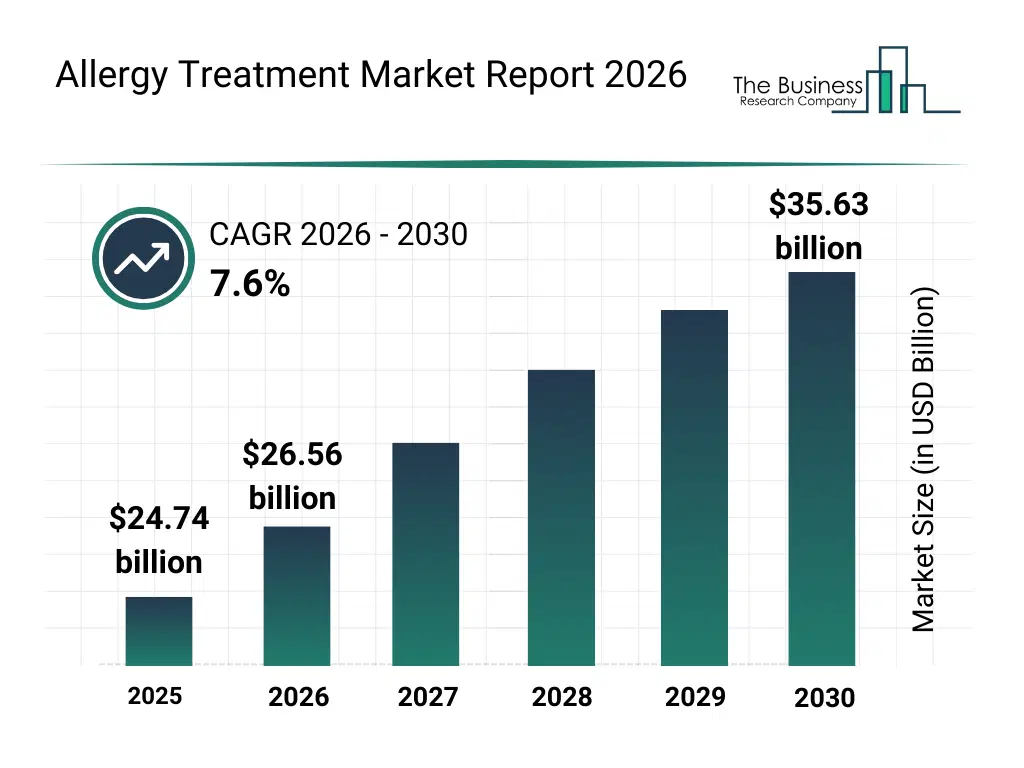
What Is The Allergy Treatment Market Size and Share 2026?
The allergy treatment market size has grown strongly in recent years. It will grow from $24.74 billion in 2025 to $26.56 billion in 2026 at a compound annual growth rate (CAGR) of 7.3%. The growth in the historic period can be attributed to increasing prevalence of allergies worldwide, rising hospital and clinic allergy treatments, limited awareness of advanced immunotherapy, reliance on conventional antihistamines, expansion of retail pharmacy networks.What Is The Allergy Treatment Market Growth Forecast?
The allergy treatment market size is expected to see strong growth in the next few years. It will grow to $35.63 billion in 2030 at a compound annual growth rate (CAGR) of 7.6%. The growth in the forecast period can be attributed to growing demand for personalized allergy care, technological advancements in immunotherapy delivery, expansion of online pharmacy channels, increasing investment in allergy research, rising prevalence of pediatric and adult asthma and rhinitis. Major trends in the forecast period include rising adoption of anti-allergy drugs and immunotherapy, increasing awareness of allergy management and prevention, expansion of homecare and specialty clinic services, growing focus on personalized allergy treatments, rising use of nasal and oral administration routes.
Global Allergy Treatment Market Segmentation
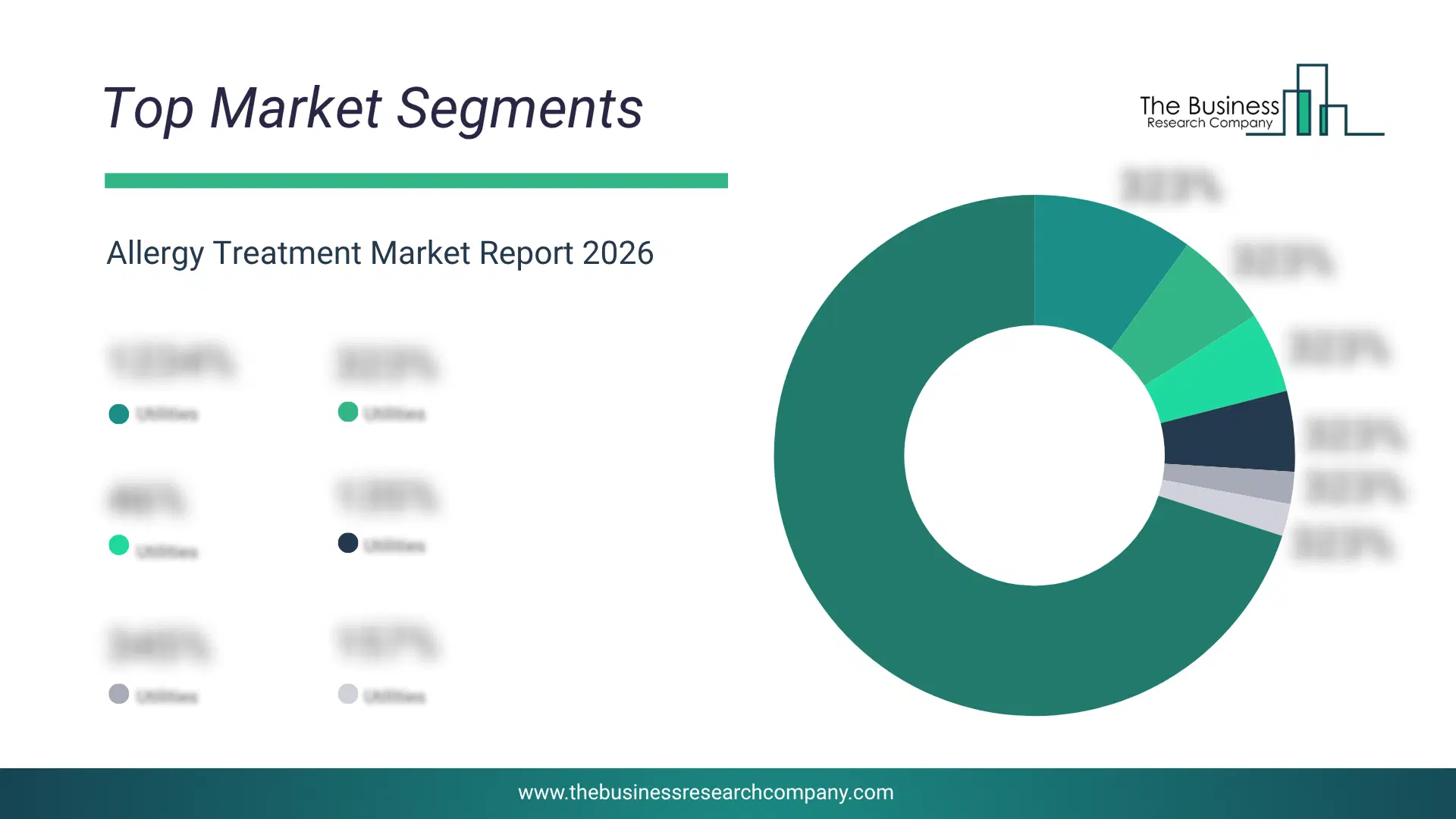
1) By Treatment Type: Anti-Allergy Drugs, Immunotherapy 2) By Type: Eye Allergy, Skin Allergy, Food Allergy, Rhinitis, Other Types 3) By Route of Administration: Oral, Parenteral, Nasal, Other Routes of Administration 4) By Distribution Channels: Hospital Pharmacies, Retail Pharmacies, Online Retailers, Other Distribution Channels 5) By End-Users: Hospitals, Specialty Clinics, Homecare, Other End-Users Subsegments: 1) By Anti-Allergy Drugs: Antihistamines, Corticosteroids, Leukotriene Receptor Antagonists, Decongestants 2) By Immunotherapy: Allergy Shots, Sublingual Immunotherapy (SLIT), Oral ImmunotherapyWhat Is The Driver Of The Allergy Treatment Market?
The growing prevalence of allergic conditions is expected to propel the growth of the allergy treatment market going forward. An allergic condition is when the immune system overreacts to an allergen, often known as a harmless substance. These treatment offers allergic therapies using nonprescription or prescription medicine that assists in identifying and avoiding various allergy triggers, therefore preventing allergic responses, alleviating symptoms, avoiding allergic severity, and improving persons' well-being. For instance, in April 2024, according to Allergy UK, a UK-based national charity, more than 21 million people in the UK are affected by allergies, which became the most commonly reported chronic health condition in 2022, and projections indicate that by 2026, half of Europe's population will experience at least one allergy. Therefore, the growing prevalence of allergic conditions is driving the growth of the allergy treatment industry.Key Players In The Global Allergy Treatment Market
Major companies operating in the allergy treatment market are Pfizer Inc., Johnson and Johnson, Allergy Therapeutics PLC, F. Hoffmann-La Roche Ltd, AbbVie Inc., Novartis AG, Merck & Co. Inc., Sanofi S.A., Thermo Fisher Scientific Inc., AstraZeneca, GlaxoSmithKline PLC, Eli Lilly and Company, Boehringer Ingelheim International GmbH, Regeneron Pharmaceuticals, Bausch Health Companies Inc., Teva Pharmaceutical Industries Ltd., Almirall S.A, Akorn Operating Company LLC, Alembic Pharmaceuticals Limited, ALK-Abelló A/S, Stallergenes Greer International AG, Adamis Pharmaceuticals, HollisterStier Allergy, Leti Pharma SL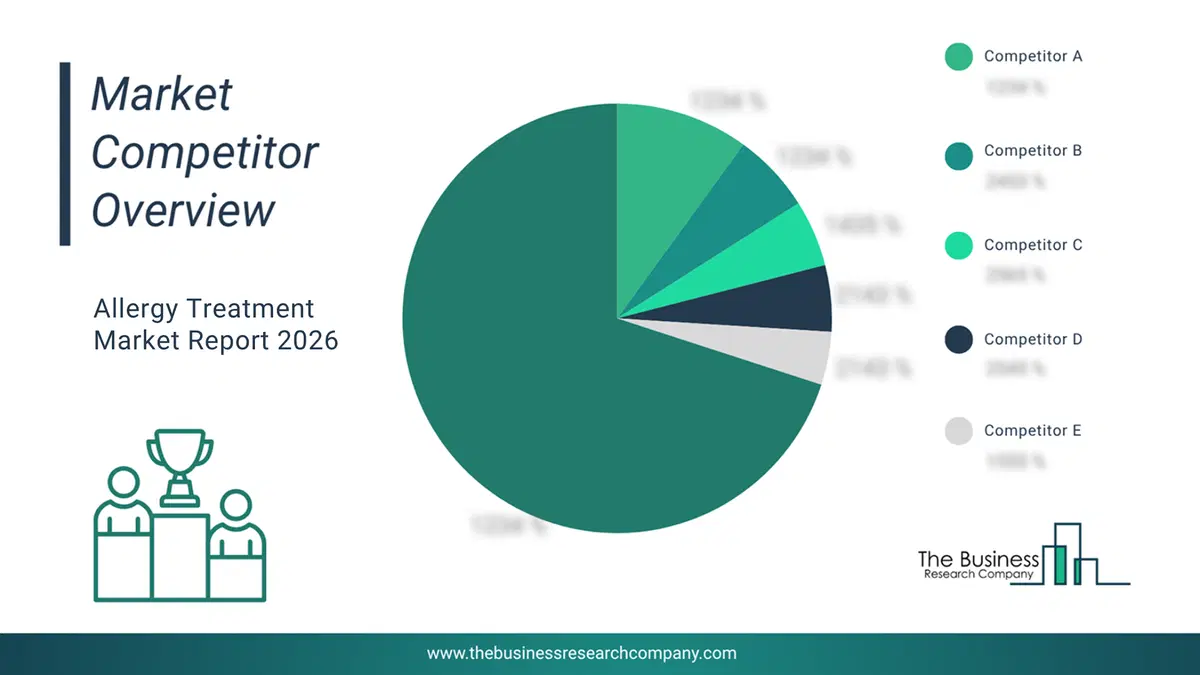
This chart is for illustrative purposes; the full report includes a detailed competitor analysis and comprehensive overview of the top 10 companies in the market.
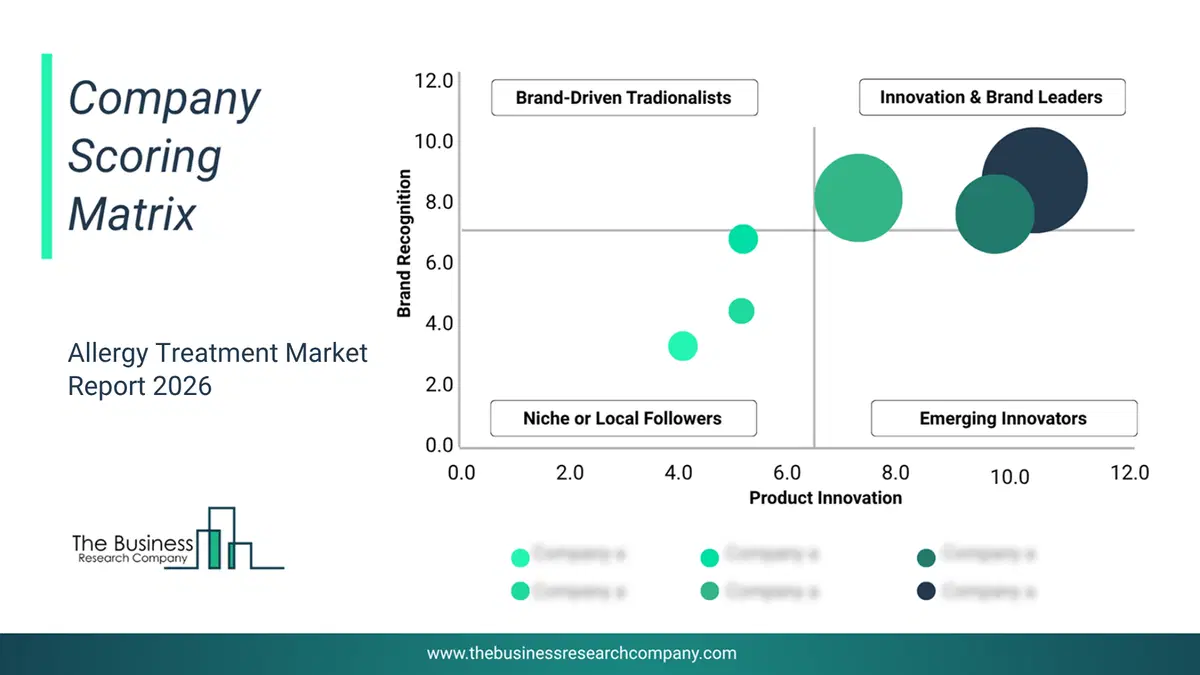
This chart maps companies by product innovation and brand strength, with bubble size indicating relative revenue, helping identify market leaders, challengers, and niche players. This is an illustrative chart; the full report provides a complete and accurate competitive analysis.
Global Allergy Treatment Market Trends and Insights
Major companies operating in the allergy treatment market are focusing on adopting advanced technologies to enhance patient care, improve treatment delivery, and optimize diagnostic and therapeutic outcomes. Technological innovations in allergy treatment include digital health platforms, telehealth solutions, wearable monitoring devices, and precision immunotherapy tools, which help streamline patient management, track allergic reactions, and provide personalized therapy options. For instance, in May 2023, Metropolis Healthcare Limited, an India-based chain of pathology labs and diagnostic centers, launched AI-powered allergy component testing based on Component Resolved Diagnostics (CRD). This component testing employs artificial intelligence (AI) to aid physicians in making informed clinical decisions and gives valuable insights into choosing and optimizing an individual's allergic disease treatment plan. It is driven by a nanotechnology-based multiplex system that uses molecular components, can identify specific IgE antibodies against 295 different allergens using a simple blood test, and offers findings for 158 food allergens, ten contact allergens, and 127 respiratory allergens.What Are Latest Mergers And Acquisitions In The Allergy Treatment Market?
In June 2024, Ewopharma AG, a Switzerland-based provider of pharmaceuticals, consumer health products, and commercial healthcare services, acquired AllergyCare AG for an undisclosed amount. With this acquisition, Ewopharma aims to strengthen its presence in the Swiss pharmaceutical market by expanding into allergy prevention and treatment through established local expertise, sales capabilities, and strategic brand partnerships. AllergyCare AG is a Switzerland-based provider of pharmaceutical and consumer health products focused on the prevention and treatment of allergies through specialized distribution and marketing services.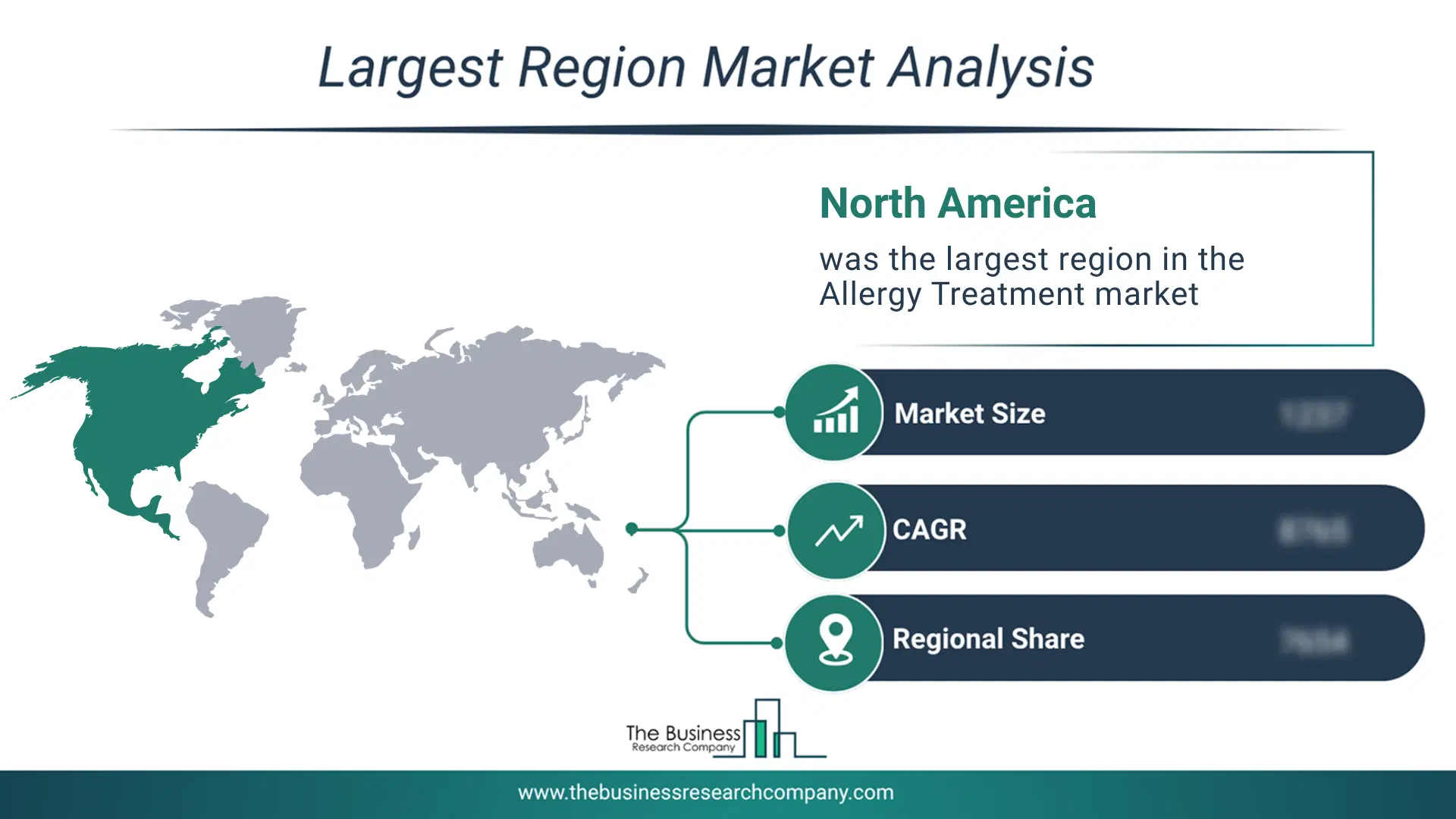
Regional Outlook
North America was the largest region in the allergy treatment market in 2025. Asia-Pacific is expected to be the fastest-growing region in the forecast period. The regions covered in this market report are Asia-Pacific, South East Asia, Western Europe, Eastern Europe, North America, South America, Middle East, Africa. The countries covered in this market report are Australia, Brazil, China, France, Germany, India, Indonesia, Japan, Taiwan, Russia, South Korea, UK, USA, Canada, Italy, Spain.What Defines the Allergy Treatment Market?
The allergy treatment market consists of revenues earned by entities by providing various therapies such as adjunct therapy, investigational therapies, immune modulation, immunotherapy (OIT), and sublingual immunotherapy (SLIT). The market value includes the value of related goods sold by the service provider or included within the service offering. The allergy treatment market also includes sales of nasal corticosteroids, antihistamines mast cell stabilizers, decongestants, corticosteroid creams or ointments, oral corticosteroids, and epinephrine. Values in this market are ‘factory gate’ values, that is the value of goods sold by the manufacturers or creators of the goods, whether to other entities (including downstream manufacturers, wholesalers, distributors, and retailers) or directly to end customers. The value of goods in this market includes related services sold by the creators of the goods.How is Market Value Defined and Measured?
The market value is defined as the revenues that enterprises gain from the sale of goods and/or services within the specified market and geography through sales, grants, or donations in terms of the currency (in USD unless otherwise specified). The revenues for a specified geography are consumption values that are revenues generated by organizations in the specified geography within the market, irrespective of where they are produced. It does not include revenues from resales along the supply chain, either further along the supply chain or as part of other products.
This chart presents market attractiveness based on a quantitative evaluation of growth, competition, strategic alignment, and risk, offering a clear view of opportunity areas for decision-making. This chart is for illustrative purposes; the full report contains the complete analysis.

This chart highlights the Total Addressable Market (TAM) by estimating the maximum revenue opportunity using an assumption-driven approach, supporting strategic planning and opportunity sizing across markets. The chart is illustrative; the full report provides a more comprehensive analysis.
What Key Data and Analysis Are Included in the Allergy Treatment Market Report 2026?
The allergy treatment market research report is one of a series of new reports from The Business Research Company that provides market statistics, including industry global market size, regional shares, competitors with the market share, detailed market segments, market trends and opportunities, and any further data you may need to thrive in the allergy treatment industry. The market research report delivers a complete perspective of everything you need, with an in-depth analysis of the current and future state of the industry.Allergy Treatment Market Report Forecast Analysis
| Report Attribute | Details |
|---|---|
| Market Size Value In 2026 | $26.56 billion |
| Revenue Forecast In 2030 | $35.63 billion |
| Growth Rate | CAGR of 7.6% from 2026 to 2030 |
| Base Year For Estimation | 2025 |
| Actual Estimates/Historical Data | 2020-2025 |
| Forecast Period | 2026 - 2030 |
| Market Representation | Revenue in USD Billion and CAGR from 2026 to 2030 |
| Segments Covered | Treatment Type, Type, Route of Administration, Distribution Channels, End-Users |
| Regional Scope | Asia-Pacific, Western Europe, Eastern Europe, North America, South America, Middle East, Africa |
| Country Scope | The countries covered in the report are Australia, Brazil, China, France, Germany, India, Indonesia, Japan, Taiwan, Russia, South Korea, UK, USA, Canada, Italy, Spain |
| Key Companies Profiled | Pfizer Inc., Johnson and Johnson, Allergy Therapeutics PLC, F. Hoffmann-La Roche Ltd, AbbVie Inc., Novartis AG, Merck & Co. Inc., Sanofi S.A., Thermo Fisher Scientific Inc., AstraZeneca, GlaxoSmithKline PLC, Eli Lilly and Company, Boehringer Ingelheim International GmbH, Regeneron Pharmaceuticals, Bausch Health Companies Inc., Teva Pharmaceutical Industries Ltd., Almirall S.A, Akorn Operating Company LLC, Alembic Pharmaceuticals Limited, ALK-Abelló A/S, Stallergenes Greer International AG, Adamis Pharmaceuticals, HollisterStier Allergy, Leti Pharma SL |
| Customization Scope | Request for Customization |
| Pricing And Purchase Options | Explore Purchase Options |