

Allogeneic Cell Therapy Market Report 2026
Global Outlook – By Type (Stem Cell Therapies, Non-Stem Cell Therapies ), By Therapeutic Area (Hematological Disorders, Dermatological Disorders), By End User (Hospitals, Specialty Clinics) - Market Size, Trends, Strategies, and Forecast to 2030
Allogeneic Cell Therapy Market Overview
• Allogeneic Cell Therapy market size has reached to $1.2 billion in 2025 • Expected to grow to $1.97 billion in 2030 at a compound annual growth rate (CAGR) of 10.2% • Growth Driver: Allogeneic Cell Therapy Revolutionizing The Treatment Of Chronic Illnesses • Market Trend: Innovative Cell Processing Platforms Strengthen Market Position Of Allogeneic Cell Therapy Companies • North America was the largest region in 2025 and Asia-Pacific is the fastest growing region.What Is Covered Under Allogeneic Cell Therapy Market?
Allogeneic cell therapy is a treatment in which cells are harvested from a donor and used to treat a different individual (the recipient). These therapies are designed to replace or repair damaged tissues, modulate immune responses, or treat diseases such as cancer, genetic disorders, and autoimmune conditions. The main types of allogenic cell therapy are stem cell therapies and non-stem cell therapies. Stem cell therapies are treatments that utilize stem cells to repair, regenerate, or replace damaged tissues or organs to prevent or treat various diseases and conditions. The various therapeutic areas are hematological disorders, dermatological disorders, and other therapeutic areas used by various end users such as hospitals, specialty clinics, and research organizations.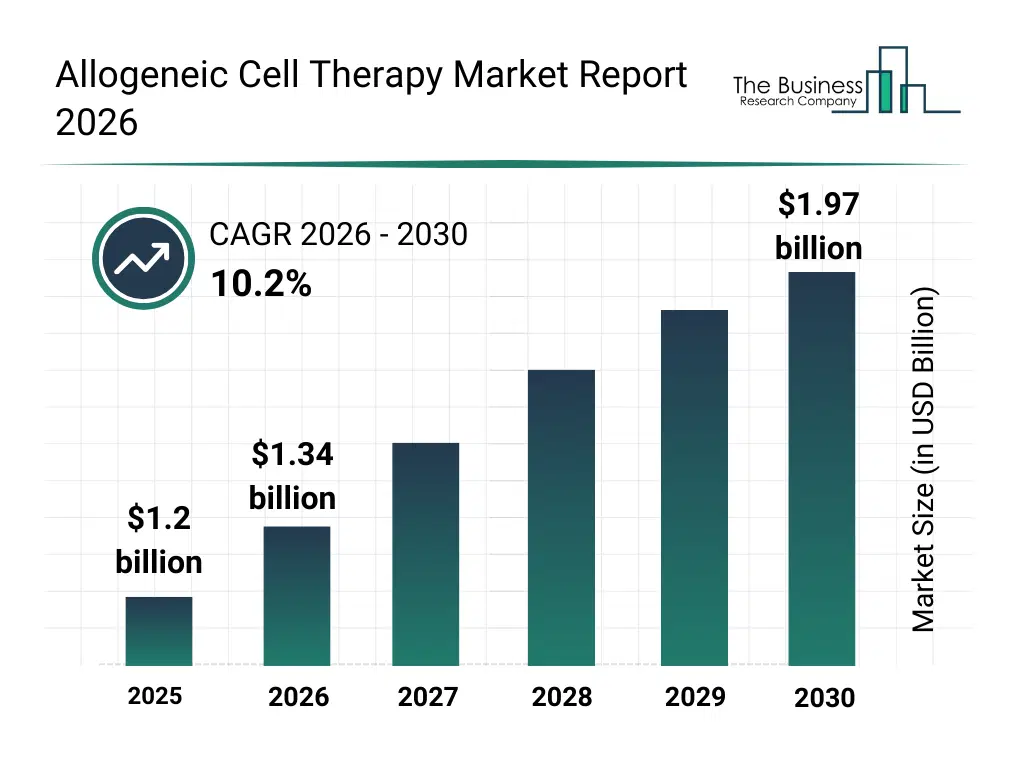
What Is The Allogeneic Cell Therapy Market Size and Share 2026?
The allogeneic cell therapy market size has grown rapidly in recent years. It will grow from $1.2 billion in 2025 to $1.34 billion in 2026 at a compound annual growth rate (CAGR) of 11.5%. The growth in the historic period can be attributed to limited availability of allogeneic cell therapy products, early-stage clinical trials expansion, increasing hematological disorder prevalence, growing hospital adoption of cell therapies, reliance on donor cell banks.What Is The Allogeneic Cell Therapy Market Growth Forecast?
The allogeneic cell therapy market size is expected to see rapid growth in the next few years. It will grow to $1.97 billion in 2030 at a compound annual growth rate (CAGR) of 10.2%. The growth in the forecast period can be attributed to advancements in stem cell and immune cell engineering, expansion of dermatological and other therapeutic applications, increasing investment in cell therapy manufacturing facilities, collaborations between hospitals and biotech firms, adoption of automated cell processing technologies. Major trends in the forecast period include increasing adoption of stem cell therapies, rising focus on t-cell and nk cell therapies, expansion of ipsc-based therapeutic applications, growing demand for personalized cell therapy treatments, enhanced regulatory oversight and safety standards.
Global Allogeneic Cell Therapy Market Segmentation
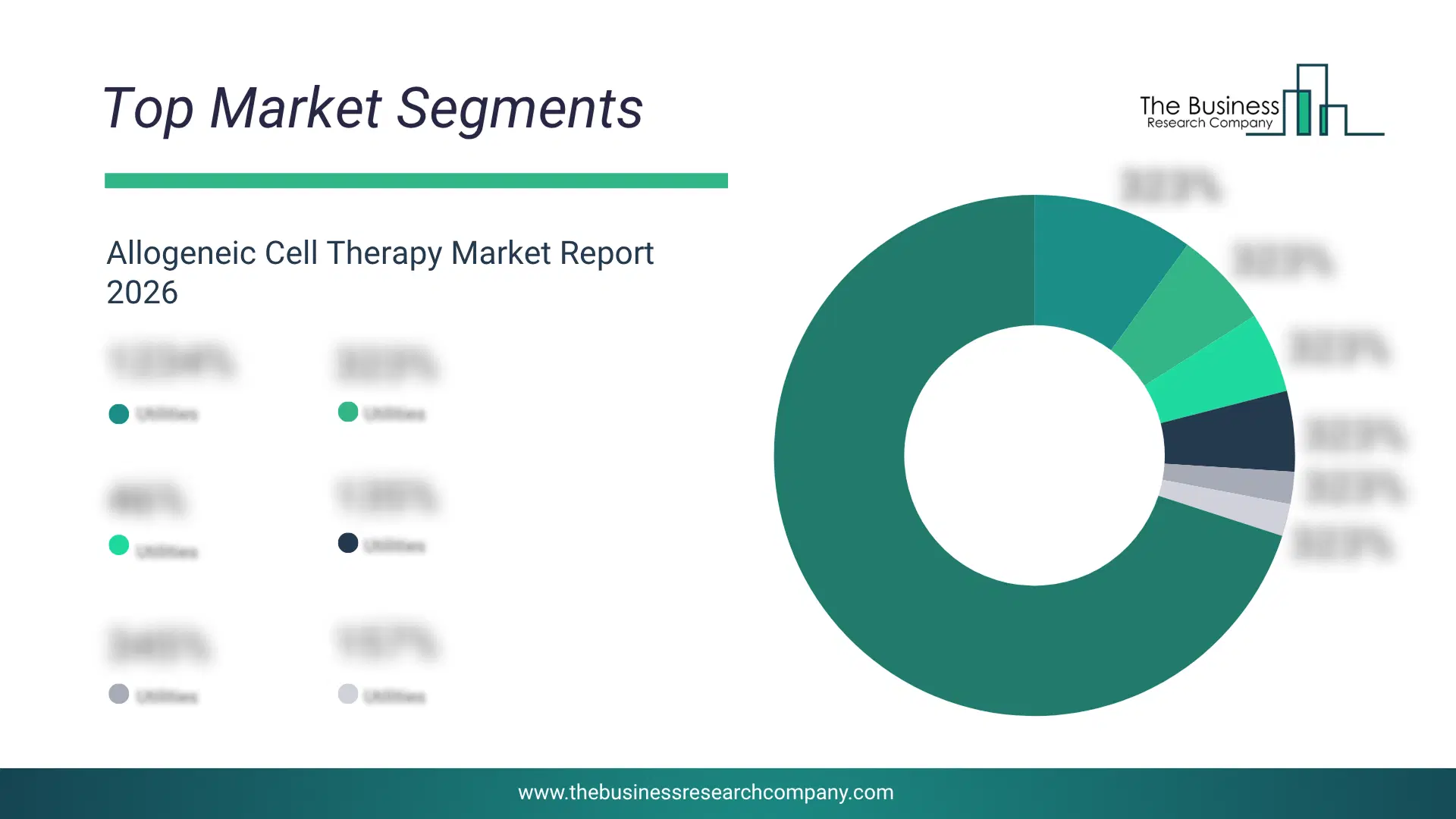
1) By Type: Stem Cell Therapies, Non-Stem Cell Therapies 2) By Therapeutic Area: Hematological Disorders, Dermatological Disorders 3) By End User: Hospitals, Specialty Clinics Subsegments: 1) By Stem Cell Therapies: Hematopoietic Stem Cell Therapy (Hematopoietic Stem Cells), Mesenchymal Stem Cell Therapy (MSC-Based Therapies), Induced Pluripotent Stem Cells (iPSC-Based Therapies), Neural Stem Cell Therapy 2) By Non-Stem Cell Therapies: T-cell Therapies, Natural Killer (NK) Cell Therapies, Dendritic Cell TherapiesWhat Is The Driver Of The Allogeneic Cell Therapy Market?
The increasing prevalence of chronic diseases is expected to drive the growth of the allogeneic cell therapy market. Chronic disease is a long-lasting condition that typically requires ongoing medical attention and can limit daily activities or quality of life. The prevalence of chronic disease is due to altered habits, inheritance, and exposure to chemicals, toxins, and pollutants in the air. Allogeneic cell therapy holds significant potential for treating a wide range of chronic diseases by utilizing healthy cells from a donor to repair, replace, or modulate the dysfunctional cells or tissues in the recipient. For instance, in January 2023, according to the National Center for Biotechnology Information (NCBI), a US-based medicine library, the number of people aged 50 and above who suffer from one or more chronic illnesses is expected to increase by 99.5% by 2050, from 71.52 million in 2020 to 142.66 million. Therefore, the increased prevalence of chronic diseases drives the growth of the allogeneic cell therapy industry.Key Players In The Global Allogeneic Cell Therapy Market
Major companies operating in the allogeneic cell therapy market are Novartis AG, Bristol Myers Squibb Company, Takeda Pharmaceutical Company Limited, Bluebird Bio Inc., Poseida Therapeutics Inc., Fate Therapeutics Inc., Fortress Biotech Inc., Sorrento Therapeutics Inc., Eureka Therapeutics Inc., Juno Therapeutics Inc., Adaptimmune Therapeutics plc, Cellectis SA, Ziopharm Oncology Inc., Allogene Therapeutics Inc., Century Therapeutics Inc., Autolus Therapeutics plc, Bellicum Pharmaceuticals Inc., Celyad SA, TILT Biotherapeutics Ltd., CRISPR Therapeutics AG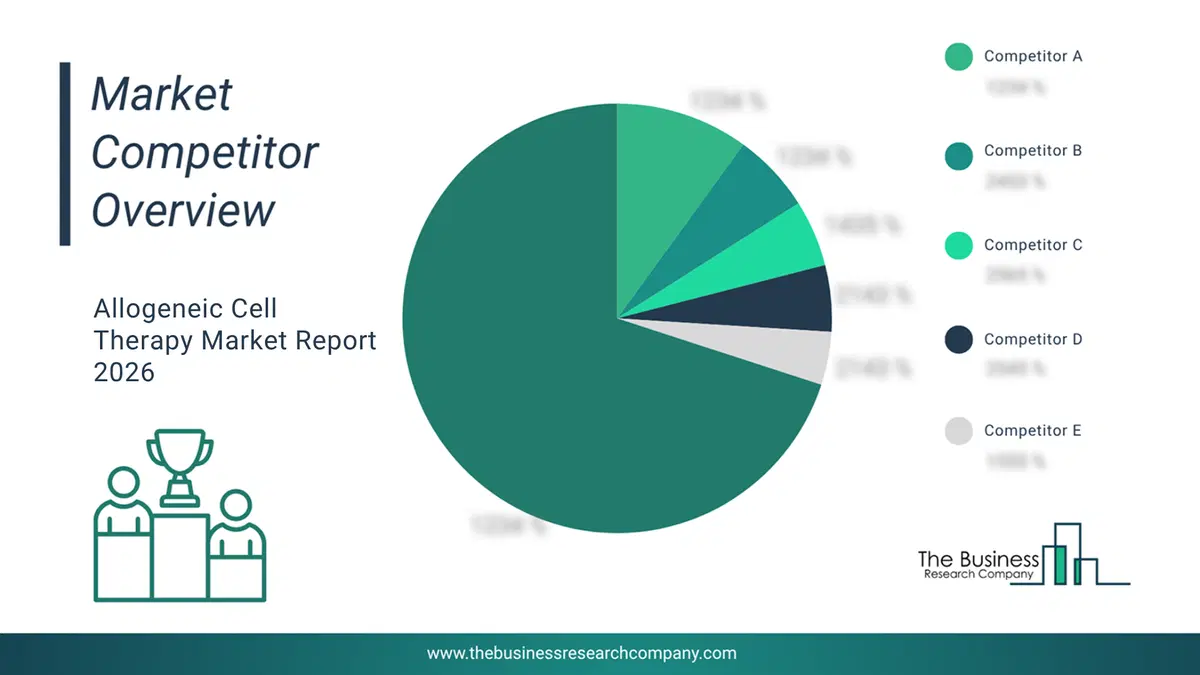
This chart is for illustrative purposes; the full report includes a detailed competitor analysis and comprehensive overview of the top 10 companies in the market.
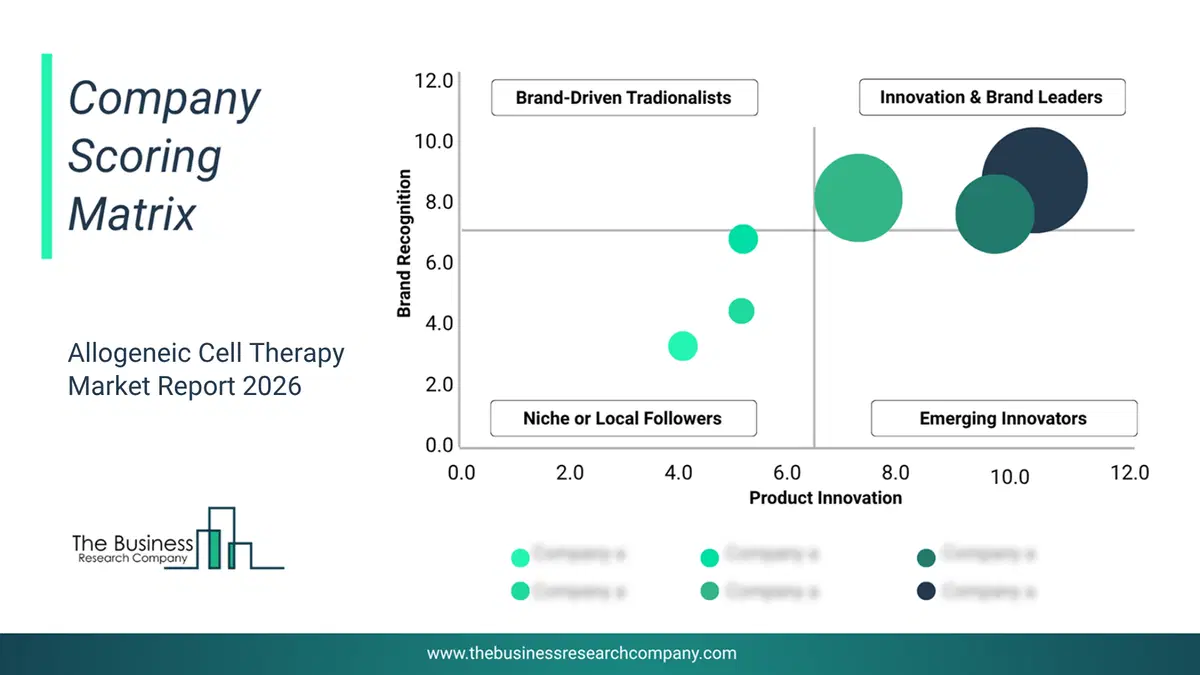
This chart maps companies by product innovation and brand strength, with bubble size indicating relative revenue, helping identify market leaders, challengers, and niche players. This is an illustrative chart; the full report provides a complete and accurate competitive analysis.
Global Allogeneic Cell Therapy Market Trends and Insights
Major companies operating in the allogeneic cell therapy market are focusing on developing innovative solutions, such as cell processing platforms, to strengthen their position in the market. Cell processing platforms are systems and technologies used to prepare and manipulate cells for therapeutic applications, encompassing isolation, purification, expansion, modification, and quality control to ensure cells are suitable for clinical use. For instance, in March 2024, Getinge, a Sweden-based healthcare company, partnered with CellRev, a UK-based biotechnology company, to launch Livit ACE, a platform for continuous cell processing (Adherent Cell Expansion). This innovative platform integrates advanced automation and bioprocessing technologies, significantly enhancing the efficiency and scalability of cell production. Its unique features include state-of-the-art cell isolation and purification systems that ensure high cell purity and viability, robust expansion capabilities to produce large quantities of therapeutic cells, sophisticated genetic modification tools for precise cell engineering, and rigorous quality control measures to guarantee the safety and efficacy of the cell products.What Are Latest Mergers And Acquisitions In The Allogeneic Cell Therapy Market?
In February 2024, AstraZeneca, a UK-based pharmaceutical company focused on oncology and rare diseases, acquired Gracell Biotechnologies for an undisclosed amount. With this acquisition, AstraZeneca aims to strengthen its position in oncology and rare diseases by integrating Gracell Biotechnologies' advanced cell therapy capabilities, potentially accelerating the development of innovative treatments for challenging cancers and other serious conditions. Gracell Biotechnologies is a China-based company that offers allogeneic cell therapy.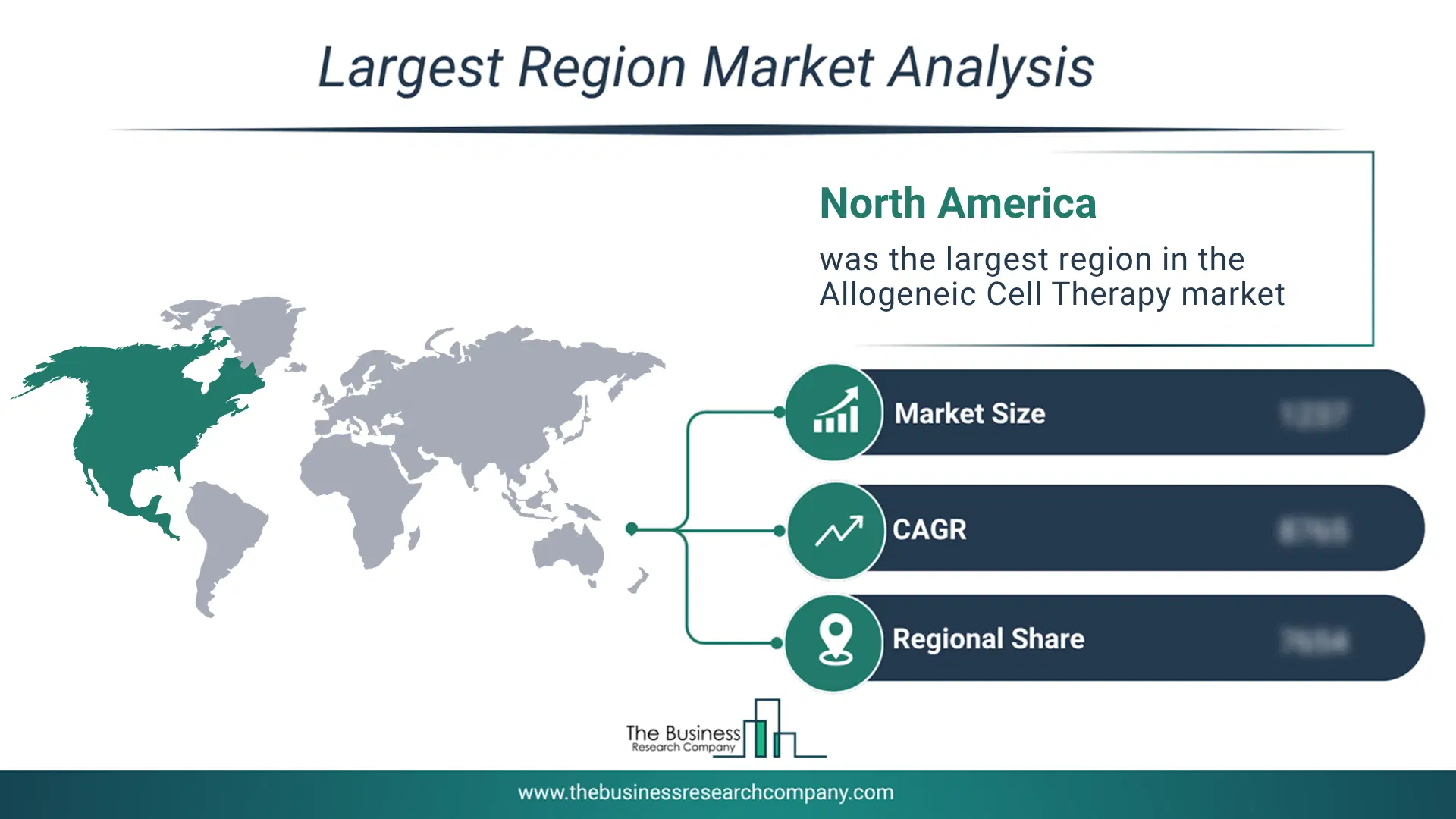
Regional Outlook
North America was the largest region in the allogeneic cell therapy market in 2025. Asia-Pacific is expected to be the fastest-growing region in the forecast period. The regions covered in this market report are Asia-Pacific, South East Asia, Western Europe, Eastern Europe, North America, South America, Middle East, Africa. The countries covered in this market report are Australia, Brazil, China, France, Germany, India, Indonesia, Japan, Taiwan, Russia, South Korea, UK, USA, Canada, Italy, Spain.What Defines the Allogeneic Cell Therapy Market?
The allogeneic cell therapy market includes revenues earned by entities through induced pluripotent stem cell therapy, hematopoietic stem cell transplantation, mesenchymal stem cell (MSC) therapy, induced pluripotent stem cell (IPSC) therapy and chimeric antigen receptor T cell therapy. The market value includes the value of related goods sold by the service provider or included within the service offering. Only goods and services traded between entities or sold to end consumers are included.How is Market Value Defined and Measured?
The market value is defined as the revenues that enterprises gain from the sale of goods and/or services within the specified market and geography through sales, grants, or donations in terms of the currency (in USD unless otherwise specified). The revenues for a specified geography are consumption values that are revenues generated by organizations in the specified geography within the market, irrespective of where they are produced. It does not include revenues from resales along the supply chain, either further along the supply chain or as part of other products.
This chart presents market attractiveness based on a quantitative evaluation of growth, competition, strategic alignment, and risk, offering a clear view of opportunity areas for decision-making. This chart is for illustrative purposes; the full report contains the complete analysis.

This chart highlights the Total Addressable Market (TAM) by estimating the maximum revenue opportunity using an assumption-driven approach, supporting strategic planning and opportunity sizing across markets. The chart is illustrative; the full report provides a more comprehensive analysis.
What Key Data and Analysis Are Included in the Allogeneic Cell Therapy Market Report 2026?
The allogeneic cell therapy market research report is one of a series of new reports from The Business Research Company that provides market statistics, including industry global market size, regional shares, competitors with the market share, detailed market segments, market trends and opportunities, and any further data you may need to thrive in the allogeneic cell therapy industry. The market research report delivers a complete perspective of everything you need, with an in-depth analysis of the current and future state of the industry.Allogeneic Cell Therapy Market Report Forecast Analysis
| Report Attribute | Details |
|---|---|
| Market Size Value In 2026 | $1.34 billion |
| Revenue Forecast In 2030 | $1.97 billion |
| Growth Rate | CAGR of 10.2% from 2026 to 2030 |
| Base Year For Estimation | 2025 |
| Actual Estimates/Historical Data | 2020-2025 |
| Forecast Period | 2026 - 2030 |
| Market Representation | Revenue in USD Billion and CAGR from 2026 to 2030 |
| Segments Covered | Type, Therapeutic Area, End User |
| Regional Scope | Asia-Pacific, Western Europe, Eastern Europe, North America, South America, Middle East, Africa |
| Country Scope | The countries covered in the report are Australia, Brazil, China, France, Germany, India, Indonesia, Japan, Taiwan, Russia, South Korea, UK, USA, Canada, Italy, Spain |
| Key Companies Profiled | Novartis AG, Bristol Myers Squibb Company, Takeda Pharmaceutical Company Limited, Bluebird Bio Inc., Poseida Therapeutics Inc., Fate Therapeutics Inc., Fortress Biotech Inc., Sorrento Therapeutics Inc., Eureka Therapeutics Inc., Juno Therapeutics Inc., Adaptimmune Therapeutics plc, Cellectis SA, Ziopharm Oncology Inc., Allogene Therapeutics Inc., Century Therapeutics Inc., Autolus Therapeutics plc, Bellicum Pharmaceuticals Inc., Celyad SA, TILT Biotherapeutics Ltd., CRISPR Therapeutics AG |
| Customization Scope | Request for Customization |
| Pricing And Purchase Options | Explore Purchase Options |