
Aluminum Market Report 2026
Global Outlook – By Product Type (Primary Aluminum, Secondary Aluminum), By Processing Method (Flat rolled, Castings, Extrusions, Forgings, Pigments and Powder, Rod and Bar), By End-user (Construction, Transportation, Packaging, Electrical, Consumer durables, Machinery and Equipment, Other End-users) – Market Size, Trends, Strategies, and Forecast to 2030
Aluminum Market Overview
• Aluminum market size has reached to $189.59 billion in 2025 • Expected to grow to $259.05 billion in 2030 at a compound annual growth rate (CAGR) of 6.5% • Growth Driver: Automotive Industry's Surge Fueling Aluminum Market Growth • Market Trend: Alloy Enterprises Inc. Introduces Cutting-Edge Aluminum Cold Plate Components For Enhanced Thermal Management In Electronic Devices • Asia-Pacific was the largest region and fastest growing region.Market Gains By 2030 – Top Opportunities By Segment
Market Gain identifies the most promising market opportunities by highlighting the segments or products expected to generate the highest incremental revenue growth over the next five years.
What Is Covered Under Aluminum Market?
Aluminum refers to the most abundant metal element and belongs to the lightweight silvery white metal obtaining its name from the alumina mineral. It is used for manufacturing a wide range of industrial and everyday products due to its lightweight nature, high strength-to-weight ratio, excellent conductivity, and resistance to corrosion. The main product types of aluminum are primary and secondary aluminum. Primary aluminum refers to aluminum obtained during the electrolytic reduction of metallurgical alumina. The processing methods include flat-rolled, castings, extrusions, forgings, pigments and powder, rod and bar, which are used by end-users such as construction, transportation, packaging, electrical, consumer durables, machinery and equipment and others.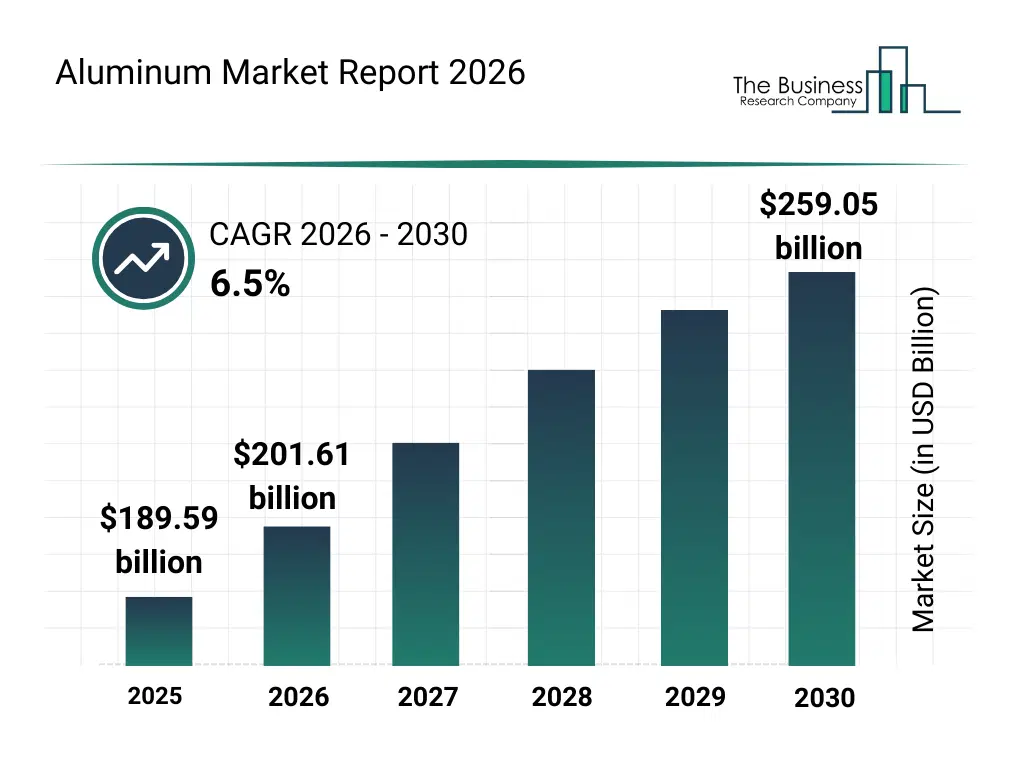
What Is The Aluminum Market Size and Share 2026?
The aluminum market size has grown strongly in recent years. It will grow from $189.59 billion in 2025 to $201.61 billion in 2026 at a compound annual growth rate (CAGR) of 6.3%. The growth in the historic period can be attributed to growth in construction and infrastructure development, rising automotive and transportation manufacturing, increased demand for packaging materials, expansion of electrical transmission and distribution networks, availability of bauxite and aluminum smelting capacity.What Is The Aluminum Market Growth Forecast?
The aluminum market size is expected to see strong growth in the next few years. It will grow to $259.05 billion in 2030 at a compound annual growth rate (CAGR) of 6.5%. The growth in the forecast period can be attributed to rising adoption of electric vehicles, increasing emphasis on aluminum recycling and circular economy, growth in renewable energy and power infrastructure, expanding use of lightweight materials in aviation and rail, technological advancements in aluminum processing. Major trends in the forecast period include increasing adoption of lightweight aluminum in transportation, growing demand for recycled and secondary aluminum, rising use of aluminum in sustainable packaging solutions, expansion of aluminum applications in construction and infrastructure, increasing focus on high-strength and corrosion-resistant aluminum alloys.
Global Aluminum Market Segmentation
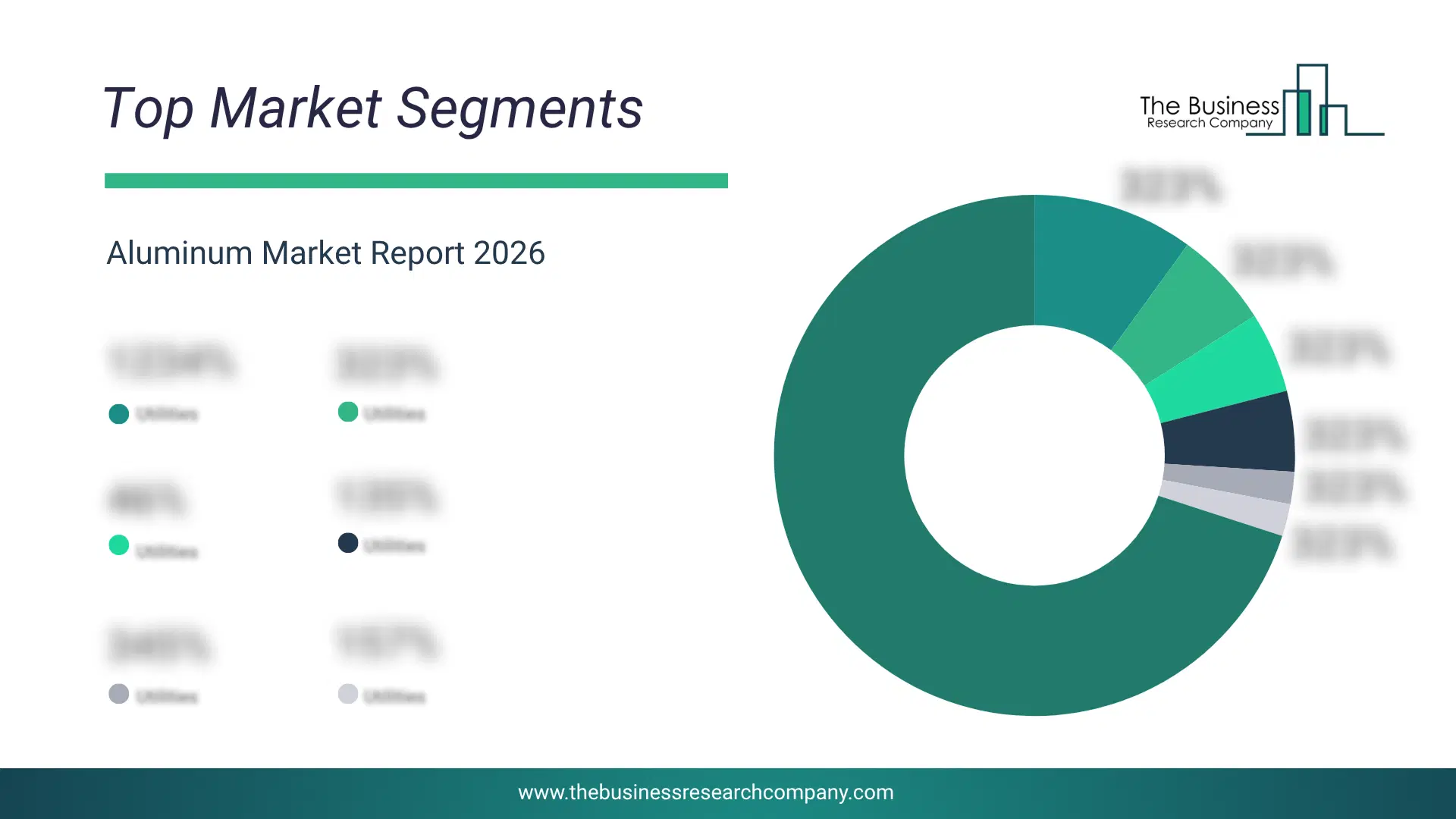
1) By Product Type: Primary Aluminum, Secondary Aluminum 2) By Processing Method: Flat rolled, Castings, Extrusions, Forgings, Pigments and Powder, Rod and Bar 3) By End-user: Construction, Transportation, Packaging, Electrical, Consumer durables, Machinery and Equipment, Other End-users Subsegments: 1) By Primary Aluminum: Primary Aluminum Ingots, Primary Aluminum Billets, Primary Aluminum Sheets and Plates, Primary Aluminum Extrusions 2) By Secondary Aluminum: Recycled Aluminum Ingots, Aluminum Alloys from Scrap, Secondary Aluminum Sheets and Plates, Secondary Aluminum Extrusions The top segments in the aluminum market will be: • Primary Aluminum will reach $154.57 Billion by 2030. • Secondary Aluminum will reach $102.34 Billion by 2030.What Is The Driver Of The Aluminum Market?
Rising demand from the automotive industry is expected to propel the growth of the aluminum market going forward. The automotive industry refers to several businesses and organizations engaged in the creation, production, marketing, and sale of automobiles. The growing automotive industry uses high amounts of aluminum to provide durability and aesthetic appeal. For instance, in March 2025, according to the European Automobile Manufacturers Association, a Belgium-based trade association, in 2024, global car sales reached 74.6 million units, marking a 2.5% increase compared to 2023, EU’s car market grew by 0.8% in 2024, with total sales reaching 10.6 million units. Therefore, rapid growth in the automotive industry is driving the growth of the aluminum industry.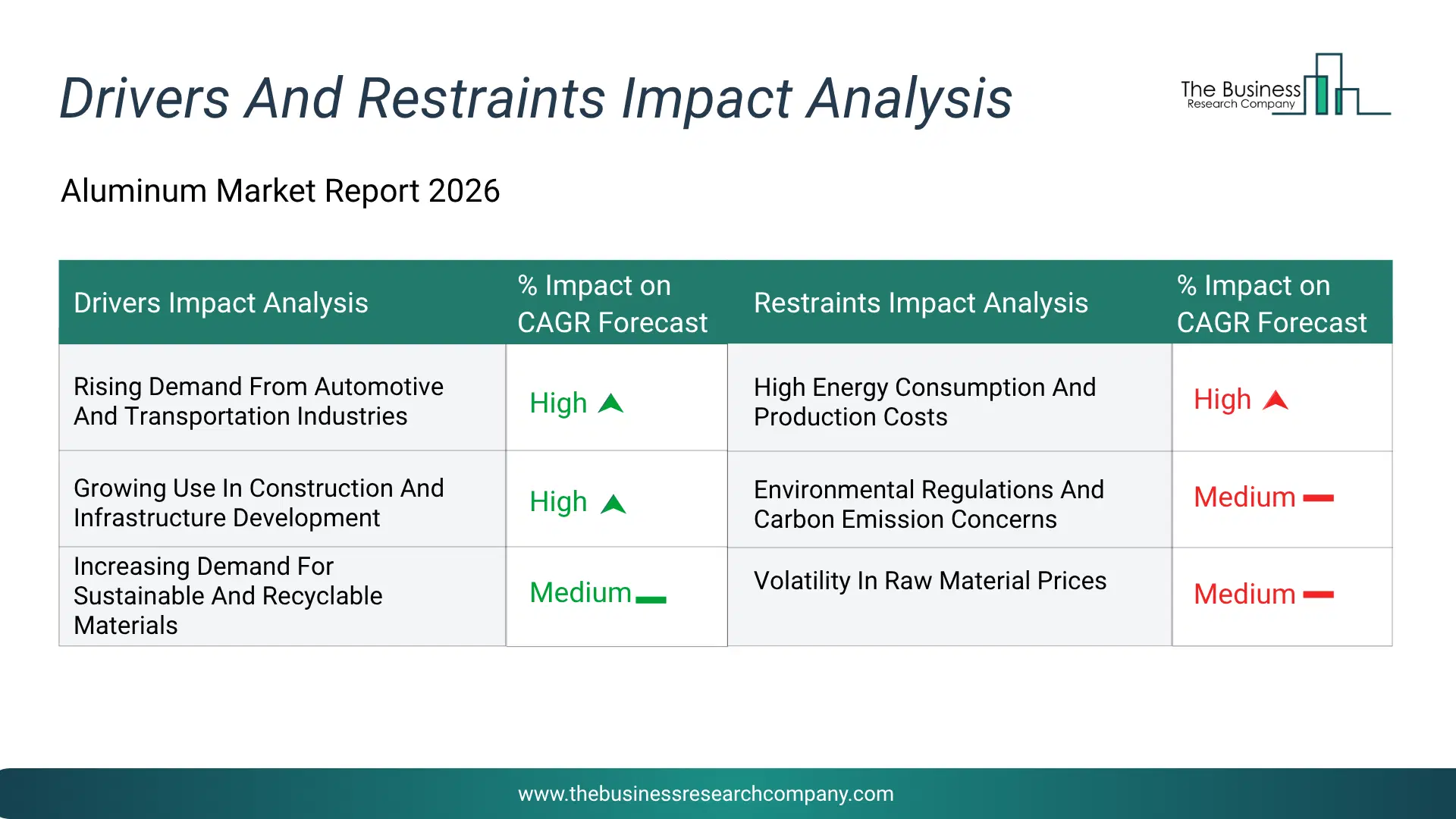
Infographic Chart Showing Key Market Drivers Analysis And Restraints For Aluminum Market
The chart presents an impact analysis of key drivers and restraints, quantifying their relative influence on the market's growth rate and helping assess the balance between growth enablers and limiting factors. This chart offers a high-level perspective; the full report contains more detailed insights.
How Will The Drivers Impact Growth In The Global Aluminum Market?
• Rising Demand From Automotive And Transportation Industries (High) – During the forecast period, the rising demand from automotive and transportation industries is expected to become a key growth driver for the aluminum market by 2030. Rising demand from automotive and transportation industries acts as a major driver for the aluminum market because manufacturers increasingly use lightweight materials to improve fuel efficiency and reduce emissions without compromising strength and safety. Aluminum’s high strength-to-weight ratio makes it ideal for vehicle components such as body panels, engines, and wheels. Growing production of electric vehicles further accelerates its adoption, as lightweight structures enhance battery performance and driving range. This expanding application base increases consumption across global markets and supports steady revenue generation. • Growing Use In Construction And Infrastructure Development (High) – During the forecast period, the growing use in construction and infrastructure development is expected to emerge as a major factor driving the expansion of the aluminum market by 2030. Growing use in construction and infrastructure development acts as a major driver for the aluminum market because the metal is widely utilized in building structures, roofing, cladding, windows, and doors due to its durability and corrosion resistance. Rapid urbanization and industrialization, especially in emerging economies, are increasing investments in residential and commercial construction projects. Aluminum’s recyclability and low maintenance requirements make it a preferred material for sustainable building solutions. This drives consistent demand from the construction sector, which represents a significant share of market consumption. • Increasing Demand For Sustainable And Recyclable Materials (Medium) – During the forecast period, the increasing demand for sustainable and recyclable materials is expected to act as a key growth catalyst for the aluminum market by 2030. Increasing demand for sustainable and recyclable materials acts as a major driver for the aluminum market because aluminum can be recycled multiple times without losing its properties, making it highly attractive in a circular economy. Industries are shifting toward eco-friendly materials to meet regulatory requirements and sustainability goals. The use of recycled aluminum significantly reduces energy consumption and production costs compared to primary aluminum production. This environmental and economic advantage encourages its adoption across packaging, automotive, and construction sectors. As sustainability trends strengthen globally, the demand for aluminum continues to rise, supporting long-term market growth.How Will The Restraints Impact Growth In The Global Aluminum Market?
• High Energy Consumption And Production Costs (High) – During the forecast period, the high energy consumption and production costs act as a significant restraint for the aluminum market by increasing the overall cost of manufacturing primary aluminum. The smelting process, particularly electrolysis, requires substantial electricity, making producers highly sensitive to energy price fluctuations. Rising power tariffs and fuel costs reduce profit margins and can lead to production curtailments in energy-intensive regions. This cost pressure limits the ability of manufacturers to offer competitive pricing in global markets. As a result, expansion of production capacity and investment in new facilities are often constrained. • Environmental Regulations And Carbon Emission Concerns (High) – During the forecast period, the environmental regulations and carbon emission concerns restrain the aluminum market by imposing strict compliance requirements on production processes. Aluminum manufacturing generates greenhouse gas emissions, prompting governments to enforce emission limits, carbon taxes, and sustainability standards. Meeting these regulations requires significant investment in cleaner technologies and recycling infrastructure, raising operational costs. Non-compliance risks penalties and operational shutdowns, further discouraging expansion. Consequently, regulatory pressure slows down production growth and affects the profitability of aluminum producers. • Volatility In Raw Material Prices (Medium) – During the forecast period, the volatility in raw material prices acts as a major restraint for the aluminum market by creating uncertainty in production costs and pricing strategies. Key inputs such as bauxite and alumina are subject to supply disruptions, geopolitical factors, and changing demand patterns. Fluctuating input costs make it difficult for manufacturers to maintain stable margins and long-term contracts. This unpredictability can discourage investments and hinder efficient supply chain planning. As a result, market stability and consistent revenue generation are negatively impacted.Key Players In The Global Aluminum Market
Major companies operating in the aluminum market report are BHP Group Limited, Hulamin Limited, Rio Tinto plc, Hindalco Industries Limited, Norsk Hydro ASA, Aluminum Corporation of China Limited, China Hongqiao Group Limited, Vedanta Resources Limited, Novelis Inc., Reliance Steel & Aluminum Co., Alcoa Corporation, United Company RUSAL Plc, Arconic Inc., Constellium SE, Emirates Global Aluminium PJSC, Vimetco N.V., Kaiser Aluminum Corporation, Century Aluminum Company, Aluminium Bahrain B.S.C., Alumetal S.A., Hydro Extrusion USA LLC, Gulf Aluminium Rolling Mill B.S.C., Assan Aluminyum Sanayi ve Ticaret A.S., East Hope Group Company Limited, Dubai Aluminium Company Limited, Shandong Xinfa Aluminum Co. Ltd., China Zhongwang Holdings Limited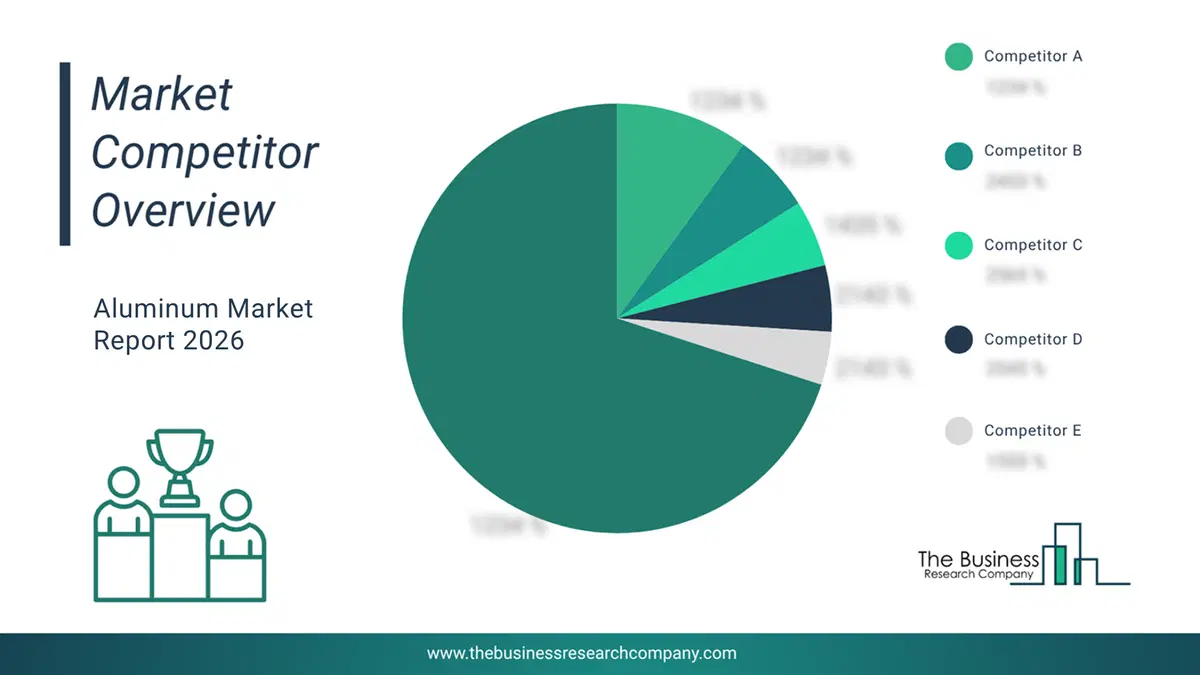
This chart is for illustrative purposes; the full report includes a detailed competitor analysis and comprehensive overview of the top 10 companies in the market.
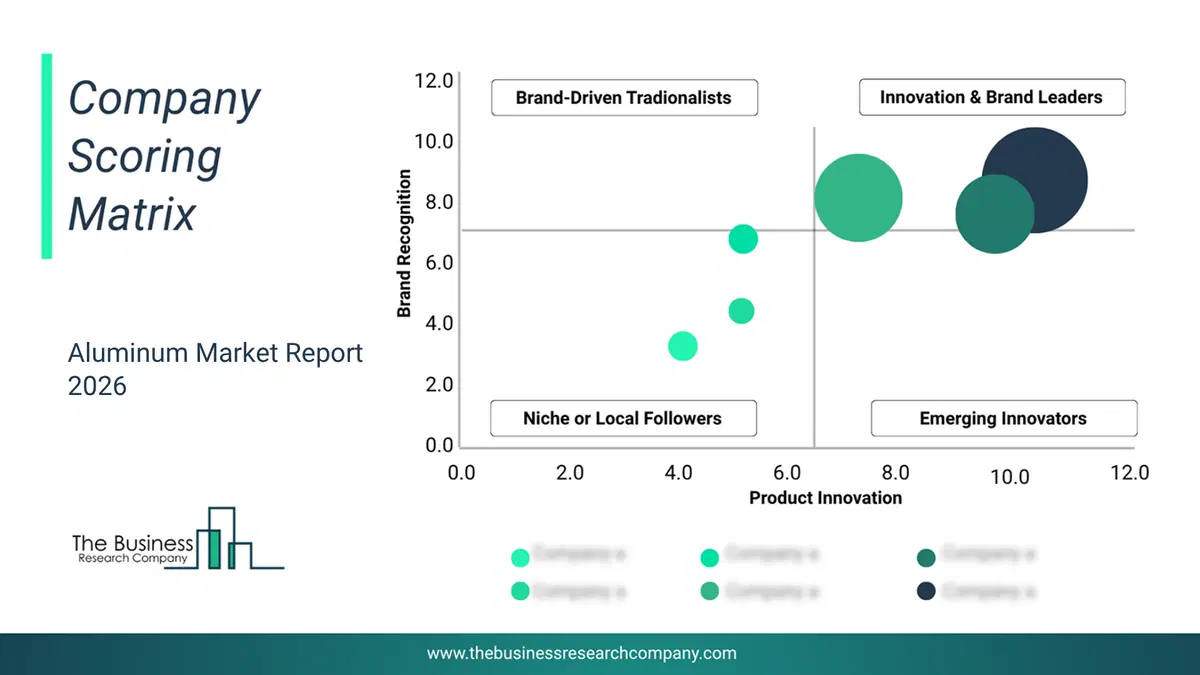
This chart maps companies by product innovation and brand strength, with bubble size indicating relative revenue, helping identify market leaders, challengers, and niche players. This is an illustrative chart; the full report provides a complete and accurate competitive analysis.
Global Aluminum Market Trends and Insights
Major companies operating in the aluminum market are developing new products such as liquid cooling plates to gain a competitive edge in the market. Liquid cooling plates are components used in thermal management systems to dissipate heat generated by electronic or power devices. For instance, in October 2023, Alloy Enterprises Inc. a US-based aluminum manufacturing company launched aluminum cold plate components. These have been created to possess exceptional material qualities, including a high strength-to-weight ratio, excellent thermal conductivity, channel complexity, integrated cooling, and conformal surfaces. These parts are made to be more durable, to operate better, and not require any further assembly or porosity or de-powdering. They are made of highly thermally conductive materials, such copper or aluminum, and provide as a path for a coolant (liquid or gas) to pass through, efficiently controlling the heat in different parts of the system.What Are Latest Mergers And Acquisitions In The Aluminum Market?
In June 2024, Mengtai Group, a China-based aluminum production conglomerate, acquired Alu Menziken for an undisclosed amount. This acquisition is part of Mengtai Group's strategic initiative to enhance its capabilities, drive innovation, and expand its market presence in the European aluminum sector. Alu Menziken is a Switzerland-based steel manufacturing company, specializes in manufacturing lightweight aluminum components.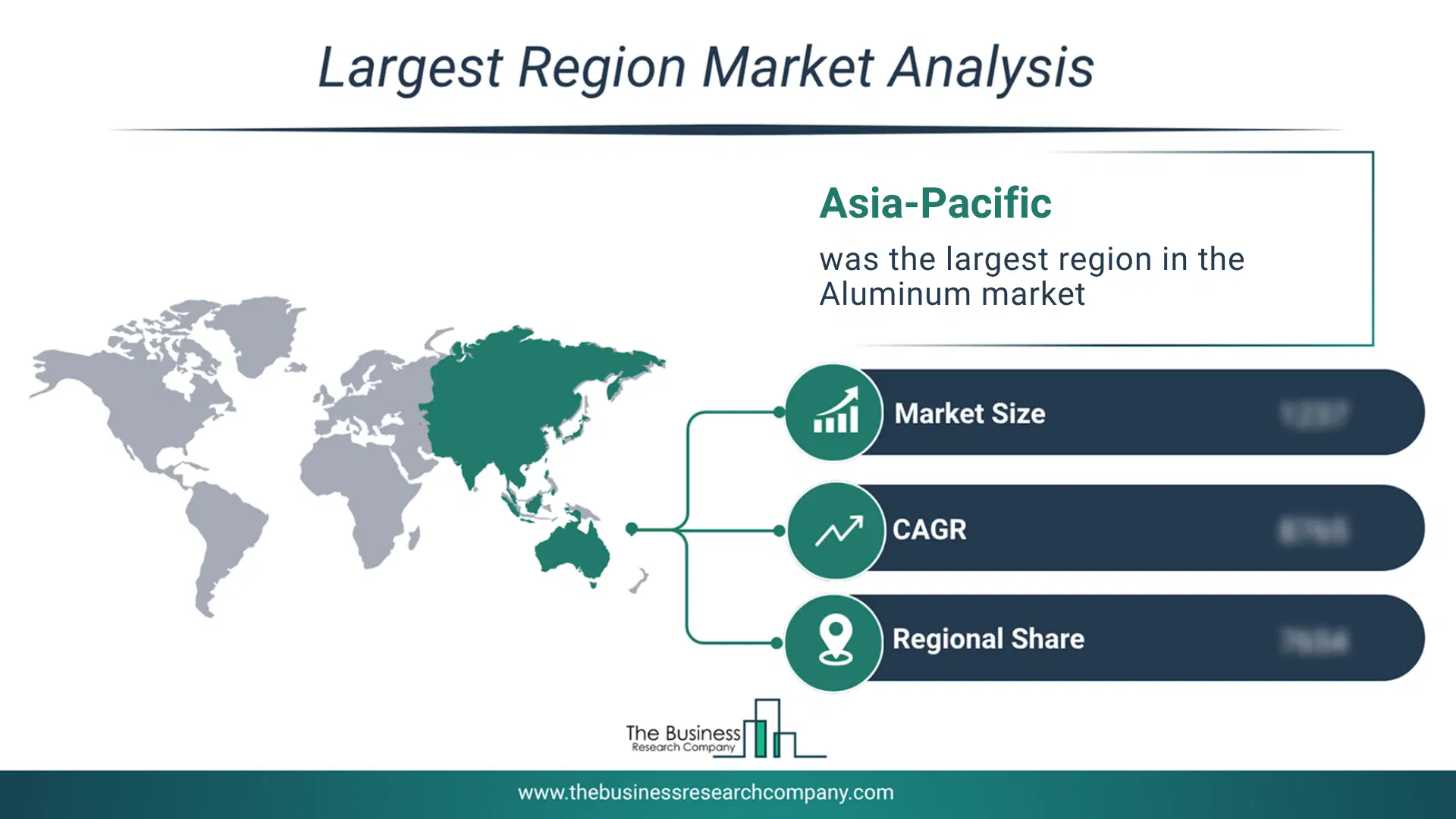
Regional Outlook
Asia-Pacific was the largest region in the aluminum market in 2025 and is expected to be the fastest-growing region in the forecast period. The regions covered in the aluminum market are Asia-Pacific, South East Asia, Western Europe, Eastern Europe, North America, South America, Middle East, Africa. The countries covered in the aluminum market are Australia, Brazil, China, France, Germany, India, Indonesia, Japan, Taiwan, Russia, South Korea, UK, USA, Canada, Italy, Spain.What Defines the Aluminum Market?
The aluminum market consists of sales of flat products, extruded products, forged products, long products, cast products, and others. Values in this market are ‘factory gate’ values, that is the value of goods sold by the manufacturers or creators of the goods, whether to other entities (including downstream manufacturers, wholesalers, distributors, and retailers) or directly to end customers. The value of goods in this market includes related services sold by the creators of the goods.How is Market Value Defined and Measured?
The market value is defined as the revenues that enterprises gain from the sale of goods and/or services within the specified market and geography through sales, grants, or donations in terms of the currency (in USD unless otherwise specified). The revenues for a specified geography are consumption values that are revenues generated by organizations in the specified geography within the market, irrespective of where they are produced. It does not include revenues from resales along the supply chain, either further along the supply chain or as part of other products.
This chart presents market attractiveness based on a quantitative evaluation of growth, competition, strategic alignment, and risk, offering a clear view of opportunity areas for decision-making. This chart is for illustrative purposes; the full report contains the complete analysis.

This chart highlights the Total Addressable Market (TAM) by estimating the maximum revenue opportunity using an assumption-driven approach, supporting strategic planning and opportunity sizing across markets. The chart is illustrative; the full report provides a more comprehensive analysis.
What Key Data and Analysis Are Included in the Aluminum Market Report 2026?
The aluminum market research report is one of a series of new reports from The Business Research Company that provides market statistics, including Market Report 2026?global market size, regional shares, competitors with the market share, detailed market segments, market trends and opportunities, and any further data you may need to thrive in the aluminum Market Report 2026? The market research report delivers a complete perspective of everything you need, with an in-depth analysis of the current and future state of the Market Report 2026?Aluminum Market Report Forecast Analysis
| Report Attribute | Details |
|---|---|
| Market Size Value In 2026 | $201.61 billion |
| Revenue Forecast In 2030 | $259.05 billion |
| Growth Rate | CAGR of 6.3% from 2026 to 2030 |
| Base Year For Estimation | 2025 |
| Actual Estimates/Historical Data | 2020-2025 |
| Forecast Period | 2026 - 2030 |
| Market Representation | Revenue in USD Billion and CAGR from 2026 to 2030 |
| Segments Covered | Product Type, Processing Method, End-user |
| Regional Scope | Asia-Pacific, Western Europe, Eastern Europe, North America, South America, Middle East, Africa |
| Country Scope | The countries covered in the report are Australia, Brazil, China, France, Germany, India, Indonesia, Japan, Taiwan, Russia, South Korea, UK, USA, Canada, Italy, Spain. |
| Key Companies Profiled | BHP Group Limited, Hulamin Limited, Rio Tinto plc, Hindalco Industries Limited, Norsk Hydro ASA, Aluminum Corporation of China Limited, China Hongqiao Group Limited, Vedanta Resources Limited, Novelis Inc., Reliance Steel & Aluminum Co., Alcoa Corporation, United Company RUSAL Plc, Arconic Inc., Constellium SE, Emirates Global Aluminium PJSC, Vimetco N.V., Kaiser Aluminum Corporation, Century Aluminum Company, Aluminium Bahrain B.S.C., Alumetal S.A., Hydro Extrusion USA LLC, Gulf Aluminium Rolling Mill B.S.C., Assan Aluminyum Sanayi ve Ticaret A.S., East Hope Group Company Limited, Dubai Aluminium Company Limited, Shandong Xinfa Aluminum Co. Ltd., China Zhongwang Holdings Limited |
| Customization Scope | Request for Customization |
| Pricing And Purchase Options | Explore Purchase Options |