
Ammoniacal Nitrogen Market Report 2026
Global Outlook – By Product Type (Laboratory Analyzers, Online Ammoniacal Nitrogen Analyzers, Portable Ammoniacal Nitrogen Analyzers, Ammoniacal Nitrogen Sensors, Testing Kits And Reagents), By Technology (Electrochemical Analysis, Spectrophotometric Analysis, Colorimetric Analysis, Ion-Selective Electrode Analysis, Other Analytical Technologies), By Testing Location (Laboratory-Based Testing, On-Site Testing, Continuous In-Line Monitoring), By End User (Municipal Water And Wastewater Utilities, Industrial Wastewater Treatment Facilities, Environmental Testing Laboratories, Environmental Monitoring Agencies, Research And Academic Institutions, Other End Users) – Market Size, Trends, Strategies, and Forecast to 2035
Ammoniacal Nitrogen Market Overview
• Ammoniacal Nitrogen market size has reached to $16.79 billion in 2025 • Expected to grow to $22.73 billion in 2030 at a compound annual growth rate (CAGR) of 6.2% • Growth Driver: Rising Demand For Nitrogen-based Fertilizers Fueling The Growth Of The Market Due To Increasing Need For Ammonia-based Nitrogen Management And Monitoring • Market Trend: Low-Emission Ammonia Fertilizer Initiatives Accelerate Sustainable Nitrogen Fertilizer Adoption • Asia-Pacific was the largest region and fastest growing region.What Is Covered Under Ammoniacal Nitrogen Market?
Ammoniacal nitrogen refers to the total concentration of nitrogen present in the form of ammonia (NH₃) and ammonium ions (NH₄⁺) in water. It is a key parameter used to assess water quality and nitrogen pollution. Its primary application is environmental monitoring, where it helps evaluate wastewater treatment efficiency, ensure regulatory compliance, monitor industrial effluents, and protect aquatic ecosystems. The main product categories in the ammoniacal nitrogen include laboratory analyzers, online monitoring systems, portable analyzers, ammoniacal nitrogen sensors, testing kits, reagents, and other analytical products. These products are used to measure ammoniacal nitrogen concentrations through electrochemical, spectrophotometric, colorimetric, and other analytical methods. They are distributed through direct sales, distributors and dealers, online procurement, and third-party suppliers. Key end users include municipal water and wastewater utilities, industrial wastewater treatment facilities, environmental testing laboratories, environmental monitoring agencies, research institutions, and other organizations involved in water-quality assessment.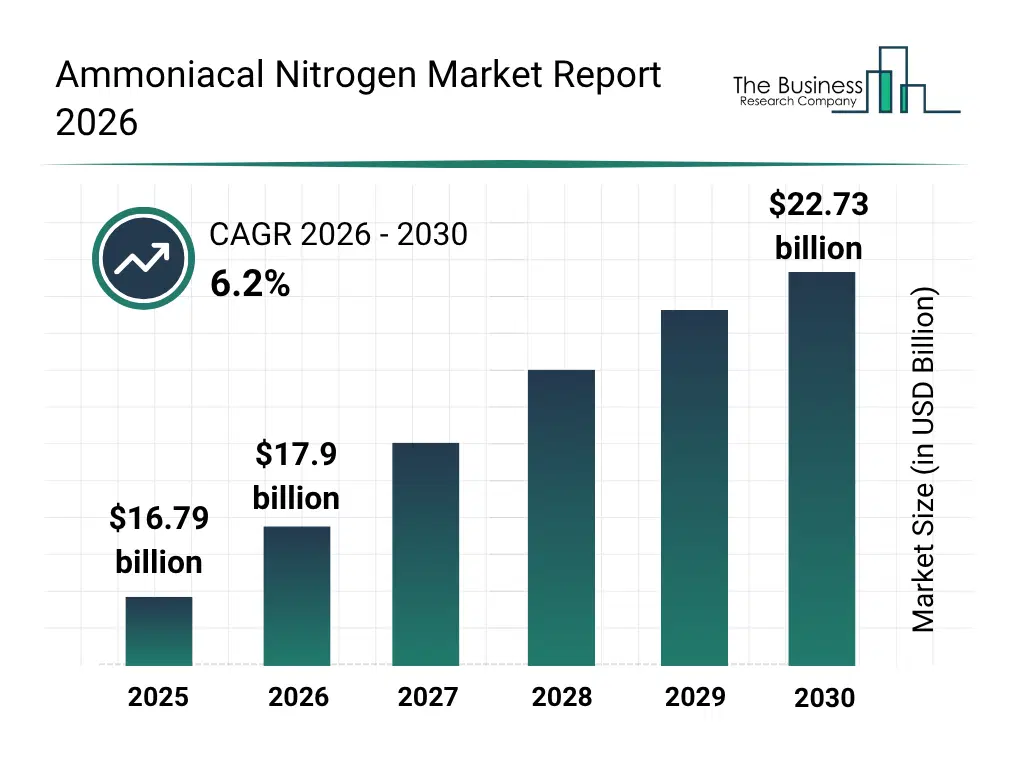
What Is The Ammoniacal Nitrogen Market Size and Share 2026?
The ammoniacal nitrogen market size has grown strongly in recent years. It will grow from $16.79 billion in 2025 to $17.9 billion in 2026 at a compound annual growth rate (CAGR) of 6.6%. The growth in the historic period can be attributed to increasing water quality monitoring requirements, growing wastewater treatment activities, rising nitrogen pollution concerns, increasing regulatory compliance requirements, expansion of industrial wastewater monitoring.What Is The Ammoniacal Nitrogen Market Growth Forecast?
The ammoniacal nitrogen market size is expected to see strong growth in the next few years. It will grow to $22.73 billion in 2030 at a compound annual growth rate (CAGR) of 6.2%. The growth in the forecast period can be attributed to stricter nitrogen discharge regulations, rising adoption of continuous water quality monitoring, increasing investment in wastewater treatment infrastructure, growing demand for rapid environmental testing, expansion of smart water management systems. Major trends in the forecast period include real-time ammoniacal nitrogen monitoring, advanced ammonia detection technologies, automated water quality testing, portable ammoniacal nitrogen analyzers, high-sensitivity nitrogen measurement.Tariff Impact On Ammoniacal Nitrogen Market
Tariffs are impacting the ammoniacal nitrogen market by increasing the cost of imported ammonia-based products, analytical instruments, sensors, laboratory equipment, and water treatment components. Agriculture and fertilizers, municipal water and wastewater utilities, and chemical manufacturing are among the most affected segments, particularly in North America, Europe, and Asia-Pacific where supply chains depend on internationally sourced chemicals and equipment. However, tariffs may encourage domestic production, regional sourcing, and investment in local manufacturing and testing capabilities, strengthening supply-chain resilience over the long term.
Global Ammoniacal Nitrogen Market Segmentation
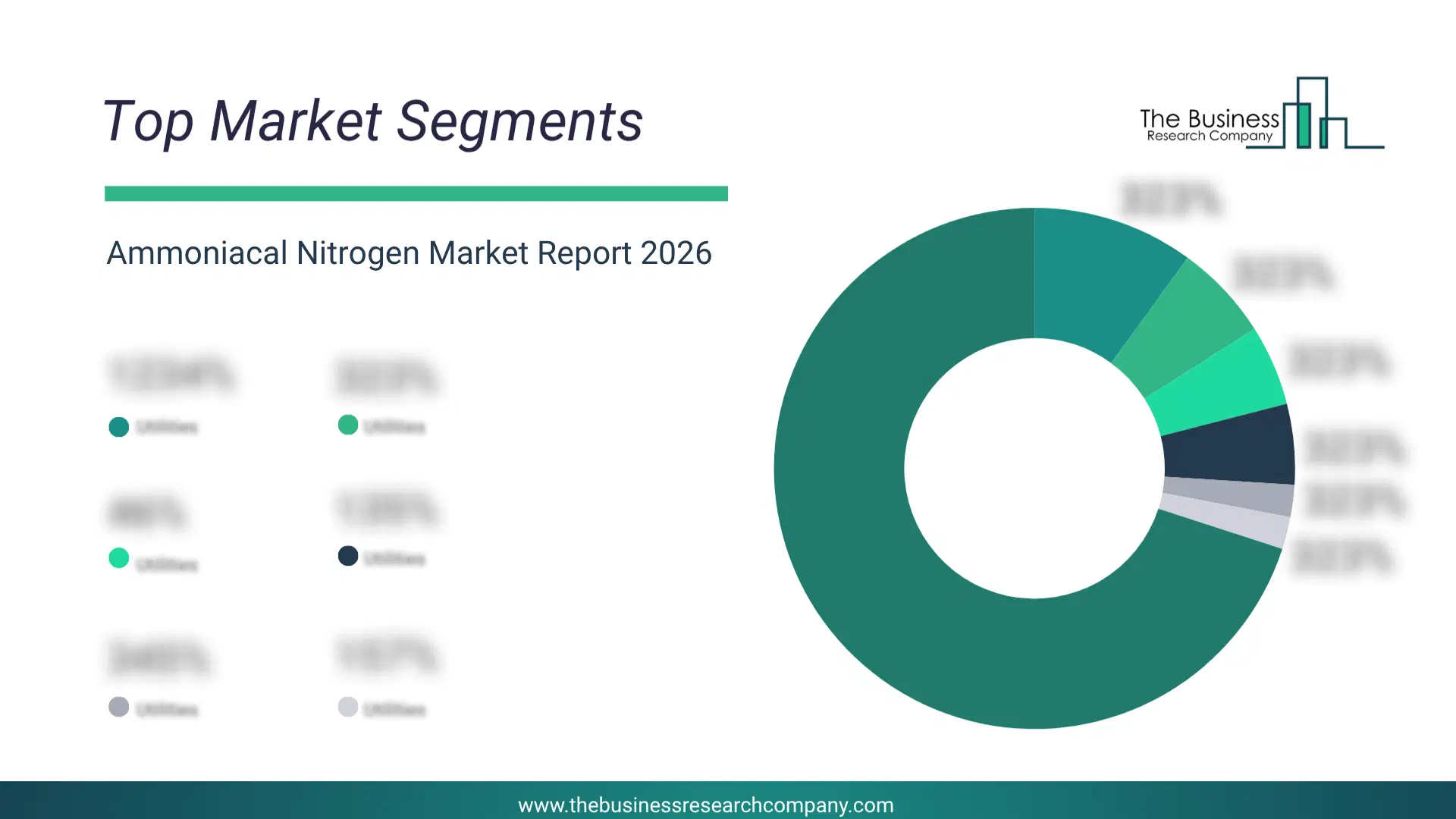
2) By Technology: Electrochemical Analysis, Spectrophotometric Analysis, Colorimetric Analysis, Ion-Selective Electrode Analysis, Other Analytical Technologies 3) By Testing Location: Laboratory-Based Testing, On-Site Testing, Continuous In-Line Monitoring 4) By End User: Municipal Water And Wastewater Utilities, Industrial Wastewater Treatment Facilities, Environmental Testing Laboratories, Environmental Monitoring Agencies, Research And Academic Institutions, Other End Users Subsegments: 1) By Laboratory Analyzers: Benchtop Ammoniacal Nitrogen Analyzers, Automated Laboratory Analyzers, Multi-Parameter Water Quality Analyzers 2) By Online Ammoniacal Nitrogen Analyzers: Continuous Process Analyzers, Automated Wastewater Monitoring Systems, Integrated Water Quality Monitoring Systems 3) By Portable Ammoniacal Nitrogen Analyzers: Handheld Analyzers, Portable Photometric Analyzers, Field-Deployable Water Testing Instruments 4) By Ammoniacal Nitrogen Sensors: Ion-Selective Sensors, Electrochemical Sensors, Integrated Digital Sensors 5) By Testing Kits And Reagents: Colorimetric Testing Reagents, Ammoniacal Nitrogen Test Kits, Calibration And Reference StandardsWhat Is The Driver Of The Ammoniacal Nitrogen Market?
The rising demand for nitrogen-based fertilizers is expected to propel the growth of the ammoniacal nitrogen market going forward. Nitrogen-based fertilizers are agricultural inputs that supply essential nitrogen nutrients, such as ammonia-derived compounds, to improve crop growth, yield, and soil nutrient availability. The demand for nitrogen-based fertilizers is increasing due to the need to enhance agricultural productivity to meet rising global food consumption requirements. Rising demand for nitrogen based fertilizers increases the consumption of ammoniacal nitrogen as it serves as a readily available nitrogen source that supports efficient plant growth and improves crop yields. For instance, in May 2026, according to the International Fertilizer Association (IFA), a France-based fertilizer industry association, global nitrogen fertilizer use is estimated to have increased from 118.3 million tonnes of nitrogen (Mt N) in 2024/25 to 118.9 Mt N in 2025/26. Therefore, the rising demand for nitrogen-based fertilizers is driving the growth of the ammoniacal nitrogen industry.Key Players In The Global Ammoniacal Nitrogen Market
Major companies operating in the ammoniacal nitrogen market are Thermo Fisher Scientific Inc., ABB Ltd, Merck KGaA, Xylem Inc., SGS SA, Eurofins Scientific SE, Bureau Veritas SA, Agilent Technologies Inc., Endress+Hauser Group Services AG, Yokogawa Electric Corporation, Halma plc, HORIBA Ltd., ALS Limited, Metrohm AG, Hanna Instruments Inc., The Tintometer Limited, Process Instruments (UK) Ltd., Shimadzu Corporation, Skalar Analytical B.V.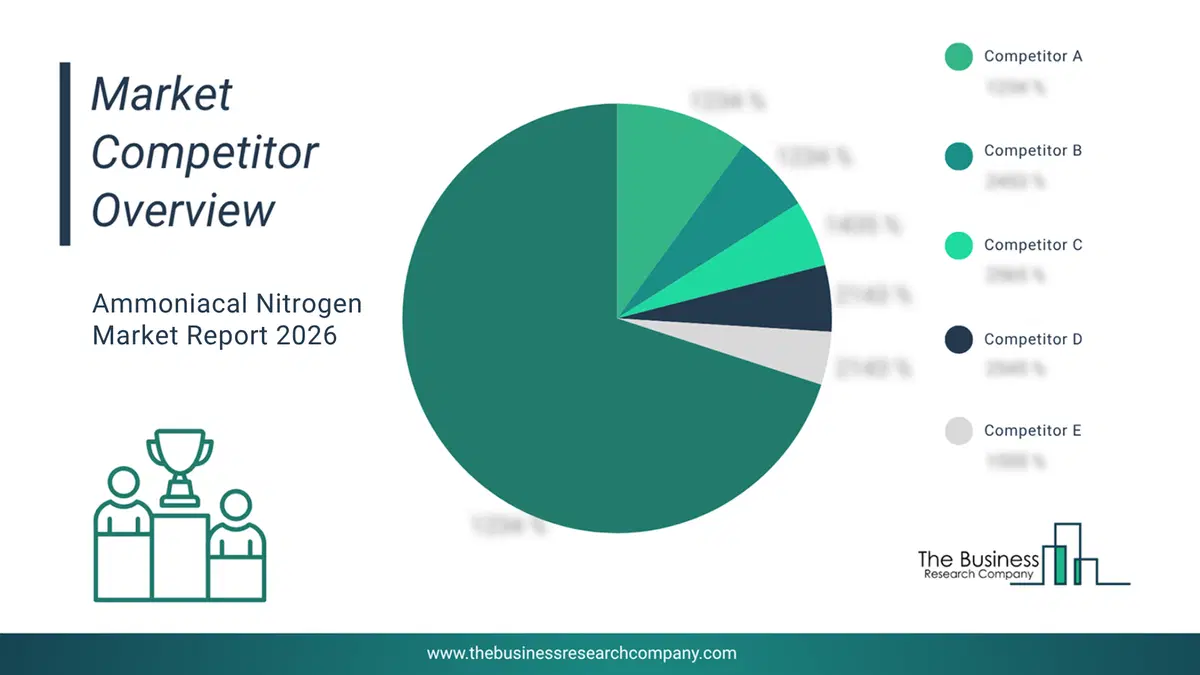
This chart is for illustrative purposes; the full report includes a detailed competitor analysis and comprehensive overview of the top 10 companies in the market.
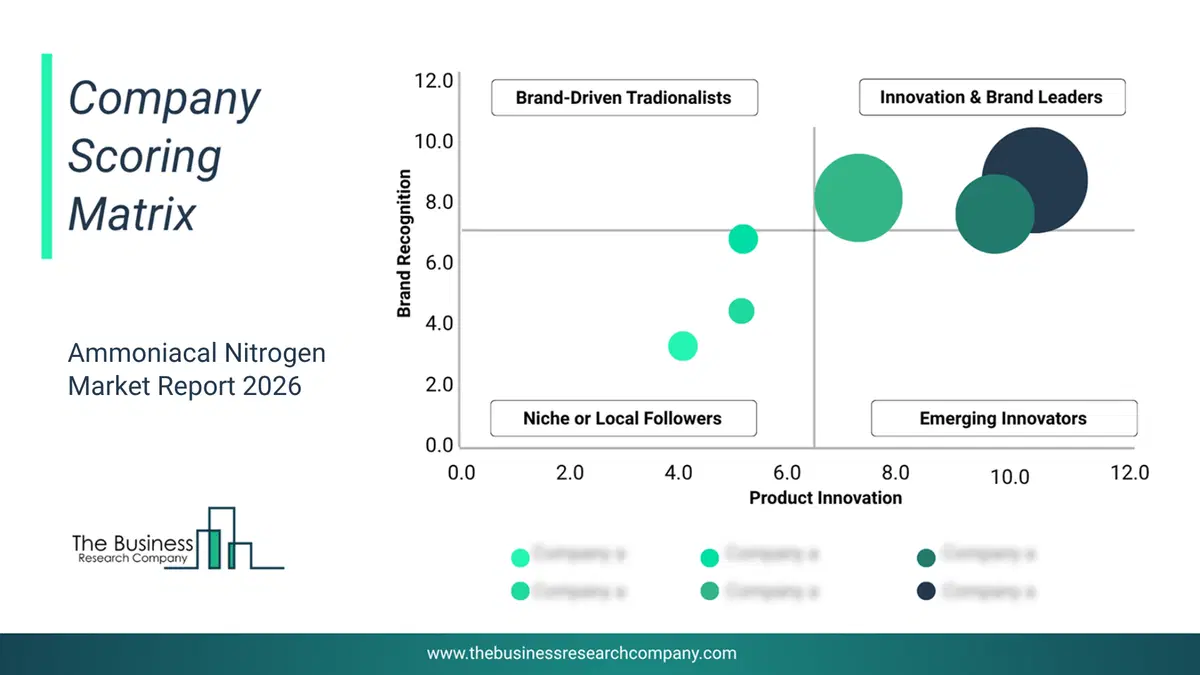
This chart maps companies by product innovation and brand strength, with bubble size indicating relative revenue, helping identify market leaders, challengers, and niche players. This is an illustrative chart; the full report provides a complete and accurate competitive analysis.
Global Ammoniacal Nitrogen Market Trends and Insights
Major companies operating in the ammoniacal nitrogen market are focusing on launching industry initiatives, such as low-emission ammonia fertilizer programs, to accelerate the adoption of sustainable nitrogen fertilizers, reduce greenhouse gas emissions, and strengthen food system resilience. Low-emission ammonia fertilizer programs refer to collaborative initiatives that promote the production, adoption, financing, and market development of ammonia-based nitrogen fertilizers with lower greenhouse gas emissions than conventional ammonia-based fertilizers. For instance, in November 2025, CF Industries Holdings Inc., a US-based manufacturer of nitrogen fertilizers, supported the launch of the Low-Emission Ammonia Fertilizer Initiative at the United Nations Climate Change Conference in Belém, Brazil, to accelerate the large-scale adoption of low-emission ammonia-based fertilizers. The initiative focuses on increasing investment, creating demand, developing standards and market-based mechanisms, and advancing public-private collaboration to support the deployment of low-emission ammonia fertilizers while maintaining essential nitrogen fertilizer supplies for global agriculture.What Are Latest Mergers And Acquisitions In The Ammoniacal Nitrogen Market?
In May 2025, Byosis, a Netherlands-based ammonia recovery technology company and part of Nijhuis Saur Industries, partnered with AquaMinerals to advance nitrogen recovery and valorization from wastewater. The partnership aims to use Byosis’ Byoflex stripping technology to recover nitrogen compounds from wastewater and convert them into products such as ammonium sulfate and ammonia water for reuse as sustainable fertilizers. AquaMinerals is a Netherlands-based organization specializing in the recovery, reuse, and valorization of resources derived from the water treatment sector.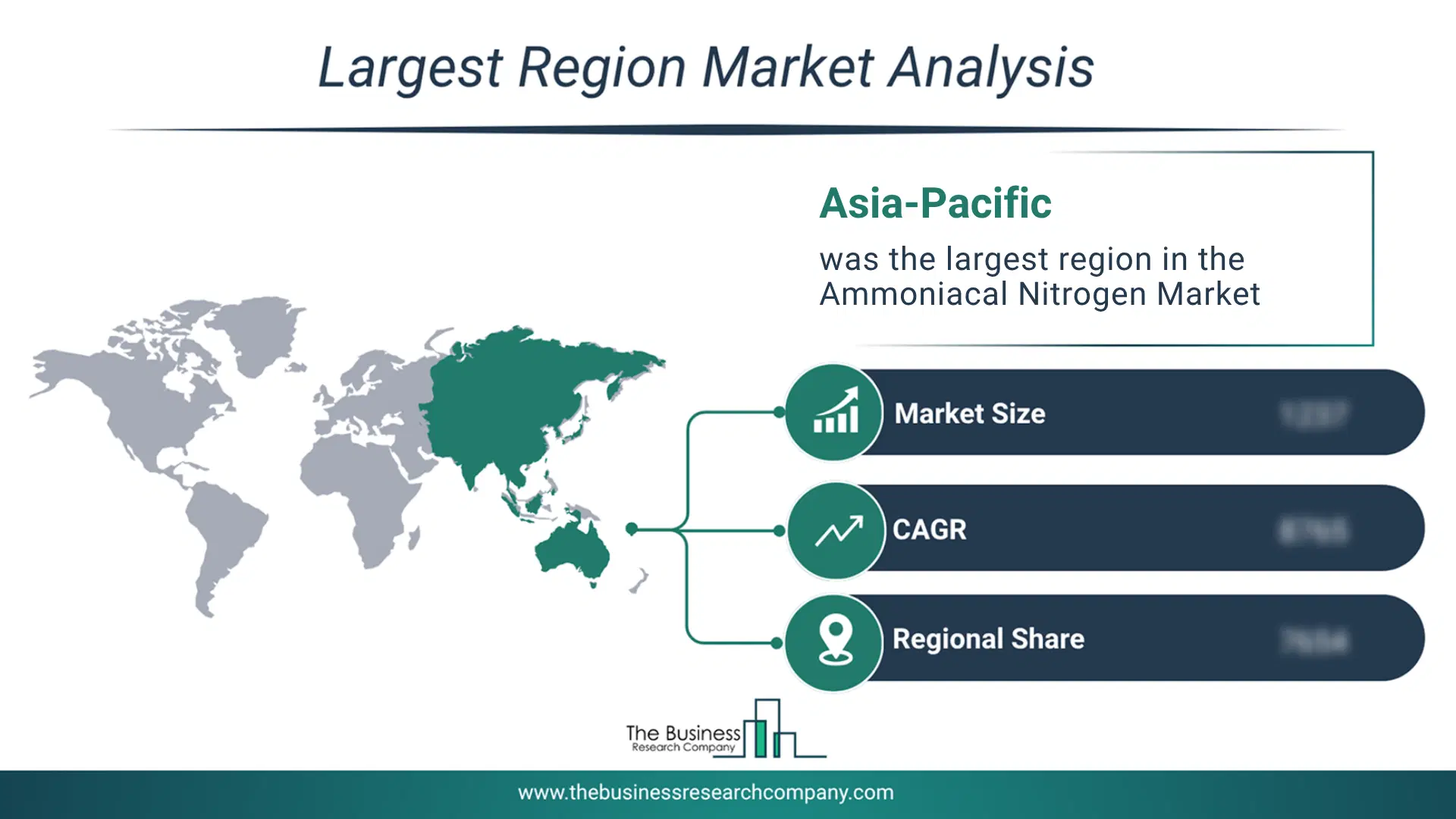
Regional Outlook/Insights
Asia-Pacific was the largest region in the ammoniacal nitrogen market in 2025. Asia-Pacific is expected to be the fastest-growing region in the forecast period. The regions covered in this market report are Asia-Pacific, South East Asia, Western Europe, Eastern Europe, North America, South America, Middle East, Africa. The countries covered in this market report are Australia, Brazil, China, France, Germany, India, Indonesia, Japan, Taiwan, Russia, South Korea, UK, USA, Canada, Italy, Spain.What Defines the Ammoniacal Nitrogen Market?
The ammoniacal nitrogen market consists of sales of ammonia, ammonium hydroxide, ammonium chloride, ammonium sulfate, ammonium bicarbonate, ammonium carbonate, ammonium phosphate, and other ammonium-based nitrogen products. Values in this market are ‘factory gate’ values, that is the value of goods sold by the manufacturers or creators of the goods, whether to other entities (including downstream manufacturers, wholesalers, distributors and retailers) or directly to end customers. The value of goods in this market includes related services sold by the creators of the goods.How is Market Value Defined and Measured?
The market value is defined as the revenues that enterprises gain from the sale of goods and/or services within the specified market and geography through sales, grants, or donations in terms of the currency (in USD unless otherwise specified). The revenues for a specified geography are consumption values that are revenues generated by organizations in the specified geography within the market, irrespective of where they are produced. It does not include revenues from resales along the supply chain, either further along the supply chain or as part of other products.
This chart presents market attractiveness based on a quantitative evaluation of growth, competition, strategic alignment, and risk, offering a clear view of opportunity areas for decision-making. This chart is for illustrative purposes; the full report contains the complete analysis.

This chart highlights the Total Addressable Market (TAM) by estimating the maximum revenue opportunity using an assumption-driven approach, supporting strategic planning and opportunity sizing across markets. The chart is illustrative; the full report provides a more comprehensive analysis.
What Key Data and Analysis Are Included in the Ammoniacal Nitrogen Market Report 2026?
The ammoniacal nitrogen market research report is one of a series of new reports from The Business Research Company that provides market statistics, including industry global market size, regional shares, competitors with the market share, detailed market segments, market trends and opportunities, and any further data you may need to thrive in the ammoniacal nitrogen industry. The market research report delivers a complete perspective of everything you need, with an in-depth analysis of the current and future state of the industry.Ammoniacal Nitrogen Market Report Forecast Analysis
| Report Attribute | Details |
|---|---|
| Market Size Value In 2026 | $17.9 billion |
| Revenue Forecast In 2030 | $22.73 billion |
| Growth Rate | CAGR of 6.2% from 2026 to 2035 |
| Base Year For Estimation | 2025 |
| Actual Estimates/Historical Data | 2020-2025 |
| Forecast Period | 2026 - 2030 |
| Market Representation | Revenue in USD Billion and CAGR from 2026 to 2030 |
| Segments Covered | Product Type, Technology, Testing Location, End User |
| Regional Scope | Asia-Pacific, Western Europe, Eastern Europe, North America, South America, Middle East, Africa |
| Country Scope | The countries covered in the report are Australia, Brazil, China, France, Germany, India, Indonesia, Japan, Taiwan, Russia, South Korea, UK, USA, Canada, Italy, Spain. |
| Customization Scope | Request for Customization |
| Pricing And Purchase Options | Explore Purchase Options |