
Analytical Laboratory Instrument Market Report 2026
Global Outlook – By Type ( Element Analysis, Separation Analysis, Molucular Enalysis, Other Types ), By Application ( Research, Clinical, Diagnostic, Other Applications), By End-User ( Hospitals, Diagnostic Laboratories, Pharmaceutical, Biotechnology, Other End-users ) – Market Size, Trends, Strategies, and Forecast to 2030
Analytical Laboratory Instrument Market Overview
• Analytical Laboratory Instrument market size has reached to $119.57 billion in 2025 • Expected to grow to $171.56 billion in 2030 at a compound annual growth rate (CAGR) of 7.6% • Growth Driver: Rapid Growth In Life Science Industries Drives Demand For Analytical Laboratory Instruments • Market Trend: Introduction Of Advanced Liquid Chromatography-Mass Spectrometry Systems For Enhanced Analytical Capabilities • Asia-Pacific was the largest region in 2025 and North America is the fastest growing region.Market Gains By 2030 – Top Opportunities By Segment
Market Gain identifies the most promising market opportunities by highlighting the segments or products expected to generate the highest incremental revenue growth over the next five years.
What Is Covered Under Analytical Laboratory Instrument Market?
Analytical laboratory instruments are either electronic or non-electronic devices that help in assessing and analyzing samples, both qualitatively and quantitatively. Analytical laboratory instruments are used to analyze the chemical composition of a sample and the quantity of each component within a sample. These instruments are used in laboratory analysis of the chemical or physical composition or concentration of solid, liquid, gaseous, or composite material. Analytical instruments are a large class of instruments used in chemical, pharmaceutical, life sciences, food processing labs, and oil refineries for testing samples. The main types of analytical laboratory instruments are element analysis, separation analysis, and molecular analysis. Element analysis is the process of determining the elemental and sometimes isotopic composition of a sample of a material such as soil, waste, minerals, and chemical compounds. The instruments are used for research, clinical, diagnostic, and other applications by hospitals, diagnostic laboratories, pharmaceutical, and biotechnology end users.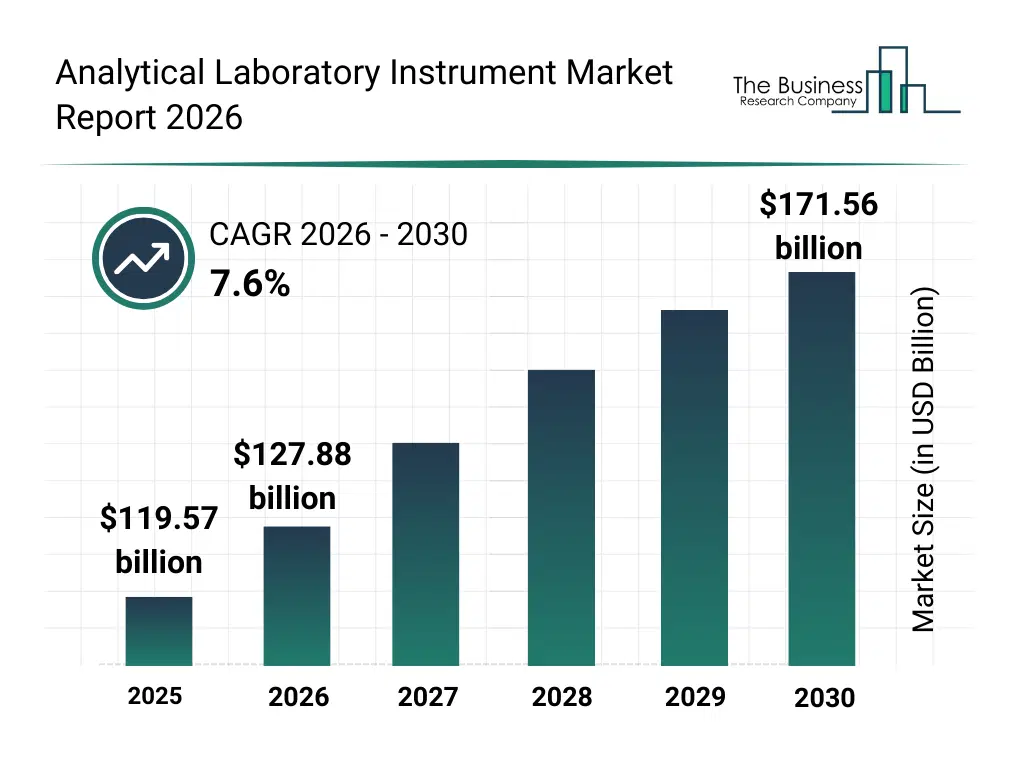
What Is The Analytical Laboratory Instrument Market Size 2026 And Growth Rate?
The analytical laboratory instrument market size has grown strongly in recent years. It will grow from $119.57 billion in 2025 to $127.88 billion in 2026 at a compound annual growth rate (CAGR) of 7.0%. The growth in the historic period can be attributed to growth in chemical composition testing, increased use of chromatography methods, early adoption of spectroscopy in research, expansion of clinical diagnostics instrumentation, reliance on manual sample preparation techniques.What Is The Analytical Laboratory Instrument Market Growth Forecast?
The analytical laboratory instrument market size is expected to see strong growth in the next few years. It will grow to $171.56 billion in 2030 at a compound annual growth rate (CAGR) of 7.6%. The growth in the forecast period can be attributed to rising demand for high-throughput analytical workflows, increasing use of molecular analysis instruments, development of automated sample preparation systems, expansion of digital laboratory ecosystems, rising investment in biotech and pharmaceutical r&d. Major trends in the forecast period include adoption of AI-driven laboratory analytics, integration of cloud-connected analytical platforms, development of automated instrumentation systems, expansion of IoT-enabled laboratory monitoring, advancement of precision analytical technologies.
Global Analytical Laboratory Instrument Market Segmentation
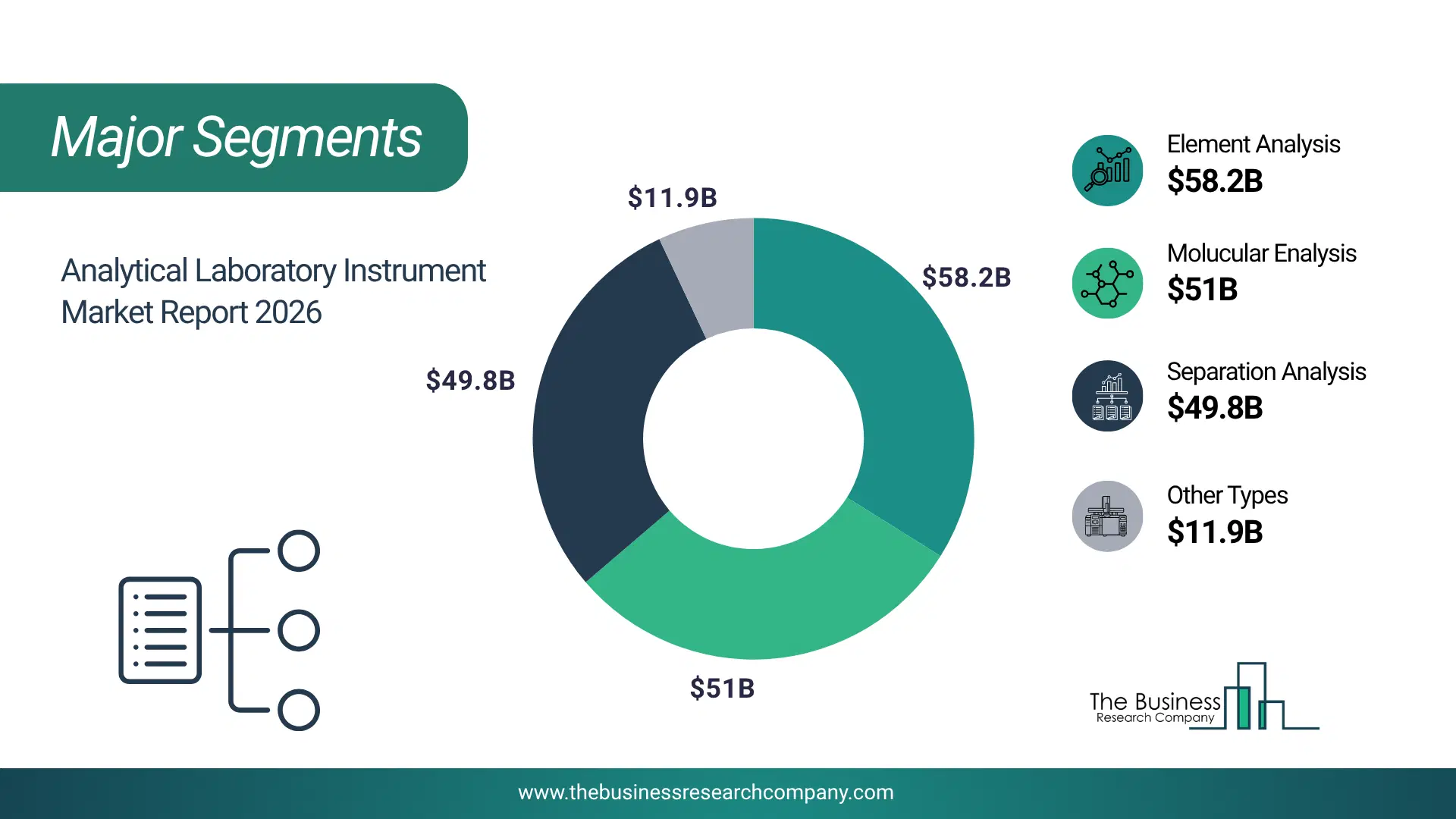
1) By Type: Element Analysis, Separation Analysis, Molucular Enalysis, Other Types 2) By Application: Research, Clinical, Diagnostic, Other Applications 3) By End-User: Hospitals, Diagnostic Laboratories, Pharmaceutical, Biotechnology, Other End-users Subsegments: 1) By Element Analysis: Atomic Absorption Spectroscopy (AAS), Inductively Coupled Plasma Optical Emission Spectroscopy (ICP-OES), X-ray Fluorescence Spectroscopy (XRF) 2) By Separation Analysis: High-Performance Liquid Chromatography (HPLC), Gas Chromatography (GC), Capillary Electrophoresis (CE) 3) By Molecular Analysis: Mass Spectrometry (MS), Infrared Spectroscopy (IR), Nuclear Magnetic Resonance (NMR) Spectroscopy 4) By Other Types: Microplate Readers, Thermal Analyzers, Elemental Analyzers, Particle Size Analyzers The top segments in the analytical laboratory instrument market will be: • Element Analysis will reach $58.15 billion by 2030. • Molucular Enalysis will reach $50.91 billion by 2030. • Separation Analysis will reach $49.71 billion by 2030. • Other Types will reach $11.89 billion by 2030.What Is The Driver Of The Analytical Laboratory Instrument Market?
The rapid growth in life science industries contributed to the growth of the analytical laboratory instruments market. A growing patient population suffering from lifestyle-related problems such as diabetes and heart-related problems, and other life-threatening diseases such as cancer and growing investment in research and development, and an increasingly aged population aided the growth in the life science industry. For instance, in January 2025, according to the BioIndustry Association (BIA), a UK-based trade association, the UK biotech sector experienced substantial growth in 2024, securing £3.5 billion (approximately $ 4.4 billion) in investment, an impressive 94% incrDIGITease from the previous year. Therefore, the growing life science industry is expected to drive the market for analytical laboratory instruments.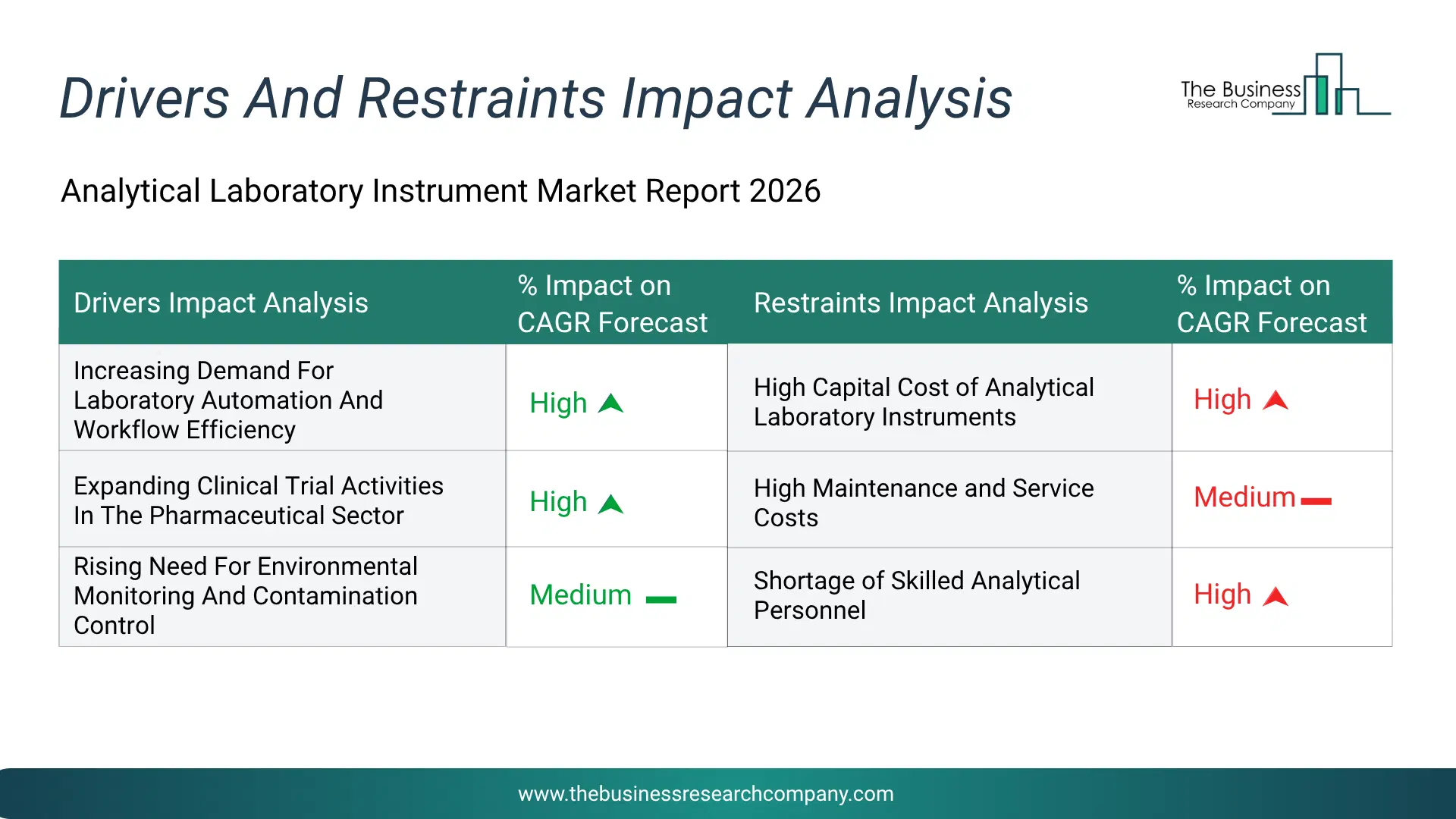
Infographic Chart Showing Key Market Drivers Analysis And Restraints For Analytical Laboratory Instrument Market
The chart presents an impact analysis of key drivers and restraints, quantifying their relative influence on the market's growth rate and helping assess the balance between growth enablers and limiting factors. This chart offers a high-level perspective; the full report contains more detailed insights.
How Will The Drivers Impact Growth In The Global Analytical Laboratory Instrument Market?
• Increasing Demand For Laboratory Automation And Workflow Efficiency (High) – During the forecast period, the increasing demand for laboratory automation and workflow efficiency is expected to become a key growth driver for the analytical laboratory instrument market by 2030. The growing need to improve laboratory productivity and reduce manual errors is driving the adoption of advanced analytical laboratory instruments. Automated systems enable faster sample processing, real -time data analysis, and improved workflow management. Laboratories in pharmaceuticals, biotechnology, and research institutions increasingly rely on automated analytical equipment to handle large volumes of samples efficiently. This shift toward automation enhances accuracy and consistency in testing processes. • Expanding Clinical Trial Activities In The Pharmaceutical Sector (High) – During the forecast period, the expanding clinical trial activities in the pharmaceutical sector is expected to emerge as a major factor driving the expansion of the analytical laboratory instrument market by 2030. The rapid increase in clinical trials for new drugs, biologics, and vaccines is significantly boosting the demand for analytical laboratory instruments. These instruments are essential for analyzing drug compounds, monitoring safety, and ensuring regulatory compliance during different stages of clinical development. Advanced analytical tools help researchers accurately measure molecular structures, impurities, and stability of pharmaceutical products. As pharmaceutical companies expand research pipelines and accelerate drug development, laboratories require more precise and reliable analytical technologies. • Rising Need For Environmental Monitoring And Contamination Control (Medium) – During the forecast period, the rising need for environmental monitoring and contamination control is expected to act as a key growth catalyst for the analytical laboratory instrument market by 2030. Increasing concerns about environmental pollution and public health are encouraging governments and industries to strengthen monitoring and testing practices. Analytical laboratory instruments play a critical role in detecting pollutants, toxins, and contaminants in air, water, and soil samples. Environmental agencies and research institutions rely on advanced analytical techniques to ensure regulatory compliance and protect ecosystems. The rising demand for accurate environmental analysis is leading to greater adoption of sophisticated testing equipment.How Will The Restraints Impact Growth In The Global Analytical Laboratory Instrument Market?
• High Capital Cost of Analytical Laboratory Instruments (High) – During the forecast period, the the high purchase cost of advanced analytical laboratory instruments is a major restraint for market growth. Instruments such as mass spectrometers, chromatographs, and advanced spectrometers require significant upfront investment, which can be difficult for small laboratories, academic institutions, and emerging research facilities. In addition to equipment costs, laboratories must also invest in supporting infrastructure, installation, and system integration. These high initial expenditures often delay procurement decisions or limit adoption, particularly in developing regions. As a result, the substantial capital requirement can restrict the expansion of the analytical laboratory instrument market. • High Maintenance and Service Costs (Medium) – During the forecast period, the analytical laboratory instruments require regular maintenance, calibration, and servicing to ensure accuracy and compliance with quality standards. These ongoing operational expenses include service contracts, replacement parts, software updates, and specialized technical support. Frequent maintenance needs and potential instrument downtime can increase operational costs and disrupt laboratory workflows. Smaller laboratories and institutions with limited budgets may find it challenging to manage these recurring expenses. Consequently, high maintenance and service costs act as a barrier to the widespread adoption of advanced analytical instrumentation. • Shortage of Skilled Analytical Personnel (High) – During the forecast period, the operating modern analytical laboratory instruments often requires highly trained professionals with expertise in analytical techniques, data interpretation, and instrument calibration. However, many regions face a shortage of skilled laboratory personnel capable of handling complex analytical systems. The lack of trained professionals can limit the effective use of sophisticated instruments and reduce laboratory productivity. Organizations may also need to invest in specialized training programs to ensure proper instrument operation. This shortage of skilled personnel therefore slows the adoption and efficient utilization of advanced analytical laboratory instruments.Key Players In The Global Analytical Laboratory Instrument Market
Major companies operating in the analytical laboratory instrument market are Thermo Fisher Scientific Inc., Danaher Corporation, Shimadzu Corporation, Bruker Corporation, Mettler-Toledo International Inc., Waters Corporation, PerkinElmer Inc., Bio-Rad Laboratories Inc., Metrohm AG, AMETEK Spectro Scientific, Malvern Panalytical Ltd., Agilent Technologies Inc., Analytik Jena AG, Eppendorf SE, Sartorius AG, ZEISS Group, WITec GmbH, Markes International Ltd., Specac Limited, Anton Paar GmbH, Cole-Parmer Instrument Company Ltd., Teledyne Tekmar, AMETEK Process Instruments, A.KRÜSS Optronic GmbH, Endress+Hauser Group, Nanosurf AG, Spectris plc, Keithley Instruments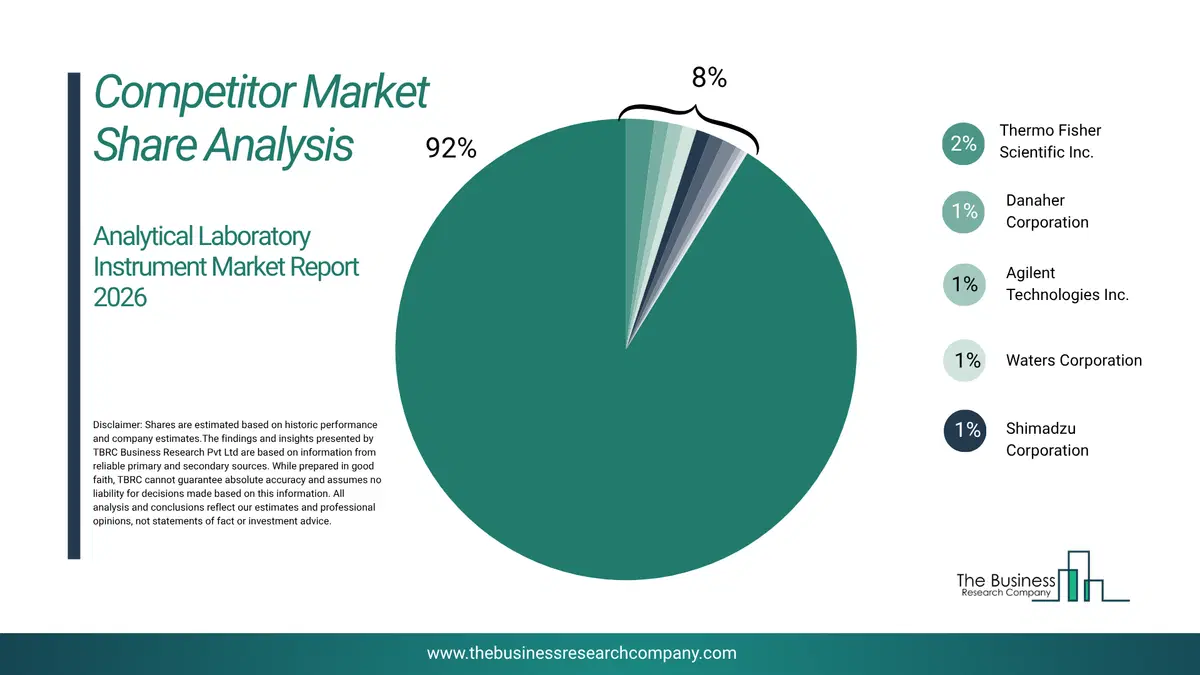
This chart is for illustrative purposes; the full report includes a detailed competitor analysis and comprehensive overview of the top 10 companies in the market.
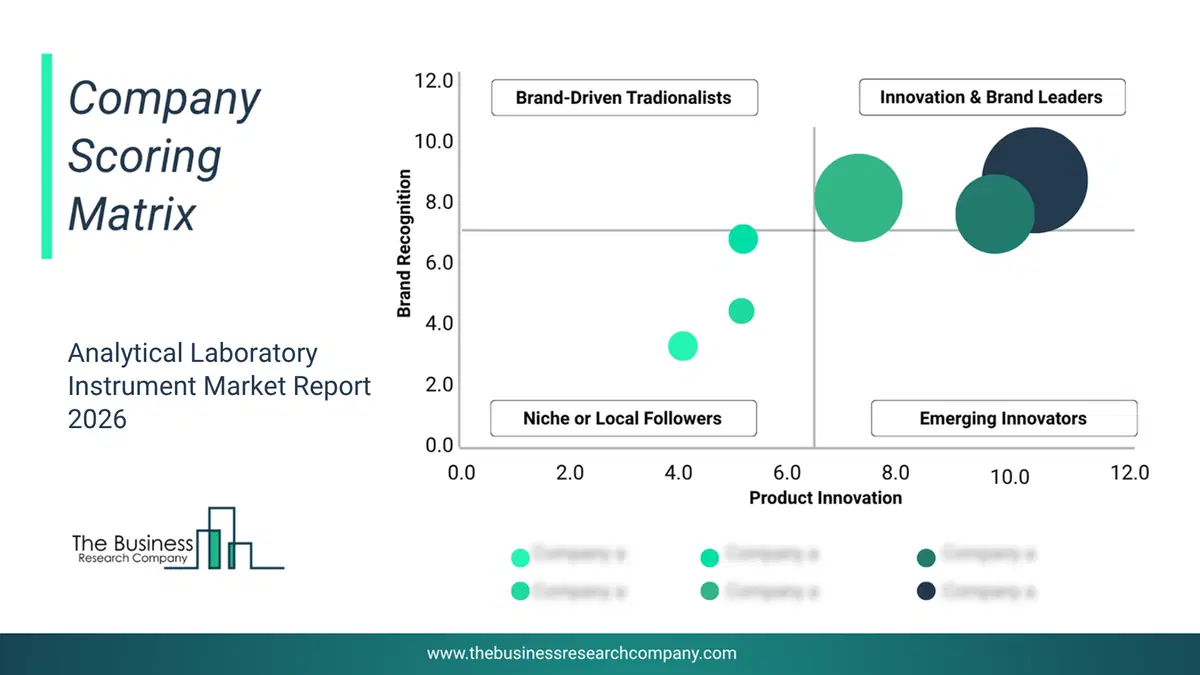
This chart maps companies by product innovation and brand strength, with bubble size indicating relative revenue, helping identify market leaders, challengers, and niche players. This is an illustrative chart; the full report provides a complete and accurate competitive analysis.
Global Analytical Laboratory Instrument Market Trends and Insights
Major companies operating in the analytical laboratory instrument market are increasing their focus on introducing advanced liquid chromatography-mass spectrometry (LC-MS) systems to maximize revenue in the market. Advanced liquid chromatography-mass spectrometry (LC-MS) systems are sophisticated analytical instruments used for the separation, identification, and quantification of complex mixtures of chemicals or compounds. For instance, in June 2023, Agilent Technologies Inc., a US-based laboratory equipment company, launched two new liquid chromatography-mass spectrometry systems. The first one is called Agilent 6495D LC/TQ, which is a triple-quadrupole LC/MS system. It is ideal for targeted analysis applications that demand the highest analytical sensitivities and are challenging. The second system is called Agilent Revident LC/Q-TOF, which is a quadrupole time-of-flight LC/MS system. This system has a new instrument architecture that comes with instrument intelligence, resulting in maximized operation time and productivity. The 6495 LC/TQ instrument is built to support research with production-ready robustness. This feature ensures that the instrument has increased sample measurements, greater efficiency, and reduced instrument downtime.What Are Latest Mergers And Acquisitions In The Analytical Laboratory Instrument Market?
In August 2023, ALS Global Ltd., an Australia-based testing, inspection, and certification company, acquired Analytical Solutions Pvt. Ltd. for an undisclosed amount. With this acquisition, ALS Global Ltd. aims to strengthen its laboratory testing capabilities in the Indian market, expand its portfolio of analytical services across sectors including environmental, mining, food, and pharmaceutical industries, and enhance its regional footprint to serve a growing client base. Analytical Solutions Pvt. Ltd. is an India-based company that specializes in providing high-quality laboratory testing and analytical instruments.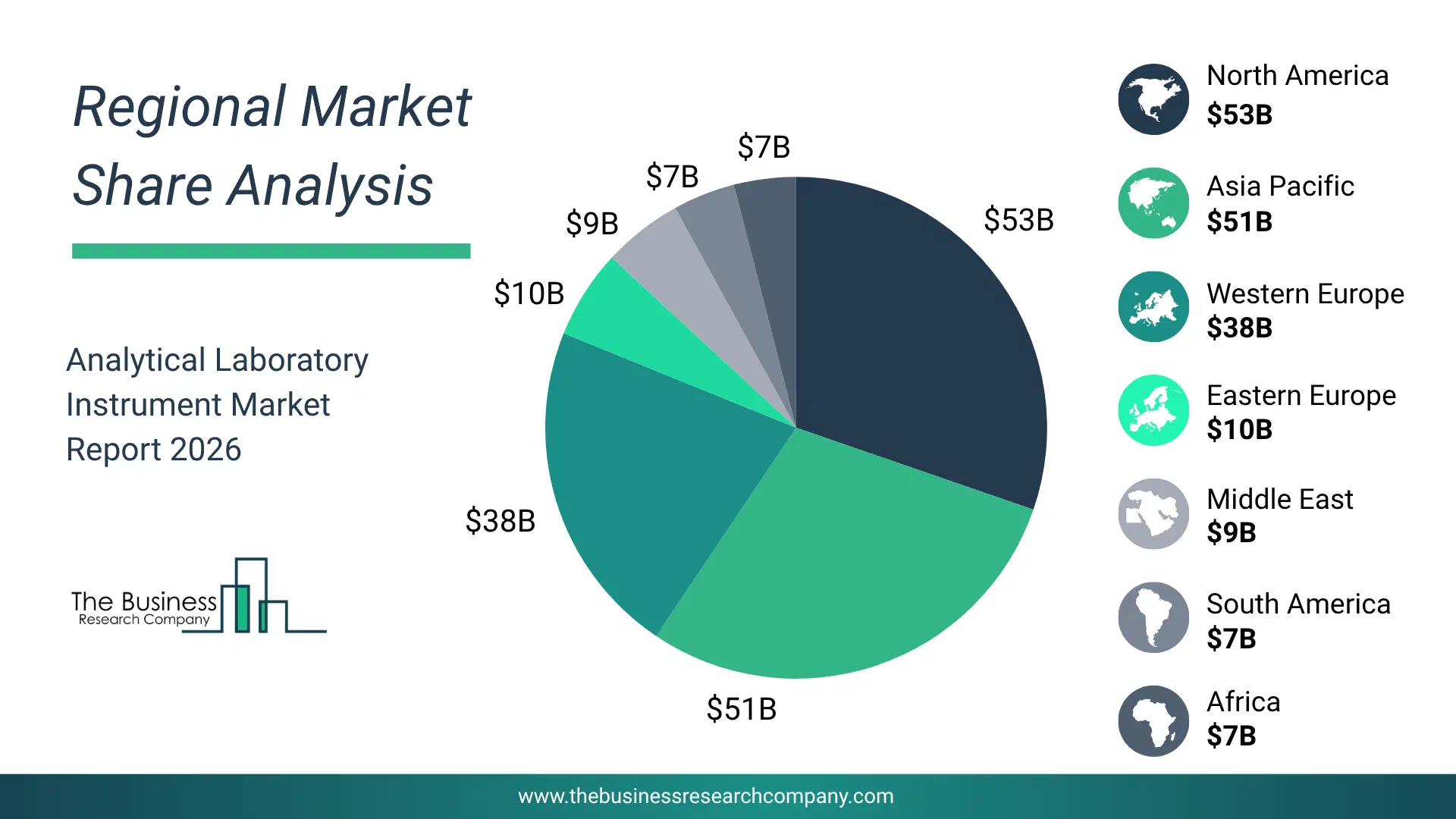
Regional Outlook
Asia-Pacific was the largest region in the analytical laboratory instruments market in 2025. North America was the second-largest region in the global analytical laboratory instrument market share. The regions covered in this market report are Asia-Pacific, South East Asia, Western Europe, Eastern Europe, North America, South America, Middle East, Africa. The countries covered in this market report are Australia, Brazil, China, France, Germany, India, Indonesia, Japan, Taiwan, Russia, South Korea, UK, USA, Canada, Italy, Spain.What Defines the Analytical Laboratory Instrument Market?
The analytical laboratory instruments market consists of sales of element analysis, separation analysis, and molecular analysis. Values in this market are factory gate values, that is the value of goods sold by the manufacturers or creators of the goods, whether to other entities (including downstream manufacturers, wholesalers, distributors, and retailers) or directly to end customers. The value of goods in this market includes related services sold by the creators of the goods.How is Market Value Defined and Measured?
The market value is defined as the revenues that enterprises gain from the sale of goods and/or services within the specified market and geography through sales, grants, or donations in terms of the currency (in USD unless otherwise specified). The revenues for a specified geography are consumption values that are revenues generated by organizations in the specified geography within the market, irrespective of where they are produced. It does not include revenues from resales along the supply chain, either further along the supply chain or as part of other products.
This chart presents market attractiveness based on a quantitative evaluation of growth, competition, strategic alignment, and risk, offering a clear view of opportunity areas for decision-making. This chart is for illustrative purposes; the full report contains the complete analysis.

This chart highlights the Total Addressable Market (TAM) by estimating the maximum revenue opportunity using an assumption-driven approach, supporting strategic planning and opportunity sizing across markets. The chart is illustrative; the full report provides a more comprehensive analysis.
What Key Data and Analysis Are Included in the Analytical Laboratory Instrument Market Report 2026?
The analytical laboratory instrument market research report is one of a series of new reports from The Business Research Company that provides market statistics, including industry global market size, regional shares, competitors with the market share, detailed market segments, market trends and opportunities, and any further data you may need to thrive in the analytical laboratory instrument industry. The market research report delivers a complete perspective of everything you need, with an in-depth analysis of the current and future state of the industry.Analytical Laboratory Instrument Market Report 2026 Market Report Forecast Analysis
| Report Attribute | Details |
|---|---|
| Market Size Value In 2026 | $127.88 billion |
| Revenue Forecast In 2030 | $171.56 billion |
| Growth Rate | CAGR of 7.6% from 2026 to 2030 |
| Base Year For Estimation | 2025 |
| Actual Estimates/Historical Data | 2020-2025 |
| Forecast Period | 2026 - 2030 |
| Market Representation | Revenue in USD Billion and CAGR from 2026 to 2030 |
| Segments Covered | Type, Application, End-User |
| Regional Scope | Asia-Pacific, Western Europe, Eastern Europe, North America, South America, Middle East, Africa |
| Country Scope | The countries covered in the report are Australia, Brazil, China, France, Germany, India, ... |
| Key Companies Profiled | Thermo Fisher Scientific Inc., Danaher Corporation, Shimadzu Corporation, Bruker Corporation, Mettler-Toledo International Inc., Waters Corporation, PerkinElmer Inc., Bio-Rad Laboratories Inc., Metrohm AG, AMETEK Spectro Scientific, Malvern Panalytical Ltd., Agilent Technologies Inc., Analytik Jena AG, Eppendorf SE, Sartorius AG, ZEISS Group, WITec GmbH, Markes International Ltd., Specac Limited, Anton Paar GmbH, Cole-Parmer Instrument Company Ltd., Teledyne Tekmar, AMETEK Process Instruments, A.KRÜSS Optronic GmbH, Endress+Hauser Group, Nanosurf AG, Spectris plc, Keithley Instruments |
| Customization Scope | Request for Customization |
| Pricing And Purchase Options | Explore Purchase Options |