
Anaplastic Astrocytoma Market Report 2026
Global Outlook – By Treatment Type (Surgery, Chemotherapy, Radiation Therapy), By Route of Administration (Oral, Parenteral), By End User (Hospitals, Specialty Cancer Centers) - Market Size, Trends, Strategies, and Forecast to 2030
Anaplastic Astrocytoma Market Overview
• Anaplastic Astrocytoma market size has reached to $0.46 billion in 2025 • Expected to grow to $0.64 billion in 2030 at a compound annual growth rate (CAGR) of 7% • Growth Driver: Rising Incidence Of Brain Tumors Fuels Growth In The Anaplastic Astrocytoma Market • Market Trend: Advancements In Targeted Therapeutics Strengthen Growth Of The Anaplastic Astrocytoma Market • North America was the largest region in 2025 and Asia-Pacific is the fastest growing region.What Is Covered Under Anaplastic Astrocytoma Market?
Anaplastic astrocytoma is a rare, malignant brain tumor that arises from astrocytes, the supportive cells in the nervous system. Anaplastic astrocytoma can cause neurological symptoms such as headaches, seizures, changes in behavior and motor deficits that are treated with a combination of surgery, radiation therapy and chemotherapies. The main types of anaplastic astrocytoma disease are Grade I, Grade II, Grade III and Grade IV. Grade I refer to anaplastic astrocytoma tumors that are the least aggressive and are considered benign and treated by surgical excision, routine monitoring and follow-up practices. The treatment options for anaplastic astrocytoma also include surgery, chemotherapy and radiation, categorized into pre-registration and clinical trial phases to be used by hospitals and clinics, retail pharmacies and online pharmacies.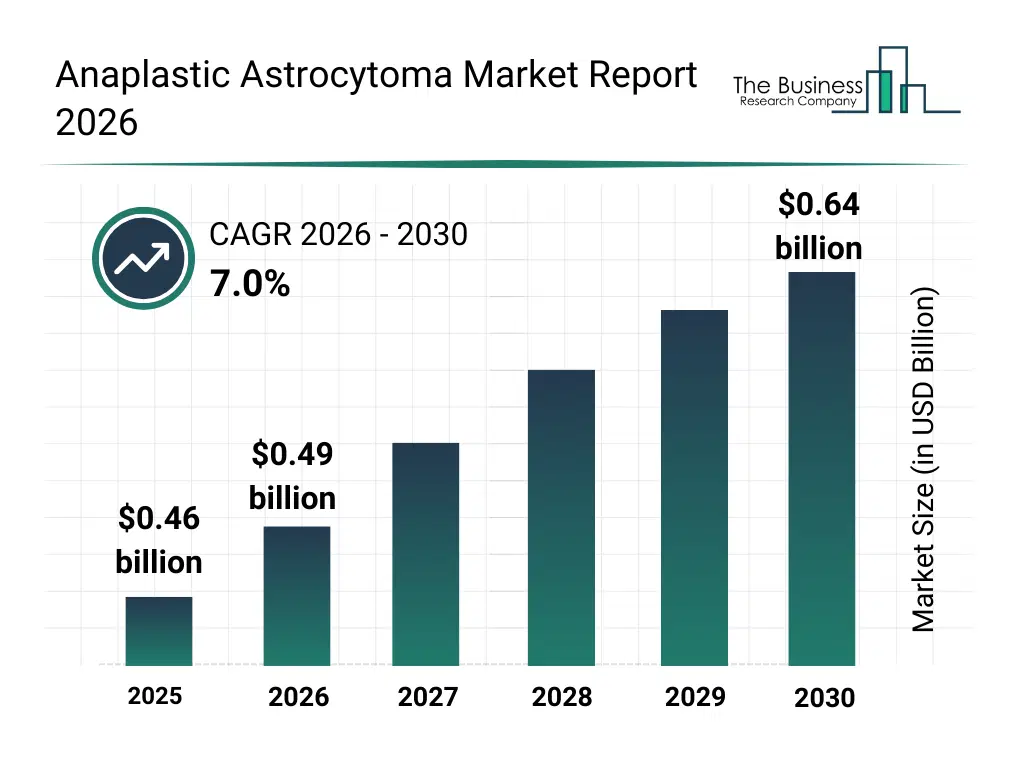
What Is The Anaplastic Astrocytoma Market Size and Share 2026?
The anaplastic astrocytoma market size has grown strongly in recent years. It will grow from $0.46 billion in 2025 to $0.49 billion in 2026 at a compound annual growth rate (CAGR) of 6.1%. The growth in the historic period can be attributed to improvements in brain tumor diagnostics, availability of neurosurgical treatment options, expansion of oncology treatment centers, growing clinical trial participation, increased use of radiotherapy.What Is The Anaplastic Astrocytoma Market Growth Forecast?
The anaplastic astrocytoma market size is expected to see strong growth in the next few years. It will grow to $0.64 billion in 2030 at a compound annual growth rate (CAGR) of 7.0%. The growth in the forecast period can be attributed to increasing investments in neuro-oncology research, rising adoption of precision medicine approaches, expansion of targeted and adjunct therapies, growing focus on early detection strategies, increasing collaboration between research institutions. Major trends in the forecast period include increasing adoption of multimodal treatment approaches, rising use of advanced neuroimaging tools, growing focus on personalized oncology therapies, expansion of clinical research activities, enhanced integration of surgical and radiotherapy protocols.
Global Anaplastic Astrocytoma Market Segmentation
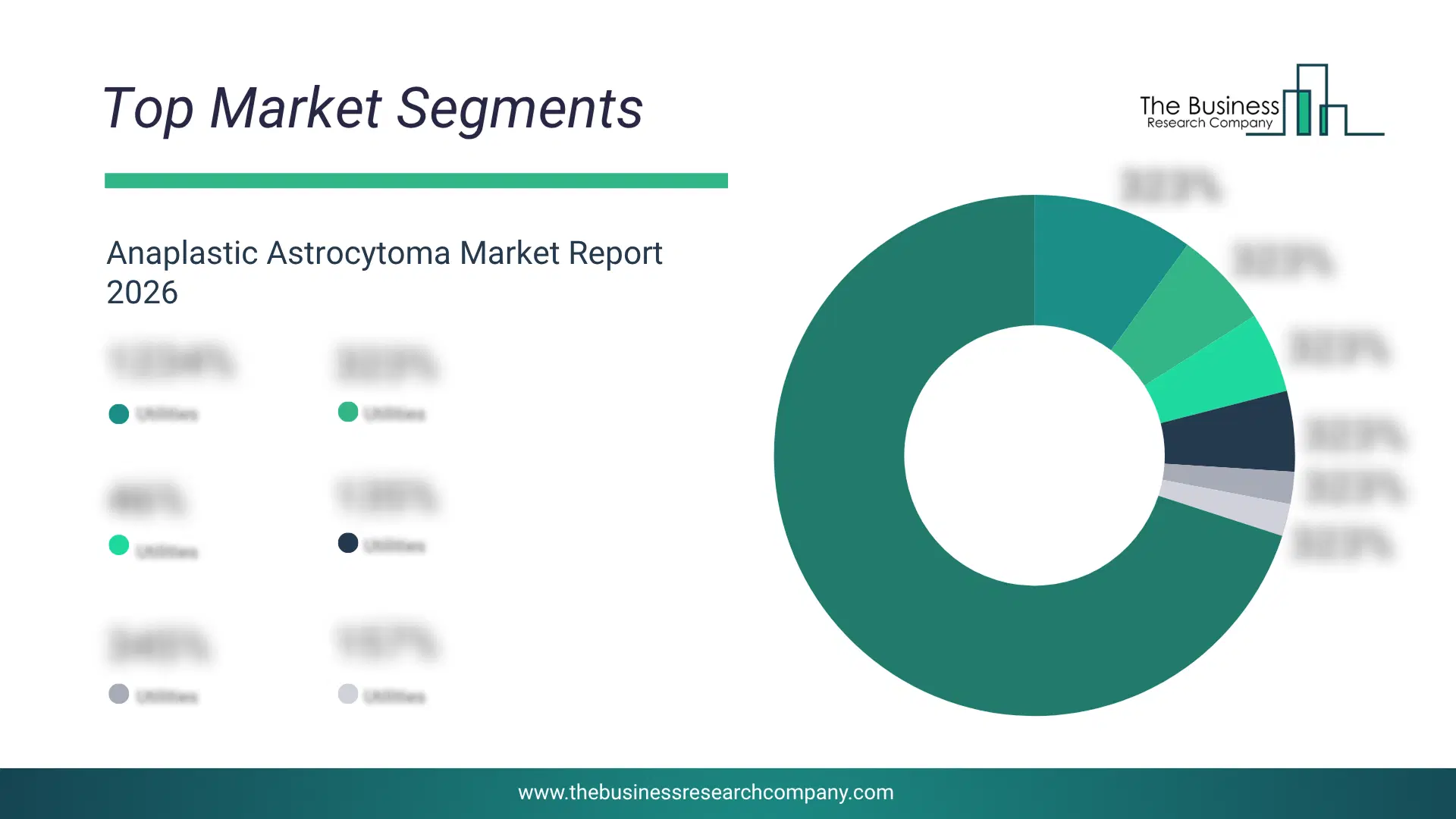
1) By Treatment Type: Surgery, Chemotherapy, Radiation Therapy 2) By Route of Administration: Oral, Parenteral 3) By End User: Hospitals, Specialty Cancer Centers Subsegments: 1) By Surgery: Maximal Safe Tumor Resection, Stereotactic Biopsy 2) By Chemotherapy: Alkylating Agents, Targeted Therapy 3) By Radiation Therapy: External Beam Radiation Therapy (EBRT), Intensity-Modulated Radiation Therapy (IMRT)What Is The Driver Of The Anaplastic Astrocytoma Market?
The growing incidence of primary malignant and non-malignant brain tumors is expected to propel the growth of the anaplastic astrocytoma market. Brain tumors are growths in the brain that can be classified as either cancerous (malignant) and invasive or non-cancerous (benign) and non-invasive, with varying degrees of aggressiveness and potential to spread. The anaplastic astrocytoma treatment removes the tumor and surrounding affected tissue while preserving brain function. For instance, in March 2023, according to the American Society of Clinical Oncology (ASCO), a US-based non-profit organization, approximately 24,810 adults in the United States are expected to receive a diagnosis of primary cancerous tumors originating in the brain and spinal cord, with 14,280 cases among men and 10,530 among women. Therefore, the growing incidence of primary malignant and non-malignant brain tumors will drive the growth of the anaplastic astrocytoma industry going forward.Key Players In The Global Anaplastic Astrocytoma Market
Major companies operating in the anaplastic astrocytoma market are Pfizer Inc., Hoffmann-La Roche Ltd., Merck & Co. Inc., Novartis AG, Bristol Myers Squibb, AstraZeneca, Eli Lilly and Company, Johnson & Johnson, Eisai Co. Ltd, AbbVie Inc., Bayer AG, Amgen Inc., Ipsen SA, Takeda Pharmaceutical Company Limited, Teva Pharmaceutical Industries Ltd., Cipla Limited, Sun Pharmaceutical Industries Ltd., Dr Reddy’s Laboratories Ltd., Novocure Ltd., Celldex Therapeutics Inc.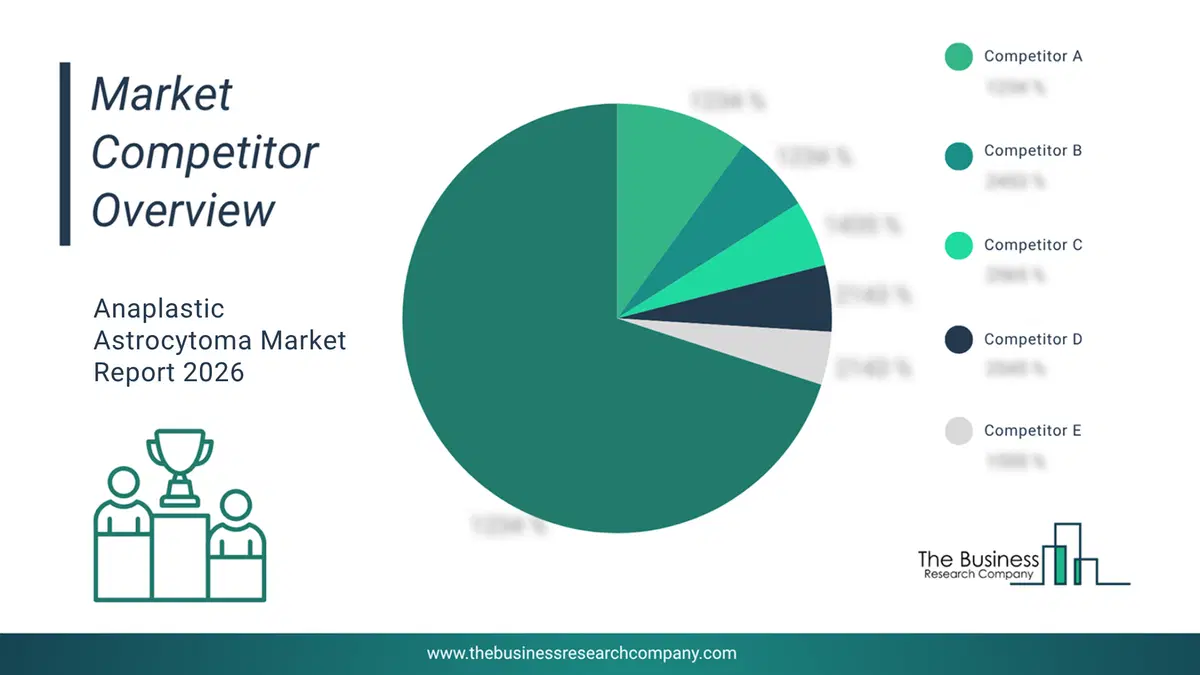
This chart is for illustrative purposes; the full report includes a detailed competitor analysis and comprehensive overview of the top 10 companies in the market.
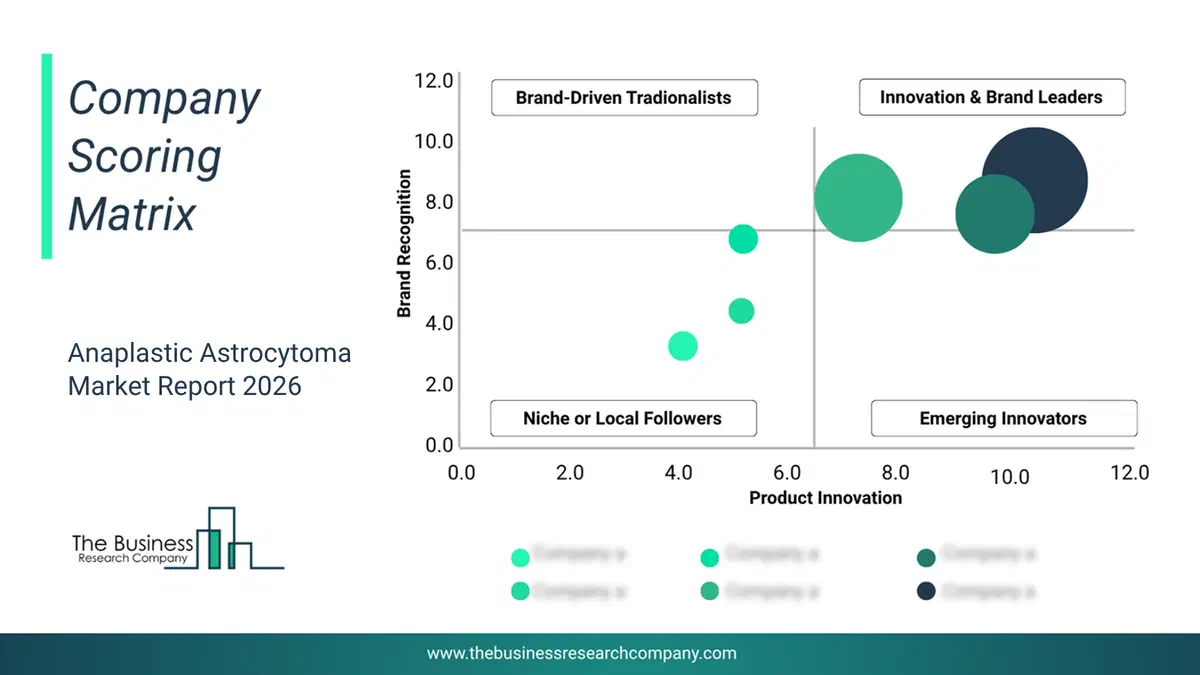
This chart maps companies by product innovation and brand strength, with bubble size indicating relative revenue, helping identify market leaders, challengers, and niche players. This is an illustrative chart; the full report provides a complete and accurate competitive analysis.
Global Anaplastic Astrocytoma Market Trends and Insights
Major companies operating in the anaplastic astrocytoma market are focusing on developing advanced combination therapies to enhance overall survival and progression-free survival in patients with recurrent disease. Combination therapy involves using two or more drugs to target cancer pathways simultaneously, improving treatment efficacy and reducing tumor progression. For instance, in November 2024, Orbus Therapeutics, a US-based biopharmaceutical company, launched a combination of eflornithine and lomustine in its Phase 3 STELLAR study. The therapy features clinically meaningful improvements in overall survival and progression-free survival for patients with grade 3 IDH mutant astrocytoma. Its key features include a median overall survival of 34.9 months compared to 23.5 months with lomustine alone, a median progression-free survival of 15.8 months versus 7.2 months, and a generally well-tolerated safety profile. The treatment leverages eflornithine’s ability to irreversibly inhibit ornithine decarboxylase, a key enzyme in polyamine biosynthesis, enhancing its cytostatic effect. The study included over 343 patients across North America and Europe and demonstrated significant clinical benefit in a difficult-to-treat population, providing a promising new option for patients with recurrent anaplastic astrocytoma.What Are Latest Mergers And Acquisitions In The Anaplastic Astrocytoma Market?
In July 2025, NeOnc Technologies Holdings, Inc., a US-based clinical-stage biotechnology company that develops treatments for anaplastic (Grade III) astrocytoma, partnered with Quazar Investment to accelerate CNS therapy development and regional commercialization in the MENA region. The partnership aims to expand its CNS-focused clinical and commercial presence across the UAE and MENA, advancing its NEO100 and NEO212 programs with regional funding and support for infrastructure and clinical trials. Quazar Investment is a UAE-based investment firm that supports high-growth life sciences.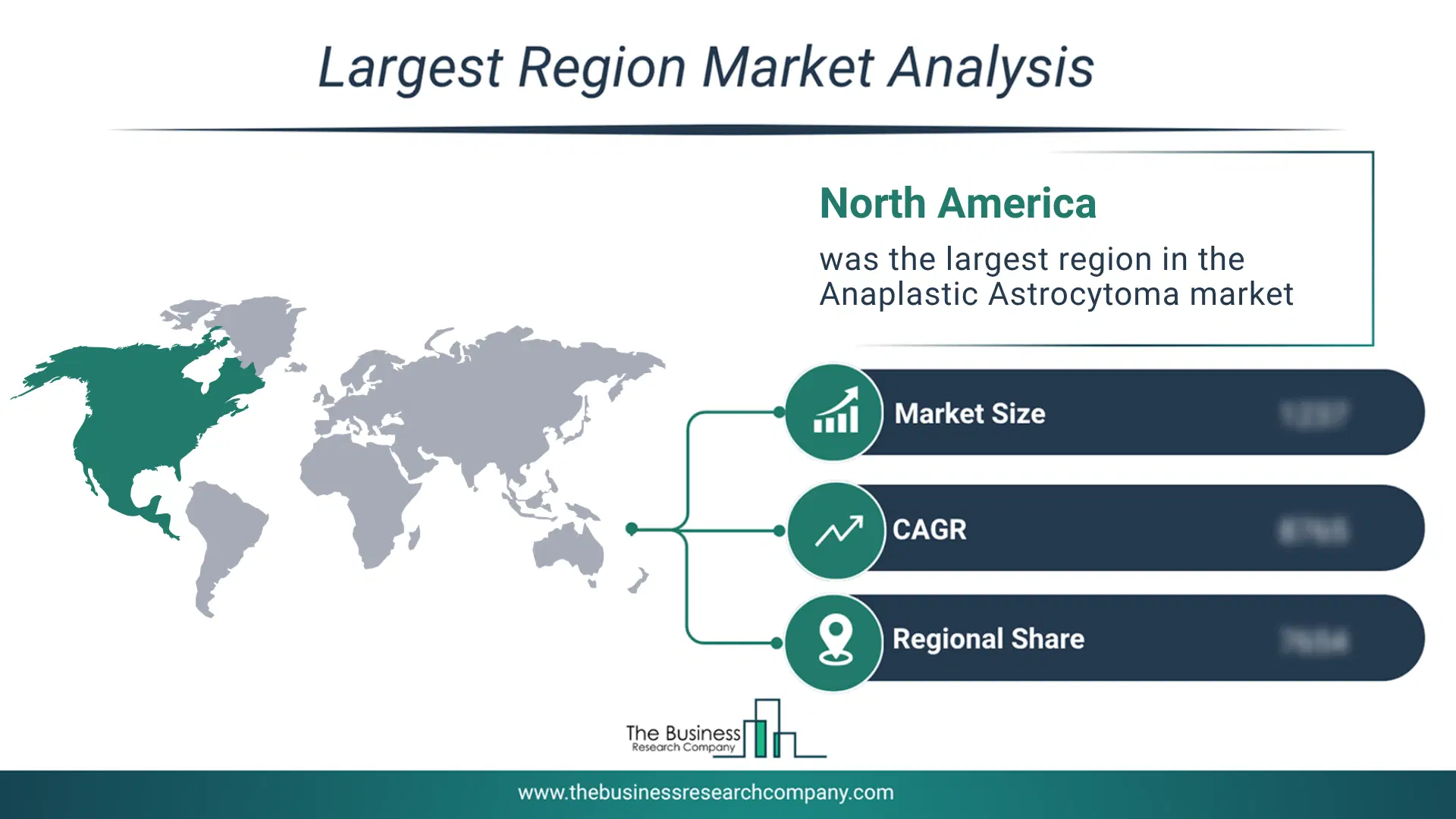
Regional Outlook
North America was the largest region in the anaplastic astrocytoma market in 2025. Asia-Pacific is expected to be the fastest-growing region in the forecast period. The regions covered in this market report are Asia-Pacific, South East Asia, Western Europe, Eastern Europe, North America, South America, Middle East, Africa. The countries covered in this market report are Australia, Brazil, China, France, Germany, India, Indonesia, Japan, Taiwan, Russia, South Korea, UK, USA, Canada, Italy, Spain.What Defines the Anaplastic Astrocytoma Market?
The anaplastic astrocytoma market consists of revenues earned by entities by providing targeted therapies, genetic testing and biomarker analysis, clinical trials and healthcare services. The market value includes the value of related goods sold by the service provider or included within the service offering. The anaplastic astrocytoma market also includes sales of surgical equipment, imaging devices and radiation therapy equipment that are used in providing anaplastic astrocytoma treatment. Values in this market are ‘factory gate’ values, that is the value of goods sold by the manufacturers or creators of the goods, whether to other entities (including downstream manufacturers, wholesalers, distributors and retailers) or directly to end customers. The value of goods in this market includes related services sold by the creators of the goods.How is Market Value Defined and Measured?
The market value is defined as the revenues that enterprises gain from the sale of goods and/or services within the specified market and geography through sales, grants, or donations in terms of the currency (in USD unless otherwise specified). The revenues for a specified geography are consumption values that are revenues generated by organizations in the specified geography within the market, irrespective of where they are produced. It does not include revenues from resales along the supply chain, either further along the supply chain or as part of other products.
This chart presents market attractiveness based on a quantitative evaluation of growth, competition, strategic alignment, and risk, offering a clear view of opportunity areas for decision-making. This chart is for illustrative purposes; the full report contains the complete analysis.

This chart highlights the Total Addressable Market (TAM) by estimating the maximum revenue opportunity using an assumption-driven approach, supporting strategic planning and opportunity sizing across markets. The chart is illustrative; the full report provides a more comprehensive analysis.
What Key Data and Analysis Are Included in the Anaplastic Astrocytoma Market Report 2026?
The anaplastic astrocytoma market research report is one of a series of new reports from The Business Research Company that provides market statistics, including industry global market size, regional shares, competitors with the market share, detailed market segments, market trends and opportunities, and any further data you may need to thrive in the anaplastic astrocytoma industry. The market research report delivers a complete perspective of everything you need, with an in-depth analysis of the current and future state of the industry.Anaplastic Astrocytoma Market Report Forecast Analysis
| Report Attribute | Details |
|---|---|
| Market Size Value In 2026 | $0.49 billion |
| Revenue Forecast In 2030 | $0.64 billion |
| Growth Rate | CAGR of 7% from 2026 to 2030 |
| Base Year For Estimation | 2025 |
| Actual Estimates/Historical Data | 2020-2025 |
| Forecast Period | 2026 - 2030 |
| Market Representation | Revenue in USD Billion and CAGR from 2026 to 2030 |
| Segments Covered | Treatment Type, Route of Administration, End User |
| Regional Scope | Asia-Pacific, Western Europe, Eastern Europe, North America, South America, Middle East, Africa |
| Country Scope | The countries covered in the report are Australia, Brazil, China, France, Germany, India, Indonesia, Japan, Taiwan, Russia, South Korea, UK, USA, Canada, Italy, Spain |
| Key Companies Profiled | Pfizer Inc., Hoffmann-La Roche Ltd., Merck & Co. Inc., Novartis AG, Bristol Myers Squibb, AstraZeneca, Eli Lilly and Company, Johnson & Johnson, Eisai Co. Ltd, AbbVie Inc., Bayer AG, Amgen Inc., Ipsen SA, Takeda Pharmaceutical Company Limited, Teva Pharmaceutical Industries Ltd., Cipla Limited, Sun Pharmaceutical Industries Ltd., Dr Reddy’s Laboratories Ltd., Novocure Ltd., Celldex Therapeutics Inc. |
| Customization Scope | Request for Customization |
| Pricing And Purchase Options | Explore Purchase Options |