
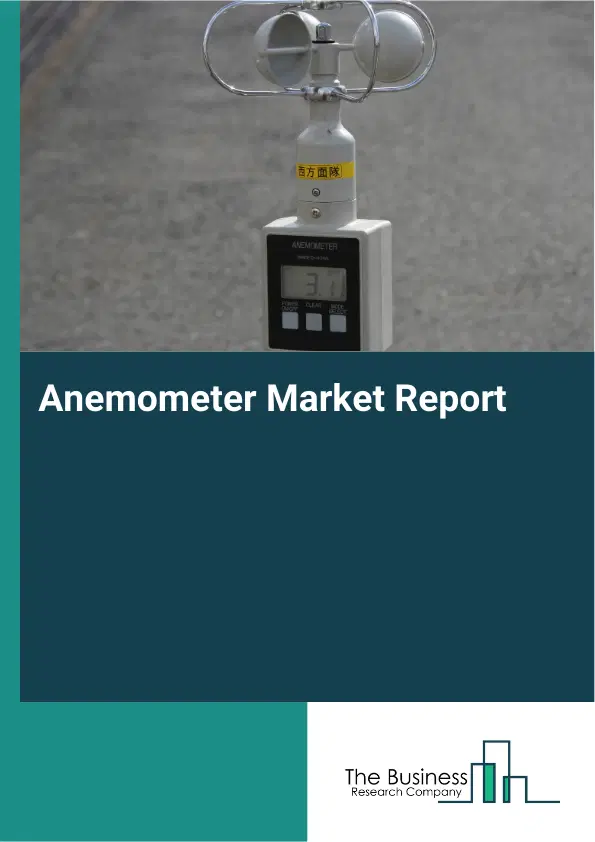
Anemometer Market Report 2026
Global Outlook – By Type (Vane Anemometer, Cup Anemometer, Hot-Wire Anemometer, Other Types), By Technology (Light Detection And Ranging (LIDAR), Sonic Detection And Ranging (SODAR)), By Measurement Type (Air Velocity Measurement, Wind Speed Measurement, Wind Pressure Measurement), By Application (Offshore, Onshore), By End-User Industry (Agriculture, Aviation, Oil And Gas Industries, Marine, Transport And Logistics, Other End-User Industries) – Market Size, Trends, Strategies, and Forecast to 2030
Anemometer Market Overview
• Anemometer market size has reached to $38.47 billion in 2025 • Expected to grow to $52.58 billion in 2030 at a compound annual growth rate (CAGR) of 6.4% • Growth Driver: Rising Wind Energy Adoption Driving Demand For Wind Measurement Technologies And Advanced Efficiency Solutions • Market Trend: Product Innovations In Wind Measurement Devices With Focus On Dual-Axis Ultrasonic Systems • North America was the largest region in 2025 and Asia-Pacific is the fastest growing region.What Is Covered Under Anemometer Market?
An anemometer is a device used to measure wind speed and direction, utilized in meteorology and environmental monitoring. It provides critical data for applications such as weather forecasting, aviation safety, and wind energy assessment. This device help to optimize performance in industries reliant on precise wind measurements by detecting air movement. The main types in the anemometer market are vane anemometer, cup anemometer, hot-wire anemometer, and others. A vane anemometer is a device used to measure wind speed and airflow by utilizing rotating blades that turn in response to air movement. The technologies encompass light detection and ranging (LIDAR) and sonic detection and ranging (SODAR), while the measurement types include air velocity, wind speed, and wind pressure. These are used for various applications such as offshore and onshore settings, with various end-user industries such as agriculture, aviation, oil and gas, marine, transport and logistics, and others.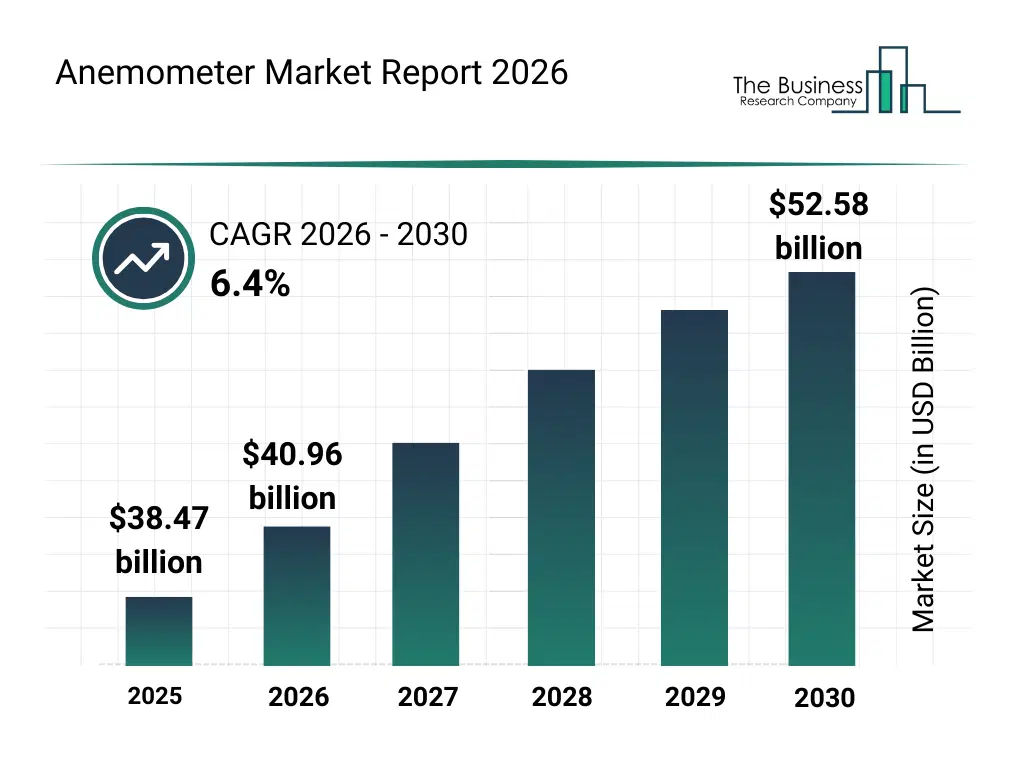
What Is The Anemometer Market Size and Share 2026?
The anemometer market size has grown strongly in recent years. It will grow from $38.47 billion in 2025 to $40.96 billion in 2026 at a compound annual growth rate (CAGR) of 6.5%. The growth in the historic period can be attributed to expansion of meteorological monitoring networks, increased use of wind measurement in aviation safety, growth in onshore wind energy projects, rising demand for environmental monitoring equipment, improvements in sensor miniaturization.What Is The Anemometer Market Growth Forecast?
The anemometer market size is expected to see strong growth in the next few years. It will grow to $52.58 billion in 2030 at a compound annual growth rate (CAGR) of 6.4%. The growth in the forecast period can be attributed to increasing investments in renewable wind energy projects, rising adoption of smart weather stations, expansion of offshore wind farms, growing demand for real-time environmental data, increased integration with predictive analytics platforms. Major trends in the forecast period include increasing deployment of iot-enabled wind measurement devices, rising adoption of remote and automated weather monitoring, growing use of advanced sensor technologies for accuracy, expansion of offshore wind assessment applications, enhanced integration with data analytics platforms.Tariff Impact On Anemometer Market
Tariffs are impacting the anemometer market by increasing costs of imported precision sensors, electronic components, optical systems, and calibration equipment used across vane, cup, ultrasonic, and lidar-based anemometers. Renewable energy, aviation, and environmental monitoring projects in North America and Europe are most affected due to reliance on high-precision imported components, while Asia-Pacific faces cost pressures in export-oriented manufacturing. These tariffs are raising equipment prices and extending procurement cycles. However, they are also encouraging local sensor manufacturing, regional assembly, and innovation in cost-efficient and ruggedized anemometer designs.
Global Anemometer Market Segmentation
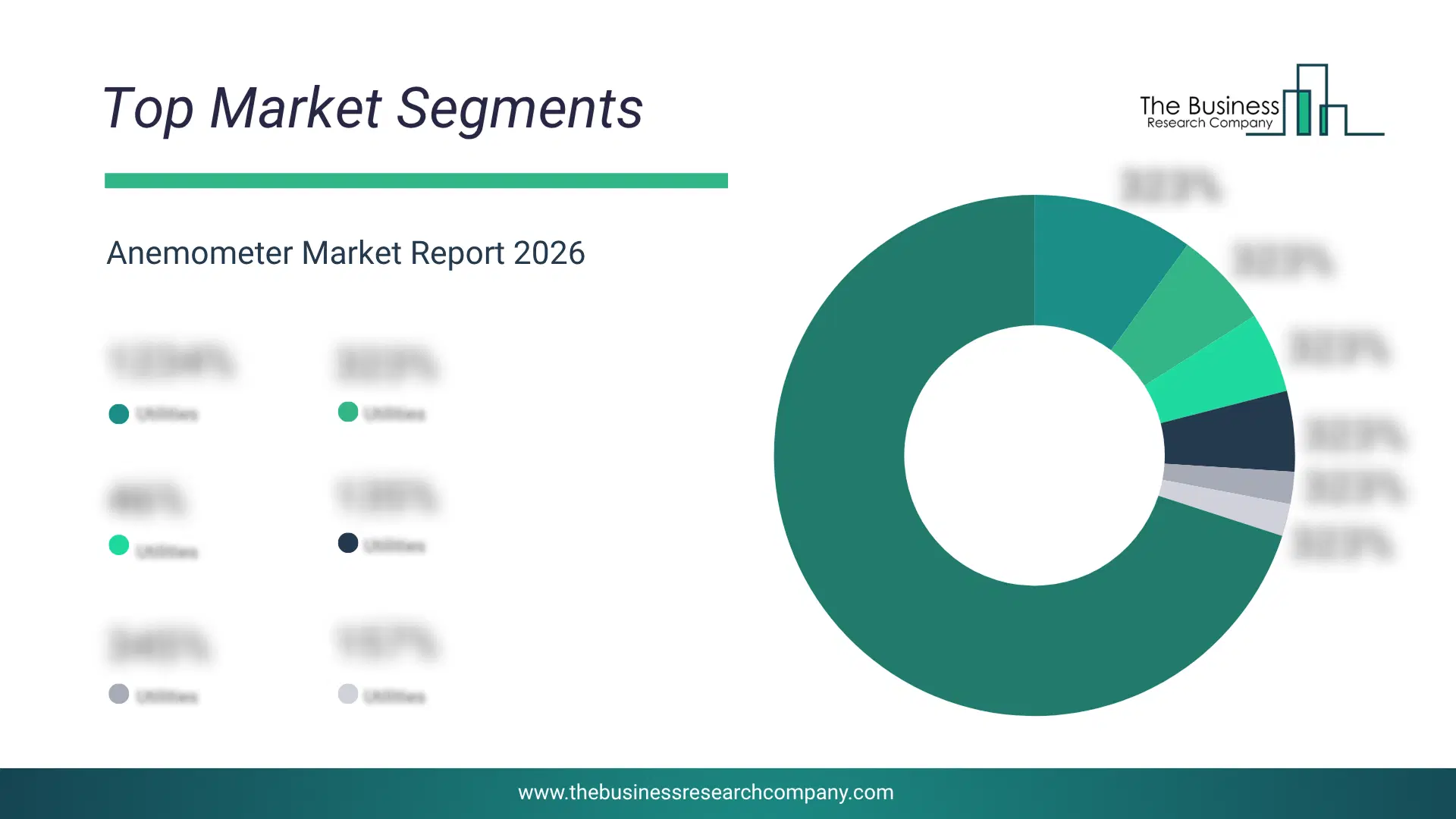
1) By Type: Vane Anemometer, Cup Anemometer, Hot-Wire Anemometer, Other Types 2) By Technology: Light Detection And Ranging (LIDAR), Sonic Detection And Ranging (SODAR) 3) By Measurement Type: Air Velocity Measurement, Wind Speed Measurement, Wind Pressure Measurement 4) By Application: Offshore, Onshore 5) By End-User Industry: Agriculture, Aviation, Oil And Gas Industries, Marine, Transport And Logistics, Other End-User Industries Subsegments: 1) By Vane Anemometer: Digital Vane Anemometer, Analog Vane Anemometer, Handheld Vane Anemometer, Fixed Vane Anemometer 2) By Cup Anemometer: Three-Cup Anemometer, Four-Cup Anemometer, Wireless Cup Anemometer, Mechanical Cup Anemometer 3) By Hot-Wire Anemometer: Constant Temperature Hot-Wire Anemometer, Constant Current Hot-Wire Anemometer, Single Sensor Hot-Wire Anemometer, Multi-Sensor Hot-Wire Anemometer 4) By Other Types: Ultrasonic Anemometer, Laser Doppler Anemometer, Acoustic Resonance Anemometer, Pressure Tube AnemometerWhat Is The Driver Of The Anemometer Market?
The increasing adoption of wind energy is expected to propel the growth of the anemometer market going forward. The adoption of wind energy is on rise due to government policies, cost reductions, technological advancements, and the global push for carbon neutrality. The increasing adoption of wind energy is due to its sustainability, cost-effectiveness, technological advancements, and global efforts to reduce carbon emissions. An anemometer is crucial in wind energy as it measures wind speed and direction, helping assess potential wind farm locations, optimize turbine efficiency, and monitor real-time wind conditions for power generation. For instance, in April 2024, according to the Global Wind Energy Council, a Portugal-based international trade association for the wind power industry, in 2023, a record-high 117 GW of new wind power capacity was installed worldwide, marking a 50% increase compared to the previous year. The year recorded the highest number of new onshore wind installations, exceeding 100 GW, and the second-highest for offshore wind, with 11 GW. The global wind industry also surpassed the 1 TW milestone of installed capacity, with expectations to reach 2 TW by 2030. Therefore, the increasing adoption of wind energy is driving the growth of the anemometer industry.Key Players In The Global Anemometer Market
Major companies operating in the anemometer market are Thermo Fisher Scientific Inc., Saras Equipments, Teledyne FLIR LLC, Vaisala Corporation, SONIC Corporation, Omega Engineering Inc., Kanomax USA Inc., Lufft, FT Technologies, Gill Instruments Limited, ANEOS Corporation, E+E Elektronik Ges.m.b.H., Delta Ohm Benelux, Cole-Parmer Instrument Company LLC., PCE Instruments India Private Ltd., R. M. Young Company, Ammonit Measurement GmbH, IED Electronics, LCJ Capteurs, NRG Systems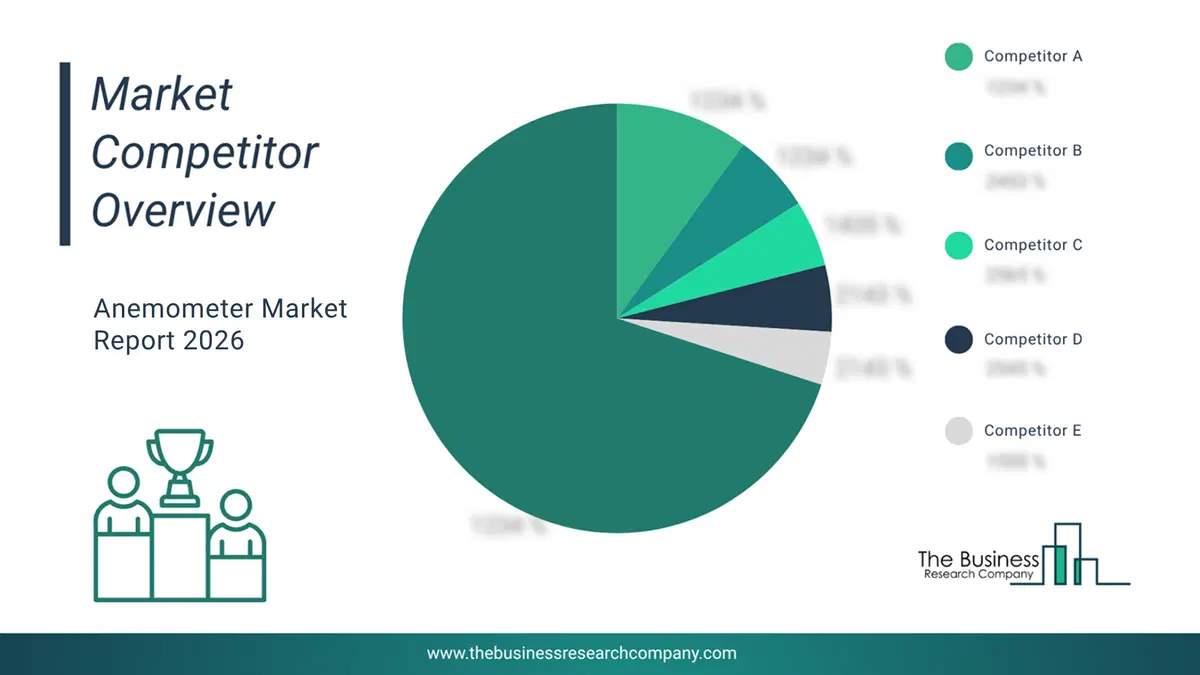
This chart is for illustrative purposes; the full report includes a detailed competitor analysis and comprehensive overview of the top 10 companies in the market.
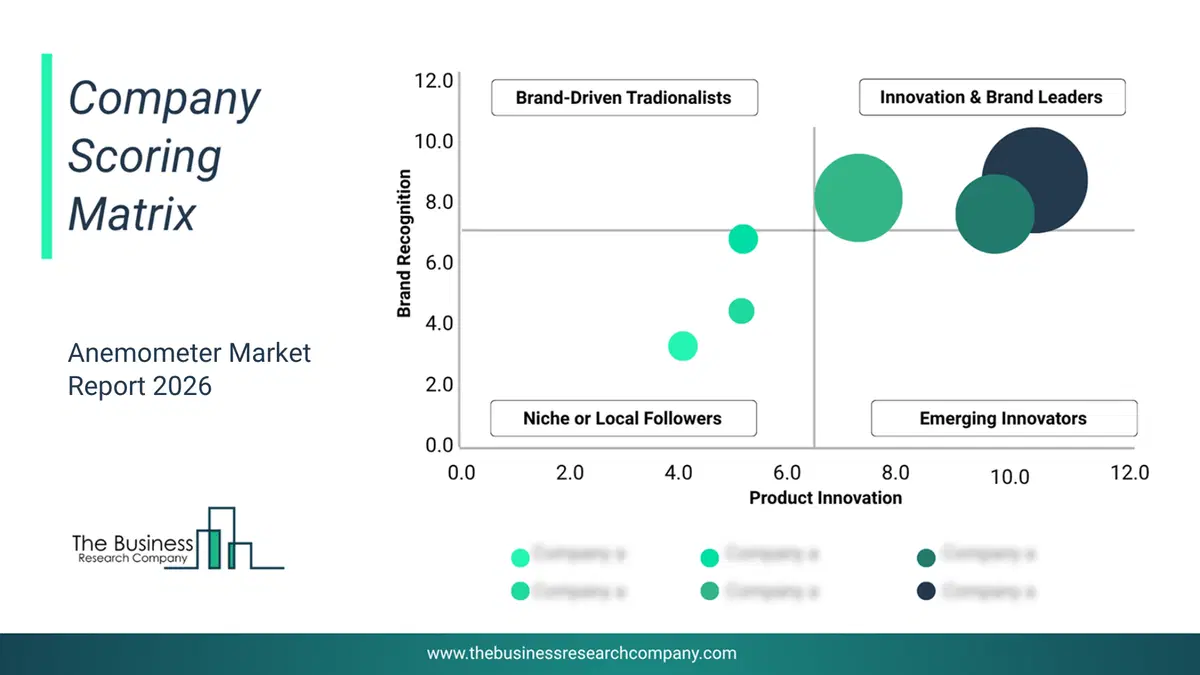
This chart maps companies by product innovation and brand strength, with bubble size indicating relative revenue, helping identify market leaders, challengers, and niche players. This is an illustrative chart; the full report provides a complete and accurate competitive analysis.
Global Anemometer Market Trends and Insights
Major companies operating in the anemometer market are focusing on developing dual-axis ultrasonic anemometers to enhance measurement accuracy, durability, and operational efficiency. A dual-axis ultrasonic anemometer refers to a wind measurement device that uses ultrasonic sensors to measure wind speed and direction along two perpendicular axes without moving parts. For instance, in July 2023, Gill Instruments Ltd., a UK-based sensor manufacturer, launched the WindUltra, a dual-axis ultrasonic anemometer designed for various marine and land applications. The WindUltra features rapid installation and alignment options, including a twist-lock 1-inch pole mount and a 1.75-2 inch band-clamp pole mount. Additionally, it offers high-precision wind measurement capabilities, making it suitable for diverse environmental conditions.What Are Latest Mergers And Acquisitions In The Anemometer Market?
In October 2024, Senseca, a Germany-based environmental monitoring and measurement technology company, acquired Biral for an undisclosed amount. Through this acquisition, Senseca aims to enhance its meteorological sensing capabilities by integrating Biral’s high-precision anemometers and other advanced weather monitoring instruments, supporting its strategic focus on weather monitoring and renewable energy applications. Biral is a UK-based company that specializes in manufacturing advanced meteorological sensors, including anemometers.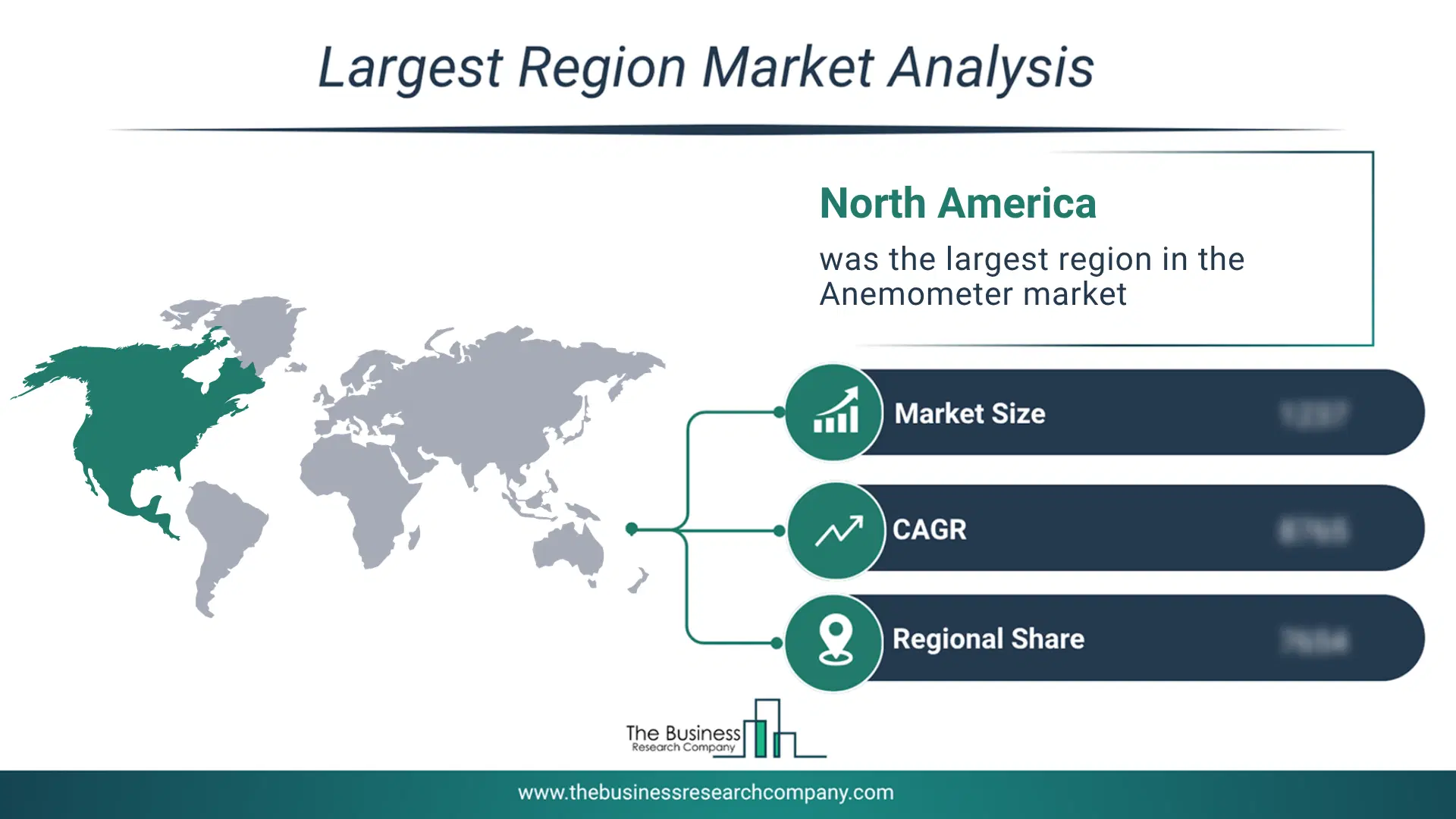
Regional Outlook
North America was the largest region in the anemometer market in 2025. Asia-Pacific is expected to be the fastest-growing region in the forecast period. The regions covered in this market report are Asia-Pacific, South East Asia, Western Europe, Eastern Europe, North America, South America, Middle East, Africa The countries covered in this market report are Australia, Brazil, China, France, Germany, India, Indonesia, Japan, Taiwan, Russia, South Korea, UK, USA, Canada, Italy, Spain.What Defines the Anemometer Market?
The anemometer market consists of revenues earned by entities by providing services such as wind speed monitoring, weather data analysis, turbine performance optimization, environmental assessment, and remote sensing integration. The market value includes the value of related goods sold by the service provider or included within the service offering. The anemometer market also includes sales of ultrasonic anemometers, portable anemometers, laser Doppler anemometers, digital anemometers, and thermal anemometers. Values in this market are ‘factory gate’ values, that is the value of goods sold by the manufacturers or creators of the goods, whether to other entities (including downstream manufacturers, wholesalers, distributors and retailers) or directly to end customers. The value of goods in this market includes related services sold by the creators of the goods.How is Market Value Defined and Measured?
The market value is defined as the revenues that enterprises gain from the sale of goods and/or services within the specified market and geography through sales, grants, or donations in terms of the currency (in USD unless otherwise specified). The revenues for a specified geography are consumption values that are revenues generated by organizations in the specified geography within the market, irrespective of where they are produced. It does not include revenues from resales along the supply chain, either further along the supply chain or as part of other products.
This chart presents market attractiveness based on a quantitative evaluation of growth, competition, strategic alignment, and risk, offering a clear view of opportunity areas for decision-making. This chart is for illustrative purposes; the full report contains the complete analysis.

This chart highlights the Total Addressable Market (TAM) by estimating the maximum revenue opportunity using an assumption-driven approach, supporting strategic planning and opportunity sizing across markets. The chart is illustrative; the full report provides a more comprehensive analysis.
What Key Data and Analysis Are Included in the Anemometer Market Report 2026?
The anemometer market research report is one of a series of new reports from The Business Research Company that provides market statistics, including industry global market size, regional shares, competitors with the market share, detailed market segments, market trends and opportunities, and any further data you may need to thrive in the anemometer industry. The market research report delivers a complete perspective of everything you need, with an in-depth analysis of the current and future state of the industry.Anemometer Market Report Forecast Analysis
| Report Attribute | Details |
|---|---|
| Market Size Value In 2026 | $40.96 billion |
| Revenue Forecast In 2030 | $52.58 billion |
| Growth Rate | CAGR of 6.4% from 2026 to 2030 |
| Base Year For Estimation | 2025 |
| Actual Estimates/Historical Data | 2020-2025 |
| Forecast Period | 2026 - 2030 |
| Market Representation | Revenue in USD Billion and CAGR from 2026 to 2030 |
| Segments Covered | Type, Technology, Measurement Type, Application, End-User Industry |
| Regional Scope | Asia-Pacific, Western Europe, Eastern Europe, North America, South America, Middle East, Africa |
| Key Companies Profiled | Thermo Fisher Scientific Inc., Saras Equipments, Teledyne FLIR LLC, Vaisala Corporation, SONIC Corporation, Omega Engineering Inc., Kanomax USA Inc., Lufft, FT Technologies, Gill Instruments Limited, ANEOS Corporation, E+E Elektronik Ges.m.b.H., Delta Ohm Benelux, Cole-Parmer Instrument Company LLC., PCE Instruments India Private Ltd., R. M. Young Company, Ammonit Measurement GmbH, IED Electronics, LCJ Capteurs, NRG Systems |
| Customization Scope | Request for Customization |
| Pricing And Purchase Options | Explore Purchase Options |