
Animal Model Market Report 2026
Global Outlook – By Animal Type (Mice, Rat, Guinea Pigs, Rabbits, Hamsters, Other Animal Types), By Technology (Clustered Regularly Interspaced Short Palindromic Repeats (CRISPR), Embryonic Stem Cell Injection, Nuclear Transfer, Other Technologies), By Application (Drug Discovery And Development, Basic Research, Other Applications), By End User (Research Institutes, Educational Institutes, Pharmaceutical Companies, Contract Research Organizations) – Market Size, Trends, Strategies, and Forecast to 2030
Animal Model Market Overview
• Animal Model market size has reached to $2.07 billion in 2025 • Expected to grow to $2.97 billion in 2030 at a compound annual growth rate (CAGR) of 7.3% • Growth Driver: The Rise In Pharmaceutical R&D Spending Fueling Market Growth Due To Increasing Investment In Drug Innovation • Market Trend: Triple-Immunodeficient Mice And Their Impact On Biomedical Research • North America was the largest region in 2025 and Asia-Pacific is the fastest growing region.What Is Covered Under Animal Model Market?
An animal model is a non-human species used in scientific research to understand biological processes, study disease mechanisms, and evaluate the efficacy and safety of new treatments and interventions. These models allow researchers to advance medical knowledge and develop new therapies, bridging the gap between basic research and clinical application. The main animal types of animal models are mice, rats, guinea pigs, rabbits, hamsters, and others. Mice are small rodents belonging to the family Muridae, typically characterized by a pointed snout, rounded ears, and long, hairless tails. The technology includes clustered regularly interspaced short palindromic repeats (CRISPR), embryonic stem cell injection, nuclear transfer, and others, and it is used in various applications such as drug discovery and development, basic research, and others. The end users of animal models are research institutes, educational institutes, pharmaceutical companies, and contract research organizations.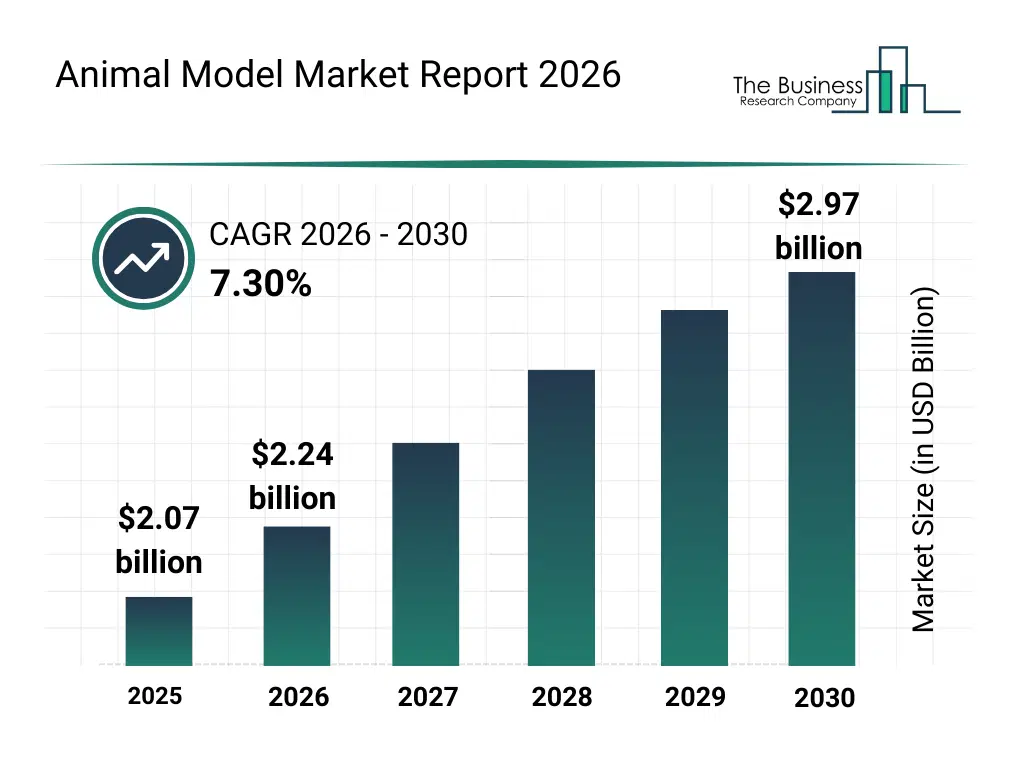
What Is The Animal Model Market Size and Share 2026?
The animal model market size has grown strongly in recent years. It will grow from $2.07 billion in 2025 to $2.24 billion in 2026 at a compound annual growth rate (CAGR) of 8.5%. The growth in the historic period can be attributed to increasing prevalence of chronic diseases, rising demand for preclinical research, growth in pharmaceutical r&d, technological advancements in laboratory equipment, expansion of academic research institutions.What Is The Animal Model Market Growth Forecast?
The animal model market size is expected to see strong growth in the next few years. It will grow to $2.97 billion in 2030 at a compound annual growth rate (CAGR) of 7.3%. The growth in the forecast period can be attributed to adoption of ai and machine learning in preclinical studies, rise of precision medicine initiatives, growth of crcos and outsourcing, expansion of genetically modified animal models, increased focus on translational research. Major trends in the forecast period include advanced animal model development, genetically engineered models, high-throughput screening in preclinical studies, integration of imaging and diagnostic tools, expansion of contract research organizations.
Global Animal Model Market Segmentation
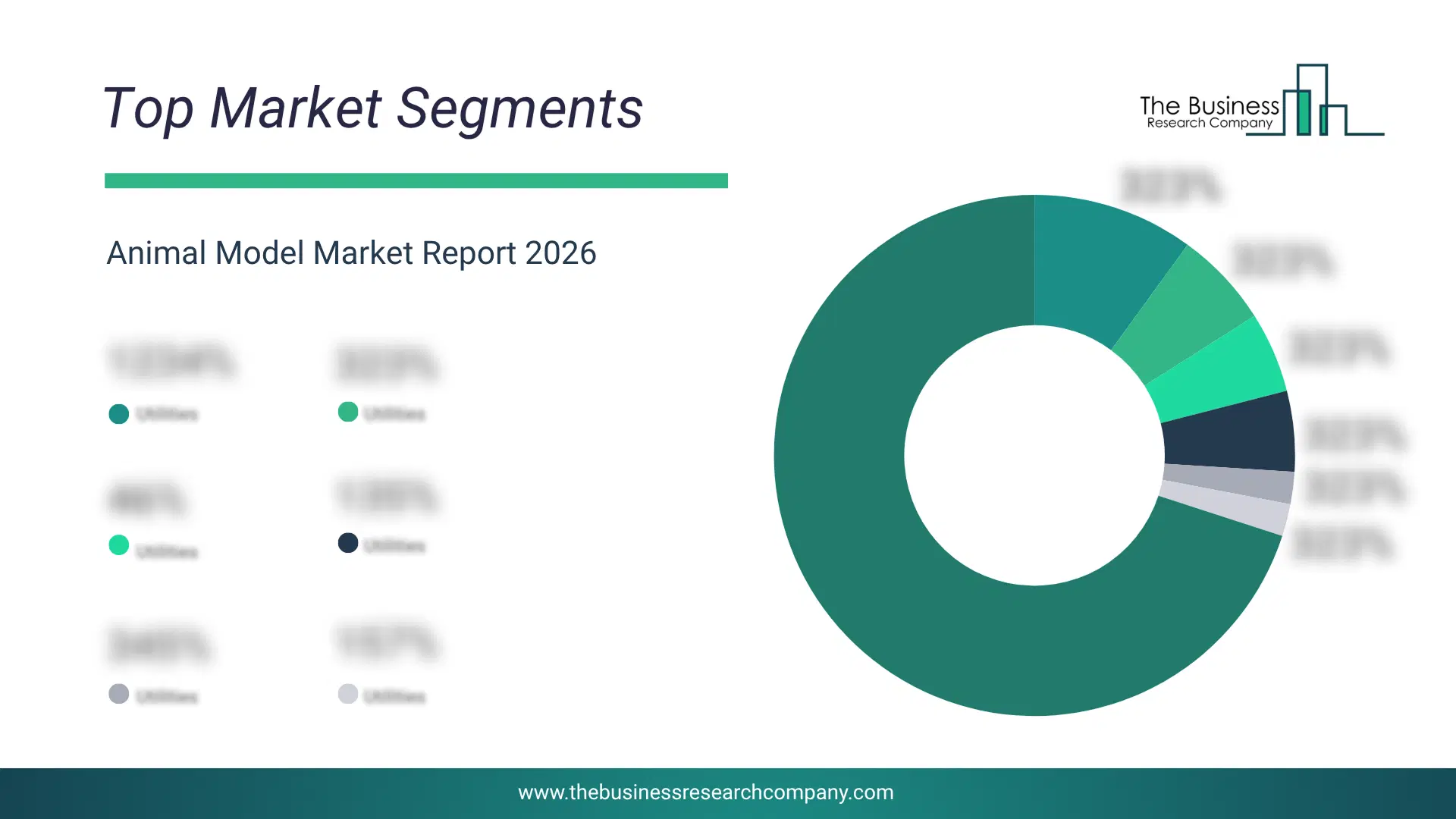
1) By Animal Type: Mice, Rat, Guinea Pigs, Rabbits, Hamsters, Other Animal Types 2) By Technology: Clustered Regularly Interspaced Short Palindromic Repeats (CRISPR), Embryonic Stem Cell Injection, Nuclear Transfer, Other Technologies 3) By Application: Drug Discovery And Development, Basic Research, Other Applications 4) By End User: Research Institutes, Educational Institutes, Pharmaceutical Companies, Contract Research Organizations Subsegments: 1) By Mice: Inbred Mice, Outbred Mice, Knockout Mice, Transgenic Mice 2) By Rat: Inbred Rats, Outbred Rats, Transgenic Rats, Knockout Rats 3) By Guinea Pigs: Standard Guinea Pigs, Immunodeficient Guinea Pigs 4) By Rabbits: New Zealand White Rabbits, Dutch Belted Rabbits, Other Rabbit Breeds 5) By Hamsters: Syrian Hamsters, Chinese Hamsters 6) By Other Animal Types: Non-Human Primates (Monkeys, Chimpanzees), Dogs, Pigs, Sheep, Ferrets, Other Small Animals (Ferrets, Gerbils)What Is The Driver Of The Animal Model Market?
The growing pharmaceutical research and development (R&D) investment is expected to propel the growth of the animal model market going forward. Pharmaceutical R&D involves discovering, developing, and testing new therapies, requiring extensive preclinical studies to evaluate safety, efficacy, and biological mechanisms before advancing to human trials. The rise in R&D spending is driven by the growing need for innovative treatments, increasing prevalence of complex diseases, and continuous scientific advancement. Animal models play a critical role in this process by providing reliable preclinical platforms that mimic human physiology, enabling predictive assessment of drug performance. For instance, in November 2023, according to the report published by the European Federation of Pharmaceutical Industries and Associations, a Belgium-based trade association, pharmaceutical industry research and development expenditure rose to 50,000 million in 2023, up from 47,010 million in 2022. Therefore, the rising pharmaceutical R&D expenditure is driving the growth of the animal model industry.Key Players In The Global Animal Model Market
Major companies operating in the animal model market are Eurofins Scientific SE, Charles River Laboratories International Inc., Pharmaron Beijing Co Ltd, Inotiv Inc., Biocytogen, Taconic Biosciences Incorporation, Cyagen Biosciences, Trans Genic Incorporation, Crown Bioscience Incorporation, Harbor BioMed, PharmaLegacy, PsychoGenics, Biomere Biomedical Research Models Inc., Genoway S.A, Alloy Therapeutics, Janvier Labs, Hera Biolabs, Ozgene Pty Ltd, Transposagen Biopharmaceuticals Inc., KMT Hepatech Inc., AniLocus Inc., BioXpert, Harlan Sprague Dawley Inc.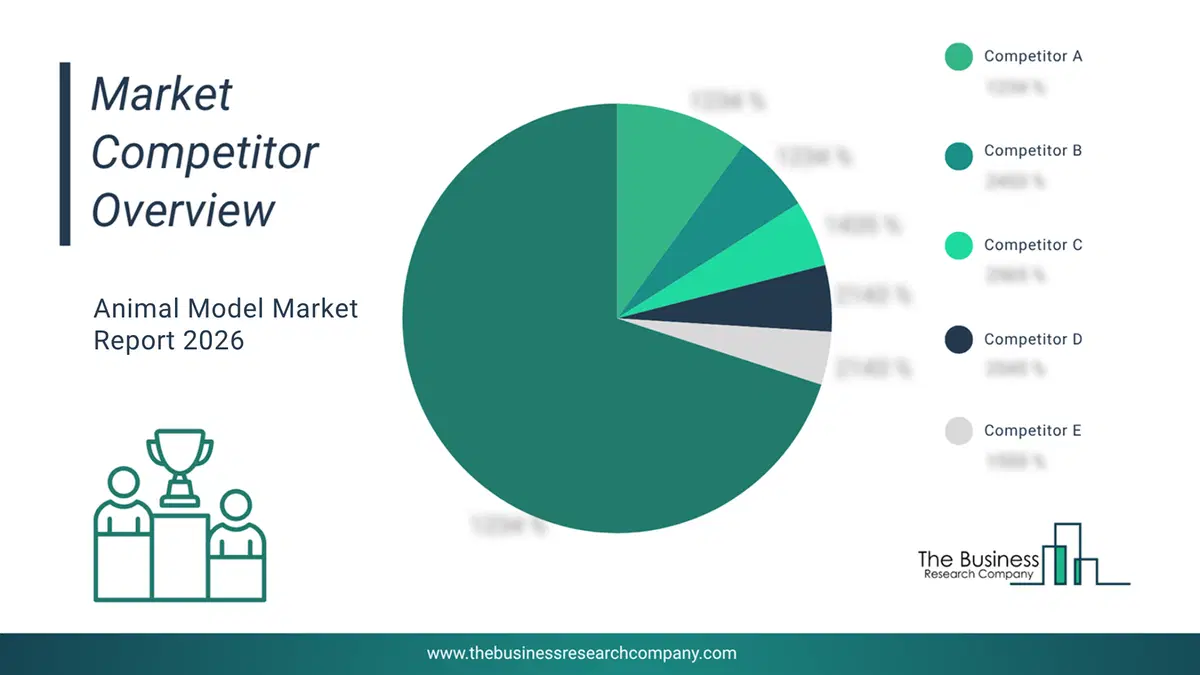
This chart is for illustrative purposes; the full report includes a detailed competitor analysis and comprehensive overview of the top 10 companies in the market.
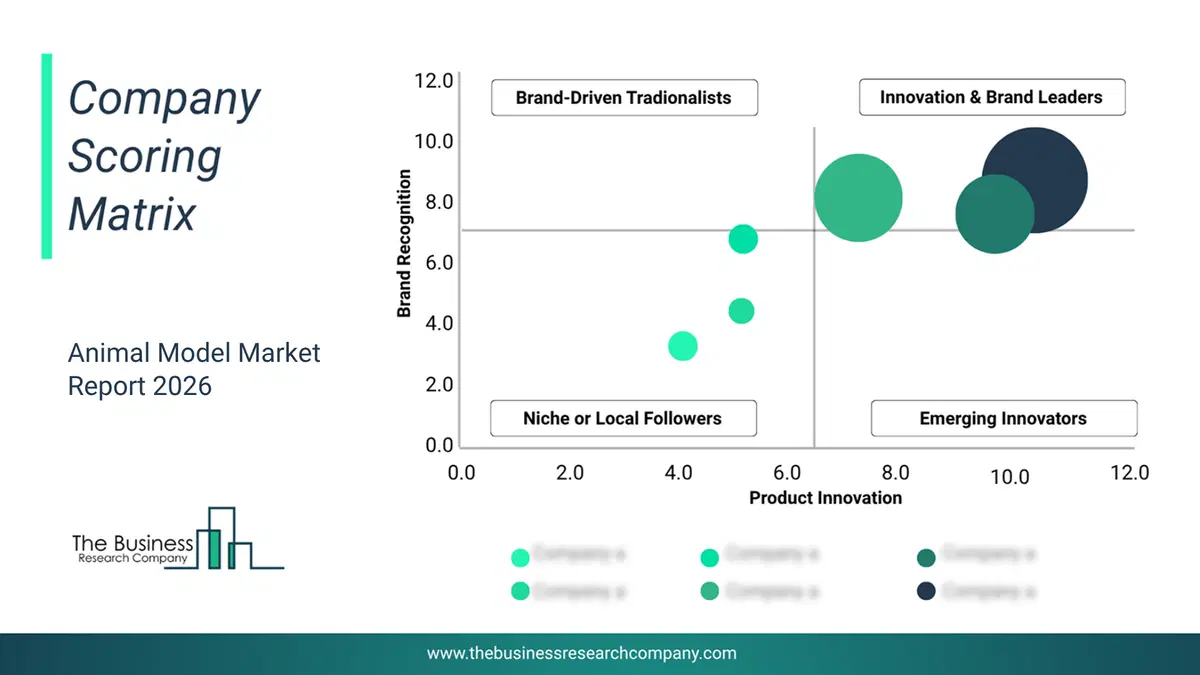
This chart maps companies by product innovation and brand strength, with bubble size indicating relative revenue, helping identify market leaders, challengers, and niche players. This is an illustrative chart; the full report provides a complete and accurate competitive analysis.
Global Animal Model Market Trends and Insights
Major companies operating in the animal model market are focusing on developing innovative products, such as triple-immunodeficient animal models, to enhance the accuracy and reliability of preclinical studies, support advanced biomedical research, and facilitate the development of novel therapies for complex human diseases. Triple-immunodeficient animal models are specially engineered animals, typically mice, that lack three key immune system components. These models are invaluable in biomedical research, particularly for studying human diseases and developing new treatments. For instance, in January 2024, Charles River Laboratories International, Inc., a US-based pharmaceutical company, launched NCG mouse strains, a triple-immunodeficient mouse model for oncology research. NCG mice are triple immunodeficient, lacking functional/mature T, B, and NK cells, and exhibit reduced macrophage and dendritic cell function. These animal models can host xenograft cells, tissues, and human immune system components. This mouse model is ideal for research in oncology, immunology, tumor biology, infectious diseases, graft-versus-host disease (GvHD), diabetes, regenerative medicine, hematopoiesis, and tissue transplant studies. NCG mice can also create humanized mice by engrafting PBMCs or CD34+ stem cells, closely mimicking the human immune system.What Are Latest Mergers And Acquisitions In The Animal Model Market?
In May 2024, The Jackson Laboratory, a US-based non-profit biomedical research organization that provides animal models, entered into a partnership with AbTherx Inc. to develop advanced preclinical models for testing novel therapeutics. Through this partnership, The Jackson Laboratory aims to accelerate and strengthen antibody discovery efforts by integrating its advanced preclinical models and translational research capabilities with AbTherx’s next-generation antibody engineering platform. AbTherx Inc. is a US-based biotechnology company specializing in innovative antibody discovery technologies designed to streamline and de-risk therapeutic development.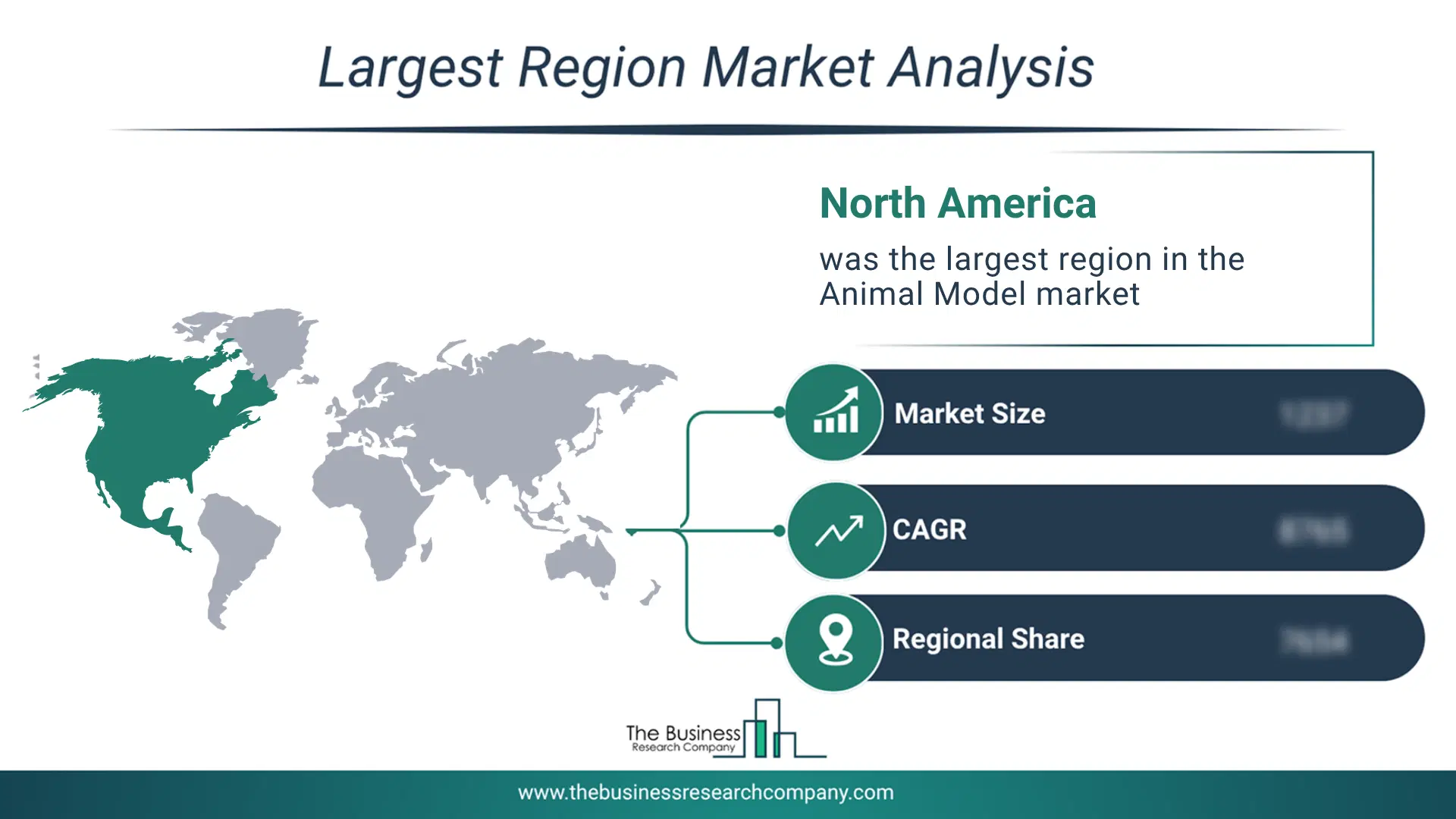
Regional Insights
North America was the largest region in the animal model market in 2025. Asia-Pacific is expected to be the fastest-growing region in the forecast period. The regions covered in this market report are Asia-Pacific, South East Asia, Western Europe, Eastern Europe, North America, South America, Middle East, Africa. The countries covered in this market report are Australia, Brazil, China, France, Germany, India, Indonesia, Japan, Taiwan, Russia, South Korea, UK, USA, Canada, Italy, Spain.What Defines the Animal Model Market?
The animal model market consists of revenues earned by entities by providing services custom animal model development, animal breeding and colony management, behavioral and neurological testing, and surgical services. The market value includes the value of related goods sold by the service provider or included within the service offering. The animal model market consists of sales of genetically engineered models, spontaneous models, induced models, xenograft and allograft models, and environmental models. Values in this market are ‘factory gate’ values, that is the value of goods sold by the manufacturers or creators of the goods, whether to other entities (including downstream manufacturers, wholesalers, distributors, and retailers) or directly to end customers. The value of goods in this market includes related services sold by the creators of the goods.How is Market Value Defined and Measured?
The market value is defined as the revenues that enterprises gain from the sale of goods and/or services within the specified market and geography through sales, grants, or donations in terms of the currency (in USD unless otherwise specified). The revenues for a specified geography are consumption values that are revenues generated by organizations in the specified geography within the market, irrespective of where they are produced. It does not include revenues from resales along the supply chain, either further along the supply chain or as part of other products.
This chart presents market attractiveness based on a quantitative evaluation of growth, competition, strategic alignment, and risk, offering a clear view of opportunity areas for decision-making. This chart is for illustrative purposes; the full report contains the complete analysis.

This chart highlights the Total Addressable Market (TAM) by estimating the maximum revenue opportunity using an assumption-driven approach, supporting strategic planning and opportunity sizing across markets. The chart is illustrative; the full report provides a more comprehensive analysis.
What Key Data and Analysis Are Included in the Animal Model Market Report 2026?
The animal model market research report is one of a series of new reports from The Business Research Company that provides market statistics, including industry global market size, regional shares, competitors with the market share, detailed market segments, market trends and opportunities, and any further data you may need to thrive in the animal model industry. The market research report delivers a complete perspective of everything you need, with an in-depth analysis of the current and future state of the industry.Animal Model Market Report Forecast Analysis
| Report Attribute | Details |
|---|---|
| Market Size Value In 2026 | $2.24 billion |
| Revenue Forecast In 2030 | $2.97 billion |
| Growth Rate | CAGR of 8.5% from 2026 to 2030 |
| Base Year For Estimation | 2025 |
| Actual Estimates/Historical Data | 2020-2025 |
| Forecast Period | 2026 - 2030 |
| Market Representation | Revenue in USD Billion and CAGR from 2026 to 2030 |
| Segments Covered | Animal Type, Technology, Application, End User |
| Regional Scope | Asia-Pacific, Western Europe, Eastern Europe, North America, South America, Middle East, Africa |
| Country Scope | The countries covered in the report are Australia, Brazil, China, France, Germany, India, Indonesia, Japan, Taiwan, Russia, South Korea, UK, USA, Canada, Italy, Spain. |
| Key Companies Profiled | Eurofins Scientific SE, Charles River Laboratories International Inc., Pharmaron Beijing Co Ltd, Inotiv Inc., Biocytogen, Taconic Biosciences Incorporation, Cyagen Biosciences, Trans Genic Incorporation, Crown Bioscience Incorporation, Harbor BioMed, PharmaLegacy, PsychoGenics, Biomere Biomedical Research Models Inc., Genoway S.A, Alloy Therapeutics, Janvier Labs, Hera Biolabs, Ozgene Pty Ltd, Transposagen Biopharmaceuticals Inc., KMT Hepatech Inc., AniLocus Inc., BioXpert, Harlan Sprague Dawley Inc. |
| Customization Scope | Request for Customization |
| Pricing And Purchase Options | Explore Purchase Options |