
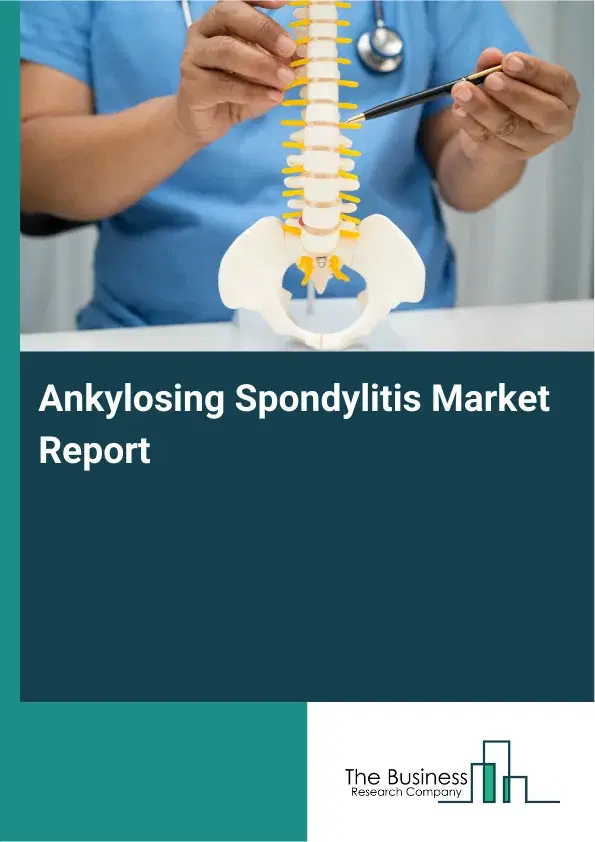
Ankylosing Spondylitis Market Report 2026
Global Outlook – By Treatment Type (Painkillers And Non-Steroidal Anti-Inflammatory Drugs (NSAIDs), Disease-Modifying Anti-Rheumatic Drugs (DMARDS), Biological Therapies, Steroids, Physical Therapies, Surgery), By Molecule (Biologics, Biosimilar, Small Molecules), By Route Of Administration (Parenteral, Oral, Other Routes), By Application (Juveniles, Adults), By End User (Hospitals, Clinics) - Market Size, Trends, Strategies, and Forecast to 2030
Ankylosing Spondylitis Market Overview
• Ankylosing Spondylitis market size has reached to $6.34 billion in 2025 • Expected to grow to $9.42 billion in 2030 at a compound annual growth rate (CAGR) of 8.3% • Growth Driver: Escalating Instances Of Autoimmune Diseases Propel The Ankylosing Spondylitis Market • Market Trend: Regulatory Advancements Strengthening The Ankylosing Spondylitis Market • North America was the largest region in 2025 and Asia-Pacific is the fastest growing region.What Is Covered Under Ankylosing Spondylitis Market?
Ankylosing spondylitis (AS) is a chronic inflammatory disease that primarily affects the spine and sacroiliac joints (the joints connecting the lower spine to the pelvis). It involves inflammation of the joints and entheses and affects joints, leading to pain, stiffness, and progressive loss of mobility in the spine. The main treatment of ankylosing spondylitis includes painkillers and non-steroidal anti-inflammatory drugs (NSAIDs), disease-modifying anti-rheumatic drugs (DMARDs), biological therapies, steroids, and physical therapies, surgery. Painkillers and Non-Steroidal Anti-Inflammatory Drugs (NSAIDs) refer to medications that block the production of certain chemicals in the body that cause pain and swelling, which are used in ankylosing spondylitis treatment to relieve pain and reduce inflammation. Biologics, biosimilars, and small molecules are administered through parenteral, oral, and other routes for applications in juveniles and adults by hospitals, clinics, research laboratories, and other end users.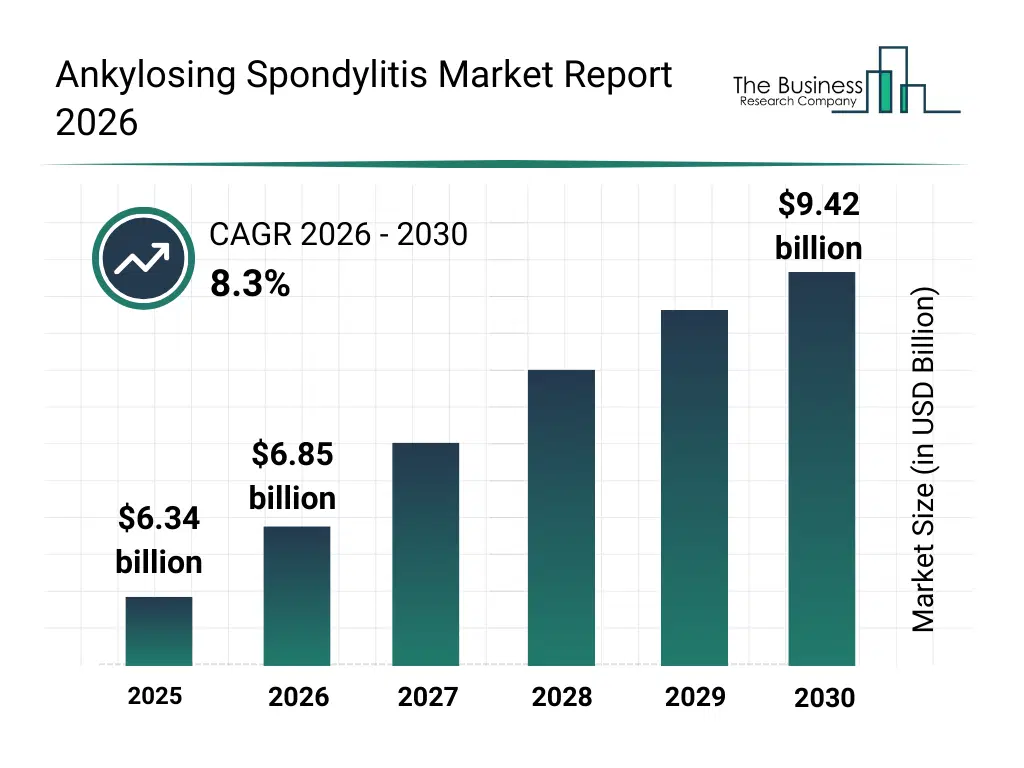
What Is The Ankylosing Spondylitis Market Size and Share 2026?
The ankylosing spondylitis market size has grown strongly in recent years. It will grow from $6.34 billion in 2025 to $6.85 billion in 2026 at a compound annual growth rate (CAGR) of 8.0%. The growth in the historic period can be attributed to improved diagnostic awareness, wider availability of NSAIDs and DMARDs, increased specialist rheumatology services, expansion of hospital-based treatment access, growing use of imaging for disease monitoring.What Is The Ankylosing Spondylitis Market Growth Forecast?
The ankylosing spondylitis market size is expected to see strong growth in the next few years. It will grow to $9.42 billion in 2030 at a compound annual growth rate (CAGR) of 8.3%. The growth in the forecast period can be attributed to rising adoption of biologics and biosimilars, increasing focus on personalized medicine, expansion of advanced biologic pipelines, growing demand for long-term disease management, increasing investments in autoimmune research. Major trends in the forecast period include increasing adoption of biologic therapies, rising use of targeted DMARDs, growing focus on early disease diagnosis, expansion of personalized treatment approaches, enhanced integration of physical therapy programs.
Global Ankylosing Spondylitis Market Segmentation
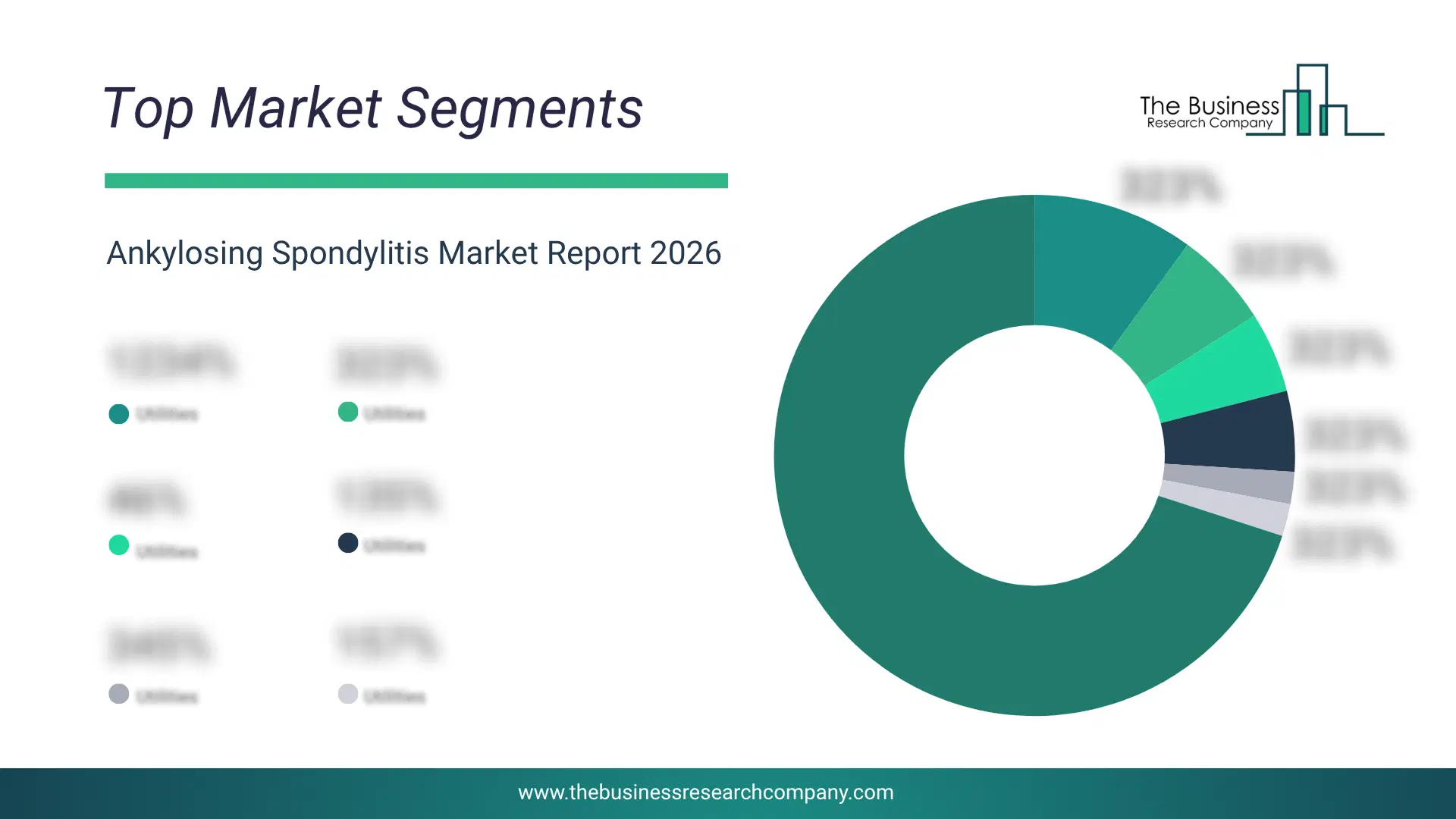
1) By Treatment Type: Painkillers And Non-Steroidal Anti-Inflammatory Drugs (NSAIDs), Disease-Modifying Anti-Rheumatic Drugs (DMARDS), Biological Therapies, Steroids, Physical Therapies, Surgery 2) By Molecule: Biologics, Biosimilar, Small Molecules 3) By Route Of Administration: Parenteral, Oral, Other Routes 4) By Application: Juveniles, Adults 5) By End User: Hospitals, Clinics Subsegments: 1) By Painkillers And Non-Steroidal Anti-Inflammatory Drugs (NSAIDs): Over-The-Counter NSAIDs, Prescription NSAIDs 2) By Disease-Modifying Anti-Rheumatic Drugs (DMARDs): Conventional DMARDs, Targeted DMARDs 3) By Biological Therapies: TNF Inhibitors, IL-17 Inhibitors 4) By Steroids: Oral Steroids, Injectable Steroids 5) By Physical Therapies: Physiotherapy, Exercise Programs 6) By Surgery: Joint Replacement Surgery, Spinal SurgeryWhat Is The Driver Of The Ankylosing Spondylitis Market?
The increase in instances of autoimmune diseases will boost the ankylosing spondylitis market going forward. Autoimmune diseases are a broad group of disorders characterized by an abnormal immune response in which the immune system mistakenly attacks and damages healthy cells, tissues, and organs. Autoimmune diseases, including ankylosing spondylitis, occur when the immune system mistakenly targets the body's own tissues, leading to inflammation and damage. Genetic predisposition and environmental factors contribute to the development of ankylosing spondylitis, a form of autoimmune arthritis primarily affecting the spine and pelvis. For instance, in September 2023, according to the Impact of IBD Report 2023 published by the IBD Clinical and Research Centre, a Canada-based organization that aims to improve the lives of patients with Crohn's disease and ulcerative colitis, with a prevalence of 825 per 100,000 in 2023, over 320,000 people in Canada have inflammatory bowel disease (IBD), and as the prevalence is expected to increase by 2.44% annually, 1.1% of the population, or 470,000 Canadians, is projected to be living with IBD by 2035. Therefore, the increase in instances of autoimmune diseases will drive the future growth of the ankylosing spondylitis industry.Key Players In The Global Ankylosing Spondylitis Market
Major companies operating in the ankylosing spondylitis market are Pfizer Inc., Johnson & Johnson Pvt. Ltd., Merck & Co. Inc., AbbVie Inc., Novartis AG, Bristol-Myers Squibb, Eli Lilly and Company, Gilead Sciences Inc., Boehringer Ingelheim International GmbH, Amgen Inc., Viatris Inc., Astellas Pharma Inc., AstraZeneca plc, UCB Inc., Cipla Inc., Zydus Lifesciences Limited, Celltrion Inc., Hetero Labs Ltd., Janssen Biotech Inc., Reliance Life Sciences Pvt. Ltd.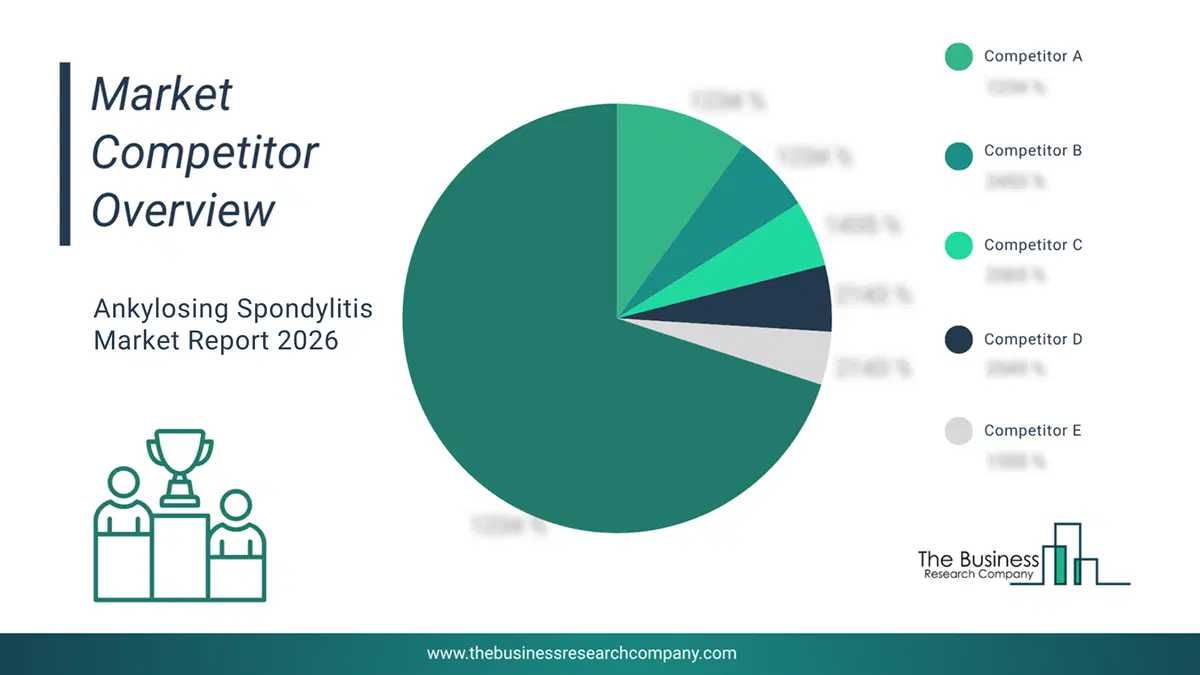
This chart is for illustrative purposes; the full report includes a detailed competitor analysis and comprehensive overview of the top 10 companies in the market.
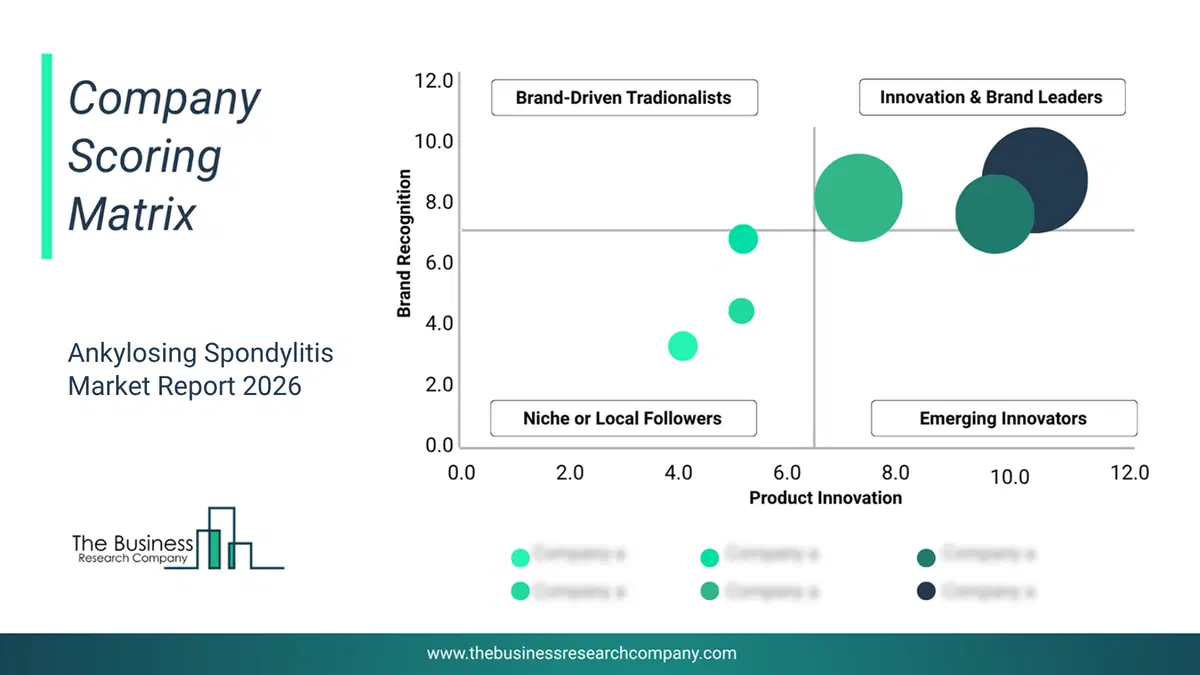
This chart maps companies by product innovation and brand strength, with bubble size indicating relative revenue, helping identify market leaders, challengers, and niche players. This is an illustrative chart; the full report provides a complete and accurate competitive analysis.
Global Ankylosing Spondylitis Market Trends and Insights
Major companies operating in the ankylosing spondylitis market are focusing on developing advanced biologic solutions, such as biosimilars, to enhance patient access, reduce treatment costs, and provide familiar administration options. Biosimilars are therapeutics that leverage established active ingredients of reference biologics while offering comparable efficacy and safety profiles. For instance, in August 2025, Amgen Biotechnology Singapore, a Singapore-based biotech firm, received approval for its biosimilar adalimumab (Amgevita) in both a 40 mg/0.4 mL autoinjector and a 20 mg/0.2 mL prefilled syringe. This therapy is indicated for reducing signs and symptoms in adult patients with active ankylosing spondylitis who have had an inadequate response to conventional therapy. By providing familiar routes of administration, leveraging a well-known active ingredient, and offering a more affordable option in the biologics space.What Are Latest Mergers And Acquisitions In The Ankylosing Spondylitis Market?
In July 2023, Superior Biologics, Inc., a US-based specialty pharmacy and home infusion therapy service company, and Coherus BioSciences, Inc., announced a national distribution agreement. This partnership aims to provide nationwide distribution of YUSIMRY, a biosimilar of Humira, offering patients a high-quality, affordable treatment for conditions like ankylosing spondylitis, rheumatoid arthritis, and Crohn's disease, while helping employers reduce specialty drug costs by over 85%. Coherus BioSciences Inc. is a US-based biopharmaceutical company providing a biosimilar product for ankylosing spondylitis (AS) called YUSIMRY (adalimumab-aqvh).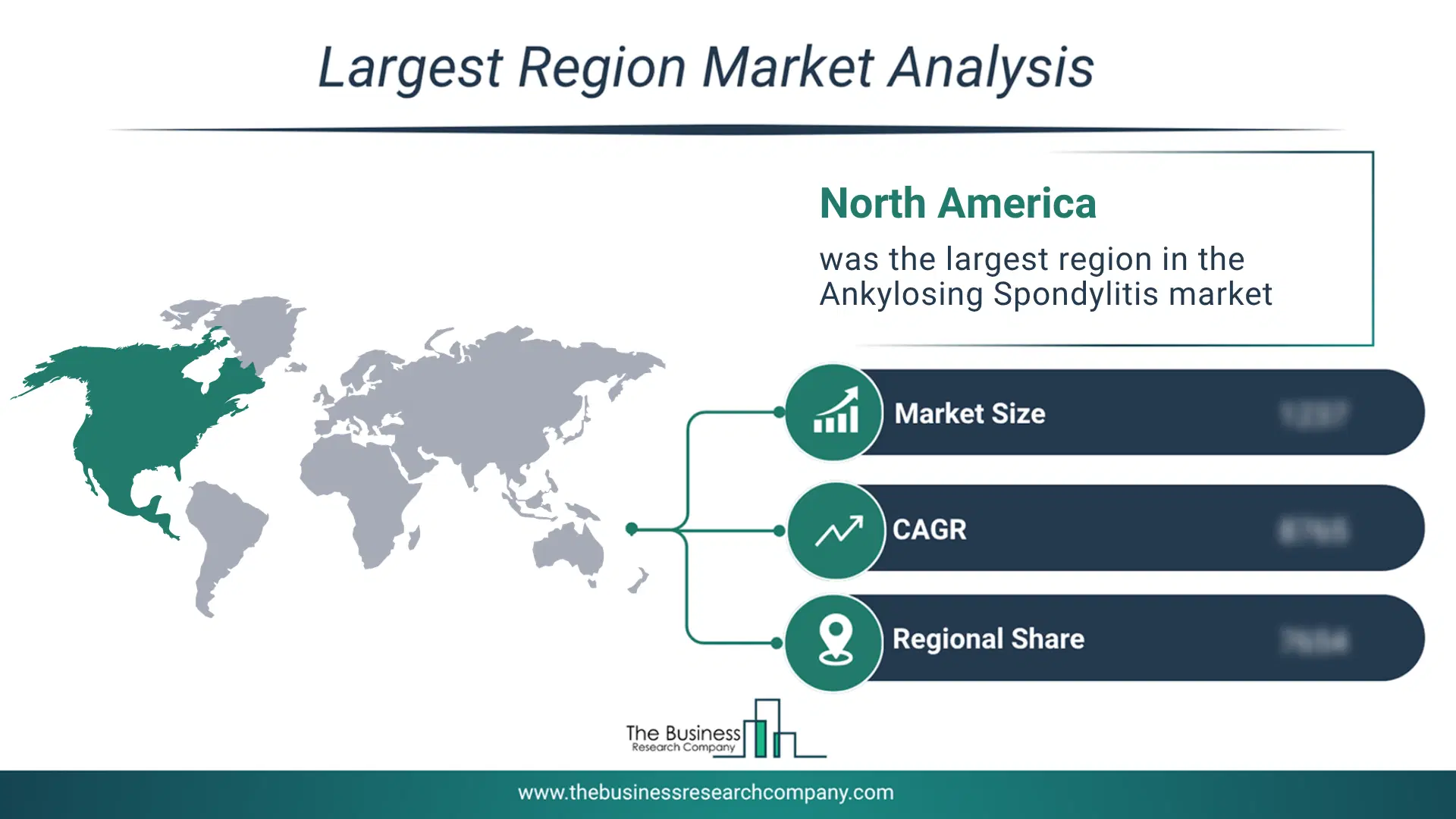
Regional Outlook
North America was the largest region in the ankylosing spondylitis market in 2025. Asia-Pacific is expected to be the fastest-growing region in the forecast period. The regions covered in this market report are Asia-Pacific, South East Asia, Western Europe, Eastern Europe, North America, South America, Middle East, Africa. The countries covered in this market report are Australia, Brazil, China, France, Germany, India, Indonesia, Japan, Taiwan, Russia, South Korea, UK, USA, Canada, Italy, Spain.What Defines the Ankylosing Spondylitis Market?
The ankylosing spondylitis market consists of sales of nonsteroidal anti-inflammatory drugs, disease-modifying antirheumatic drugs (DMARDs), tumor necrosis factor (TNF) inhibitors, interleukin inhibitors, and corticosteroids. Values in this market are ‘factory gate’ values, that is the value of goods sold by the manufacturers or creators of the goods, whether to other entities (including downstream manufacturers, wholesalers, distributors, and retailers) or directly to end customers. The value of goods in this market includes related services sold by the creators of the goods.How is Market Value Defined and Measured?
The market value is defined as the revenues that enterprises gain from the sale of goods and/or services within the specified market and geography through sales, grants, or donations in terms of the currency (in USD unless otherwise specified). The revenues for a specified geography are consumption values that are revenues generated by organizations in the specified geography within the market, irrespective of where they are produced. It does not include revenues from resales along the supply chain, either further along the supply chain or as part of other products.
This chart presents market attractiveness based on a quantitative evaluation of growth, competition, strategic alignment, and risk, offering a clear view of opportunity areas for decision-making. This chart is for illustrative purposes; the full report contains the complete analysis.

This chart highlights the Total Addressable Market (TAM) by estimating the maximum revenue opportunity using an assumption-driven approach, supporting strategic planning and opportunity sizing across markets. The chart is illustrative; the full report provides a more comprehensive analysis.
What Key Data and Analysis Are Included in the Ankylosing Spondylitis Market Report 2026?
The ankylosing spondylitis market research report is one of a series of new reports from The Business Research Company that provides market statistics, including industry global market size, regional shares, competitors with the market share, detailed market segments, market trends and opportunities, and any further data you may need to thrive in the ankylosing spondylitis industry. The market research report delivers a complete perspective of everything you need, with an in-depth analysis of the current and future state of the industry.Ankylosing Spondylitis Market Report Forecast Analysis
| Report Attribute | Details |
|---|---|
| Market Size Value In 2026 | $6.85 billion |
| Revenue Forecast In 2030 | $9.42 billion |
| Growth Rate | CAGR of 8.3% from 2026 to 2030 |
| Base Year For Estimation | 2025 |
| Actual Estimates/Historical Data | 2020-2025 |
| Forecast Period | 2026 - 2030 |
| Market Representation | Revenue in USD Billion and CAGR from 2026 to 2030 |
| Segments Covered | Treatment Type, Molecule, Route Of Administration, Application, End User |
| Regional Scope | Asia-Pacific, Western Europe, Eastern Europe, North America, South America, Middle East, Africa |
| Country Scope | The countries covered in the report are Australia, Brazil, China, France, Germany, India, Indonesia, Japan, Taiwan, Russia, South Korea, UK, USA, Canada, Italy, Spain |
| Key Companies Profiled | Pfizer Inc., Johnson & Johnson Pvt. Ltd., Merck & Co. Inc., AbbVie Inc., Novartis AG, Bristol-Myers Squibb, Eli Lilly and Company, Gilead Sciences Inc., Boehringer Ingelheim International GmbH, Amgen Inc., Viatris Inc., Astellas Pharma Inc., AstraZeneca plc, UCB Inc., Cipla Inc., Zydus Lifesciences Limited, Celltrion Inc., Hetero Labs Ltd., Janssen Biotech Inc., Reliance Life Sciences Pvt. Ltd. |
| Customization Scope | Request for Customization |
| Pricing And Purchase Options | Explore Purchase Options |