
Anti-Cancer MAbS Market Report 2026
Global Outlook – By Type (Murine Antibodies, Chimeric Antibodies, Humanized Antibodies, Other Types), By Application (Blood Cancer, Breast Cancer, Lung Cancer, Melanoma, Colorectal Cancer, Liver Cancer, Other Applications), By End User (Hospitals, Research Institutes, Other End Users) – Market Size, Trends, Strategies, and Forecast to 2030
Anti-Cancer MAbS Market Overview
• Anti-Cancer MAbS market size has reached to $71.25 billion in 2025 • Expected to grow to $112.41 billion in 2030 at a compound annual growth rate (CAGR) of 9.5% • Growth Driver: Rising Global Cancer Prevalence Fuels Anticancer monoclonal antibodies (mAbs) Market Growth • Market Trend: Innovative Approaches In Anticancer Monoclonal Antibodies Market • North America was the largest region in 2025 and Asia-Pacific is the fastest growing region.Market Gains By 2030 – Top Opportunities By Segment
Market Gain identifies the most promising market opportunities by highlighting the segments or products expected to generate the highest incremental revenue growth over the next five years.
What Is Covered Under Anti-Cancer MAbS Market?
Anticancer monoclonal antibodies (mAbs) are the antibodies used for monoclonal antibody therapy to target and destroy cancer cells. These mAbs are intended to bind to specific proteins or chemicals located on the surface of cancer cells, preventing cancer growth, and spread. The main types of anti-cancer mAbs are murine antibodies, chimeric antibodies, humanized antibodies, and others. Murine refers to a type of monoclonal antibody (mAb) that is a laboratory-made copy of a single antibody, produced by a single B cell, derived from mice or rats, they are used to bind to a specific antigen. These are used in various applications such as blood cancer, breast cancer, lung cancer, melanoma, colorectal cancer, liver cancer and others and are used in hospitals, research institutes, and others.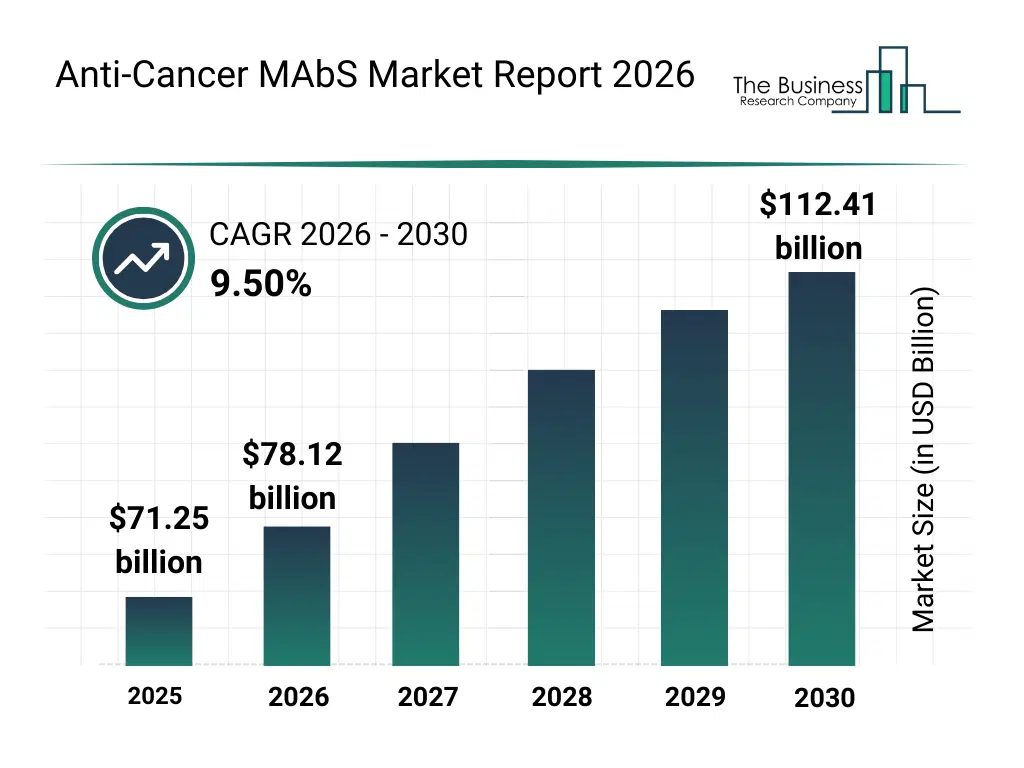
What Is The Anti-Cancer MAbS Market Size and Share 2026?
The anti-cancer mabs market size has grown strongly in recent years. It will grow from $71.25 billion in 2025 to $78.12 billion in 2026 at a compound annual growth rate (CAGR) of 9.6%. The growth in the historic period can be attributed to rising global cancer incidence, clinical success of monoclonal antibodies, strong oncology r&d investment, regulatory approvals for biologics, increased survival outcomes in cancer treatment.What Is The Anti-Cancer MAbS Market Growth Forecast?
The anti-cancer mabs market size is expected to see strong growth in the next few years. It will grow to $112.41 billion in 2030 at a compound annual growth rate (CAGR) of 9.5%. The growth in the forecast period can be attributed to growth in personalized cancer medicine, expansion of biosimilar mAbs, rising oncology healthcare spending, advances in antibody engineering, increasing access to biologic therapies. Major trends in the forecast period include rising adoption of targeted immunotherapies, expansion of humanized and bispecific antibodies, growing use of combination cancer therapies, increasing focus on precision oncology, improved manufacturing scalability of mAbs.
Global Anti-Cancer MAbS Market Segmentation
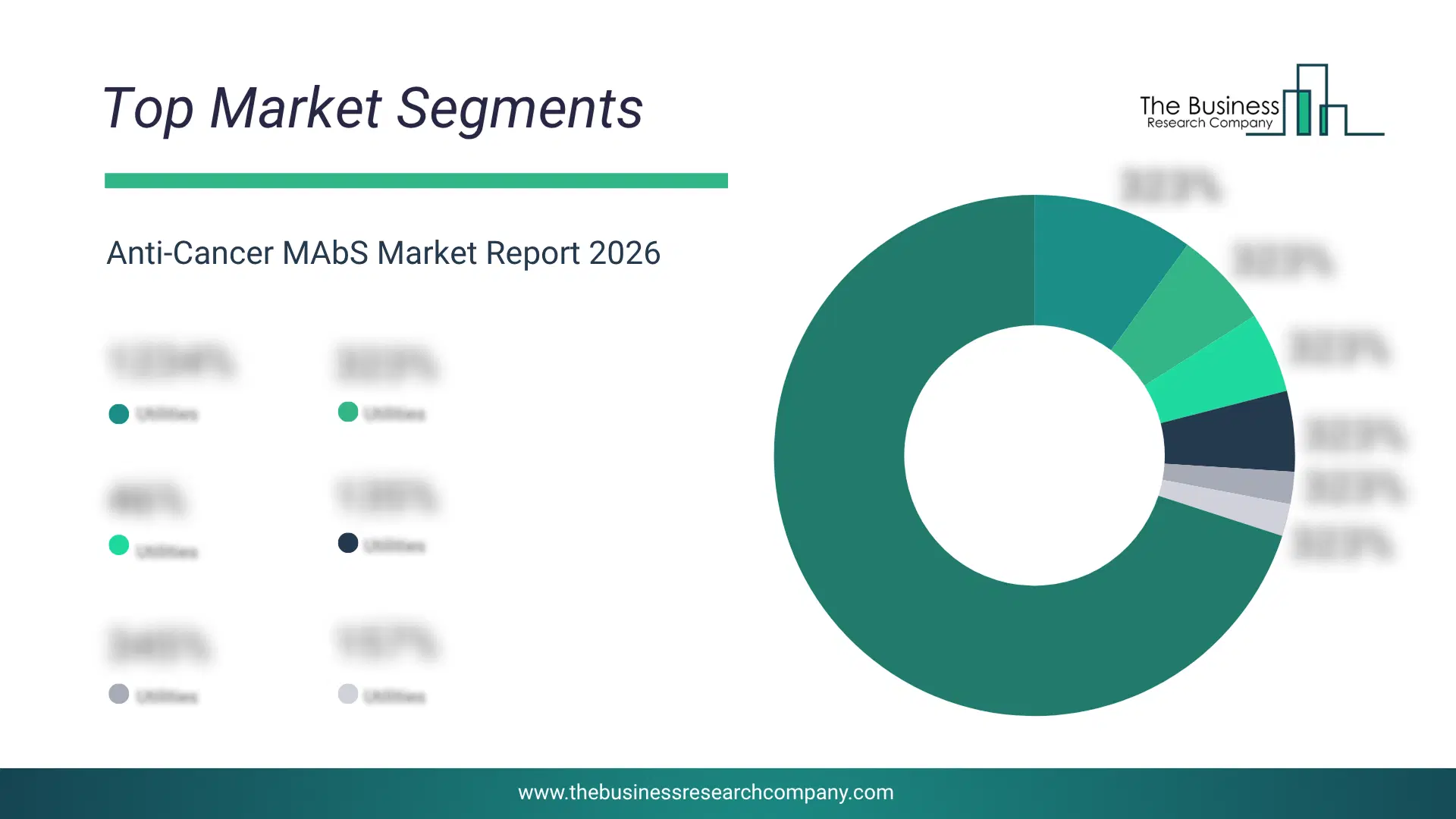
1) By Type: Murine Antibodies, Chimeric Antibodies, Humanized Antibodies, Other Types 2) By Application: Blood Cancer, Breast Cancer, Lung Cancer, Melanoma, Colorectal Cancer, Liver Cancer, Other Applications 3) By End User: Hospitals, Research Institutes, Other End Users Subsegments: 1) By Murine Antibodies: Murine IgG, Murine IgM, Other Murine Isotypes 2) By Chimeric Antibodies: Chimeric IgG, Chimeric IgM, Other Chimeric Isotypes 3) By Humanized Antibodies: Humanized IgG, Humanized IgM, Other Humanized Isotypes 4) By Other Types: Fully Human Antibodies, Bispecific Antibodies, Conjugated Antibodies, Other Novel Formats The top segments in the anti-cancer mabs market will be: • Humanized Antibodies will reach $44.82 Billion by 2030. • Other Types will reach $34.7 Billion by 2030. • Chimeric Antibodies will reach $20.42 Billion by 2030. • Murine Antibodies will reach $11.75 Billion by 2030.What Is The Driver Of The Anti-Cancer MAbS Market?
The increasing prevalence of cancer across the globe is expected to propel the growth of the anticancer mAbs market going forward. Cancer refers to a group of diseases characterised by uncontrolled cell growth with the potential to invade and harm healthy bodily tissue. The increasing prevalence of cancer is due to ageing populations, lifestyle changes, environmental exposures, and advances in diagnostic technology that lead to higher detection rates. Anticancer monoclonal antibodies (mAbs) are designed to bind to specific proteins on cancerous cells, using genetically engineered versions of the immune system’s own antibodies to target and destroy those cells; thus, increasing cancer prevalence increases demand for the anticancer mAbs market. For instance in February 2024 accroding to the World Health Organization (WHO) a Switzerland-based United Nations agency in 2050, new cancer cases are projected to exceed 35 million, representing a 77% increase compared to the estimated 20 million cases in 2022. Therefore, the increasing prevalence of cancer across the globe is driving the growth of the anticancer mAbs market.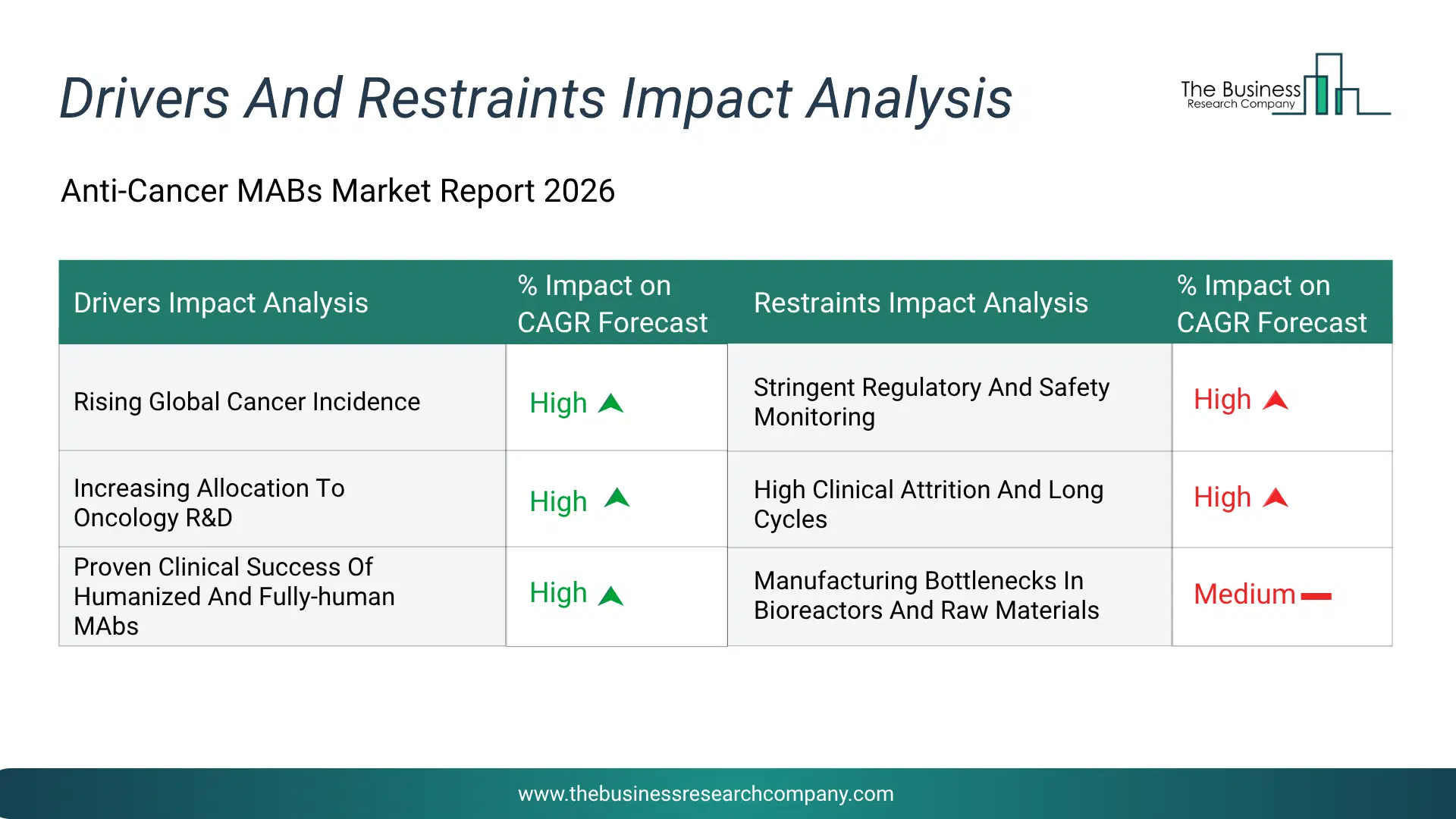
Infographic Chart Showing Key Market Drivers Analysis And Restraints For Anti-Cancer Mabs Market
The chart presents an impact analysis of key drivers and restraints, quantifying their relative influence on the market's growth rate and helping assess the balance between growth enablers and limiting factors. This chart offers a high-level perspective; the full report contains more detailed insights.
How Will The Drivers Impact Growth In The Global Anti-Cancer MABs Market?
• Rising Global Cancer Incidence (High) – During the forecast period, the rising global cancer incidence is expected to become a key growth driver for the anti-cancer MABs market by 2030. The growing burden of cancer cases across both developed and emerging economies is increasing the demand for targeted and effective treatment options. Factors such as aging populations, lifestyle-related risk factors, and improved cancer detection rates are contributing to a larger patient pool requiring advanced therapeutic interventions. Monoclonal antibodies are increasingly being adopted due to their ability to selectively target cancer cells while minimizing damage to healthy tissues. This expanding patient population is creating sustained demand for innovative oncology biologics. • Increasing Allocation To Oncology R&D (High) – During the forecast period, the increasing allocation to oncology R&D is expected to emerge as a major factor driving the expansion of the anti-cancer MAbs market by 2030. Pharmaceutical and biotechnology companies are significantly expanding investments in cancer-focused research programs to develop next-generation antibody therapies with enhanced efficacy and broader therapeutic applications. Growing clinical trial activity, advances in antibody engineering platforms, and expanding exploration of combination therapies are accelerating product development pipelines. Academic institutions and research organizations are also strengthening collaborations to advance novel treatment approaches. • Proven Clinical Success Of Humanized And Fully-human MAbs (High) – During the forecast period, the proven clinical success of humanized and fully-human MABs is expected to act as a key growth catalyst for the anti-cancer MABs market by 2030. Strong therapeutic outcomes demonstrated across multiple cancer indications have reinforced physician confidence and expanded adoption of monoclonal antibody-based treatments. These advanced antibody formats offer improved target specificity, enhanced tolerability, and broader applicability in precision oncology strategies. Their success has encouraged continued development of new indications and expanded use in earlier treatment lines. As clinical evidence supporting their long-term benefits continues to grow, market penetration is expected to increase further.How Will The Restraints Impact Growth In The Global Anti-Cancer MABs Market?
• Stringent Regulatory And Safety Monitoring (High) – During the forecast period, the stringent regulatory approval procedures and extensive safety monitoring requirements represent a major restraint for the anti-cancer MABs market. Monoclonal antibodies undergo highly complex clinical evaluation processes to ensure therapeutic efficacy, immunogenicity control, and long-term patient safety before commercialization. Regulatory agencies require comprehensive preclinical and clinical data, which significantly increases development timelines and operational costs for manufacturers. Post-marketing pharmacovigilance obligations further add to compliance burdens as companies must continuously monitor adverse reactions and treatment outcomes. Safety concerns associated with immune-related toxicities, infusion reactions, and off-target effects can also delay approvals or restrict market access. Different regulatory standards across countries create additional complexity for global product launches and international commercialization strategies. Small and mid-sized biotechnology firms often face difficulties managing the financial and operational demands associated with regulatory compliance. Frequent changes in biologics guidelines and quality standards further increase uncertainty in product development pathways. These regulatory challenges can slow innovation cycles and limit the rapid introduction of new monoclonal antibody therapies into the market. • High Clinical Attrition And Long Cycles (High) – During the forecast period, the high clinical failure rates and lengthy development timelines significantly restrain growth in the anti-cancer monoclonal antibodies market. Oncology drug development is associated with substantial scientific uncertainty, as many monoclonal antibody candidates fail during preclinical testing or advanced clinical trial phases due to insufficient efficacy or safety concerns. The process of moving from discovery to commercialization can often require more than a decade and involves extensive financial investment. Complex trial designs, patient recruitment challenges, and biomarker validation requirements further prolong development cycles. Delays in regulatory approvals and inconsistent clinical outcomes can negatively impact investor confidence and reduce funding availability for emerging therapies. Pharmaceutical companies also face considerable financial risks because unsuccessful trials can result in major capital losses and delayed revenue generation. Competition from alternative cancer therapies, including cell therapies and small-molecule drugs, adds additional pressure on monoclonal antibody developers. The long commercialization timeline limits the speed at which innovative treatments can reach patients and affects overall market expansion. • Manufacturing Bottlenecks In Bioreactors And Raw Materials (High) – During the forecast period, the manufacturing limitations related to bioreactor capacity and raw material availability are creating substantial operational restraints for the anti-cancer MABs market. Monoclonal antibody production requires highly specialized biologics manufacturing infrastructure, advanced cell culture systems, and stringent quality control processes. Limited global bioreactor capacity can create supply shortages and delay large-scale commercial production, particularly during periods of high oncology drug demand. Dependence on critical raw materials such as cell culture media, purification resins, and single-use bioprocessing components further increases supply chain vulnerability. Disruptions in raw material procurement or logistics can directly impact manufacturing timelines and treatment availability. The high cost of biologics production also contributes to elevated therapy prices, limiting affordability in several healthcare markets. Expanding manufacturing facilities requires significant capital investment and lengthy regulatory validation procedures, creating barriers for rapid capacity expansion. Smaller biotechnology companies may struggle to secure reliable contract manufacturing partnerships due to limited industry production bandwidth. These manufacturing bottlenecks can restrict product scalability, delay product launches, and hinder the overall growth potential of the anti-cancer monoclonal antibodies market.Key Players In The Global Anti-Cancer MAbS Market
Major companies operating in the anti-cancer mabs market are Amgen Inc., Bristol Myers Squibb Company, Eli Lilly and Company, F. Hoffmann-La Roche Ltd., GlaxoSmithKline plc, Johnson & Johnson, Novartis AG, Merck & Co. Inc., Spectrum Pharmaceuticals Inc., AstraZeneca plc., Pfizer Inc., Gilead Sciences Inc., Bayer HealthCare, ImmunoGen Inc., Genentech Inc., AbbVie Inc., Takeda Pharmaceuticals, Seattle Genetics, Regeneron Pharmaceuticals, Celgene, Ipsen, Daiichi Sankyo, ADC Therapeutics, MacroGenics Inc., Zymeworks Inc.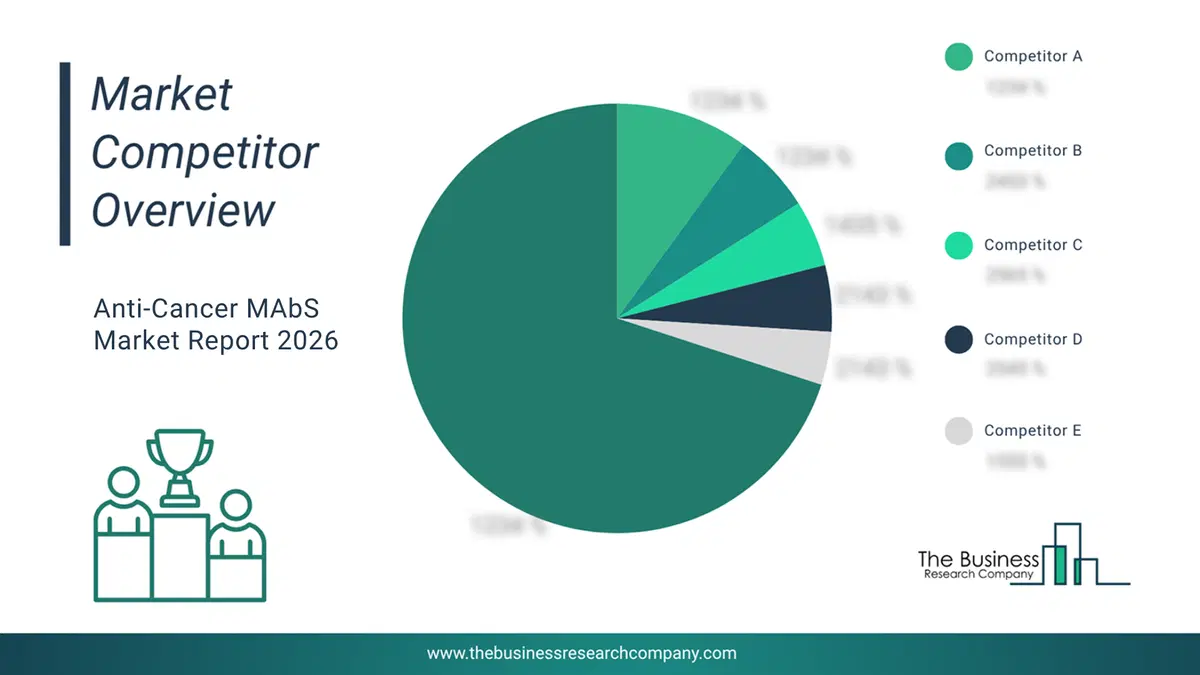
This chart is for illustrative purposes; the full report includes a detailed competitor analysis and comprehensive overview of the top 10 companies in the market.
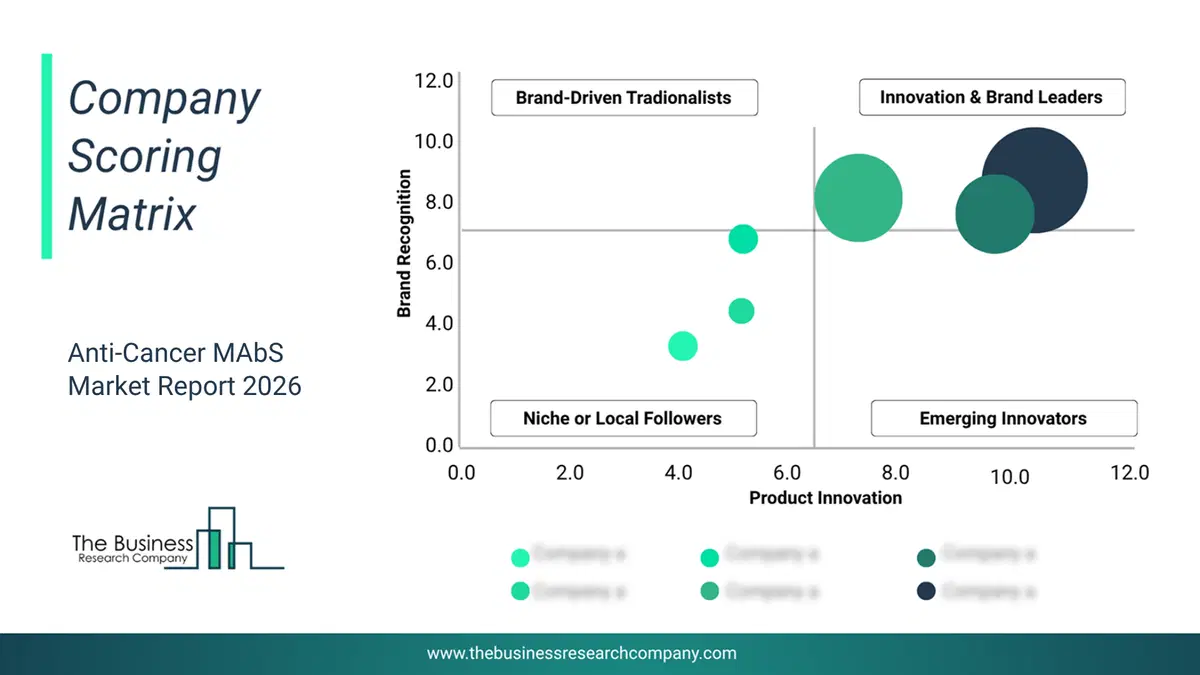
This chart maps companies by product innovation and brand strength, with bubble size indicating relative revenue, helping identify market leaders, challengers, and niche players. This is an illustrative chart; the full report provides a complete and accurate competitive analysis.
Global Anti-Cancer MAbS Market Trends and Insights
Major companies operating in the anti-cancer monoclonal antibodies (mAbs) market are focusing on developing innovative solutions, such as early-phase clinical trials, to advance novel therapeutic candidates and strengthen their competitive position. Clinical trials refer to structured research studies conducted in human participants to evaluate the safety, dosing, and therapeutic effectiveness of new medical interventions, including targeted antibodies and radioimmunotherapies. For instance, in April 2023, Y-mAbs Therapeutics Inc., a US-based clinical biopharmaceutical company, launched a Phase I clinical trial evaluating GD2-SADA, a pre-targeted radioimmunotherapy designed for GD2-positive solid tumors such as small cell lung cancer, sarcoma, and malignant melanoma. The therapy uses a two-step mechanism in which the SADA protein first binds selectively to GD2-expressing tumor cells, followed by administration of the radioactive ligand 177Lu-DOTA that attaches to the SADA protein to deliver targeted radiation, aiming to maximize tumor cell destruction while minimizing radiation exposure to healthy tissues.What Are Latest Mergers And Acquisitions In The Anti-Cancer MAbS Market?
In June 2024, Merck & Co., Inc., a US-based pharmaceutical company, acquired Prometheus Biosciences Inc. for $10.8 billion. This acquisition strengthens Merck’s immunology portfolio by integrating Prometheus’s lead candidate PRA023 (now MK-7240), a monoclonal antibody targeting TL1A involved in autoimmune conditions such as ulcerative colitis and Crohn’s disease. It further enhances Merck’s pipeline with advanced biologics and supports expansion into precision immunology through Prometheus’s biomarker-driven development platform. Prometheus Biosciences Inc. is a US-based clinical-stage biotechnology company that develops monoclonal antibody therapies.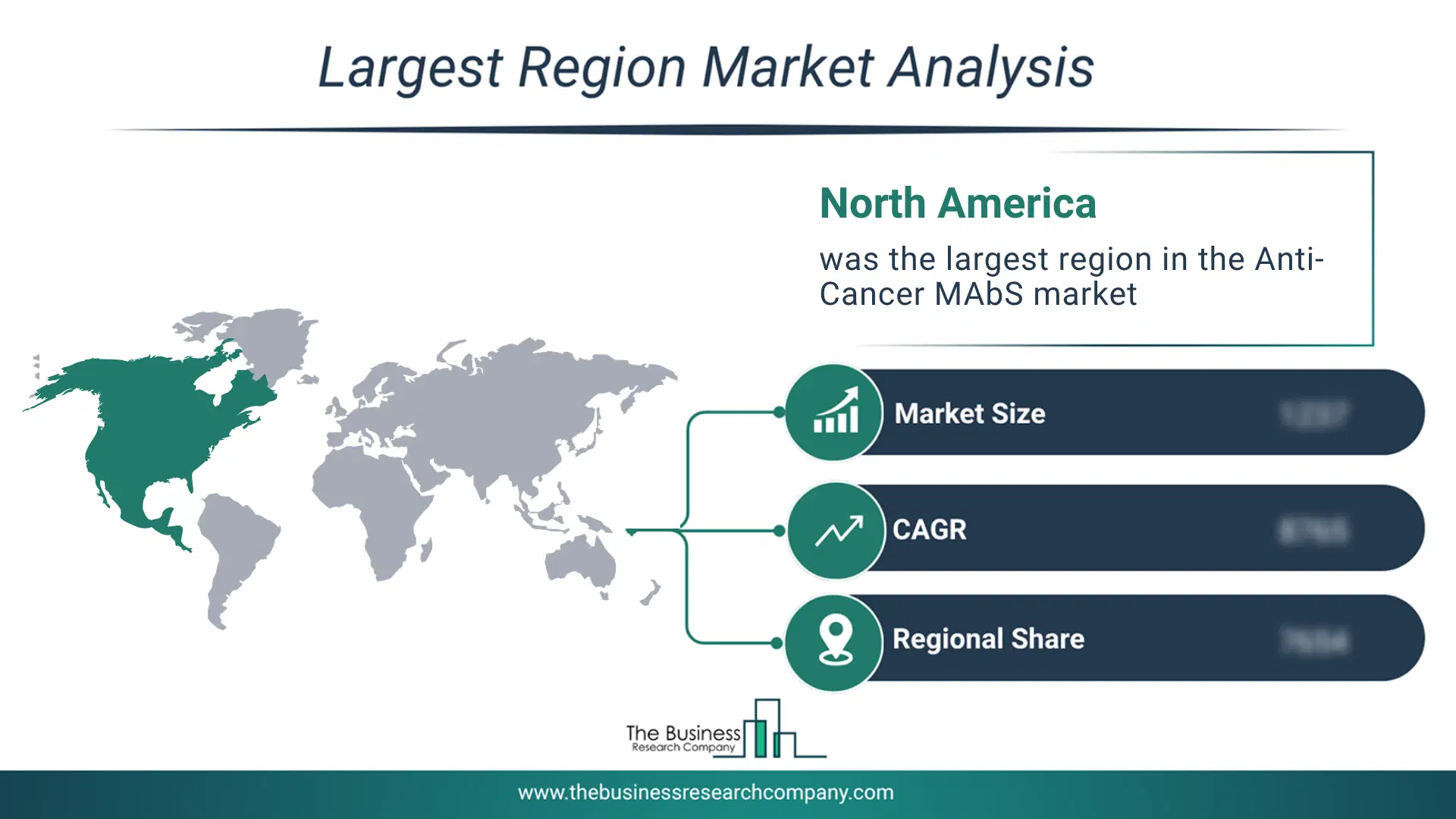
Regional Insights
North America was the largest region in the anti-cancer MAbS market in 2025. Asia-Pacific is expected to be the fastest-growing region in the anti-cancer MAbS market during the forecast period. The regions covered in this market report are Asia-Pacific, South East Asia, Western Europe, Eastern Europe, North America, South America, Middle East, Africa. The countries covered in this market report are Australia, Brazil, China, France, Germany, India, Indonesia, Japan, Taiwan, Russia, South Korea, UK, USA, Canada, Italy, Spain.What Defines the Anti-Cancer MAbS Market?
The anticancer mAbs market consists of sales of monoclonal antibody therapies such as avastin, Herceptin, keytruda, opdivo, darzalex, and perjeta. Values in this market are ‘factory gate’ values, that is the value of goods sold by the manufacturers or creators of the goods, whether to other entities (including downstream manufacturers, wholesalers, distributors, and retailers) or directly to end customers. The value of goods in this market includes related services sold by the creators of the goods.How is Market Value Defined and Measured?
The market value is defined as the revenues that enterprises gain from the sale of goods and/or services within the specified market and geography through sales, grants, or donations in terms of the currency (in USD unless otherwise specified). The revenues for a specified geography are consumption values that are revenues generated by organizations in the specified geography within the market, irrespective of where they are produced. It does not include revenues from resales along the supply chain, either further along the supply chain or as part of other products.
This chart presents market attractiveness based on a quantitative evaluation of growth, competition, strategic alignment, and risk, offering a clear view of opportunity areas for decision-making. This chart is for illustrative purposes; the full report contains the complete analysis.

This chart highlights the Total Addressable Market (TAM) by estimating the maximum revenue opportunity using an assumption-driven approach, supporting strategic planning and opportunity sizing across markets. The chart is illustrative; the full report provides a more comprehensive analysis.
What Key Data and Analysis Are Included in the Anti-Cancer MAbS Market Report 2026?
The anti-cancer mabs market research report is one of a series of new reports from The Business Research Company that provides market statistics, including industry global market size, regional shares, competitors with the market share, detailed market segments, market trends and opportunities, and any further data you may need to thrive in the anti-cancer mabs industry. The market research report delivers a complete perspective of everything you need, with an in-depth analysis of the current and future state of the industry.Anti-Cancer MAbS Market Report Forecast Analysis
| Report Attribute | Details |
|---|---|
| Market Size Value In 2026 | $78.12 billion |
| Revenue Forecast In 2030 | $112.41 billion |
| Growth Rate | CAGR of 9.6% from 2026 to 2030 |
| Base Year For Estimation | 2025 |
| Actual Estimates/Historical Data | 2020-2025 |
| Forecast Period | 2026 - 2030 |
| Market Representation | Revenue in USD Billion and CAGR from 2026 to 2030 |
| Segments Covered | Type, Application, End User |
| Regional Scope | Asia-Pacific, Western Europe, Eastern Europe, North America, South America, Middle East, Africa |
| Country Scope | The countries covered in the report are Australia, Brazil, China, France, Germany, India, Indonesia, Japan, Taiwan, Russia, South Korea, UK, USA, Canada, Italy, Spain. |
| Key Companies Profiled | Amgen Inc., Bristol Myers Squibb Company, Eli Lilly and Company, F. Hoffmann-La Roche Ltd., GlaxoSmithKline plc, Johnson & Johnson, Novartis AG, Merck & Co. Inc., Spectrum Pharmaceuticals Inc., AstraZeneca plc., Pfizer Inc., Gilead Sciences Inc., Bayer HealthCare, ImmunoGen Inc., Genentech Inc., AbbVie Inc., Takeda Pharmaceuticals, Seattle Genetics, Regeneron Pharmaceuticals, Celgene, Ipsen, Daiichi Sankyo, ADC Therapeutics, MacroGenics Inc., Zymeworks Inc. |
| Customization Scope | Request for Customization |
| Pricing And Purchase Options | Explore Purchase Options |