

Anti-CD20 Monoclonal Antibodies Market Report 2026
Global Outlook – By Product Type (Rituximab, Obinutuzumab, Ofatumumab, Other Product Types), By Route Of Administration (Intravenous, Subcutaneous), By Distribution Channel (Hospital Pharmacies, Retail Pharmacies, Online Pharmacies), By Application (Non-Hodgkin's Lymphoma (NHL), Chronic Lymphocytic Leukemia (Cll), Rheumatoid Arthritis, Multiple Sclerosis, Pemphigus Vulgaris, Other Applications), By End-User (Hospitals, Surgical Centers and Diagnostic Centers, Maternity Centers, Ambulatory Care Centers, Research And Academia, Other End-Users) – Market Size, Trends, Strategies, and Forecast to 2030
Anti-CD20 Monoclonal Antibodies Market Overview
• Anti-CD20 Monoclonal Antibodies market size has reached to $9 billion in 2025 • Expected to grow to $12.94 billion in 2030 at a compound annual growth rate (CAGR) of 7.5% • Growth Driver: The Growing Autoimmune Diseases Is Fueling The Growth Of The Market Due To Increased B-Cell Targeting Therapies For Immune Regulation • Market Trend: Advancements In Anti-CD20 Therapies For Treatment-Resistant Conditions • North America was the largest region in 2025 and Asia-Pacific is the fastest growing region.Market Gains By 2030 – Top Opportunities By Segment
Market Gain identifies the most promising market opportunities by highlighting the segments or products expected to generate the highest incremental revenue growth over the next five years.
What Is Covered Under Anti-CD20 Monoclonal Antibodies Market?
Anti-CD20 monoclonal antibodies are specialized immunotherapies that target the CD20 protein present on B-cell surfaces. These antibodies trigger immune responses such as complement activation and antibody-dependent cell-mediated cytotoxicity to eliminate abnormal or cancerous B-cells. This targeted approach enables more precise treatment with reduced systemic side effects compared to conventional chemotherapy. The main types of anti-CD20 monoclonal antibodies are rituximab, obinutuzumab, ofatumumab, and others. Rituximab is a CD20-targeting monoclonal antibody used to treat B-cell cancers and autoimmune diseases by eliminating abnormal B-cells. It is administered through different routes of administration, such as intravenous and subcutaneous, and is distributed through several distribution channels, including hospital pharmacies, retail pharmacies, and online pharmacies. It is applicable in various applications such as non-Hodgkin's lymphoma (NHL), chronic lymphocytic leukemia (CLL), rheumatoid arthritis, multiple sclerosis, pemphigus vulgaris, and others and is used by several end-users, including hospitals, surgical centers and diagnostic centers, maternity centers, ambulatory care centers, research and academia, and others.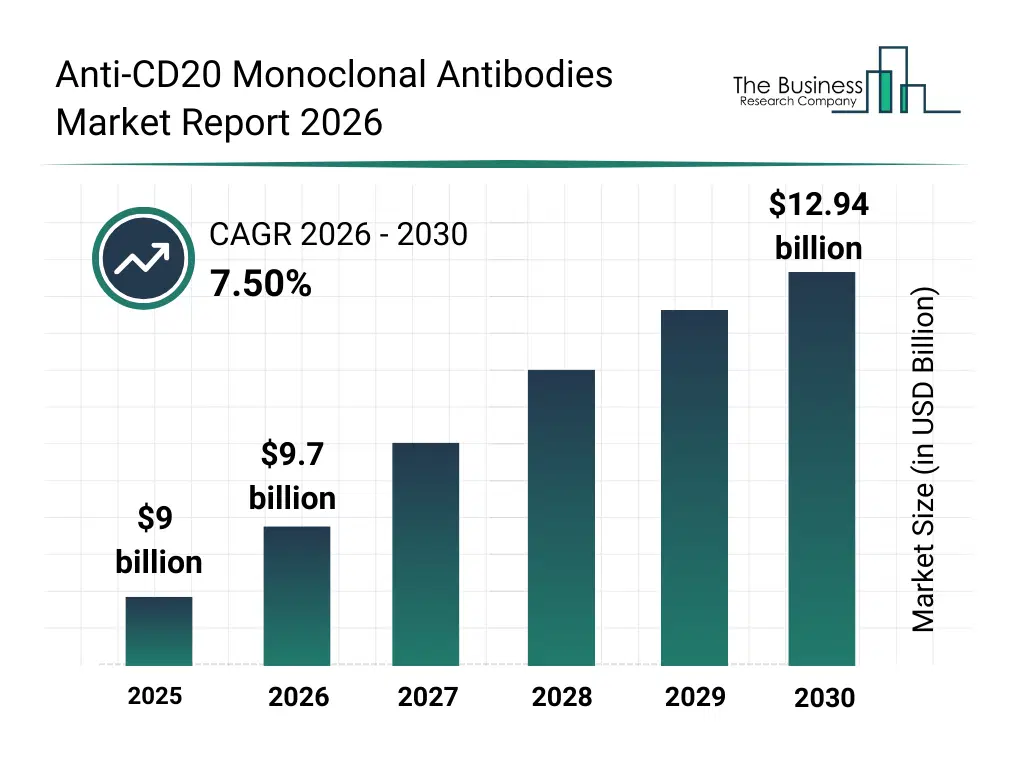
What Is The Anti-CD20 Monoclonal Antibodies Market Size and Share 2026?
The anti-cd20 monoclonal antibodies market size has grown strongly in recent years. It will grow from $9 billion in 2025 to $9.7 billion in 2026 at a compound annual growth rate (CAGR) of 7.8%. The growth in the historic period can be attributed to approval and widespread use of rituximab, rising incidence of non-hodgkin's lymphoma and chronic lymphocytic leukemia, growing awareness of targeted therapies, availability of hospital pharmacy distribution channels, expansion of intravenous administration routes.What Is The Anti-CD20 Monoclonal Antibodies Market Growth Forecast?
The anti-cd20 monoclonal antibodies market size is expected to see strong growth in the next few years. It will grow to $12.94 billion in 2030 at a compound annual growth rate (CAGR) of 7.5%. The growth in the forecast period can be attributed to development of obinutuzumab and ofatumumab biosimilars, increasing adoption of subcutaneous formulations, growing investment in research and academia, expansion of ambulatory care centers, increasing demand for anti-cd20 therapies in multiple autoimmune diseases. Major trends in the forecast period include rising adoption of monoclonal antibody therapies for b-cell malignancies, development of biosimilars and next-generation anti-cd20 antibodies, expansion of subcutaneous and patient-friendly administration routes, increasing focus on personalized and targeted immunotherapy, growing clinical trials and research in autoimmune and oncology indications.
Global Anti-CD20 Monoclonal Antibodies Market Segmentation
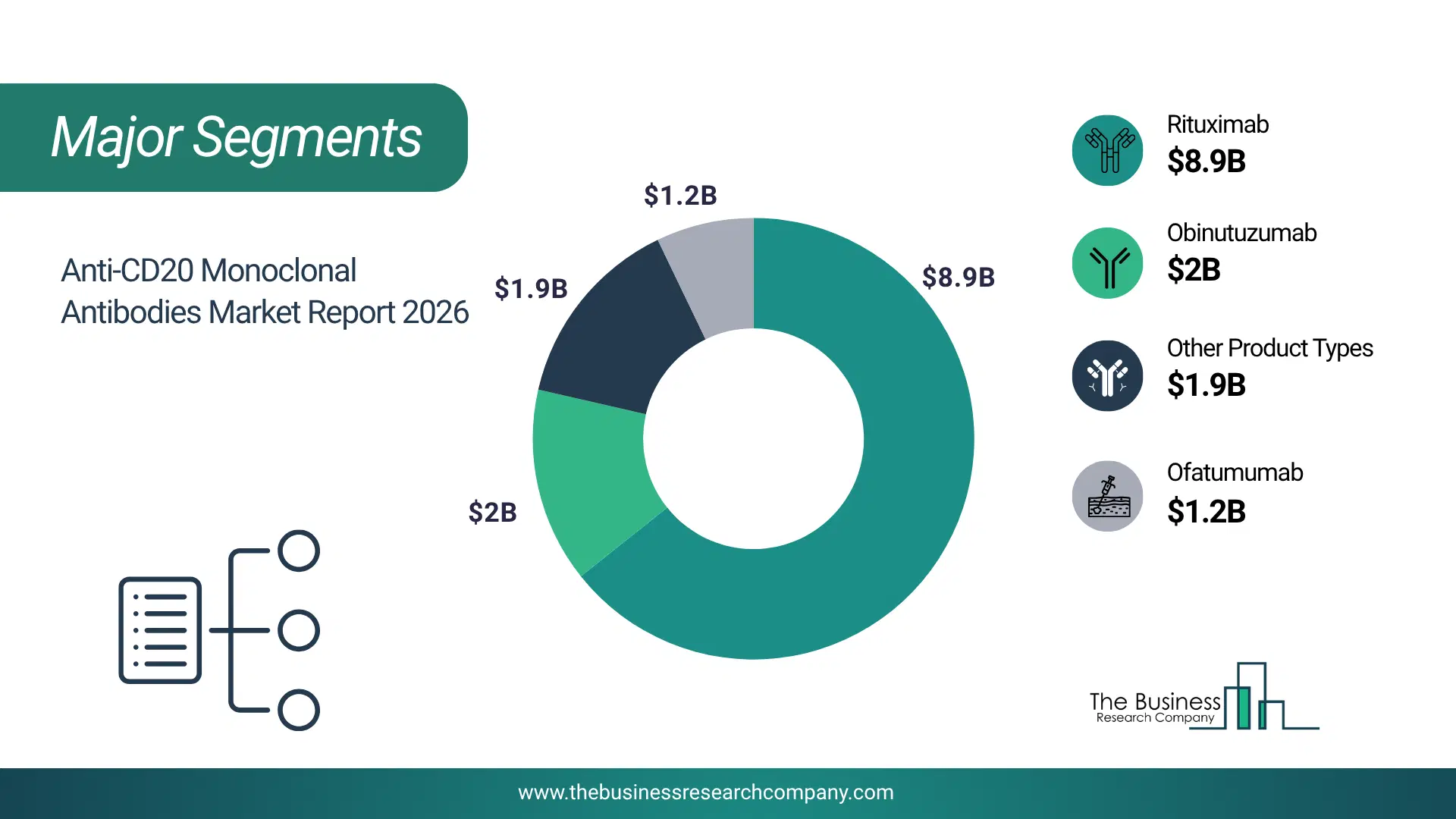
1) By Product Type: Rituximab, Obinutuzumab, Ofatumumab, Other Product Types 2) By Route Of Administration: Intravenous, Subcutaneous 3) By Distribution Channel: Hospital Pharmacies, Retail Pharmacies, Online Pharmacies 4) By Application: Non-Hodgkin's Lymphoma (NHL), Chronic Lymphocytic Leukemia (Cll), Rheumatoid Arthritis, Multiple Sclerosis, Pemphigus Vulgaris, Other Applications 5) By End-User: Hospitals, Surgical Centers and Diagnostic Centers, Maternity Centers, Ambulatory Care Centers, Research And Academia, Other End-Users Subsegments: 1) By Rituximab: Rituxan, Truxima, Ruxience, Reditux 2) By Obinutuzumab: Gazyva, Biosimilar Candidates 3) By Ofatumumab: Arzerra, Kesimpta 4) By Other Product Types: Ublituximab, Veltuzumab, Ocrelizumab, Mosunetuzumab The top segments in the anti-cd20 monoclonal antibodies market will be: • Rituximab will reach $8.82 billion by 2030. • Obinutuzumab will reach $1.99 billion by 2030. • Other Product Types will reach $1.84 billion by 2030. • Ofatumumab will reach $1.15 billion by 2030.What Is The Driver Of The Anti-CD20 Monoclonal Antibodies Market?
The growing autoimmune diseases are expected to propel the growth of the anti-CD20 monoclonal antibodies market going forward. Autoimmune diseases occur when the immune system wrongly identifies the body’s cells as threats and launches an attack against them. Autoimmune diseases are rising due to growing exposure to environmental pollutants, which can impair immune regulation and trigger attacks on the body’s tissues. Anti-CD20 monoclonal antibodies treat autoimmune diseases by eliminating B cells contributing to autoantibody production and inflammation. They help regulate the immune response and reduce disease symptoms. For instance, in February 2024, according to the Arthritis Australia, an Australia-based non-profit organization, an estimated 562,378 Australians will be living with RA in 2025, accounting for 14% of all arthritis cases that year. By 2040, this number is expected to rise by 33% to 748,721 people. This represents an additional 186,343 Australians living with RA in 2040 compared with 2025. Therefore, the growing number of autoimmune diseases is driving the growth of the anti-CD20 monoclonal antibodies industry.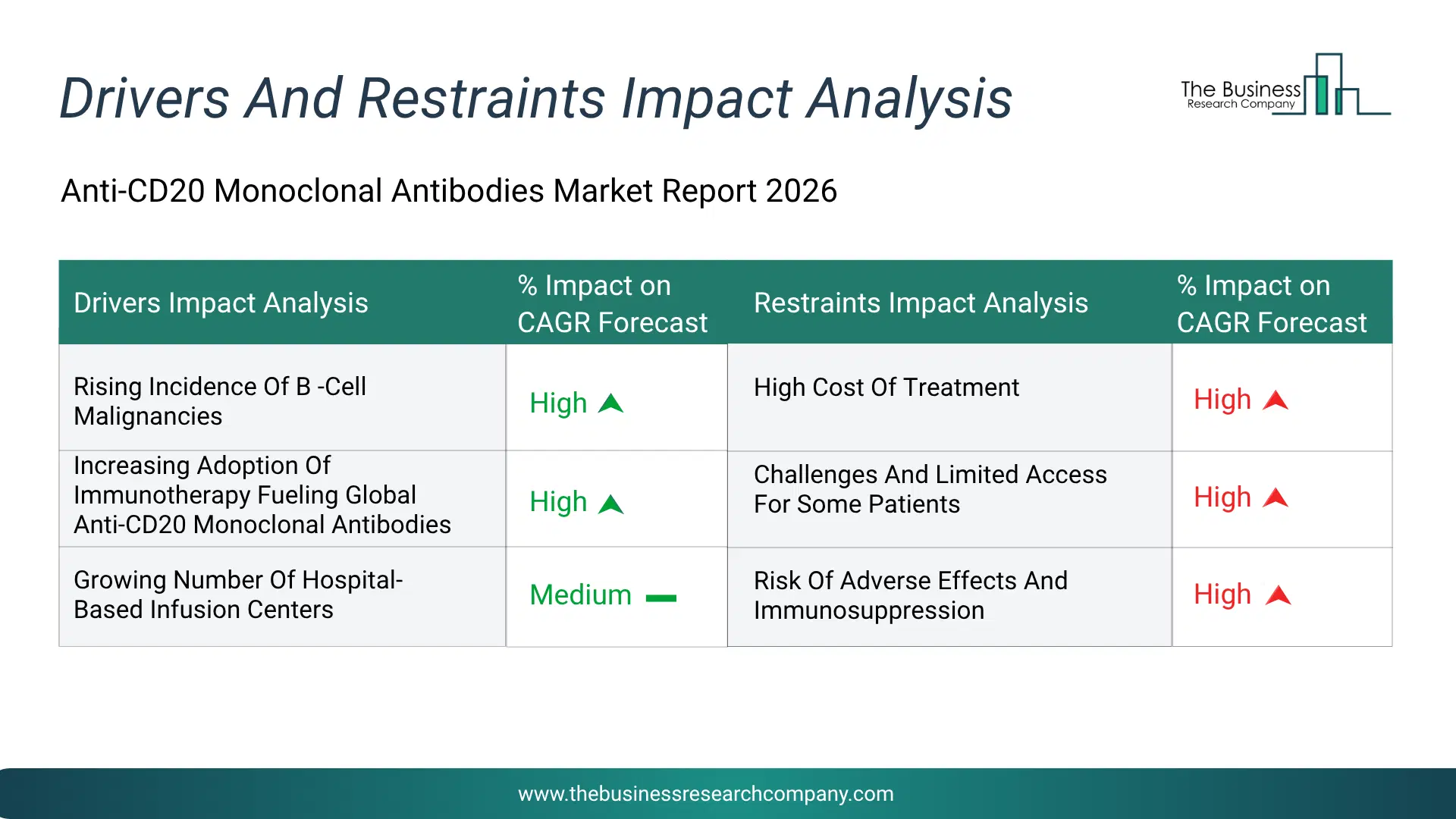
Infographic Chart Showing Key Market Drivers Analysis And Restraints For Anti-Cd20 Monoclonal Antibodies Market
The chart presents an impact analysis of key drivers and restraints, quantifying their relative influence on the market's growth rate and helping assess the balance between growth enablers and limiting factors. This chart offers a high-level perspective; the full report contains more detailed insights.
How Will The Drivers Impact Growth In The Global Anti-CD20 Monoclonal Antibodies Market?
• Rising Incidence Of B -Cell Malignancies (High) – During the forecast period, the rising incidence of b -cell malignancies is expected to become a key growth driver for the anti -cd20 monoclonal antibodies market by 2030. The increasing global burden of diseases such as non -hodgkin’s lymphoma and chronic lymphocytic leukemia is driving demand for targeted therapies like anti -cd20 monoclonal antibodies. These therapies offer improved specificity and clinical outcomes compared to traditional chemotherapy, making them a preferred treatment option. Healthcare providers are increasingly adopting these biologics to enhance patient survival rates and reduce disease progression. • Increasing Adoption Of Immunotherapy Fueling Global Anti-CD20 Monoclonal Antibodies (High) – During the forecast period, the increasing adoption of immunotherapy is expected to emerge as a major factor driving the expansion of the anti-cd20 monoclonal antibodies market by 2030. Immunotherapy is becoming a cornerstone in modern oncology and autoimmune disease management due to its targeted mechanism of action and reduced systemic toxicity. Anti-cd20 therapies are widely integrated into combination regimens and treatment protocols, enhancing their clinical relevance. Ongoing research and clinical trials are further expanding their therapeutic indications. • Growing Number Of Hospital-Based Infusion Centers (Medium) – During the forecast period, the growing number of hospital-based infusion centers is expected to act as a key growth catalyst for the anti-cd20 monoclonal antibodies market by 2030. The expansion of infusion infrastructure is improving patient access to biologic therapies, particularly for intravenous administration. Hospitals are investing in specialized oncology and immunology treatment centers to accommodate rising patient volumes and ensure efficient drug delivery. This trend is enhancing treatment adherence and enabling broader adoption of monoclonal antibody therapies.How Will The Restraints Impact Growth In The Global Anti-CD20 Monoclonal Antibodies Market?
• High Cost Of Treatment (High) – During the forecast period, the anti-cd20 monoclonal antibody therapies are often associated with substantial treatment costs due to complex biologic manufacturing processes, extensive clinical development, and specialized administration requirements. The high price of these therapies can place a significant financial burden on healthcare systems, insurers, and patients. In many regions, reimbursement limitations further restrict affordability. These cost challenges can reduce treatment adoption and limit market penetration, particularly in developing healthcare markets. • Challenges And Limited Access For Some Patients (High) – During the forecast period, the access to anti-cd20 monoclonal antibody therapies can be restricted by factors such as inadequate healthcare infrastructure, limited specialist availability, and reimbursement barriers. Patients in rural or underserved regions may face difficulties obtaining timely diagnosis and treatment. Differences in healthcare coverage across countries also contribute to unequal access. These limitations can prevent eligible patients from receiving appropriate therapy and restrain overall market growth. • Risk Of Adverse Effects And Immunosuppression (High) – During the forecast period, the anti-cd20 monoclonal antibodies can increase the risk of infections, infusion-related reactions, and prolonged immune suppression due to b-cell depletion. Concerns regarding potential side effects often require extensive patient monitoring and careful treatment management by healthcare providers. These safety considerations may influence prescribing decisions and limit adoption among certain patient groups, particularly those with pre-existing health complications.Key Players In The Global Anti-CD20 Monoclonal Antibodies Market
Major companies operating in the anti-cd20 monoclonal antibodies market are F. Hoffmann-La Roche Ltd., Novartis AG, Biogen Idec, TG Therapeutics, Celltrion Inc., Shanghai Henlius Biotech Inc., Innovent Biologics, Dr. Reddy’s Laboratories Ltd., Genmab A/S, AbbVie Inc., Pfizer Inc., Teva Pharmaceutical Industries Ltd., Chugai Pharmaceutical Co. Ltd., Sanofi SA, Bristol-Myers Squibb Company, Samsung Bioepis, Sandoz International GmbH, Amneal Pharmaceuticals LLC, Viatris Inc., Intas Pharmaceuticals Ltd., Lupin Limited, Zydus Lifesciences Ltd., Aurobindo Pharma Ltd., Biocon Biologics Ltd., Fresenius Kabi AG, Sun Pharmaceutical Industries Ltd., Hetero Biopharma Ltd., Reliance Life Sciences Pvt. Ltd., Adello Biologics, Mabion SA, mAbxience, Probiomed S.A. de C.V., Prestige Biopharma Ltd., CinnaGen Co., JHL Biotech Inc., Amgen Biologics Pvt. Ltd.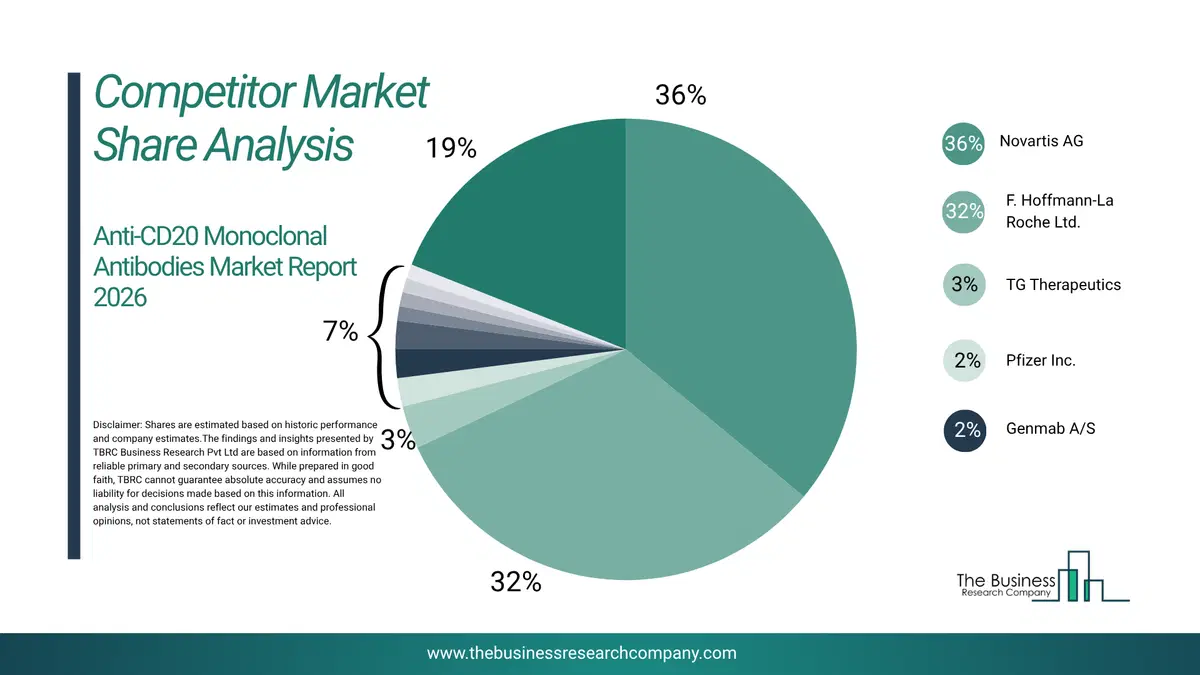
This chart is for illustrative purposes; the full report includes a detailed competitor analysis and comprehensive overview of the top 10 companies in the market.
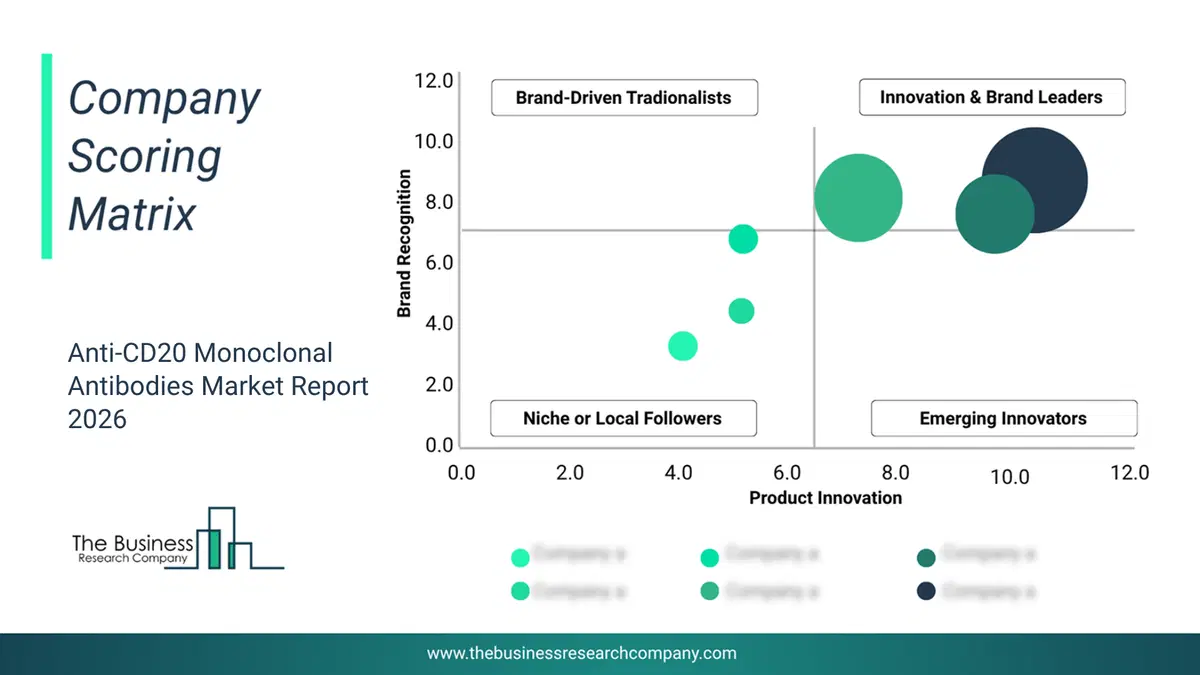
This chart maps companies by product innovation and brand strength, with bubble size indicating relative revenue, helping identify market leaders, challengers, and niche players. This is an illustrative chart; the full report provides a complete and accurate competitive analysis.
Global Anti-CD20 Monoclonal Antibodies Market Trends and Insights
Major companies operating in the anti-CD20 monoclonal antibody market are focusing on developing advanced products such as obinutuzumab to target resistant or relapsed B-cell malignancies more effectively. Obinutuzumab is a humanized type II anti-CD20 monoclonal antibody designed to target and destroy CD20-positive B cells involved in certain blood cancers and autoimmune diseases. For instance, in March 2025, Roche, a Switzerland-based biopharmaceutical company, announced that the US Food and Drug Administration (FDA) accepted a supplemental Biologics License Application (sBLA) for Gazyva/Gazyvaro (obinutuzumab) for the treatment of lupus nephritis. It is based on positive results from the Phase III REGENCY study showing improved complete renal response (CRR) when combined with standard therapy versus standard therapy alone. It marks Gazyva/Gazyvaro as the only anti-CD20 monoclonal antibody to demonstrate such benefit in lupus nephritis, a severe inflammation caused by lupus that can lead to kidney failure.What Are Latest Mergers And Acquisitions In The Anti-CD20 Monoclonal Antibodies Market?
In August 2023, TG Therapeutics, a US-based manufacturer of anti-CD20 monoclonal antibodies, partnered with Neuraxpharm to expand global access to innovative multiple sclerosis treatment. The partnership aims to commercialize BRIUMVI (CD20‑targeted monoclonal antibody therapy) across international markets and accelerate its availability for patients with relapsing multiple sclerosis outside the U.S. Neuraxpharm is a Germany-based pharmaceutical company.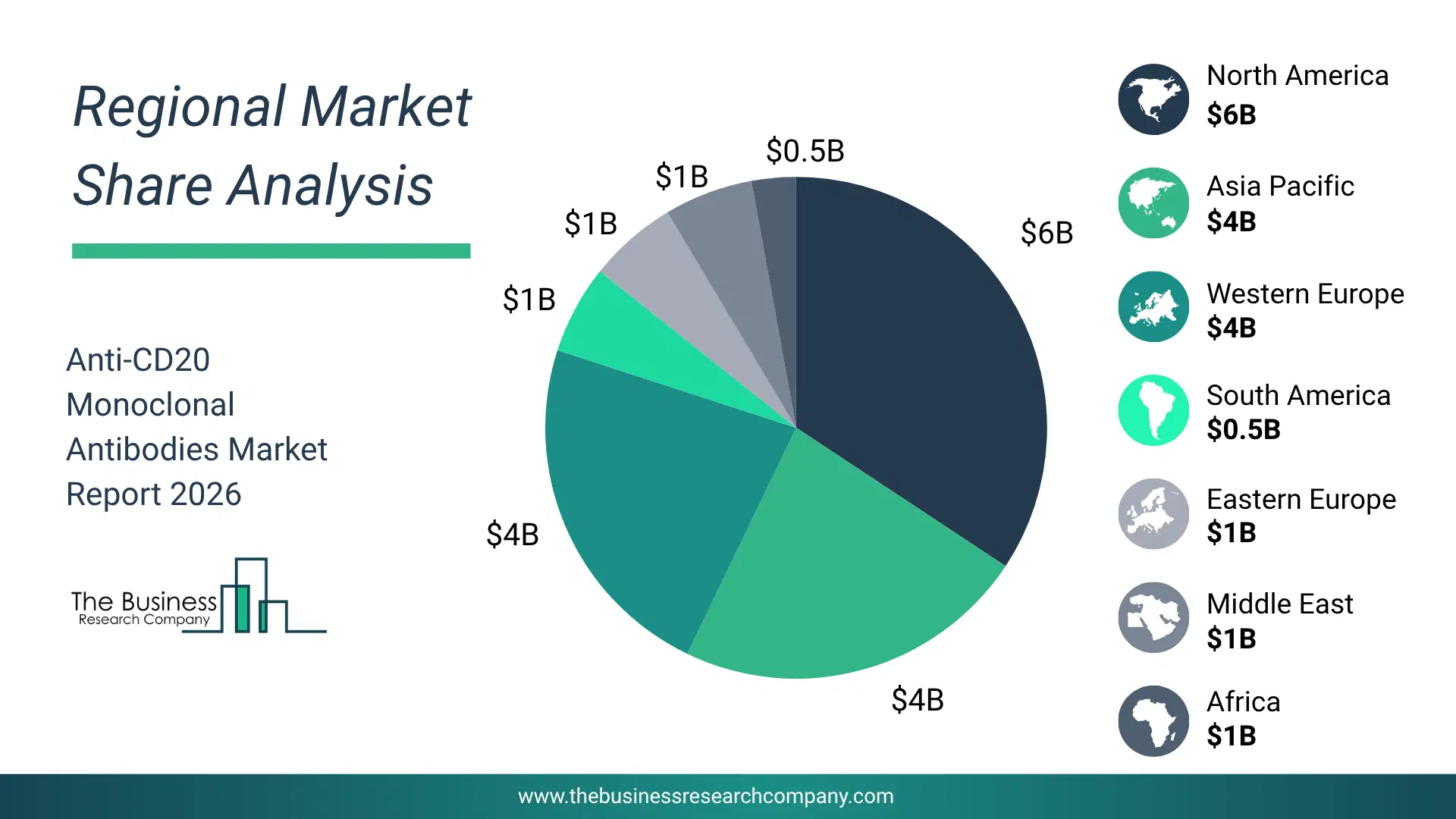
Regional Insights
North America was the largest region in the Anti-CD20 monoclonal antibodies market in 2025. Asia-Pacific is expected to be the fastest-growing region in the forecast period. The regions covered in this market report are Asia-Pacific, South East Asia, Western Europe, Eastern Europe, North America, South America, Middle East, Africa. The countries covered in this market report are Australia, Brazil, China, France, Germany, India, Indonesia, Japan, Taiwan, Russia, South Korea, UK, USA, Canada, Italy, Spain.What Defines the Anti-CD20 Monoclonal Antibodies Market?
The anti-CD20 monoclonal antibodies market consists of sales of tositumomab, ocrelizumab, ublituximab, and mosunetuzumab. Values in this market are ‘factory gate’ values, that is, the value of goods sold by the manufacturers or creators of the goods, whether to other entities (including downstream manufacturers, wholesalers, distributors, and retailers) or directly to end customers. The value of goods in this market includes related services sold by the creators of the goods.How is Market Value Defined and Measured?
The market value is defined as the revenues that enterprises gain from the sale of goods and/or services within the specified market and geography through sales, grants, or donations in terms of the currency (in USD unless otherwise specified). The revenues for a specified geography are consumption values that are revenues generated by organizations in the specified geography within the market, irrespective of where they are produced. It does not include revenues from resales along the supply chain, either further along the supply chain or as part of other products.
This chart presents market attractiveness based on a quantitative evaluation of growth, competition, strategic alignment, and risk, offering a clear view of opportunity areas for decision-making. This chart is for illustrative purposes; the full report contains the complete analysis.

This chart highlights the Total Addressable Market (TAM) by estimating the maximum revenue opportunity using an assumption-driven approach, supporting strategic planning and opportunity sizing across markets. The chart is illustrative; the full report provides a more comprehensive analysis.
What Key Data and Analysis Are Included in the Anti-CD20 Monoclonal Antibodies Market Report 2026?
The anti-cd20 monoclonal antibodies market research report is one of a series of new reports from The Business Research Company that provides market statistics, including industry global market size, regional shares, competitors with the market share, detailed market segments, market trends and opportunities, and any further data you may need to thrive in the anti-cd20 monoclonal antibodies industry. The market research report delivers a complete perspective of everything you need, with an in-depth analysis of the current and future state of the industry.Anti-CD20 Monoclonal Antibodies Market Report Forecast Analysis
| Report Attribute | Details |
|---|---|
| Market Size Value In 2026 | $9.7 billion |
| Revenue Forecast In 2030 | $12.94 billion |
| Growth Rate | CAGR of 7.5% from 2026 to 2030 |
| Base Year For Estimation | 2025 |
| Actual Estimates/Historical Data | 2020-2025 |
| Forecast Period | 2026 - 2030 |
| Market Representation | Revenue in USD Billion and CAGR from 2026 to 2030 |
| Segments Covered | Product Type, Route Of Administration, Distribution Channel, Application, End-User |
| Regional Scope | Asia-Pacific, Western Europe, Eastern Europe, North America, South America, Middle East, Africa |
| Country Scope | The countries covered in the report are Australia, Brazil, China, France, Germany, India, ... |
| Key Companies Profiled | F. Hoffmann-La Roche Ltd., Novartis AG, Biogen Idec, TG Therapeutics, Celltrion Inc., Shanghai Henlius Biotech Inc., Innovent Biologics, Dr. Reddy’s Laboratories Ltd., Genmab A/S, AbbVie Inc., Pfizer Inc., Teva Pharmaceutical Industries Ltd., Chugai Pharmaceutical Co. Ltd., Sanofi SA, Bristol-Myers Squibb Company, Samsung Bioepis, Sandoz International GmbH, Amneal Pharmaceuticals LLC, Viatris Inc., Intas Pharmaceuticals Ltd., Lupin Limited, Zydus Lifesciences Ltd., Aurobindo Pharma Ltd., Biocon Biologics Ltd., Fresenius Kabi AG, Sun Pharmaceutical Industries Ltd., Hetero Biopharma Ltd., Reliance Life Sciences Pvt. Ltd., Adello Biologics, Mabion SA, mAbxience, Probiomed S.A. de C.V., Prestige Biopharma Ltd., CinnaGen Co., JHL Biotech Inc., Amgen Biologics Pvt. Ltd. |
| Customization Scope | Request for Customization |
| Pricing And Purchase Options | Explore Purchase Options |