
Anti-D Immunoglobulin Market Report 2026
Global Outlook – By Product Type (Intramuscular Anti-D Immunoglobulin, Intravenous Anti-D Immunoglobulin), By Distribution Channel (Hospital Pharmacies, Retail Pharmacies, Online Pharmacies, Other Distribution Channel), By Application (Hemolytic Disease Of The Newborn, Immune Thrombocytopenic Purpura, Antenatal And Postnatal Prophylaxis, Other Applications), By End-User (Hospitals, Clinics, Blood Banks, Research Laboratories) – Market Size, Trends, Strategies, and Forecast to 2030
Anti-D Immunoglobulin Market Overview
• Anti-D Immunoglobulin market size has reached to $2.59 billion in 2025 • Expected to grow to $3.55 billion in 2030 at a compound annual growth rate (CAGR) of 6.5% • Growth Driver: Rise In Global Birth Rates Fueling The Growth Of The Market Due To Increasing Risk Of Rh Incompatibility • North America was the largest region in 2025 and Asia-Pacific is the fastest growing region.Market Gains By 2030 – Top Opportunities By Segment
Market Gain identifies the most promising market opportunities by highlighting the segments or products expected to generate the highest incremental revenue growth over the next five years.
What Is Covered Under Anti-D Immunoglobulin Market?
Anti-D immunoglobulin is a specialized blood product derived from human plasma that contains antibodies against the RhD antigen found on red blood cells. It is produced by collecting plasma from donors who have been sensitized to the RhD antigen, followed by purification and concentration of the specific immunoglobulin G (IgG) antibodies. The main product types of anti-D immunoglobulin are intramuscular anti-D immunoglobulin and intravenous anti-D immunoglobulin. Intramuscular anti-D immunoglobulin is a plasma-derived antibody preparation administered into muscle tissue to prevent Rh incompatibility in Rh-negative individuals by neutralizing Rh-positive fetal red blood cells. These are distributed through various channels, including hospital pharmacies, retail pharmacies, online pharmacies, and others, and are used in various applications such as hemolytic disease of the newborn, immune thrombocytopenic purpura, antenatal and postnatal prophylaxis, and others. It is used by several end-users, such as hospitals, clinics, blood banks, and research laboratories.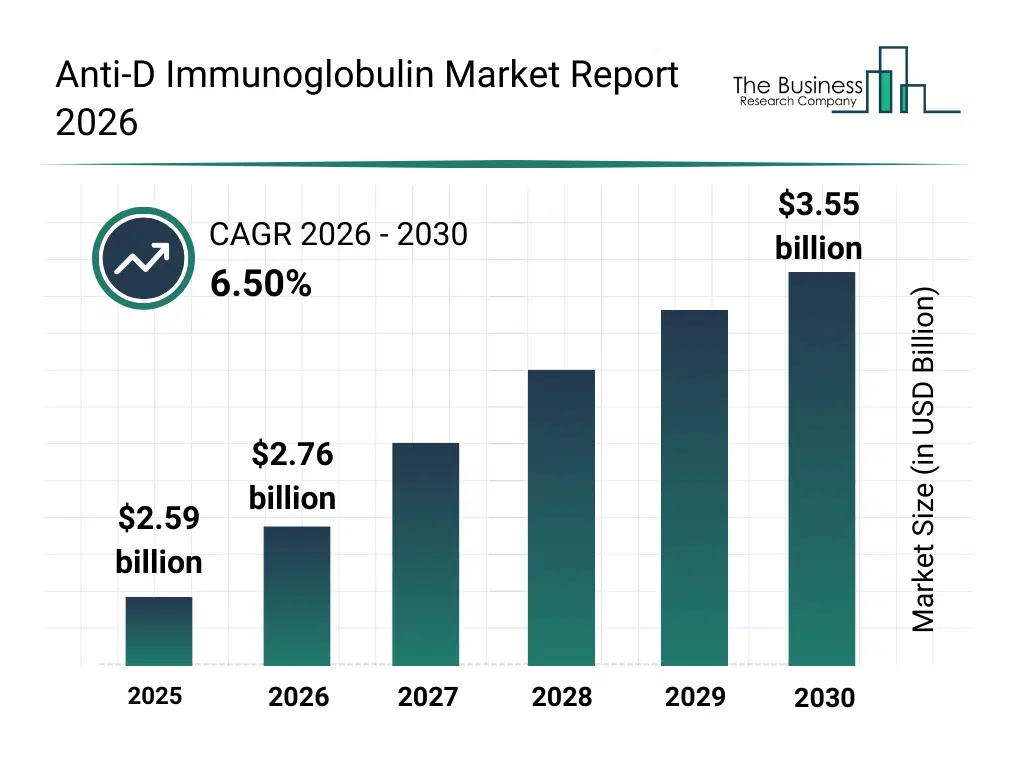
What Is The Anti-D Immunoglobulin Market Size and Share 2026?
The anti-d immunoglobulin market size has grown strongly in recent years. It will grow from $2.59 billion in 2025 to $2.76 billion in 2026 at a compound annual growth rate (CAGR) of 6.6%. The growth in the historic period can be attributed to limited plasma donor pools, reliance on manual antibody extraction processes, growing awareness of hemolytic disease, increasing hospital and clinical usage, adoption of intramuscular administration.What Is The Anti-D Immunoglobulin Market Growth Forecast?
The anti-d immunoglobulin market size is expected to see strong growth in the next few years. It will grow to $3.55 billion in 2030 at a compound annual growth rate (CAGR) of 6.5%. The growth in the forecast period can be attributed to development of intravenous formulations, expansion of automated plasma fractionation technologies, rising antenatal screening programs, increasing global blood bank infrastructure, growth in personalized immunoglobulin therapies. Major trends in the forecast period include rising demand for anti-d immunoglobulin in hemolytic disease management, increasing adoption of pre-filled syringes and single-use vials, expansion of antenatal and postnatal prophylaxis programs, growth in hospital and blood bank-based distribution channels, enhanced focus on safety, purity, and regulatory compliance.
Global Anti-D Immunoglobulin Market Segmentation
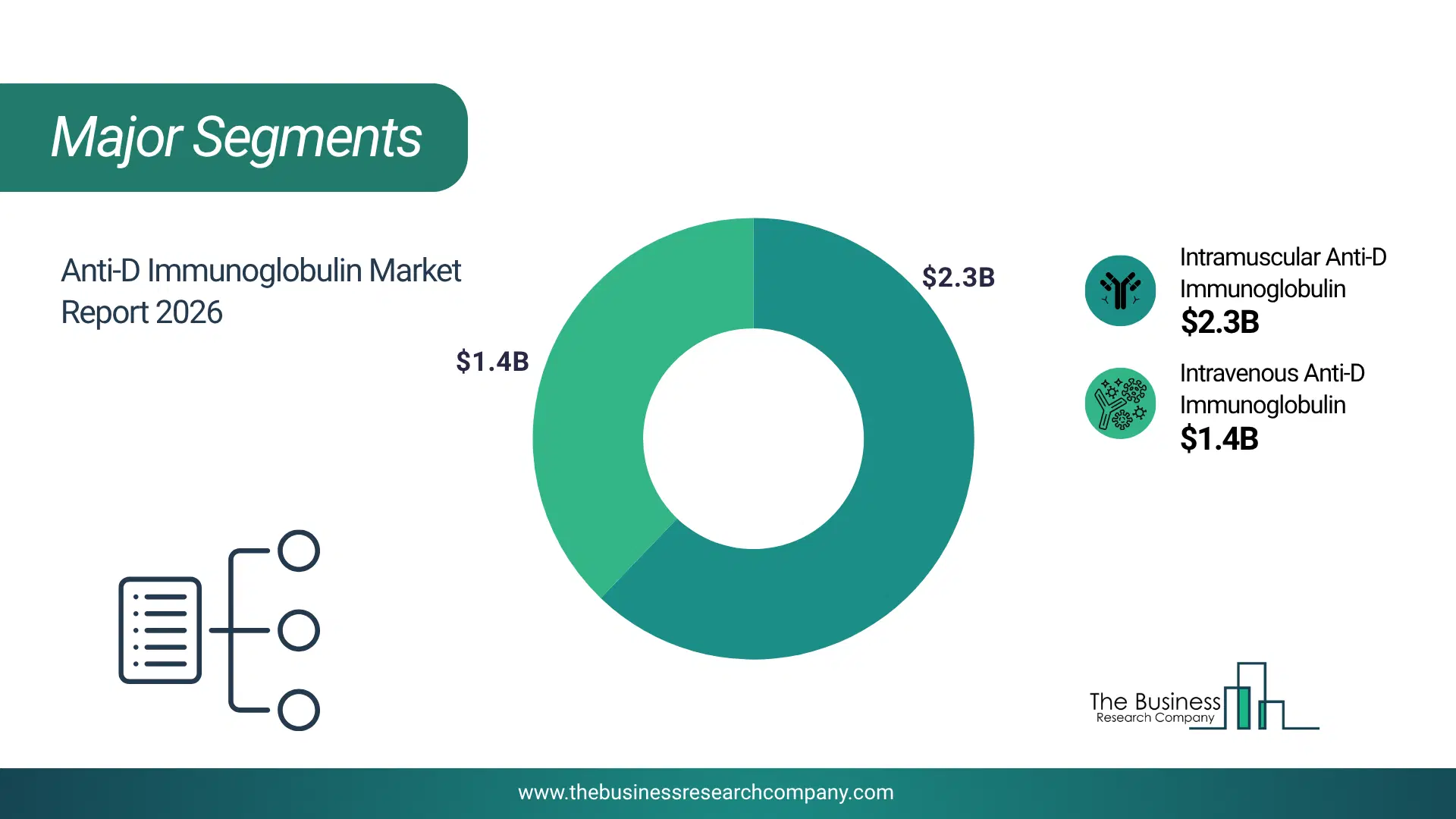
1) By Product Type: Intramuscular Anti-D Immunoglobulin, Intravenous Anti-D Immunoglobulin 2) By Distribution Channel: Hospital Pharmacies, Retail Pharmacies, Online Pharmacies, Other Distribution Channel 3) By Application: Hemolytic Disease Of The Newborn, Immune Thrombocytopenic Purpura, Antenatal And Postnatal Prophylaxis, Other Applications 4) By End-User: Hospitals, Clinics, Blood Banks, Research Laboratories Subsegments: 1) By Intramuscular Anti-D Immunoglobulin: Standard Dose, High Dose, Pre-Filled Syringes, Vials 2) By Intravenous Anti-D Immunoglobulin: Lyophilized Powder, Liquid Formulation, Single-Use Vials, Multi-Dose Vials The top segments in the anti-d immunoglobulin market will be: • Intramuscular Anti-D Immunoglobulin will reach $2.27 billion by 2030. • Intravenous Anti-D Immunoglobulin will reach $1.31 billion by 2030.What Are The Drivers Of The Anti-D Immunoglobulin Market?
The high birth rates are expected to propel the growth of the anti-D immunoglobulin market going forward. Birth rates represent the number of live births recorded annually for every 1,000 people in a population. Birth rates are increasing due to insufficient access to education and family planning services, resulting in higher fertility and larger families. Anti-D immunoglobulin helps birth rates by preventing Rh incompatibility in pregnancy, which reduces the risk of hemolytic disease in newborns and supports healthier outcomes in future pregnancies. For instance, in April 2025, according to the Centers for Disease Control and Prevention, a US-based government agency, there were 3,622,673 recorded births in 2024, reflecting a 1% increase from 2023. Therefore, the high birth rates are driving the growth of the anti-D immunoglobulin industry. The expanding healthcare infrastructure is expected to propel the growth of the anti-D immunoglobulin market going forward. Healthcare infrastructure refers to the system of facilities, equipment, workforce, and support mechanisms essential for delivering healthcare services within a population. Healthcare infrastructure is expanding as a result of the growing global population, which drives higher demand for medical care and necessitates the development of more hospitals, clinics, and related resources. Healthcare infrastructure expansion enhances access to maternal healthcare, enabling better screening and timely use of anti-D immunoglobulin to prevent hemolytic disease in newborns. For instance, in May 2023, according to the Department of Health and Social Care, a UK-based government department, the government announced plans to allocate more than $27 billion (£20 billion) toward building new hospital facilities. As part of the New Hospital Programme, two hospitals are already finished, five are currently being built, and over 20 are set to be underway or completed by the end of 2023. Therefore, the expanding healthcare infrastructure is driving the growth of the anti-D immunoglobulin industry. The expansion of prenatal and antenatal screening programs is expected to propel the growth of the anti D immunoglobulin market going forward. Prenatal and antenatal screening involves testing pregnant women for blood group compatibility and fetal RhD genotype to prevent hemolytic disease of the fetus and newborn. The expansion of these screening programs is due to the adoption of noninvasive prenatal testing (NIPT) using cell-free fetal DNA, which allows accurate identification of fetal RhD status. Prenatal and antenatal screening programs support the effective use of Anti-D immunoglobulin by identifying Rh-negative mothers early in pregnancy, monitoring for any potential sensitisation events, and ensuring timely intervention to prevent Rh incompatibility and protect both maternal and fetal health. For instance, in July 2025, according to the World Health Organization (WHO), a Switzerland-based international public health agency, an estimated 1.2 million pregnant women were living with HIV in 2023, of whom about 84% received antiretroviral medicines to prevent mother-to-child transmission. Therefore, the expansion of prenatal and antenatal screening programs is driving the growth of the anti D immunoglobulin market.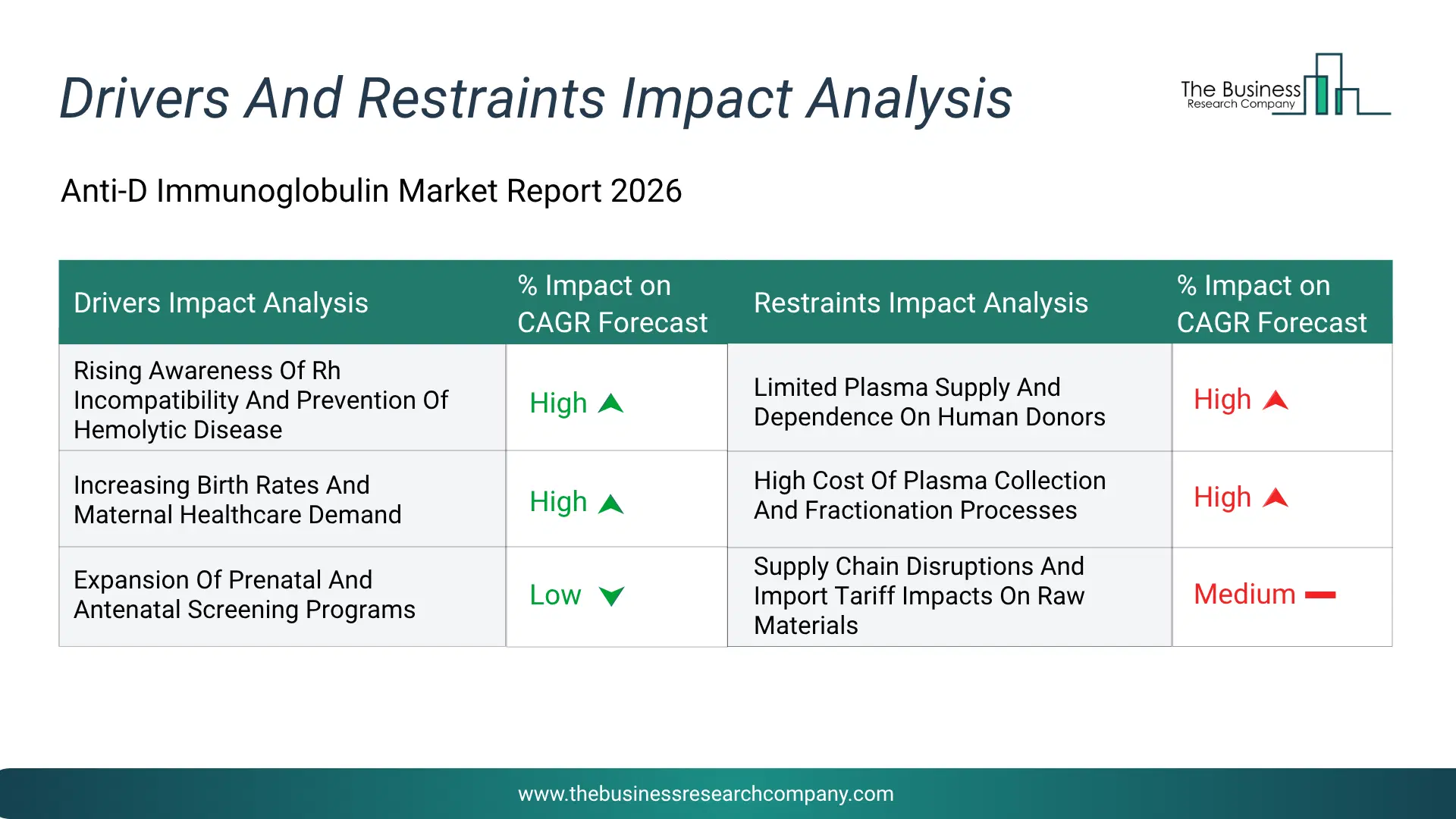
Infographic Chart Showing Key Market Drivers Analysis And Restraints For Anti-D Immunoglobulin Market
The chart presents an impact analysis of key drivers and restraints, quantifying their relative influence on the market's growth rate and helping assess the balance between growth enablers and limiting factors. This chart offers a high-level perspective; the full report contains more detailed insights.
How Will The Drivers Impact Growth In The Global Anti-D Immunoglobulin Market?
• Rising Awareness Of Rh Incompatibility And Prevention Of Hemolytic Disease (High) – During the forecast period, the rising awareness of rh incompatibility and prevention of hemolytic disease is expected to become a key growth driver for the anti -d immunoglobulin market by 2030. Healthcare providers and governments are increasingly focusing on educating expectant mothers about the risks associated with rh incompatibility and the importance of timely anti -d administration. Early diagnosis and preventive treatment significantly reduce neonatal complications and mortality rates. This growing awareness is driving higher screening rates and increased demand for anti -d immunoglobulin across developed and emerging markets. • Increasing Birth Rates And Maternal Healthcare Demand (High) – During the forecast period, the increasing birth rates and maternal healthcare demand are expected to emerge as a major factor driving the expansion of the anti-d immunoglobulin market by 2030. Growing population levels, particularly in developing regions, are leading to a higher number of pregnancies requiring prenatal and postnatal care. This is increasing the demand for immunoglobulin therapies to ensure safe pregnancies and prevent complications related to rh incompatibility. Additionally, improvements in healthcare access and maternal care services are further supporting market growth. • Expansion Of Prenatal And Antenatal Screening Programs (Low) – During the forecast period, the expansion of prenatal and antenatal screening programs is expected to act as a key growth catalyst for the anti-d immunoglobulin market by 2030. Governments and healthcare organizations are increasingly implementing routine blood screening programs to detect rh-negative pregnancies at an early stage. These programs enable timely intervention and administration of anti-d immunoglobulin, reducing the risk of complications. The growing adoption of structured screening protocols across hospitals and clinics is enhancing treatment outcomes and driving consistent demand for immunoglobulin products.How Will The Restraints Impact Growth In The Global Anti-D Immunoglobulin Market?
• Limited Plasma Supply And Dependence On Human Donors (High) – During the forecast period, the limited plasma supply and reliance on human donors act as a major constraint because anti-d immunoglobulin is entirely derived from donor plasma containing specific antibodies. The availability of this raw material is inherently restricted by donor participation rates, eligibility criteria, and collection infrastructure. Any decline in donations or disruptions in collection directly reduces production capacity, limiting the volume of finished products entering the market. This creates supply-demand imbalances, especially in regions with high maternal care needs. As a result, the dependence on human plasma restricts scalability and puts pressure on consistent revenue generation within the defined market. • High Cost Of Plasma Collection And Fractionation Processes (High) – During the forecast period, the the production of anti-d immunoglobulin involves complex and capital-intensive steps, including donor screening, plasma collection, cold-chain storage, and advanced fractionation processes. These procedures require specialized facilities, strict quality controls, and regulatory compliance, significantly increasing operational costs. As a result, manufacturers face high production expenses, which can limit pricing flexibility and affordability in cost-sensitive markets. This may restrict adoption in developing regions where healthcare budgets are constrained. Consequently, high production costs act as a barrier to market expansion and scalability. • Supply Chain Disruptions And Import Tariff Impacts On Raw Materials (Medium) – During the forecast period, the the anti-d immunoglobulin market depends on a globally interconnected supply chain for plasma, equipment, and processing materials. Disruptions such as transportation delays, geopolitical issues, or pandemics can interrupt the steady flow of critical inputs. Additionally, import tariffs and trade restrictions increase procurement costs for essential materials and technologies used in plasma fractionation. These challenges can lead to delays in production and higher end-product pricing. As a result, supply chain inefficiencies and trade barriers hinder consistent product availability and market growth.Key Players In The Global Anti-D Immunoglobulin Market
Major companies operating in the anti-d immunoglobulin market are CSL Behring, Octapharma AG, Kedrion Biopharma Inc., Biotest AG, Sanquin, Bharat Serums and Vaccines Limited, Intas Pharmaceuticals Ltd., Zydus Lifesciences Limited, Emergent BioSolutions Inc., Kamada Pharmaceuticals, Saol Therapeutics Inc., Avin Darou, Sichuan Yuanda Shuyang Pharmaceutical Co. Ltd., Taj Pharmaceuticals Limited, Aetos Pharma Private Limited, PV Pharma Healthcare Pvt. Ltd., Grifols S.A., Takeda Pharmaceutical Company Limited, LFB Biomedicaments, China Biologic Products Holdings Inc., Shanghai RAAS Blood Products Co. Ltd., Hualan Biological Engineering Inc., CBPO (Shandong Taibang Biological Products Co. Ltd.), Bio Products Laboratory (BPL), Instituto Grifols S.A., HemaCare Corporation, KM Biologics Co. Ltd., National Bioproducts Institute (NBI), GC Pharma (Green Cross Corporation), SK Plasma Co. Ltd.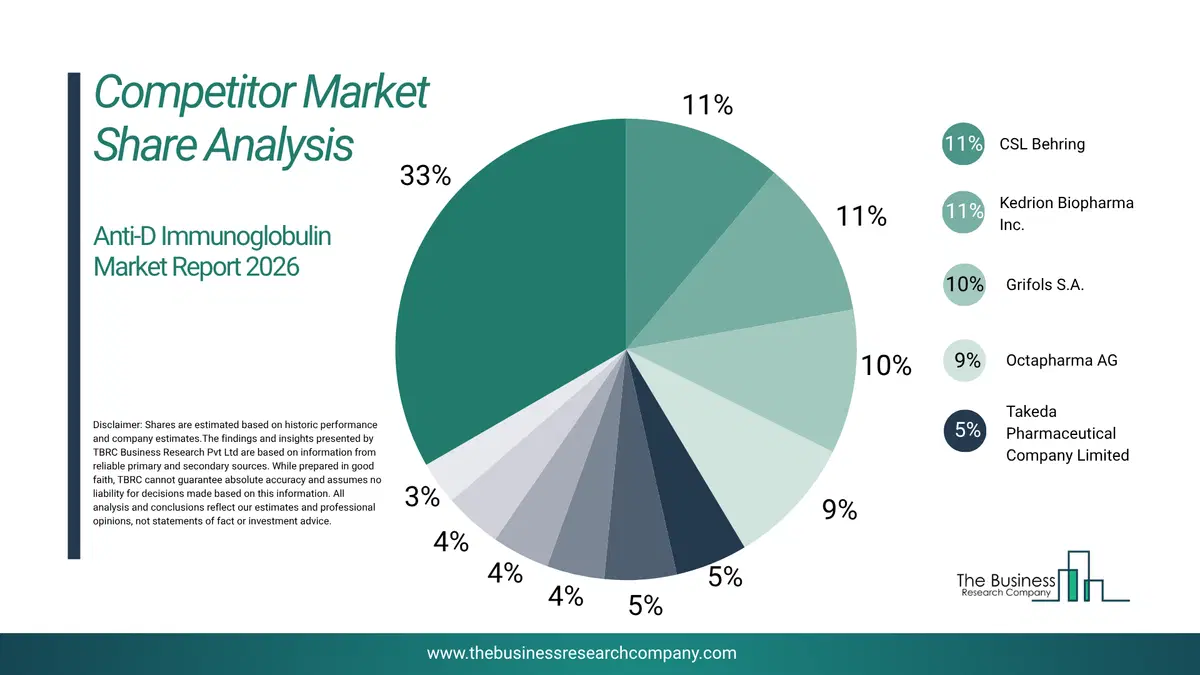
This chart is for illustrative purposes; the full report includes a detailed competitor analysis and comprehensive overview of the top 10 companies in the market.
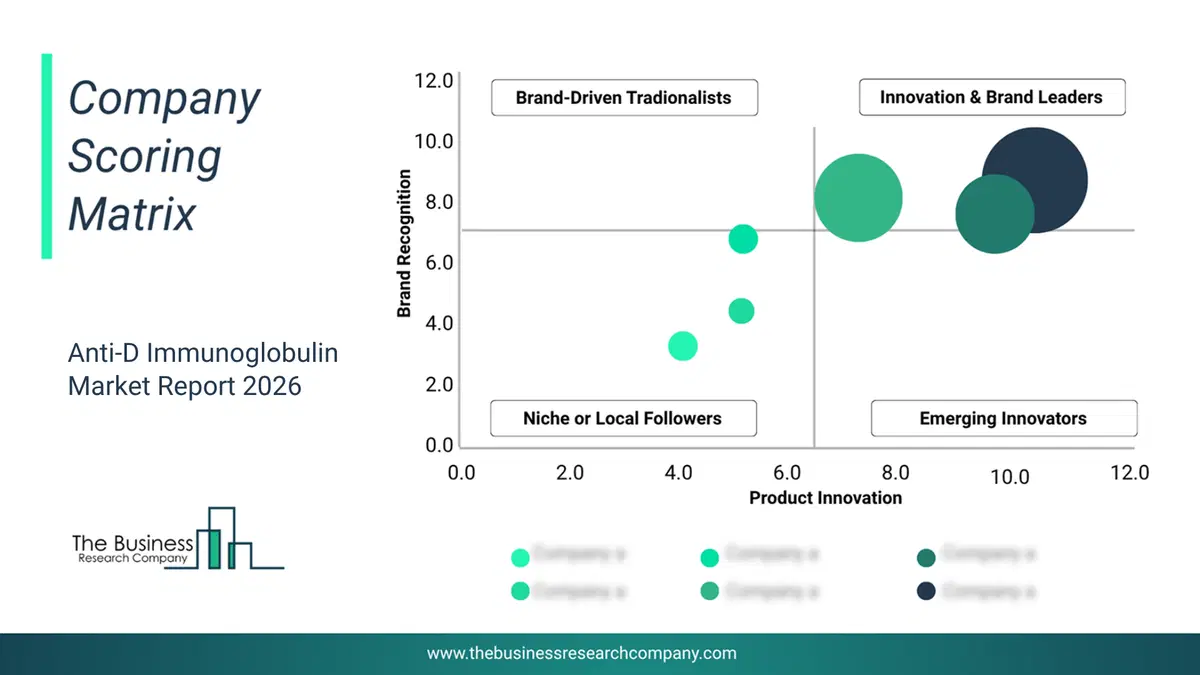
This chart maps companies by product innovation and brand strength, with bubble size indicating relative revenue, helping identify market leaders, challengers, and niche players. This is an illustrative chart; the full report provides a complete and accurate competitive analysis.
Regional Insights
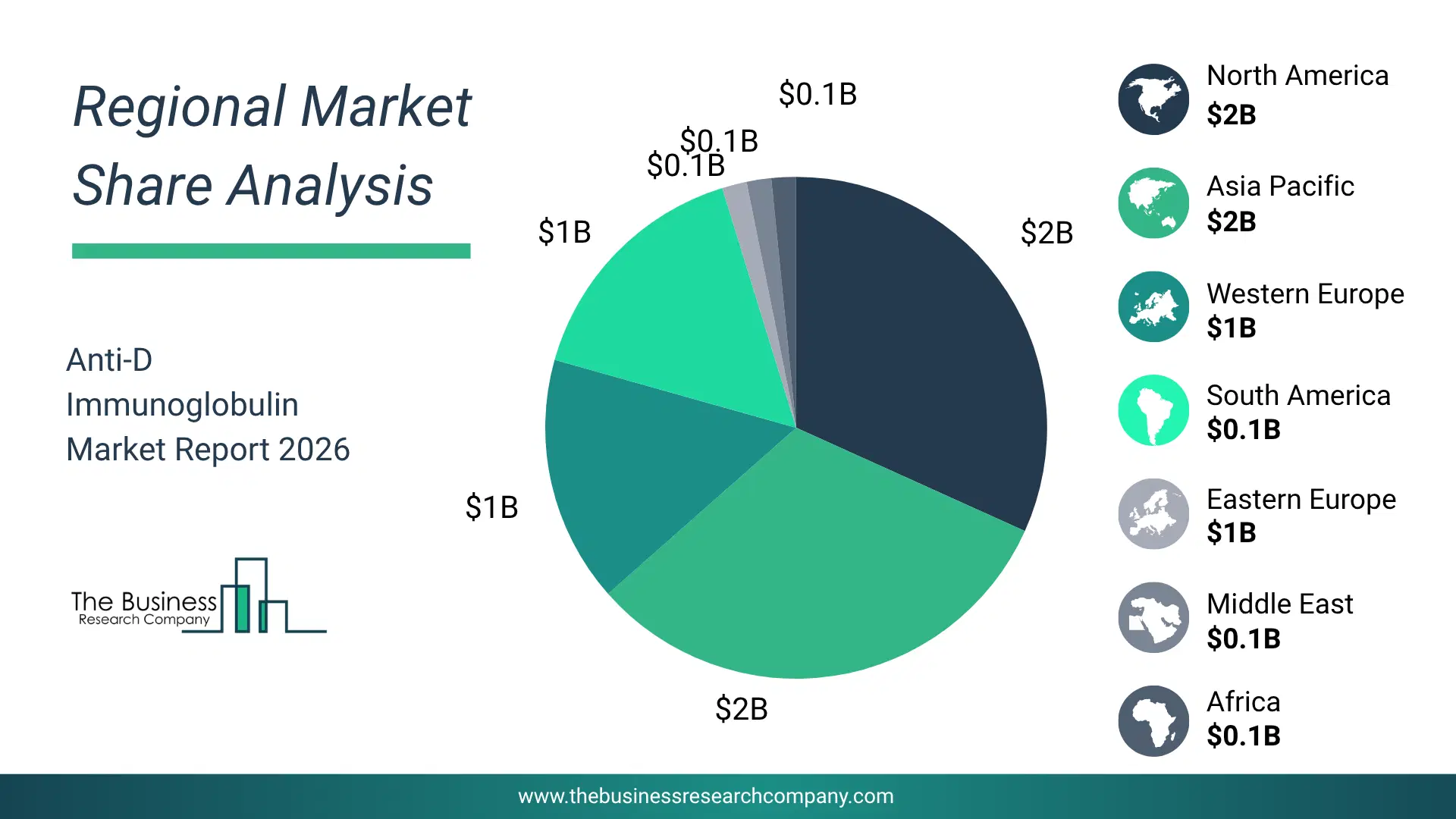
North America was the largest region in the anti-D immunoglobulin market in 2025. Asia-Pacific is expected to be the fastest-growing region in the forecast period. The regions covered in this market report are Asia-Pacific, South East Asia, Western Europe, Eastern Europe, North America, South America, Middle East, Africa. The countries covered in this market report are Australia, Brazil, China, France, Germany, India, Indonesia, Japan, Taiwan, Russia, South Korea, UK, USA, Canada, Italy, Spain.What Defines the Anti-D Immunoglobulin Market?
The anti-D immunoglobulin market consists of sales of hepatitis B immunoglobulin, tetanus immunoglobulin, rabies immunoglobulin, and varicella-zoster immunoglobulin. Values in this market are ‘factory gate’ values, that is the value of goods sold by the manufacturers or creators of the goods, whether to other entities (including downstream manufacturers, wholesalers, distributors and retailers) or directly to end customers. The value of goods in this market includes related services sold by the creators of the goods.How is Market Value Defined and Measured?
The market value is defined as the revenues that enterprises gain from the sale of goods and/or services within the specified market and geography through sales, grants, or donations in terms of the currency (in USD unless otherwise specified). The revenues for a specified geography are consumption values that are revenues generated by organizations in the specified geography within the market, irrespective of where they are produced. It does not include revenues from resales along the supply chain, either further along the supply chain or as part of other products.
This chart presents market attractiveness based on a quantitative evaluation of growth, competition, strategic alignment, and risk, offering a clear view of opportunity areas for decision-making. This chart is for illustrative purposes; the full report contains the complete analysis.

This chart highlights the Total Addressable Market (TAM) by estimating the maximum revenue opportunity using an assumption-driven approach, supporting strategic planning and opportunity sizing across markets. The chart is illustrative; the full report provides a more comprehensive analysis.
What Key Data and Analysis Are Included in the Anti-D Immunoglobulin Market Report 2026?
The anti-d immunoglobulin market research report is one of a series of new reports from The Business Research Company that provides market statistics, including industry global market size, regional shares, competitors with the market share, detailed market segments, market trends and opportunities, and any further data you may need to thrive in the anti-d immunoglobulin industry. The market research report delivers a complete perspective of everything you need, with an in-depth analysis of the current and future state of the industry.Anti-D Immunoglobulin Market Report Forecast Analysis
| Report Attribute | Details |
|---|---|
| Market Size Value In 2026 | $2.76 billion |
| Revenue Forecast In 2030 | $3.55 billion |
| Growth Rate | CAGR of 6.5% from 2026 to 2030 |
| Base Year For Estimation | 2025 |
| Actual Estimates/Historical Data | 2020-2025 |
| Forecast Period | 2026 - 2030 |
| Market Representation | Revenue in USD Billion and CAGR from 2026 to 2030 |
| Segments Covered | Product Type, Distribution Channel, Application, End-User |
| Regional Scope | Asia-Pacific, Western Europe, Eastern Europe, North America, South America, Middle East, Africa |
| Country Scope | The countries covered in the report are Australia, Brazil, China, France, Germany, India, ... |
| Key Companies Profiled | CSL Behring, Octapharma AG, Kedrion Biopharma Inc., Biotest AG, Sanquin, Bharat Serums and Vaccines Limited, Intas Pharmaceuticals Ltd., Zydus Lifesciences Limited, Emergent BioSolutions Inc., Kamada Pharmaceuticals, Saol Therapeutics Inc., Avin Darou, Sichuan Yuanda Shuyang Pharmaceutical Co. Ltd., Taj Pharmaceuticals Limited, Aetos Pharma Private Limited, PV Pharma Healthcare Pvt. Ltd., Grifols S.A., Takeda Pharmaceutical Company Limited, LFB Biomedicaments, China Biologic Products Holdings Inc., Shanghai RAAS Blood Products Co. Ltd., Hualan Biological Engineering Inc., CBPO (Shandong Taibang Biological Products Co. Ltd.), Bio Products Laboratory (BPL), Instituto Grifols S.A., HemaCare Corporation, KM Biologics Co. Ltd., National Bioproducts Institute (NBI), GC Pharma (Green Cross Corporation), SK Plasma Co. Ltd. |
| Customization Scope | Request for Customization |
| Pricing And Purchase Options | Explore Purchase Options |