
Anti-Drunk Driving Device Market Report 2026
Global Outlook – By Type (Ignition Interlock Device, Alcohol Detection Systems, Alcohol-Focused Driver Monitoring Systems), By Distribution Channel (Original Equipment Manufacturers (OEMs), Aftermarket), By Application (Passenger Car, Commercial Car) – Market Size, Trends, Strategies, and Forecast to 2030
Anti-Drunk Driving Device Market Overview
• Anti-Drunk Driving Device market size has reached to $4.82 billion in 2025 • Expected to grow to $7.13 billion in 2030 at a compound annual growth rate (CAGR) of 8.2% • Growth Driver: Increase In Alcohol Consumption Rate To Drive Growth In The Anti-Drunk Driving Device Market • Market Trend: Innovative Impaired Driving Prevention Technology Enhances Road Safety • North America was the largest region in 2025 and Asia-Pacific is the fastest growing region.Market Gains By 2030 – Top Opportunities By Segment
Market Gain identifies the most promising market opportunities by highlighting the segments or products expected to generate the highest incremental revenue growth over the next five years.
What Is Covered Under Anti-Drunk Driving Device Market?
Anti-drunk driving devices are technologies designed to prevent individuals under the influence of alcohol from operating vehicles. These devices typically include ignition interlock systems that require breath samples before starting the engine, as well as advanced detection systems that monitor a driver's blood alcohol concentration (BAC) through breath or touch sensors. The main types of anti-drunk driving devices are ignition interlock devices, lane departure warning systems, and others. An ignition interlock device (IID) is a safety tool installed in vehicles that requires the driver to provide a breath sample before starting the engine. The various distribution channels include original equipment manufacturers (OEMs), and aftermarkets used for different applications, such as passenger cars, and commercial cars.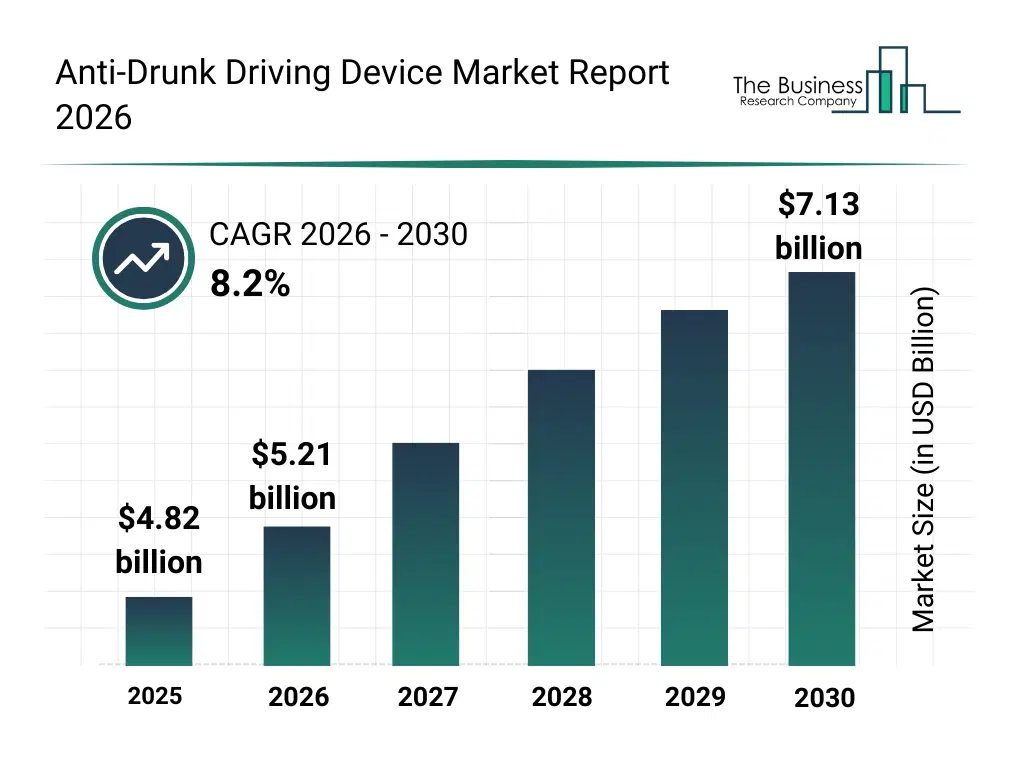
What Is The Anti-Drunk Driving Device Market Size and Share 2026?
The anti-drunk driving device market size has grown strongly in recent years. It will grow from $4.82 billion in 2025 to $5.21 billion in 2026 at a compound annual growth rate (CAGR) of 7.9%. The growth in the historic period can be attributed to drunk driving regulations, court-mandated installations, road safety awareness, fleet safety programs, early adoption of IID systems.What Is The Anti-Drunk Driving Device Market Growth Forecast?
The anti-drunk driving device market size is expected to see strong growth in the next few years. It will grow to $7.13 billion in 2030 at a compound annual growth rate (CAGR) of 8.2%. The growth in the forecast period can be attributed to stricter traffic safety laws, smart vehicle integration, growth of connected cars, demand for real-time monitoring, government road safety initiatives. Major trends in the forecast period include mandatory use of ignition interlock systems, integration with advanced driver monitoring, growth of aftermarket installations, adoption of connected safety devices, expansion in commercial fleets.
Global Anti-Drunk Driving Device Market Segmentation
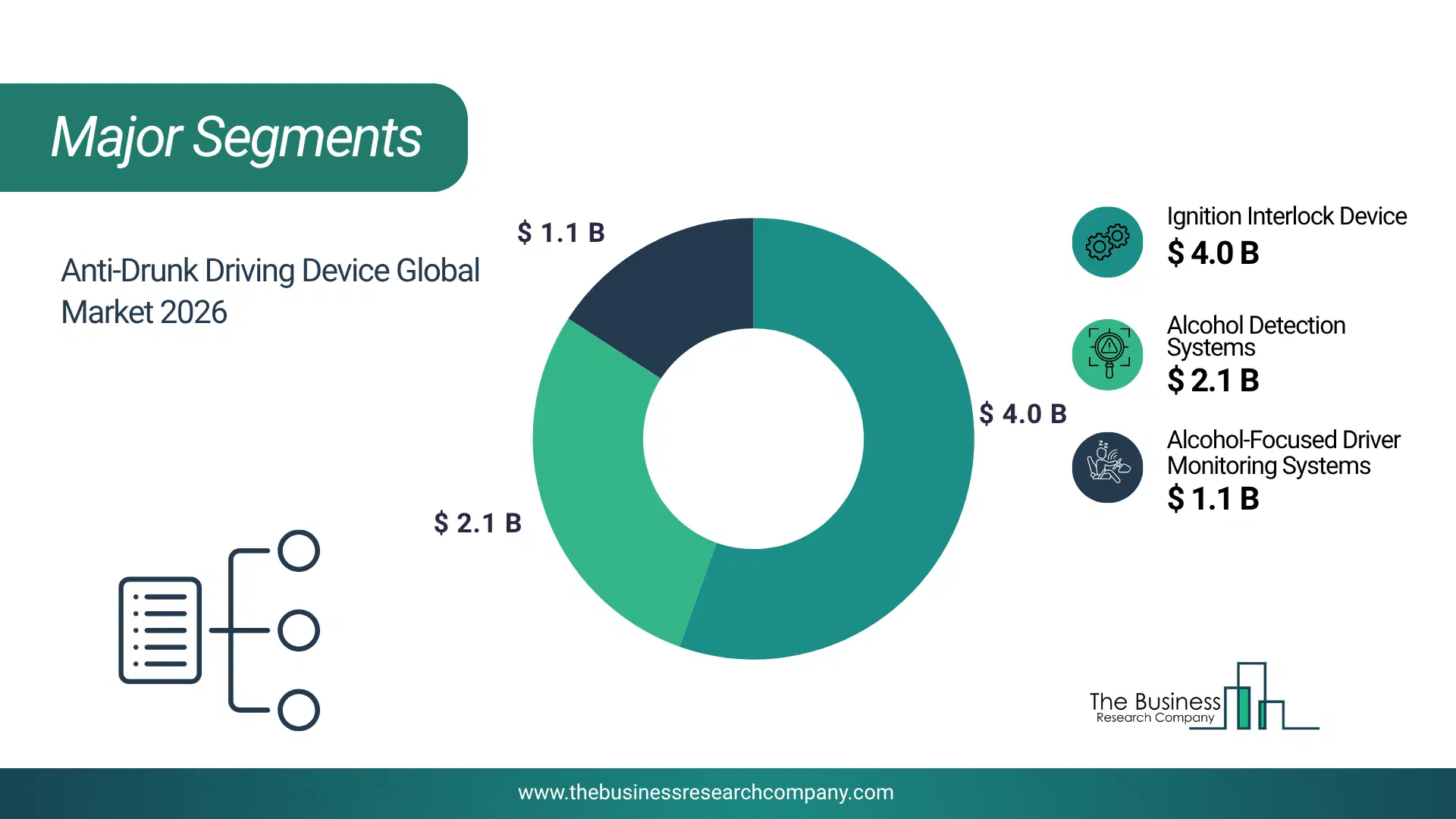
1) By Type: Ignition Interlock Device, Alcohol Detection Systems, Alcohol-Focused Driver Monitoring Systems 2) By Distribution Channel: Original Equipment Manufacturers (OEMs), Aftermarket 3) By Application: Passenger Car, Commercial Car Subsegments: 1) By Ignition Interlock Devices: Traditional Ignition Interlock Devices, Mobile App–Connected Ignition Interlock Devices, Camera-Enabled Ignition Interlock Devices, Wireless Ignition Interlock Devices, Advanced Breathalyzer-Based Ignition Interlock Devices 2) By Alcohol Detection Systems: Breath-Based Alcohol Detection Systems, Touch-Based Alcohol Detection Systems, Continuous BAC Monitoring Systems 3) By Alcohol-Focused Driver Monitoring Systems: Alcohol Impairment Monitoring Systems, Biometric Alcohol Detection Systems The top segments in the anti-drunk driving device market will be: • Ignition Interlock Device will reach $3.97 billion by 2030. • Alcohol Detection Systems will reach $2.06 billion by 2030. • Alcohol-Focused Driver Monitoring Systems will reach $1.11 billion by 2030.What Is The Driver Of The Anti-Drunk Driving Device Market?
An increase in alcohol consumption rate is expected to propel the growth of the anti-drunk driving device market. The alcohol consumption rate measures how much alcohol people drink in a given time within a certain population. Alcohol consumption is rising mainly due to growing social acceptance, where drinking is more common in social events and leisure activities. Anti-drunk driving devices, such as ignition interlocks, promote responsible drinking by preventing intoxicated individuals from driving, thus regulating alcohol use. For instance, in August 2025, according to the National Institute on Alcohol Abuse and Alcoholism, a US-based government department, the 2024 National Survey on Drug Use and Health (NSDUH) reported that 228.4 million people ages 12 and older, about 79.2% of this age group, had consumed alcohol at least once in their lives. Therefore, the increase in alcohol consumption rate is driving the anti-drunk driving device industry going forward.Global Anti-Drunk Driving Device Market Trends and Insights
Major companies operating in the anti-drunk driving device market are developing advanced technologies such as impaired driving prevention technology to enhance road safety and effectiveness in preventing impaired driving. Impaired driving prevention technology refers to advanced systems and devices designed to detect and mitigate driver impairment due to alcohol or other substances, aiming to enhance road safety by preventing accidents and fatalities associated with impaired driving. For instance, in January 2024, Magna, a Canada-based automotive parts manufacturing company, launched breath and camera-based pre-development technology. The new breath and camera-based pre-development technology has been introduced to combat impaired driving by integrating advanced sensing systems that assess driver fitness. This innovative solution utilizes camera technology to detect signs of distraction, drowsiness, and intoxication through pupillary responses while simultaneously measuring alcohol and carbon dioxide levels in the driver's breath. It provides a reliable and non-invasive method for ensuring sobriety, and this technology aims to significantly enhance road safety and reduce incidents of drunk driving.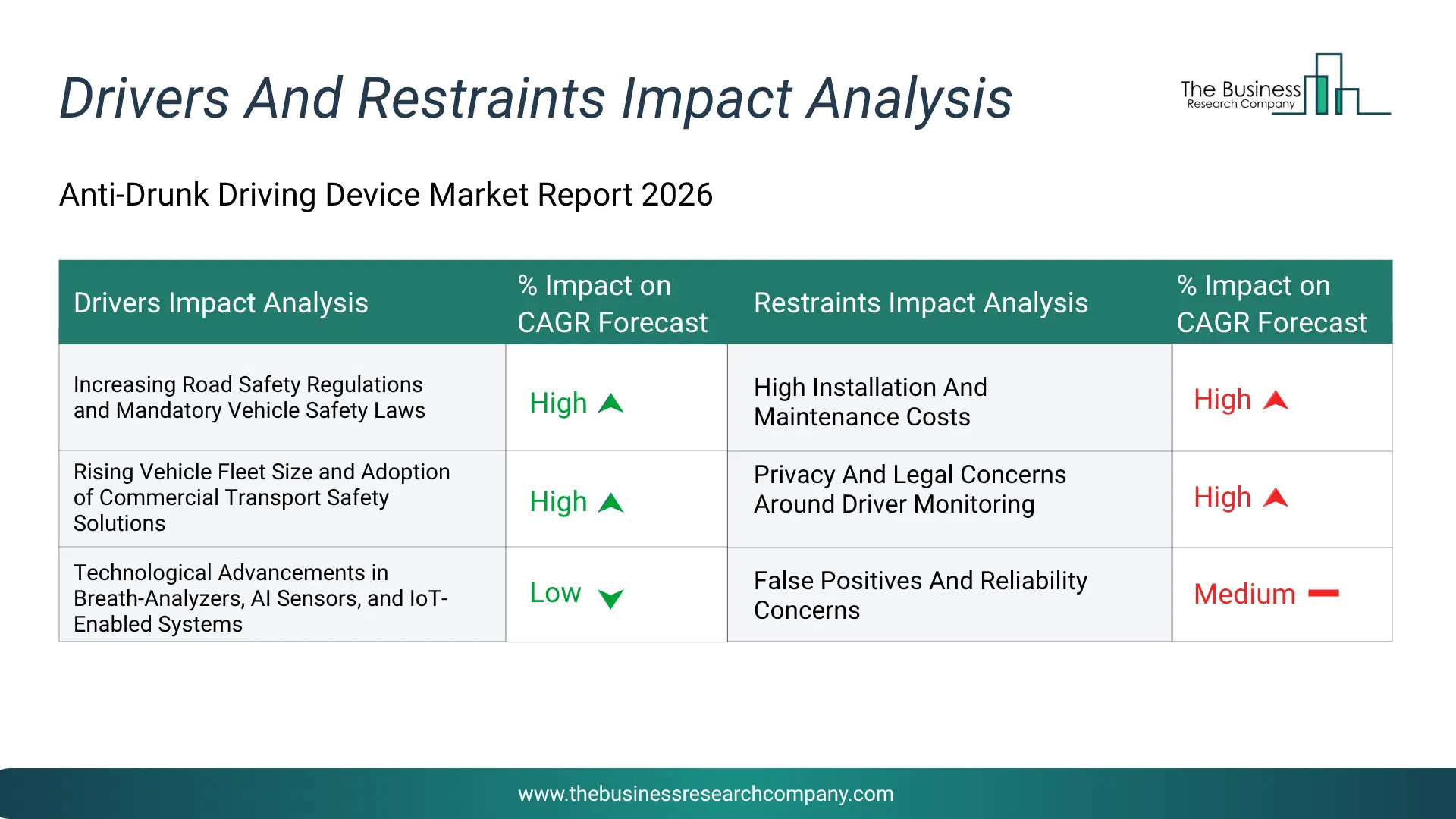
Infographic Chart Showing Key Market Drivers Analysis And Restraints For Anti-Drunk Driving Device Market
The chart presents an impact analysis of key drivers and restraints, quantifying their relative influence on the market's growth rate and helping assess the balance between growth enablers and limiting factors. This chart offers a high-level perspective; the full report contains more detailed insights.
How Will The Drivers Impact Growth In The Global Anti-Drunk Driving Device Market?
• Increasing Road Safety Regulations and Mandatory Vehicle Safety Laws (High) – During the forecast period, the increasing road safety regulations and mandatory vehicle safety laws are expected to become a key growth driver for the anti -drunk driving device market by 2030. Governments worldwide are introducing stricter traffic safety regulations, zero -tolerance drunk driving laws, and mandatory installation of alcohol detection devices in commercial and personal vehicles. Enforcement initiatives, including frequent sobriety checks and penalties for impaired driving, are compelling vehicle manufacturers and fleet operators to integrate anti -drunk driving devices. The legal push for safer roads, combined with rising public awareness about traffic fatalities due to alcohol, is driving widespread adoption and regulatory compliance, making legislation the primary growth driver. • Rising Vehicle Fleet Size and Adoption of Commercial Transport Safety Solutions (High) – During the forecast period, the rising vehicle fleet size and adoption of commercial transport safety solutions are expected to emerge as a major factor driving the expansion of the anti-drunk driving device market by 2030. The expanding automotive fleet, particularly in commercial vehicles, taxis, buses, and ride-hailing services, is significantly increasing demand for in-vehicle alcohol detection systems. Fleet operators are adopting these devices to ensure driver sobriety, reduce accident liability, and lower insurance costs. Additionally, the growing emphasis on corporate social responsibility and passenger safety in logistics and public transport sectors is reinforcing consistent deployment of anti-drunk driving technology. • Technological Advancements in Breath-Analyzers, AI Sensors, and IoT-Enabled Systems (Low) – During the forecast period, the technological advancements in breath-analyzers, ai sensors, and iot-enabled systems are expected to act as a key growth catalyst for the anti-drunk driving device market by 2030. Advances in sensor accuracy, ai-based alcohol detection, iot connectivity, and integration with vehicle ignition systems are making anti-drunk driving devices more reliable, convenient, and user-friendly. Modern devices offer features such as automatic engine immobilization, real-time monitoring, mobile alerts, and fleet telematics integration, increasing trust and adoption among consumers and operators. Continuous innovation and decreasing device costs are further facilitating market penetration across both personal and commercial vehicle segments.How Will The Restraints Impact Growth In The Global Anti-Drunk Driving Device Market?
• High Installation And Maintenance Costs (High) – During the forecast period, the despite growing adoption, the high cost of installing and maintaining anti-drunk driving devices can limit widespread deployment, particularly in developing economies. Smaller fleet operators and individual vehicle owners may hesitate to invest in these systems due to upfront expenses and calibration requirements. Cost barriers may slow adoption until technology becomes more affordable and standardized. • Privacy And Legal Concerns Around Driver Monitoring (High) – During the forecast period, the driver monitoring technologies, including alcohol detection systems, sometimes raise privacy and legal concerns. Continuous monitoring of driver behavior and biometric indicators may be perceived as intrusive. Regulatory frameworks governing data usage, privacy protection, and workplace monitoring could create challenges for adoption in certain regions. • False Positives And Reliability Concerns (Medium) – During the forecast period, the false positives and reliability concerns act as a restraint for the anti-drunk driving device market by affecting user trust and system acceptance. In some cases, sensors may incorrectly detect alcohol presence or fail to accurately assess driver impairment due to environmental conditions or calibration issues. Such inaccuracies can lead to unnecessary vehicle immobilization and operational disruptions, especially in fleet applications. This reduces confidence among end users and slows down large-scale adoption of these systems.Key Players In The Global Anti-Drunk Driving Device Market
Major companies operating in the anti-drunk driving device market report include Robert Bosch GmbH, Nissan Motor Co. Ltd., Magna International Inc., Valeo S.A., Autoliv Inc., Drägerwerk AG & Co. KGaA, Alcohol Monitoring Systems, Inc., Smart Start Inc., AddSecure AB, LifeSafer Ignition Interlock, Intoxalock Inc., Alcohol Countermeasure Systems Corp., Guardian Interlock Systems Inc., Alcolock, Senseair AB, A&A Interlock Services Ltd., Andatech Pty Ltd., Monitech LLC, Sens-O-Lock of America LLC, SkyFine USA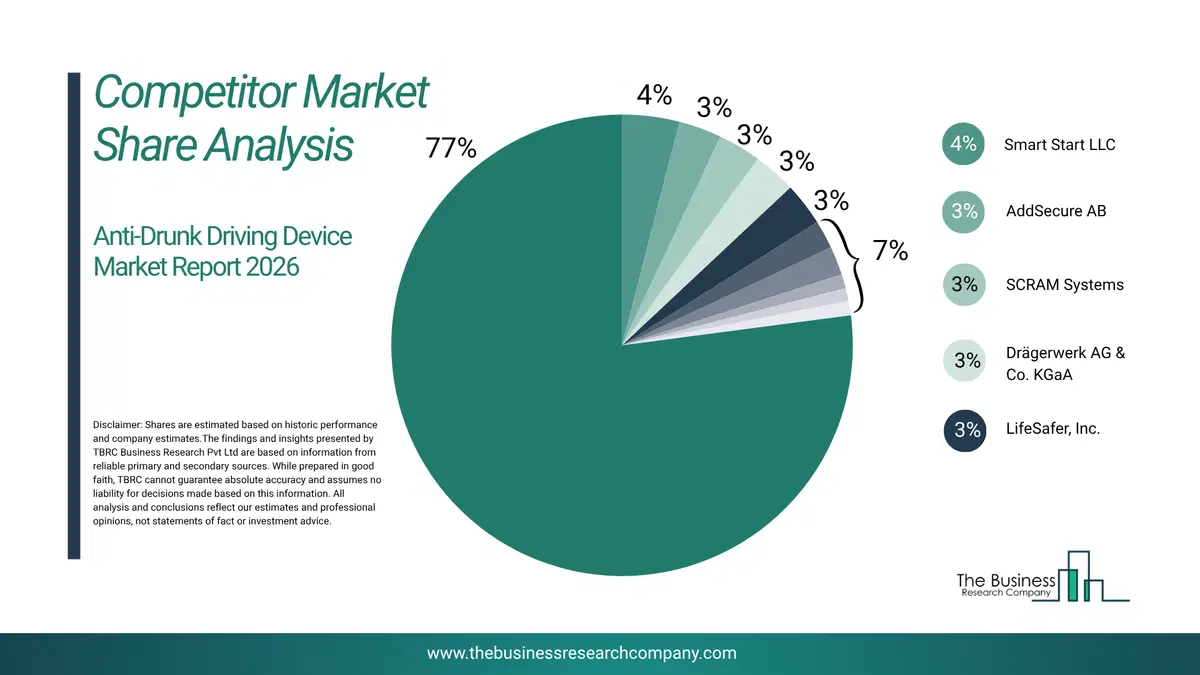
This chart is for illustrative purposes; the full report includes a detailed competitor analysis and comprehensive overview of the top 10 companies in the market.
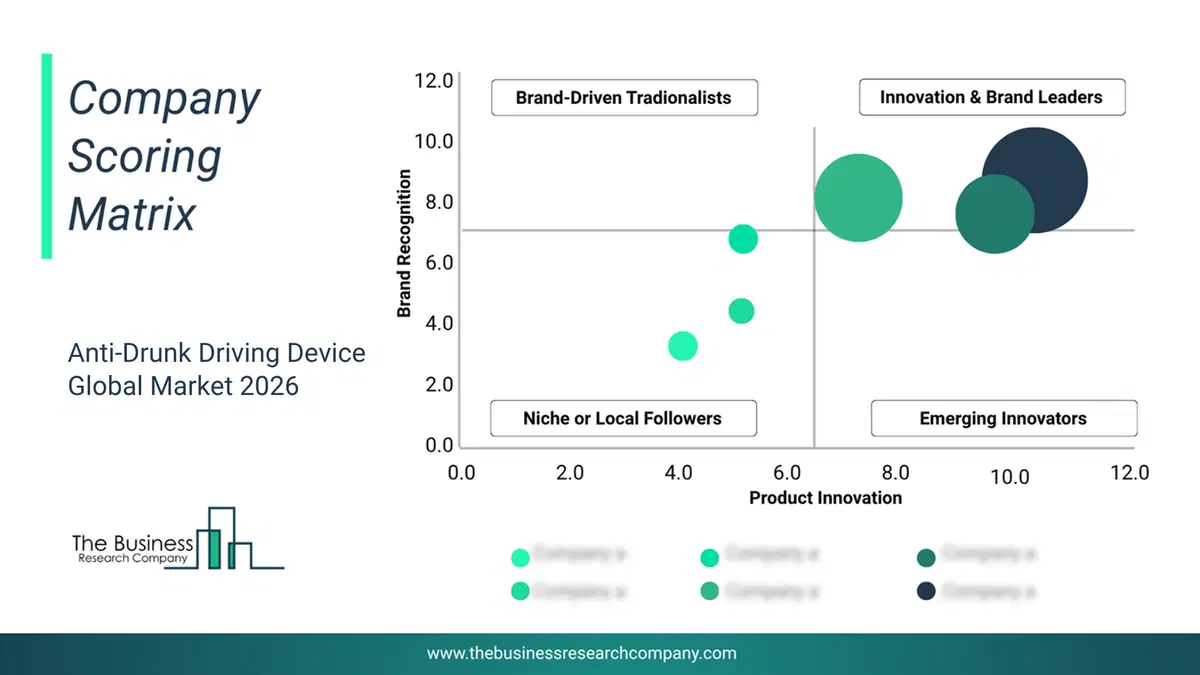
This chart maps companies by product innovation and brand strength, with bubble size indicating relative revenue, helping identify market leaders, challengers, and niche players. This is an illustrative chart; the full report provides a complete and accurate competitive analysis.
What Are Latest Mergers And Acquisitions In The Anti-Drunk Driving Device Market?
In October 2023, 1A Smart Start, LLC, a US-based company specializing in ignition interlock devices, partnered with Mobile Electronic Specialists of America (M.E.S.A.). Through this partnership, 1A Smart Start aims to strengthen its position in driving under the influence (DUI) prevention, including the drunk driving market, while M.E.S.A. seeks to enhance its capabilities and presence in the alcohol monitoring and vehicle safety sectors. Mobile Electronic Specialists of America (M.E.S.A.). is a US-based company specializing in road safety technologies.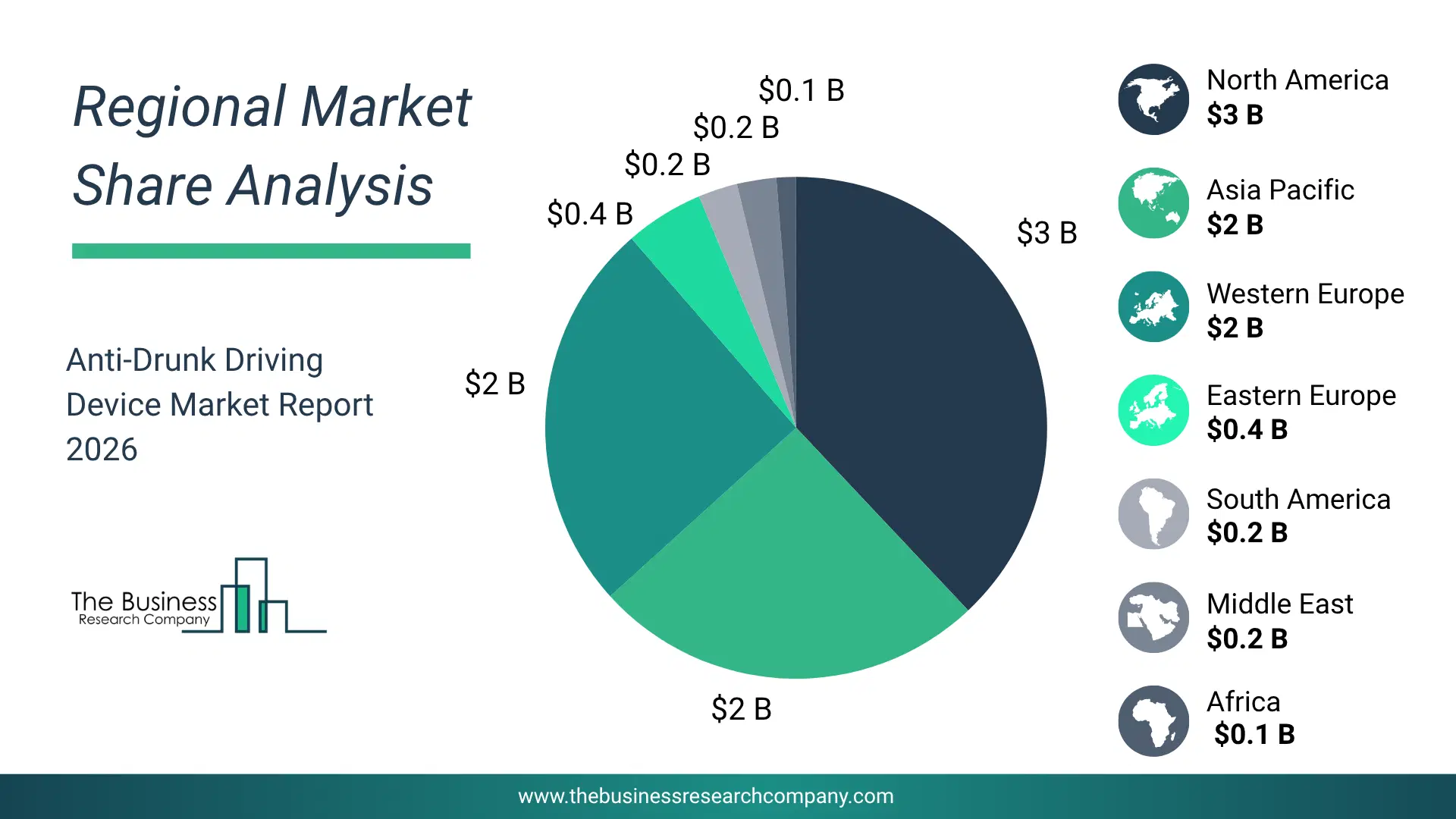
Regional Outlook
North America was the largest region in the anti-drunk driving device market in 2025. Asia-Pacific is expected to be the fastest-growing region in the forecast period. The regions covered in this market report include Asia-Pacific, South East Asia, Western Europe, Eastern Europe, North America, South America, Middle East, Africa. The countries covered in this market report include Australia, Brazil, China, France, Germany, India, Indonesia, Japan, Taiwan, Russia, South Korea, UK, USA, Canada, Italy, SpainWhat Defines the Anti-Drunk Driving Device Market?
The anti-drunk driving devices market consists of sales of products such as ignition interlock devices, driver alcohol detection systems, facial monitoring systems, lane monitoring systems, and alcohol odor sensors, all aimed at preventing impaired driving and enhancing road safety. Values in this market are ‘factory gate’ values, that is, the value of goods sold by the manufacturers or creators of the goods, whether to other entities (including downstream manufacturers, wholesalers, distributors, and retailers) or directly to end customers. The value of goods in this market includes related services sold by the creators of the goods.How is Market Value Defined and Measured?
The market value is defined as the revenues that enterprises gain from the sale of goods and/or services within the specified market and geography through sales, grants, or donations in terms of the currency (in USD unless otherwise specified). The revenues for a specified geography are consumption values that are revenues generated by organizations in the specified geography within the market, irrespective of where they are produced. It does not include revenues from resales along the supply chain, either further along the supply chain or as part of other products.
This chart presents market attractiveness based on a quantitative evaluation of growth, competition, strategic alignment, and risk, offering a clear view of opportunity areas for decision-making. This chart is for illustrative purposes; the full report contains the complete analysis.

This chart highlights the Total Addressable Market (TAM) by estimating the maximum revenue opportunity using an assumption-driven approach, supporting strategic planning and opportunity sizing across markets. The chart is illustrative; the full report provides a more comprehensive analysis.
What Key Data and Analysis Are Included in the Anti-Drunk Driving Device Market Report 2026?
The anti-drunk driving device market research report is one of a series of new reports from The Business Research Company that provides market statistics, including industry global market size, regional shares, competitors with the market share, detailed market segments, market trends and opportunities, and any further data you may need to thrive in the anti-drunk driving device industry. The market research report delivers a complete perspective of everything you need, with an in-depth analysis of the current and future state of the industry.Anti-Drunk Driving Device Market Report Forecast Analysis
| Report Attribute | Details |
|---|---|
| Market Size Value In 2026 | $5.21 billion |
| Revenue Forecast In 2030 | $7.13 billion |
| Growth Rate | CAGR of 7.9% from 2026 to 2030 |
| Base Year For Estimation | 2025 |
| Actual Estimates/Historical Data | 2020-2025 |
| Forecast Period | 2026 - 2030 |
| Market Representation | Revenue in USD Billion and CAGR from 2026 to 2030 |
| Segments Covered | Type, Distribution Channel, Application |
| Regional Scope | Asia-Pacific, Western Europe, Eastern Europe, North America, South America, Middle East, Africa |
| Country Scope | The countries covered in the report are Australia, Brazil, China, France, Germany, India, Indonesia, Japan, Taiwan, Russia, South Korea, UK, USA, Canada, Italy, Spain. |
| Key Companies Profiled | Robert Bosch GmbH, Nissan Motor Co. Ltd., Magna International Inc., Valeo S.A., Autoliv Inc., Drägerwerk AG & Co. KGaA, Alcohol Monitoring Systems, Inc., Smart Start Inc., AddSecure AB, LifeSafer Ignition Interlock, Intoxalock Inc., Alcohol Countermeasure Systems Corp., Guardian Interlock Systems Inc., Alcolock, Senseair AB, A&A Interlock Services Ltd., Andatech Pty Ltd., Monitech LLC, Sens-O-Lock of America LLC, SkyFine USA |
| Customization Scope | Request for Customization |
| Pricing And Purchase Options | Explore Purchase Options |