
Anti Microbial Peptides Market Report 2026
Global Outlook – By Type (Plant Antimicrobial Peptides, Bacterial Antimicrobial Peptides, Animal Antimicrobial Peptides, Insect Antimicrobial Peptides), By Ailments (Pneumonia, Hepatitis, Bacterial infections, Human Immunodeficiency Viruses), By Route of Administration (Topical, Subcutaneous, Intravenous), By Distribution Channel (Hospital, Research Institutes, Specialty Clinic, Pharmacies), By End-User (Pharma And Healthcare, Agriculture Industry, Biological Engineering) – Market Size, Trends, Strategies, and Forecast to 2030
Anti Microbial Peptides Market Overview
• Anti Microbial Peptides market size has reached to $7.03 billion in 2025 • Expected to grow to $10.4 billion in 2030 at a compound annual growth rate (CAGR) of 8.1% • Growth Driver: Impact Of Rising Infectious Diseases On Antimicrobial Peptides • Market Trend: Advancing Anti-Microbial Peptides Beiersdorf AG And Macro Biologics' Strategic Alliance For Eco-Friendly Skincare Solutions • North America was the largest region in 2025 and Asia-Pacific is the fastest growing region.What Is Covered Under Anti Microbial Peptides Market?
Antimicrobial peptides (AMPs) are short proteins that form a crucial part of the immune system, offering defense against bacteria, viruses, fungi, and parasites. They work by disrupting the cell membranes of pathogens, leading to their destruction. AMPs are naturally produced by a wide range of organisms, including humans, animals, and plants. Due to their broad-spectrum antimicrobial activity, they are being researched as potential alternatives to traditional antibiotics. The main types of anti-microbial peptides are plant antimicrobial peptides, bacterial antimicrobial peptides, animal antimicrobial peptides, insect antimicrobial peptides. Plant antimicrobial peptides are small proteins produced by plants to protect against pathogens such as bacteria, fungi, and viruses. various ailments include pneumonia, hepatitis, bacterial infections, human immunodeficiency viruses with various routes of administration such as topical, subcutaneous, intravenous. These are distributed through various distribution channels such as hospital, research institutes, specialty clinic, pharmacies and also by various end-users such as pharma and healthcare, agriculture industry, biological engineering.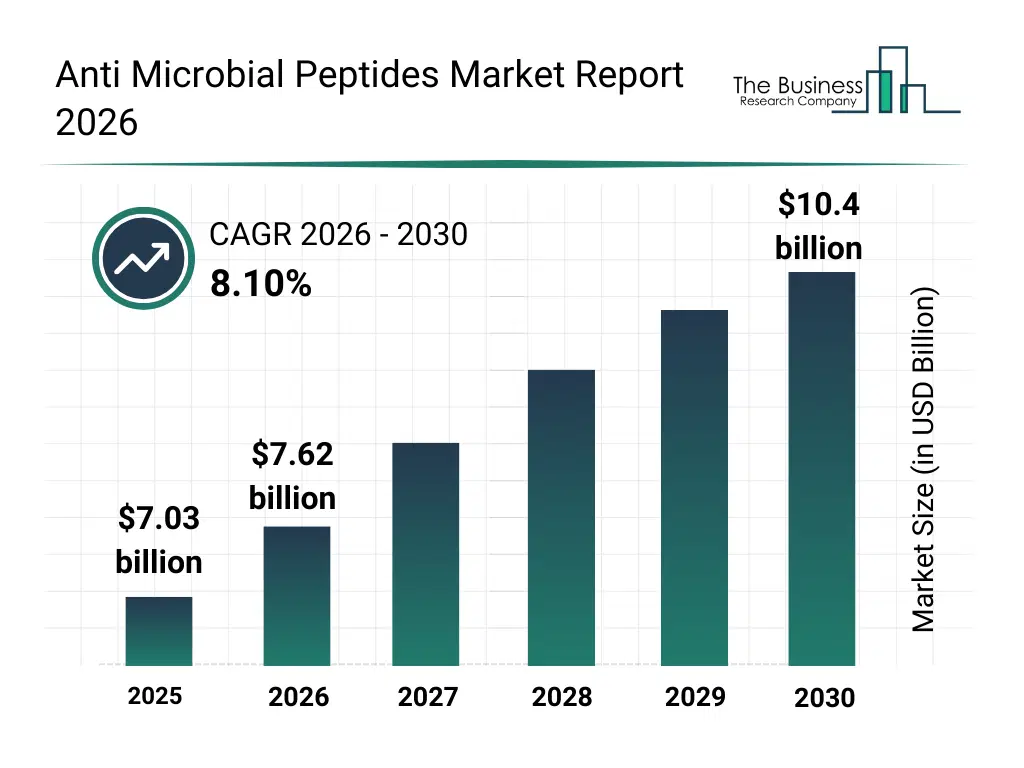
What Is The Anti Microbial Peptides Market Size and Share 2026?
The anti microbial peptides market size has grown strongly in recent years. It will grow from $7.03 billion in 2025 to $7.62 billion in 2026 at a compound annual growth rate (CAGR) of 8.4%. The growth in the historic period can be attributed to rising antimicrobial resistance concerns, academic research on innate immunity peptides, early-stage clinical studies, increased funding for alternative antimicrobials, expansion of peptide synthesis capabilities.What Is The Anti Microbial Peptides Market Growth Forecast?
The anti microbial peptides market size is expected to see strong growth in the next few years. It will grow to $10.4 billion in 2030 at a compound annual growth rate (CAGR) of 8.1%. The growth in the forecast period can be attributed to increasing commercialization of amp-based therapeutics, growing application in antiviral and antifungal treatments, expansion of agricultural and veterinary uses, rising investment in peptide drug platforms, increasing regulatory support for novel antimicrobials. Major trends in the forecast period include increasing research into antibiotic alternatives, rising development of broad-spectrum amps, expansion of clinical applications beyond bacterial infections, growing focus on resistance-resilient therapies, enhanced peptide engineering techniques.
Global Anti Microbial Peptides Market Segmentation
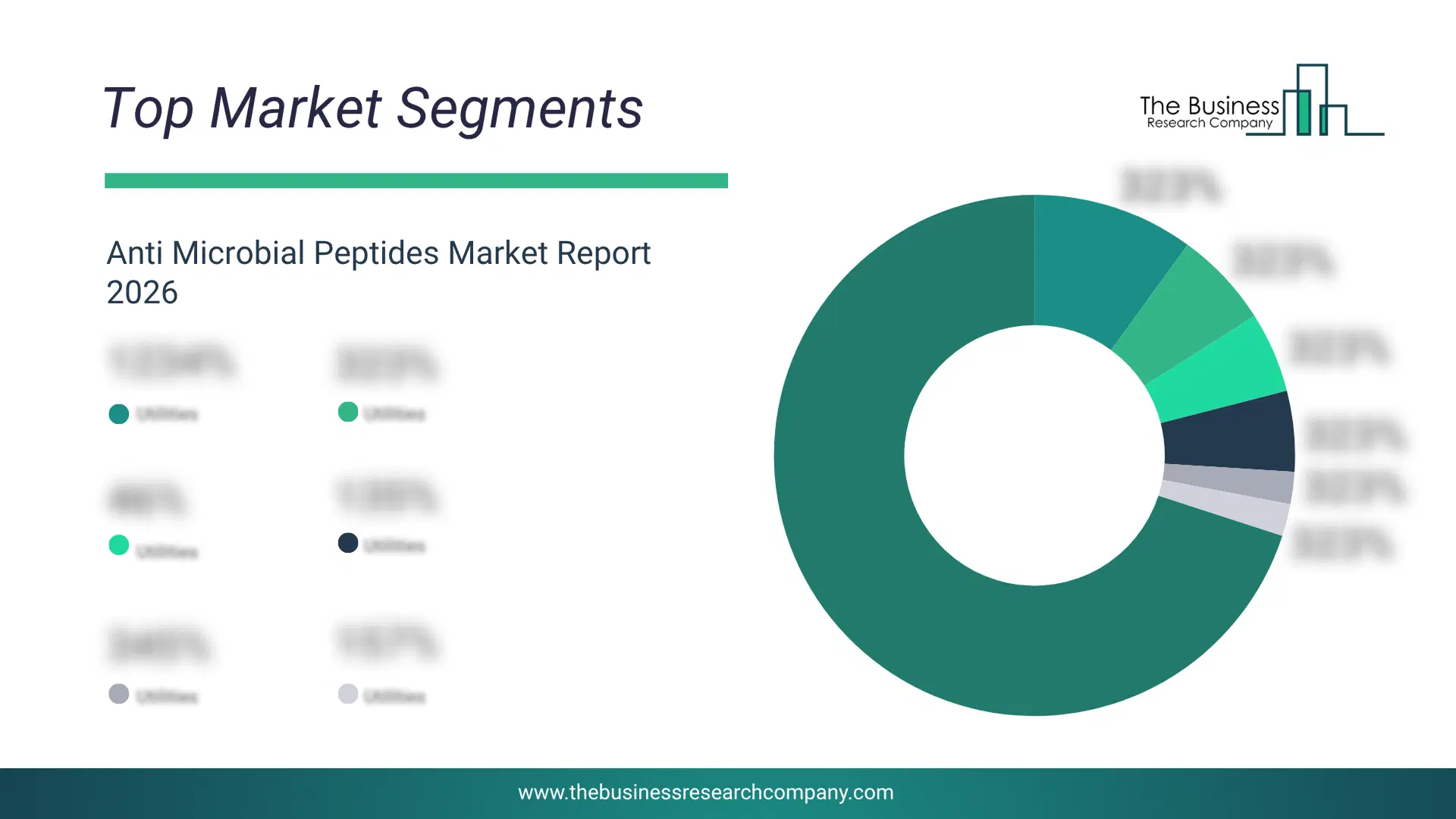
1) By Type: Plant Antimicrobial Peptides, Bacterial Antimicrobial Peptides, Animal Antimicrobial Peptides, Insect Antimicrobial Peptides 2) By Ailments: Pneumonia, Hepatitis, Bacterial infections, Human Immunodeficiency Viruses 3) By Route of Administration: Topical, Subcutaneous, Intravenous 4) By Distribution Channel: Hospital, Research Institutes, Specialty Clinic, Pharmacies 5) By End-User: Pharma And Healthcare, Agriculture Industry, Biological Engineering Subsegments: 1) By Plant Antimicrobial Peptides: Defensins, Thionins, Hevein-Like Peptides, Plant Defensin-Like Peptides, Lipid Transfer Proteins (LTPs) 2) By Bacterial Antimicrobial Peptides: Bacitracin, Nisin, Magainins, Protegrins, Bacillocins 3) By Animal Antimicrobial Peptides: Cathelicidins, Defensins, Histatins, Lactoferrin, Cationic Antimicrobial Peptides (CAMPs) 4) By Insect Antimicrobial Peptides: Cecropins, Defensins, Attacins, Diptericins, MelittinWhat Is The Driver Of The Anti Microbial Peptides Market?
The increasing incidence of infectious diseases is expected to propel the growth of the antimicrobial peptide market going forward. Infectious diseases refer to illnesses caused by harmful organisms such as bacteria, viruses, fungi, or parasites. The increasing incidence of infectious diseases can be attributed to factors such as climate change, the rise of drug-resistant pathogens, and unhealthy dietary habits. Antimicrobial peptides offer a promising solution for combating infectious diseases by providing novel therapeutic options that address the growing challenge of antibiotic resistance and the limitations of conventional treatments. For instance, in February 2025, according to Gov.UK, a UK-based public sector information website, in England HIV diagnoses were 2,451 in 2022 and then rose by 15% to 2,810 in 2023. Therefore, the increasing incidence of infectious diseases drives the antimicrobial peptide market.Key Players In The Global Anti Microbial Peptides Market
Major companies operating in the anti microbial peptides market are Wuxi AppTec, Sigma Aldrich Chemicals Private Limited, Ipsen S.A., Novozymes A/S, GenScript Biotech, Bachem Holding AG, Basilea Pharmaceutica Ltd., Probiotec Limited, Migenix Inc., Zymeworks Inc., Venatorx Pharmaceuticals Inc., AMPS Biotech Pvt. Ltd., AnaSpec Inc., MediGene AG, Hycult Biotech, Phoenix Biotechnology Inc., Shenzhen Sunsmile Biotechnology Co. Ltd., WatsonBio Sciences, Helix BioMedix, Jiangsu ProteLight Pharmaceutical and Biotechnology Co Ltd.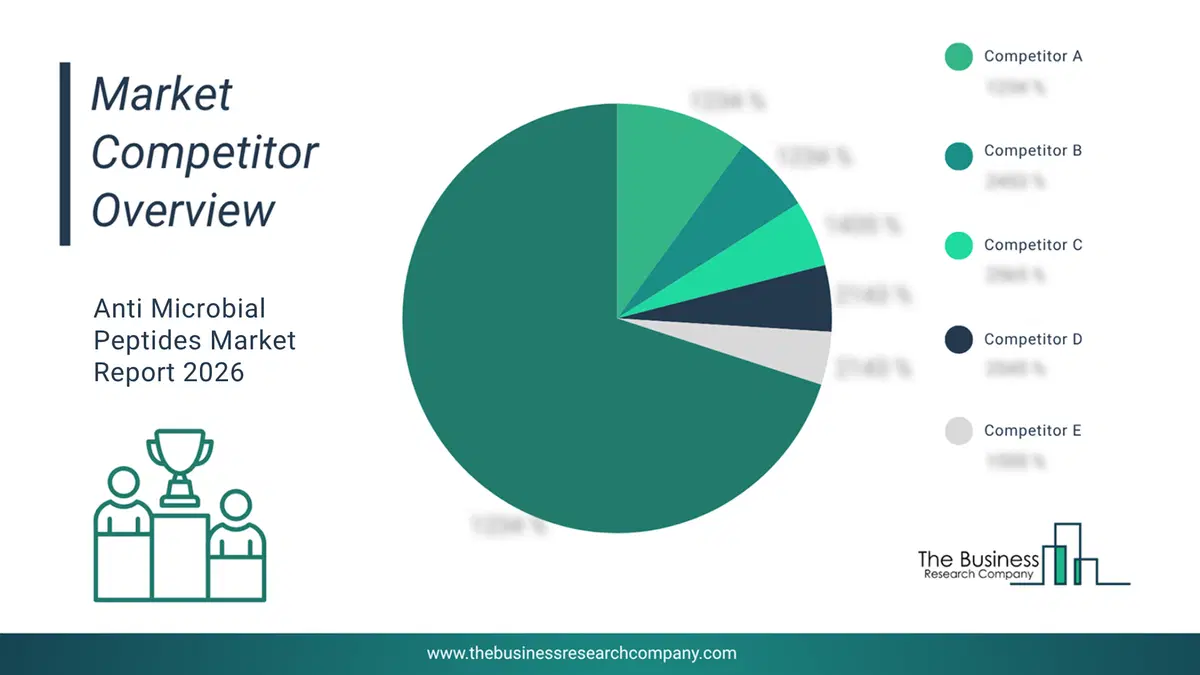
This chart is for illustrative purposes; the full report includes a detailed competitor analysis and comprehensive overview of the top 10 companies in the market.
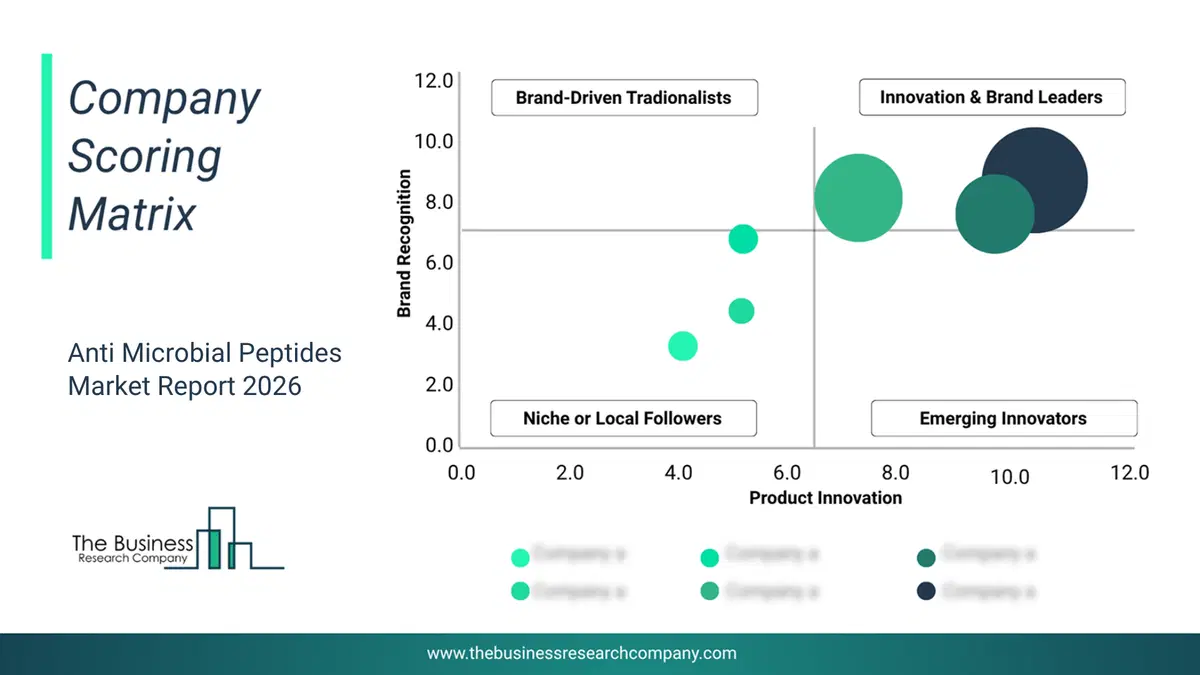
This chart maps companies by product innovation and brand strength, with bubble size indicating relative revenue, helping identify market leaders, challengers, and niche players. This is an illustrative chart; the full report provides a complete and accurate competitive analysis.
Global Anti Microbial Peptides Market Trends and Insights
Major companies operating in the anti-microbial peptides market are developing innovative products, such as biodegradable antimicrobial peptides, to address emerging antimicrobial resistance challenges and enhance treatment efficacy. Biodegradable antimicrobial peptides are short proteins that can naturally break down into harmless byproducts after performing their function of killing or inhibiting harmful microorganisms such as bacteria, viruses, and fungi. For instance, in September 2024, Beiersdorf AG, a Germany-based company that manufactures personal care products, partnered with Macro Biologics, a US-based bioengineering company, to develop antimicrobial peptides. This collaboration focuses on creating innovative solutions using biodegradable antimicrobial peptides, reflecting a growing trend in the cosmetics industry towards incorporating advanced biotechnological innovations to achieve both performance and sustainability objectives.What Are Latest Mergers And Acquisitions In The Anti Microbial Peptides Market?
In December 2023, Invaio Sciences Inc., a US-based biotechnology company, acquired Peptyde Bio Inc. for an undisclosed amount. With this acquisition, Invaio Sciences Inc. aims to enhance its capabilities in precision agriculture through advanced peptide-based technologies. Peptide Bio Inc. is a US-based biotechnology company developing novel antimicrobial peptides.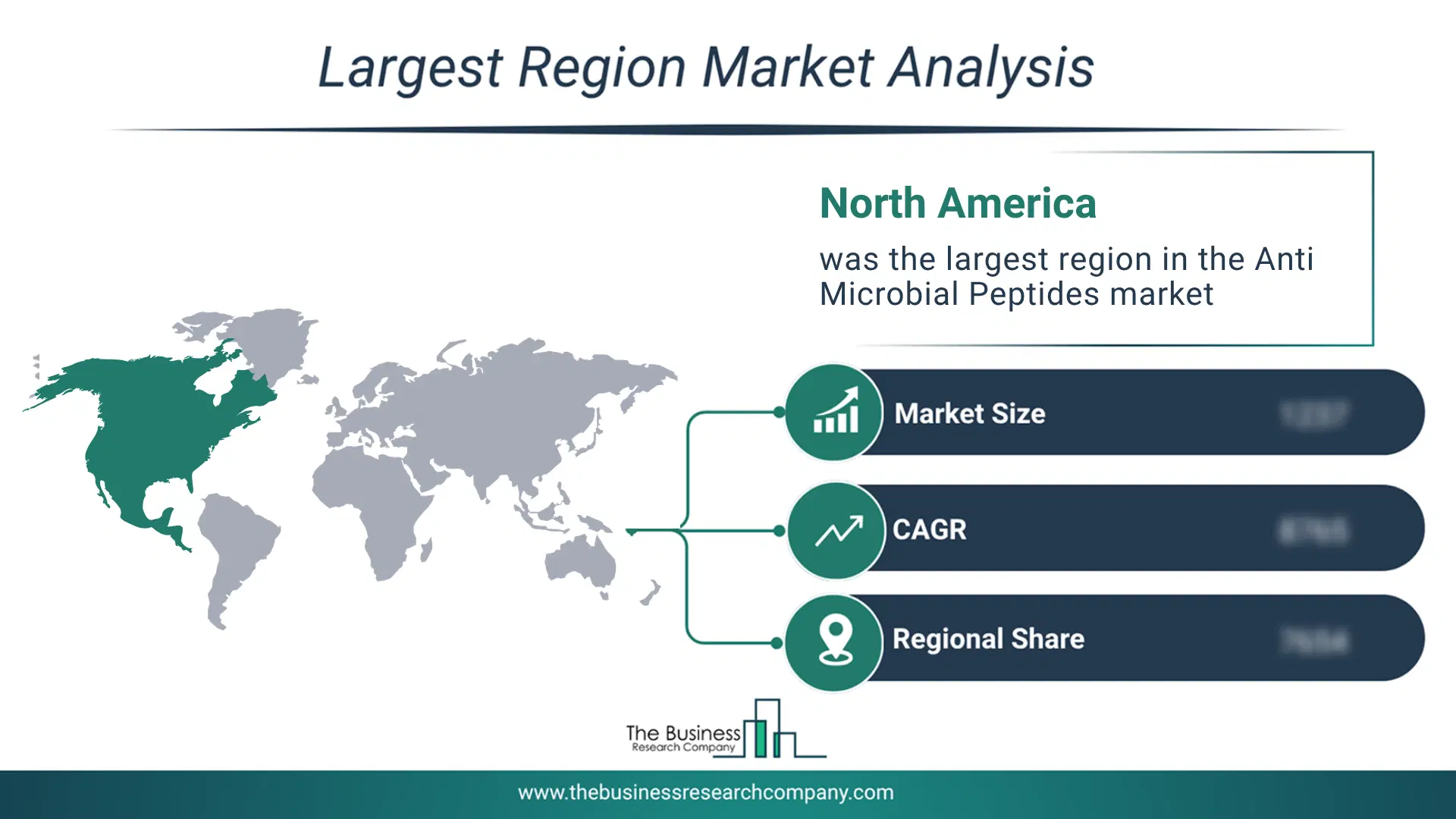
Regional Insights
North America was the largest region in the anti-microbial Peptides market in 2025. Asia-Pacific is expected to be the fastest-growing region in the forecast period. The regions covered in this market report are Asia-Pacific, South East Asia, Western Europe, Eastern Europe, North America, South America, Middle East, Africa. The countries covered in this market report are Australia, Brazil, China, France, Germany, India, Indonesia, Japan, Taiwan, Russia, South Korea, UK, USA, Canada, Italy, Spain.What Defines the Anti Microbial Peptides Market?
The antimicrobial peptides market consists of sales of natural antimicrobial peptides, synthetic antimicrobial peptides, modified antimicrobial peptides, antimicrobial peptide-based drugs, and antimicrobial peptide-based diagnostic kits. Values in this market are ‘factory gate’ values, that is, the value of goods sold by the manufacturers or creators of the goods, whether to other entities (including downstream manufacturers, wholesalers, distributors, and retailers) or directly to end customers. The value of goods in this market includes related services sold by the creators of the goods.How is Market Value Defined and Measured?
The market value is defined as the revenues that enterprises gain from the sale of goods and/or services within the specified market and geography through sales, grants, or donations in terms of the currency (in USD unless otherwise specified). The revenues for a specified geography are consumption values that are revenues generated by organizations in the specified geography within the market, irrespective of where they are produced. It does not include revenues from resales along the supply chain, either further along the supply chain or as part of other products.
This chart presents market attractiveness based on a quantitative evaluation of growth, competition, strategic alignment, and risk, offering a clear view of opportunity areas for decision-making. This chart is for illustrative purposes; the full report contains the complete analysis.

This chart highlights the Total Addressable Market (TAM) by estimating the maximum revenue opportunity using an assumption-driven approach, supporting strategic planning and opportunity sizing across markets. The chart is illustrative; the full report provides a more comprehensive analysis.
What Key Data and Analysis Are Included in the Anti Microbial Peptides Market Report 2026?
The anti microbial peptides market research report is one of a series of new reports from The Business Research Company that provides market statistics, including industry global market size, regional shares, competitors with the market share, detailed market segments, market trends and opportunities, and any further data you may need to thrive in the anti microbial peptides industry. The market research report delivers a complete perspective of everything you need, with an in-depth analysis of the current and future state of the industry.Anti Microbial Peptides Market Report Forecast Analysis
| Report Attribute | Details |
|---|---|
| Market Size Value In 2026 | $7.62 billion |
| Revenue Forecast In 2030 | $10.4 billion |
| Growth Rate | CAGR of 8.4% from 2026 to 2030 |
| Base Year For Estimation | 2025 |
| Actual Estimates/Historical Data | 2020-2025 |
| Forecast Period | 2026 - 2030 |
| Market Representation | Revenue in USD Billion and CAGR from 2026 to 2030 |
| Segments Covered | Type, Ailments, Route of Administration, Distribution Channel, End-User |
| Regional Scope | Asia-Pacific, Western Europe, Eastern Europe, North America, South America, Middle East, Africa |
| Country Scope | The countries covered in the report are Australia, Brazil, China, France, Germany, India, Indonesia, Japan, Taiwan, Russia, South Korea, UK, USA, Canada, Italy, Spain. |
| Key Companies Profiled | Wuxi AppTec, Sigma Aldrich Chemicals Private Limited, Ipsen S.A., Novozymes A/S, GenScript Biotech, Bachem Holding AG, Basilea Pharmaceutica Ltd., Probiotec Limited, Migenix Inc., Zymeworks Inc., Venatorx Pharmaceuticals Inc., AMPS Biotech Pvt. Ltd., AnaSpec Inc., MediGene AG, Hycult Biotech, Phoenix Biotechnology Inc., Shenzhen Sunsmile Biotechnology Co. Ltd., WatsonBio Sciences, Helix BioMedix, Jiangsu ProteLight Pharmaceutical and Biotechnology Co Ltd. |
| Customization Scope | Request for Customization |
| Pricing And Purchase Options | Explore Purchase Options |