
Anti-Vascular Endothelial Growth Factor Therapeutics Market Report 2026
Global Outlook – By Product (Eylea, Lucentis, Beovu), By Disease (Macular Edema, Diabetic Retinopathy, Retinal Vein Occlusion, Age-related Macular Degeneration), By End Users (Hospitals, Clinics, Oncology Centers, Other End Users) – Market Size, Trends, Strategies, and Forecast to 2030
Anti-Vascular Endothelial Growth Factor Therapeutics Market Overview
• Anti-Vascular Endothelial Growth Factor Therapeutics market size has reached to $12.17 billion in 2025 • Expected to grow to $13.59 billion in 2030 at a compound annual growth rate (CAGR) of 2.4% • Growth Driver: Rising Prevalence Of Ophthalmic Diseases Drives Growth In The Anti-VEGF Therapeutics Market • Market Trend: Strategic Collaborations Drive Growth In Anti-Vascular Endothelial Growth Factor (VEGF) Therapeutics Market • North America was the largest region in 2025 and Europe is the fastest growing region.What Is Covered Under Anti-Vascular Endothelial Growth Factor Therapeutics Market?
Anti-Vascular Endothelial Growth Factor (VEGF) therapeutics are drugs that inhibit the growth of blood vessels, commonly used in the treatment of ophthalmic diseases. These drugs inhibit vascular endothelial growth factors. It is utilized in the therapy of some tumors and in treating age-related macular degeneration. The main products of anti-vascular endothelial growth factor therapeutics are Eylea, Lucentis, and Beovu. Eylea refers to a medication used to treat certain eye conditions, including macular degeneration and diabetic retinopathy. It is used as an anti-vascular endothelial growth factor (anti-VEGF) therapeutic agent to inhibit abnormal blood vessel growth in the eye, often associated with retinal diseases. The anti-vascular endothelial growth factor therapeutics are used for treating macular edema, diabetic retinopathy, retinal vein occlusion, and age-related macular degeneration by hospitals, clinics, oncology centers, and others.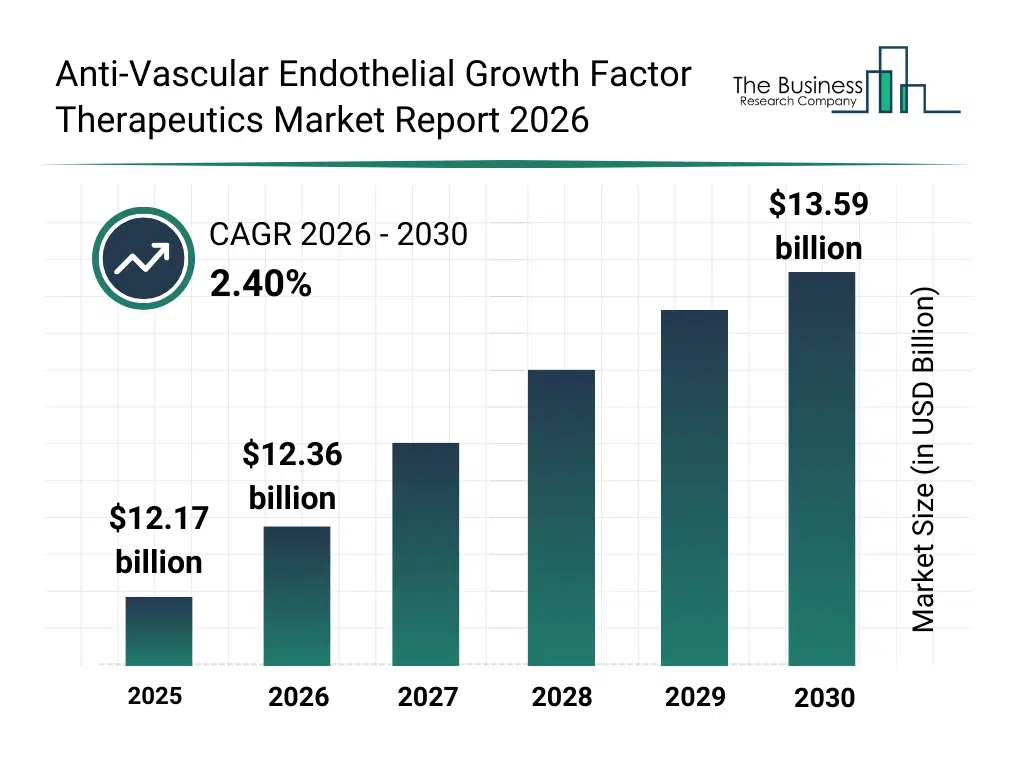
What Is The Anti-Vascular Endothelial Growth Factor Therapeutics Market Size and Share 2026?
The anti-vascular endothelial growth factor therapeutics market size has grown marginally in recent years. It will grow from $12.17 billion in 2025 to $12.36 billion in 2026 at a compound annual growth rate (CAGR) of 1.6%. The growth in the historic period can be attributed to approval of lucentis and eylea, rising prevalence of age-related macular degeneration, growing incidence of diabetic retinopathy, advancements in molecular biology for angiogenesis inhibition, expansion of hospital ophthalmology services.What Is The Anti-Vascular Endothelial Growth Factor Therapeutics Market Growth Forecast?
The anti-vascular endothelial growth factor therapeutics market size is expected to see steady growth in the next few years. It will grow to $13.59 billion in 2030 at a compound annual growth rate (CAGR) of 2.4%. The growth in the forecast period can be attributed to launch of next-generation anti-vegf therapeutics, increased investment in precision oncology, growing biosimilar market penetration, rising healthcare expenditure in emerging markets, adoption of combination therapies in retinal diseases. Major trends in the forecast period include increasing adoption of anti-vegf therapies in ophthalmology, growth of targeted cancer therapies, development of biosimilar anti-vegf drugs, rising geriatric population driving amd treatments, expansion of outpatient and specialty clinics.
Global Anti-Vascular Endothelial Growth Factor Therapeutics Market Segmentation
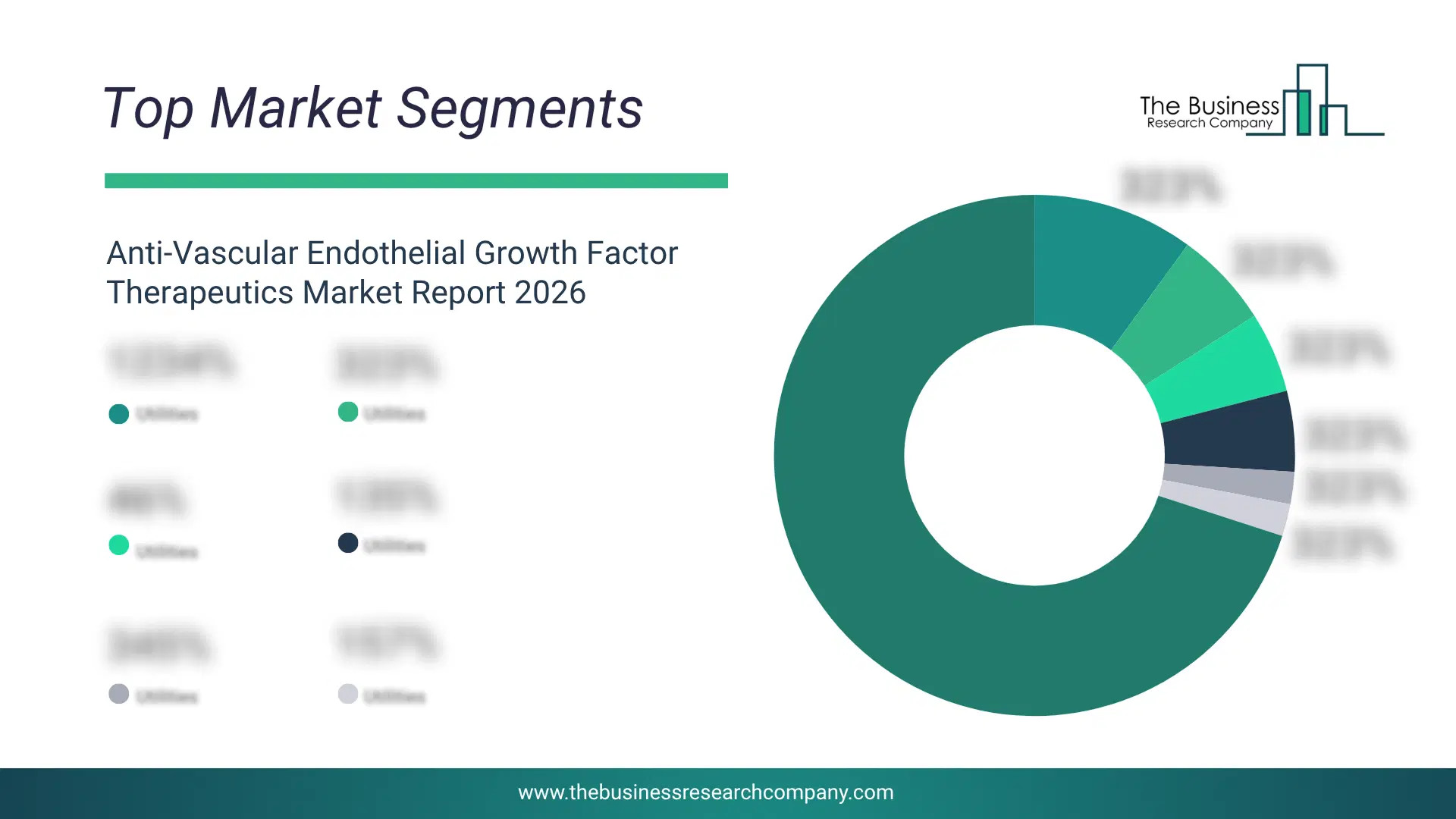
1) By Product: Eylea, Lucentis, Beovu 2) By Disease: Macular Edema, Diabetic Retinopathy, Retinal Vein Occlusion, Age-related Macular Degeneration 3) By End Users: Hospitals, Clinics, Oncology Centers, Other End UsersWhat Is The Driver Of The Anti-Vascular Endothelial Growth Factor Therapeutics Market?
The increase in the prevalence of ophthalmic diseases is expected to propel the growth of the anti-vascular endothelial growth factor therapeutics market going forward. The prevalence of ophthalmic diseases refers to the number or proportion of individuals within a given population who have been diagnosed with or exhibit specific eye conditions or diseases. Anti-vascular endothelial growth factor (VEGF) therapeutics help reduce the prevalence of ophthalmic diseases by effectively treating ailments such as wet age-related macular degeneration (AMD), diabetic retinopathy, and retinal vein occlusion. For instance, in August 2023, according to the World Health Organization, a Switzerland-based international public health organization, globally, around 2.2 billion people have near or distance vision impairment, and 1 billion people suffer from near or distance vision impairment. Further, among these, 88.4 million are suffering from refractive error, 94 million have cataracts, 8 million have age-related macular degeneration, and around 3.9 million have diabetic retinopathy. Therefore, the increase in the prevalence of ophthalmic diseases is driving the growth of the anti-vascular endothelial growth factor therapeutics industry.Key Players In The Global Anti-Vascular Endothelial Growth Factor Therapeutics Market
Major companies operating in the anti-vascular endothelial growth factor therapeutics market are F. Hoffmann-La Roche AG, Pfizer Inc., Coherus BioSciences Inc., Bausch Health Companies Inc., Viatris Inc., Xbrane Biopharma AB, Bayer AG, Regeneron Pharmaceuticals Inc., Genentech Inc., Allergan Inc., Novartis AG, Amgen Inc., AstraZeneca plc, Merck & Co. Inc., Johnson & Johnson Private Limited, Sanofi S.A., AbbVie Inc., Takeda Pharmaceutical Company Limited, Boehringer Ingelheim International GmbH, Daiichi Sankyo Company Limited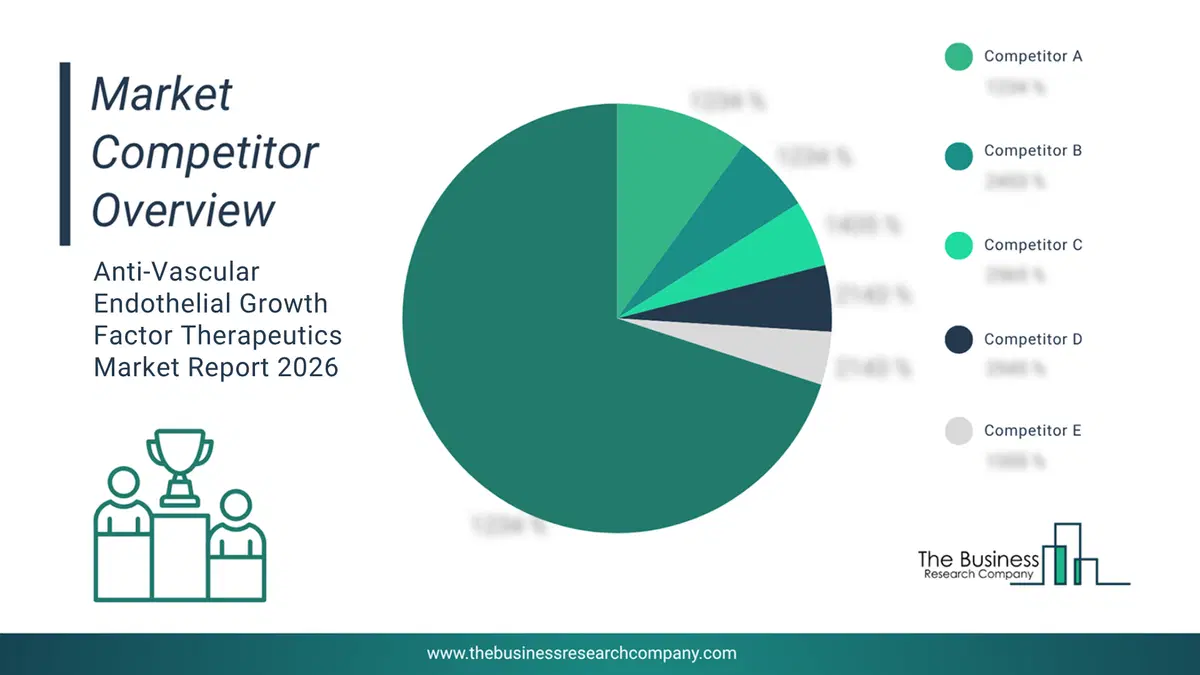
This chart is for illustrative purposes; the full report includes a detailed competitor analysis and comprehensive overview of the top 10 companies in the market.
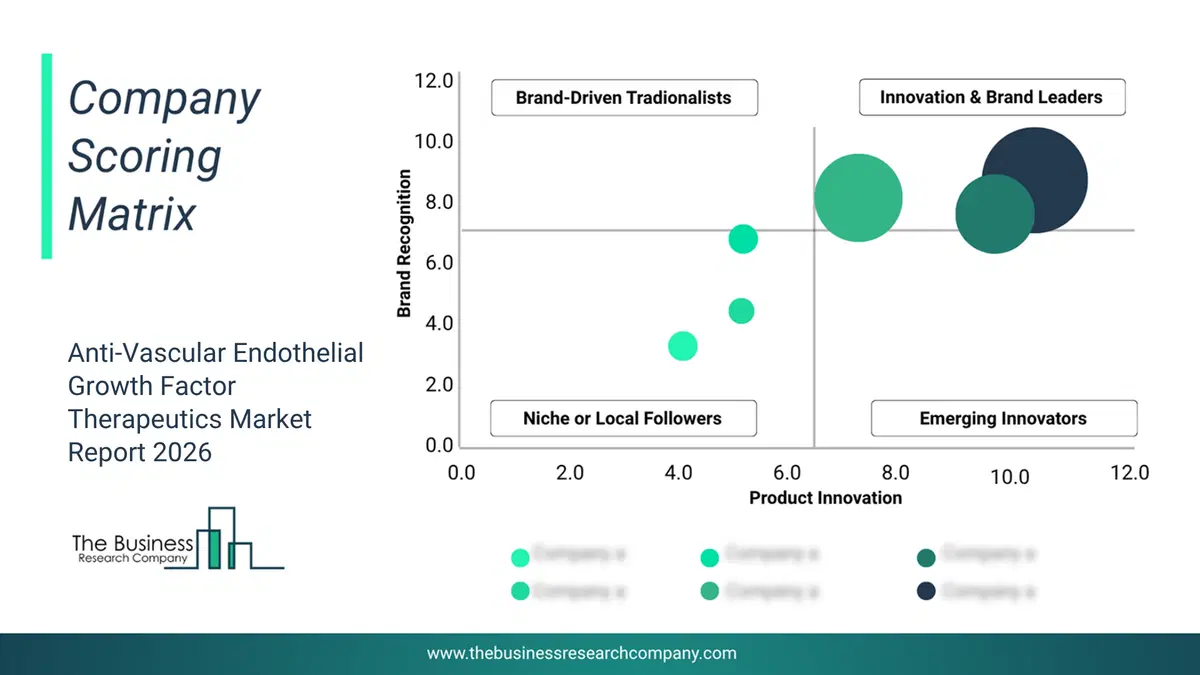
This chart maps companies by product innovation and brand strength, with bubble size indicating relative revenue, helping identify market leaders, challengers, and niche players. This is an illustrative chart; the full report provides a complete and accurate competitive analysis.
Global Anti-Vascular Endothelial Growth Factor Therapeutics Market Trends and Insights
Major companies operating in the anti-VEGF therapeutics market are increasingly forming strategic partnerships to accelerate the development, commercialization, and adoption of VEGF inhibitors. Such collaborations allow companies to leverage complementary expertise, access innovative technologies, and expand their market presence. For instance, in January 2025, Teva Pharmaceuticals International GmbH, a Switzerland-based subsidiary of Teva Pharmaceutical Industries specializing in biosimilars and complex generics, entered into a strategic collaboration with Klinge Biopharma GmbH and Formycon AG to commercialize FYB203, a biosimilar candidate to Eylea (aflibercept), in Europe (excluding Italy) and Israel. Under this partnership, Teva leverages its established commercial infrastructure and distribution network to strengthen its presence in the anti-VEGF therapeutics market. Formycon AG is responsible for developing FYB203, and Klinge Biopharma GmbH holds exclusive global commercialization rights for the product.What Are Latest Mergers And Acquisitions In The Anti-Vascular Endothelial Growth Factor Therapeutics Market?
In February 2025, BioNTech SE, a Germany-based biotechnology company specializing in immunotherapies and biologics, acquired Biotheus for $950 million. Through this acquisition, BioNTech aims to strengthen its pipeline of VEGF-directed therapeutics by gaining full global rights to BNT327/PM8002, an investigational PD-L1 × VEGF-A bispecific antibody, and accessing Biotheus’ antibody development platform. Biotheus is a China-based biopharmaceutical company that is involved in developing anti-VEGF (vascular endothelial growth factor) therapeutics.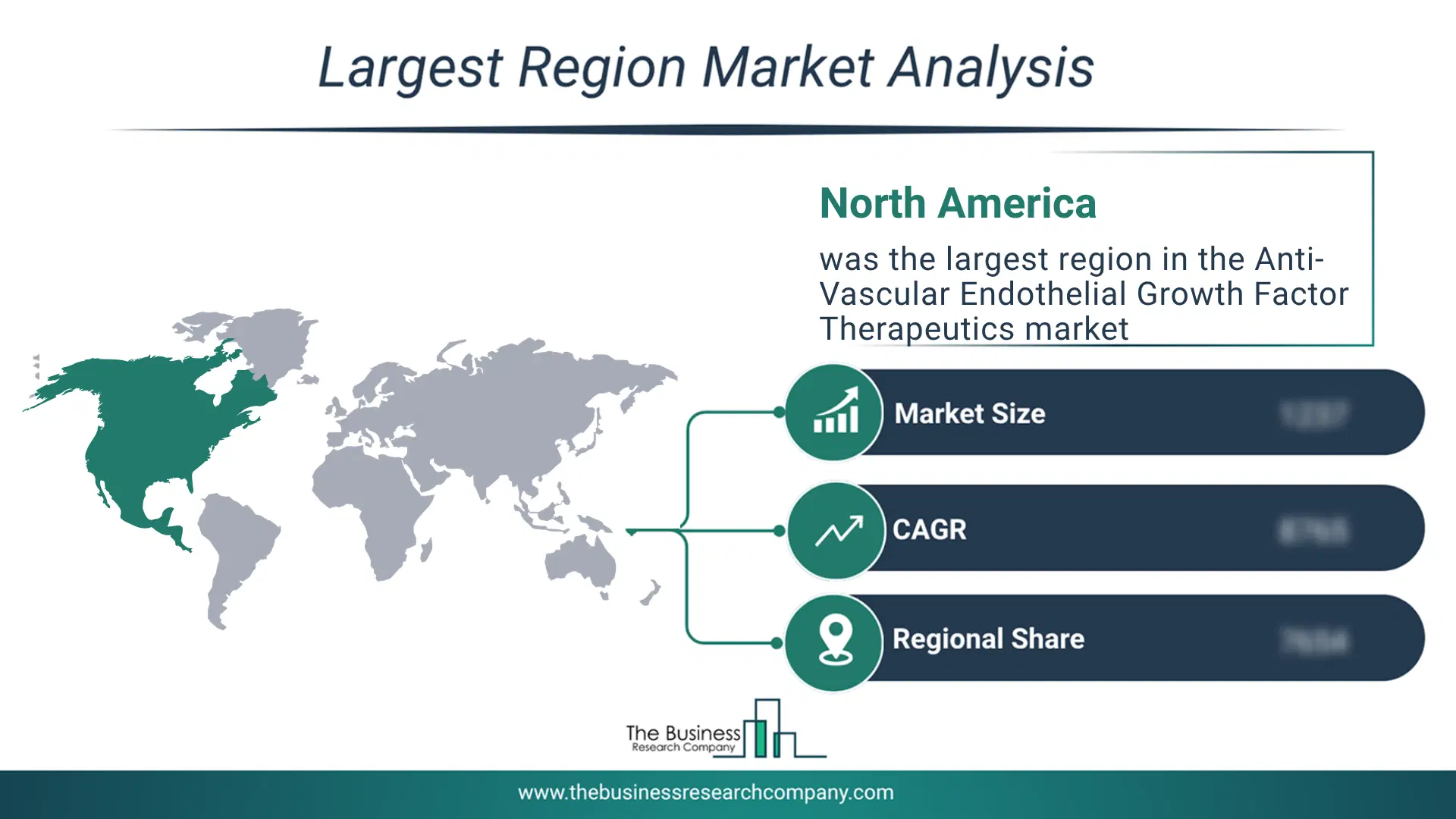
Regional Insights
North America was the largest region in the anti-vascular endothelial growth factor therapeutics market in 2025. Europe is expected to be the fastest-growing region in the global anti-vascular endothelial growth factor therapeutics market report during the forecast period. The regions covered in this market report are Asia-Pacific, South East Asia, Western Europe, Eastern Europe, North America, South America, Middle East, Africa. The countries covered in this market report are Australia, Brazil, China, France, Germany, India, Indonesia, Japan, Taiwan, Russia, South Korea, UK, USA, Canada, Italy, Spain.What Defines the Anti-Vascular Endothelial Growth Factor Therapeutics Market?
The anti-vascular endothelial growth factor therapeutics market consists of revenues earned by entities by providing lapatinib (tykerb), sorafenib (nexavar), sunitinib (sutent), axitinib, and pazopanib. The market value includes the value of related goods sold by the service provider or included within the service offering. The anti-vascular endothelial growth factor therapeutics market also includes sales of drugs, injectables, and therapy-related products. Values in this market are ‘factory gate’ values, that is the value of goods sold by the manufacturers or creators of the goods, whether to other entities (including downstream manufacturers, wholesalers, distributors and retailers) or directly to end customers. The value of goods in this market includes related services sold by the creators of the goods.How is Market Value Defined and Measured?
The market value is defined as the revenues that enterprises gain from the sale of goods and/or services within the specified market and geography through sales, grants, or donations in terms of the currency (in USD unless otherwise specified). The revenues for a specified geography are consumption values that are revenues generated by organizations in the specified geography within the market, irrespective of where they are produced. It does not include revenues from resales along the supply chain, either further along the supply chain or as part of other products.
This chart presents market attractiveness based on a quantitative evaluation of growth, competition, strategic alignment, and risk, offering a clear view of opportunity areas for decision-making. This chart is for illustrative purposes; the full report contains the complete analysis.

This chart highlights the Total Addressable Market (TAM) by estimating the maximum revenue opportunity using an assumption-driven approach, supporting strategic planning and opportunity sizing across markets. The chart is illustrative; the full report provides a more comprehensive analysis.
What Key Data and Analysis Are Included in the Anti-Vascular Endothelial Growth Factor Therapeutics Market Report 2026?
The anti-vascular endothelial growth factor therapeutics market research report is one of a series of new reports from The Business Research Company that provides market statistics, including industry global market size, regional shares, competitors with the market share, detailed market segments, market trends and opportunities, and any further data you may need to thrive in the anti-vascular endothelial growth factor therapeutics industry. The market research report delivers a complete perspective of everything you need, with an in-depth analysis of the current and future state of the industry.Anti-Vascular Endothelial Growth Factor Therapeutics Market Report Forecast Analysis
| Report Attribute | Details |
|---|---|
| Market Size Value In 2026 | $12.36 billion |
| Revenue Forecast In 2030 | $13.59 billion |
| Growth Rate | CAGR of 1.6% from 2026 to 2030 |
| Base Year For Estimation | 2025 |
| Actual Estimates/Historical Data | 2020-2025 |
| Forecast Period | 2026 - 2030 |
| Market Representation | Revenue in USD Billion and CAGR from 2026 to 2030 |
| Segments Covered | Product, Disease, End Users |
| Regional Scope | Asia-Pacific, Western Europe, Eastern Europe, North America, South America, Middle East, Africa |
| Country Scope | The countries covered in the report are Australia, Brazil, China, France, Germany, India, Indonesia, Japan, Taiwan, Russia, South Korea, UK, USA, Canada, Italy, Spain. |
| Key Companies Profiled | F. Hoffmann-La Roche AG, Pfizer Inc., Coherus BioSciences Inc., Bausch Health Companies Inc., Viatris Inc., Xbrane Biopharma AB, Bayer AG, Regeneron Pharmaceuticals Inc., Genentech Inc., Allergan Inc., Novartis AG, Amgen Inc., AstraZeneca plc, Merck & Co. Inc., Johnson & Johnson Private Limited, Sanofi S.A., AbbVie Inc., Takeda Pharmaceutical Company Limited, Boehringer Ingelheim International GmbH, Daiichi Sankyo Company Limited |
| Customization Scope | Request for Customization |
| Pricing And Purchase Options | Explore Purchase Options |