
Antibody Drug Conjugates Contract Manufacturing Market Report 2026
Global Outlook – By Type (Immunoglobulin G1(Igg–, Immunoglobulin G4(Igg,), By Linker (Cleavable Linker, Non-Cleavable Linker), By Condition (Myeloma, Lymphoma, Breast Cancer, Other Conditions), By Phase (Clinical, Commercial) – Market Size, Trends, Strategies, and Forecast to 2030
Antibody Drug Conjugates Contract Manufacturing Market Overview
• Antibody Drug Conjugates Contract Manufacturing market size has reached to $10.45 billion in 2025 • Expected to grow to $16.5 billion in 2030 at a compound annual growth rate (CAGR) of 9.6% • Growth Driver: Rising Biopharmaceutical Industry Fuels Growth In Antibody Drug Conjugates Contract Manufacturing Market • Market Trend: Innovative Mobius ADC Reactor To Enhance Antibody-Drug Conjugate Manufacturing • North America was the largest region in 2025 and Asia-Pacific is the fastest growing region.Market Gains By 2030 – Top Opportunities By Segment
Market Gain identifies the most promising market opportunities by highlighting the segments or products expected to generate the highest incremental revenue growth over the next five years.
What Is Covered Under Antibody Drug Conjugates Contract Manufacturing Market?
Antibody-drug conjugates (ADC) contract manufacturing refers to the outsourced production services provided by specialized contract development and manufacturing organizations (CDMOs) to create antibody-drug conjugates. ADCs are complex biopharmaceuticals that combine an antibody with a cytotoxic drug, designed to target and destroy specific cancer cells while minimizing damage to healthy cells. The main types of antibody-drug conjugates contract manufacturing are immunoglobulin g1(IGG1), and immunoglobulin g4(IGG4). Immunoglobulin G1 (IgG1) is one of the four subclasses of Immunoglobulin G (IgG), a type of antibody found in the blood and extracellular fluid. The various linkers include cleavable linkers, non-cleavable linkers with multiple conditions such as myeloma, lymphoma, and breast cancer, and others that are used in several phases such as clinical, and commercial.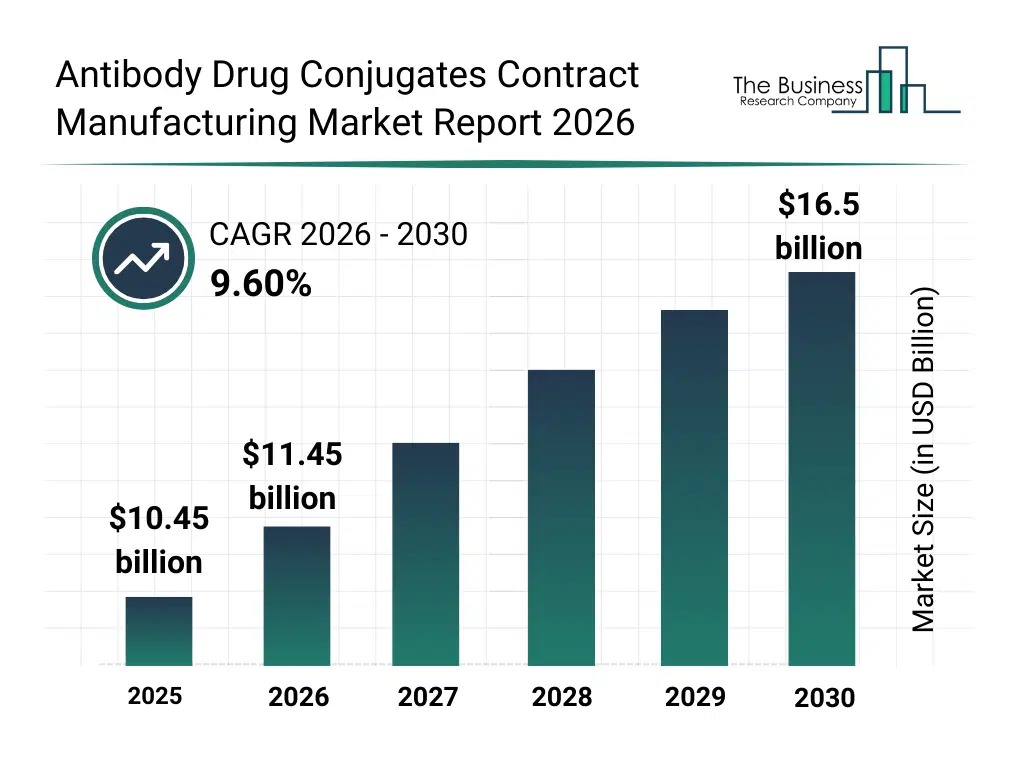
What Is The Antibody Drug Conjugates Contract Manufacturing Market Size and Share 2026?
The antibody drug conjugates contract manufacturing market size has grown strongly in recent years. It will grow from $10.45 billion in 2025 to $11.45 billion in 2026 at a compound annual growth rate (CAGR) of 9.5%. The growth in the historic period can be attributed to growth in targeted cancer therapies, complexity of adc production, limited in-house manufacturing capabilities, early clinical success of adcs, regulatory compliance requirements.What Is The Antibody Drug Conjugates Contract Manufacturing Market Growth Forecast?
The antibody drug conjugates contract manufacturing market size is expected to see strong growth in the next few years. It will grow to $16.5 billion in 2030 at a compound annual growth rate (CAGR) of 9.6%. The growth in the forecast period can be attributed to expanding oncology pipelines, increasing approvals of adc therapies, rising demand for commercial-scale production, investment in specialized manufacturing facilities, long-term cdmo partnerships. Major trends in the forecast period include rising outsourcing of complex biologic manufacturing, growing demand for oncology-focused cdmo services, increased focus on high-potency payload handling, expansion of clinical-stage adc manufacturing, higher adoption of advanced conjugation technologies.
Global Antibody Drug Conjugates Contract Manufacturing Market Segmentation
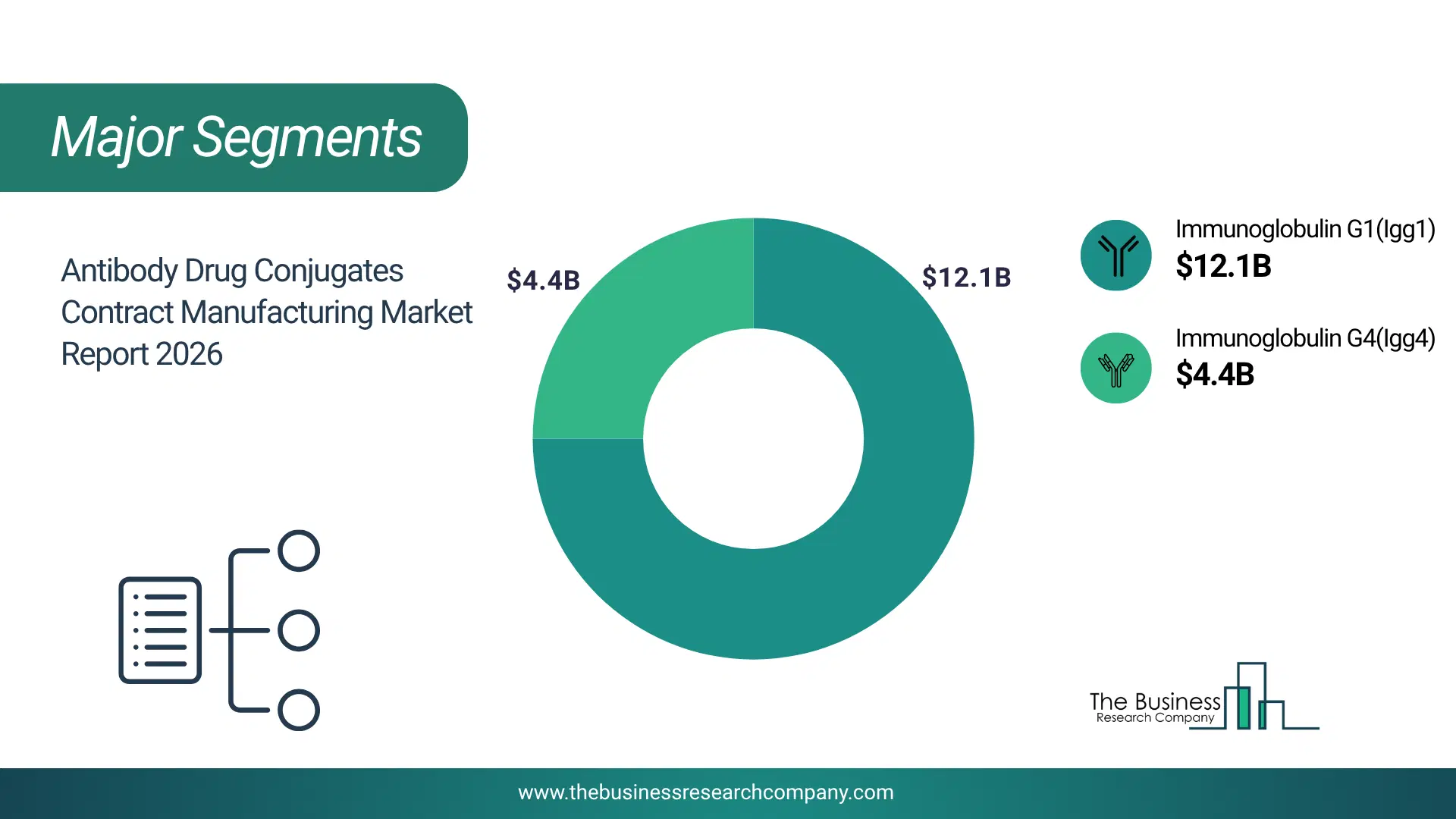
1) By Type: Immunoglobulin G1(Igg1), Immunoglobulin G4(Igg4) 2) By Linker: Cleavable Linker, Non-Cleavable Linker 3) By Condition: Myeloma, Lymphoma, Breast Cancer, Other Conditions 4) By Phase: Clinical, Commercial Subsegments: 1) By Immunoglobulin G1 (IgG1): High-Effector Function ADCs, Fc-Mediated Cytotoxicity-Enabled ADCs, Stable Conjugation IgG1 ADCs, Oncology-Targeted IgG1 ADCs 2) By Immunoglobulin G4 (IgG4): Reduced Effector Function ADCs, Low Immunogenicity IgG4 ADCs, Site-Specific Conjugation IgG4 ADCs, Precision-Targeted IgG4 ADCs The top segments in the antibody drug conjugates contract manufacturing market will be: • Immunoglobulin G1(Igg1) will reach $12.01 billion by 2030. • Immunoglobulin G4(Igg4) will reach $4.39 billion by 2030.What Is The Driver Of The Antibody Drug Conjugates Contract Manufacturing Market?
The growing biopharmaceutical industry is expected to propel the growth of the antibody-drug conjugates contract manufacturing market going forward. The biopharmaceutical industry is a sector focused on developing, producing, and commercializing drugs derived from biological sources, utilizing biotechnology and molecular biology to create innovative therapies and treatments. The biopharmaceutical industry is increasing due to rapid advancements in biotechnology, growing demand for personalized medicine, and rising investments in research and development for innovative therapies and treatments. Antibody-drug conjugates (ADCs) contract manufacturing supports the biopharmaceutical industry by offering specialized production services that facilitate developing and commercializing these advanced therapies. Biopharmaceutical companies can efficiently scale up production and ensure high-quality standards while concentrating on their core areas of research and development. For instance, in June 2023, according to the European Federation of Pharmaceutical Industries and Associations (EFPIA), a Belgium-based trade association that represents the pharmaceutical industry in Europe, the total pharmaceutical production in Europe accounted for €390,000 million ($422,803 million) in 2023, up from €363,300 million ($393,857 million) in 2022. Therefore, the growing biopharmaceutical industry drives the growth of the antibody-drug conjugates contract manufacturing market.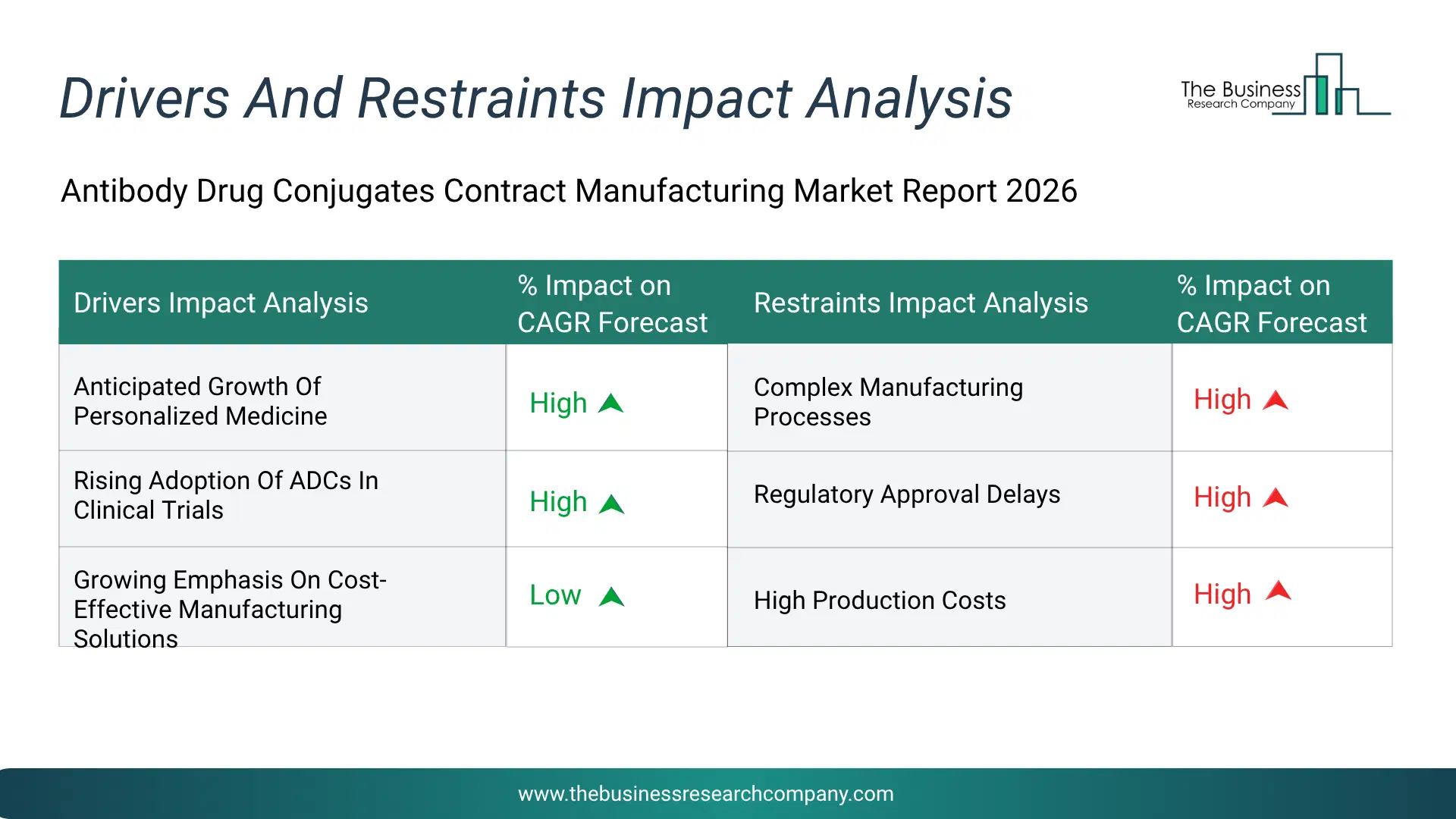
Infographic Chart Showing Key Market Drivers Analysis And Restraints For Antibody Drug Conjugates Contract Manufacturing Market
The chart presents an impact analysis of key drivers and restraints, quantifying their relative influence on the market's growth rate and helping assess the balance between growth enablers and limiting factors. This chart offers a high-level perspective; the full report contains more detailed insights.
How Will The Drivers Impact Growth In The Global Antibody Drug Conjugates Contract Manufacturing Market?
• Anticipated Growth Of Personalized Medicine (High) – During the forecast period, the increasing shift toward personalized medicine is expected to be a key driver of the antibody drug conjugates contract manufacturing market by 2030. Adcs enable highly targeted therapies by combining monoclonal antibodies with cytotoxic agents, allowing precise treatment based on specific tumor markers while minimizing damage to healthy cells. As healthcare systems continue to adopt precision -based approaches, pharmaceutical companies are significantly expanding investments in adc development. This trend is driving greater reliance on contract development and manufacturing organizations (cdmos) for specialized production and complex process requirements. • Rising Adoption Of ADCs In Clinical Trials (High) – During the forecast period, the growing number of adcs entering clinical trials is anticipated to strongly support the antibody drug conjugates contract manufacturing market expansion by 2030. Many biotechnology companies lack the necessary infrastructure to handle high-potency compounds and complex conjugation technologies, leading to increased dependence on specialized cdmos for development, testing, and clinical-scale manufacturing. The rapid expansion of oncology pipelines worldwide has resulted in a surge in adc clinical programs, further accelerating outsourcing activities. • Growing Emphasis On Cost-Effective Manufacturing Solutions (Low) – During the forecast period, the need for cost-efficient production strategies is set to be a major catalyst for the antibody drug conjugates contract manufacturing market by 2030. Establishing in-house adc manufacturing facilities requires significant capital investment and stringent containment systems for handling highly potent drugs. To optimize costs and streamline development timelines, pharmaceutical companies are increasingly outsourcing to experienced cdmos that offer advanced infrastructure, technical expertise, and scalable production capabilities. This approach reduces financial and operational risks while allowing companies to focus on core research and commercialization activities.How Will The Restraints Impact Growth In The Global Antibody Drug Conjugates Contract Manufacturing Market?
• Complex Manufacturing Processes (High) – During the forecast period, the the adc manufacturing involves multiple sophisticated steps including monoclonal antibody production, cytotoxic drug synthesis, and precise conjugation techniques. These processes require specialized facilities with high-containment infrastructure to safely handle highly potent compounds. Maintaining consistency, stability, and product quality throughout the conjugation process is technically challenging. Many manufacturers must invest heavily in advanced equipment and skilled personnel to manage these complexities. As a result, the intricate nature of adc production acts as a restraint for the growth of the adc contract manufacturing market. • Regulatory Approval Delays (High) – During the forecast period, the the adc products must comply with strict regulatory requirements due to their complex structure and use of highly potent cytotoxic agents. Regulatory agencies require extensive safety, efficacy, and manufacturing validation data before approving adc-related manufacturing processes. The need to meet multiple regulatory guidelines across different regions can significantly delay development timelines. These prolonged approval processes slow down product launches and limit the speed of contract manufacturing projects. Consequently, regulatory approval delays create barriers for market expansion and commercialization. • High Production Costs (High) – During the forecast period, the producing antibody-drug conjugates requires expensive raw materials, specialized equipment, and high-potency containment facilities. The development and manufacturing processes also involve significant research, testing, and quality control expenses. Smaller biotech companies often struggle to afford these costs, limiting the number of projects entering manufacturing stages. Even contract manufacturers must invest heavily in infrastructure and skilled labor to maintain safe production environments. These high production costs restrict wider adoption and growth in the adc contract manufacturing market.Key Players In The Global Antibody Drug Conjugates Contract Manufacturing Market
Major companies operating in the antibody drug conjugates contract manufacturing market are Lonza Group AG, Catalent Inc., Recipharm AB, Curia, KBI Biopharma, Alcami Corporation, BioVectra Inc., Axplora, Abzena PLC, Cerbios-Pharma SA, Aurigene Pharmaceutical Services Ltd., Sterling Pharma Solutions, Formosa Laboratories, Avid Bioservices Inc., EirGenix Inc., Creative Biolabs, Sartorius AG, Sigma-Aldrich, ImmunoGen Inc., Eli Lilly and Company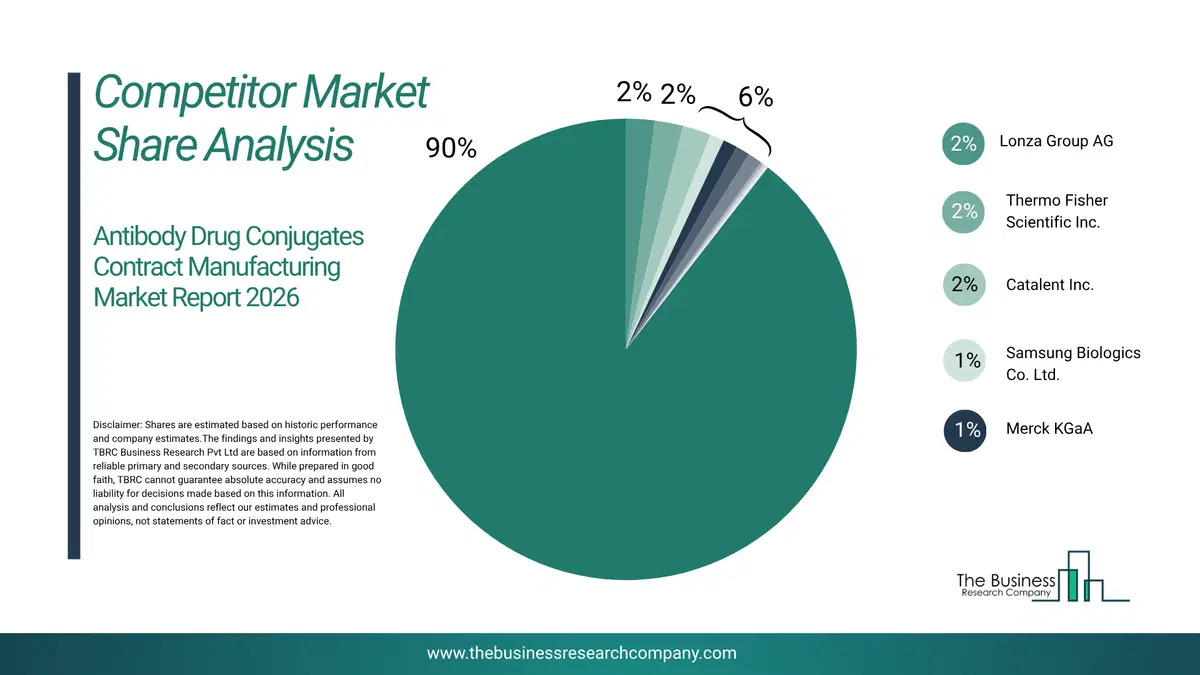
This chart is for illustrative purposes; the full report includes a detailed competitor analysis and comprehensive overview of the top 10 companies in the market.
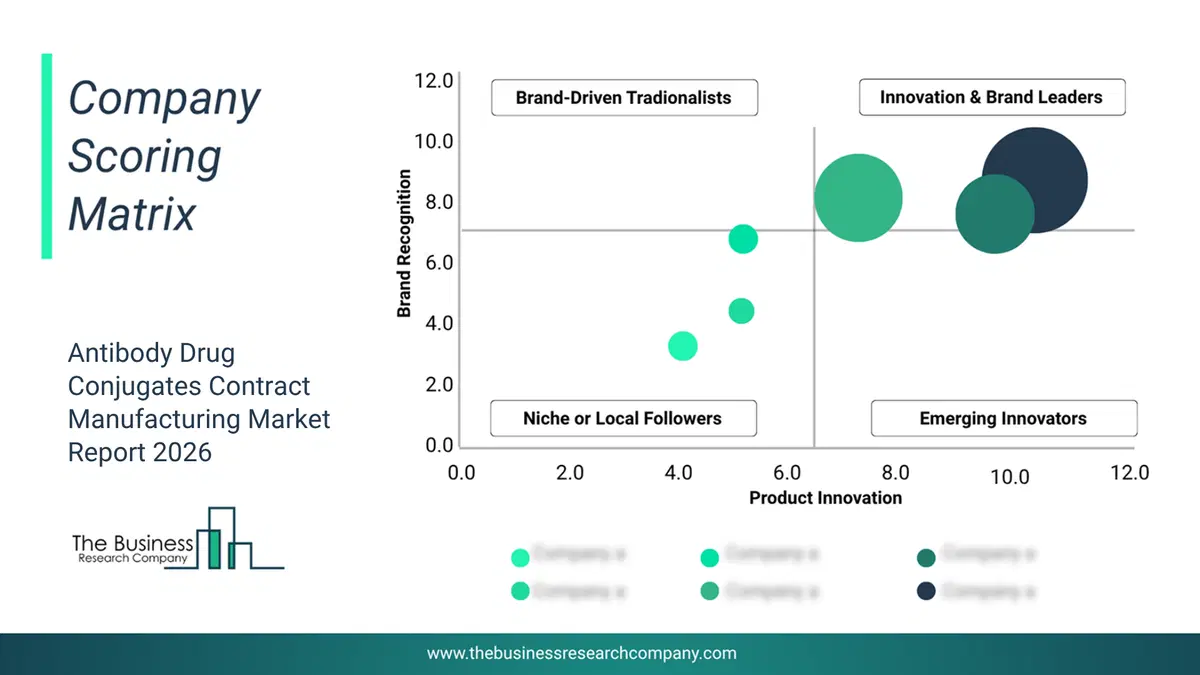
This chart maps companies by product innovation and brand strength, with bubble size indicating relative revenue, helping identify market leaders, challengers, and niche players. This is an illustrative chart; the full report provides a complete and accurate competitive analysis.
Global Antibody Drug Conjugates Contract Manufacturing Market Trends and Insights
Major companies operating in the antibody-drug conjugates contract manufacturing market are focused on developing innovative products, such as single-use reactors, to enhance production flexibility, reduce contamination risks, and streamline the manufacturing process, ultimately improving the efficiency and scalability of ADC production. Single-use reactors are revolutionizing the field of antibody-drug conjugates (ADCs) contract manufacturing by providing a flexible, efficient, and contamination-free solution for producing these complex biologics. For instance, in September 2024, MilliporeSigma, a US-based life science company, launched the Mobius ADC Reactor, a single-use reactor. Mobius ADC Reactor is specifically designed to manufacture antibody-drug conjugates (ADCs) efficiently. The Mobius ADC Reactor integrates advanced mixing and control technologies that streamline conjugation, enhance scalability, and improve consistency. This innovative reactor supports higher yields and better quality control in ADC production, addressing the growing demand for targeted cancer therapies with improved safety and efficacy.What Are Latest Mergers And Acquisitions In The Antibody Drug Conjugates Contract Manufacturing Market?
In March 2024, Johnson & Johnson, a US-based pharmaceutical, biotechnology, and medical technologies corporation, acquired Ambrx Biopharma Inc. for $2.0 billion. With this acquisition, Johnson & Johnson aims to enhance its pipeline of advanced therapies by integrating Ambrx's innovative drug development technologies and expanding its biologics and targeted treatment capabilities. Ambrx Biopharma Inc. is a US-based biotechnology company that focuses on developing cutting-edge therapies, including antibody-drug conjugates (ADCs).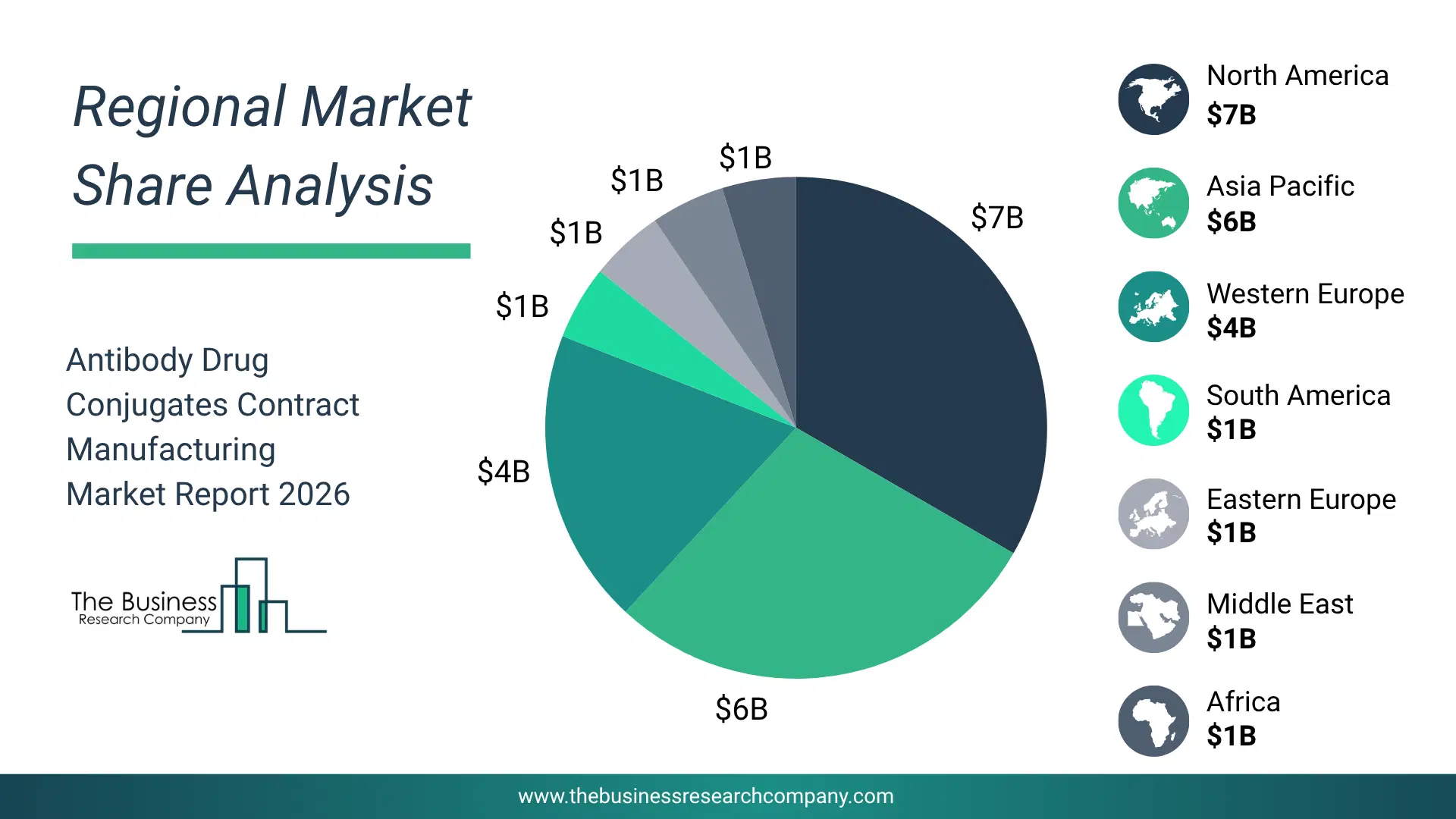
Regional Insights
North America was the largest region in the antibody drug conjugates contract manufacturing market in 2025. Asia-Pacific is expected to be the fastest-growing region in the forecast period. The regions covered in this market report are Asia-Pacific, South East Asia, Western Europe, Eastern Europe, North America, South America, Middle East, Africa. The countries covered in this market report are Australia, Brazil, China, France, Germany, India, Indonesia, Japan, Taiwan, Russia, South Korea, UK, USA, Canada, Italy, Spain.What Defines the Antibody Drug Conjugates Contract Manufacturing Market?
The antibody drug conjugates contract manufacturing market includes revenues earned by entities by providing process development, scale-up and manufacturing, analytical testing. The market value includes the value of related goods sold by the service provider or included within the service offering. Only goods and services traded between entities or sold to end consumers are included.How is Market Value Defined and Measured?
The market value is defined as the revenues that enterprises gain from the sale of goods and/or services within the specified market and geography through sales, grants, or donations in terms of the currency (in USD unless otherwise specified). The revenues for a specified geography are consumption values that are revenues generated by organizations in the specified geography within the market, irrespective of where they are produced. It does not include revenues from resales along the supply chain, either further along the supply chain or as part of other products.
This chart presents market attractiveness based on a quantitative evaluation of growth, competition, strategic alignment, and risk, offering a clear view of opportunity areas for decision-making. This chart is for illustrative purposes; the full report contains the complete analysis.

This chart highlights the Total Addressable Market (TAM) by estimating the maximum revenue opportunity using an assumption-driven approach, supporting strategic planning and opportunity sizing across markets. The chart is illustrative; the full report provides a more comprehensive analysis.
What Key Data and Analysis Are Included in the Antibody Drug Conjugates Contract Manufacturing Market Report 2026?
The antibody drug conjugates contract manufacturing market research report is one of a series of new reports from The Business Research Company that provides market statistics, including industry global market size, regional shares, competitors with the market share, detailed market segments, market trends and opportunities, and any further data you may need to thrive in the antibody drug conjugates contract manufacturing industry. The market research report delivers a complete perspective of everything you need, with an in-depth analysis of the current and future state of the industry.Antibody Drug Conjugates Contract Manufacturing Market Report Forecast Analysis
| Report Attribute | Details |
|---|---|
| Market Size Value In 2026 | $11.45 billion |
| Revenue Forecast In 2030 | $16.5 billion |
| Growth Rate | CAGR of 9.6% from 2026 to 2030 |
| Base Year For Estimation | 2025 |
| Actual Estimates/Historical Data | 2020-2025 |
| Forecast Period | 2026 - 2030 |
| Market Representation | Revenue in USD Billion and CAGR from 2026 to 2030 |
| Segments Covered | Type, Linker, Condition, Phase |
| Regional Scope | Asia-Pacific, Western Europe, Eastern Europe, North America, South America, Middle East, Africa |
| Country Scope | The countries covered in the report are Australia, Brazil, China, France, Germany, India, ... |
| Key Companies Profiled | Lonza Group AG, Catalent Inc., Recipharm AB, Curia, KBI Biopharma, Alcami Corporation, BioVectra Inc., Axplora, Abzena PLC, Cerbios-Pharma SA, Aurigene Pharmaceutical Services Ltd., Sterling Pharma Solutions, Formosa Laboratories, Avid Bioservices Inc., EirGenix Inc., Creative Biolabs, Sartorius AG, Sigma-Aldrich, ImmunoGen Inc., Eli Lilly and Company |
| Customization Scope | Request for Customization |
| Pricing And Purchase Options | Explore Purchase Options |