
Anticoccidial Drugs Market Report 2026
Global Outlook – By Drug Class (Ionophore, Antibiotic, Sulphonamides, Chemical Derivative, Other Drug Classes), By Drug Action (Coccidiostatic, Coccidiocidal), By Application (Poultry, Swine, Fish, Cattle, Companion Animals), By Distribution Channel (Veterinary Hospitals, Retail Pharmacy, Other Distribution Channels) – Market Size, Trends, Strategies, and Forecast to 2030
Anticoccidial Drugs Market Overview
• Anticoccidial Drugs market size has reached to $1.35 billion in 2025 • Expected to grow to $1.84 billion in 2030 at a compound annual growth rate (CAGR) of 6.2% • Growth Driver: Impact Of Growing Demand For Meat Proteins In The Anticoccidial Drug Market • Market Trend: Innovative Synthetic Drugs In Anticoccidial Drug Development • North America was the largest region in 2025 and Asia-Pacific is the fastest growing region.What Is Covered Under Anticoccidial Drugs Market?
Anticoccidial drugs are a class of medications used to prevent and treat coccidiosis, a parasitic disease of the intestinal tract caused by protozoa of the genus Eimeria. These drugs work by inhibiting various stages of the coccidia life cycle, controlling the infection, and preventing the severe intestinal damage and related symptoms associated with the disease. Anticoccidial drugs are commonly used in veterinary medicine, particularly poultry, to enhance health and productivity by managing this widespread and economically significant condition. The main drug classes of anticoccidial drugs are ionophores, antibiotics, sulphonamides, chemical derivatives, and others. Ionophores are a type of anticoccidial drug that disrupts the growth and reproduction of coccidia parasites by affecting ion transport across cell membranes. Various drug actions include coccidiostatic and coccidiocidal for a variety of applications, such as poultry, swine, fish, cattle, and companion animals, through different distribution channels, including veterinary hospitals, retail pharmacies, and others.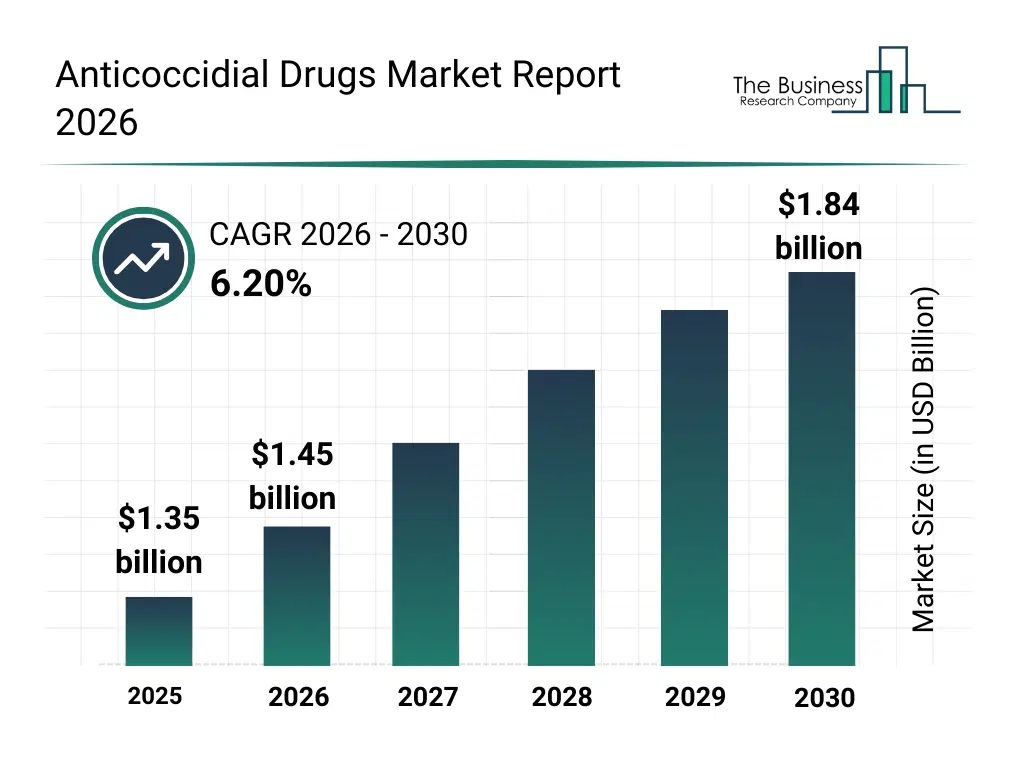
What Is The Anticoccidial Drugs Market Size and Share 2026?
The anticoccidial drugs market size has grown strongly in recent years. It will grow from $1.35 billion in 2025 to $1.45 billion in 2026 at a compound annual growth rate (CAGR) of 6.9%. The growth in the historic period can be attributed to high prevalence of coccidiosis in poultry, limited availability of effective drug classes, growing demand for livestock products, traditional farming practices, increasing awareness of animal health management.What Is The Anticoccidial Drugs Market Growth Forecast?
The anticoccidial drugs market size is expected to see strong growth in the next few years. It will grow to $1.84 billion in 2030 at a compound annual growth rate (CAGR) of 6.2%. The growth in the forecast period can be attributed to innovation in drug delivery systems, rise in intensive poultry farming, expansion of veterinary services in emerging regions, increased government support for animal health, growth in global meat and poultry consumption. Major trends in the forecast period include development of novel anticoccidial drug formulations, increased focus on poultry health management, rising adoption of combination therapies, expansion of veterinary pharmaceutical distribution networks, enhanced regulatory compliance for veterinary drugs.
Global Anticoccidial Drugs Market Segmentation
1) By Drug Class: Ionophore, Antibiotic, Sulphonamides, Chemical Derivative, Other Drug Classes 2) By Drug Action: Coccidiostatic, Coccidiocidal 3) By Application: Poultry, Swine, Fish, Cattle, Companion Animals 4) By Distribution Channel: Veterinary Hospitals, Retail Pharmacy, Other Distribution Channels Subsegments: 1) By Ionophore: Monensin, Lasalocid, Salinomycin 2) By Antibiotic: Tylosin, Lincomycin, Bacitracin 3) By Sulphonamides: Sulfadimethoxine, Sulfaquinoxaline 4) By Chemical Derivative: Diclazuril, Clopidol 5) By Other Drug Classes: Amprolium, RobenidineWhat Are The Drivers Of The Anticoccidial Drugs Market?
The growing demand for meat proteins is expected to propel the growth of the anticoccidial drug market going forward. Meat proteins are naturally present in animal flesh, comprising various amino acids essential for various bodily functions. The rising demand for meat proteins is due to population growth, increasing disposable income, urbanization, and changing dietary preferences toward protein-rich foods. Anticoccidial drugs are essential tools in modern livestock farming. They help maintain the health and productivity of animals, ensuring that farmers can meet the growing demand for meat proteins efficiently and sustainably. For instance in October 2025 according to the Meat And Livestock Australia Limited a Australia-based non-profit organization in 2024, Australia’s red meat and livestock exports increased by 3.2% year-on-year, reaching a value of $19.5 billion. Therefore, the growing demand for meat proteins is driving the growth of the anticoccidial drug industry. The rise in poultry farming is expected to propel the growth of the anticoccidial drug market going forward. Poultry farming refers to raising domesticated birds, such as chickens, turkeys, ducks, and geese, to produce meat, eggs, and feathers. The rise in poultry farming is due to increasing demand for protein, improved farming techniques, and the expansion of global trade. Anticoccidial drugs are often added to poultry feed or water as a preventive measure to protect the birds from coccidiosis during the early and most vulnerable stages of growth. For instance, in April 2024, according to the USDA Economic Research Service, a US-based government administration, in 2023, the number of chickens sold totaled 178 million, up 4 percent from the previous year, and turkey numbers increased by 4 percent as well. Therefore, the rise in poultry farming is driving the growth of the anticoccidial drug industry.Key Players In The Global Anticoccidial Drugs Market
Major companies operating in the anticoccidial drugs market are Zoetis Inc., Elanco Animal Health Incorporated, Huvepharma AD, Phibro Animal Health Corporation, Ceva Santé Animale S.A., Boehringer Ingelheim International GmbH, Merck & Co. Inc, Bayer AG, Virbac S.A., Vetoquinol SA, Intas Pharmaceuticals Ltd, Alpharma BVBA, Kepro B.V., Kemin Industries Inc., Tianjin Ringpu Bio-Technology Co. Ltd., Hester Biosciences Limited, Biovet S.A., HIPRA, Impextraco NV, Lallemand Animal Nutrition
This chart is for illustrative purposes; the full report includes a detailed competitor analysis and comprehensive overview of the top 10 companies in the market.
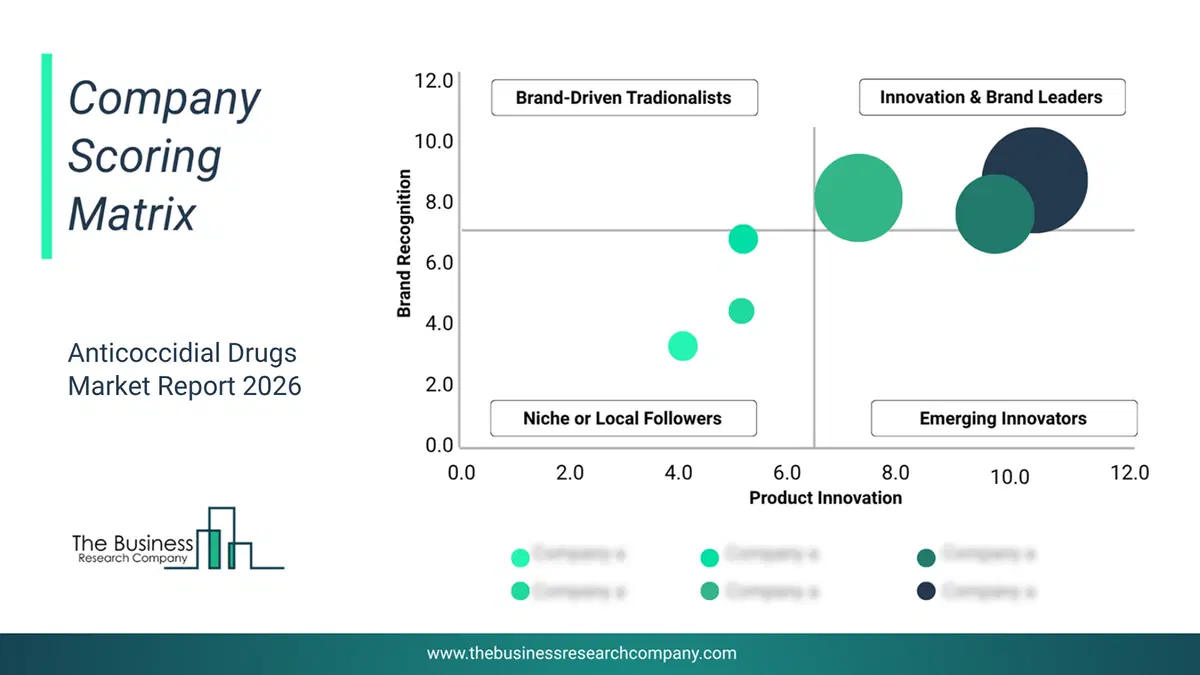
This chart maps companies by product innovation and brand strength, with bubble size indicating relative revenue, helping identify market leaders, challengers, and niche players. This is an illustrative chart; the full report provides a complete and accurate competitive analysis.
Global Anticoccidial Drugs Market Trends and Insights
Major companies operating in the anticoccidial drugs market focus on developing innovative solutions, such as synthetic coccidiostat, to enhance efficacy, minimize resistance development, and address emerging challenges in poultry and livestock management. A synthetic coccidiostat is a chemically engineered compound used to prevent or control coccidiosis by inhibiting the growth and reproduction of coccidia parasites in animals. For instance, in March 2023, Zoetis, a US-based animal health company, launched Avi-Deccox, a reformulated synthetic coccidiostat designed to control coccidiosis in broiler chickens. This product specifically targets the pathogens Eimeria acervulina and Eimeria tenella, which are responsible for significant economic losses in poultry farming. This product features decoquinate as its active ingredient, similar to its predecessor, Deccox. Avi-Deccox addresses the growing issue of resistance linked to the frequent use of ionophores in poultry farming by employing a different mode of action, providing a more effective short-term knock-down effect.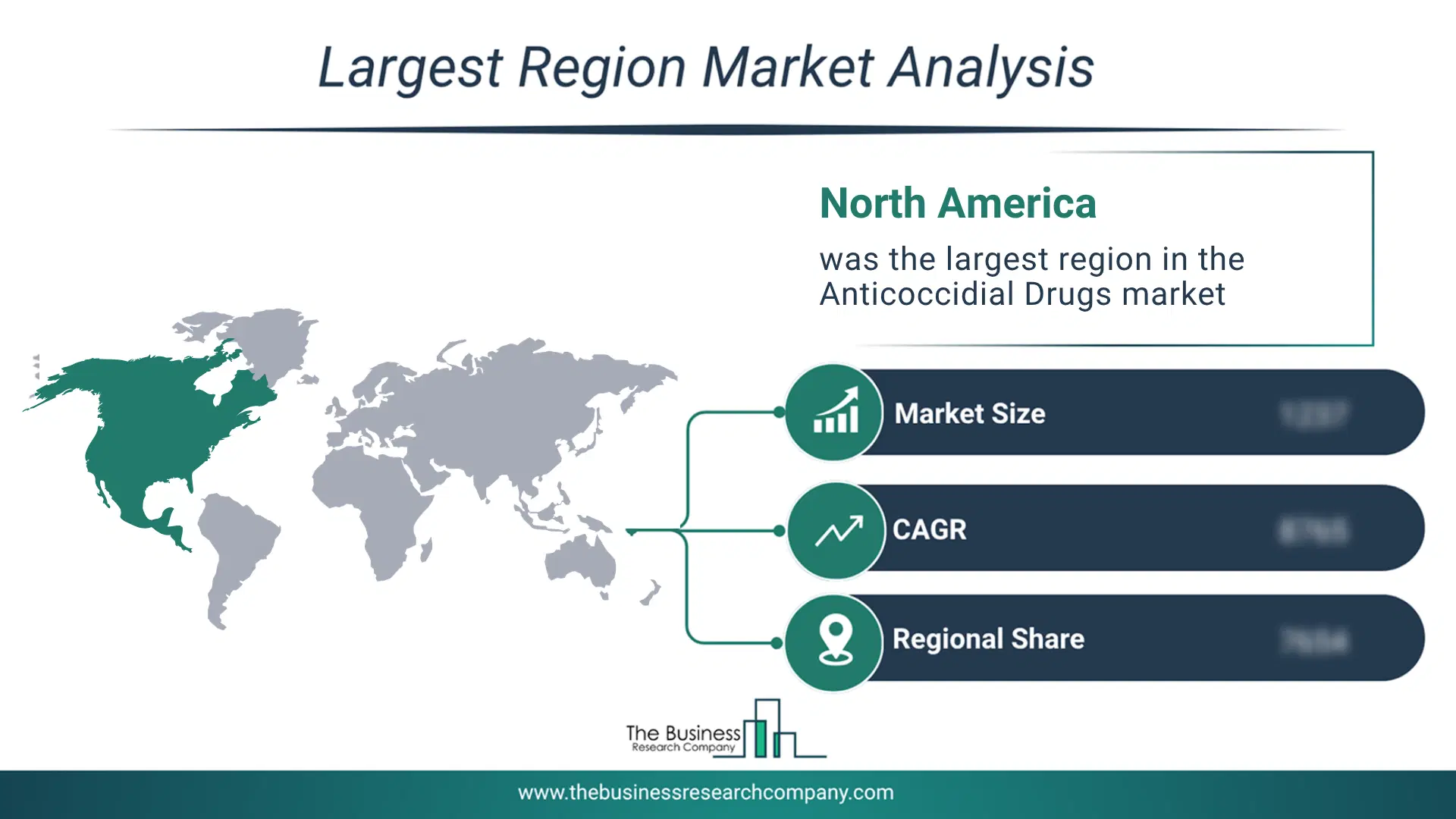
Regional Insights
North America was the largest region in the anticoccidial drugs market in 2025. Asia-Pacific is expected to be the fastest-growing region in the forecast period. The regions covered in this market report are Asia-Pacific, South East Asia, Western Europe, Eastern Europe, North America, South America, Middle East, Africa. The countries covered in this market report are Australia, Brazil, China, France, Germany, India, Indonesia, Japan, Taiwan, Russia, South Korea, UK, USA, Canada, Italy, Spain.What Defines the Anticoccidial Drugs Market?
The anticoccidial drugs market consist of sales of semduramicin, monensin, lasalocid, salinomycin, decoquinate, amprolium, clopidol, and sulfachloropyrazine. Values in this market are ‘factory gate’ values, that is, the value of goods sold by the manufacturers or creators of the goods, whether to other entities (including downstream manufacturers, wholesalers, distributors, and retailers) or directly to end customers. The value of goods in this market includes related services sold by the creators of the goods.How is Market Value Defined and Measured?
The market value is defined as the revenues that enterprises gain from the sale of goods and/or services within the specified market and geography through sales, grants, or donations in terms of the currency (in USD unless otherwise specified). The revenues for a specified geography are consumption values that are revenues generated by organizations in the specified geography within the market, irrespective of where they are produced. It does not include revenues from resales along the supply chain, either further along the supply chain or as part of other products.
This chart presents market attractiveness based on a quantitative evaluation of growth, competition, strategic alignment, and risk, offering a clear view of opportunity areas for decision-making. This chart is for illustrative purposes; the full report contains the complete analysis.

This chart highlights the Total Addressable Market (TAM) by estimating the maximum revenue opportunity using an assumption-driven approach, supporting strategic planning and opportunity sizing across markets. The chart is illustrative; the full report provides a more comprehensive analysis.
What Key Data and Analysis Are Included in the Anticoccidial Drugs Market Report 2026?
The anticoccidial drugs market research report is one of a series of new reports from The Business Research Company that provides market statistics, including industry global market size, regional shares, competitors with the market share, detailed market segments, market trends and opportunities, and any further data you may need to thrive in the anticoccidial drugs industry. The market research report delivers a complete perspective of everything you need, with an in-depth analysis of the current and future state of the industry.Anticoccidial Drugs Market Report Forecast Analysis
| Report Attribute | Details |
|---|---|
| Market Size Value In 2026 | $1.45 billion |
| Revenue Forecast In 2030 | $1.84 billion |
| Growth Rate | CAGR of 6.9% from 2026 to 2030 |
| Base Year For Estimation | 2025 |
| Actual Estimates/Historical Data | 2020-2025 |
| Forecast Period | 2026 - 2030 |
| Market Representation | Revenue in USD Billion and CAGR from 2026 to 2030 |
| Segments Covered | Drug Class, Drug Action, Application, Distribution Channel |
| Regional Scope | Asia-Pacific, Western Europe, Eastern Europe, North America, South America, Middle East, Africa |
| Country Scope | The countries covered in the report are Australia, Brazil, China, France, Germany, India, Indonesia, Japan, Taiwan, Russia, South Korea, UK, USA, Canada, Italy, Spain. |
| Key Companies Profiled | Zoetis Inc., Elanco Animal Health Incorporated, Huvepharma AD, Phibro Animal Health Corporation, Ceva Santé Animale S.A., Boehringer Ingelheim International GmbH, Merck & Co. Inc, Bayer AG, Virbac S.A., Vetoquinol SA, Intas Pharmaceuticals Ltd, Alpharma BVBA, Kepro B.V., Kemin Industries Inc., Tianjin Ringpu Bio-Technology Co. Ltd., Hester Biosciences Limited, Biovet S.A., HIPRA, Impextraco NV, Lallemand Animal Nutrition |
| Customization Scope | Request for Customization |
| Pricing And Purchase Options | Explore Purchase Options |