
Antimetabolite Drug Market Report 2026
Global Outlook – By Type (Purine Analogues, Pyrimidine Analogues, Folic Acid Analogs, Other Types), By Route Of Administration (Oral, Intravenous, Subcutaneous), By Distribution Channel (Hospital Pharmacy, Retail Pharmacy, Online Pharmacy), By Application (Cancer, Autoimmune Disorders, Organ Transplantation), By End-Use (Hospitals, Clinics) – Market Size, Trends, Strategies, and Forecast to 2030
Antimetabolite Drug Market Overview
• Antimetabolite Drug market size has reached to $9.77 billion in 2025 • Expected to grow to $12.23 billion in 2030 at a compound annual growth rate (CAGR) of 4.5% • Growth Driver: The Increasing Prevalence Of Cancer Is Fueling The Growth Of The Market Due To The Rising Demand For Effective Chemotherapeutic Solutions • Market Trend: Innovative Oral Methotrexate Solutions Enhance Convenience And Compliance In Cancer And Autoimmune Treatments • North America was the largest region in 2025.What Is Covered Under Antimetabolite Drug Market?
Antimetabolite drugs are chemotherapy medicines that interfere with the production of DNA and RNA by pretending to be natural substances that cells use. They block key enzymes or become part of nucleic acids, hindering cell division. Mainly used in cancer treatment, they target fast-growing cells and work by stopping vital metabolic processes essential for tumor growth. The main types of antimetabolite drugs are purine analogs, pyrimidine analogs, folic acid analogs, and others. Purine analogues are antimetabolite drugs that mimic DNA bases to inhibit cancer cell growth, with agents like mercaptopurine playing a key role in leukemia treatment. It is administered through various routes of administration, including oral, intravenous, subcutaneous, and topical, and is distributed through several distribution channels, such as hospital pharmacies, retail pharmacies, and online pharmacies. It is applicable in various applications, including cancer, autoimmune disorders, organ transplantation, and infectious diseases, and is used by several end-users, such as hospitals, clinics, and home care settings.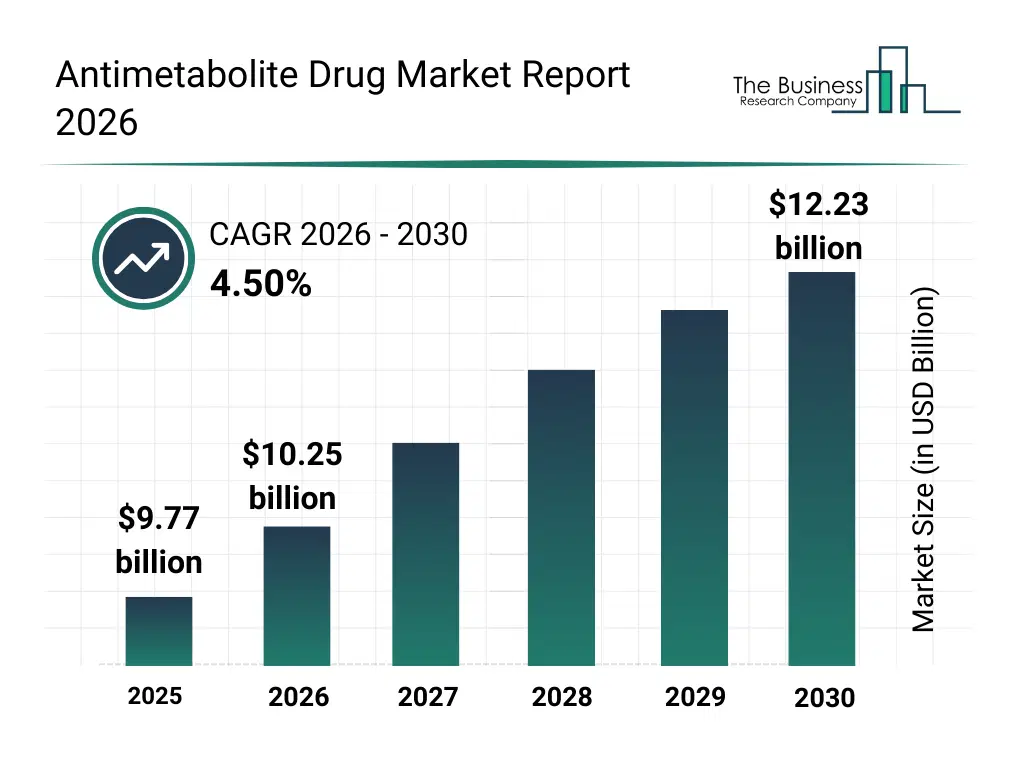
What Is The Antimetabolite Drug Market Size and Share 2026?
The antimetabolite drug market size has grown steadily in recent years. It will grow from $9.77 billion in 2025 to $10.25 billion in 2026 at a compound annual growth rate (CAGR) of 4.8%. The growth in the historic period can be attributed to cancer treatment protocols, hospital oncology adoption, chemotherapy standards, availability of generic drugs, research-driven usage.What Is The Antimetabolite Drug Market Growth Forecast?
The antimetabolite drug market size is expected to see steady growth in the next few years. It will grow to $12.23 billion in 2030 at a compound annual growth rate (CAGR) of 4.5%. The growth in the forecast period can be attributed to oncology pipeline growth, biosimilar development, autoimmune disease treatment expansion, outpatient chemotherapy growth, precision oncology. Major trends in the forecast period include continued use in oncology treatment, expansion of combination chemotherapy regimens, growth of generic antimetabolite drugs, demand in autoimmune disorders, focus on improved drug tolerability.
Global Antimetabolite Drug Market Segmentation
1) By Type: Purine Analogues, Pyrimidine Analogues, Folic Acid Analogs, Other Types 2) By Route Of Administration: Oral, Intravenous, Subcutaneous 3) By Distribution Channel: Hospital Pharmacy, Retail Pharmacy, Online Pharmacy 4) By Application: Cancer, Autoimmune Disorders, Organ Transplantation 5) By End-Use: Hospitals, Clinics Subsegments: 1) By Purine Analogues: 6-Mercaptopurine (6-MP), Thioguanine (6-TG), Fludarabine, Cladribine, Pentostatin 2) By Pyrimidine Analogues: 5-Fluorouracil (5-FU), Capecitabine, Cytarabine (Ara-C), Gemcitabine, Decitabine 3) By Folic Acid Analogs: Methotrexate, Pemetrexed, Raltitrexed, Pralatrexate 4) By Other Types: Hydroxyurea, Trifluridine Or Tipiracil, Nelarabine, AzacitidineWhat Is The Driver Of The Antimetabolite Drug Market?
The increasing prevalence of cancer is expected to propel the growth of the antimetabolite drug market going forward. Cancer is a condition marked by the rapid, unregulated proliferation of abnormal cells that can invade and damage surrounding tissues and organs. Cancer rates are increasing mainly because exposure to carcinogens such as tobacco smoke triggers genetic mutations that result in uncontrolled cell growth and tumor formation. Antimetabolite drugs combat cancer by blocking DNA and RNA production, stopping cancer cells from multiplying. They mimic natural metabolites to disrupt critical metabolic pathways, effectively halting tumor growth. For instance, in February 2024, according to the World Health Organization, a Switzerland-based intergovernmental organization, by 2050, over 35 million new cancer cases were projected, representing a 77% increase compared to the estimated 20 million cases in 2022. Therefore, the increasing prevalence of cancer is driving the growth of the antimetabolite drug industry.Key Players In The Global Antimetabolite Drug Market
Major companies operating in the antimetabolite drug market are Pfizer Inc., F. Hoffmann-La Roche Ltd., Teva Pharmaceutical Industries Ltd., Fresenius Kabi AG, Aurobindo Pharma Ltd., Lupin Pharmaceuticals Ltd., Natco Pharma Ltd., Shorla Oncology Ltd., Dr. Reddy’s Laboratories Ltd., Sun Pharmaceutical Industries Ltd., Cipla Ltd., Hikma Pharmaceuticals PLC, Accord Healthcare Ltd., Mylan N.V. (Viatris Inc.), Sandoz International GmbH, Zydus Lifesciences Ltd., Intas Pharmaceuticals Ltd., Alkem Laboratories Ltd., Apotex Inc., Amneal Pharmaceuticals LLC
This chart is for illustrative purposes; the full report includes a detailed competitor analysis and comprehensive overview of the top 10 companies in the market.
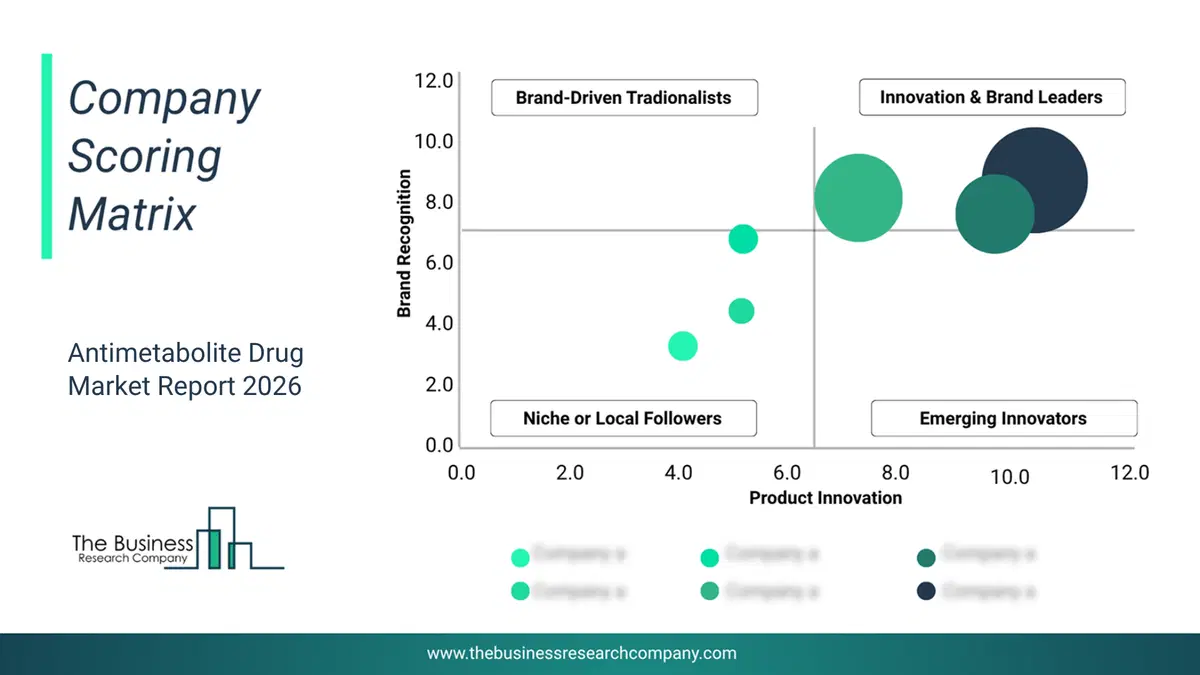
This chart maps companies by product innovation and brand strength, with bubble size indicating relative revenue, helping identify market leaders, challengers, and niche players. This is an illustrative chart; the full report provides a complete and accurate competitive analysis.
Global Antimetabolite Drug Market Trends and Insights
Major companies operating in the antimetabolite drug market are focusing on developing advanced products such as oral methotrexate solution to provide more convenient and effective cancer treatment options. Oral methotrexate solution is a liquid form of methotrexate that enables easier swallowing and accurate dosing. It is used to treat cancers and autoimmune disorders by blocking cell growth and modulating the immune system. For instance, in October 2024, Shorla Oncology, an Ireland-based pharmaceutical company, announced the expansion of Jylamvo, approved by the US Food and Drug Administration (FDA), a US-based government organization. It is designed for children with acute lymphoblastic leukemia and polyarticular juvenile idiopathic arthritis, making it the only liquid methotrexate providing a palatable, easy-to-administer alternative for those who have difficulty swallowing pills. Additionally, it also offers an orange-flavored formulation with a dedicated dosing syringe for accurate measurement, stability at room temperature for up to 90 days after opening, removing the need for refrigeration, and a user-friendly design that simplifies storage, preparation, and adherence for patients and caregivers.What Are Latest Mergers And Acquisitions In The Antimetabolite Drug Market?
In May 2025, Helix BioPharma Corp., a Canada-based immuno-oncology company specializing in the field of cancer therapy, acquired LEUMUNA and GEMCEDA from Laevoroc Group for an undisclosed amount. With this acquisition, Helix company aimed to broaden its treatment arsenal by integrating advanced antimetabolite candidates to enhance its therapeutic pipeline. Laevoroc Group is a Switzerland-based company that manufactures antimetabolite drugs.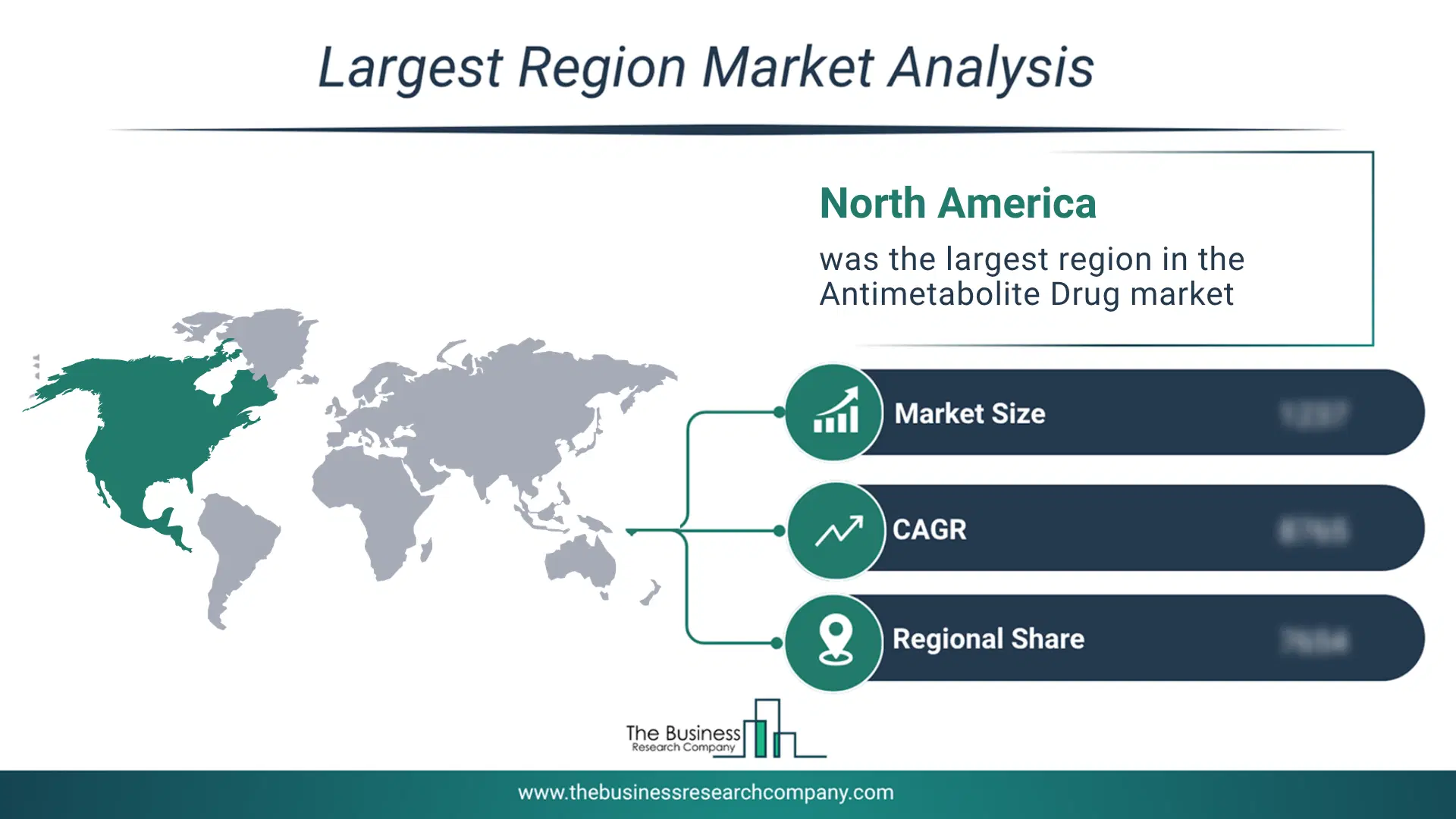
Regional Insights
North America was the largest region in the antimetabolite drug market in 2025. The regions covered in this market report are Asia-Pacific, South East Asia, Western Europe, Eastern Europe, North America, South America, Middle East, Africa. The countries covered in this market report are Australia, Brazil, China, France, Germany, India, Indonesia, Japan, Taiwan, Russia, South Korea, UK, USA, Canada, Italy, Spain.What Defines the Antimetabolite Drug Market?
The antimetabolite drug market consists of sales of methotrexate, cytarabine, mercaptopurine, azathioprine, and fludarabine. Values in this market are ‘factory gate’ values, that is, the value of goods sold by the manufacturers or creators of the goods, whether to other entities (including downstream manufacturers, wholesalers, distributors and retailers) or directly to end customers. The value of goods in this market includes related services sold by the creators of the goods.How is Market Value Defined and Measured?
The market value is defined as the revenues that enterprises gain from the sale of goods and/or services within the specified market and geography through sales, grants, or donations in terms of the currency (in USD unless otherwise specified). The revenues for a specified geography are consumption values that are revenues generated by organizations in the specified geography within the market, irrespective of where they are produced. It does not include revenues from resales along the supply chain, either further along the supply chain or as part of other products.
This chart presents market attractiveness based on a quantitative evaluation of growth, competition, strategic alignment, and risk, offering a clear view of opportunity areas for decision-making. This chart is for illustrative purposes; the full report contains the complete analysis.

This chart highlights the Total Addressable Market (TAM) by estimating the maximum revenue opportunity using an assumption-driven approach, supporting strategic planning and opportunity sizing across markets. The chart is illustrative; the full report provides a more comprehensive analysis.
What Key Data and Analysis Are Included in the Antimetabolite Drug Market Report 2026?
The antimetabolite drug market research report is one of a series of new reports from The Business Research Company that provides market statistics, including industry global market size, regional shares, competitors with the market share, detailed market segments, market trends and opportunities, and any further data you may need to thrive in the antimetabolite drug industry. The market research report delivers a complete perspective of everything you need, with an in-depth analysis of the current and future state of the industry.Antimetabolite Drug Market Report Forecast Analysis
| Report Attribute | Details |
|---|---|
| Market Size Value In 2026 | $10.25 billion |
| Revenue Forecast In 2030 | $12.23 billion |
| Growth Rate | CAGR of 4.8% from 2026 to 2030 |
| Base Year For Estimation | 2025 |
| Actual Estimates/Historical Data | 2020-2025 |
| Forecast Period | 2026 - 2030 |
| Market Representation | Revenue in USD Billion and CAGR from 2026 to 2030 |
| Segments Covered | Type, Route Of Administration, Distribution Channel, Application, End-Use |
| Regional Scope | Asia-Pacific, Western Europe, Eastern Europe, North America, South America, Middle East, Africa |
| Country Scope | The countries covered in the report are Australia, Brazil, China, France, Germany, India, Indonesia, Japan, Taiwan, Russia, South Korea, UK, USA, Canada, Italy, Spain. |
| Key Companies Profiled | Pfizer Inc., F. Hoffmann-La Roche Ltd., Teva Pharmaceutical Industries Ltd., Fresenius Kabi AG, Aurobindo Pharma Ltd., Lupin Pharmaceuticals Ltd., Natco Pharma Ltd., Shorla Oncology Ltd., Dr. Reddy’s Laboratories Ltd., Sun Pharmaceutical Industries Ltd., Cipla Ltd., Hikma Pharmaceuticals PLC, Accord Healthcare Ltd., Mylan N.V. (Viatris Inc.), Sandoz International GmbH, Zydus Lifesciences Ltd., Intas Pharmaceuticals Ltd., Alkem Laboratories Ltd., Apotex Inc., Amneal Pharmaceuticals LLC |
| Customization Scope | Request for Customization |
| Pricing And Purchase Options | Explore Purchase Options |