
Antimicrobial Textile Market Report 2026
Global Outlook – By Fibers (Cotton, Polyester, Polyamide, Other Fibers), By Active Agent (Synthetic Organic Agents, Metal And Metallic Salts, Bio-Based Agents, Other Active Agents), By Application (Medical Textiles, Apparel, Home Textiles, Commercial Textiles, Industrial Textiles, Other Applications) – Market Size, Trends, Strategies, and Forecast to 2030
Antimicrobial Textile Market Overview
• Antimicrobial Textile market size has reached to $14.02 billion in 2025 • Expected to grow to $22.61 billion in 2030 at a compound annual growth rate (CAGR) of 10% • Growth Driver: The Growing Demand For Antimicrobial Textiles Driven By Health-Conscious Consumers And Lifestyles • Market Trend: Technological Advancements Drive Innovation In Antimicrobial Textile Market • North America was the largest region in 2025 and Asia-Pacific is the fastest growing region.What Is Covered Under Antimicrobial Textile Market?
Antimicrobial textile refers to any fabric or products made by weaving, knitting, or felting that are intended to either completely or severely restrict the growth of microbes. Antimicrobial textiles are active textiles that help to resist harmful bacteria by up to 99.9% by attacking them at the cellular level to inhibit their reproduction and growth. The main types of fibers in the antimicrobial textile are cotton, polyester, polyamide, and others. Polyamide fibers are typically made from linear aliphatic polyamides with molecular weights ranging from 15, 000 to 30, 000, the most common of which being polycaproamide and polyhexamethylene adipamide. The different active agents include synthetic organic agents, metal and metallic salts, bio-based agents, and others and are used in various applications such as medical textiles, apparel, home textiles, commercial textiles, industrial textiles, and others.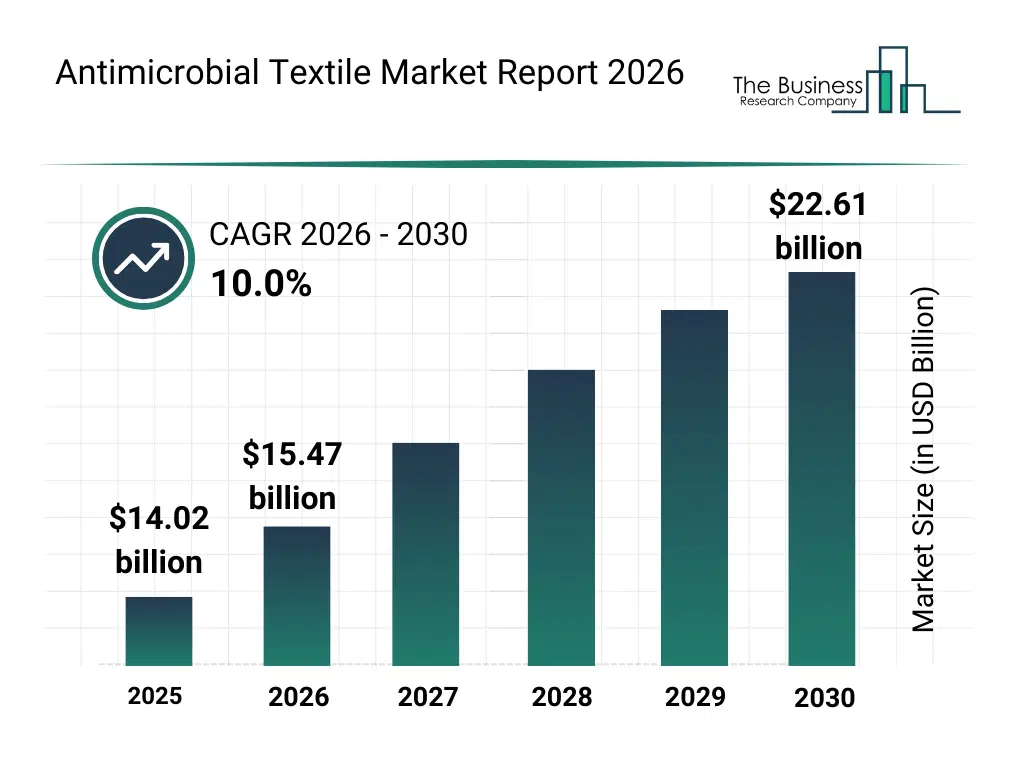
What Is The Antimicrobial Textile Market Size and Share 2026?
The antimicrobial textile market size has grown rapidly in recent years. It will grow from $14.02 billion in 2025 to $15.47 billion in 2026 at a compound annual growth rate (CAGR) of 10.4%. The growth in the historic period can be attributed to increasing healthcare textile consumption, rising awareness of hygiene in apparel, expansion of hospital and clinical textile usage, availability of synthetic antimicrobial agents, growth in technical textile production.What Is The Antimicrobial Textile Market Growth Forecast?
The antimicrobial textile market size is expected to see strong growth in the next few years. It will grow to $22.61 billion in 2030 at a compound annual growth rate (CAGR) of 10.0%. The growth in the forecast period can be attributed to growing demand for sustainable antimicrobial fabrics, rising investments in functional textiles, expansion of antimicrobial sportswear adoption, increasing use of natural antimicrobial fibers, stricter hygiene standards in public spaces. Major trends in the forecast period include increasing adoption of antimicrobial medical fabrics, rising demand for odor-resistant apparel textiles, growing use of bio-based antimicrobial agents, expansion of antimicrobial home and commercial textiles, enhanced focus on wash-durable treatments.
Global Antimicrobial Textile Market Segmentation
1) By Fibers: Cotton, Polyester, Polyamide, Other Fibers 2) By Active Agent: Synthetic Organic Agents, Metal And Metallic Salts, Bio-Based Agents, Other Active Agents 3) By Application: Medical Textiles, Apparel, Home Textiles, Commercial Textiles, Industrial Textiles, Other Applications Subsegments: 1) By Cotton: Organic Cotton, Conventional Cotton, Cotton Blends 2) By Polyester: PET (Polyethylene Terephthalate), Recycled Polyester, Polyester Blends 3) By Polyamide: Nylon 6, Nylon 66, Polyamide Blends 4) By Other Fibers: Bamboo Fiber, Wool, Lyocell, SilkWhat Is The Driver Of The Antimicrobial Textile Market?
The changes in health-conscious consumers and lifestyles will propel the growth of the antimicrobial textile market. Health-conscious consumers refer to individuals who prioritize and actively seek to make choices that contribute to their overall health and well-being. As health-conscious consumers continue to prioritize hygiene and cleanliness in their daily lives, the demand for antimicrobial textiles is on the rise. Health-conscious consumers are aware of the potential health risks associated with microbial contamination. Antimicrobial textiles provide an additional layer of protection by reducing the presence of harmful microorganisms on surfaces, including clothing, bedding, and upholstery. For instance, in August 2023, according to Koninklijke DSM N.V., a Netherlands-based health and bioscience company, in response to the pandemic, 60% of consumers worldwide are now more concerned about their health, placing a higher priority on leading healthy lives to avoid health problems. Therefore, the changes in health-conscious consumers and lifestyles will drive the antimicrobial textile industry.Key Players In The Global Antimicrobial Textile Market
Major companies operating in the antimicrobial textile market are Milliken & Company, PurThread Technologies, Trevira GmbH, Vestagen Protective Technologies Inc., Herculite Products Inc., BASF SE, Dow Chemical Company, Sanitized AG, LifeThreads LLC, Surgicotfab Textiles Private Limited, Sciessent LLC, Kolon Industries Inc., Response Fabrics Pvt. Ltd., Indorama Ventures Public Company Limited, Sarex Textile Chemicals, Toyobo Co. Ltd., Vardhman Holdings Limited, Unitika Ltd., Meditex Technology, BioCote Limited, Microban International, HeiQ Materials AG, Noble Biomaterials Inc.
This chart is for illustrative purposes; the full report includes a detailed competitor analysis and comprehensive overview of the top 10 companies in the market.
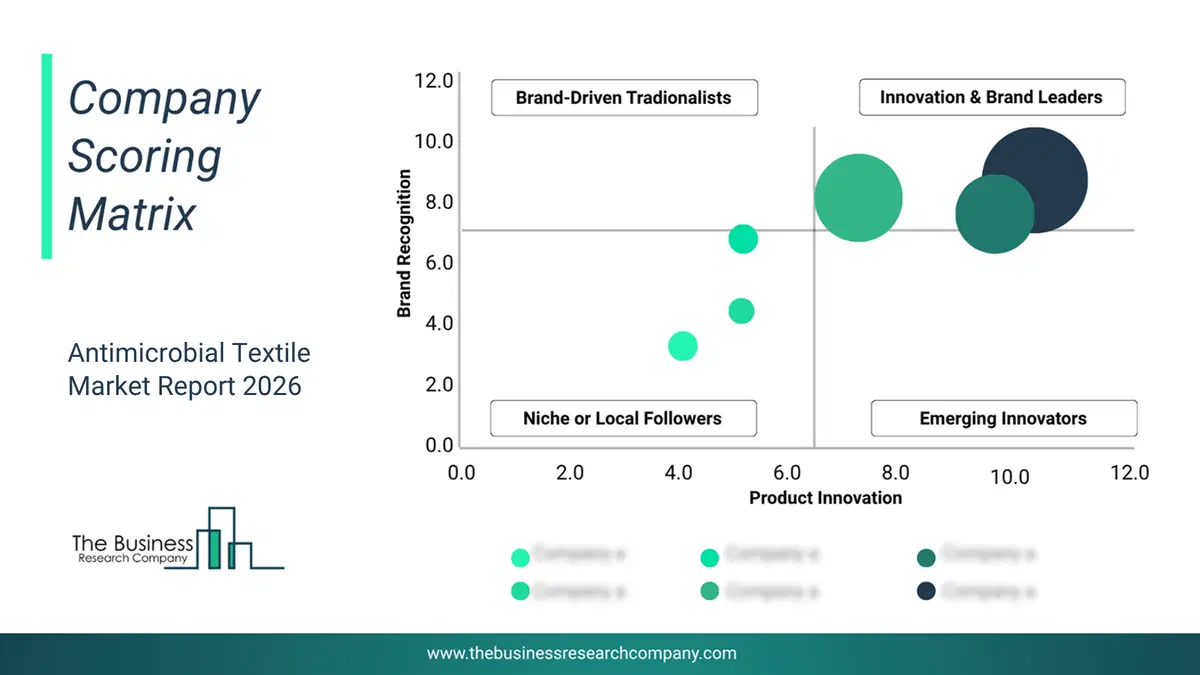
This chart maps companies by product innovation and brand strength, with bubble size indicating relative revenue, helping identify market leaders, challengers, and niche players. This is an illustrative chart; the full report provides a complete and accurate competitive analysis.
Global Antimicrobial Textile Market Trends and Insights
Major companies operating in the antimicrobial textile market are focusing on developing innovative solutions, such as next-generation antimicrobial technologies, to enhance viral protection and hygiene and meet rising consumer demand for safer textiles. Next-generation antimicrobial technology incorporates active ingredients designed to inhibit the growth and spread of microbes on textile surfaces, offering a safer and more sustainable alternative to traditional antimicrobial treatments. For instance, in September 2023, Microban International, a US-based provider of antimicrobial additives and odor control solutions, launched Ascera. This patent-pending technology is inspired by nature and formulated for use in olefinic polymers and solvent-based coatings. Ascera is sustainable, metal-free, and less toxic than conventional antimicrobial solutions, providing effective microbial control while supporting environmentally conscious manufacturing practices.What Are Latest Mergers And Acquisitions In The Antimicrobial Textile Market?
In September 2024, Microban International LLC, a US-based provider of antimicrobial and odor-control solutions, partnered with CiCLO Textiles, LLC, to enhance sustainable antimicrobial textile offerings. With this partnership, Microban International, LLC aims to improve the functionality and sustainability of textiles by combining long-lasting antimicrobial performance with biodegradable fiber technology, providing textile manufacturers with solutions that meet both hygiene and environmental sustainability requirements. CiCLO Textiles LLC is a US-based provider of biodegradable fiber and fabric technologies for synthetic textiles, specializing in environmentally friendly materials that maintain performance and durability.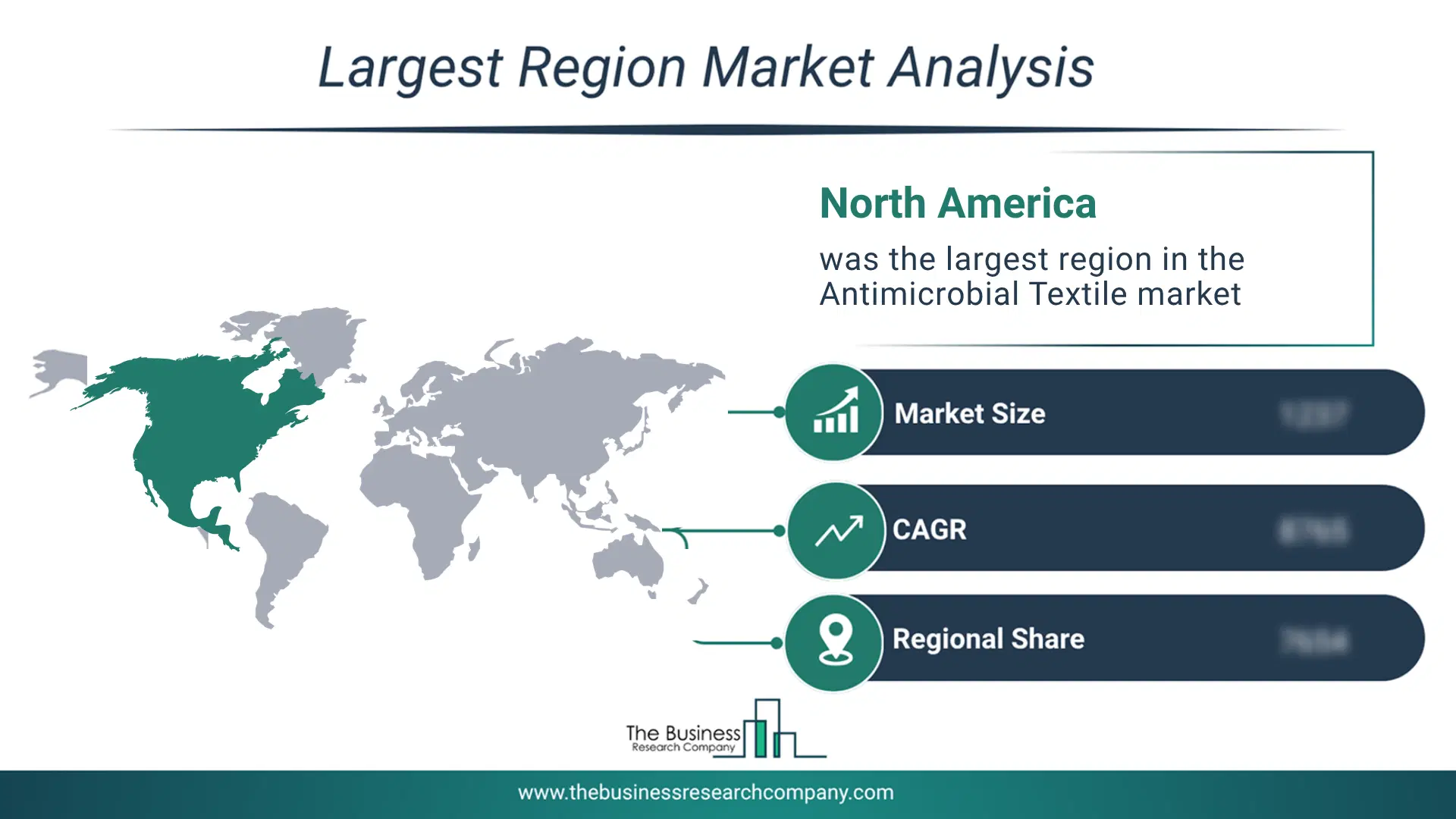
Regional Outlook
North America was the largest region in the antimicrobial textile market in 2025. Asia-Pacific is expected to be the fastest-growing region in the forecast period. The regions covered in this market report are Asia-Pacific, South East Asia, Western Europe, Eastern Europe, North America, South America, Middle East, Africa. The countries covered in this market report are Australia, Brazil, China, France, Germany, India, Indonesia, Japan, Taiwan, Russia, South Korea, UK, USA, Canada, Italy, Spain.What Defines the Antimicrobial Textile Market?
The antimicrobial textile market consists of sales of acrylic, polypropylene, and tetrafluoroethylene; synthetic organic compounds; triclosan, polybiguanide, chitosan, and N-halamines. Values in this market are ‘factory gate’ values, that is the value of goods sold by the manufacturers or creators of the goods, whether to other entities (including downstream manufacturers, wholesalers, distributors and retailers) or directly to end customers. The value of goods in this market includes related services sold by the creators of the goods.How is Market Value Defined and Measured?
The market value is defined as the revenues that enterprises gain from the sale of goods and/or services within the specified market and geography through sales, grants, or donations in terms of the currency (in USD unless otherwise specified). The revenues for a specified geography are consumption values that are revenues generated by organizations in the specified geography within the market, irrespective of where they are produced. It does not include revenues from resales along the supply chain, either further along the supply chain or as part of other products.
This chart presents market attractiveness based on a quantitative evaluation of growth, competition, strategic alignment, and risk, offering a clear view of opportunity areas for decision-making. This chart is for illustrative purposes; the full report contains the complete analysis.

This chart highlights the Total Addressable Market (TAM) by estimating the maximum revenue opportunity using an assumption-driven approach, supporting strategic planning and opportunity sizing across markets. The chart is illustrative; the full report provides a more comprehensive analysis.
What Key Data and Analysis Are Included in the Antimicrobial Textile Market Report 2026?
The antimicrobial textile market research report is one of a series of new reports from The Business Research Company that provides market statistics, including Market Report 2026?global market size, regional shares, competitors with the market share, detailed market segments, market trends and opportunities, and any further data you may need to thrive in the antimicrobial textile Market Report 2026? The market research report delivers a complete perspective of everything you need, with an in-depth analysis of the current and future state of the Market Report 2026?Antimicrobial Textile Market Report Forecast Analysis
| Report Attribute | Details |
|---|---|
| Market Size Value In 2026 | $15.47 billion |
| Revenue Forecast In 2030 | $22.61 billion |
| Growth Rate | CAGR of 10.4% from 2026 to 2030 |
| Base Year For Estimation | 2025 |
| Actual Estimates/Historical Data | 2020-2025 |
| Forecast Period | 2026 - 2030 |
| Market Representation | Revenue in USD Billion and CAGR from 2026 to 2030 |
| Segments Covered | Fibers, Active Agent, Application |
| Regional Scope | Asia-Pacific, Western Europe, Eastern Europe, North America, South America, Middle East, Africa |
| Country Scope | The countries covered in the report are Australia, Brazil, China, France, Germany, India, Indonesia, Japan, Taiwan, Russia, South Korea, UK, USA, Canada, Italy, Spain. |
| Key Companies Profiled | Milliken & Company, PurThread Technologies, Trevira GmbH, Vestagen Protective Technologies Inc., Herculite Products Inc., BASF SE, Dow Chemical Company, Sanitized AG, LifeThreads LLC, Surgicotfab Textiles Private Limited, Sciessent LLC, Kolon Industries Inc., Response Fabrics Pvt. Ltd., Indorama Ventures Public Company Limited, Sarex Textile Chemicals, Toyobo Co. Ltd., Vardhman Holdings Limited, Unitika Ltd., Meditex Technology, BioCote Limited, Microban International, HeiQ Materials AG, Noble Biomaterials Inc. |
| Customization Scope | Request for Customization |
| Pricing And Purchase Options | Explore Purchase Options |