
Antiobesity Market Report 2026
Global Outlook – By Drug Class (Peripherally Acting Anti-Obesity Drugs, Centrally Acting Anti-Obesity Drugs), By Type (Prescription Drugs (Rx), OTC Drugs), By Medication (Monotherapies, Polytherapies) – Market Size, Trends, Strategies, and Forecast to 2030
Antiobesity Market Overview
• Antiobesity market size has reached to $4.13 billion in 2025 • Expected to grow to $6.61 billion in 2030 at a compound annual growth rate (CAGR) of 9.9% • Growth Driver: Rising Prevalence Rate Of Obesity Driving Market Growth Due To Increased Need For Effective Weight Management Therapies • Market Trend: Embedding Dual GIP/GLP-1 Agonists for Enhanced Weight Loss and Metabolic Control • North America was the largest region in 2025 and Middle East is the fastest growing region.What Is Covered Under Antiobesity Market?
The anti-obesity drugs refer to the medications that are used to lower or regulate weight of a patient. These drugs interfere with one of the body's basic functions, controlling weight, by affecting either appetite or calorie absorption. Dieting (a healthy diet and caloric restriction) and exercise continue to be the main therapeutic approaches for overweight and obese people. The main classes of drugs in anti-obesity are peripherally acting anti-obesity drugs and centrally acting anti-obesity drugs. Antiobesity medications with a peripheral effect help people lose weight without influencing the brain or decreasing their appetite. It blocks pancreatic lipase and hinders fat breakdown in the gastrointestinal tract, lowering fat absorption through the intestine. The different types of drugs include prescription drugs (Rx), and OTC drugs and involve various medications such as monotherapies and polytherapy.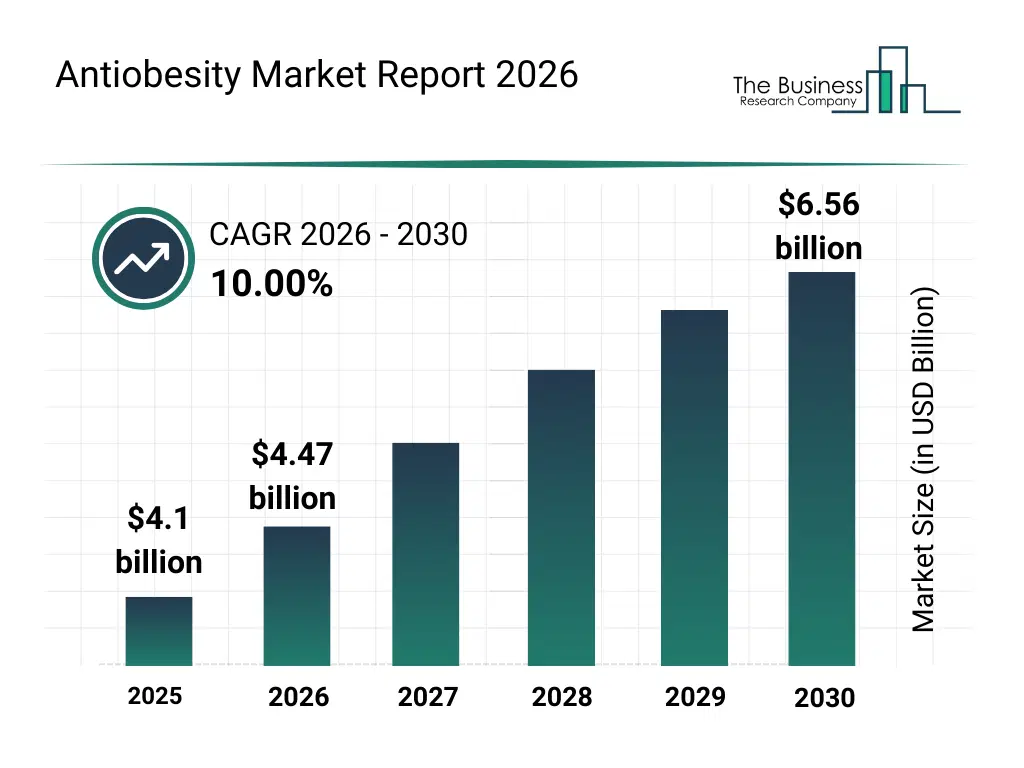
What Is The Antiobesity Market Size and Share 2026?
The antiobesity market size has grown strongly in recent years. It will grow from $4.13 billion in 2025 to $4.53 billion in 2026 at a compound annual growth rate (CAGR) of 9.8%. The growth in the historic period can be attributed to rising global obesity rates, limited success of lifestyle-only interventions, availability of appetite suppressants, growing metabolic disorder burden, physician-led weight management.What Is The Antiobesity Market Growth Forecast?
The antiobesity market size is expected to see strong growth in the next few years. It will grow to $6.61 billion in 2030 at a compound annual growth rate (CAGR) of 9.9%. The growth in the forecast period can be attributed to increasing prevalence of diabetes and obesity, innovation in hormone-based drugs, expansion of reimbursement coverage, rising obesity awareness, demand for sustainable weight loss solutions. Major trends in the forecast period include rapid adoption of glp-1 based therapies, growing preference for prescription weight loss drugs, increasing use of combination antiobesity therapies, rising focus on long-term weight management, expansion of obesity treatment access.
Global Antiobesity Market Segmentation
2) By Type: Prescription Drugs (Rx), OTC Drugs 3) By Medication: Monotherapies, Polytherapies Subsegments: 1) By Peripherally Acting Anti-Obesity Drugs: Orlistat, Lorcaserin 2) By Centrally Acting Anti-Obesity Drugs: Phentermine, Topiramate, Naltrexone-Bupropion Combination, LiraglutideWhat Is The Driver Of The Antiobesity Market?
The rising prevalence rate of obesity is anticipated to propel the growth of the anti-obesity drugs market going forward. Obesity is a chronic metabolic condition characterized by excessive body fat accumulation that increases the risk of serious health complications, including diabetes, cardiovascular diseases, osteoarthritis, and certain cancers. The rising prevalence of obesity is due to increasing consumption of ultra-processed foods that are high in sugars, unhealthy fats, and refined carbohydrates, combined with sedentary lifestyles that reduce physical activity. This surge in obesity prevalence is increasing the need for effective antiobesity medical interventions, supportive weight management therapies, and long-term treatment solutions to mitigate associated health risks and improve patient outcomes. For instance, in March 2024, according to the World Obesity Federation, a UK-based organization focused on obesity research and advocacy, 79% of adults with overweight and obesity and 88% of children with overweight and obesity are projected to be living in low and middle income countries by 2035. Therefore, the rising prevalence rate of obesity is driving the growth of the anti-obesity drugs market.Key Players In The Global Antiobesity Market
Major companies operating in the antiobesity market are Takeda Pharmaceutical Company Limited, Eisai Co. Ltd., Novo Nordisk A/S, Zafgen Inc., Rhythm Pharmaceuticals Inc., Zydus Cadila, Norgine B.V., Vivus Inc., Arena Pharmaceuticals Inc., Orexigen Therapeutics Inc., Eli Lilly and Company, Amgen Inc., AstraZeneca PLC, Viking Therapeutics Inc., Structure Therapeutics Inc., Gelesis Inc., Sanofi S.A., F. Hoffmann-La Roche Ltd, Teva Pharmaceutical Industries Limited, Sun Pharmaceutical Industries Ltd., Dr. Reddy's Laboratories Ltd., Cipla Ltd., Lupin Ltd., Torrent Pharmaceuticals Ltd.
This chart is for illustrative purposes; the full report includes a detailed competitor analysis and comprehensive overview of the top 10 companies in the market.
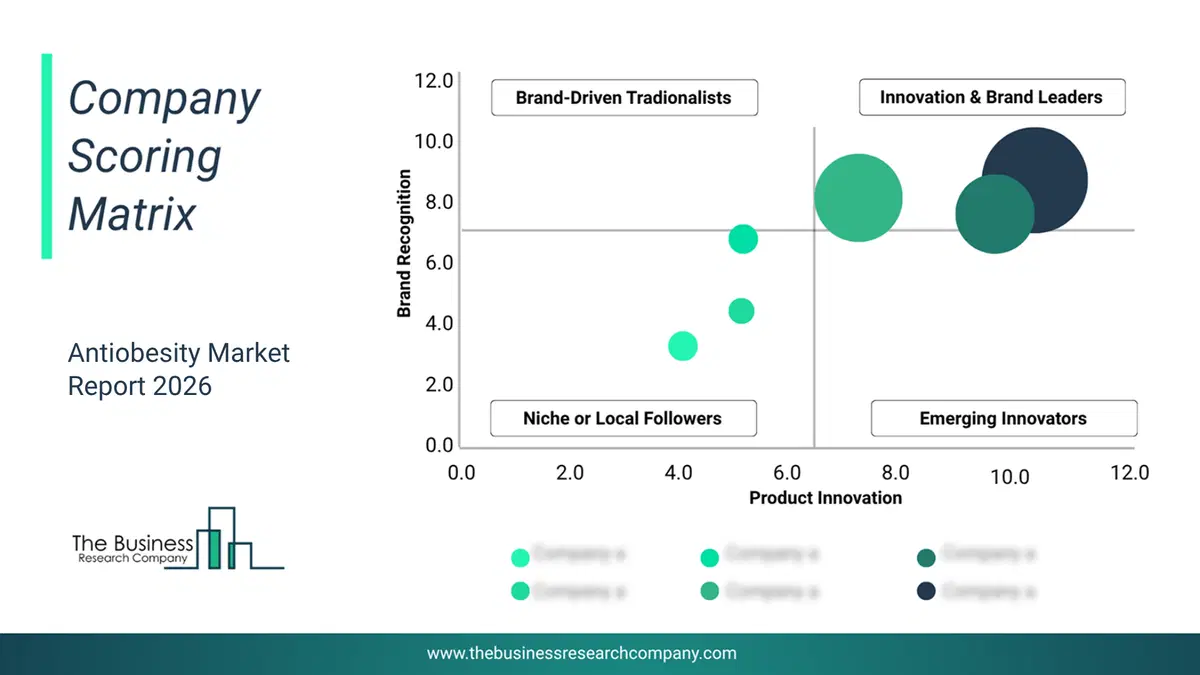
This chart maps companies by product innovation and brand strength, with bubble size indicating relative revenue, helping identify market leaders, challengers, and niche players. This is an illustrative chart; the full report provides a complete and accurate competitive analysis.
Global Antiobesity Market Trends and Insights
Major companies operating in the antiobesity market are focusing on product innovation and formulation such as dual glucose‑dependent insulinotropic peptide receptor agonists, to provide more effective weight loss, improved metabolic outcomes, and better tolerability. These therapies leverage synergistic actions on appetite suppression, insulin sensitivity, and energy expenditure to deliver superior efficacy compared to earlier generation GLP‑1-only treatments. For instance, in December 2024, Eli Lilly, a US-based pharmaceutical company, received FDA approval for Zepbound (tirzepatide), making it the first and only prescription dual GIP/GLP-1 agonist approved for chronic weight management. Tirzepatide has demonstrated robust weight-loss efficacy, with phase 3 trial participants achieving significant reductions in body weight. With its new indication, Zepbound is expected to reinforce Lilly’s leadership in the precision obesity therapy space, catering to the growing demand for long-acting, high-efficacy treatments.What Are Latest Mergers And Acquisitions In The Antiobesity Market?
In August 2023, Eli Lilly, a US-based pharmaceutical company, acquired Versanis Bio, for an undisclosed amount. Through this acquisition, Eli Lilly aims to strengthen its antiobesity drug portfolio by integrating Versanis Bio’s innovative therapies targeting metabolic and weight-management pathways, enabling the development of next-generation treatments for obesity and related metabolic disorders. Versanis Bio is a US-based biotechnology company, specializes in the development of novel therapeutics for obesity and metabolic diseases with a strong track record in preclinical and early clinical research.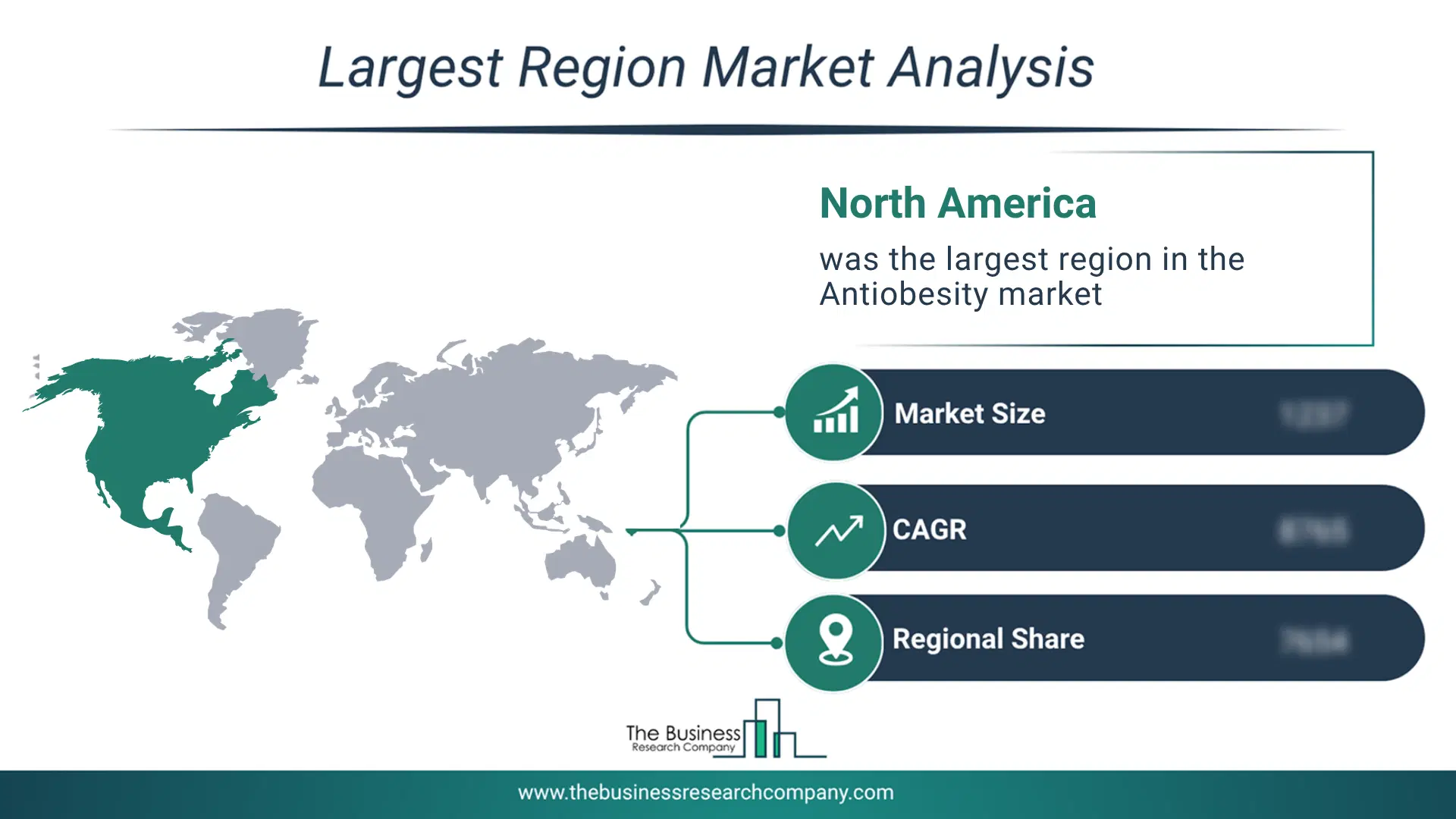
Regional Outlook
North America was the largest region in the anti-obesity market in 2025. Middle East is expected to be the fastest-growing region in the antiobesity market. The regions covered in this market report are Asia-Pacific, South East Asia, Western Europe, Eastern Europe, North America, South America, Middle East, Africa. The countries covered in this market report are Australia, Brazil, China, France, Germany, India, Indonesia, Japan, Taiwan, Russia, South Korea, UK, USA, Canada, Italy, Spain.What Defines the Antiobesity Market?
The anti-obesity market consists of sales of liraglutide, semaglutide, naltrexone-bupropion, and orlistat. Values in this market are factory gate values, that is the value of goods sold by the manufacturers or creators of the goods, whether to other entities (including downstream manufacturers, wholesalers, distributors and retailers) or directly to end customers. The value of goods in this market includes related services sold by the creators of the goods.How is Market Value Defined and Measured?
The market value is defined as the revenues that enterprises gain from the sale of goods and/or services within the specified market and geography through sales, grants, or donations in terms of the currency (in USD unless otherwise specified). The revenues for a specified geography are consumption values that are revenues generated by organizations in the specified geography within the market, irrespective of where they are produced. It does not include revenues from resales along the supply chain, either further along the supply chain or as part of other products.
This chart presents market attractiveness based on a quantitative evaluation of growth, competition, strategic alignment, and risk, offering a clear view of opportunity areas for decision-making. This chart is for illustrative purposes; the full report contains the complete analysis.

This chart highlights the Total Addressable Market (TAM) by estimating the maximum revenue opportunity using an assumption-driven approach, supporting strategic planning and opportunity sizing across markets. The chart is illustrative; the full report provides a more comprehensive analysis.
What Key Data and Analysis Are Included in the Antiobesity Market Report 2026?
The antiobesity market research report is one of a series of new reports from The Business Research Company that provides market statistics, including industry global market size, regional shares, competitors with the market share, detailed market segments, market trends and opportunities, and any further data you may need to thrive in the antiobesity industry. The market research report delivers a complete perspective of everything you need, with an in-depth analysis of the current and future state of the industry.Antiobesity Market Report Forecast Analysis
| Report Attribute | Details |
|---|---|
| Market Size Value In 2026 | $4.53 billion |
| Revenue Forecast In 2030 | $6.61 billion |
| Growth Rate | CAGR of 9.9% from 2026 to 2030 |
| Base Year For Estimation | 2025 |
| Actual Estimates/Historical Data | 2020-2025 |
| Forecast Period | 2026 - 2030 |
| Market Representation | Revenue in USD Billion and CAGR from 2026 to 2030 |
| Segments Covered | Drug Class, Type, Medication |
| Regional Scope | Asia-Pacific, Western Europe, Eastern Europe, North America, South America, Middle East, Africa |
| Country Scope | The countries covered in the report are Australia, Brazil, China, France, Germany, India, Indonesia, Japan, Taiwan, Russia, South Korea, UK, USA, Canada, Italy, Spain. |
| Key Companies Profiled | Takeda Pharmaceutical Company Limited, Eisai Co. Ltd., Novo Nordisk A/S, Zafgen Inc., Rhythm Pharmaceuticals Inc., Zydus Cadila, Norgine B.V., Vivus Inc., Arena Pharmaceuticals Inc., Orexigen Therapeutics Inc., Eli Lilly and Company, Amgen Inc., AstraZeneca PLC, Viking Therapeutics Inc., Structure Therapeutics Inc., Gelesis Inc., Sanofi S.A., F. Hoffmann-La Roche Ltd, Teva Pharmaceutical Industries Limited, Sun Pharmaceutical Industries Ltd., Dr. Reddy's Laboratories Ltd., Cipla Ltd., Lupin Ltd., Torrent Pharmaceuticals Ltd. |
| Customization Scope | Request for Customization |
| Pricing And Purchase Options | Explore Purchase Options |