
Antiparasitic Drugs Market Report 2026
Global Outlook – By Product Type (Anthelmintics, Antiprotozoals, Ectoparasiticide, Other Products), By Treatment (Avermectins, Bezimidazoles, Pyrimidines, Imidazolesthiazoles), By Route of Administration (Oral, Injectable, Topical), By End User (Hospitals, Homecare, Specialty Clinics, Other End Users) – Market Size, Trends, Strategies, and Forecast to 2030
Antiparasitic Drugs Market Overview
• Antiparasitic Drugs market size has reached to $25.58 billion in 2025 • Expected to grow to $36.13 billion in 2030 at a compound annual growth rate (CAGR) of 7.4% • Growth Driver: Rising Incidence Of Vector-Borne Diseases Sparks Growth In The Antiparasitic Drugs Market • Market Trend: Innovative Chewable Antiparasitic Solutions Boost Pet Compliance in Veterinary Care • North America was the largest region in 2025 and Asia-Pacific is the fastest growing region.What Is Covered Under Antiparasitic Drugs Market?
Antiparasitic drugs are medications used to treat infections caused by various parasites that can infect humans, animals, or plants. Parasites are organisms that live on or within a host organism and derive their nutrients from it, often causing harm to the host in the process. Antiparasitic drugs target these parasites to either kill them or inhibit their growth. The main types of products included in antiparasitic drugs are anthelmintics, antiprotozoals, ectoparasitic ides and others. Anthelmintics refer to a class of drugs used to treat infections caused by parasitic worms. Anthelmintic drugs work by either killing the parasites or inhibiting their growth and reproduction. Various types of treatments are included, such as avermectins, benzimidazoles, pyrimidines, organophosphates and imidazole thiazoles, which can be administered through various routes, including oral, injectable and topical and are used by several end-users, such as hospitals, homecare, specialty clinics and others.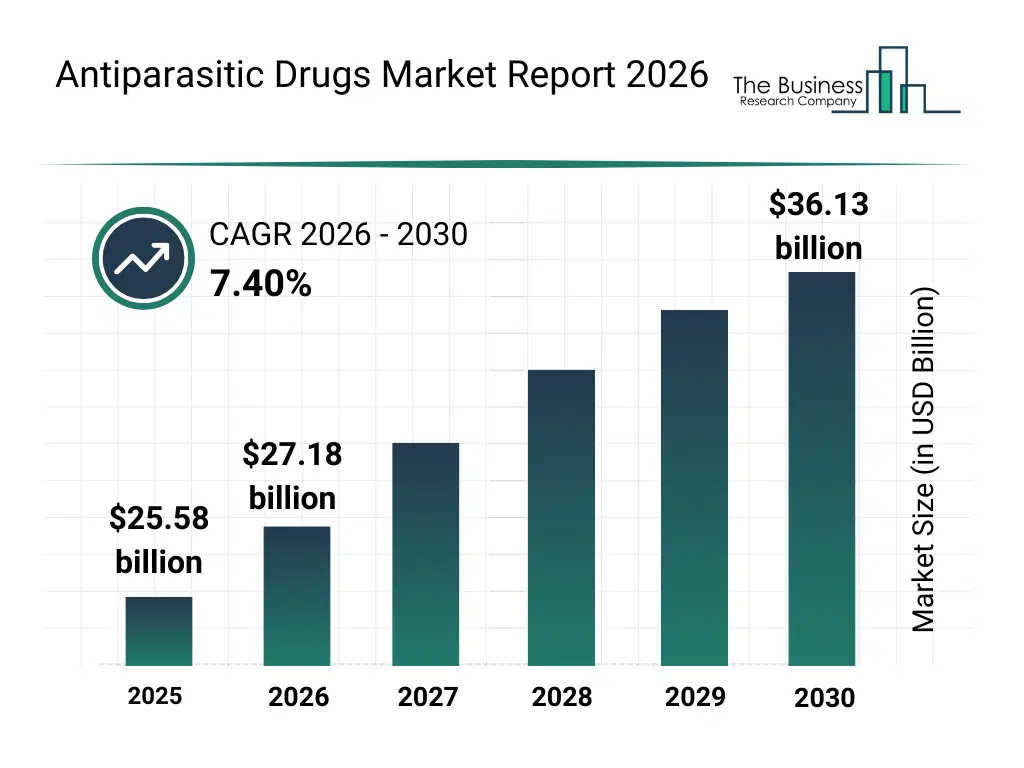
What Is The Antiparasitic Drugs Market Size and Share 2026?
The antiparasitic drugs market size has grown strongly in recent years. It will grow from $25.58 billion in 2025 to $27.18 billion in 2026 at a compound annual growth rate (CAGR) of 6.2%. The growth in the historic period can be attributed to increasing prevalence of parasitic diseases, limited access to modern antiparasitic drugs in developing regions, traditional reliance on monotherapy drugs, rising veterinary care demand, lack of awareness about preventive measures.What Is The Antiparasitic Drugs Market Growth Forecast?
The antiparasitic drugs market size is expected to see strong growth in the next few years. It will grow to $36.13 billion in 2030 at a compound annual growth rate (CAGR) of 7.4%. The growth in the forecast period can be attributed to growth in combination therapy adoption, advancements in precision medicine for parasitic infections, increasing focus on animal health and livestock protection, expansion of emerging markets, development of novel delivery systems for antiparasitic drugs. Major trends in the forecast period include rising incidence of parasitic infections, development of combination antiparasitic drugs, expansion of animal healthcare applications, growth of oral and injectable treatment preferences, emergence of novel antiparasitic agents.
Global Antiparasitic Drugs Market Segmentation
1) By Product Type: Anthelmintics, Antiprotozoals, Ectoparasiticide, Other Products 2) By Treatment: Avermectins, Bezimidazoles, Pyrimidines, Imidazolesthiazoles 3) By Route of Administration: Oral, Injectable, Topical 4) By End User: Hospitals, Homecare, Specialty Clinics, Other End Users Subsegments: 1) By Anthelmintics: Benzimidazoles, Ivermectin, Pyrantel Pamoate, Praziquantel 2) By Antiprotozoals: Metronidazole, Tinidazole, Nitazoxanide, Pentamidine 3) By Ectoparasiticides: Permethrin, Malathion, Fipronil 4) By Other Products: Combination Antiparasitic Drugs, Novel Antiparasitic AgentsWhat Is The Driver Of The Antiparasitic Drugs Market?
The increasing incidence of vector-borne diseases is expected to propel the growth of the antiparasitic drugs market going forward. Vector-borne diseases refer to infectious diseases transmitted to humans or other animals through the bite of arthropods, primarily insects like mosquitoes, ticks and flies. Some examples of vector-borne diseases include malaria, dengue and yellow fever. Antiparasitic drugs play an essential role in stopping the spread of vector-borne diseases by targeting and eliminating the parasites responsible. A few antiparasitic drugs, including chloroquine, doxycycline and atovaquone-proguanil, are commonly used to cure malaria. For instance, in June 2024, according to the Centers for Disease Control and Prevention, a US-based Government agency, From January to June 2024, over 9.7 million dengue cases were reported across the Americas, more than double the 4.6 million cases reported in 2023. Puerto Rico reported 1,498 dengue cases in the United States, and 745 cases were identified among U.S. travelers returning from affected areas. Therefore, the increasing incidence of vector-borne diseases drives the growth of the antiparasitic drugs industry.Key Players In The Global Antiparasitic Drugs Market
Major companies operating in the antiparasitic drugs market are Pfizer Inc., Johnson & Johnson, Cadila Pharmaceuticals, Merck & Co. Inc., Bayer AG, Novartis AG, Sanofi S.A., GlaxoSmithKline plc, Takeda Pharmaceutical Company Limited, Boehringer Ingelheim Group, Zoetis Inc., Eisai Co. Ltd., Dr. Reddy's Laboratories, Intas Pharmaceuticals Ltd., Alkem Laboratories Ltd., Ceva Santé Animale S.A., Elanco Animal Health Incorporated, Phibro Animal Health Corporation, Norbrook Laboratories Ltd., Mankind Pharma, Bimeda Inc., Indoco Remedies Ltd., ECO Animal Health, Lincoln Pharmaceuticals Ltd., Laboratorios Calier
This chart is for illustrative purposes; the full report includes a detailed competitor analysis and comprehensive overview of the top 10 companies in the market.
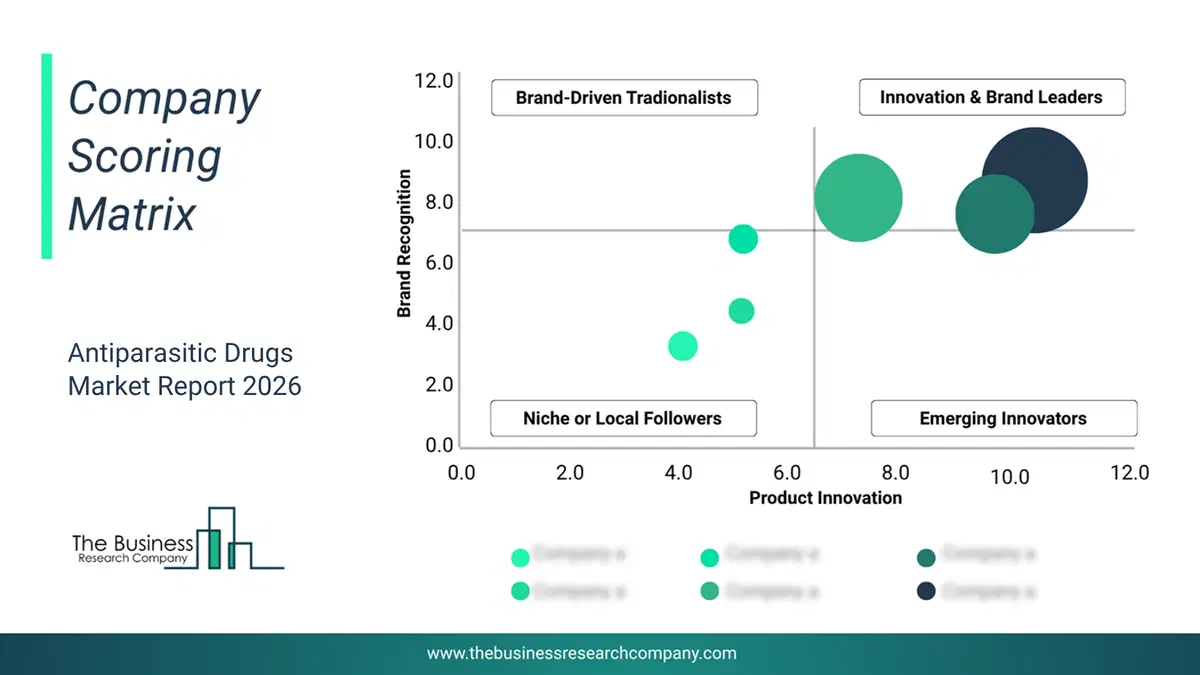
This chart maps companies by product innovation and brand strength, with bubble size indicating relative revenue, helping identify market leaders, challengers, and niche players. This is an illustrative chart; the full report provides a complete and accurate competitive analysis.
Global Antiparasitic Drugs Market Trends and Insights
Major companies operating in the antiparasitic drugs market are focusing on developing innovative products such as chewable veterinary products to enhance ease of administration and improve pet compliance. Chewable veterinary products are flavored, easy-to-administer tablets or treats designed to deliver medication to animals. They enhance pet compliance by making treatment more palatable and stress-free. For instance, in April 2024, C.H. Boehringer Sohn AG and Co. KG, a Germany-based pharmaceutical company, launched NexGard Spectra to provide comprehensive parasite control. NexGard SPECTRA is a soft, flavorful chew that provides comprehensive internal and external parasite control for dogs, effectively targeting fleas, ticks, heartworms, and various intestinal worms in a single monthly dose. It demonstrates rapid action by killing fleas within four hours of administration and achieving over 99% effectiveness against multiple parasites shortly thereafter.What Are Latest Mergers And Acquisitions In The Antiparasitic Drugs Market?
In July 2023, Bayer AG, a Germany-based multinational pharmaceutical and life sciences company, formed a partnership with the Tropical and Public Health Institute (Swiss TPH) to develop innovative treatments against soil-transmitted helminths. The collaboration aims to advance the discovery and development of effective anti-parasitic therapies, improve global access to treatment for affected populations, and strengthen research capabilities in tropical medicine, fostering sustainable health solutions in regions burdened by parasitic infections. Tropical and Public Health Institute is a Switzerland-based research institute specializing in tropical and public health, focusing on the prevention and control of infectious diseases.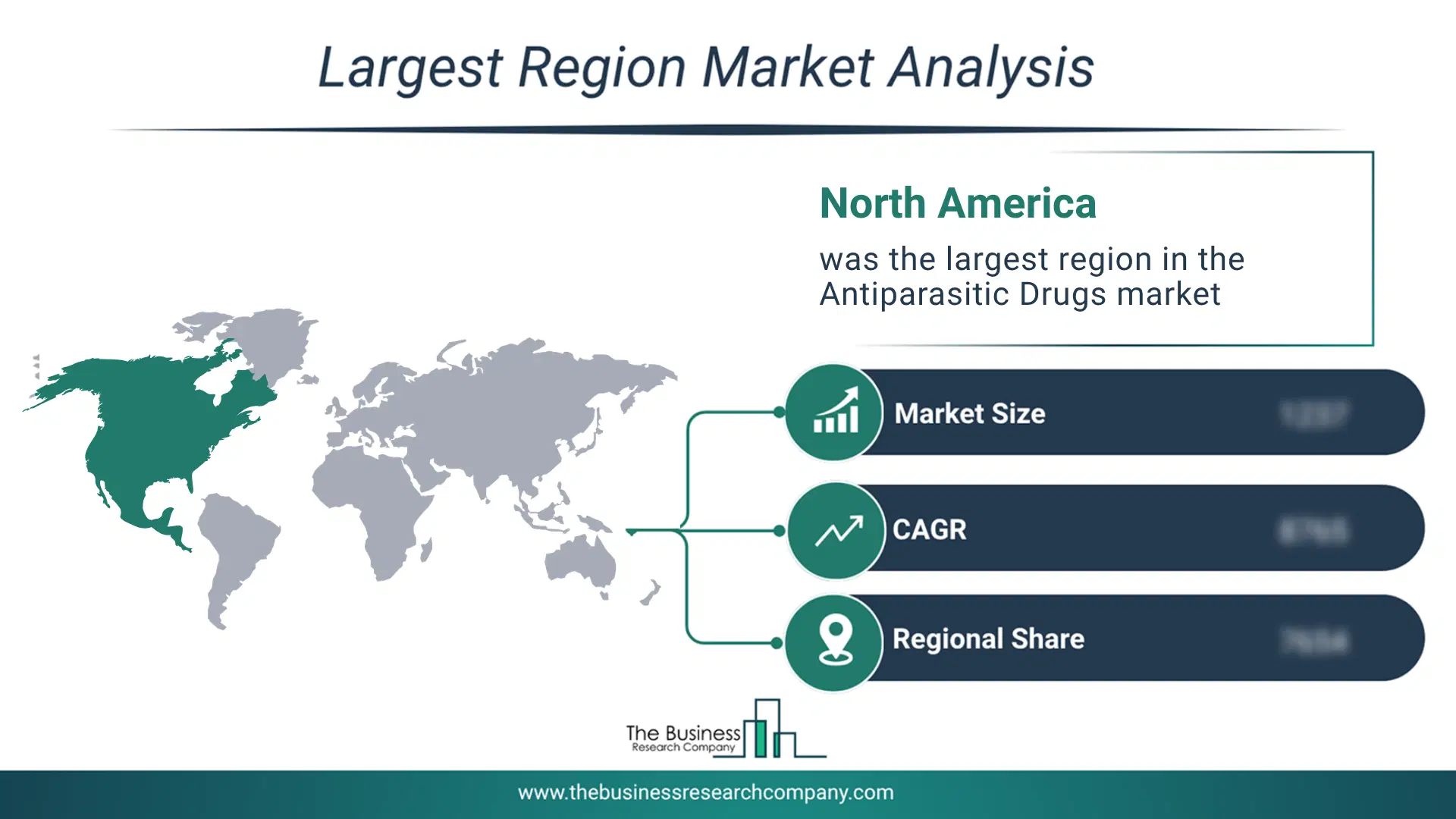
Regional Insights
North America was the largest region in the antiparasitic drugs market in 2025. Asia-Pacific is expected to be the fastest-growing region in the forecast period. The regions covered in this market report are Asia-Pacific, South East Asia, Western Europe, Eastern Europe, North America, South America, Middle East, Africa. The countries covered in this market report are Australia, Brazil, China, France, Germany, India, Indonesia, Japan, Taiwan, Russia, South Korea, UK, USA, Canada, Italy, Spain.What Defines the Antiparasitic Drugs Market?
The antiparasitic drugs market consists of sales of antimalarial drugs, antiamoebic drugs, anti-trematode drugs and veterinary products. Values in this market are ‘factory gate’ values, that is, the value of goods sold by the manufacturers or creators of the goods, whether to other entities (including downstream manufacturers, wholesalers, distributors and retailers) or directly to end customers. The value of goods in this market includes related services sold by the creators of the goods.How is Market Value Defined and Measured?
The market value is defined as the revenues that enterprises gain from the sale of goods and/or services within the specified market and geography through sales, grants, or donations in terms of the currency (in USD unless otherwise specified). The revenues for a specified geography are consumption values that are revenues generated by organizations in the specified geography within the market, irrespective of where they are produced. It does not include revenues from resales along the supply chain, either further along the supply chain or as part of other products.
This chart presents market attractiveness based on a quantitative evaluation of growth, competition, strategic alignment, and risk, offering a clear view of opportunity areas for decision-making. This chart is for illustrative purposes; the full report contains the complete analysis.

This chart highlights the Total Addressable Market (TAM) by estimating the maximum revenue opportunity using an assumption-driven approach, supporting strategic planning and opportunity sizing across markets. The chart is illustrative; the full report provides a more comprehensive analysis.
What Key Data and Analysis Are Included in the Antiparasitic Drugs Market Report 2026?
The antiparasitic drugs market research report is one of a series of new reports from The Business Research Company that provides market statistics, including industry global market size, regional shares, competitors with the market share, detailed market segments, market trends and opportunities, and any further data you may need to thrive in the antiparasitic drugs industry. The market research report delivers a complete perspective of everything you need, with an in-depth analysis of the current and future state of the industry.Antiparasitic Drugs Market Report Forecast Analysis
| Report Attribute | Details |
|---|---|
| Market Size Value In 2026 | $27.18 billion |
| Revenue Forecast In 2030 | $36.13 billion |
| Growth Rate | CAGR of 6.2% from 2026 to 2030 |
| Base Year For Estimation | 2025 |
| Actual Estimates/Historical Data | 2020-2025 |
| Forecast Period | 2026 - 2030 |
| Market Representation | Revenue in USD Billion and CAGR from 2026 to 2030 |
| Segments Covered | Product Type, Treatment, Route of Administration, End User |
| Regional Scope | Asia-Pacific, Western Europe, Eastern Europe, North America, South America, Middle East, Africa |
| Country Scope | The countries covered in the report are Australia, Brazil, China, France, Germany, India, Indonesia, Japan, Taiwan, Russia, South Korea, UK, USA, Canada, Italy, Spain. |
| Key Companies Profiled | Pfizer Inc., Johnson & Johnson, Cadila Pharmaceuticals, Merck & Co. Inc., Bayer AG, Novartis AG, Sanofi S.A., GlaxoSmithKline plc, Takeda Pharmaceutical Company Limited, Boehringer Ingelheim Group, Zoetis Inc., Eisai Co. Ltd., Dr. Reddy's Laboratories, Intas Pharmaceuticals Ltd., Alkem Laboratories Ltd., Ceva Santé Animale S.A., Elanco Animal Health Incorporated, Phibro Animal Health Corporation, Norbrook Laboratories Ltd., Mankind Pharma, Bimeda Inc., Indoco Remedies Ltd., ECO Animal Health, Lincoln Pharmaceuticals Ltd., Laboratorios Calier |
| Customization Scope | Request for Customization |
| Pricing And Purchase Options | Explore Purchase Options |