

Aplastic Anemia Market Report 2026
Global Outlook – By Disease Type (Acquired Aplastic Anemia, Inherited Bone Marrow Failure Syndromes), By Treatment Type (Bone Marrow Transfusion Or Stem Cell Therapy, Blood Transfusion, Drug Therapy), By Route Of Administration (Oral, Parentals, Other Routes Of Administration), By Distribution Channel (Hospital Pharmacies, Retail Pharmacies, Online Pharmacies), By End User (Hospitals, Homecare, Specialty Clinics, Other End-Users) - Market Size, Trends, And Global Forecast 2026-2030
Aplastic Anemia Market Overview
• Aplastic Anemia market size has reached to $7.01 billion in 2025 • Expected to grow to $9.08 billion in 2030 at a compound annual growth rate (CAGR) of 5.1% • Growth Driver: Personalized Medicine Advancements Driving Growth In The Aplastic Anemia Market • Market Trend: Advancements In Cell Therapy For Severe Aplastic Anemia • North America was the largest region in 2025 and Asia-Pacific is the fastest growing region.Market Gains By 2030 – Top Opportunities By Segment
Market Gain identifies the most promising market opportunities by highlighting the segments or products expected to generate the highest incremental revenue growth over the next five years.
What Is Covered Under Aplastic Anemia Market?
Aplastic anemia refers to a rare disorder where the bone marrow fails to produce enough blood cells, including red blood cells, white blood cells, and platelets. This deficiency can lead to fatigue, frequent infections, and excessive bleeding or bruising. Treatment may involve medications to stimulate blood cell production or even bone marrow transplantation in severe cases. The main disease types of aplastic anemia are acquired aplastic anemia and inherited bone marrow failure syndromes. Acquired aplastic anemia is a condition where the bone marrow fails to produce sufficient blood cells due to damage from external factors such as chemicals, drugs, or infections. The treatment includes bone marrow transfusion or stem cell therapy, blood transfusion, and drug therapy, administered through various routes such as oral, parenteral, and others. The distribution channels for these treatments include hospital pharmacies, retail pharmacies, and online pharmacies, serving end users such as hospitals, home care, specialty clinics, and others.
What Is The Aplastic Anemia Market Size and Share 2026?
The aplastic anemia market size has grown strongly in recent years. It will grow from $7.01 billion in 2025 to $7.43 billion in 2026 at a compound annual growth rate (CAGR) of 5.9%. The growth in the historic period can be attributed to increased clinical awareness of rare hematological disorders, availability of immunosuppressive drug therapies, establishment of bone marrow transplant centers, improved diagnostic capabilities, growth of hospital-based treatment infrastructure.What Is The Aplastic Anemia Market Growth Forecast?
The aplastic anemia market size is expected to see strong growth in the next few years. It will grow to $9.08 billion in 2030 at a compound annual growth rate (CAGR) of 5.1%. The growth in the forecast period can be attributed to advancements in regenerative medicine, rising adoption of personalized hematology treatments, increasing investment in rare disease research, expansion of stem cell donor registries, development of novel immunomodulatory drugs. Major trends in the forecast period include increasing adoption of targeted immunosuppressive therapies, growing use of stem cell and bone marrow transplantation, rising focus on early and accurate diagnosis, expansion of personalized treatment protocols, improved supportive care management.
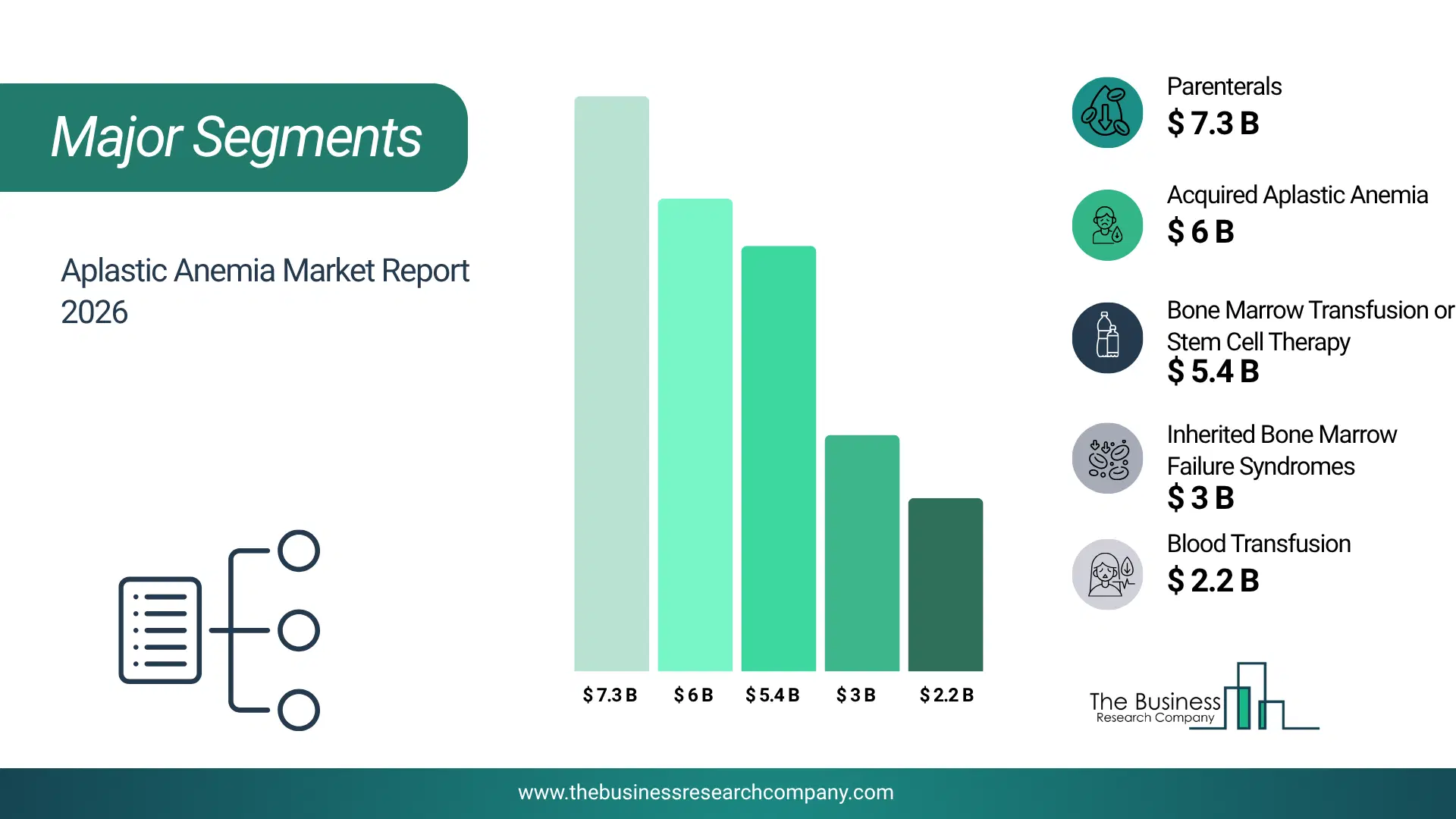
Global Aplastic Anemia Market Segmentation
1) By Disease Type: Acquired Aplastic Anemia, Inherited Bone Marrow Failure Syndromes 2) By Treatment Type: Bone Marrow Transfusion Or Stem Cell Therapy, Blood Transfusion, Drug Therapy 3) By Route Of Administration: Oral, Parentals, Other Routes Of Administration 4) By Distribution Channel: Hospital Pharmacies, Retail Pharmacies, Online Pharmacies 5) By End User: Hospitals, Homecare, Specialty Clinics, Other End-Users Subsegments: 1) By Acquired Aplastic Anemia: Idiopathic Acquired Aplastic Anemia, Drug-Induced Aplastic Anemia, Radiation-Induced Aplastic Anemia, Viral-Infection Induced Aplastic Anemia 2) By Inherited Bone Marrow Failure Syndromes: Fanconi Anemia, Shwachman-Diamond Syndrome, Dyskeratosis Congenita, Diamond-Blackfan Anemia The top segments in the aplastic anemia market will be: • Parenterals will reach $7389.88 Million by 2030. • Acquired Aplastic Anemia will reach $6087.66 Million by 2030. • Bone Marrow Transfusion or Stem Cell Therapy will reach $5396.19 Million by 2030. • Inherited Bone Marrow Failure Syndromes will reach $2994.26 Million by 2030. • Blood Transfusion will reach $2282.29 Million by 2030.What Is The Driver Of The Aplastic Anemia Market?
The growing demand for personalized medicines is expected to propel the growth of the aplastic anemia market going forward. Personalized medicine refers to tailoring medical treatment to the individual characteristics of each patient, often based on genetic or molecular profiling. The rise in demand for personalized medicine is driven by advancements in genetic testing and molecular diagnostics. Personalized medicine in aplastic anemia involves tailored treatments based on genetic and molecular profiles to optimize outcomes for individual patients. For instance, in February 2024, according to the Personalized Medicine Coalition, a US-based non-profit organization, the FDA approved 16 novel personalized therapies for patients with rare diseases in 2023, compared to six in 2022. Therefore, the growing demand for personalized medicines is driving the growth of the aplastic anemia industry.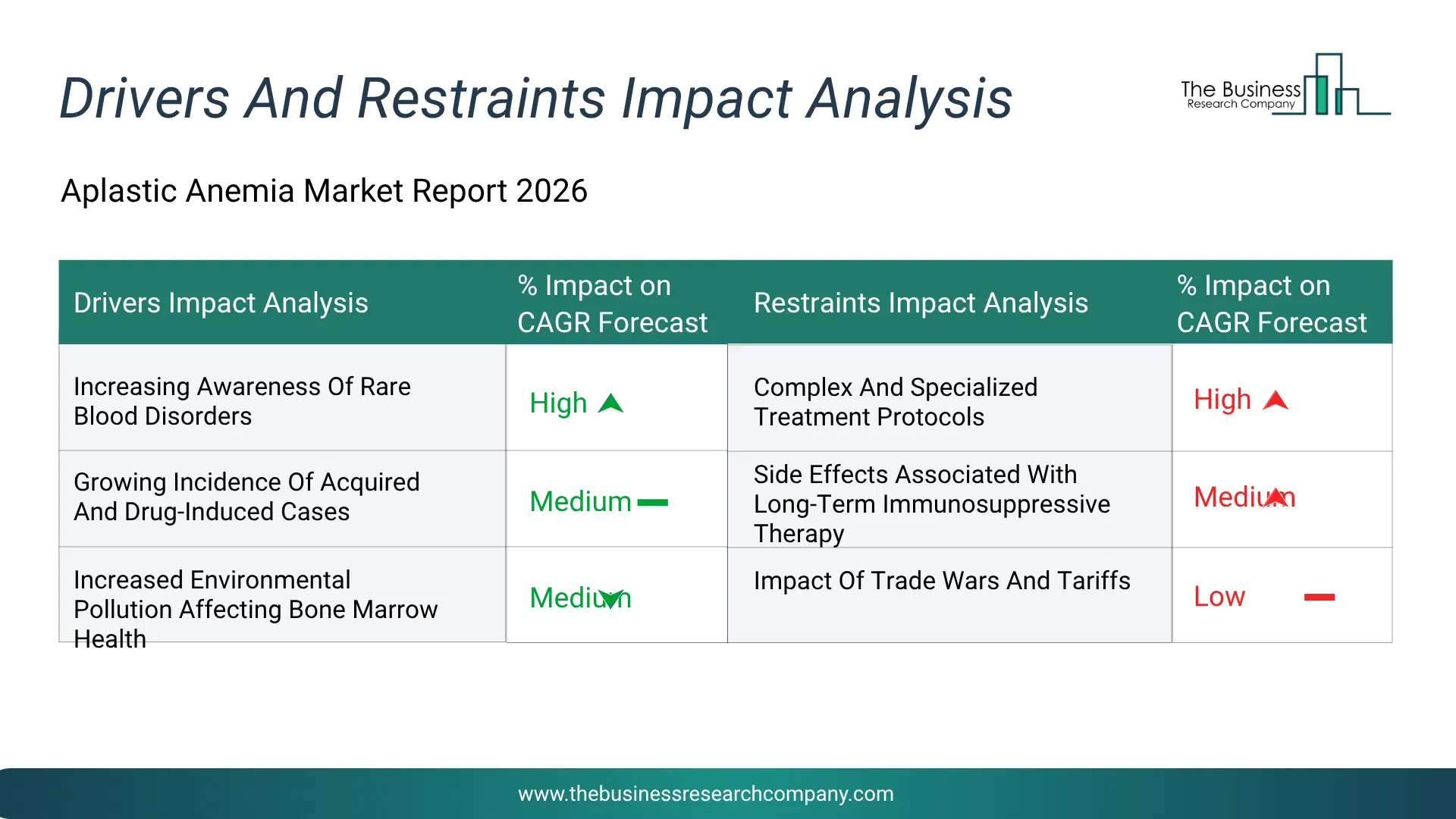
Infographic Chart Showing Key Market Drivers Analysis And Restraints For Aplastic Anemia Market
The chart presents an impact analysis of key drivers and restraints, quantifying their relative influence on the market's growth rate and helping assess the balance between growth enablers and limiting factors. This chart offers a high-level perspective; the full report contains more detailed insights.
How Will The Drivers Impact Growth In The Global Aplastic Anemia Market?
• Increasing Awareness Of Rare Blood Disorders (High) – During the forecast period, increasing awareness of rare blood disorders is expected to be a key driver propelling growth in the aplastic anemia market. As healthcare organizations, patient advocacy groups and medical institutions expand awareness campaigns and public education initiatives, more individuals are becoming informed about the symptoms, diagnosis and management of rare hematological diseases. The growing focus on awareness programs and global health observances is increasing screening, early diagnosis and patient referrals for rare blood disorders. The expansion of awareness initiatives is driving improved detection and clinical management of rare hematologic conditions. The increasing awareness of rare blood disorders growth contribution during the forecast period in 2025 is 2.0%. • Growing Incidence Of Acquired And Drug-Induced Cases (Medium) – During the forecast period, the growing incidence of acquired and drug-induced cases is expected to be a key driver propelling growth in the aplastic anemia market. As exposure to certain medications, chemicals and environmental toxins increases, healthcare systems are witnessing a rise in acquired forms of aplastic anemia associated with bone marrow damage. The growing use of pharmaceuticals such as antibiotics, antiepileptics and chemotherapeutic agents is expanding the number of patients at risk of drug-induced bone marrow suppression and related hematological complications. The increasing occurrence of acquired and drug-induced aplastic anemia cases is driving greater demand for diagnostic evaluation, monitoring and therapeutic interventions in the aplastic anemia market. The growing incidence of acquired and drug-induced cases growth contribution during the forecast period in 2025 is 1.5%. • Increased Environmental Pollution Affecting Bone Marrow Health (Medium) – During the forecast period, increased environmental pollution affecting bone marrow health is expected to be a key driver propelling growth in the aplastic anemia market. As industrial activities, urbanization and vehicular emissions continue to increase globally, exposure to environmental pollutants and toxic chemicals that affect hematological health is also rising. The growing presence of pollutants such as fine particulate matter and industrial chemicals can disrupt the bone marrow environment and damage hematopoietic stem cells responsible for blood cell production. The increasing exposure to environmental toxins and air pollutants linked to bone marrow dysfunction and blood disorders is driving demand for improved diagnostic and treatment solutions in the aplastic anemia market. The increased environmental pollution affecting bone marrow health growth contribution during the forecast period in 2025 is 1.0%. • Rise In Development Of Targeted Therapies And Novel Drugs (Low) – During the forecast period, the rise in development of targeted therapies and novel drugs is expected to be a key driver propelling growth in the aplastic anemia market. As pharmaceutical and biotechnology companies intensify research efforts to develop innovative treatments for rare hematological disorders, the pipeline of advanced therapies and biologics is expanding. The growing focus on cell-based therapies, immunosuppressive treatments and regenerative medicine approaches is increasing the availability of more effective and specialized treatment options for patients with bone marrow failure disorders. The expansion of novel drug development and targeted therapeutic innovations is driving demand for advanced treatment solutions in the aplastic anemia market. The rise in development of targeted therapies and novel drugs growth contribution during the forecast period in 2025 is 0.5%.How Will The Restraints Impact Growth In The Global Aplastic Anemia Market?
• Complex And Specialized Treatment Protocols (High) – During the forecast period, complex and specialized treatment protocols are expected to restrict the growth of the aplastic anemia market. As the management of aplastic anemia increasingly involves advanced medical procedures such as immunosuppressive therapy and hematopoietic stem cell transplantation, treatment pathways become more complex and require specialized healthcare infrastructure and expertise. The growing reliance on multi-stage therapeutic approaches, including combinations of antithymocyte globulin, cyclosporine and stem-cell transplantation, increases the complexity of treatment and patient management. The presence of highly specialized treatment protocols and the need for expert clinical care can limit treatment accessibility and slow the broader adoption of therapies in the aplastic anemia market. Growth affected by complex and specialized treatment protocols in the forecast period in 2025 is -2.0%. • Side Effects Associated With Long-Term Immunosuppressive Therapy (Medium) – During the forecast period, side effects associated with long-term immunosuppressive therapy are expected to restrict the growth of the aplastic anemia market. As clinicians increasingly rely on immunosuppressive regimens to manage patients who are not eligible for stem cell transplantation, prolonged exposure to these drugs can lead to treatment-related complications. The long-term administration of agents such as cyclosporine and antithymocyte globulin can increase the risk of infections, organ toxicity and other adverse health effects. The presence of these side effects and the risks associated with prolonged immunosuppressive therapy can reduce treatment tolerance and adherence, thereby slowing the large-scale adoption of therapies in the aplastic anemia market. Growth affected by the side effects associated with long-term immunosuppressive therapy during the forecast period in 2025 is -1.0%. • Impact Of Trade Wars And Tariffs (Medium) – During the forecast period, the impact of trade wars and tariffs is expected to restrict the growth of the aplastic anemia market. As governments increasingly impose tariffs on pharmaceutical imports and raw materials amid geopolitical trade tensions, global pharmaceutical supply chains face rising cost pressures and operational uncertainties. The growing dependence of the pharmaceutical industry on internationally sourced active pharmaceutical ingredients and finished medicines increases vulnerability to tariff-related disruptions and higher production costs. The presence of tariffs and trade conflicts can increase drug prices and limit the affordability of medicines, thereby slowing the large-scale adoption of treatments in the aplastic anemia market. Growth affected by impact of trade wars and tariffs during the forecast period in 2025 is -0.3%.Key Players In The Global Aplastic Anemia Market
Major companies operating in the aplastic anemia market are Pfizer Inc., Johnson & Johnson Inc., F. Hoffmann-La Roche Ltd., Merck & Co. Inc., Sanofi SA, Bristol-Myers Squibb Company, Novartis AG, GlaxoSmithKline plc, Takeda Pharmaceutical Company Limited, Amgen Inc., Teva Pharmaceutical Industries Ltd., Otsuka Pharmaceuticals Co. Ltd., UCB SA, Kyowa Kirin Co. Ltd., Dr. Reddy's Laboratories Ltd., Cipla Limited, Cadila Healthcare Limited, Cellenkos Inc., Amyndas Pharmaceuticals S.A., Hemogenyx Pharmaceuticals plc, Gamida Cell Ltd.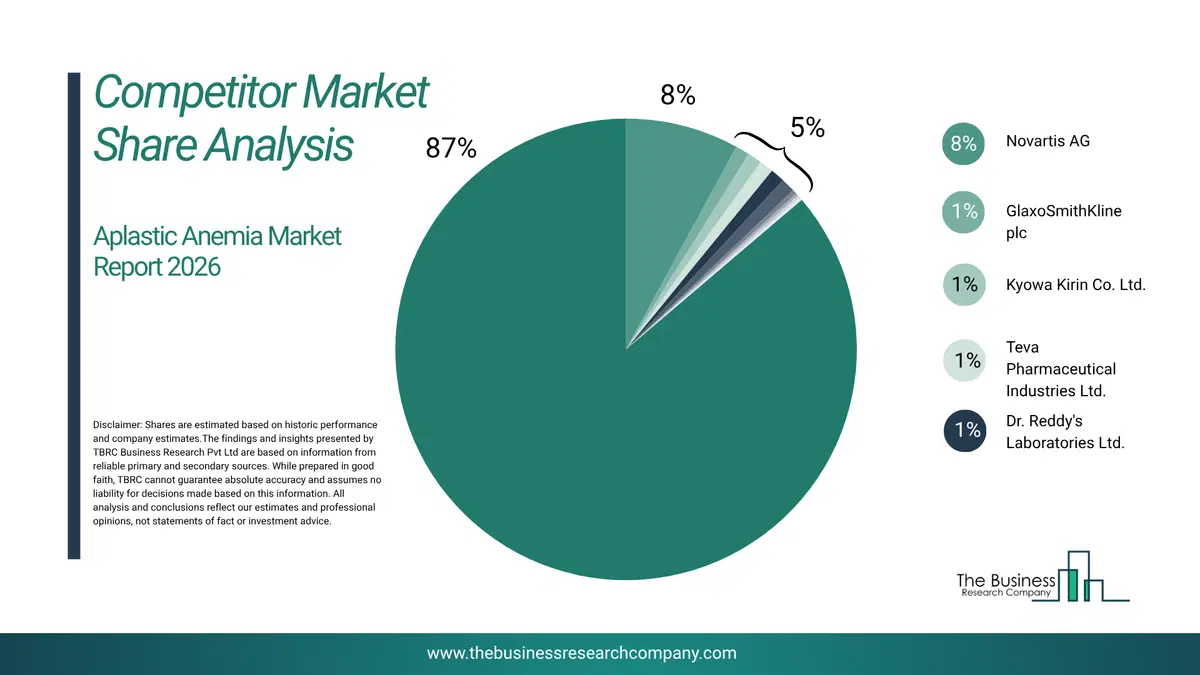
This chart is for illustrative purposes; the full report includes a detailed competitor analysis and comprehensive overview of the top 10 companies in the market.
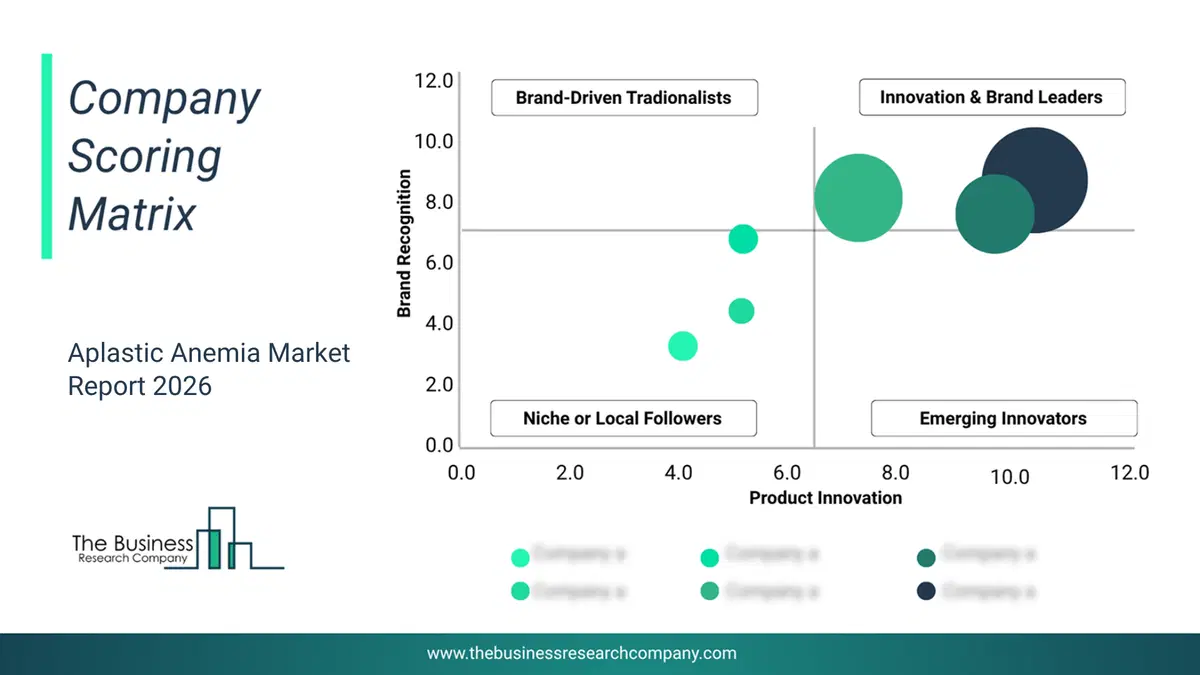
This chart maps companies by product innovation and brand strength, with bubble size indicating relative revenue, helping identify market leaders, challengers, and niche players. This is an illustrative chart; the full report provides a complete and accurate competitive analysis.
Global Aplastic Anemia Market Trends and Insights
Major companies operating in the aplastic anemia market are focusing on developing advanced cell therapy solutions, such as nicotinamide-modified allogeneic hematopoietic progenitor cell therapy, to enhance treatment efficacy and patient outcomes. Nicotinamide-modified cell therapy leverages the properties of nicotinamide to expand and enhance cells, creating allogeneic cell therapy products that are potentially curative for patients with hematologic diseases. For instance, in August 2025, Ayrmid Ltd., a UK-based cell therapy company, announced FDA acceptance and priority review for omidubicel for the treatment of severe aplastic anemia with a PDUFA. Omidubicel, derived from umbilical cord blood, features nicotinamide-modified cells that enhance hematopoietic progenitor cell function. The therapy is designed to provide a potentially curative option for patients without a matched sibling donor and to improve engraftment and recovery of blood cells. The product builds on Ayrmid’s commercial hematology portfolio, including Omisirge for hematologic malignancies and APHEXDA for autologous transplantation. Clinical studies supporting omidubicel demonstrate its ability to expand cell populations, improve transplant outcomes, and address unmet needs in severe aplastic anemia patients.What Are Latest Mergers And Acquisitions In The Aplastic Anemia Market?
In May 2025, Cellenkos Inc., a US-based provider of therapy for aplastic anemia, partnered with King Faisal Specialist Hospital & Research Centre in Riyadh for clinical trials to advance global access to transformational cell therapies. The partnership aims to expand Cellenkos’ global presence, accelerate clinical validation, and deliver novel treatments for rare diseases like aplastic anemia and ALS. King Faisal Specialist Hospital & Research Centre is a Saudi Arabia-based provider of advanced medical care and research services, specializing in complex clinical trials and treatment of rare diseases.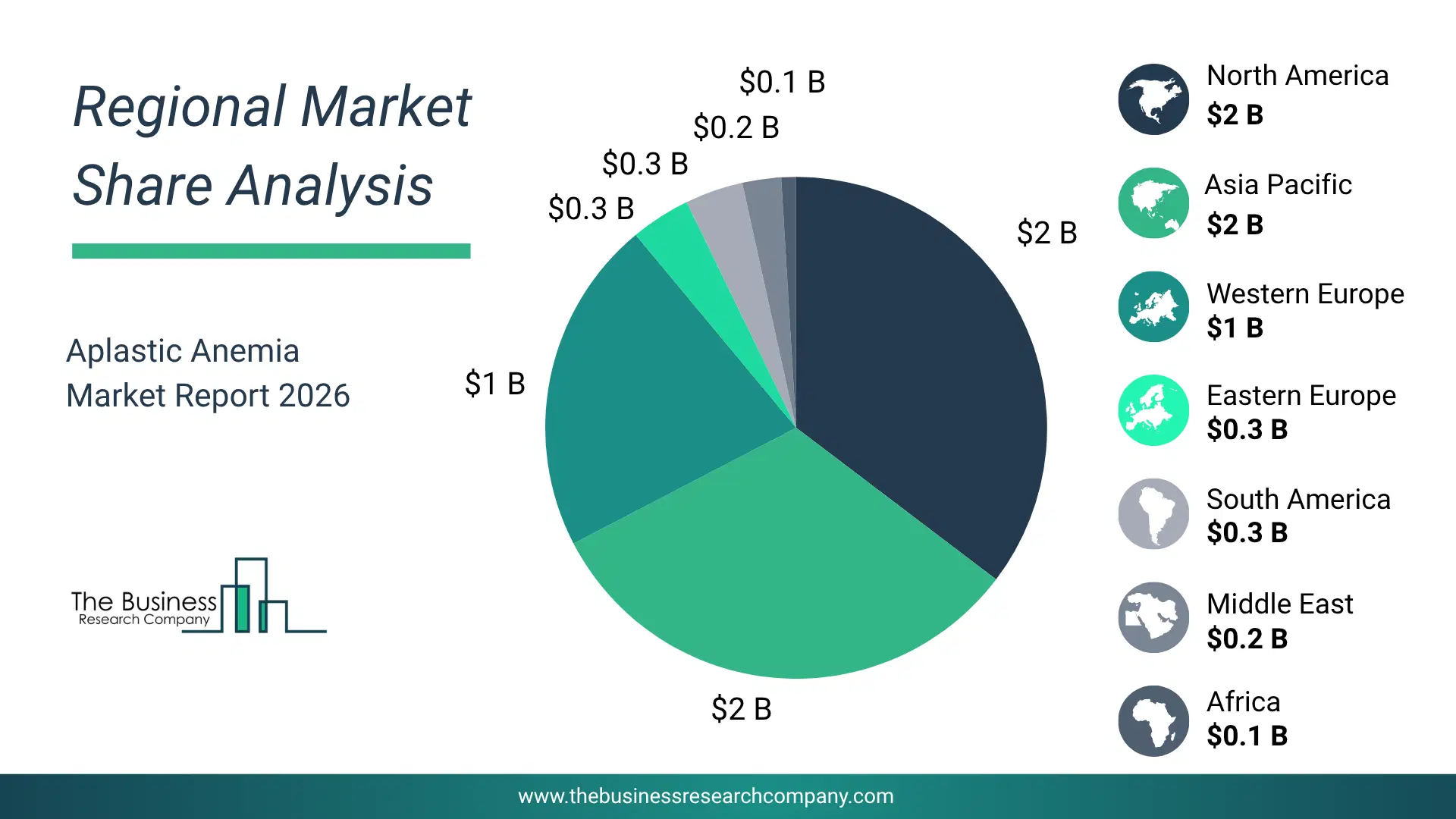
Regional Outlook
North America was the largest region in the aplastic anemia market in 2025. Asia-Pacific is expected to be the fastest-growing region in the forecast period. The regions covered in this market report are Asia-Pacific, South East Asia, Western Europe, Eastern Europe, North America, South America, Middle East, Africa. The countries covered in this market report are Australia, Brazil, China, France, Germany, India, Indonesia, Japan, Taiwan, Russia, South Korea, UK, USA, Canada, Italy, Spain.What Defines the Aplastic Anemia Market?
The aplastic anemia market consists of revenues earned by entities by providing services such as supportive care for infections and monitoring and management of complications. The market value includes the value of related goods sold by the service provider or included within the service offering. The aplastic anemia market also includes sales of immunosuppressive medications and antibiotics. Values in this market are ‘factory gate’ values, that is the value of goods sold by the manufacturers or creators of the goods, whether to other entities (including downstream manufacturers, wholesalers, distributors and retailers) or directly to end customers. The value of goods in this market includes related services sold by the creators of the goods.How is Market Value Defined and Measured?
The market value is defined as the revenues that enterprises gain from the sale of goods and/or services within the specified market and geography through sales, grants, or donations in terms of the currency (in USD unless otherwise specified). The revenues for a specified geography are consumption values that are revenues generated by organizations in the specified geography within the market, irrespective of where they are produced. It does not include revenues from resales along the supply chain, either further along the supply chain or as part of other products.
This chart presents market attractiveness based on a quantitative evaluation of growth, competition, strategic alignment, and risk, offering a clear view of opportunity areas for decision-making. This chart is for illustrative purposes; the full report contains the complete analysis.

This chart highlights the Total Addressable Market (TAM) by estimating the maximum revenue opportunity using an assumption-driven approach, supporting strategic planning and opportunity sizing across markets. The chart is illustrative; the full report provides a more comprehensive analysis.
What Key Data and Analysis Are Included in the Aplastic Anemia Market Report 2026?
The aplastic anemia market research report is one of a series of new reports from The Business Research Company that provides market statistics, including industry global market size, regional shares, competitors with the market share, detailed market segments, market trends and opportunities, and any further data you may need to thrive in the aplastic anemia industry. The market research report delivers a complete perspective of everything you need, with an in-depth analysis of the current and future state of the industry.Aplastic Anemia Market Report Forecast Analysis
| Report Attribute | Details |
|---|---|
| Market Size Value In 2026 | $7.43 billion |
| Revenue Forecast In 2030 | $9.08 billion |
| Growth Rate | CAGR of 5.9% from 2026 to 2030 |
| Base Year For Estimation | 2025 |
| Actual Estimates/Historical Data | 2020-2025 |
| Forecast Period | 2026 - 2030 - 2035 |
| Market Representation | Revenue in USD Billion and CAGR from 2026 to 2030 |
| Segments Covered | Disease Type, Treatment Type, Route Of Administration, Distribution Channel, End User |
| Regional Scope | Asia-Pacific, Western Europe, Eastern Europe, North America, South America, Middle East, Africa |
| Country Scope | The countries covered in the report are Australia, Brazil, China, France, Germany, India, Indonesia, Japan, Taiwan, Russia, South Korea, UK, USA, Canada, Italy, Spain. |
| Key Companies Profiled | Pfizer Inc., Johnson & Johnson Inc., F. Hoffmann-La Roche Ltd., Merck & Co. Inc., Sanofi SA, Bristol-Myers Squibb Company, Novartis AG, GlaxoSmithKline plc, Takeda Pharmaceutical Company Limited, Amgen Inc., Teva Pharmaceutical Industries Ltd., Otsuka Pharmaceuticals Co. Ltd., UCB SA, Kyowa Kirin Co. Ltd., Dr. Reddy's Laboratories Ltd., Cipla Limited, Cadila Healthcare Limited, Cellenkos Inc., Amyndas Pharmaceuticals S.A., Hemogenyx Pharmaceuticals plc, Gamida Cell Ltd. |
| Customization Scope | Request for Customization |
| Pricing And Purchase Options | Explore Purchase Options |