
Aplastic Anemia Global Market Opportunities And Strategies To 2035
By Disease Type (Acquired Aplastic Anemia, Inherited Bone Marrow Failure Syndromes), By Treatment Type (Bone Marrow Transfusion Or Stem Cell Therapy, Blood Transfusion, Drug Therapy), By Route Of Administration (Oral, Parentals, Other Routes Of Administration), By End User (Hospitals, Homecare, Specialty Clinics, Other End Users), And By Region, Opportunities And Strategies – Global Forecast To 2035
Aplastic Anemia Market Definition
Aplastic anemia is a rare and serious blood disorder in which the bone marrow fails to produce sufficient new blood cells, including red blood cells, white blood cells, and platelets. This condition results from damage to or destruction of hematopoietic stem cells in the bone marrow or by autoimmune processes, certain medications, radiation, infections, or genetic factors. The treatment of aplastic anemia is to restore normal blood cell production, manage symptoms, and prevent complications such as infections and bleeding. The aplastic anemia market consists of sales by entities (organizations, sole traders and partnerships) of aplastic anemia services such as research, development, manufacturing and provision of therapies and medical services used to diagnose, manage and treat aplastic anemia. The market includes a range of pharmaceutical drugs, biologic therapies, blood products and stem cell transplantation services that aim to restore bone marrow function or manage the complications associated with the disorder.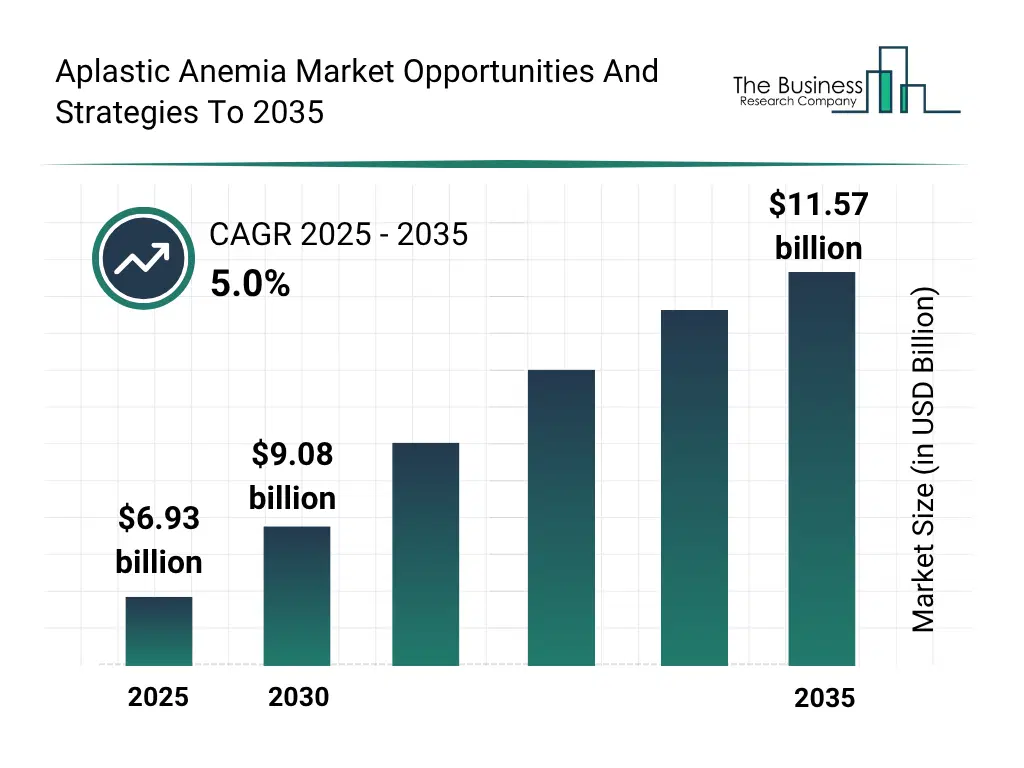
Aplastic Anemia Market Size
The global aplastic anemia market reached a value of nearly $6,925.5 million in 2025, having grown at a compound annual growth rate (CAGR) of 5.9% since 2020. The market is expected to grow from $6,925.5 million in 2025 to $9,081.9 million in 2030 at a rate of 5.6%. The market is then expected to grow at a CAGR of 5.0% from 2030 and reach $11,574.1 million in 2035. Growth in the historic period resulted from aging global population, rising demand for personalized medicine, increasing healthcare expenditure worldwide and rising number of clinical trials. Factors that negatively affected growth in the historic period were high cost of treatment for aplastic anemia and limited healthcare coverage and reimbursement. Going forward, increasing awareness of rare blood disorders, growing incidence of acquired and drug-induced cases, increased environmental pollution affecting bone marrow health and rise in development of targeted therapies and novel drugs will drive the growth. Factors that could hinder the growth of the aplastic anemia market in the future include complex and specialized treatment protocols,side effects associated with long-term immunosuppressive therapy and impact of trade war and tariff.
Aplastic Anemia Market Segmentation
The aplastic anemia market is segmented by disease type, by treatment type, by route of administration and by end user.
By Disease Type –
The aplastic anemia market is segmented by disease type into:
By Treatment Type –
The aplastic anemia market is segmented by treatment type into:
By Route Of Administration –
The aplastic anemia market is segmented by route of administration into:
By End User –
The aplastic anemia market is segmented by end user into:
By Geography - The aplastic anemia market is segmented by geography into:
By Disease Type –
The aplastic anemia market is segmented by disease type into:
- a) Acquired Aplastic Anemia
- b) Inherited Bone Marrow Failure Syndromes
By Treatment Type –
The aplastic anemia market is segmented by treatment type into:
- a) Bone Marrow Transfusion Or Stem Cell Therapy
- b) Blood Transfusion
- c) Drug Therapy
By Route Of Administration –
The aplastic anemia market is segmented by route of administration into:
- a) Oral
- b) Parentals
- c) Other Routes Of Administration
By End User –
The aplastic anemia market is segmented by end user into:
- a) Hospitals
- b) Homecare
- c) Specialty Clinics
- d) Other End Users
By Geography - The aplastic anemia market is segmented by geography into:
- China
- India
- Japan
- Australia
- Indonesia
- South Korea
- USA
- Canada
- Brazil
- France
- Germany
- UK
- Italy
- Spain
- Russia
-
o Asia Pacific
o Africa