
Artery Stenosis Drug Market Report 2026
Global Outlook – By Drug Type (Antiplatelet Agents, Anticoagulants, Statins, Beta Blockers), By Mechanism Of Action (Platelet Aggregation Inhibitors, Thrombin Inhibitors, HMG-CoA Reductase Inhibitors, Beta-Adrenergic Antagonists), By Route Of Administration (Oral, Injectable, Transdermal), By Patient Type (Adults, Geriatric, Pediatric) – Market Size, Trends, Strategies, and Forecast to 2030
Artery Stenosis Drug Market Overview
• Artery Stenosis Drug market size has reached to $2.6 billion in 2025 • Expected to grow to $3.46 billion in 2030 at a compound annual growth rate (CAGR) of 5.9% • Growth Driver: Rising Prevalence Of Diabetes And Obesity Fueling The Growth Of The Market Due To Increasingly Sedentary Lifestyles • Market Trend: Sirolimus Drug-Coated Balloons Advancing Treatment For Peripheral Artery Disease And Improving Long-Term Vessel Patency • North America was the largest region in 2025.What Is Covered Under Artery Stenosis Drug Market?
Artery stenosis drugs are medications used to manage and treat the narrowing of arteries, a condition known as stenosis, which can lead to reduced blood flow and associated health complications. These drugs aim to alleviate symptoms, prevent progression, and reduce the risk of serious events such as heart attacks or strokes. The main types of artery stenosis drugs include antiplatelet agents, anticoagulants, statins, and beta-blockers. Antiplatelet agents are drugs that prevent platelets from clumping together to form clots. By mechanism of action, it includes platelet aggregation inhibitors, thrombin inhibitors, HMG-CoA reductase inhibitors, and beta-adrenergic antagonists. The route of administration covers oral, injectable, and transdermal, while patient types include adults, geriatric, and pediatric.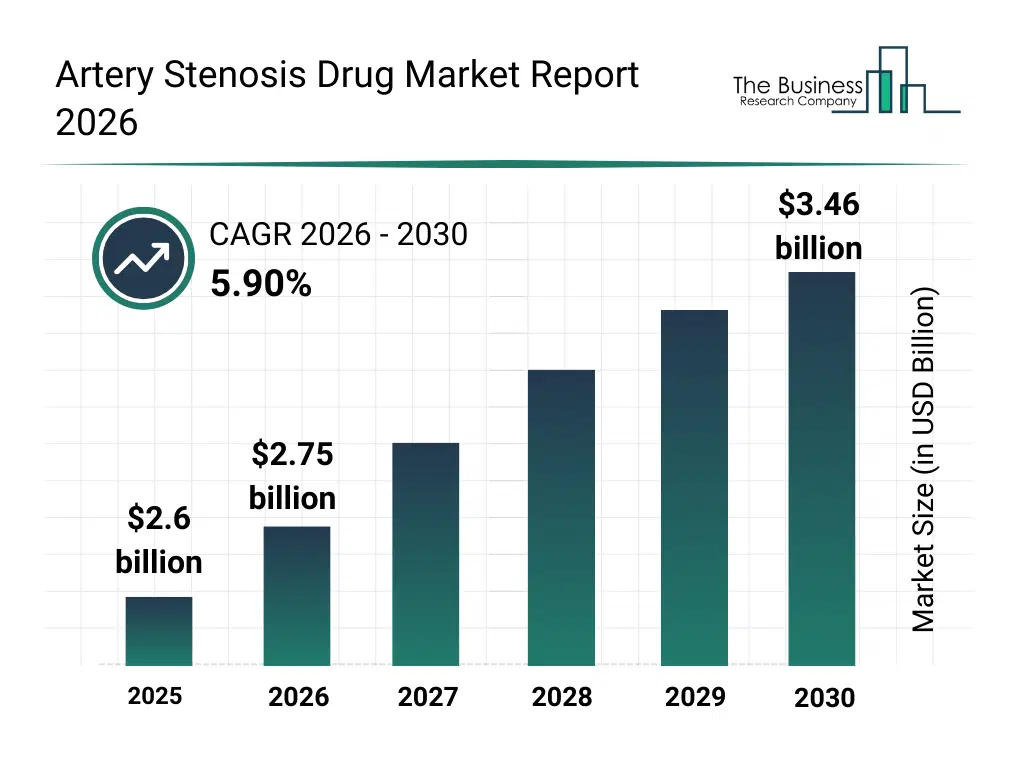
What Is The Artery Stenosis Drug Market Size and Share 2026?
The artery stenosis drug market size has grown strongly in recent years. It will grow from $2.6 billion in 2025 to $2.75 billion in 2026 at a compound annual growth rate (CAGR) of 5.9%. The growth in the historic period can be attributed to cardiovascular disease prevalence, aging population growth, statin therapy adoption, hypertension incidence, hospital cardiology expansion.What Is The Artery Stenosis Drug Market Growth Forecast?
The artery stenosis drug market size is expected to see strong growth in the next few years. It will grow to $3.46 billion in 2030 at a compound annual growth rate (CAGR) of 5.9%. The growth in the forecast period can be attributed to preventive cardiology focus, early diagnosis programs, combination therapy uptake, chronic disease management, outpatient cardiovascular care. Major trends in the forecast period include rising use of combination cardiovascular therapy, increased adoption of preventive drug regimens, growth in long-term statin therapy, expansion of geriatric vascular care, emphasis on stroke and heart attack prevention.
Global Artery Stenosis Drug Market Segmentation
1) By Drug Type: Antiplatelet Agents, Anticoagulants, Statins, Beta Blockers 2) By Mechanism Of Action: Platelet Aggregation Inhibitors, Thrombin Inhibitors, HMG-CoA Reductase Inhibitors, Beta-Adrenergic Antagonists 3) By Route Of Administration: Oral, Injectable, Transdermal 4) By Patient Type: Adults, Geriatric, Pediatric Subsegments: 1) By Antiplatelet Agents: Aspirin, Clopidogrel, Ticagrelor, Prasugrel, Dipyridamole 2) By Anticoagulants: Warfarin, Heparin, Low Molecular Weight Heparins, Direct Oral Anticoagulants (DOACs) 3) By Statins: Atorvastatin, Simvastatin, Rosuvastatin, Pravastatin, Lovastatin 4) By Beta Blockers: Metoprolol, Atenolol, Propranolol, Carvedilol, BisoprololWhat Is The Driver Of The Artery Stenosis Drug Market?
The rising prevalence of diabetes and obesity is expected to propel the growth of the artery stenosis drug market going forward. Diabetes is a long-term condition where the body either produces insufficient insulin or is unable to use it properly, resulting in elevated blood sugar levels, whereas obesity is a health condition marked by an excess of body fat, raising the likelihood of numerous health issues. This rise in diabetes and obesity is growing due to a lack of regular physical activity associated with increasingly sedentary work environments and screen-based leisure activities, which contribute to weight gain and insulin resistance. Artery stenosis drugs are needed in diabetes and obesity, as both conditions promote plaque buildup in arteries, increasing the risk of heart attacks and strokes. For instance, in September 2023, according to the World Health Organization, a Switzerland-based specialized agency of the United Nations, there were 2.0 million deaths from diabetes. Therefore, the growing prevalence of diabetes and obesity is driving growth in the artery stenosis drug industry.Key Players In The Global Artery Stenosis Drug Market
Major companies operating in the artery stenosis drug market are Pfizer Inc., Bayer AG, Bristol-Myers Squibb Company, AstraZeneca PLC, Novartis AG, Sanofi S.A., Merck & Co. Inc., Johnson & Johnson Services Inc., GSK plc, Boehringer Ingelheim, Daiichi Sankyo Company Limited, Eli Lilly and Company, Otsuka Pharmaceutical Co. Ltd., Teva Pharmaceutical Industries Ltd., Sun Pharmaceutical Industries Ltd., Dr. Reddy’s Laboratories Ltd., Cipla Limited, Lupin Limited, Aurobindo Pharma Limited, Zydus Lifesciences Limited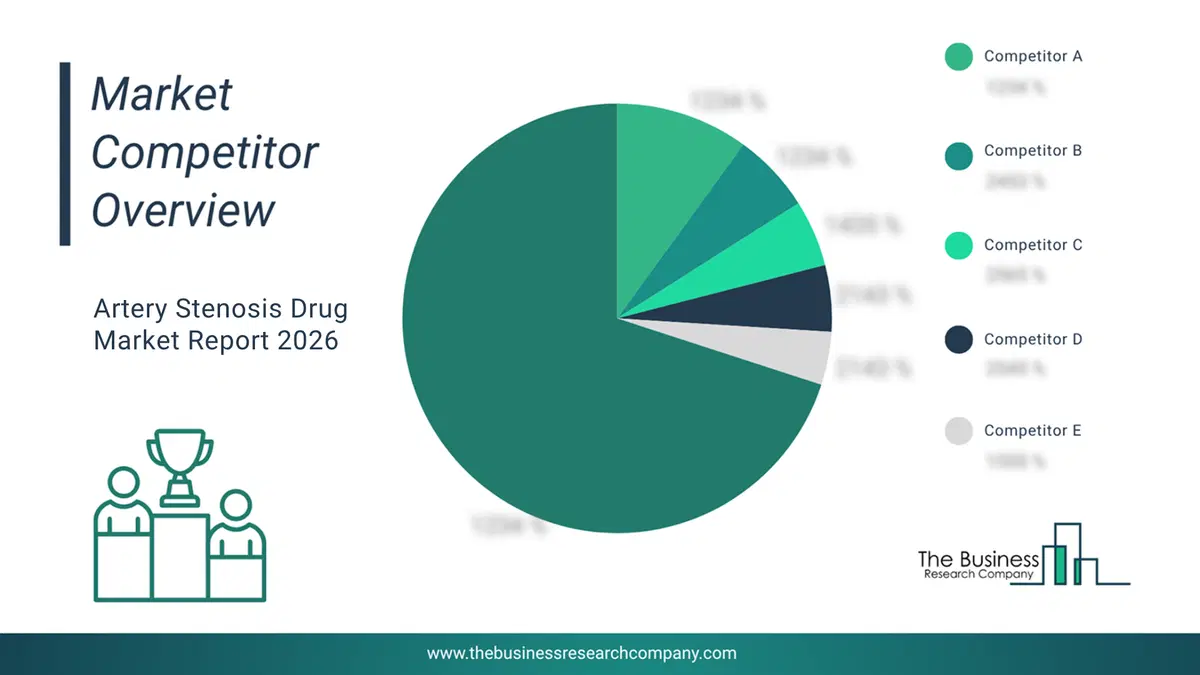
This chart is for illustrative purposes; the full report includes a detailed competitor analysis and comprehensive overview of the top 10 companies in the market.
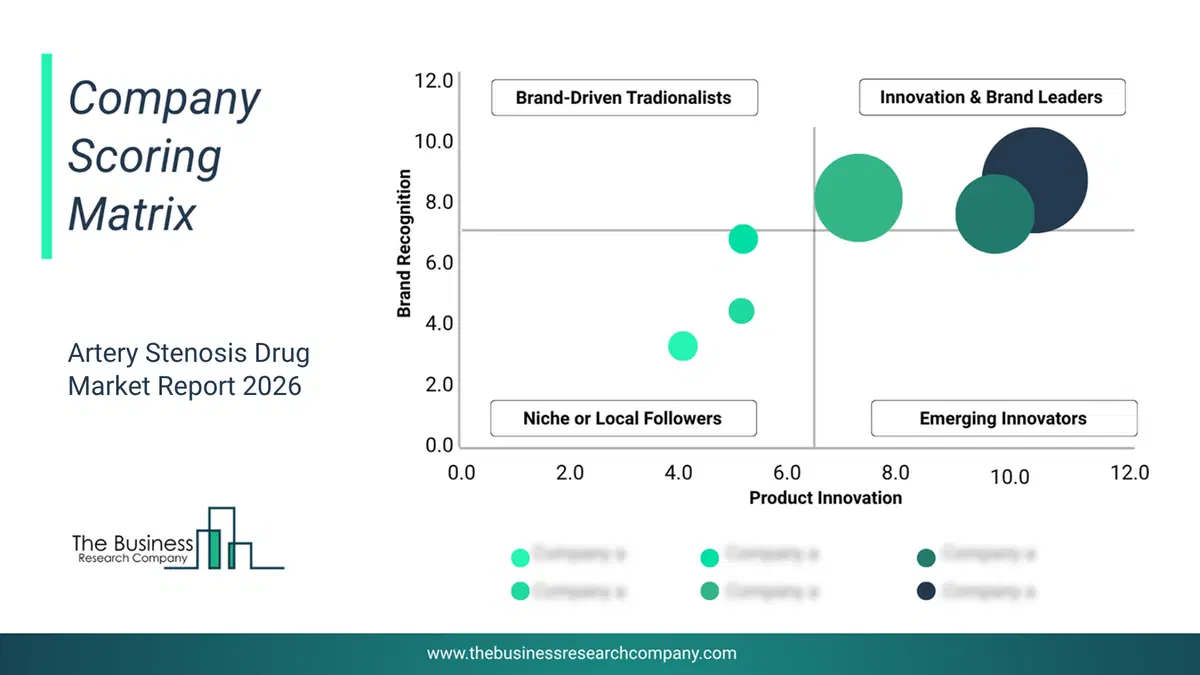
This chart maps companies by product innovation and brand strength, with bubble size indicating relative revenue, helping identify market leaders, challengers, and niche players. This is an illustrative chart; the full report provides a complete and accurate competitive analysis.
Global Artery Stenosis Drug Market Trends and Insights
Major companies operating in the artery stenosis drug market are focusing on advancing therapeutic solutions, such as sirolimus drug-coated balloons, to address unmet medical needs in the treatment of peripheral artery disease. Sirolimus drug-coated balloons are medical devices that combine balloon angioplasty with localized drug delivery, releasing sirolimus (an antiproliferative agent) directly into the arterial wall during inflation to inhibit restenosis and improve long-term vessel patency. For instance, in November 2024, Cordis Corporation, a US-based cardiovascular medical device company, announced positive 24-month results from the Selution SFA Japan trial demonstrating the effectiveness of its Selution SLR sirolimus drug-coated balloon in treating superficial femoral artery disease. The results showed a primary patency rate of 86.8% at 24 months with a low target lesion revascularization rate of 6.6%, indicating sustained vessel openness and reduced need for repeat interventions. The Selution SLR balloon delivers a sustained and controlled release of sirolimus to the arterial wall, preventing excessive tissue growth that leads to re-narrowing while maintaining excellent safety profiles in patients with peripheral artery stenosis.What Are Latest Mergers And Acquisitions In The Artery Stenosis Drug Market?
In January 2023, AstraZeneca plc, a UK-based pharmaceutical company, acquired CinCor Pharma Inc. for $1.8 billion. Through this acquisition, AstraZeneca aims to strengthen its presence in the cardiorenal pipeline by adding CinCor's drug, baxdrostat, an aldosterone synthase inhibitor (ASI) for blood pressure lowering in treatment-resistant hypertension. It aligns with AstraZeneca's mission to deliver innovative therapies that address complex diseases with a focus on improving patient outcomes. CinCor Pharma Inc. is a US-based biopharmaceutical company specializing in novel therapies for cardiorenal diseases.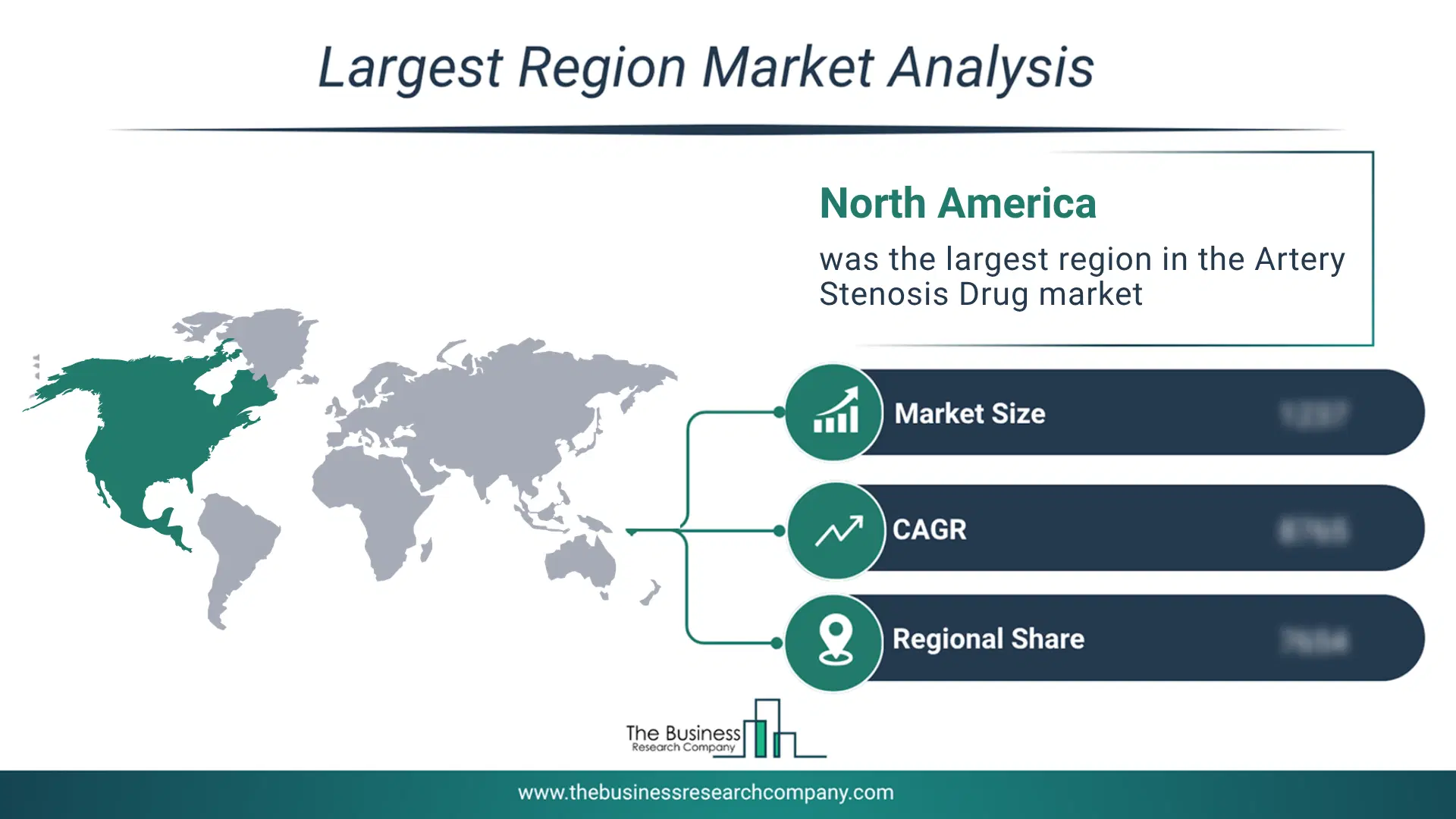
Regional Insights
North America was the largest region in the artery stenosis drug market in 2025. The regions covered in this market report are Asia-Pacific, South East Asia, Western Europe, Eastern Europe, North America, South America, Middle East, Africa. The countries covered in this market report are Australia, Brazil, China, France, Germany, India, Indonesia, Japan, Taiwan, Russia, South Korea, UK, USA, Canada, Italy, Spain.What Defines the Artery Stenosis Drug Market?
The artery stenosis drug market consists of sales of cholesterol-lowering drugs, calcium channel blockers, and hypertension medications. Values in this market are ‘factory gate’ values, that is the value of goods sold by the manufacturers or creators of the goods, whether to other entities (including downstream manufacturers, wholesalers, distributors, and retailers) or directly to end customers. The value of goods in this market includes related services sold by the creators of the goods.How is Market Value Defined and Measured?
The market value is defined as the revenues that enterprises gain from the sale of goods and/or services within the specified market and geography through sales, grants, or donations in terms of the currency (in USD unless otherwise specified). The revenues for a specified geography are consumption values that are revenues generated by organizations in the specified geography within the market, irrespective of where they are produced. It does not include revenues from resales along the supply chain, either further along the supply chain or as part of other products.
This chart presents market attractiveness based on a quantitative evaluation of growth, competition, strategic alignment, and risk, offering a clear view of opportunity areas for decision-making. This chart is for illustrative purposes; the full report contains the complete analysis.

This chart highlights the Total Addressable Market (TAM) by estimating the maximum revenue opportunity using an assumption-driven approach, supporting strategic planning and opportunity sizing across markets. The chart is illustrative; the full report provides a more comprehensive analysis.
What Key Data and Analysis Are Included in the Artery Stenosis Drug Market Report 2026?
The artery stenosis drug market research report is one of a series of new reports from The Business Research Company that provides market statistics, including industry global market size, regional shares, competitors with the market share, detailed market segments, market trends and opportunities, and any further data you may need to thrive in the artery stenosis drug industry. The market research report delivers a complete perspective of everything you need, with an in-depth analysis of the current and future state of the industry.Artery Stenosis Drug Market Report Forecast Analysis
| Report Attribute | Details |
|---|---|
| Market Size Value In 2026 | $2.75 billion |
| Revenue Forecast In 2030 | $3.46 billion |
| Growth Rate | CAGR of 5.9% from 2026 to 2030 |
| Base Year For Estimation | 2025 |
| Actual Estimates/Historical Data | 2020-2025 |
| Forecast Period | 2026 - 2030 |
| Market Representation | Revenue in USD Billion and CAGR from 2026 to 2030 |
| Segments Covered | Drug Type, Mechanism Of Action, Route Of Administration, Patient Type |
| Regional Scope | Asia-Pacific, Western Europe, Eastern Europe, North America, South America, Middle East, Africa |
| Country Scope | The countries covered in the report are Australia, Brazil, China, France, Germany, India, Indonesia, Japan, Taiwan, Russia, South Korea, UK, USA, Canada, Italy, Spain. |
| Key Companies Profiled | Pfizer Inc., Bayer AG, Bristol-Myers Squibb Company, AstraZeneca PLC, Novartis AG, Sanofi S.A., Merck & Co. Inc., Johnson & Johnson Services Inc., GSK plc, Boehringer Ingelheim, Daiichi Sankyo Company Limited, Eli Lilly and Company, Otsuka Pharmaceutical Co. Ltd., Teva Pharmaceutical Industries Ltd., Sun Pharmaceutical Industries Ltd., Dr. Reddy’s Laboratories Ltd., Cipla Limited, Lupin Limited, Aurobindo Pharma Limited, Zydus Lifesciences Limited |
| Customization Scope | Request for Customization |
| Pricing And Purchase Options | Explore Purchase Options |