
Artificial Dermis Market Report 2026
Global Outlook – By Product Type (Acellular Dermal Matrix, Cellular Dermal Substitute, Biosynthetic Dermal Scaffold, Composite Dermal Substitute), By Material (Collagen Based, Silicone Based, Hyaluronic Acid Based, Synthetic Polymer Based), By Distribution Channel (Direct Sales, Distributors, Online Sales), By Application (Burn Treatment, Chronic Wound Management, Surgical Reconstruction, Trauma And Skin Defect Repair), By End User (Hospitals, Specialty Clinics, Ambulatory Surgical Centers, Burn Centers) – Market Size, Trends, Strategies, and Forecast to 2030
Artificial Dermis Market Overview
• Artificial Dermis market size has reached to $1.66 billion in 2025 • Expected to grow to $2.56 billion in 2030 at a compound annual growth rate (CAGR) of 9% • Growth Driver: The Increasing Incidence Of Burn Injuries Driving The Growth Of The Market Due To Rising Frequency Of Household And Industrial Accidents • North America was the largest region in 2025 and Asia-Pacific is the fastest growing region.What Is Covered Under Artificial Dermis Market?
Artificial dermis refers to a bioengineered skin substitute designed to replace or support damaged dermal tissue during wound healing and skin regeneration. It is commonly made from collagen, silicone, or other biocompatible materials and is widely used in burn treatment, reconstructive surgery, and chronic wound management. The main product types of artificial dermis include acellular dermal matrix, cellular dermal substitute, biosynthetic dermal scaffold, and composite dermal substitute. Acellular dermal matrix refers to a biologically derived scaffold with cellular components removed, providing structural support for tissue regeneration and wound healing. These products are manufactured using materials such as collagen based, silicone based, hyaluronic acid based, and synthetic polymer based materials and are distributed through direct sales, distributors, and online sales. The various applications involved are burn treatment, chronic wound management, surgical reconstruction, and trauma and skin defect repair, and they are used by several end users such as hospitals, specialty clinics, ambulatory surgical centers, and burn centers.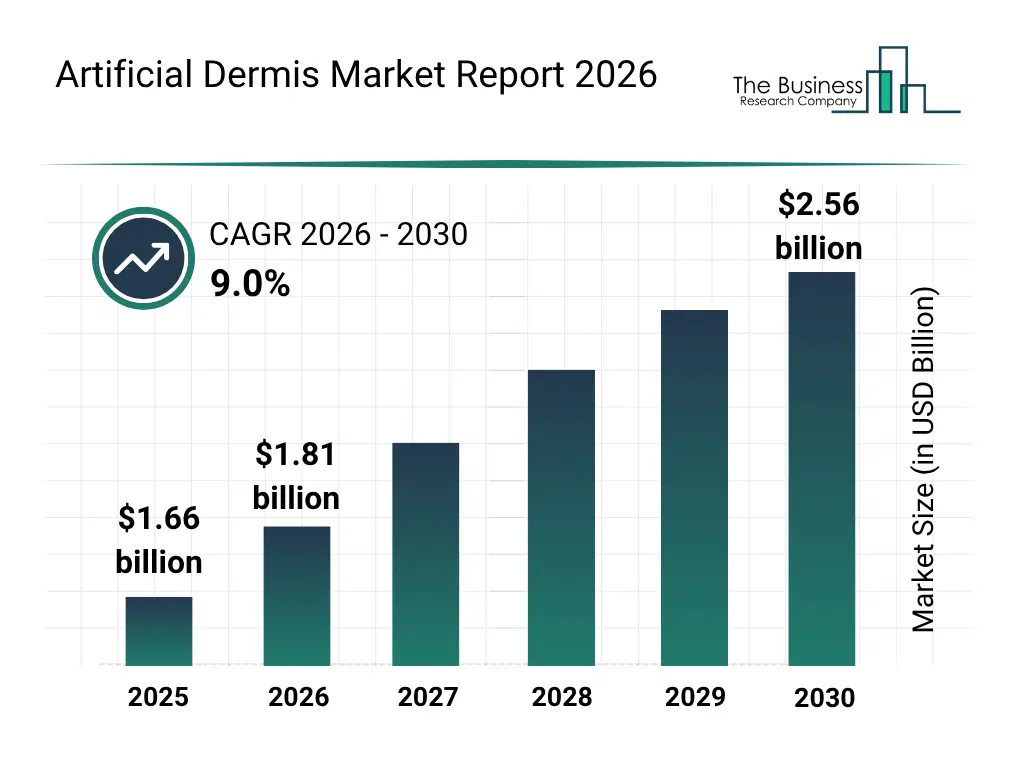
What Is The Artificial Dermis Market Size and Share 2026?
The artificial dermis market size has grown strongly in recent years. It will grow from $1.66 billion in 2025 to $1.81 billion in 2026 at a compound annual growth rate (CAGR) of 8.8%. The growth in the historic period can be attributed to increasing incidence of severe burn injuries, growing number of reconstructive surgical procedures, rising prevalence of chronic wounds, expanding healthcare infrastructure, improving availability of advanced wound care products.What Is The Artificial Dermis Market Growth Forecast?
The artificial dermis market size is expected to see strong growth in the next few years. It will grow to $2.56 billion in 2030 at a compound annual growth rate (CAGR) of 9.0%.The growth in the forecast period can be attributed to growing demand for regenerative medicine solutions, increasing adoption of bioengineered skin substitutes, rising investment in tissue engineering research, expanding access to specialized wound care centers, increasing focus on improving post-surgical healing outcomes. Major trends in the forecast period include increasing adoption of advanced bioengineered skin substitutes, growing demand for collagen based dermal regeneration solutions, rising use of composite dermal substitutes in reconstructive surgery, expansion of artificial dermis applications in chronic wound management, increasing development of next generation biocompatible dermal scaffolds.
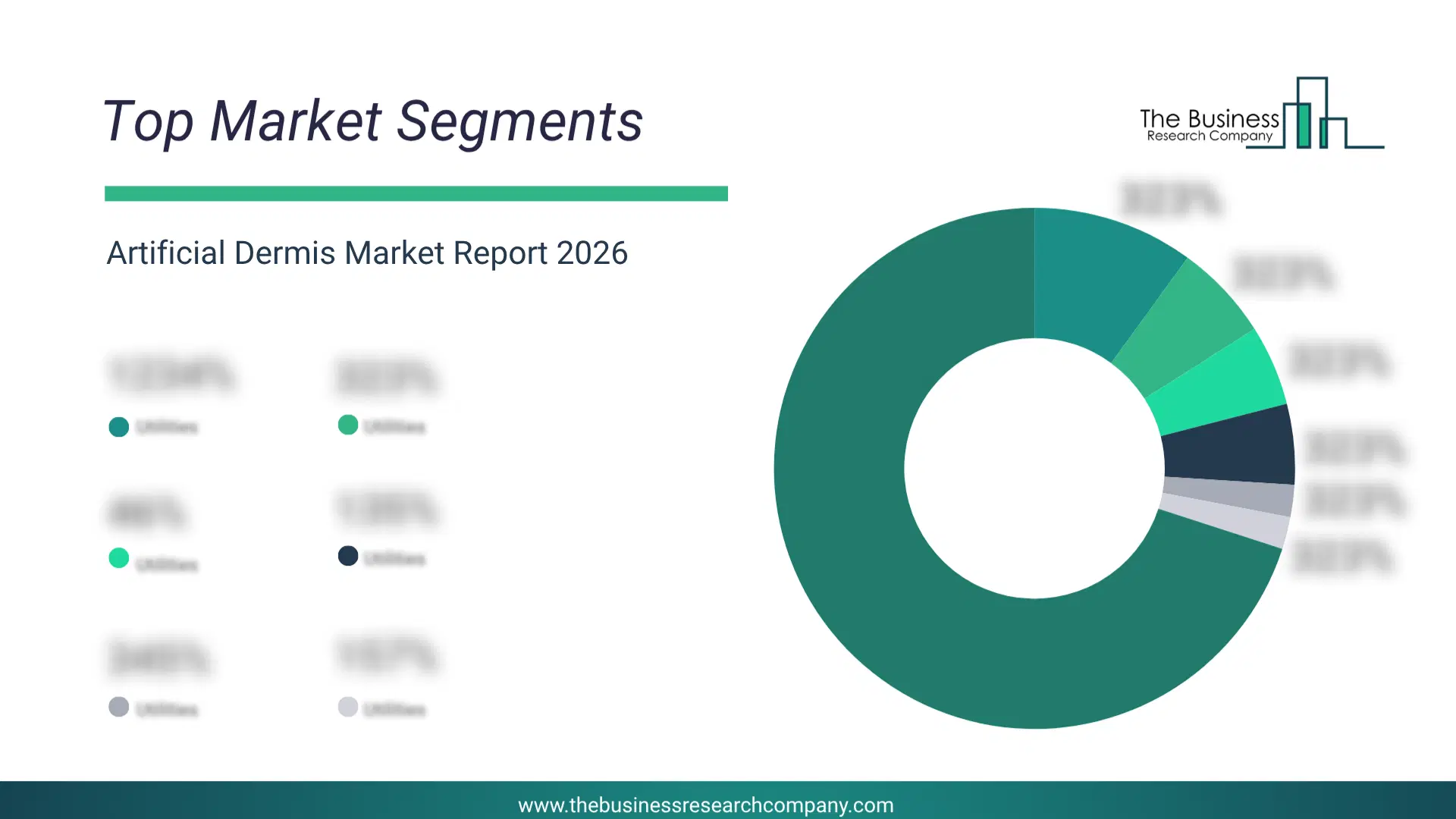
Global Artificial Dermis Market Segmentation
2) By Material: Collagen Based, Silicone Based, Hyaluronic Acid Based, Synthetic Polymer Based 3) By Distribution Channel: Direct Sales, Distributors, Online Sales 4) By Application: Burn Treatment, Chronic Wound Management, Surgical Reconstruction, Trauma And Skin Defect Repair 5) By End User: Hospitals, Specialty Clinics, Ambulatory Surgical Centers, Burn Centers Subsegments: 1) By Acellular Dermal Matrix: Human Acellular Dermal Matrix, Porcine Acellular Dermal Matrix, Bovine Acellular Dermal Matrix, Fish Derived Acellular Dermal Matrix 2) By Cellular Dermal Substitute: Fibroblast Based Dermal Substitute, Keratinocyte Based Dermal Substitute, Stem Cell Based Dermal Substitute, Bilayer Cellular Dermal Substitute 3) By Biosynthetic Dermal Scaffold: Collagen Based Scaffold, Silicone Based Scaffold, Hydrogel Based Scaffold, Polymeric Scaffold 4) By Composite Dermal Substitute: Collagen Silicone Composite, Hydrogel Composite, Biopolymer Composite, Hybrid Dermal MatrixWhat Are The Drivers Of The Artificial Dermis Market?
The increasing incidence of burn injuries is expected to propel the growth of the artificial dermis market going forward. Burn injuries refer to tissue damage caused by heat, chemicals, electricity, radiation, or friction affecting the skin and underlying tissues. The increasing incidence of burn injuries is primarily driven by the rising frequency of household and industrial accidents, which are often linked to unsafe cooking practices, electrical hazards, chemical exposure, and inadequate workplace safety measures. Artificial dermis helps in burn injuries by providing a temporary or permanent skin substitute that supports wound closure, promotes tissue regeneration, and reduces scarring and infection risk in patients with severe skin loss. For instance, in October 2023, according to the International Burn Injury Database (iBID), a US-based organization, in the first six months of 2023, burns and scalds among children increased by 45% compared with the same period in 2022, while incidents involving adults and the elderly from hot water bottles rose by 19%. Therefore, the increasing incidence of burn injuries is driving the growth of the artificial dermis industry. The rising number of trauma and accident cases are expected to propel the growth of the artificial dermis market going forward. Trauma and accident cases refer to medical situations involving injuries caused by sudden external forces such as road traffic collisions, falls, burns, or physical violence that require urgent clinical evaluation and treatment. The rising number of trauma and accident cases is due to increasing road traffic density, which leads to higher congestion, greater exposure of road users, and an elevated likelihood of collisions. Artificial dermis helps trauma and accident patients by providing a temporary or permanent skin substitute that supports wound closure, reduces infection risk, and promotes faster tissue regeneration in severe injuries. For instance, in October 2024, according to the Department of Health Alaska, a US-based government department, in 2023, approximately 3,373 individuals in Alaska experienced traumatic brain injuries (TBI). This total includes both fatal cases and non-fatal injuries that were treated and discharged from hospitals or emergency departments (ED). Therefore, the rising number of trauma and accident cases are driving the growth of the artificial dermis industry.Key Players In The Global Artificial Dermis Market
Major companies operating in the artificial dermis market are Aroa Biosurgery Limited, AVITA Medical Inc., Elutia Inc., ConvaTec Group plc, Gunze Limited, Integra LifeSciences Holdings Corporation, LifeNet Health Inc., Medline Industries LP, MiMedx Group Inc., Mölnlycke Health Care AB, MTF Biologics, Organogenesis Holdings Inc., Parametrics Medical LLC, PolyNovo Limited, Smith & Nephew plc, Surgenex LLC, Tides Medical LLC, Tissue Regenix Group plc, Vericel Corporation, Vivex Biologics Inc., Zimmer Biomet Holdings Inc.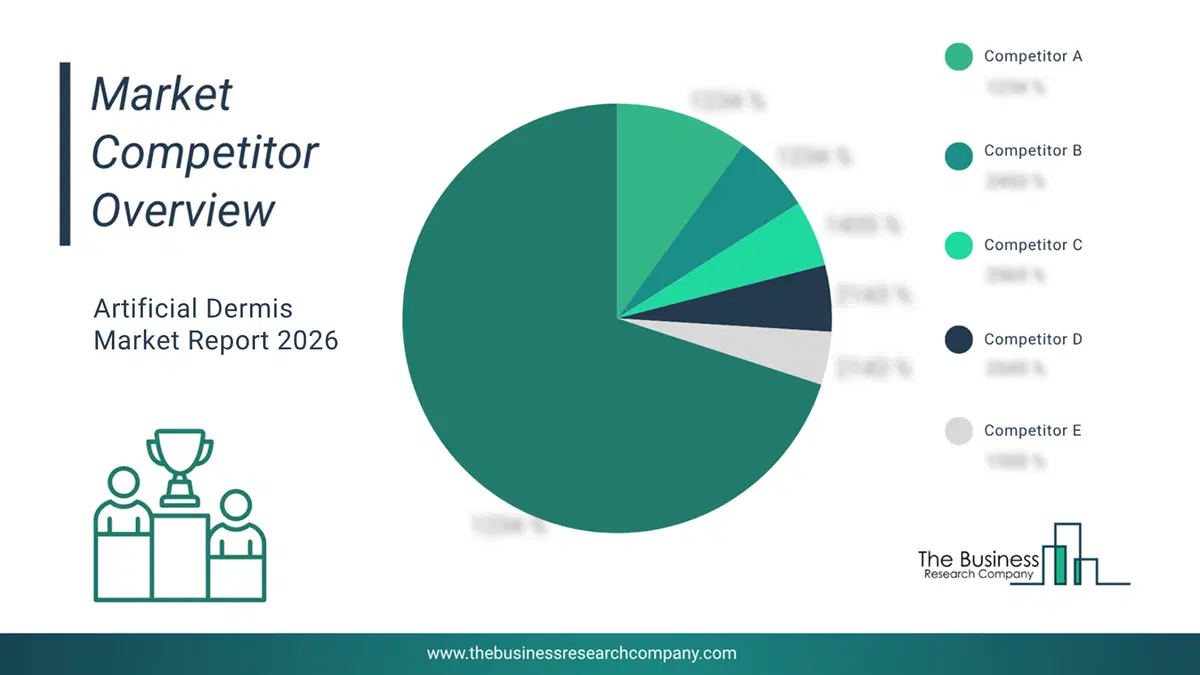
This chart is for illustrative purposes; the full report includes a detailed competitor analysis and comprehensive overview of the top 10 companies in the market.
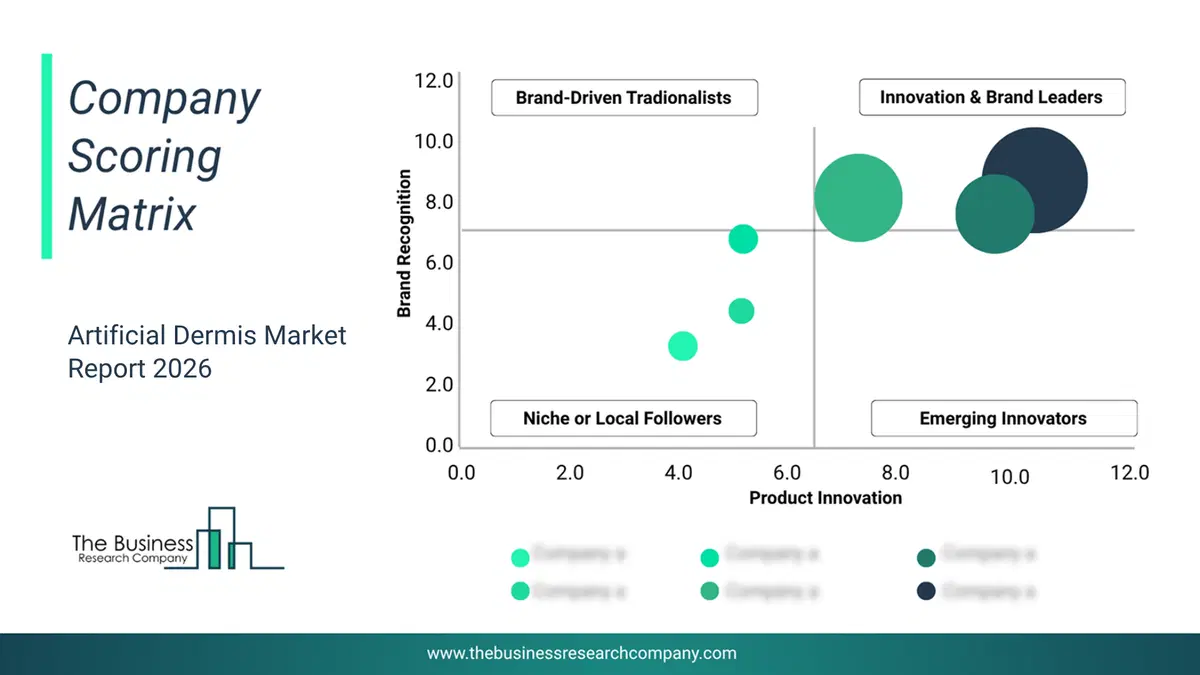
This chart maps companies by product innovation and brand strength, with bubble size indicating relative revenue, helping identify market leaders, challengers, and niche players. This is an illustrative chart; the full report provides a complete and accurate competitive analysis.
What Are Latest Mergers And Acquisitions In The Artificial Dermis Market?
In April 2023 Essex Bio-Technology Ltd., a China-based biopharmaceutical company that provides collagen-based artificial dermis products, and Gunze Limited entered into a collaboration agreement in mainland China for the commercialization of PELNAC, a bioresorbable dermal substitute used in advanced wound care applications. With this partnership, Essex and Gunze aim to strengthen the availability and distribution of artificial dermis solutions in China by combining clinical wound care expertise with established regional commercialization capabilities, thereby improving access to regenerative wound healing technologies for surgical and chronic wound management. Gunze Limited is a Japan-based diversified manufacturer engaged in textiles, plastics, and medical materials, including advanced wound care products.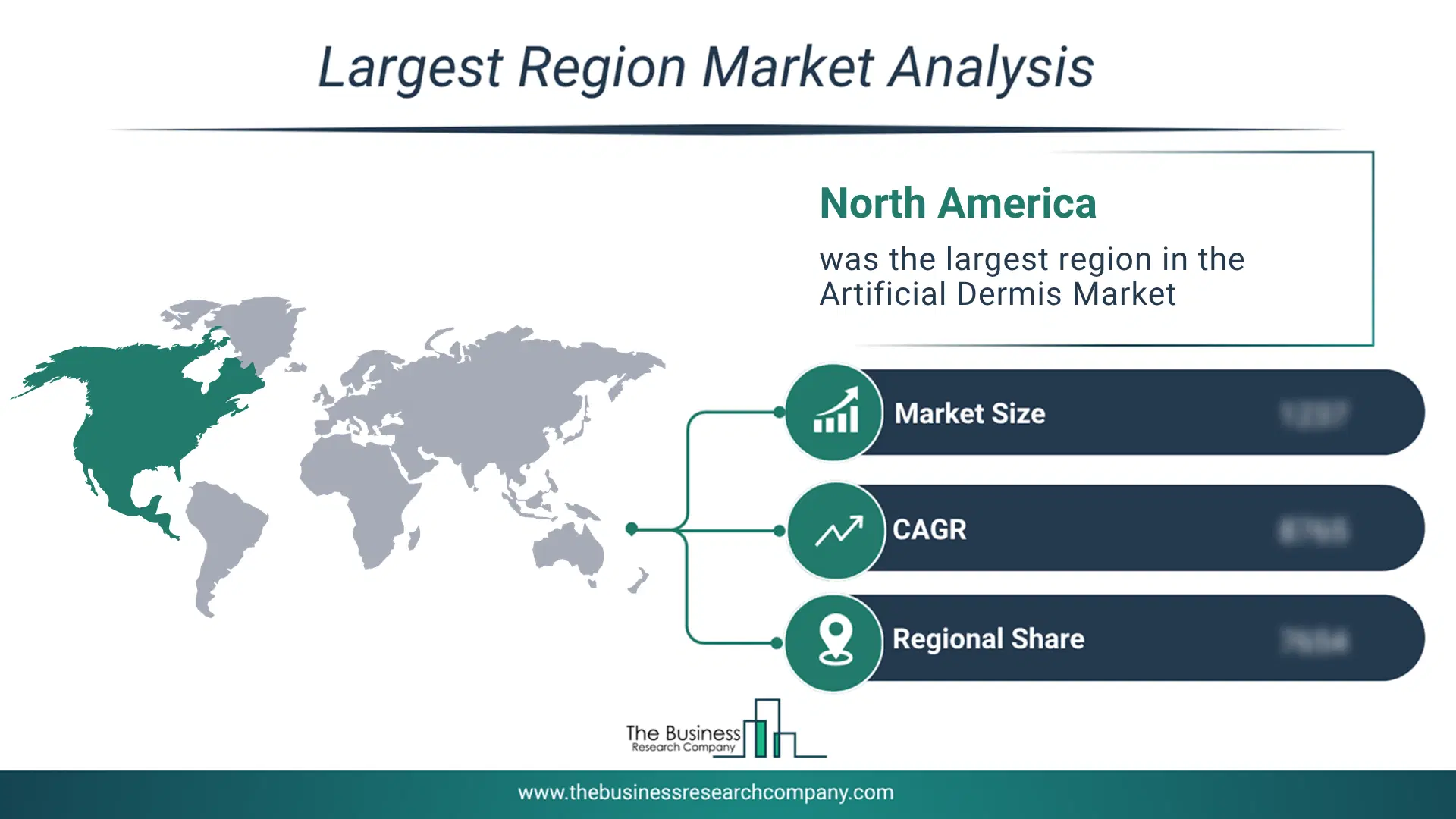
Regional Outlook/Insights
North America was the largest region in the artificial dermis market in 2025. Asia-Pacific is expected to be the fastest-growing region in the forecast period. The regions covered in this market report are Asia-Pacific, South East Asia, Western Europe, Eastern Europe, North America, South America, Middle East, Africa. The countries covered in this market report are Australia, Brazil, China, France, Germany, India, Indonesia, Japan, Taiwan, Russia, South Korea, UK, USA, Canada, Italy, Spain.What Defines the Artificial Dermis Market?
The artificial dermis market consists of sales of products such as collagen-based artificial dermis, silicone-based dermal substitutes, biodegradable skin matrices, acellular dermal matrices, and tissue-engineered skin substitutes. Values in this market are ‘factory gate’ values, that is the value of goods sold by the manufacturers or creators of the goods, whether to other entities (including downstream manufacturers, wholesalers, distributors and retailers) or directly to end customers. The value of goods in this market includes related services sold by the creators of the goods.How is Market Value Defined and Measured?
The market value is defined as the revenues that enterprises gain from the sale of goods and/or services within the specified market and geography through sales, grants, or donations in terms of the currency (in USD unless otherwise specified). The revenues for a specified geography are consumption values that are revenues generated by organizations in the specified geography within the market, irrespective of where they are produced. It does not include revenues from resales along the supply chain, either further along the supply chain or as part of other products.
This chart presents market attractiveness based on a quantitative evaluation of growth, competition, strategic alignment, and risk, offering a clear view of opportunity areas for decision-making. This chart is for illustrative purposes; the full report contains the complete analysis.

This chart highlights the Total Addressable Market (TAM) by estimating the maximum revenue opportunity using an assumption-driven approach, supporting strategic planning and opportunity sizing across markets. The chart is illustrative; the full report provides a more comprehensive analysis.
What Key Data and Analysis Are Included in the Artificial Dermis Market Report 2026?
The artificial dermis market research report is one of a series of new reports from The Business Research Company that provides artificial dermis market statistics, including artificial dermis industry global market size, regional shares, competitors with a artificial dermis market share, detailed artificial dermis market segments, market trends and opportunities, and any further data you may need to thrive in the artificial dermis industry. This artificial dermis market research report delivers a complete perspective of everything you need, with an in-depth analysis of the current and future scenario of the industry.Artificial Dermis Market Report Forecast Analysis
| Report Attribute | Details |
|---|---|
| Market Size Value In 2026 | $1.81 billion |
| Revenue Forecast In 2030 | $2.56 billion |
| Growth Rate | CAGR of 9% from 2026 to 2030 |
| Base Year For Estimation | 2025 |
| Actual Estimates/Historical Data | 2020-2025 |
| Forecast Period | 2026 - 2030 |
| Market Representation | Revenue in USD Billion and CAGR from 2026 to 2030 |
| Segments Covered | Product Type, Material, Distribution Channel, Application, End User |
| Regional Scope | Asia-Pacific, Western Europe, Eastern Europe, North America, South America, Middle East, Africa |
| Country Scope | The countries covered in the report are Australia, Brazil, China, France, Germany, India, Indonesia, Japan, Taiwan, Russia, South Korea, UK, USA, Canada, Italy, Spain. |
| Key Companies Profiled | Aroa Biosurgery Limited, AVITA Medical Inc., Elutia Inc., ConvaTec Group plc, Gunze Limited, Integra LifeSciences Holdings Corporation, LifeNet Health Inc., Medline Industries LP, MiMedx Group Inc., Mölnlycke Health Care AB, MTF Biologics, Organogenesis Holdings Inc., Parametrics Medical LLC, PolyNovo Limited, Smith & Nephew plc, Surgenex LLC, Tides Medical LLC, Tissue Regenix Group plc, Vericel Corporation, Vivex Biologics Inc., Zimmer Biomet Holdings Inc. |
| Customization Scope | Request for Customization |
| Pricing And Purchase Options | Explore Purchase Options |