

Artificial Eye Market Report 2026
Global Outlook – By Product (Integrated, Semi-Integrated, Non-Integrated), By Technology (Passive Prosthetic Technology, Mechanical), By Distribution Channel (Direct Sales, Online Sales, Third Party Distributors, Specialized Ocular Prosthetic Clinics), By Application (Orbital Support And Aesthetic Restoration, Cosmetic Enhancement, Medical Treatment, Reconstructive Surgery), By End User (Hospitals, Ambulatory Surgical Centers, Other End Users) – Market Size, Trends, Strategies, and Forecast to 2030
Artificial Eye Market Overview
• Artificial Eye market size has reached to $2.16 billion in 2025 • Expected to grow to $3.16 billion in 2030 at a compound annual growth rate (CAGR) of 7.8% • Growth Driver: Rising Cases Of Complete Or Partial Blindness Driving The Market Due To Increasing Vision Loss From Diabetes And Other Factors • Market Trend: Restoring Vision With Bioengineered Retinal Implants And New Technology • North America was the largest region in 2025 and Asia-Pacific is the fastest growing region.What Is Covered Under Artificial Eye Market?
An artificial eye, also known as a prosthetic eye or ocular prosthesis, is a custom-made medical device designed to replace a missing or damaged natural eye, providing a lifelike appearance and, in some cases, limited functional benefits such as eyelid support and tear distribution. It is primarily used to restore facial aesthetics, enhance psychological well-being, support eyelid movement, maintain orbital structure, and protect the eye socket after enucleation (surgical removal of the eye) or trauma. The main products in artificial eye are integrated, semi-integrated, and non-integrated. An integrated artificial eye refers to a seamlessly designed ocular prosthetic or implant that combines advanced technology with biological systems to restore or enhance vision in individuals with visual impairments. These are based on electronic and mechanical technology, which are distributed through various channels such as direct sales, online sales, third party distributors, and retail pharmacies for applications including vision correction, cosmetic enhancement, medical treatment, and reconstructive surgery in end users such as hospitals, ambulatory surgical centers, and others.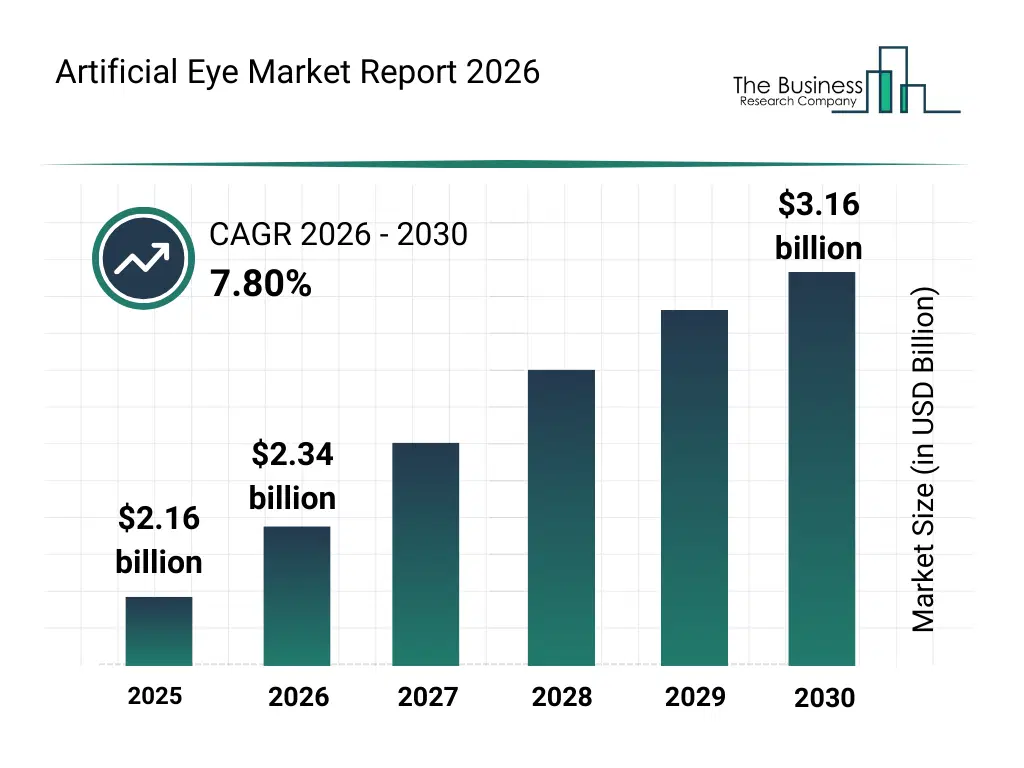
What Is The Artificial Eye Market Size and Share 2026?
The artificial eye market size has grown strongly in recent years. It will grow from $2.16 billion in 2025 to $2.34 billion in 2026 at a compound annual growth rate (CAGR) of 8.0%. The growth in the historic period can be attributed to eye trauma incidence, cancer-related enucleation cases, cosmetic rehabilitation demand, hospital ophthalmic services growth, prosthetic technology advancement.What Is The Artificial Eye Market Growth Forecast?
The artificial eye market size is expected to see strong growth in the next few years. It will grow to $3.16 billion in 2030 at a compound annual growth rate (CAGR) of 7.8%. The growth in the forecast period can be attributed to 3D printing adoption, personalized prosthetic demand, healthcare access improvement, psychological rehabilitation focus, material science innovation. Major trends in the forecast period include custom-made ocular prosthetics, growing use of digital eye printing, demand for improved aesthetic outcomes, lightweight and biocompatible materials, rising awareness of ocular rehabilitation.
Global Artificial Eye Market Segmentation
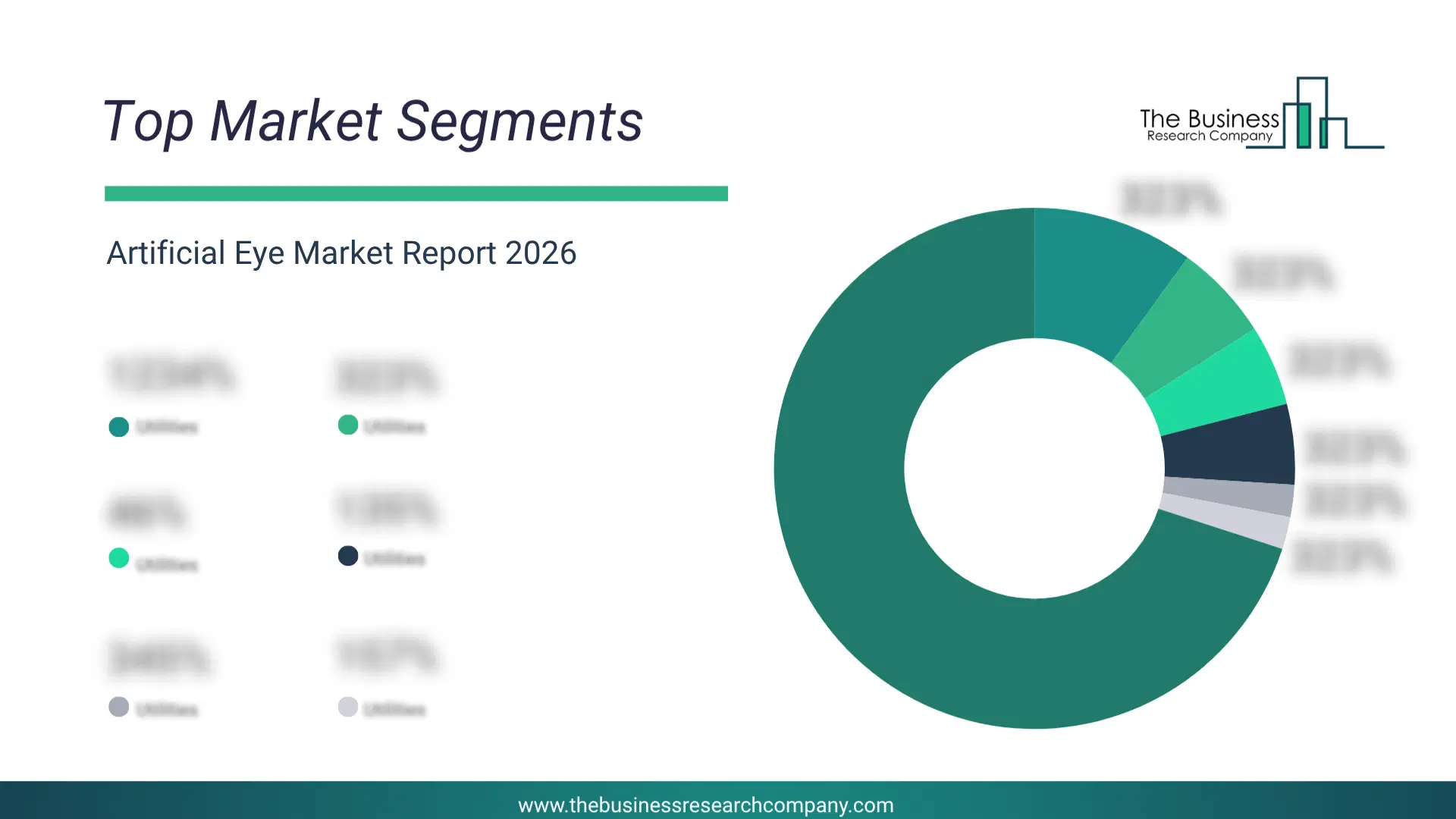
1) By Product: Integrated, Semi-Integrated, Non-Integrated 2) By Technology: Passive Prosthetic Technology, Mechanical 3) By Distribution Channel: Direct Sales, Online Sales, Third Party Distributors, Specialized Ocular Prosthetic Clinics 4) By Application: Orbital Support And Aesthetic Restoration, Cosmetic Enhancement, Medical Treatment, Reconstructive Surgery 5) By End User: Hospitals, Ambulatory Surgical Centers, Other End Users Subsegments: 1) Integrated: Hydroxyapatite (HA), Porous Polyethylene (Medpor), Bioceramic 2) Semi-Integrated: Acrylic-Based, Silicone-Based, Polymer Composite 3) Non-Integrated: Glass Prosthetic Eye, Acrylic Prosthetic Eye, Digital-Printed Prosthetic EyeWhat Is The Driver Of The Artificial Eye Market?
The rise in the number of people suffering from complete or partial blindness is expected to propel the growth of the artificial eye market going forward. Complete or partial blindness refers to the significant or total loss of vision, preventing individuals from perceiving light, shapes, or their surroundings, thereby severely impacting daily activities and overall quality of life. The rise in the number of people suffering from complete or partial blindness is due to rising retinal degenerative diseases as they progressively damage photoreceptor cells, resulting to irreversible vision loss. Artificial eye technology provides innovative solutions such as bioengineered retinal implants, which restore or enhance vision, significantly improving the quality of life for affected individuals. For instance, in May 2024, according to a report published by the East Sussex Joint Strategic Needs Assessment, a UK-based public health assessment body, about 2 million people in the UK currently live with some level of sight loss, and this number is expected to grow to 2.7 million by 2030. Therefore, the rise in the number of people suffering from complete or partial blindness is driving the growth of the artificial eye industry.Key Players In The Global Artificial Eye Market
Major companies operating in the artificial eye market are Midwest Eye Laboratories Inc., Advanced Artificial Eyes, Boston Ocular Prosthetics Inc., Erickson Laboratories Inc., F.Ad. Muller Sohne GmbH & Co KG, Irises Unlimited Inc., Ocular Prosthetics Incorporated, International Prosthetic Eye Center Private Limited, New Zealand Prosthetic Eye Service, Southeastern Ocularists Inc., The Artificial Eye Co., John O. Hughes Prosthetic Eye Laboratory, Chadwick Optical Inc., Prosthetic Eye Center of New York, American Artificial Eye Center, Hanger Ocular Prosthetics, Romford Artificial Eye Service, Artificial Eye Services Australia, Queensland Artificial Eye Service, Moorfields Ocular Prosthetics Department, Artificial Eye Clinic of India, National Artificial Eye Service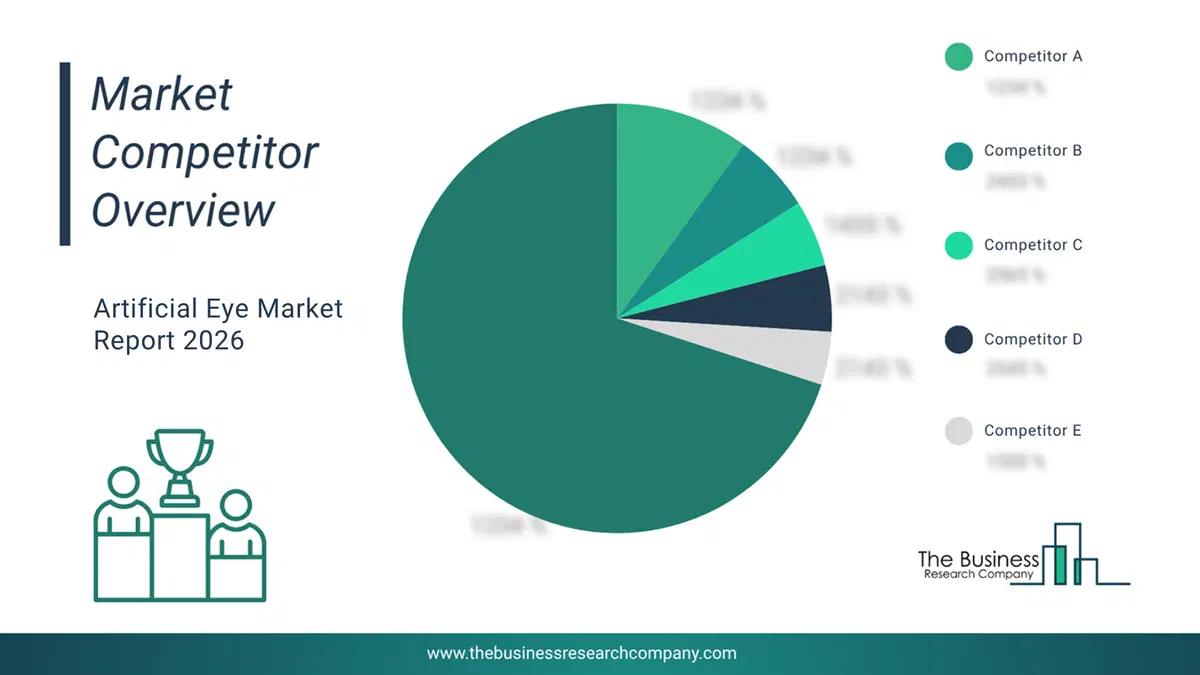
This chart is for illustrative purposes; the full report includes a detailed competitor analysis and comprehensive overview of the top 10 companies in the market.
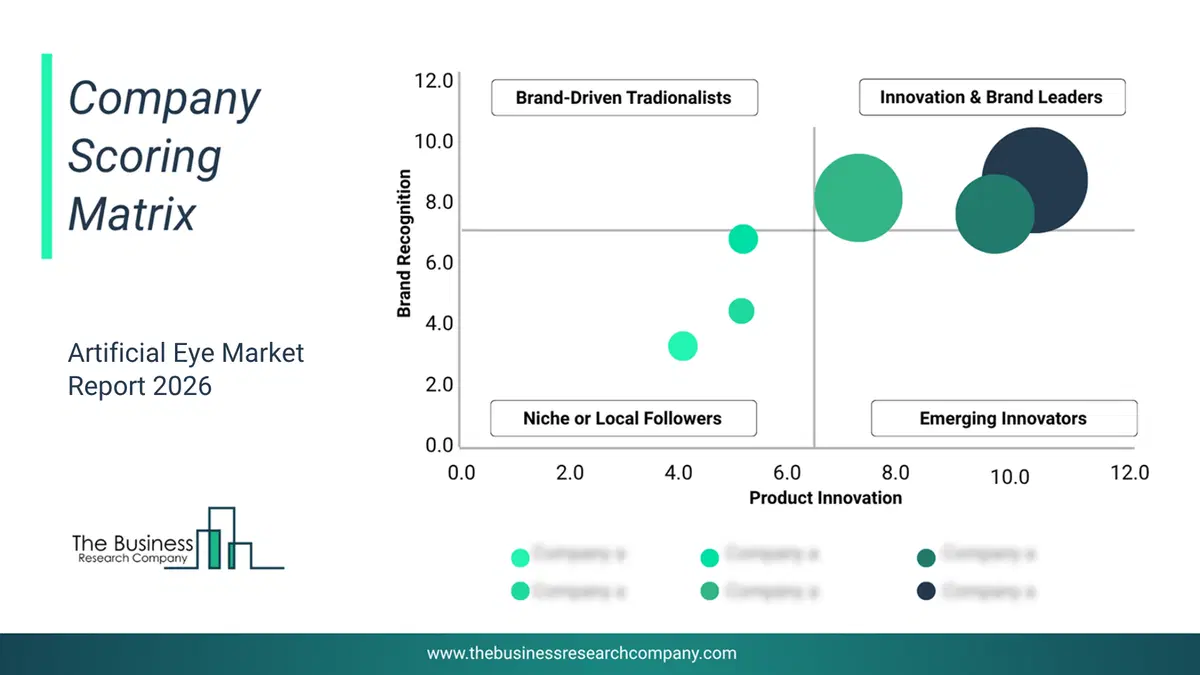
This chart maps companies by product innovation and brand strength, with bubble size indicating relative revenue, helping identify market leaders, challengers, and niche players. This is an illustrative chart; the full report provides a complete and accurate competitive analysis.
Global Artificial Eye Market Trends and Insights
Major companies operating in the artificial eye are focusing on developing advancements such as bioengineered retinal implants to restore vision for patients with retinal degenerative diseases. A bioengineered retinal implant is an artificial, lab-designed device that replaces or enhances damaged retinal tissue to restore or improve vision. It is used to restore vision in individuals with retinal degenerative diseases by replacing or enhancing damaged retinal function. For instance, in May 2024, LambdaVision Inc., a US-based biotechnology company, announced the successful first closing of its seed funding round to advance preclinical studies of its protein-based artificial retina. This innovative bioengineered retinal implant utilizes bacteriorhodopsin, a light-sensitive protein, to mimic the natural photoreceptor function in the human eye, offering a potentially more seamless vision restoration approach than traditional electronic implants. Additionally, the company is pioneering microgravity-based manufacturing on the International Space Station, which may enhance the quality and efficiency of production, setting a new standard for precision in retinal prosthetics.What Are Latest Mergers And Acquisitions In The Artificial Eye Market?
In February 2024, United Ocular, a US-based medical equipment manufacturer, acquired Eye Prosthetics of Utah for an undisclosed amount. With this acquisition, United Ocular aimed to expand its presence in the ocular prosthetics market and enhance its capabilities in providing customized eye prosthetic solutions to better serve patients with vision-related impairments. Eye Prosthetics of Utah is a US-based ocular prosthetics manufacturer that provides custom-made ocular prosthetics, including artificial eyes and scleral shells.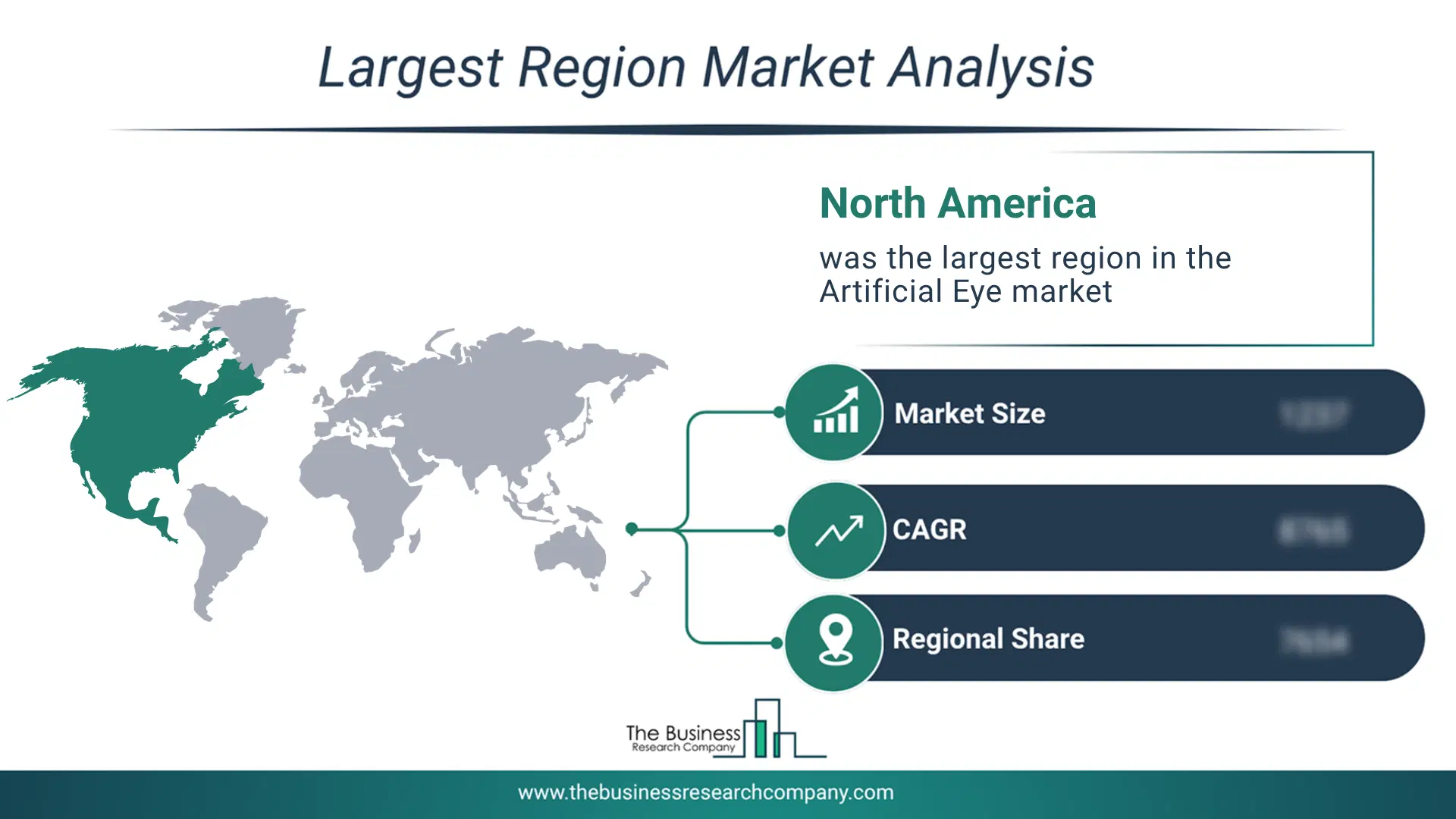
Regional Outlook
North America was the largest region in the artificial eye market in 2025. Asia-Pacific is expected to be the fastest-growing region in the forecast period. The regions covered in this market report are Asia-Pacific, South East Asia, Western Europe, Eastern Europe, North America, South America, Middle East, Africa. The countries covered in this market report are Australia, Brazil, China, France, Germany, India, Indonesia, Japan, Taiwan, Russia, South Korea, UK, USA, Canada, Italy, SpainWhat Defines the Artificial Eye Market?
The artificial eye market consists of revenues earned by entities by providing services such as ocular prosthetics, bionic eyes, 3D-printed prosthetics, and retinal implants. The market value includes the value of related goods sold by the service provider or included within the service offering. Values in this market are ‘factory gate’ values, that is, the value of goods sold by the manufacturers or creators of the goods, whether to other entities (including downstream manufacturers, wholesalers, distributors, and retailers) or directly to end customers. The value of goods in this market includes related services sold by the creators of the goods.How is Market Value Defined and Measured?
The market value is defined as the revenues that enterprises gain from the sale of goods and/or services within the specified market and geography through sales, grants, or donations in terms of the currency (in USD unless otherwise specified). The revenues for a specified geography are consumption values that are revenues generated by organizations in the specified geography within the market, irrespective of where they are produced. It does not include revenues from resales along the supply chain, either further along the supply chain or as part of other products.
This chart presents market attractiveness based on a quantitative evaluation of growth, competition, strategic alignment, and risk, offering a clear view of opportunity areas for decision-making. This chart is for illustrative purposes; the full report contains the complete analysis.

This chart highlights the Total Addressable Market (TAM) by estimating the maximum revenue opportunity using an assumption-driven approach, supporting strategic planning and opportunity sizing across markets. The chart is illustrative; the full report provides a more comprehensive analysis.
What Key Data and Analysis Are Included in the Artificial Eye Market Report 2026?
The artificial eye market research report is one of a series of new reports from The Business Research Company that provides market statistics, including industry global market size, regional shares, competitors with the market share, detailed market segments, market trends and opportunities, and any further data you may need to thrive in the artificial eye industry. The market research report delivers a complete perspective of everything you need, with an in-depth analysis of the current and future state of the industry.Artificial Eye Market Report Forecast Analysis
| Report Attribute | Details |
|---|---|
| Market Size Value In 2026 | $2.34 billion |
| Revenue Forecast In 2030 | $3.16 billion |
| Growth Rate | CAGR of 7.8% from 2026 to 2030 |
| Base Year For Estimation | 2025 |
| Actual Estimates/Historical Data | 2020-2025 |
| Forecast Period | 2026 - 2030 |
| Market Representation | Revenue in USD Billion and CAGR from 2026 to 2030 |
| Segments Covered | Product, Technology, Distribution Channel, Application, End User |
| Regional Scope | Asia-Pacific, Western Europe, Eastern Europe, North America, South America, Middle East, Africa |
| Country Scope | The countries covered in the report are Australia, Brazil, China, France, Germany, India, Indonesia, Japan, Taiwan, Russia, South Korea, UK, USA, Canada, Italy, Spain. |
| Key Companies Profiled | Midwest Eye Laboratories Inc., Advanced Artificial Eyes, Boston Ocular Prosthetics Inc., Erickson Laboratories Inc., F.Ad. Muller Sohne GmbH & Co KG, Irises Unlimited Inc., Ocular Prosthetics Incorporated, International Prosthetic Eye Center Private Limited, New Zealand Prosthetic Eye Service, Southeastern Ocularists Inc., The Artificial Eye Co., John O. Hughes Prosthetic Eye Laboratory, Chadwick Optical Inc., Prosthetic Eye Center of New York, American Artificial Eye Center, Hanger Ocular Prosthetics, Romford Artificial Eye Service, Artificial Eye Services Australia, Queensland Artificial Eye Service, Moorfields Ocular Prosthetics Department, Artificial Eye Clinic of India, National Artificial Eye Service |
| Customization Scope | Request for Customization |
| Pricing And Purchase Options | Explore Purchase Options |