
Artificial Intelligence (AI) Brain Magnetic Resonance Imaging (MRI) Lesion Detection Market Report 2026
Global Outlook – By Component (Software, Hardware, Services), By Lesion Type (Tumor Lesions, Vascular Lesions, Demyelinating Lesions, Traumatic Lesions, Other Lesion Types), By Modality (3D MRI, 2D MRI, Other Modalitys), By Application (Tumor Detection, Multiple Sclerosis, Stroke, Traumatic Brain Injury, Other Applications), By End-User (Hospitals, Diagnostic Imaging Centers, Research Institutes, Other End-Users) – Market Size, Trends, Strategies, and Forecast to 2030
Artificial Intelligence (AI) Brain Magnetic Resonance Imaging (MRI) Lesion Detection Market Overview
• Artificial Intelligence (AI) Brain Magnetic Resonance Imaging (MRI) Lesion Detection market size has reached to $1.00 billion in 2025 • Expected to grow to $2.69 billion in 2030 at a compound annual growth rate (CAGR) of 21.9% • Growth Driver: Rising Prevalence Of Neurological Disorders Driving Growth Of The Market Due To Increasing Cases, Early Diagnosis Needs, And Advancements In AI Technology • Market Trend: Developing AI-Powered Brain MRI Enhancement Tools To Improve Early Lesion Detection And Diagnostic Accuracy • North America was the largest region in 2025 and Asia-Pacific is the fastest growing region.What Is Covered Under Artificial Intelligence (AI) Brain Magnetic Resonance Imaging (MRI) Lesion Detection Market?
Artificial intelligence (AI) brain magnetic resonance imaging (MRI) lesion detection refers to the use of artificial intelligence algorithms to automatically identify abnormal lesions in brain MRI scans. It enhances diagnostic accuracy by analyzing complex imaging patterns that may be difficult for clinicians to detect consistently. This technology supports faster clinical decision-making and improves early disease detection. The main components of artificial intelligence (AI) brain MRI lesion detection are includes software, hardware, and services. Software refers to AI-based platforms and algorithms that process brain MRI images to automatically detect, classify, and analyze abnormalities. The lesion types such as tumor, vascular, demyelinating, traumatic, and others. These modalities including 2D MRI, 3D MRI, and others. The applications such as tumor detection, multiple sclerosis, stroke, traumatic brain injury, and others, and the key end users including hospitals, diagnostic imaging centers, research institutes, and others.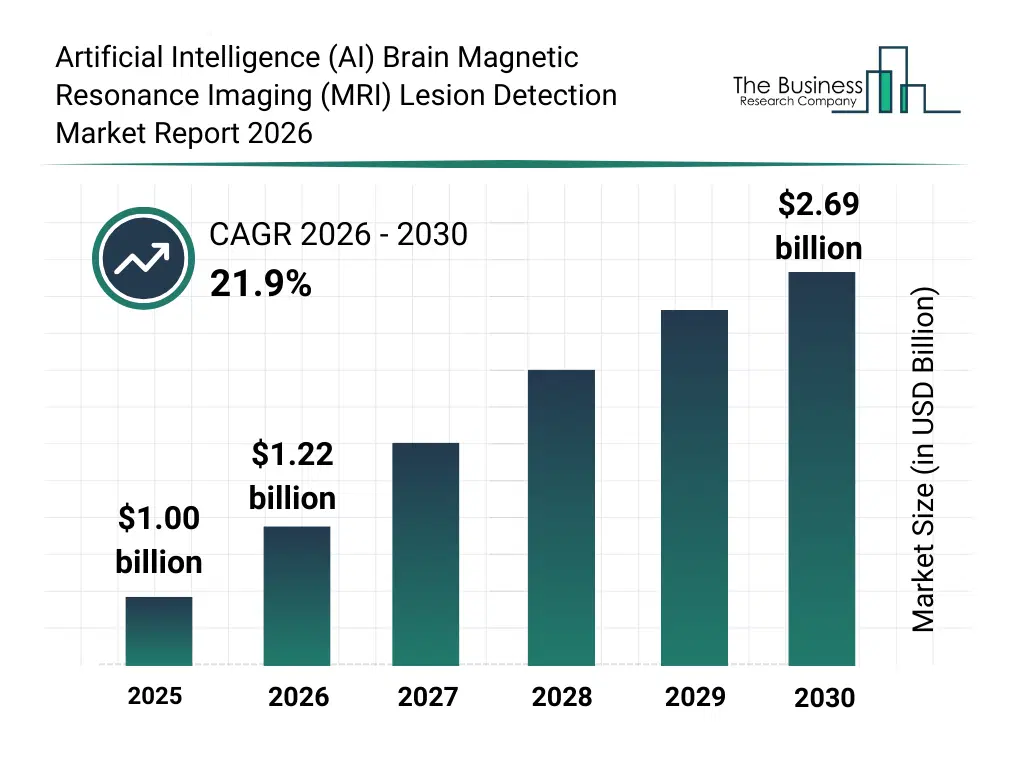
What Is The Artificial Intelligence (AI) Brain Magnetic Resonance Imaging (MRI) Lesion Detection Market Size and Share 2026?
The AI brain MRI lesion detection market size has grown exponentially in recent years. It will grow from $1.00 billion in 2025 to $1.22 billion in 2026 at a compound annual growth rate (CAGR) of 22.2%. The growth in the historic period can be attributed to increasing use of MRI in neurology, growing adoption of digital radiology, rising incidence of brain tumors and stroke, expanding hospital investments in imaging systems, increasing need for early disease diagnosis.What Is The Artificial Intelligence (AI) Brain Magnetic Resonance Imaging (MRI) Lesion Detection Market Growth Forecast?
The AI brain MRI lesion detection market size is expected to see exponential growth in the next few years. It will grow to $2.69 billion in 2030 at a compound annual growth rate (CAGR) of 21.9%. The growth in the forecast period can be attributed to growing demand for AI-enabled diagnostics, rising government support for healthcare AI, expanding adoption of cloud medical imaging, increasing integration of AI with PACS systems, rising investment in tele-radiology solutions. Major trends in the forecast period include growing demand for AI-enabled diagnostics, rising government support for healthcare AI, expanding adoption of cloud medical imaging, increasing integration of AI with PACS systems, rising investment in tele-radiology solutions.
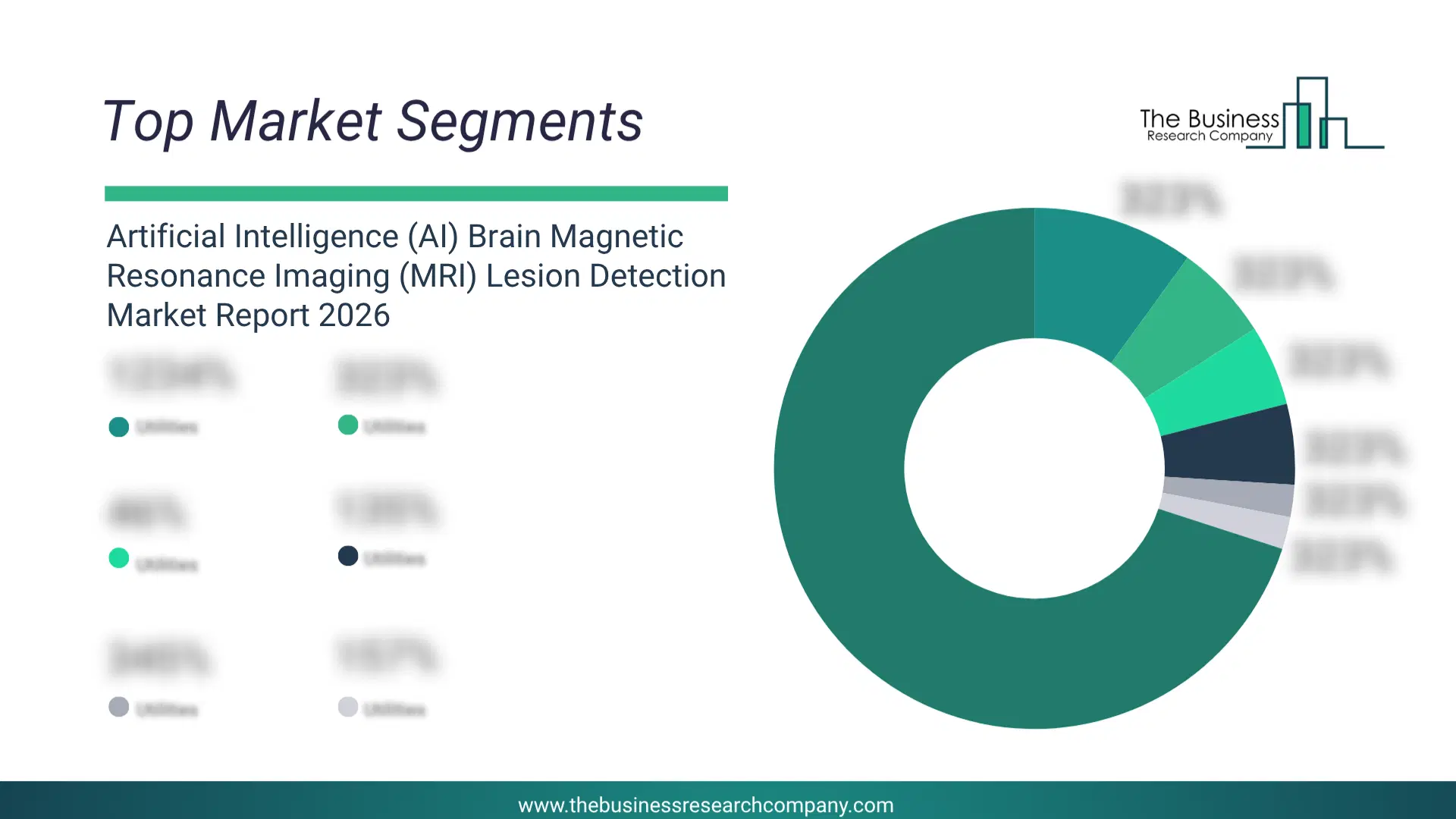
Global Artificial Intelligence (AI) Brain Magnetic Resonance Imaging (MRI) Lesion Detection Market Segmentation
1) By Component: Software, Hardware, Services 2) By Lesion Type: Tumor Lesions, Vascular Lesions, Demyelinating Lesions, Traumatic Lesions, Other Lesion Types 3) By Modality: 3D MRI, 2D MRI, Other Modalitys 4) By Application: Tumor Detection, Multiple Sclerosis, Stroke, Traumatic Brain Injury, Other Applications 5) By End-User: Hospitals, Diagnostic Imaging Centers, Research Institutes, Other End-Users Subsegments: 1) By Software: Deep Learning Detection Software, Image Processing Software, Clinical Decision Support Software, Diagnostic Reporting Software, Annotation and Labeling Software 2) By Hardware: Magnetic Resonance Imaging Scanners, Graphics Processing Units, Edge Computing Devices, Image Acquisition Systems 3) By Services: Installation And Integration Services, Model Training And Customization Services, Maintenance And Support Services, Data Annotation And Validation ServicesWhat Is The Driver Of The Artificial Intelligence (AI) Brain Magnetic Resonance Imaging (MRI) Lesion Detection Market?
The increasing prevalence of neurological disorders is expected to propel the growth of the artificial intelligence (AI) brain MRI lesion detection market going forward. Neurological disorders are medical conditions that affect the brain, spinal cord, and nerves, disrupting normal nervous system function and leading to impairments in movement, cognition, sensation, behavior, or overall bodily control. The increasing prevalence of neurological disorders is due to unhealthy lifestyle habits, including poor diet, physical inactivity, smoking, excessive alcohol consumption, and chronic stress. AI brain MRI lesion detection supports neurological disorder patients by enabling faster and more accurate identification of brain abnormalities, facilitating early diagnosis, personalized treatment planning, and improved overall patient outcomes. For instance, in April 2024, according to the National Institutes of Health (NIH), a US-based government’s premier biomedical research agency, an estimated 6.9 million Americans aged 65 and older are currently living with Alzheimer’s dementia, and this figure is projected to nearly double to 13.8 million by 2060. Therefore, the increasing prevalence of neurological disorders drives the artificial intelligence (AI) brain MRI lesion detection market.Key Players In The Global Artificial Intelligence (AI) Brain Magnetic Resonance Imaging (MRI) Lesion Detection Market
Major companies operating in the artificial intelligence (AI) brain magnetic resonance imaging (mri) lesion detection market are Aidoc Medical Ltd., RapidAI Inc., Annalise.ai Pty Ltd., Quibim S.L., Olea Medical Imaging SAS, DeepTek.ai Inc., Image Analysis Group Ltd., Subtle Medical Inc., Gleamer SAS, Raidium Ltd., Invicro LLC, CorTechs.ai Inc., Omniscient Neurotechnology Inc., NeoSoma Inc., Oxipit Ltd., Cerebriu Inc., BrainReader ApS, MedImaging AI Solutions Ltd., NeuroVision Imaging Inc., NeuroQuant Analytics Inc.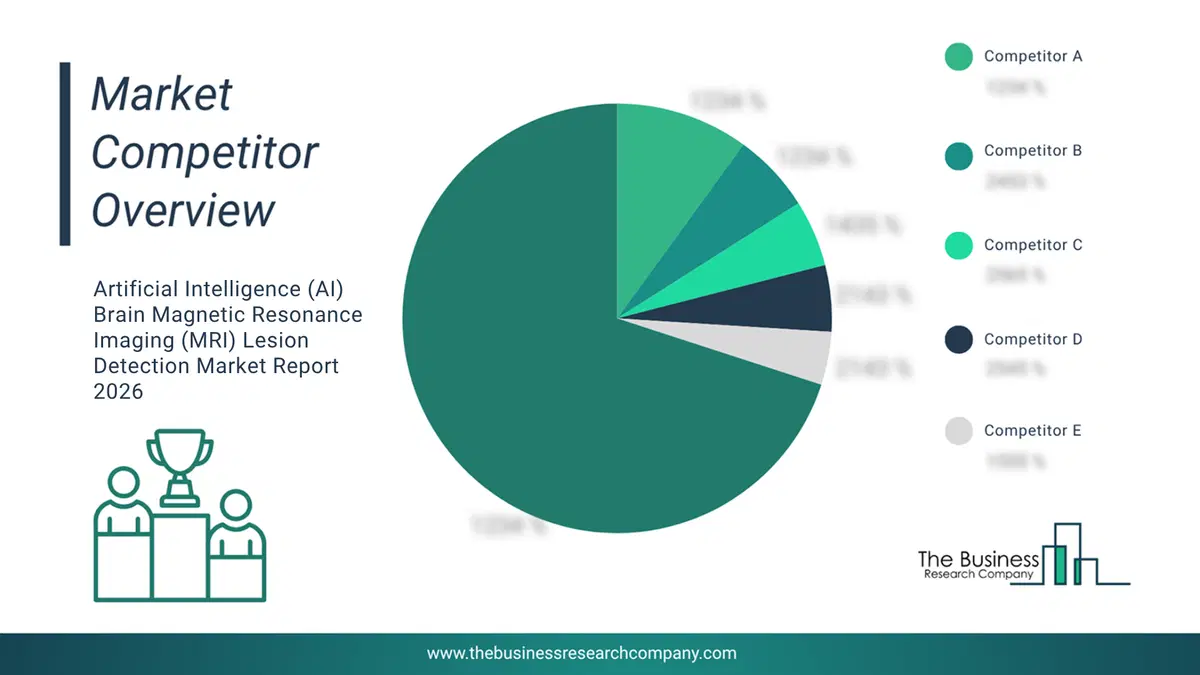
This chart is for illustrative purposes; the full report includes a detailed competitor analysis and comprehensive overview of the top 10 companies in the market.
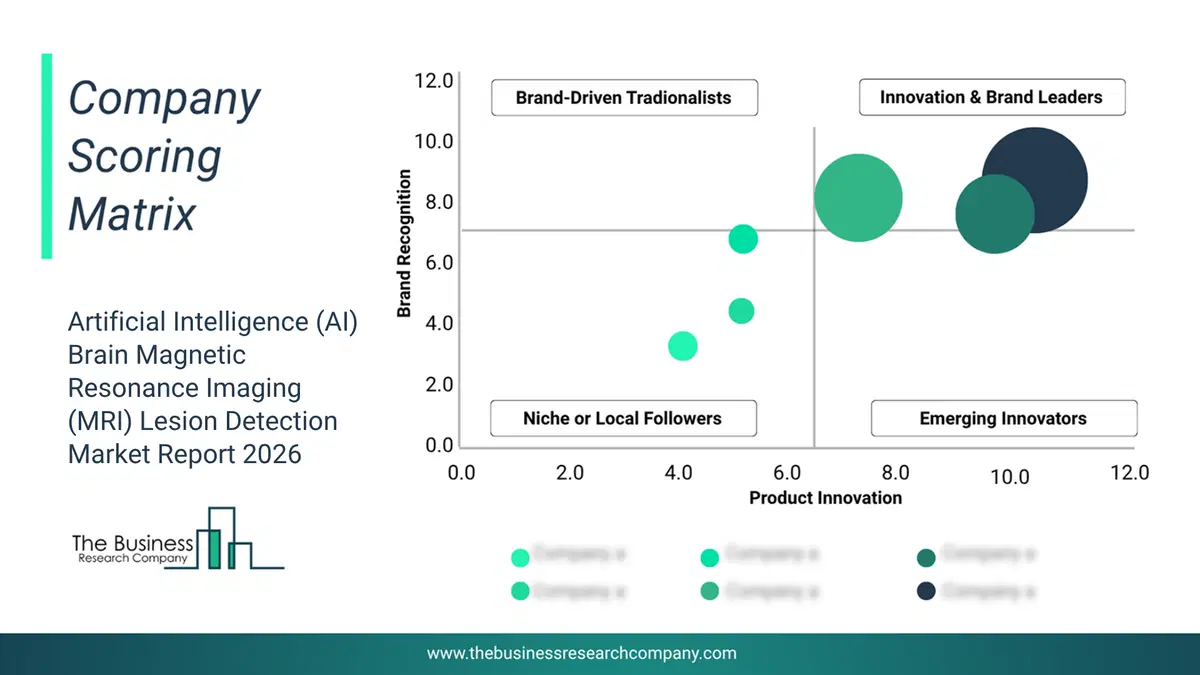
This chart maps companies by product innovation and brand strength, with bubble size indicating relative revenue, helping identify market leaders, challengers, and niche players. This is an illustrative chart; the full report provides a complete and accurate competitive analysis.
Global Artificial Intelligence (AI) Brain Magnetic Resonance Imaging (MRI) Lesion Detection Market Trends and Insights
Major companies operating in the artificial intelligence (AI) brain MRI lesion detection market are focusing on developing innovative solutions, such as AI-powered contrast enhancement systems, to improve early detection of subtle brain abnormalities and enhance diagnostic accuracy. AI-powered contrast enhancement systems use advanced algorithms to increase lesion visibility on contrast-enhanced MRI scans, improving lesion-to-brain and contrast-to-noise ratios without modifying standard acquisition protocols. For instance, in October 2024, Bracco Diagnostics, a US-based medical imaging company, and Subtle Medical, a US-based AI healthcare company, launched AiMIFY software. This AI-based brain MRI enhancement tool amplifies contrast enhancement up to two times compared with standard gadolinium-based imaging and improves the visibility of lesions while maintaining existing scanning workflows. This launch represents a significant technological advancement by integrating AI with conventional imaging, bridging advanced computational analysis with clinical radiology practice. It offers a scalable, efficient solution for enhancing diagnostic confidence and early lesion detection in neurological imaging.What Are Latest Mergers And Acquisitions In The Artificial Intelligence (AI) Brain Magnetic Resonance Imaging (MRI) Lesion Detection Market?
In September 2025, GE HealthCare, a US-based provider of medical imaging systems, AI-enabled diagnostics, and healthcare solutions, acquired icometrix for an undisclosed amount. With this acquisition, GE HealthCare aims to strengthen its neurology portfolio and integrate icometrix’s AI-powered brain imaging analysis (icobrain platform) into its MRI systems to support detection and quantification of neurological abnormalities, including Alzheimer’s-related imaging biomarkers. icometrix is a Belgium-based provider of AI-driven brain imaging analysis solutions that assist in the detection and monitoring of neurological disorders via MRI.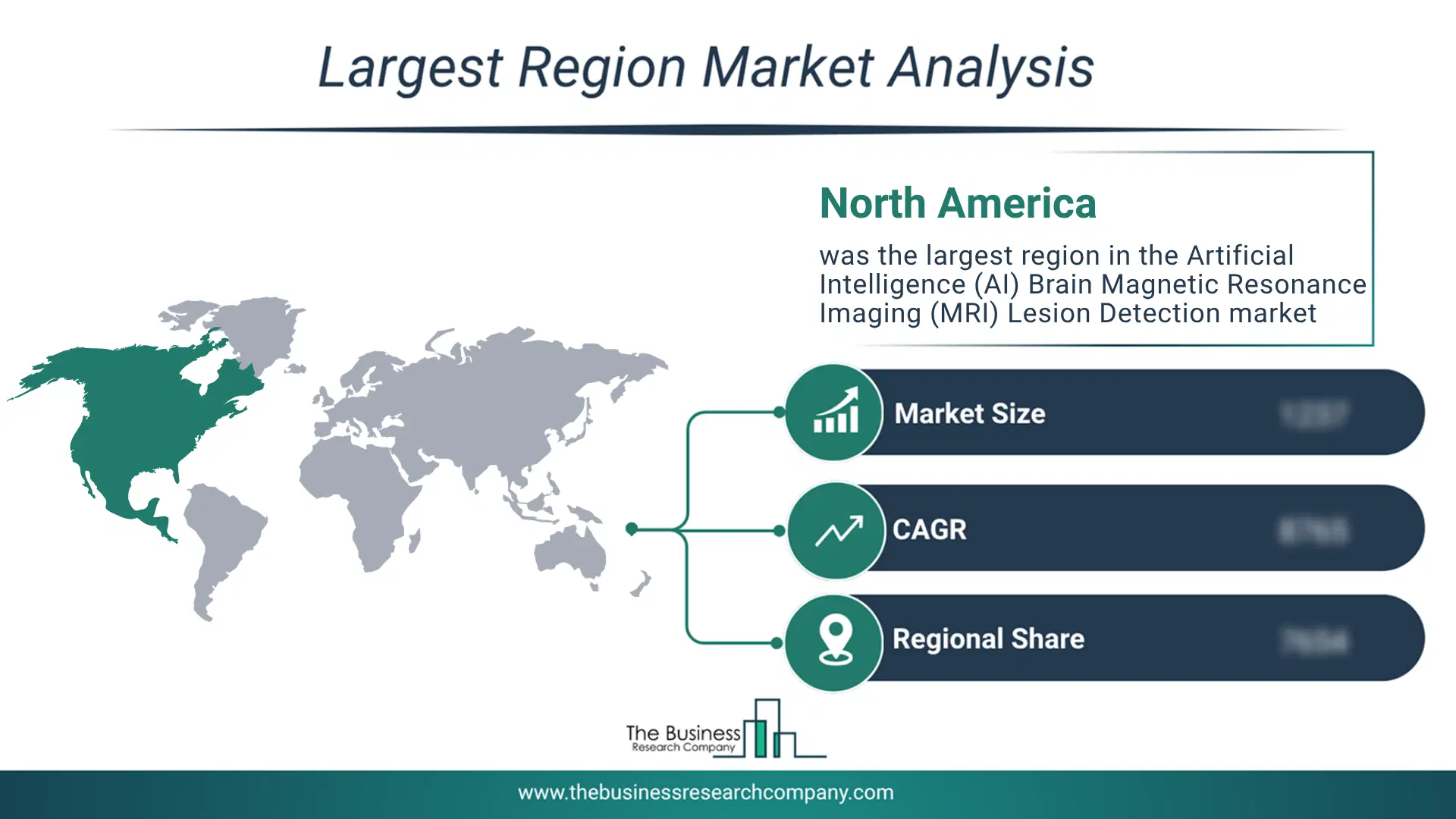
Regional Insights
North America was the largest region in the AI brain MRI lesion detection market in 2025. Asia-Pacific is expected to be the fastest-growing region in the forecast period. The regions covered in this market report are Asia-Pacific, South East Asia, Western Europe, Eastern Europe, North America, South America, Middle East, Africa. The countries covered in this market report are Australia, Brazil, China, France, Germany, India, Indonesia, Japan, Taiwan, Russia, South Korea, UK, USA, Canada, Italy, Spain.What Defines the Artificial Intelligence (AI) Brain Magnetic Resonance Imaging (MRI) Lesion Detection Market?
The artificial intelligence (AI) brain magnetic resonance imaging (MRI) lesion detection market consists of revenues earned by entities by providing services such as algorithm development, model training, cloud-based image analysis, diagnostic reporting, and data annotation. The market value includes the value of related goods sold by the service provider or included within the service offering. The artificial intelligence (AI) brain magnetic resonance imaging (MRI) lesion detection market also includes sales of MRI scanners, imaging hardware modules, GPU servers, and data storage devices. Values in this market are ‘factory gate’ values, that is the value of goods sold by the manufacturers or creators of the goods, whether to other entities (including downstream manufacturers, wholesalers, distributors and retailers) or directly to end customers. The value of goods in this market includes related services sold by the creators of the goods.How is Market Value Defined and Measured?
The market value is defined as the revenues that enterprises gain from the sale of goods and/or services within the specified market and geography through sales, grants, or donations in terms of the currency (in USD unless otherwise specified). The revenues for a specified geography are consumption values that are revenues generated by organizations in the specified geography within the market, irrespective of where they are produced. It does not include revenues from resales along the supply chain, either further along the supply chain or as part of other products.
This chart presents market attractiveness based on a quantitative evaluation of growth, competition, strategic alignment, and risk, offering a clear view of opportunity areas for decision-making. This chart is for illustrative purposes; the full report contains the complete analysis.

This chart highlights the Total Addressable Market (TAM) by estimating the maximum revenue opportunity using an assumption-driven approach, supporting strategic planning and opportunity sizing across markets. The chart is illustrative; the full report provides a more comprehensive analysis.
What Key Data and Analysis Are Included in the Artificial Intelligence (AI) Brain Magnetic Resonance Imaging (MRI) Lesion Detection Market Report 2026?
The artificial intelligence (ai) brain magnetic resonance imaging (mri) lesion detection market research report is one of a series of new reports from The Business Research Company that provides market statistics, including industry global market size, regional shares, competitors with the market share, detailed market segments, market trends and opportunities, and any further data you may need to thrive in the artificial intelligence (ai) brain magnetic resonance imaging (mri) lesion detection industry. The market research report delivers a complete perspective of everything you need, with an in-depth analysis of the current and future state of the industry.Artificial Intelligence (AI) Brain Magnetic Resonance Imaging (MRI) Lesion Detection Market Report Forecast Analysis
| Report Attribute | Details |
|---|---|
| Market Size Value In 2026 | $1.22 billion |
| Revenue Forecast In 2030 | $2.69 billion |
| Growth Rate | CAGR of 21.9% from 2026 to 2030 |
| Base Year For Estimation | 2025 |
| Actual Estimates/Historical Data | 2020-2025 |
| Forecast Period | 2026 - 2030 |
| Market Representation | Revenue in USD Billion and CAGR from 2026 to 2030 |
| Segments Covered | Component, Lesion Type, Modality, Application, End-User |
| Regional Scope | Asia-Pacific, Western Europe, Eastern Europe, North America, South America, Middle East, Africa |
| Country Scope | The countries covered in the report are Australia, Brazil, China, France, Germany, India, Indonesia, Japan, Taiwan, Russia, South Korea, UK, USA, Canada, Italy, Spain. |
| Key Companies Profiled | Aidoc Medical Ltd., RapidAI Inc., Annalise.ai Pty Ltd., Quibim S.L., Olea Medical Imaging SAS, DeepTek.ai Inc., Image Analysis Group Ltd., Subtle Medical Inc., Gleamer SAS, Raidium Ltd., Invicro LLC, CorTechs.ai Inc., Omniscient Neurotechnology Inc., NeoSoma Inc., Oxipit Ltd., Cerebriu Inc., BrainReader ApS, MedImaging AI Solutions Ltd., NeuroVision Imaging Inc., NeuroQuant Analytics Inc. |
| Customization Scope | Request for Customization |
| Pricing And Purchase Options | Explore Purchase Options |