
Artificial Intelligence (AI)-Driven Hospital Readmission Predictor Market Report 2026
Global Outlook – By Component (Software, Hardware, Services), By Deployment Mode (On-Premises, Cloud), By Application (Patient Risk Assessment, Care Management, Clinical Decision Support, Population Health Management, Other Applications), By End-User (Hospitals, Clinics, Ambulatory Surgical Centers, Other End-Users) – Market Size, Trends, Strategies, and Forecast to 2030
Artificial Intelligence (AI)-Driven Hospital Readmission Predictor Market Overview
• Artificial Intelligence (AI)-Driven Hospital Readmission Predictor market size has reached to $1.92 billion in 2025 • Expected to grow to $6.09 billion in 2030 at a compound annual growth rate (CAGR) of 25.9% • Growth Driver: Increasing Prevalence Of Chronic Diseases Fueling The Growth Of The Market Due To The Need For Proactive, Personalized Care And Reduced Readmissions • Market Trend: Launching Advanced Predictive Platforms To Reduce Avoidable Readmissions And Optimize Post-Discharge Care • North America was the largest region in 2025 and Asia-Pacific is the fastest growing region.What Is Covered Under Artificial Intelligence (AI)-Driven Hospital Readmission Predictor Market?
An artificial intelligence (AI)-driven hospital readmission predictor is a digital healthcare tool that uses artificial intelligence and machine learning models to estimate the likelihood of a patient returning to the hospital after discharge. It analyzes large amounts of clinical, behavioral, and historical health data to identify patterns that signal higher readmission risk. Hospitals and care teams use these insights to improve care planning, reduce avoidable readmissions, and enhance patient outcomes. The main components of AI-driven hospital readmission predictor solutions are software, hardware, and services. Software consists of predictive analytics platforms that analyze clinical, operational, and patient data to identify individuals at high risk of readmission and support proactive intervention strategies. These solutions are deployed through on-premises and cloud models, used in applications such as patient risk assessment, care management, clinical decision support, population health management, and others, among end users including hospitals, clinics, ambulatory surgical centers, and others.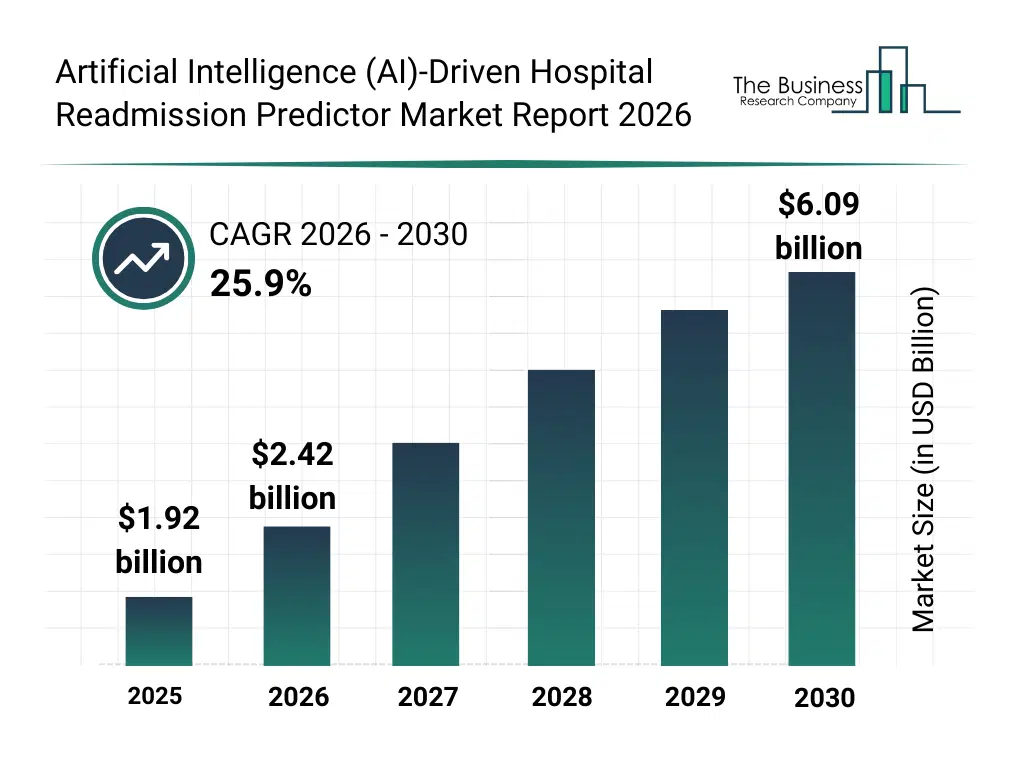
What Is The Artificial Intelligence (AI)-Driven Hospital Readmission Predictor Market Size and Share 2026?
The artificial intelligence (AI)-driven hospital readmission predictor market size has grown exponentially in recent years. It will grow from $1.92 billion in 2025 to $2.42 billion in 2026 at a compound annual growth rate (CAGR) of 26.2%. The growth in the historic period can be attributed to increasing adoption of AI in healthcare, growing demand to reduce hospital readmissions, rising availability of electronic health records, expansion of predictive analytics usage, and increasing focus on patient outcomes.What Is The Artificial Intelligence (AI)-Driven Hospital Readmission Predictor Market Growth Forecast?
The artificial intelligence (AI)-driven hospital readmission predictor market size is expected to see exponential growth in the next few years. It will grow to $6.09 billion in 2030 at a compound annual growth rate (CAGR) of 25.9%. The growth in the forecast period can be attributed to rising investments in healthcare IT infrastructure, growing integration of clinical decision support systems, increasing adoption of cloud-based analytics platforms, expansion of remote patient monitoring tools, and growing emphasis on value-based care models. Major trends in the forecast period include technology advancements in machine learning models, innovations in real-time patient monitoring, research and developments in natural language processing, the development of explainable AI for healthcare, and advancements in interoperable healthcare IT systems.
Global Artificial Intelligence (AI)-Driven Hospital Readmission Predictor Market Segmentation
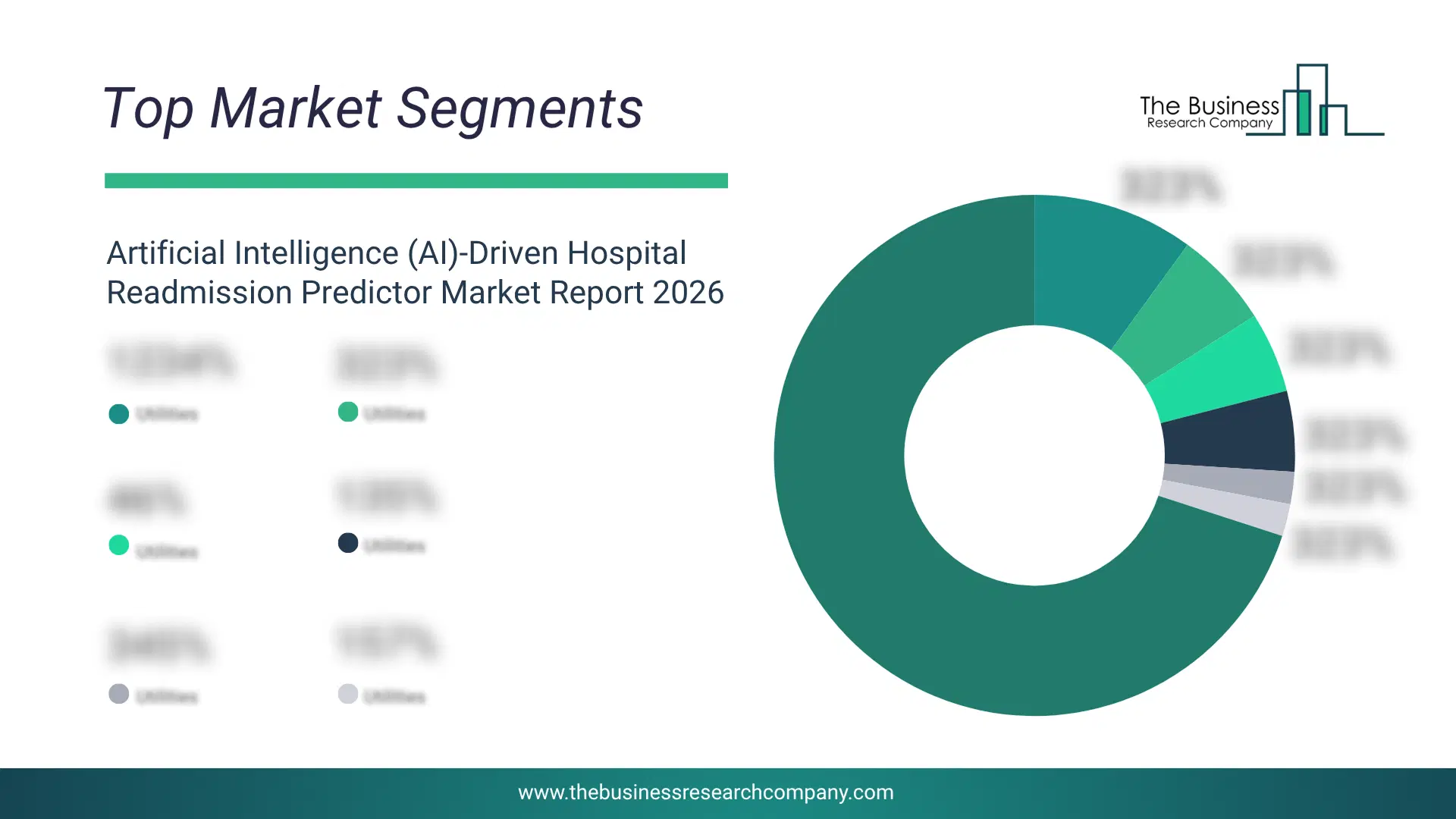
1) By Component: Software, Hardware, Services 2) By Deployment Mode: On-Premises, Cloud 3) By Application: Patient Risk Assessment, Care Management, Clinical Decision Support, Population Health Management, Other Applications 4) By End-User: Hospitals, Clinics, Ambulatory Surgical Centers, Other End-Users Subsegments: 1) By Software: Electronic Health Record Integration, Predictive Analytics Platforms, Risk Scoring Systems, Clinical Decision Support Tools 2) By Hardware: Servers, Sensors, Monitoring Devices, Data Storage Devices 3) By Services: Data Analytics Services, Predictive Modeling Services, Integration And Deployment Services, Training And Support Services, Monitoring And Reporting ServicesWhat Is The Driver Of The Artificial Intelligence (AI)-Driven Hospital Readmission Predictor Market?
The increasing prevalence of chronic diseases is expected to propel the growth of the artificial intelligence (AI)-driven hospital readmission predictor market going forward. Chronic diseases are long-lasting health conditions that usually progress slowly over time, such as diabetes, heart disease, and arthritis, and often require ongoing medical attention and lifestyle management to control symptoms and prevent complications. Chronic diseases are increasing largely due to unhealthy lifestyles, including poor diet, physical inactivity, and smoking, which raise the risk of conditions such as diabetes, heart disease, and obesity. Artificial intelligence (AI)-driven hospital readmission predictors aid in chronic disease management by analyzing patient data to identify those at high risk of readmission. They improve patient outcomes by enabling proactive interventions, personalized care plans, and timely follow-up to prevent complications and reduce hospital stays. For instance, in June 2024, according to the National Health Service, a UK-based government department, 3,615,330 individuals registered with a general practitioner (GP) were diagnosed with non-diabetic hyperglycemia or pre-diabetes (a condition with elevated blood sugar levels, not high enough to be classified as diabetes) in 2023, marking an 18% increase from 3,065,825 cases in 2022. Therefore, the increasing prevalence of chronic diseases is driving the growth of the artificial intelligence (AI)-driven hospital readmission predictor industry.Key Players In The Global Artificial Intelligence (AI)-Driven Hospital Readmission Predictor Market
Major companies operating in the artificial intelligence (AI)-driven hospital readmission predictor market are Oracle Corporation, Siemens Healthineers AG, Cognizant Technology Solutions Corp., Epic Systems Corporation, SAS Institute Inc., Veradigm Inc., Merative LLP, Health Catalyst Inc., Lumeris Inc., Innovaccer Inc., Optum Inc., H2O.ai Inc., Healthfirst Inc., Qventus Inc., Lightbeam Health Solutions Inc., HealthEC LLC, Collective Medical Technologies Inc., CarePredict Inc., HBI Solutions Inc., CloudMedx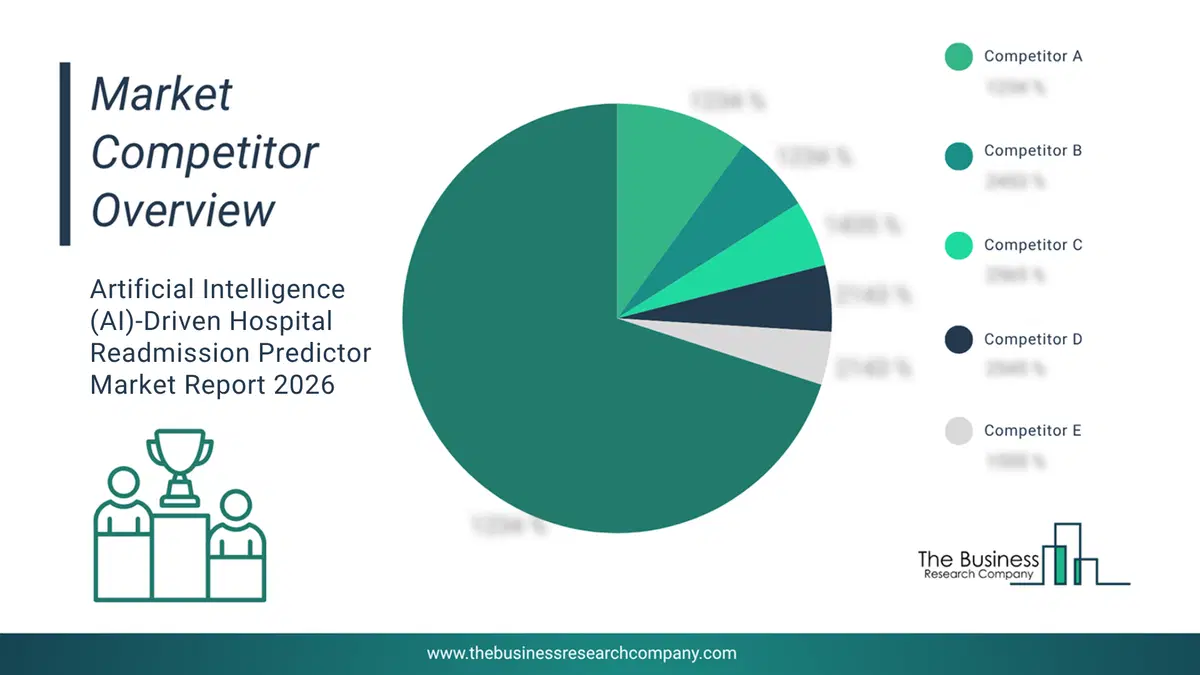
This chart is for illustrative purposes; the full report includes a detailed competitor analysis and comprehensive overview of the top 10 companies in the market.
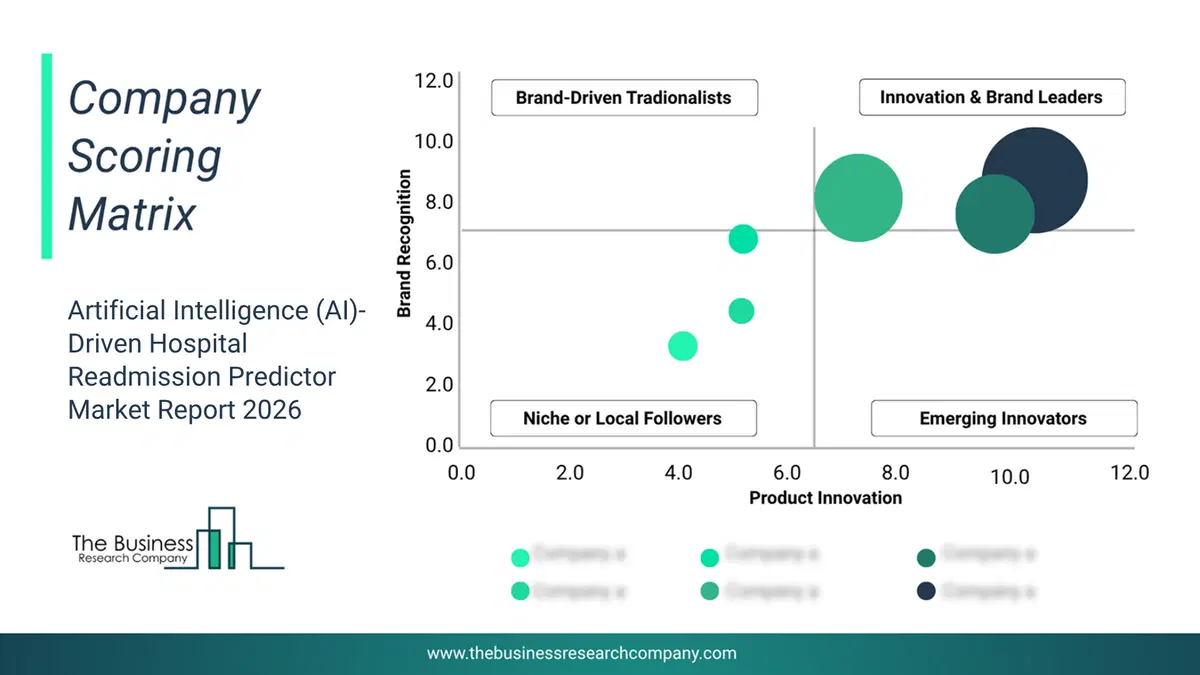
This chart maps companies by product innovation and brand strength, with bubble size indicating relative revenue, helping identify market leaders, challengers, and niche players. This is an illustrative chart; the full report provides a complete and accurate competitive analysis.
Global Artificial Intelligence (AI)-Driven Hospital Readmission Predictor Market Trends and Insights
Major companies operating in the artificial intelligence (AI)-driven hospital readmission predictor market are focusing on developing advanced solutions, such as advanced predictive modeling, to identify high-risk patients, enable proactive interventions, and optimize post-discharge care. Advanced predictive modeling refers to the use of sophisticated statistical algorithms and machine learning techniques on historical and real-time data to uncover complex patterns and generate highly accurate forecasts of future outcomes. For instance, in July 2025, Innovaccer Inc., a US-based healthcare AI company, launched its AI-Powered Readmissions Management Solution, which integrates advanced predictive modeling to flag avoidable readmissions across Medicare, Medicaid, and uninsured populations. The platform also provides unified 360-degree patient views, agentic AI tools such as Care Management Copilot and Pre-Call Coordinator Agent for workflow automation, and benchmark intelligence for proactive intervention planning. This solution helps healthcare providers reduce readmission rates, improve resource allocation, and enhance overall patient outcomes.What Are Latest Mergers And Acquisitions In The Artificial Intelligence (AI)-Driven Hospital Readmission Predictor Market?
In July 2024, SAIGroup, a US-based enterprise AI investment firm focusing on healthcare and enterprise intelligence solutions, acquired GetWellNetwork Inc. for an undisclosed amount. With this acquisition, SAIGroup aims to integrate advanced predictive and generative AI into Get Well’s patient engagement platform, enhancing predictive insights into patient behaviors and clinical outcomes to reduce hospital readmissions, optimize care transitions, and strengthen overall hospital operational efficiency. GetWellNetwork Inc. is a US-based healthcare technology company specializing in AI-driven hospital readmission prediction solutions.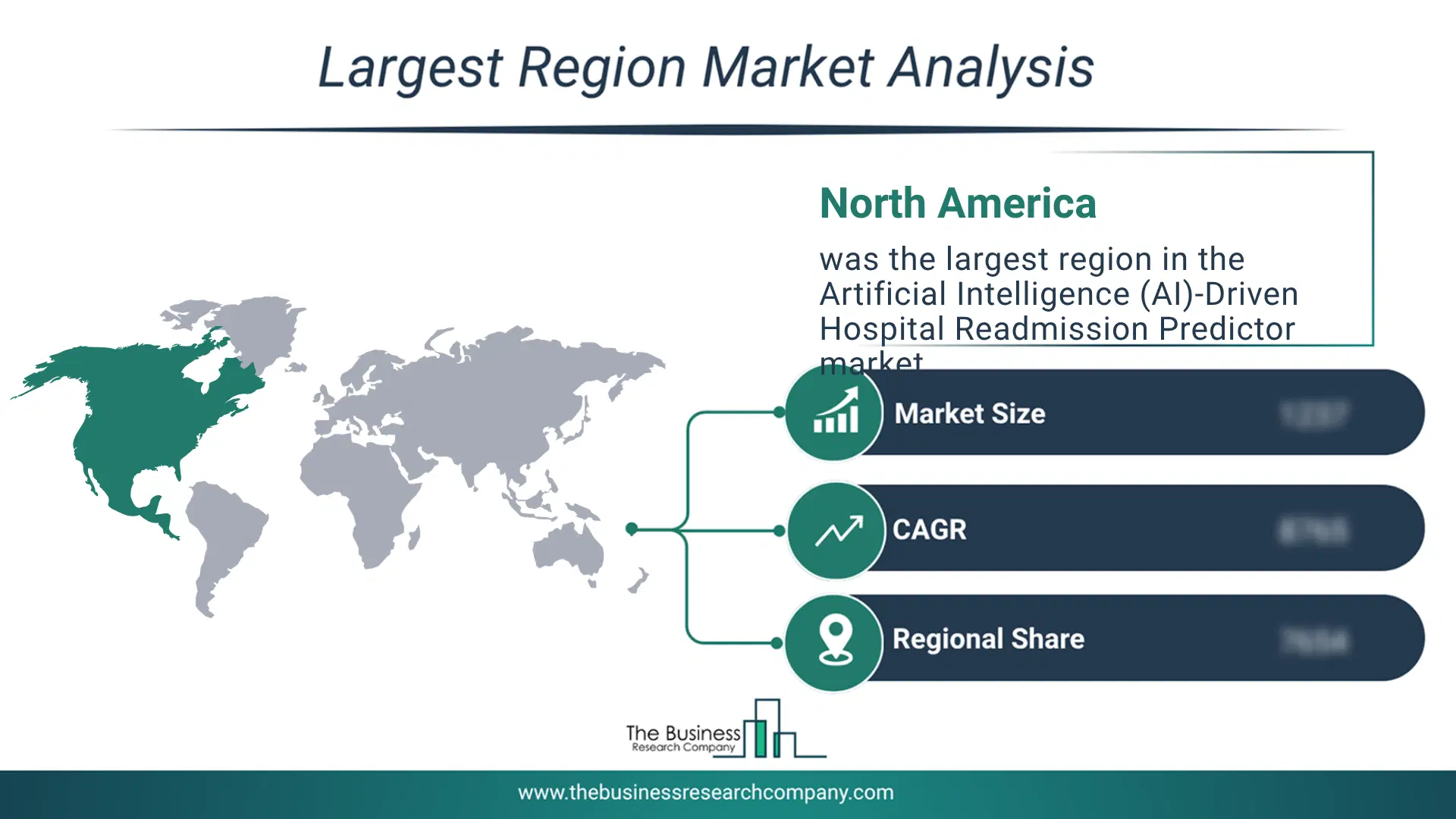
Regional Insights
North America was the largest region in the artificial intelligence (AI)-driven hospital readmission predictor market in 2025. Asia-Pacific is expected to be the fastest-growing region in the forecast period. The regions covered in this market report are Asia-Pacific, South East Asia, Western Europe, Eastern Europe, North America, South America, Middle East, Africa. The countries covered in this market report are Australia, Brazil, China, France, Germany, India, Indonesia, Japan, Taiwan, Russia, South Korea, UK, USA, Canada, Italy, Spain.What Defines the Artificial Intelligence (AI)-Driven Hospital Readmission Predictor Market?
The artificial intelligence (AI)-driven hospital readmission predictor market consists of revenues earned by entities by providing services such as patient readmission risk assessment, predictive analytics and modeling, clinical decision support, and care pathway optimization. The market value includes the value of related goods sold by the service provider or included within the service offering. The artificial intelligence (AI)-driven hospital readmission predictor market also includes sales of AI-based predictive analytics software, hospital readmission risk prediction platforms, machine learning models and algorithms, and dashboard and reporting tools. Values in this market are ‘factory gate’ values, that is the value of goods sold by the manufacturers or creators of the goods, whether to other entities (including downstream manufacturers, wholesalers, distributors and retailers) or directly to end customers. The value of goods in this market includes related services sold by the creators of the goods.How is Market Value Defined and Measured?
The market value is defined as the revenues that enterprises gain from the sale of goods and/or services within the specified market and geography through sales, grants, or donations in terms of the currency (in USD unless otherwise specified). The revenues for a specified geography are consumption values that are revenues generated by organizations in the specified geography within the market, irrespective of where they are produced. It does not include revenues from resales along the supply chain, either further along the supply chain or as part of other products.
This chart presents market attractiveness based on a quantitative evaluation of growth, competition, strategic alignment, and risk, offering a clear view of opportunity areas for decision-making. This chart is for illustrative purposes; the full report contains the complete analysis.

This chart highlights the Total Addressable Market (TAM) by estimating the maximum revenue opportunity using an assumption-driven approach, supporting strategic planning and opportunity sizing across markets. The chart is illustrative; the full report provides a more comprehensive analysis.
What Key Data and Analysis Are Included in the Artificial Intelligence (AI)-Driven Hospital Readmission Predictor Market Report 2026?
The artificial intelligence (ai)-driven hospital readmission predictor market research report is one of a series of new reports from The Business Research Company that provides market statistics, including industry global market size, regional shares, competitors with the market share, detailed market segments, market trends and opportunities, and any further data you may need to thrive in the artificial intelligence (ai)-driven hospital readmission predictor industry. The market research report delivers a complete perspective of everything you need, with an in-depth analysis of the current and future state of the industry.Artificial Intelligence (AI)-Driven Hospital Readmission Predictor Market Report Forecast Analysis
| Report Attribute | Details |
|---|---|
| Market Size Value In 2026 | $2.42 billion |
| Revenue Forecast In 2030 | $6.09 billion |
| Growth Rate | CAGR of 25.9% from 2026 to 2030 |
| Base Year For Estimation | 2025 |
| Actual Estimates/Historical Data | 2020-2025 |
| Forecast Period | 2026 - 2030 |
| Market Representation | Revenue in USD Billion and CAGR from 2026 to 2030 |
| Segments Covered | Component, Deployment Mode, Application, End-User |
| Regional Scope | Asia-Pacific, Western Europe, Eastern Europe, North America, South America, Middle East, Africa |
| Country Scope | The countries covered in the report are Australia, Brazil, China, France, Germany, India, Indonesia, Japan, Taiwan, Russia, South Korea, UK, USA, Canada, Italy, Spain |
| Key Companies Profiled | Oracle Corporation, Siemens Healthineers AG, Cognizant Technology Solutions Corp., Epic Systems Corporation, SAS Institute Inc., Veradigm Inc., Merative LLP, Health Catalyst Inc., Lumeris Inc., Innovaccer Inc., Optum Inc., H2O.ai Inc., Healthfirst Inc., Qventus Inc., Lightbeam Health Solutions Inc., HealthEC LLC, Collective Medical Technologies Inc., CarePredict Inc., HBI Solutions Inc., CloudMedx |
| Customization Scope | Request for Customization |
| Pricing And Purchase Options | Explore Purchase Options |