
Artificial Intelligence (AI)-Driven Rare Disease Patient Finder Market Report 2026
Global Outlook – By Component (Software, Services), By Deployment Mode (Cloud-Based, On-Premises), By Application (Hospitals, Clinics, Research Institutes, Pharmaceutical Companies, Other Applications), By End-User (Healthcare Providers, Life Sciences Companies, Payers, Other End-Users) - Market Size, Trends, Strategies, and Forecast to 2030
Artificial Intelligence (AI)-Driven Rare Disease Patient Finder Market Overview
• Artificial Intelligence (AI)-Driven Rare Disease Patient Finder market size has reached to $1.62 billion in 2025 • Expected to grow to $5.95 billion in 2030 at a compound annual growth rate (CAGR) of 29.6% • Growth Driver: Increasing Acceptance Of Digital Health And Telemedicine Is Fueling The Growth Of The Market Due To Rising Patient Demand For Convenient And Accessible Healthcare Solutions • Market Trend: Technological Advancements Are Driving Faster And More Efficient Patient Identification For Rare Disease Clinical Trials • North America was the largest region in 2025 and Asia-Pacific is the fastest growing region.What Is Covered Under Artificial Intelligence (AI)-Driven Rare Disease Patient Finder Market?
An artificial intelligence (AI)-driven rare disease patient finder is a technology platform that leverages AI algorithms to identify and match patients with rare diseases for clinical trials, research studies, and personalized treatments. It analyzes diverse datasets, including medical records, genetic information, and real-world health data, to accurately locate potential patients. By improving patient identification efficiency, it accelerates research, enhances clinical trial recruitment, and supports the development of targeted therapies. The main components of the artificial intelligence (AI)-driven rare disease patient finder are software and services. Software is a set of programs, instructions, and data that tell a computer or digital device how to perform specific tasks or functions. The various deployment modes are cloud-based and on-premises. The multiple applications involved are hospitals, clinics, research institutes, pharmaceutical companies, and others, and they are used by several end users such as healthcare providers, life sciences companies, payers, and others.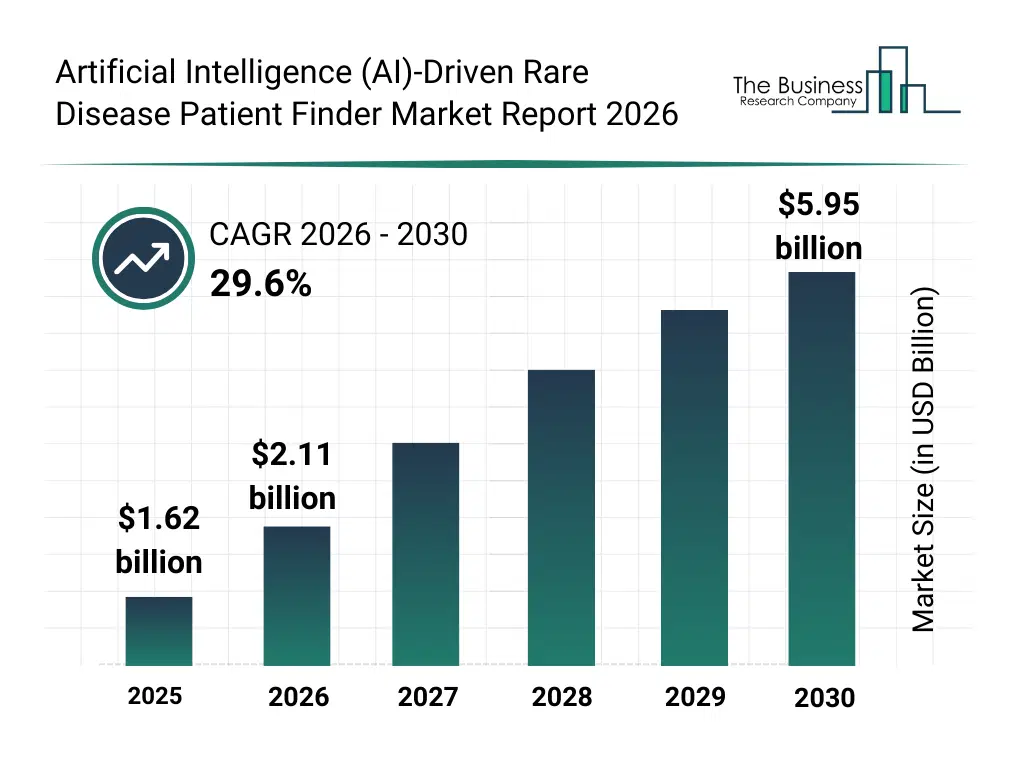
What Is The Artificial Intelligence (AI)-Driven Rare Disease Patient Finder Market Size and Share 2026?
The artificial intelligence (ai)-driven rare disease patient finder market size has grown exponentially in recent years. It will grow from $1.62 billion in 2025 to $2.11 billion in 2026 at a compound annual growth rate (CAGR) of 29.9%. The growth in the historic period can be attributed to increasing availability of electronic health records, early adoption of data analytics in clinical research, expansion of genomic databases, rising focus on orphan diseases, initial use of ai in trial recruitment.What Is The Artificial Intelligence (AI)-Driven Rare Disease Patient Finder Market Growth Forecast?
The artificial intelligence (ai)-driven rare disease patient finder market size is expected to see exponential growth in the next few years. It will grow to $5.95 billion in 2030 at a compound annual growth rate (CAGR) of 29.6%. The growth in the forecast period can be attributed to increasing investments in precision medicine research, rising demand for faster clinical trial enrollment, expansion of real-world evidence analytics, growing collaboration between healthcare and life sciences firms, increasing regulatory support for rare disease innovation. Major trends in the forecast period include increasing use of AI-based patient identification algorithms, rising integration of multi-source health data, growing automation of clinical trial recruitment, expansion of precision patient matching platforms, enhanced focus on rare disease research enablement.
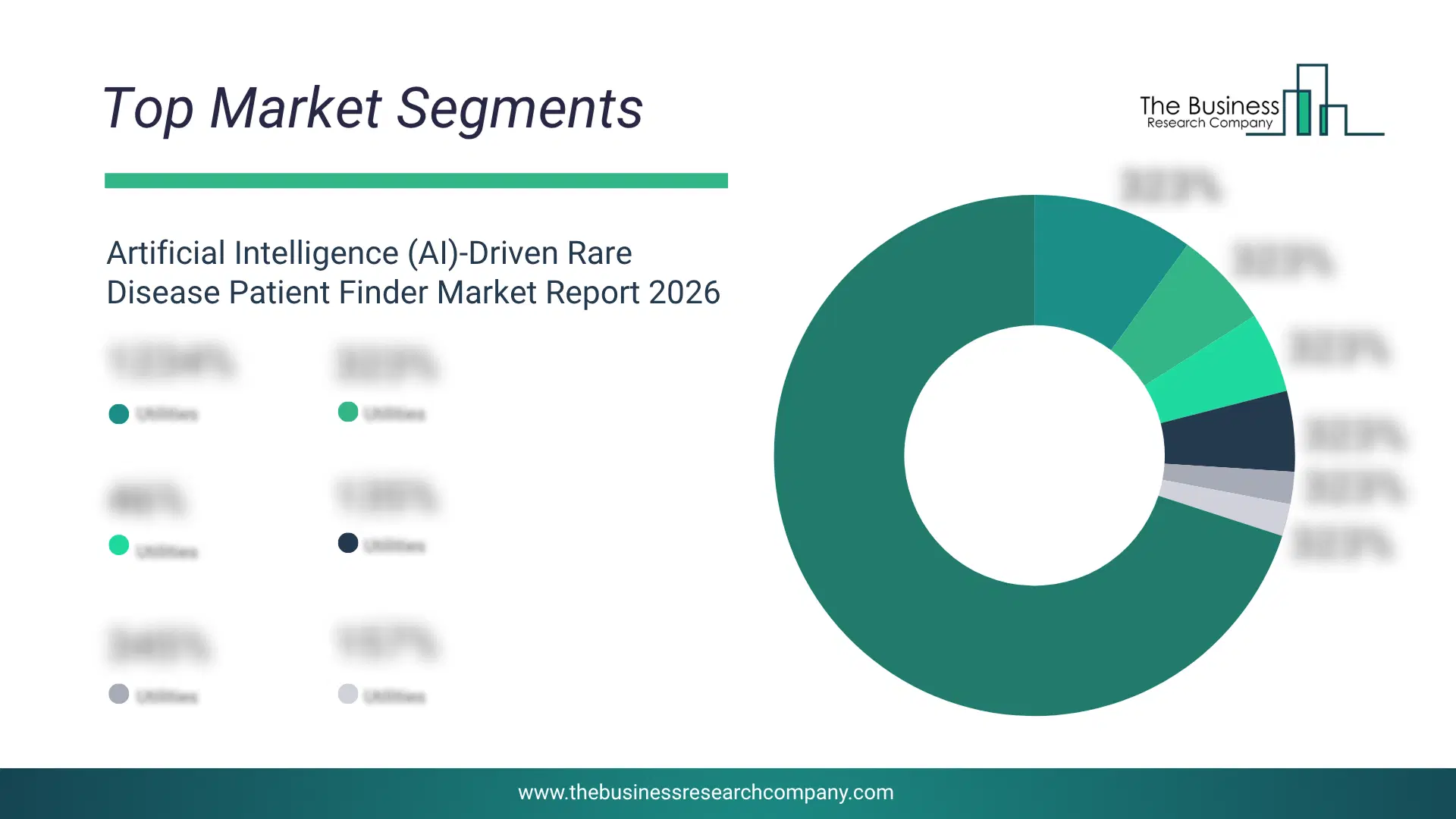
Global Artificial Intelligence (AI)-Driven Rare Disease Patient Finder Market Segmentation
1) By Component: Software, Services 2) By Deployment Mode: Cloud-Based, On-Premises 3) By Application: Hospitals, Clinics, Research Institutes, Pharmaceutical Companies, Other Applications 4) By End-User: Healthcare Providers, Life Sciences Companies, Payers, Other End-Users Subsegments: 1) By Software: Electronic Data Capture, Data Management Platform, Analytics And Reporting Tools, Patient Engagement Tools, Clinical Trial Management System 2) By Services: Implementation And Integration, Training And Support, Data Hosting And Security, Consulting Services, Maintenance And UpgradesWhat Is The Driver Of The Artificial Intelligence (AI)-Driven Rare Disease Patient Finder Market?
The increasing acceptance of digital health and telemedicine is expected to propel the growth of the artificial intelligence (AI)-driven rare disease patient finder market going forward. Digital health is the use of technology, software, and electronic tools to monitor, manage, and improve health and wellness. Telemedicine is the delivery of healthcare services remotely using telecommunications technology, such as video calls, mobile apps, and online platforms. The increasing acceptance of digital health and telemedicine is due to patients and providers seeking convenient, time-saving, and accessible healthcare solutions. Artificial intelligence (AI)-driven rare disease patient finder supports digital health and telemedicine by accurately identifying patients, enabling remote monitoring, timely virtual consultations, and personalized care. For instance, in November 2025, according to the Organisation for Economic Co operation and Development, a France-based intergovernmental organization, reported that OECD countries have made progress in expanding access to EHRs. In 2024, the average availability of online digital health services reached 82%, an increase from 79% in 2023 among countries with comparable data. Therefore, the increasing acceptance of digital health and telemedicine is driving the growth of the artificial intelligence (AI)-driven rare disease patient finder industry.Key Players In The Global Artificial Intelligence (AI)-Driven Rare Disease Patient Finder Market
Major companies operating in the artificial intelligence (AI)-driven rare disease patient finder market are UnitedHealth Group Incorporated, Dassault Systèmes SE, GeneDx Holdings Corp., HealthVerity Inc., ConcertAI Inc., Komodo Health Inc., Unlearn.AI Inc., Antidote Technologies Inc., Healx Ltd., FDNA Inc., Saventic Health Sp. z o.o., Digital Pharma Lab SAS, AnnieGuard Ltd., Rapid Innovation Labs Inc., Sqilline EOOD, TrialX Inc., enGenome Srl, EveryCure Inc., ThinkGenetic Inc., RareSum Inc.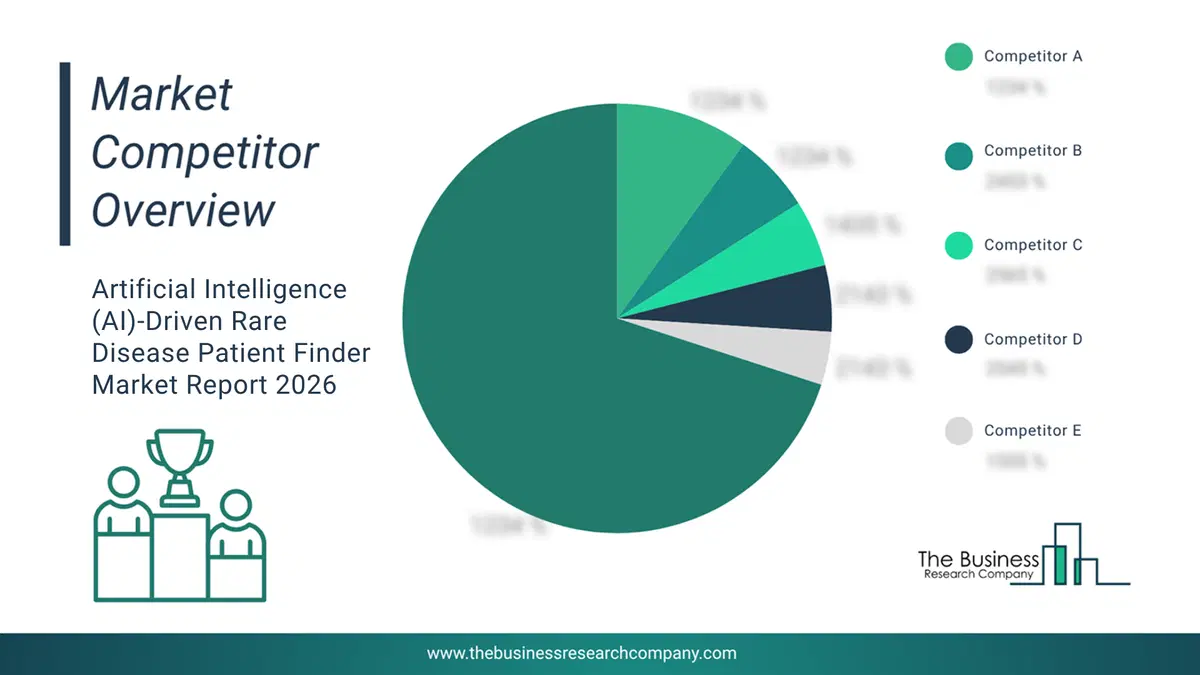
This chart is for illustrative purposes; the full report includes a detailed competitor analysis and comprehensive overview of the top 10 companies in the market.
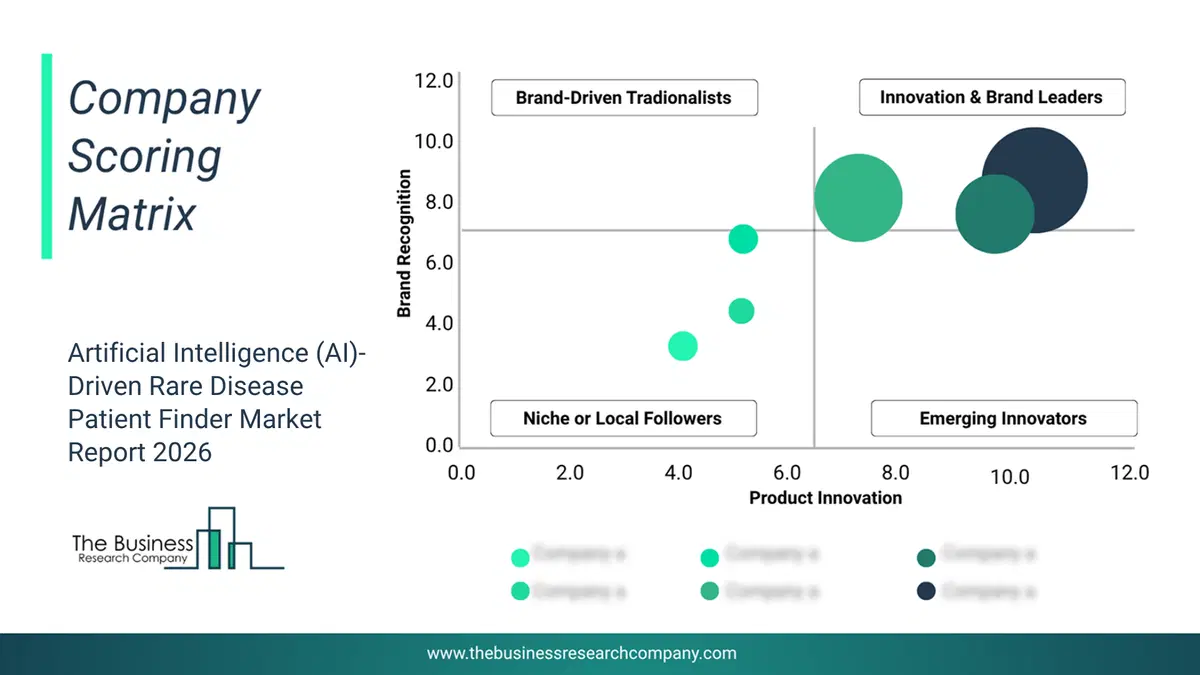
This chart maps companies by product innovation and brand strength, with bubble size indicating relative revenue, helping identify market leaders, challengers, and niche players. This is an illustrative chart; the full report provides a complete and accurate competitive analysis.
Global Artificial Intelligence (AI)-Driven Rare Disease Patient Finder Market Trends and Insights
Major companies operating in the AI-driven rare disease patient finder market are focusing on developing technological advancements, such as precision patient recruitment solutions, to enhance the accuracy, speed, and efficiency of identifying eligible patients for rare disease clinical trials while reducing recruitment timelines and improving trial success rates. A precision patient recruitment solution is a technology-driven approach that uses advanced algorithms and real-world data to accurately identify and engage patients who meet specific clinical trial eligibility criteria. For instance, in April 2024, Citeline, a US-based business intelligence and data analytics company, launched Citeline PatientMatch. The platform combines advanced algorithms with comprehensive real-world data, including lab results, biomarkers, and electronic medical records from over 400 hospitals and health systems, to help sponsors and investigators identify eligible patients for clinical trials in a timely and efficient manner, streamline enrollment, and support diverse and complex study protocols across multiple therapeutic areas.What Are Latest Mergers And Acquisitions In The Artificial Intelligence (AI)-Driven Rare Disease Patient Finder Market?
In September 2025, SeqOne, a France-based provider of AI-powered genomic analysis and clinical decision-support tools, acquired Congenica for an undisclosed amount. With this acquisition, SeqOne aims to integrate its AI-driven next-generation sequencing platform with Congenica’s clinical interpretation technology to enhance rare-disease and oncology diagnostic capabilities, expand global reach, and create a unified software-centric genomics leader. Congenica is a UK-based provider of clinical genomics software services, including scalable genomic data interpretation, clinical variant classification, and rare and inherited disease diagnostic support.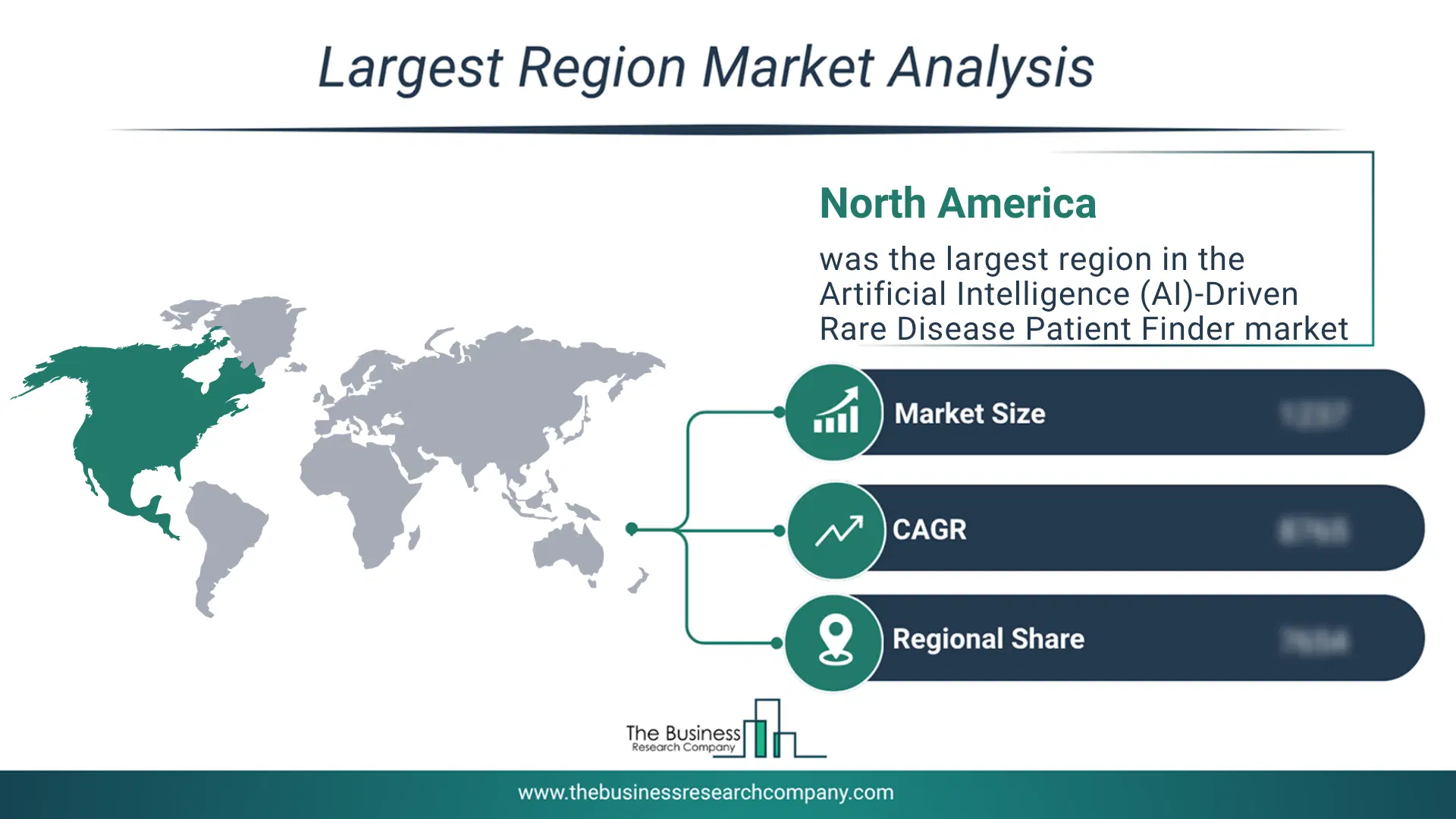
Regional Outlook
North America was the largest region in the artificial intelligence (AI)-driven rare disease patient finder market in 2025. Asia-Pacific is expected to be the fastest-growing region in the forecast period. The regions covered in this market report are Asia-Pacific, South East Asia, Western Europe, Eastern Europe, North America, South America, Middle East, Africa. The countries covered in this market report are Australia, Brazil, China, France, Germany, India, Indonesia, Japan, Taiwan, Russia, South Korea, UK, USA, Canada, Italy, Spain.What Defines the Artificial Intelligence (AI)-Driven Rare Disease Patient Finder Market?
The artificial intelligence (AI)-driven rare disease patient finder market consists of revenues earned by entities by providing services such as clinical trial recruitment, patient identification, electronic health record (EHR) data mining, natural language processing (NLP), and real-world evidence (RWE) analytics. The market value includes the value of related goods sold by the service provider or included within the service offering. The artificial intelligence (AI)-driven rare disease patient finder market also includes sales of predictive analytics tools, natural language processing engines, machine learning models, data integration platforms, electronic health record connectors, genomic data analyzers, patient matching engines, clinical decision support tools, and real-world data aggregators. Values in this market are ‘factory gate’ values, that is the value of goods sold by the manufacturers or creators of the goods, whether to other entities (including downstream manufacturers, wholesalers, distributors and retailers) or directly to end customers. The value of goods in this market includes related services sold by the creators of the goods.How is Market Value Defined and Measured?
The market value is defined as the revenues that enterprises gain from the sale of goods and/or services within the specified market and geography through sales, grants, or donations in terms of the currency (in USD unless otherwise specified). The revenues for a specified geography are consumption values that are revenues generated by organizations in the specified geography within the market, irrespective of where they are produced. It does not include revenues from resales along the supply chain, either further along the supply chain or as part of other products.
This chart presents market attractiveness based on a quantitative evaluation of growth, competition, strategic alignment, and risk, offering a clear view of opportunity areas for decision-making. This chart is for illustrative purposes; the full report contains the complete analysis.

This chart highlights the Total Addressable Market (TAM) by estimating the maximum revenue opportunity using an assumption-driven approach, supporting strategic planning and opportunity sizing across markets. The chart is illustrative; the full report provides a more comprehensive analysis.
What Key Data and Analysis Are Included in the Artificial Intelligence (AI)-Driven Rare Disease Patient Finder Market Report 2026?
The artificial intelligence (ai)-driven rare disease patient finder market research report is one of a series of new reports from The Business Research Company that provides market statistics, including industry global market size, regional shares, competitors with the market share, detailed market segments, market trends and opportunities, and any further data you may need to thrive in the artificial intelligence (ai)-driven rare disease patient finder industry. The market research report delivers a complete perspective of everything you need, with an in-depth analysis of the current and future state of the industry.Artificial Intelligence (AI)-Driven Rare Disease Patient Finder Market Report Forecast Analysis
| Report Attribute | Details |
|---|---|
| Market Size Value In 2026 | $2.11 billion |
| Revenue Forecast In 2030 | $5.95 billion |
| Growth Rate | CAGR of 29.6% from 2026 to 2030 |
| Base Year For Estimation | 2025 |
| Actual Estimates/Historical Data | 2020-2025 |
| Forecast Period | 2026 - 2030 |
| Market Representation | Revenue in USD Billion and CAGR from 2026 to 2030 |
| Segments Covered | Component, Deployment Mode, Application, End-User |
| Regional Scope | Asia-Pacific, Western Europe, Eastern Europe, North America, South America, Middle East, Africa |
| Country Scope | The countries covered in the report are Australia, Brazil, China, France, Germany, India, Indonesia, Japan, Taiwan, Russia, South Korea, UK, USA, Canada, Italy, Spain |
| Key Companies Profiled | UnitedHealth Group Incorporated, Dassault Systèmes SE, GeneDx Holdings Corp., HealthVerity Inc., ConcertAI Inc., Komodo Health Inc., Unlearn.AI Inc., Antidote Technologies Inc., Healx Ltd., FDNA Inc., Saventic Health Sp. z o.o., Digital Pharma Lab SAS, AnnieGuard Ltd., Rapid Innovation Labs Inc., Sqilline EOOD, TrialX Inc., enGenome Srl, EveryCure Inc., ThinkGenetic Inc., RareSum Inc. |
| Customization Scope | Request for Customization |
| Pricing And Purchase Options | Explore Purchase Options |