
Artificial Intelligence (AI)-Driven Retinal Screening Device Market Report 2026
Global Outlook – By Component (Hardware, Software, Services), By Technology (Fundus Image-Based Artificial Intelligence (AI), Optical Coherence Tomography (OCT)-Based Artificial Intelligence (AI), Multi-Modal Artificial Intelligence (AI), Machine Learning (ML), Deep Learning (DL), Natural Language Processing (NLP)), By Deployment (Cloud-Based, On-Premise), By Application (Diabetic Retinopathy, Age-Related Macular Degeneration, Glaucoma, Cataract, Other Applications), By End-User (Hospitals, Ophthalmology Clinics, Mobile Clinics Or Rural Camps, Diagnostic Centers, Research And Academia, Telemedicine Providers) – Market Size, Trends, Strategies, and Forecast to 2030
Artificial Intelligence (AI)-Driven Retinal Screening Device Market Overview
• Artificial Intelligence (AI)-Driven Retinal Screening Device market size has reached to $1.93 billion in 2025 • Expected to grow to $3.54 billion in 2030 at a compound annual growth rate (CAGR) of 12.9% • Growth Driver: Growing Burden Of Diabetes Fueling The Growth Of The Market Due To The Need For Early Detection And Prevention Of Diabetes-Related Retinal Damage • Market Trend: Handheld AI Fundus Cameras Enhance Accessibility And Early Disease Detection • North America was the largest region in 2025 and Asia-Pacific is the fastest growing region.What Is Covered Under Artificial Intelligence (AI)-Driven Retinal Screening Device Market?
An artificial intelligence (AI)-driven retinal screening device is a medical diagnostic system that combines retinal imaging hardware with artificial intelligence algorithms to automatically analyze eye images and identify signs of retinal diseases. It is used to enable early, accurate, and scalable detection of eye conditions, supporting timely clinical intervention and improved patient outcomes. The main components of AI-driven retinal screening devices are hardware, software, and services. Hardware includes retinal imaging devices such as fundus cameras and optical coherence tomography scanners integrated with computing units for image acquisition and processing. These devices are based on technologies including fundus image-based artificial intelligence, optical coherence tomography–based artificial intelligence, multi-modal artificial intelligence, machine learning, deep learning, and natural language processing, deployed through cloud-based and on-premise models, used in applications such as diabetic retinopathy, age-related macular degeneration, glaucoma, cataract, and others, among end users including hospitals, ophthalmology clinics, mobile clinics or rural camps, diagnostic centers, research and academia, and telemedicine providers.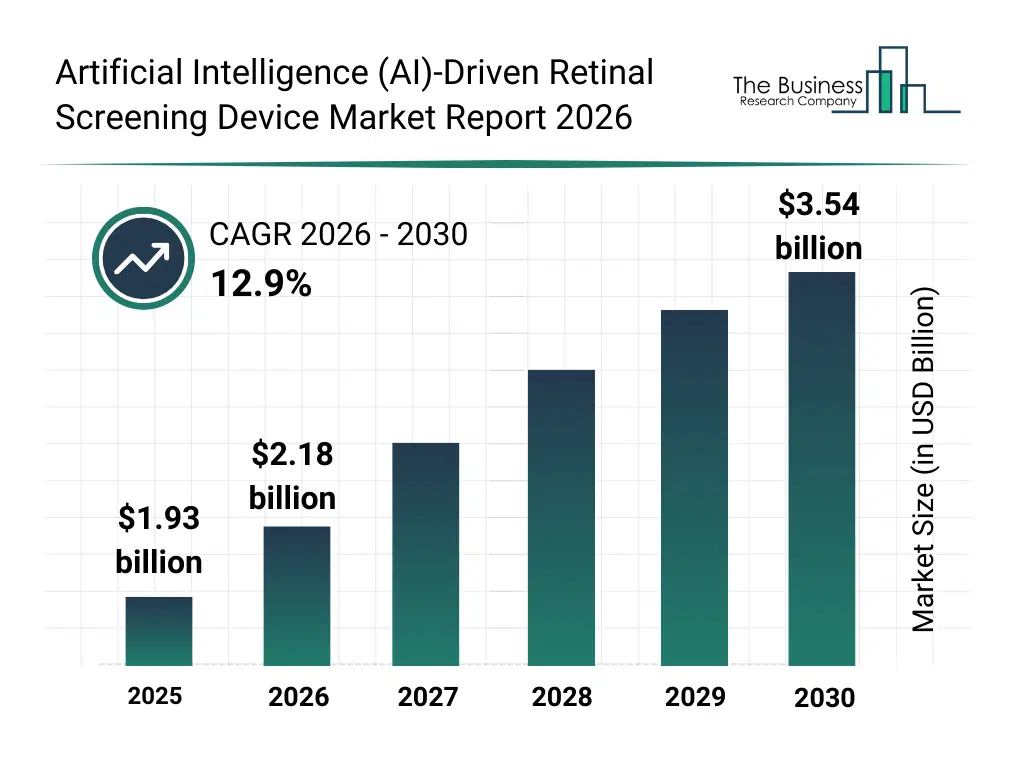
What Is The Artificial Intelligence (AI)-Driven Retinal Screening Device Market Size and Share 2026?
The artificial intelligence (AI)-driven retinal screening device market size has grown rapidly in recent years. It will grow from $1.93 billion in 2025 to $2.18 billion in 2026 at a compound annual growth rate (CAGR) of 13.1%. The growth in the historic period can be attributed to increasing adoption of artificial intelligence (AI)-enabled ophthalmic diagnostics, growing incidence of diabetic retinopathy, rising demand for early retinal disease detection, increasing integration of digital health screening programs, and growing healthcare focus on preventive eye care.What Is The Artificial Intelligence (AI)-Driven Retinal Screening Device Market Growth Forecast?
The artificial intelligence (AI)-driven retinal screening device market size is expected to see rapid growth in the next few years. It will grow to $3.54 billion in 2030 at a compound annual growth rate (CAGR) of 12.9%. The growth in the forecast period can be attributed to growing use of autonomous artificial intelligence (AI)-based screening systems, increasing deployment of point-of-care retinal devices, rising government support for digital eye screening initiatives, expanding integration of artificial intelligence (AI) tools in teleophthalmology, and increasing demand for rapid and low-cost retinal assessment solutions. Major trends in the forecast period include advancements in artificial intelligence (AI) algorithms for retinal image interpretation, innovations in edge-computing retinal screening devices, technology developments improving image acquisition quality, research and development in multimodal eye-disease detection platforms, and advancements in cloud-based artificial intelligence (AI) screening workflows.
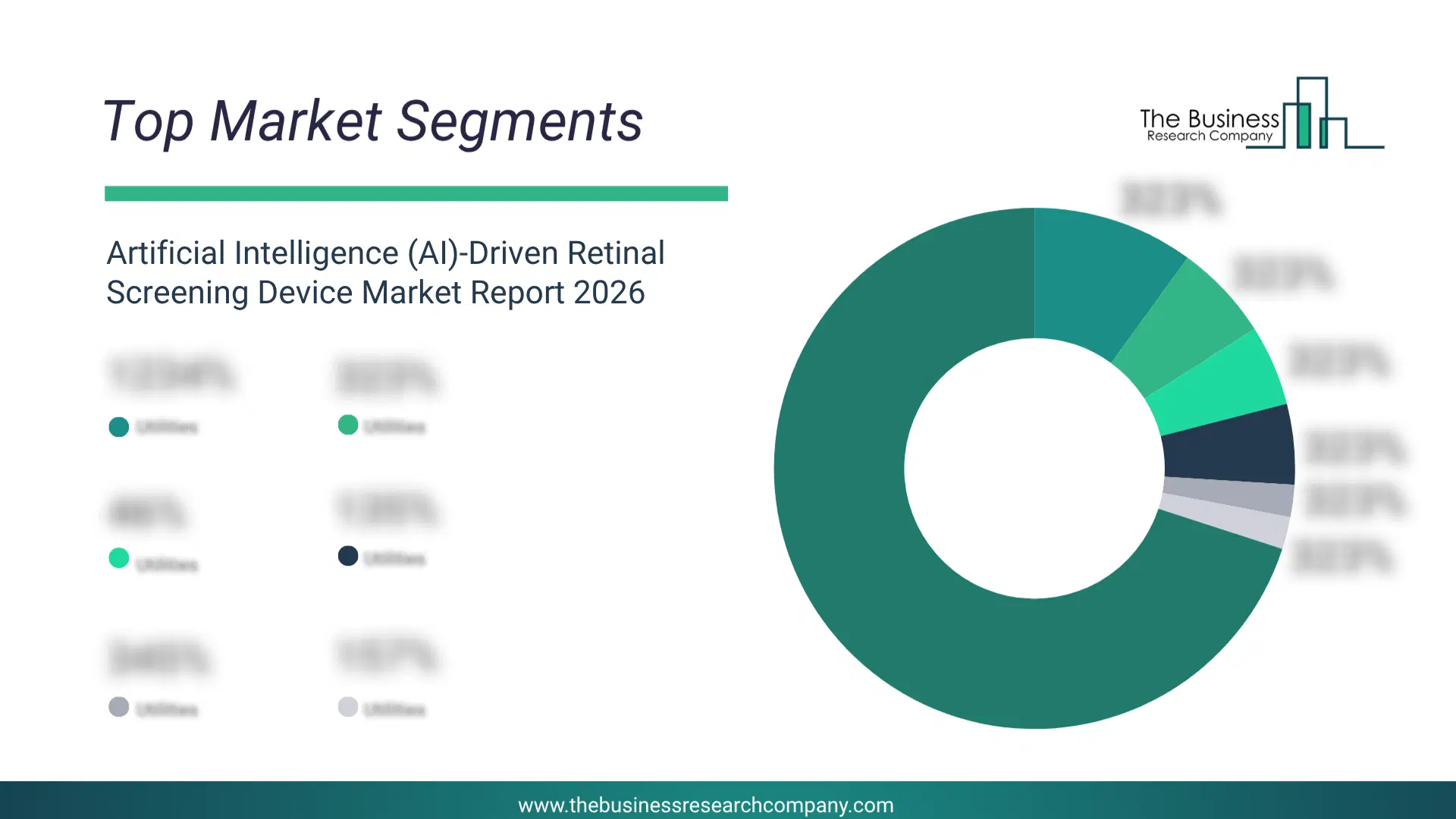
Global Artificial Intelligence (AI)-Driven Retinal Screening Device Market Segmentation
1) By Component: Hardware, Software, Services 2) By Technology: Fundus Image-Based Artificial Intelligence (AI), Optical Coherence Tomography (OCT)-Based Artificial Intelligence (AI), Multi-Modal Artificial Intelligence (AI), Machine Learning (ML), Deep Learning (DL), Natural Language Processing (NLP) 3) By Deployment: Cloud-Based, On-Premise 4) By Application: Diabetic Retinopathy, Age-Related Macular Degeneration, Glaucoma, Cataract, Other Applications 5) By End-User: Hospitals, Ophthalmology Clinics, Mobile Clinics Or Rural Camps, Diagnostic Centers, Research And Academia, Telemedicine Providers Subsegments: 1) By Hardware: Imaging Devices, Sensor Modules, Display Units, Storage Devices 2) By Software: Image Processing Software, Diagnostic Analysis Software, Data Management Software, Reporting And Visualization Software 3) By Services: Installation And Setup, Maintenance And Support, Training And Education, Consulting ServicesWhat Is The Driver Of The Artificial Intelligence (AI)-Driven Retinal Screening Device Market?
The growing burden of diabetes is expected to propel the growth of the AI-driven retinal screening device market going forward. Diabetes is a chronic metabolic disease characterized by persistently high blood glucose levels that damage blood vessels over time, including those supplying the retina, and it is a leading cause of preventable vision loss worldwide. The rise in the diabetes burden is due to aging populations and lifestyle changes, which have increased obesity rates and reduced physical activity across both developed and developing regions. AI-driven retinal screening device helps in managing diabetes by enabling early detection of diabetes-related retinal damage, expanding screening access at scale, and supporting timely clinical intervention to prevent vision impairment. For instance, in April 2025, according to the International Diabetes Federation, a Belgium-based global health organization, approximately 589 million adults aged 20–79 were living with diabetes worldwide in 2024, with projections indicating that this number could rise to 853 million by 2050, showing a significant increase compared to previous decades. Therefore, the growing global burden of diabetes is driving the growth of the AI-Driven Retinal Screening Device market.Key Players In The Global Artificial Intelligence (AI)-Driven Retinal Screening Device Market
Major companies operating in the artificial intelligence (AI)-driven retinal screening device market are Carl Zeiss Meditec AG, Topcon Corporation, Canon Medical Systems Corporation, Bosch Healthcare Solutions GmbH, Heidelberg Engineering GmbH, Shenzhen Sibionics Technology Co. Ltd., Digital Diagnostics Inc., Optomed Plc, Optain Health Inc., NIDEK Co. Ltd., Airdoc Technology Co. Ltd., Identifeye Health Ltd., Kowa Company Ltd., RetinaLyze System A/S, EyRIS Pte. Ltd., Eyenuk Inc., EYRIS Pte. Ltd., VUNO Inc., Eyenuk Inc., AEYE Health Inc.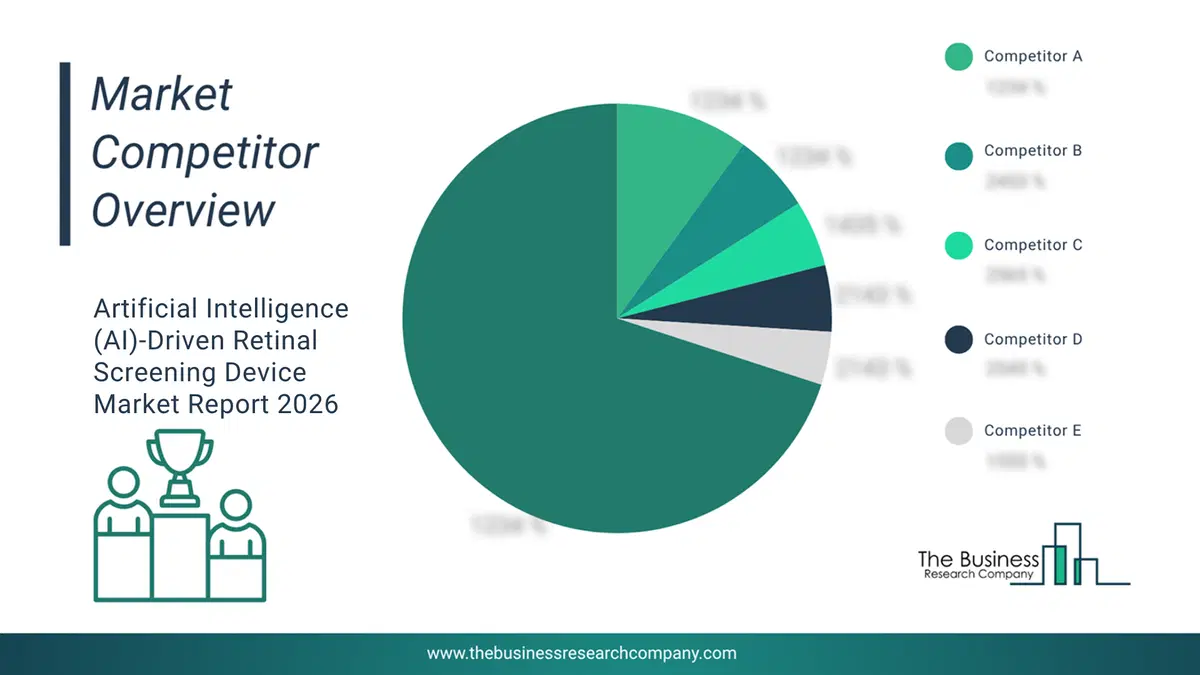
This chart is for illustrative purposes; the full report includes a detailed competitor analysis and comprehensive overview of the top 10 companies in the market.
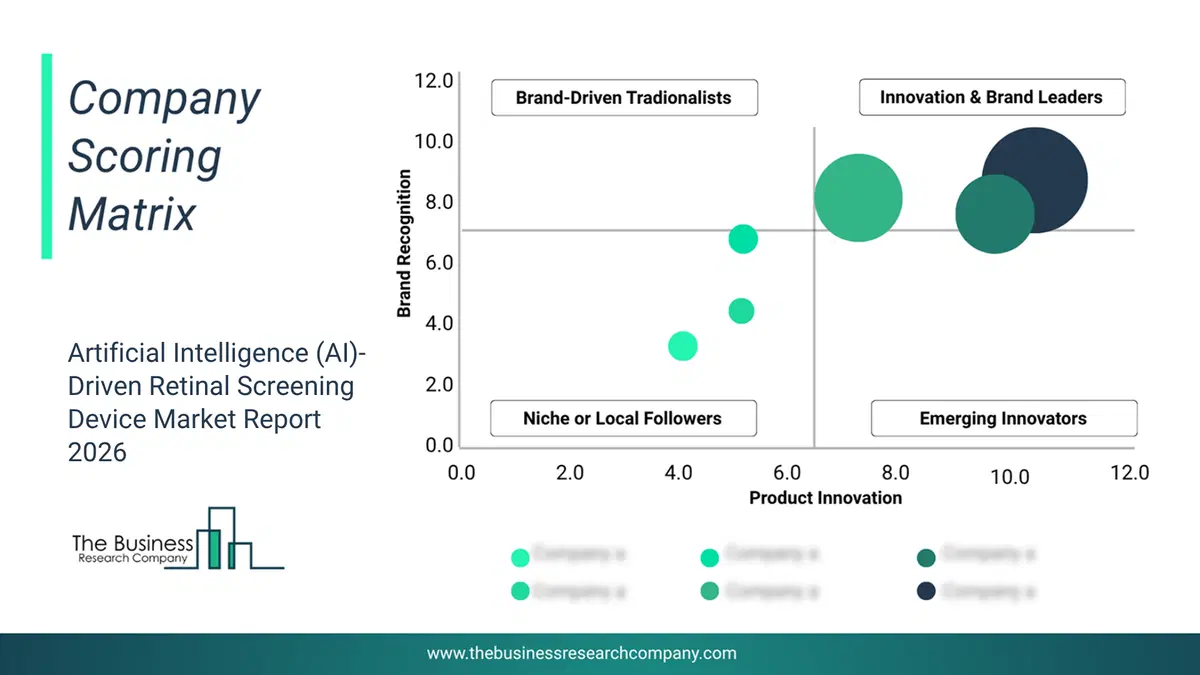
This chart maps companies by product innovation and brand strength, with bubble size indicating relative revenue, helping identify market leaders, challengers, and niche players. This is an illustrative chart; the full report provides a complete and accurate competitive analysis.
Global Artificial Intelligence (AI)-Driven Retinal Screening Device Market Trends and Insights
Major companies operating in the artificial intelligence (AI)-driven retinal screening device market are focusing on developing advanced products, such as handheld AI fundus cameras, to boost accessibility, enhance diagnostic speed, and enable earlier disease detection. Handheld AI fundus cameras refer to portable imaging devices that use artificial intelligence to automatically analyze images of the retina for signs of disease. For instance, in May 2024, Optomed USA Inc., a US-based medical technology company, launched the Optomed Aurora AEYE. It is the first FDA-cleared, handheld AI fundus camera for the detection of more than mild diabetic retinopathy. The device features automatic, AI-based image analysis that provides an immediate screening result at the point of care, enabling clinical decision support without the need for a specialist to be present. It is battery-operated and highly portable, designed to increase access to sight-saving screenings in primary care, endocrinology, and other non-specialist settings.What Are Latest Mergers And Acquisitions In The Artificial Intelligence (AI)-Driven Retinal Screening Device Market?
In November 2025, Optain Health, a US-based healthcare technology company, acquired EyePACS for an undisclosed amount. With this acquisition, Optain Health aims to expand access to next-generation retinal imaging and AI-driven automated disease detection in primary care by integrating EyePACS’s extensive teleophthalmology network with its AI-enabled imaging and screening technology to enhance early detection of ocular and systemic conditions at scale. EyePACS is a US‑based healthcare technology company focused on AI‑driven retinal screening and teleophthalmology solutions for early detection of eye diseases.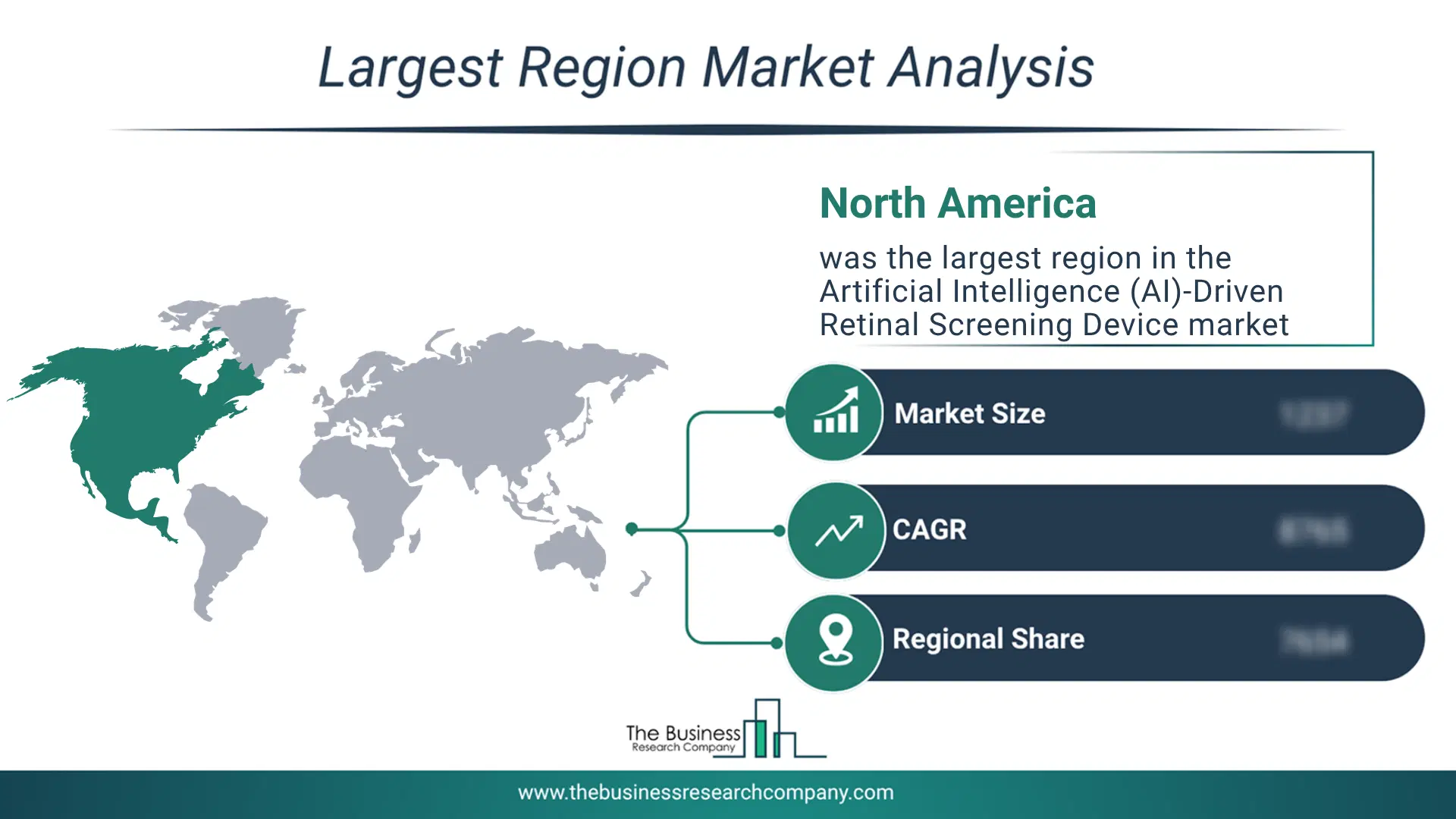
Regional Insights
North America was the largest region in the artificial intelligence (AI)-driven retinal screening device market in 2025. Asia-Pacific is expected to be the fastest-growing region in the forecast period. The regions covered in this market report are Asia-Pacific, South East Asia, Western Europe, Eastern Europe, North America, South America, Middle East, Africa. The countries covered in this market report are Australia, Brazil, China, France, Germany, India, Indonesia, Japan, Taiwan, Russia, South Korea, UK, USA, Canada, Italy, Spain.What Defines the Artificial Intelligence (AI)-Driven Retinal Screening Device Market?
The artificial intelligence (AI)-driven retinal screening device market consists of revenues earned by entities by providing services such as automated retinal image analysis, diabetic retinopathy screening, glaucoma risk assessment, age-related macular degeneration detection, and tele-ophthalmology screening support. The market value includes the value of related goods sold by the service provider or included within the service offering. The artificial intelligence (AI)-driven retinal screening device market also includes sales of retinal imaging cameras, artificial intelligence software platforms, cloud-based diagnostic tools, handheld fundus imaging devices, and integrated screening systems. Values in this market are ‘factory gate’ values, that is, the value of goods sold by the manufacturers or creators of the goods, whether to other entities (including downstream manufacturers, wholesalers, distributors, and retailers) or directly to end customers. The value of goods in this market includes related services sold by the creators of the goods.How is Market Value Defined and Measured?
The market value is defined as the revenues that enterprises gain from the sale of goods and/or services within the specified market and geography through sales, grants, or donations in terms of the currency (in USD unless otherwise specified). The revenues for a specified geography are consumption values that are revenues generated by organizations in the specified geography within the market, irrespective of where they are produced. It does not include revenues from resales along the supply chain, either further along the supply chain or as part of other products.
This chart presents market attractiveness based on a quantitative evaluation of growth, competition, strategic alignment, and risk, offering a clear view of opportunity areas for decision-making. This chart is for illustrative purposes; the full report contains the complete analysis.

This chart highlights the Total Addressable Market (TAM) by estimating the maximum revenue opportunity using an assumption-driven approach, supporting strategic planning and opportunity sizing across markets. The chart is illustrative; the full report provides a more comprehensive analysis.
What Key Data and Analysis Are Included in the Artificial Intelligence (AI)-Driven Retinal Screening Device Market Report 2026?
The artificial intelligence (ai)-driven retinal screening device market research report is one of a series of new reports from The Business Research Company that provides market statistics, including industry global market size, regional shares, competitors with the market share, detailed market segments, market trends and opportunities, and any further data you may need to thrive in the artificial intelligence (ai)-driven retinal screening device industry. The market research report delivers a complete perspective of everything you need, with an in-depth analysis of the current and future state of the industry.Artificial Intelligence (AI)-Driven Retinal Screening Device Market Report Forecast Analysis
| Report Attribute | Details |
|---|---|
| Market Size Value In 2026 | $2.18 billion |
| Revenue Forecast In 2030 | $3.54 billion |
| Growth Rate | CAGR of 12.9% from 2026 to 2030 |
| Base Year For Estimation | 2025 |
| Actual Estimates/Historical Data | 2020-2025 |
| Forecast Period | 2026 - 2030 |
| Market Representation | Revenue in USD Billion and CAGR from 2026 to 2030 |
| Segments Covered | Component, Technology, Deployment, Application, End-User |
| Regional Scope | Asia-Pacific, Western Europe, Eastern Europe, North America, South America, Middle East, Africa |
| Country Scope | The countries covered in the report are Australia, Brazil, China, France, Germany, India, Indonesia, Japan, Taiwan, Russia, South Korea, UK, USA, Canada, Italy, Spain. |
| Key Companies Profiled | Carl Zeiss Meditec AG, Topcon Corporation, Canon Medical Systems Corporation, Bosch Healthcare Solutions GmbH, Heidelberg Engineering GmbH, Shenzhen Sibionics Technology Co. Ltd., Digital Diagnostics Inc., Optomed Plc, Optain Health Inc., NIDEK Co. Ltd., Airdoc Technology Co. Ltd., Identifeye Health Ltd., Kowa Company Ltd., RetinaLyze System A/S, EyRIS Pte. Ltd., Eyenuk Inc., EYRIS Pte. Ltd., VUNO Inc., Eyenuk Inc., AEYE Health Inc. |
| Customization Scope | Request for Customization |
| Pricing And Purchase Options | Explore Purchase Options |