
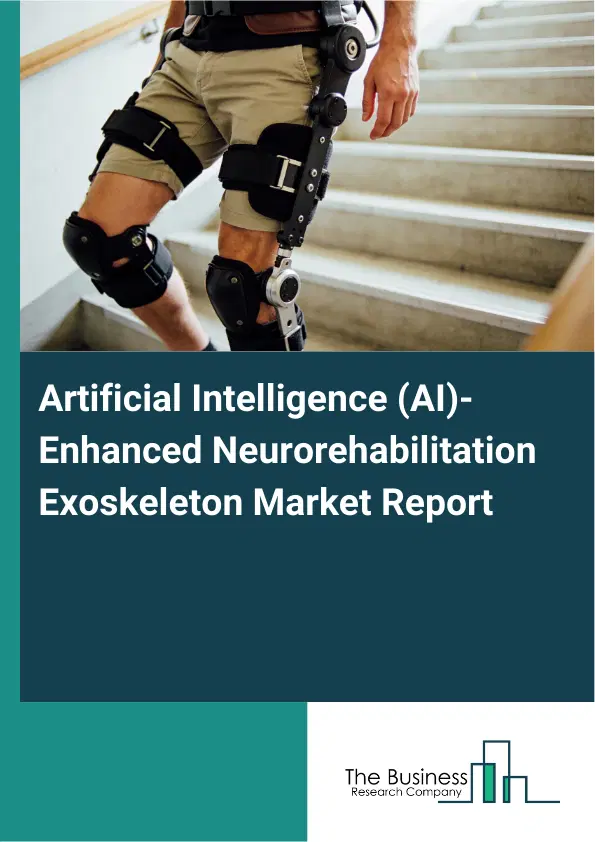
Artificial Intelligence (AI)-Enhanced Neurorehabilitation Exoskeleton Market Report 2026
Global Outlook – By Component (Hardware, Software, Services), By Mobility Type (Mobile, Stationary), By Application (Stroke Rehabilitation, Spinal Cord Injury, Traumatic Brain Injury, Multiple Sclerosis), By End-User (Hospitals And Clinics, Rehabilitation Centers, Home Care Settings) – Market Size, Trends, Strategies, and Forecast to 2030
Artificial Intelligence (AI)-Enhanced Neurorehabilitation Exoskeleton Market Overview
• Artificial Intelligence (AI)-Enhanced Neurorehabilitation Exoskeleton market size has reached to $1.24 billion in 2025 • Expected to grow to $2.87 billion in 2030 at a compound annual growth rate (CAGR) of 18.3% • Growth Driver: Rising Incidence Of Neurological Disorders Driving The Growth Of Market Due To Increasing Demand For Advanced Rehabilitation Solutions • Market Trend: Robotic Control Systems Enhance Stability And Rehabilitation Outcomes • North America was the largest region in 2025.What Is Covered Under Artificial Intelligence (AI)-Enhanced Neurorehabilitation Exoskeleton Market?
An AI-enhanced neurorehabilitation exoskeleton is a wearable robotic system that supports and optimizes motor recovery using intelligent, adaptive control. By integrating advanced AI algorithms, it continuously analyzes users’ movement patterns to deliver personalized assistance during therapy. Through real-time feedback and dynamic adjustment, the device promotes efficient rehabilitation, improving coordination, strength, and functional mobility over time. The main components of artificial intelligence (AI)-enhanced neurorehabilitation exoskeleton are hardware, software, and services. Hardware refers to the physical components of artificial intelligence (AI)-enhanced neurorehabilitation exoskeletons that enable safe and effective patient-assisted movement. They have mobility types of mobile and stationary and integrate various technologies, including powered, passive, and hybrid. They are used for various applications, such as stroke rehabilitation, spinal cord injury, traumatic brain injury, and multiple sclerosis, and are utilized by various end-users, including hospitals and clinics, rehabilitation centers, and home care settings.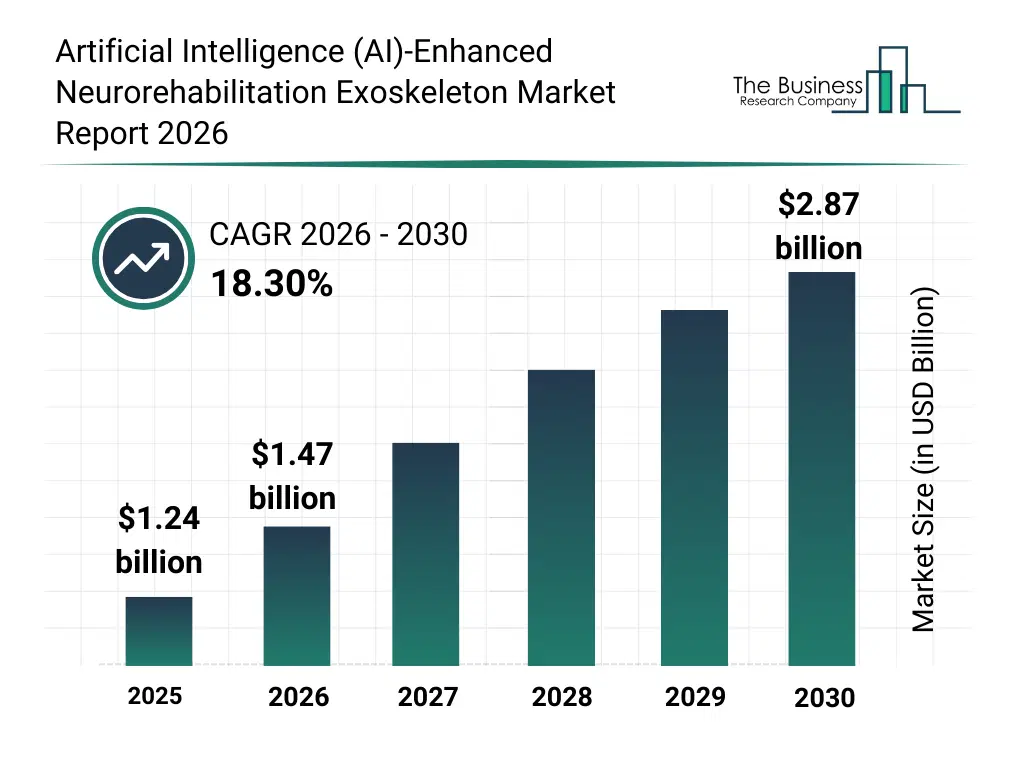
What Is The Artificial Intelligence (AI)-Enhanced Neurorehabilitation Exoskeleton Market Size and Share 2026?
The artificial intelligence (ai)-enhanced neurorehabilitation exoskeleton market size has grown rapidly in recent years. It will grow from $1.24 billion in 2025 to $1.47 billion in 2026 at a compound annual growth rate (CAGR) of 18.6%. The growth in the historic period can be attributed to rise in neurological disorder prevalence, early adoption of robotic rehabilitation devices, advancements in sensor technologies, demand for intensive rehabilitation therapies, growth of rehabilitation centers.What Is The Artificial Intelligence (AI)-Enhanced Neurorehabilitation Exoskeleton Market Growth Forecast?
The artificial intelligence (ai)-enhanced neurorehabilitation exoskeleton market size is expected to see rapid growth in the next few years. It will grow to $2.87 billion in 2030 at a compound annual growth rate (CAGR) of 18.3%. The growth in the forecast period can be attributed to AI-enabled adaptive rehabilitation, expansion of home-based neurorehabilitation, increasing geriatric population, reimbursement support for robotic therapy, integration of cloud-based analytics. Major trends in the forecast period include personalized ai-driven rehabilitation programs, adaptive motion assistance systems, data-driven therapy outcome tracking, home-based robotic rehabilitation, integration with clinical rehabilitation protocols.
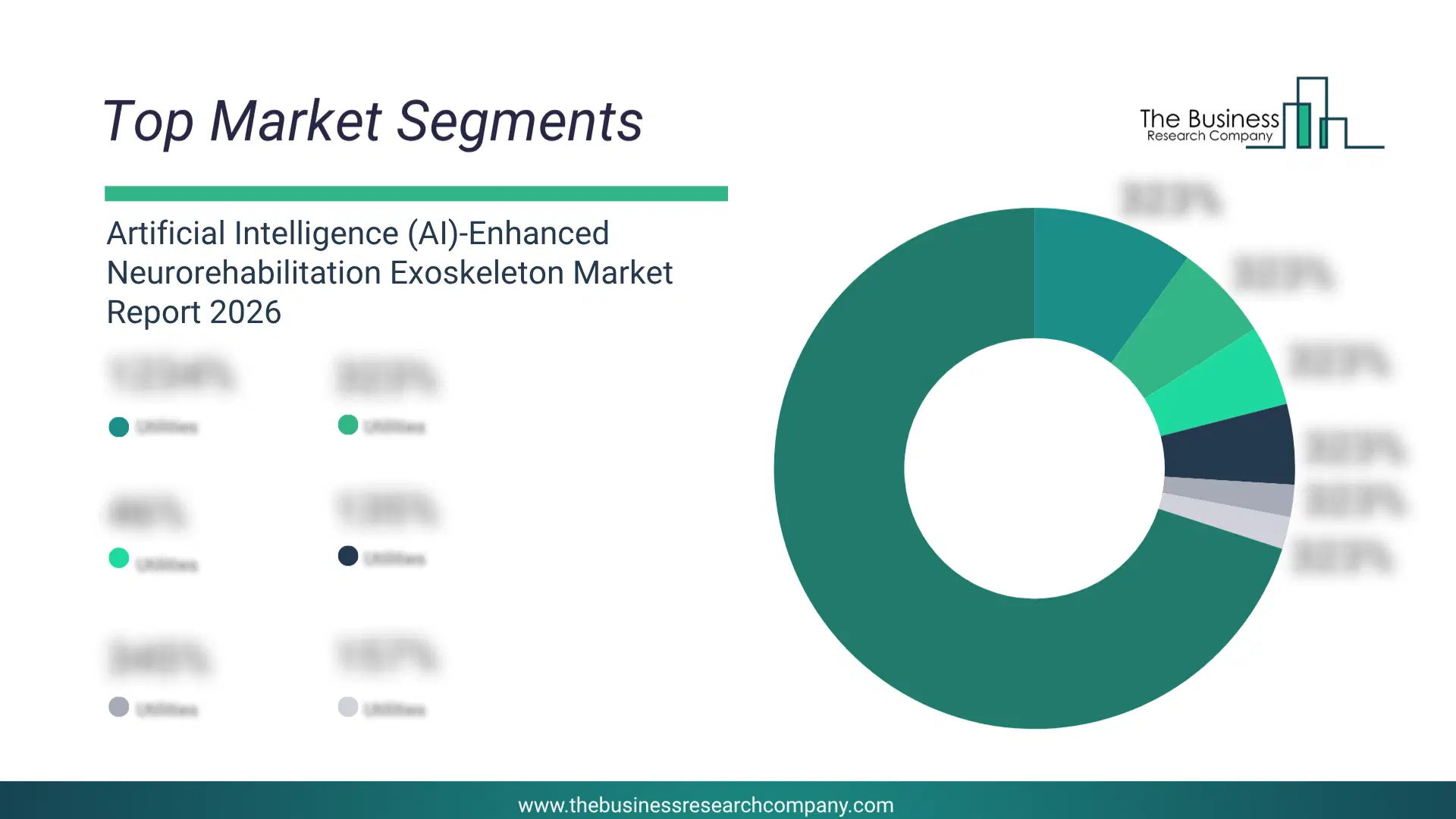
Global Artificial Intelligence (AI)-Enhanced Neurorehabilitation Exoskeleton Market Segmentation
1) By Component: Hardware, Software, Services 2) By Mobility Type: Mobile, Stationary 3) By Application: Stroke Rehabilitation, Spinal Cord Injury, Traumatic Brain Injury, Multiple Sclerosis 4) By End-User: Hospitals And Clinics, Rehabilitation Centers, Home Care Settings Subsegments: 1) By Hardware: Exoskeleton Frames, Actuators And Motors, Sensors And Wearable Devices, Control Units And Embedded Electronics 2) By Software: Motion Planning Software, Rehabilitation Protocol Software, Data Analytics And Monitoring Software, Connectivity And Integration Software 3) By Services: Implementation And Setup Services, Training And Education Services, Maintenance And Support Services, Remote Monitoring And Assistance ServicesWhat Is The Driver Of The Artificial Intelligence (AI)-Enhanced Neurorehabilitation Exoskeleton Market?
The rising incidence of neurological disorders is expected to propel the growth of the artificial intelligence (AI)-enhanced neurorehabilitation exoskeleton market going forward. Neurological disorders refer to medical conditions that affect the brain, spinal cord, and nerves, leading to impairments in movement, cognition, sensation, or other bodily functions. The global rise in neurological disorders is largely driven by an aging population, as older adults are more vulnerable to conditions such as stroke, dementia, and Parkinson’s disease, all of which tend to increase in prevalence with advancing age. Artificial intelligence (AI)-enhanced neurorehabilitation exoskeletons support individuals with neurological disorders by providing personalized, adaptive therapy that improves motor function, accelerates recovery, and compensates for impaired movement through real-time monitoring and intelligent adjustment to each patient’s specific needs. For instance, in March 2023, according to the Alzheimer's Association, a US-based nonprofit voluntary health organization, approximately 6.7 million Americans aged 65 and older are living with Alzheimer's dementia, and this number is projected to rise to 13.8 million by 2060. Therefore, the rising incidence of neurological disorders is driving the growth of the artificial intelligence (AI)-enhanced neurorehabilitation exoskeleton industry.Key Players In The Global Artificial Intelligence (AI)-Enhanced Neurorehabilitation Exoskeleton Market
Major companies operating in the artificial intelligence (ai)-enhanced neurorehabilitation exoskeleton market are Ottobock SE & Co. KGaA, Shanghai Fourier Intelligence Co. Ltd., Kinova Inc., Cyberdyne Inc., Hocoma AG, Myomo Inc., Neofect Co. Ltd., Ekso Bionics Holdings Inc., ReWalk Robotics Ltd., AlterG Inc., RENU ROBOTICS CORPORATION, ExoAtlet Global S.A., REEV Robotics, Bionik Laboratories Corp., Rex Bionics PLC, Wearable Robotics Srl, Gogoa Mobility Robots S.L., Technaid S.L., Bionic Yantra Pvt. Ltd., MediTouch Inc.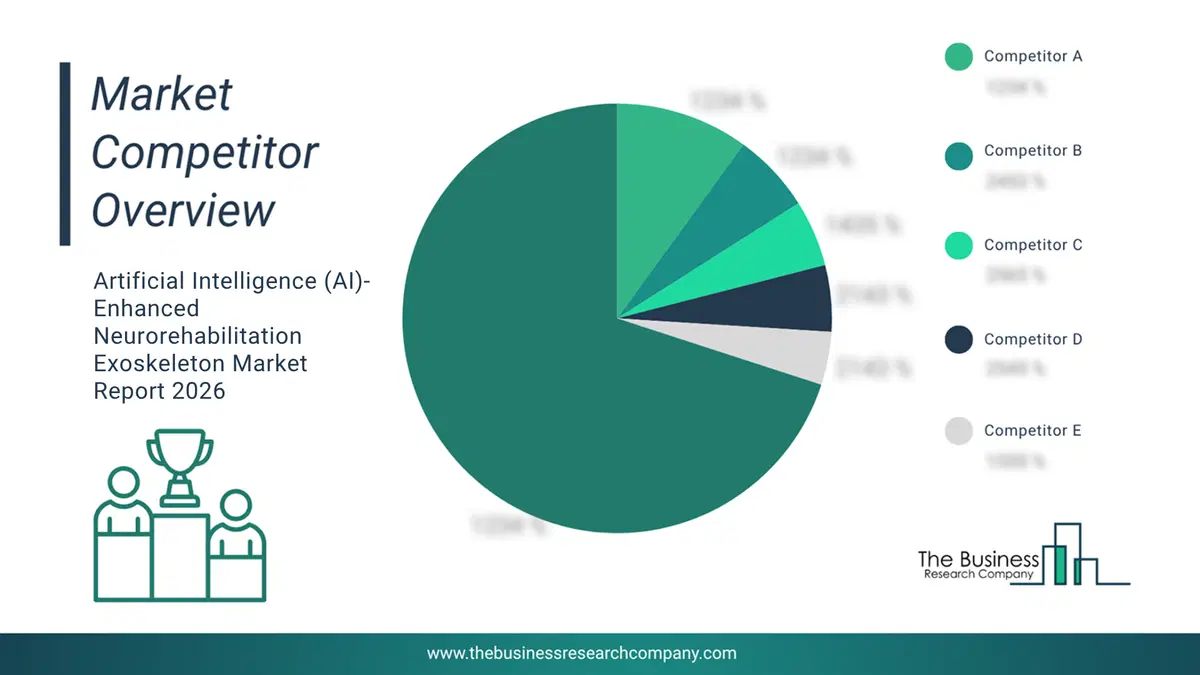
This chart is for illustrative purposes; the full report includes a detailed competitor analysis and comprehensive overview of the top 10 companies in the market.
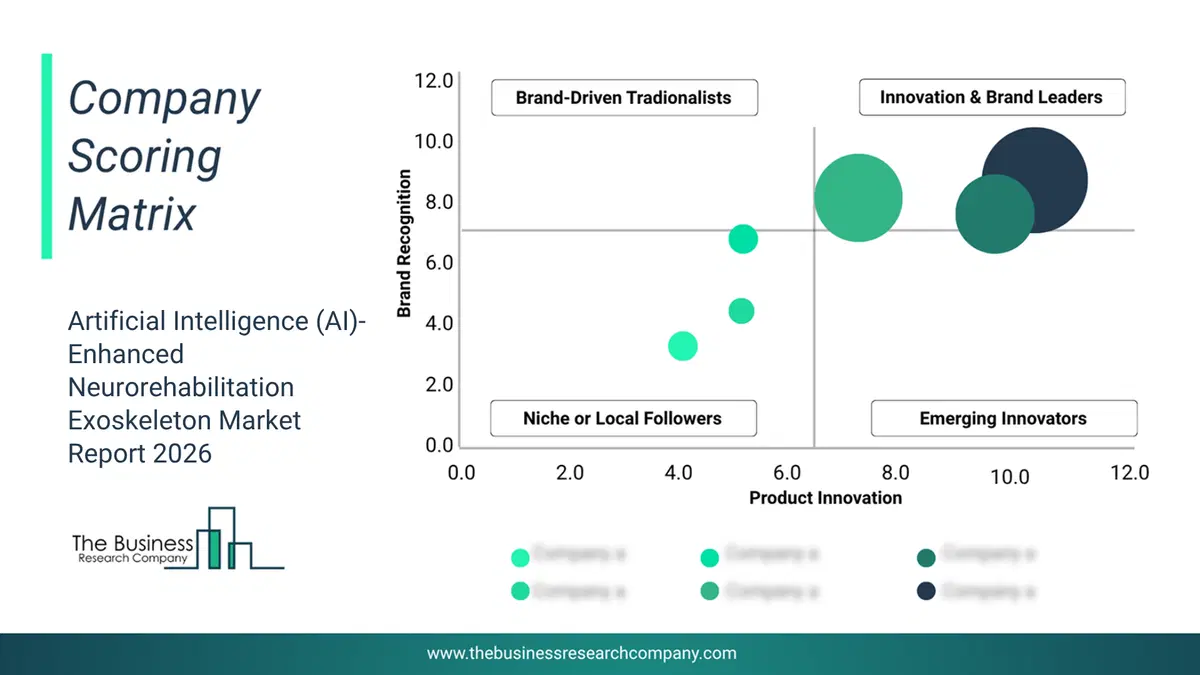
This chart maps companies by product innovation and brand strength, with bubble size indicating relative revenue, helping identify market leaders, challengers, and niche players. This is an illustrative chart; the full report provides a complete and accurate competitive analysis.
Global Artificial Intelligence (AI)-Enhanced Neurorehabilitation Exoskeleton Market Trends and Insights
Major companies operating in the artificial intelligence (AI)-enhanced neurorehabilitation exoskeleton market are focusing on integrating innovative solutions such as robotic control systems to improve mobility, stability, and personalized rehabilitation outcomes. Robotic control systems are technologies that manage and coordinate the movements of a robot or exoskeleton, helping users walk, stand, and perform daily activities safely and efficiently by ensuring precise, stable, and adaptive motion. For instance, in May 2025, Wandercraft SAS, a France-based robotics company, began clinical trials in the U.S. for its AI-powered Personal Exoskeleton. The device combines advanced physical AI and robotic control systems to help individuals with spinal cord injuries, stroke, and other mobility impairments stand, walk, and navigate various surfaces safely. Continuously adapting to the user’s movements in real time, it enhances mobility, stability, and rehabilitation outcomes. Equipped with a joystick-based control system and intelligent algorithms that anticipate shifts in weight, surface, and speed, the exoskeleton promotes greater independence while reducing secondary health risks linked to prolonged wheelchair use.What Are Latest Mergers And Acquisitions In The Artificial Intelligence (AI)-Enhanced Neurorehabilitation Exoskeleton Market?
In July 2025, Moody Neurorehabilitation Institute Inc., a US-based healthcare organization, acquired Wandercraft SAS’s Atalante X exoskeleton for an undisclosed amount. With this acquisition, Moody Neurorehabilitation Institute, Inc. aims to enhance its rehabilitation capabilities by providing high-intensity, hands-free gait therapy, improving outcomes for patients with complex mobility challenges, including those recovering from traumatic brain injuries. Wandercraft SAS is a France-based medical robotics company that specializes in providing AI-enhanced neurorehabilitation exoskeletons.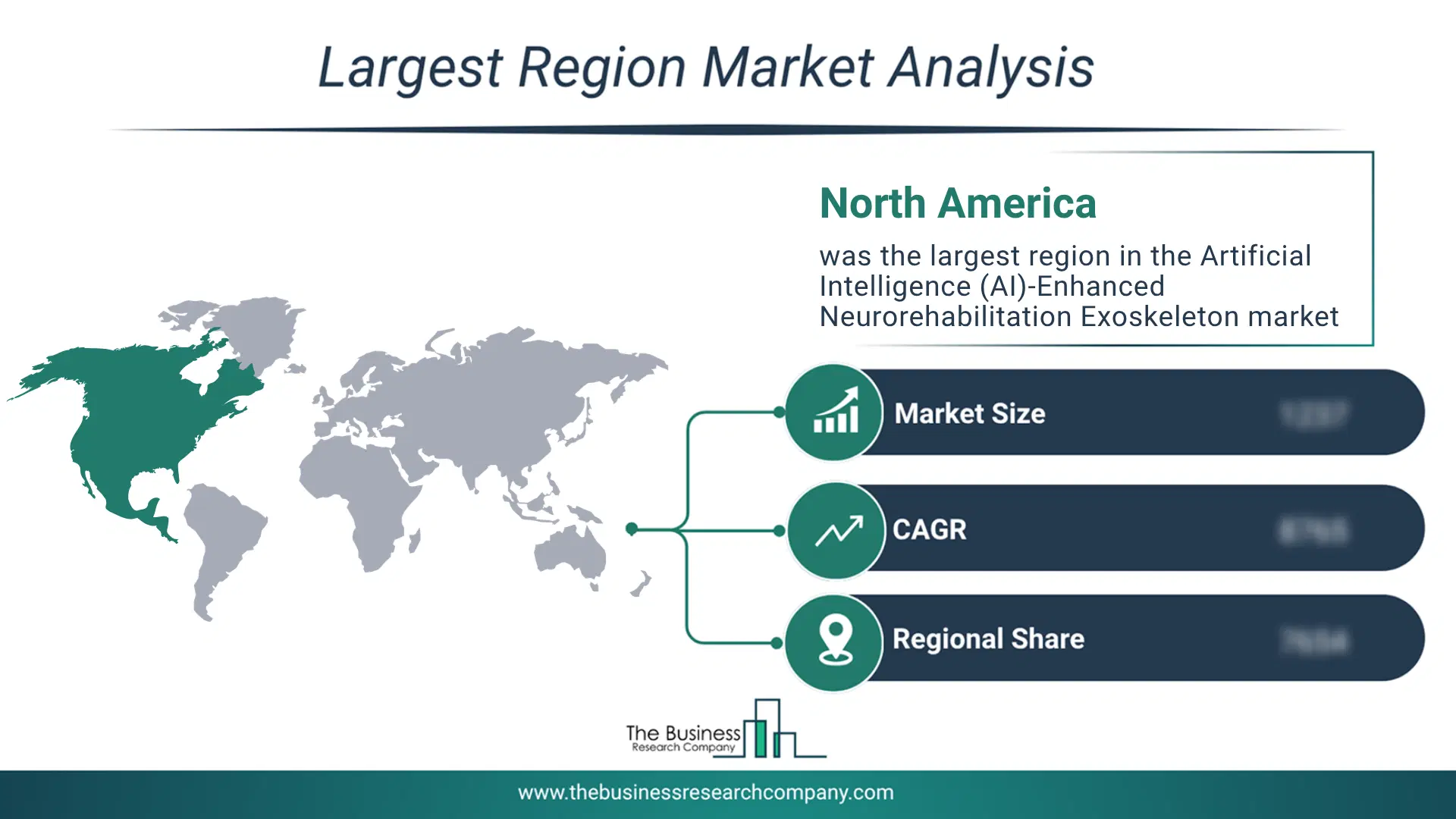
Regional Outlook
North America was the largest region in the artificial intelligence (AI)-enhanced neurorehabilitation exoskeleton market in 2025. The regions covered in this market report are Asia-Pacific, South East Asia, Western Europe, Eastern Europe, North America, South America, Middle East, Africa. The countries covered in this market report are Australia, Brazil, China, France, Germany, India, Indonesia, Japan, Taiwan, Russia, South Korea, UK, USA, Canada, Italy, SpainWhat Defines the Artificial Intelligence (AI)-Enhanced Neurorehabilitation Exoskeleton Market?
The artificial intelligence (AI)-enhanced neurorehabilitation exoskeleton market consists of revenues earned by entities by providing services such as patient assessment services, therapy planning services, remote monitoring services, maintenance and support services, and rehabilitation consultation services. The market value includes the value of related goods sold by the service provider or included within the service offering. The artificial intelligence (AI)-enhanced neurorehabilitation exoskeleton market also includes sales of brain-computer interface (BCI)-controlled exoskeletons, occupational exoskeletons for healthcare workers, AI-integrated exoskeletons with advanced sensors, and modular and customizable exoskeleton systems. Values in this market are ‘factory gate’ values; that is, the value of goods sold by the manufacturers or creators of the goods, whether to other entities (including downstream manufacturers, wholesalers, distributors, and retailers) or directly to end customers. The value of goods in this market includes related services sold by the creators of the goods.How is Market Value Defined and Measured?
The market value is defined as the revenues that enterprises gain from the sale of goods and/or services within the specified market and geography through sales, grants, or donations in terms of the currency (in USD unless otherwise specified). The revenues for a specified geography are consumption values that are revenues generated by organizations in the specified geography within the market, irrespective of where they are produced. It does not include revenues from resales along the supply chain, either further along the supply chain or as part of other products.
This chart presents market attractiveness based on a quantitative evaluation of growth, competition, strategic alignment, and risk, offering a clear view of opportunity areas for decision-making. This chart is for illustrative purposes; the full report contains the complete analysis.

This chart highlights the Total Addressable Market (TAM) by estimating the maximum revenue opportunity using an assumption-driven approach, supporting strategic planning and opportunity sizing across markets. The chart is illustrative; the full report provides a more comprehensive analysis.
What Key Data and Analysis Are Included in the Artificial Intelligence (AI)-Enhanced Neurorehabilitation Exoskeleton Market Report 2026?
The artificial intelligence (ai)-enhanced neurorehabilitation exoskeleton market research report is one of a series of new reports from The Business Research Company that provides market statistics, including industry global market size, regional shares, competitors with the market share, detailed market segments, market trends and opportunities, and any further data you may need to thrive in the artificial intelligence (ai)-enhanced neurorehabilitation exoskeleton industry. The market research report delivers a complete perspective of everything you need, with an in-depth analysis of the current and future state of the industry.Artificial Intelligence (AI)-Enhanced Neurorehabilitation Exoskeleton Market Report Forecast Analysis
| Report Attribute | Details |
|---|---|
| Market Size Value In 2026 | $1.47 billion |
| Revenue Forecast In 2030 | $2.87 billion |
| Growth Rate | CAGR of 18.3% from 2026 to 2030 |
| Base Year For Estimation | 2025 |
| Actual Estimates/Historical Data | 2020-2025 |
| Forecast Period | 2026 - 2030 |
| Market Representation | Revenue in USD Billion and CAGR from 2026 to 2030 |
| Segments Covered | Component, Mobility Type, Application, End-User |
| Regional Scope | Asia-Pacific, Western Europe, Eastern Europe, North America, South America, Middle East, Africa |
| Country Scope | The countries covered in the report are Australia, Brazil, China, France, Germany, India, Indonesia, Japan, Taiwan, Russia, South Korea, UK, USA, Canada, Italy, Spain. |
| Key Companies Profiled | Ottobock SE & Co. KGaA, Shanghai Fourier Intelligence Co. Ltd., Kinova Inc., Cyberdyne Inc., Hocoma AG, Myomo Inc., Neofect Co. Ltd., Ekso Bionics Holdings Inc., ReWalk Robotics Ltd., AlterG Inc., RENU ROBOTICS CORPORATION, ExoAtlet Global S.A., REEV Robotics, Bionik Laboratories Corp., Rex Bionics PLC, Wearable Robotics Srl, Gogoa Mobility Robots S.L., Technaid S.L., Bionic Yantra Pvt. Ltd., MediTouch Inc. |
| Customization Scope | Request for Customization |
| Pricing And Purchase Options | Explore Purchase Options |