
Artificial Intelligence (AI)-Enhanced Remote Neonatal Monitoring Market Report 2026
Global Outlook – By Component (Hardware, Software, Services), By Monitoring Type (Vital Signs Monitoring, Respiratory Monitoring, Cardiac Monitoring, Other Monitoring Types), By Deployment Mode (Cloud-Based, On-Premises), By End User (Hospitals, Neonatal Intensive Care Units, Homecare Settings, Clinics, Other End Users) - Market Size, Trends, Strategies, and Forecast to 2030
Artificial Intelligence (AI)-Enhanced Remote Neonatal Monitoring Market Overview
• Artificial Intelligence (AI)-Enhanced Remote Neonatal Monitoring market size has reached to $1.27 billion in 2025 • Expected to grow to $2.98 billion in 2030 at a compound annual growth rate (CAGR) of 18.6% • Growth Driver: The Rising Incidence Of Preterm Births Fueling The Growth Of The Market Due To Increasing Demand For Remote Monitoring Solutions • Market Trend: AI-Driven Innovations Transforming Neonatal And Pediatric Care Monitoring • North America was the largest region in 2025 and Asia-Pacific is the fastest growing region.What Is Covered Under Artificial Intelligence (AI)-Enhanced Remote Neonatal Monitoring Market?
Artificial intelligence (AI)-enhanced remote neonatal monitoring refers to an advanced system that uses AI algorithms to continuously analyze and interpret the vital signs and physiological data of newborns, especially those who are premature or high-risk, outside traditional hospital settings. It enables predictive analysis and early detection of potential health issues, supporting timely and informed monitoring of neonatal health. The main components of artificial intelligence (AI)-enhanced remote neonatal monitoring are hardware, software, and services. Hardware in AI-enhanced remote neonatal monitoring includes wearable sensors, biosensors, and wireless modules used to track newborns’ vital signs continuously. It includes various monitoring types, including vital signs monitoring, respiratory monitoring, cardiac monitoring, and others, and is deployed through cloud-based, on-premises. Key end-users include hospitals, neonatal intensive care units, homecare settings, clinics, and others.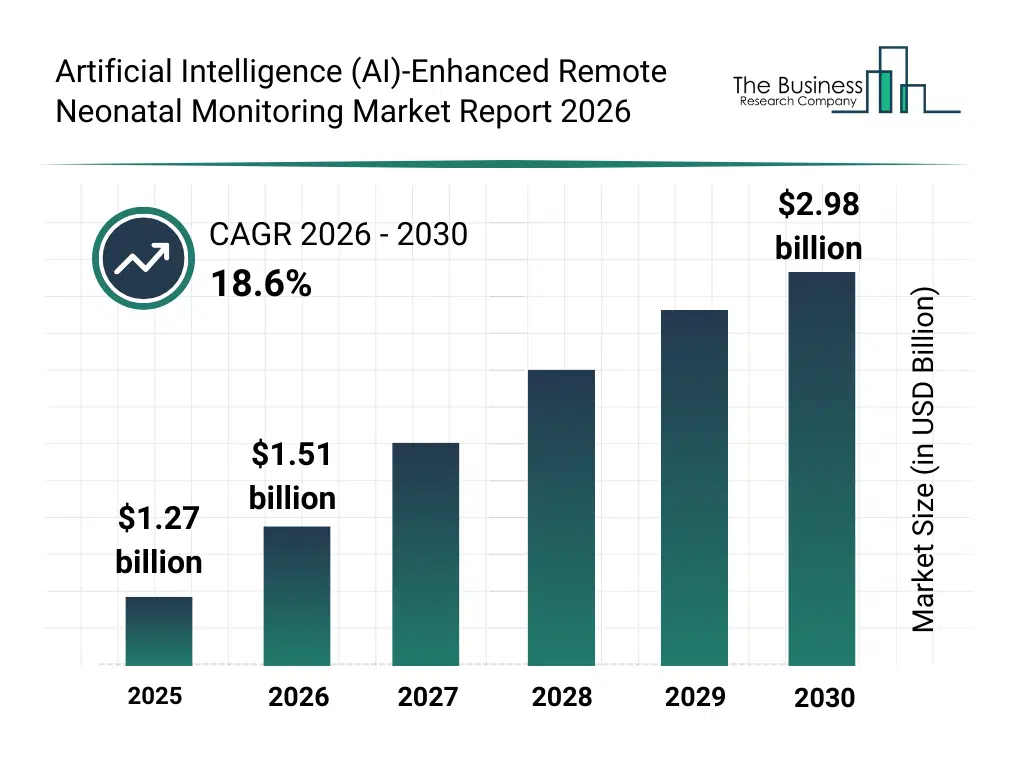
What Is The Artificial Intelligence (AI)-Enhanced Remote Neonatal Monitoring Market Size and Share 2026?
The artificial intelligence (ai)-enhanced remote neonatal monitoring market size has grown rapidly in recent years. It will grow from $1.27 billion in 2025 to $1.51 billion in 2026 at a compound annual growth rate (CAGR) of 18.9%. The growth in the historic period can be attributed to increasing premature birth rates, expansion of neonatal intensive care services, rising adoption of remote patient monitoring technologies, growing focus on early intervention in neonatal care, advancements in neonatal sensor technologies.What Is The Artificial Intelligence (AI)-Enhanced Remote Neonatal Monitoring Market Growth Forecast?
The artificial intelligence (ai)-enhanced remote neonatal monitoring market size is expected to see rapid growth in the next few years. It will grow to $2.98 billion in 2030 at a compound annual growth rate (CAGR) of 18.6%. The growth in the forecast period can be attributed to increasing adoption of ai-driven neonatal monitoring, rising demand for home-based neonatal care solutions, expansion of predictive health analytics, growing integration of cloud-based monitoring platforms, increasing focus on preventive neonatal healthcare. Major trends in the forecast period include increasing adoption of continuous neonatal vital monitoring, rising use of AI-based early warning systems, growing deployment of wearable neonatal sensors, expansion of remote neonatal care models, enhanced focus on predictive neonatal analytics.
Global Artificial Intelligence (AI)-Enhanced Remote Neonatal Monitoring Market Segmentation
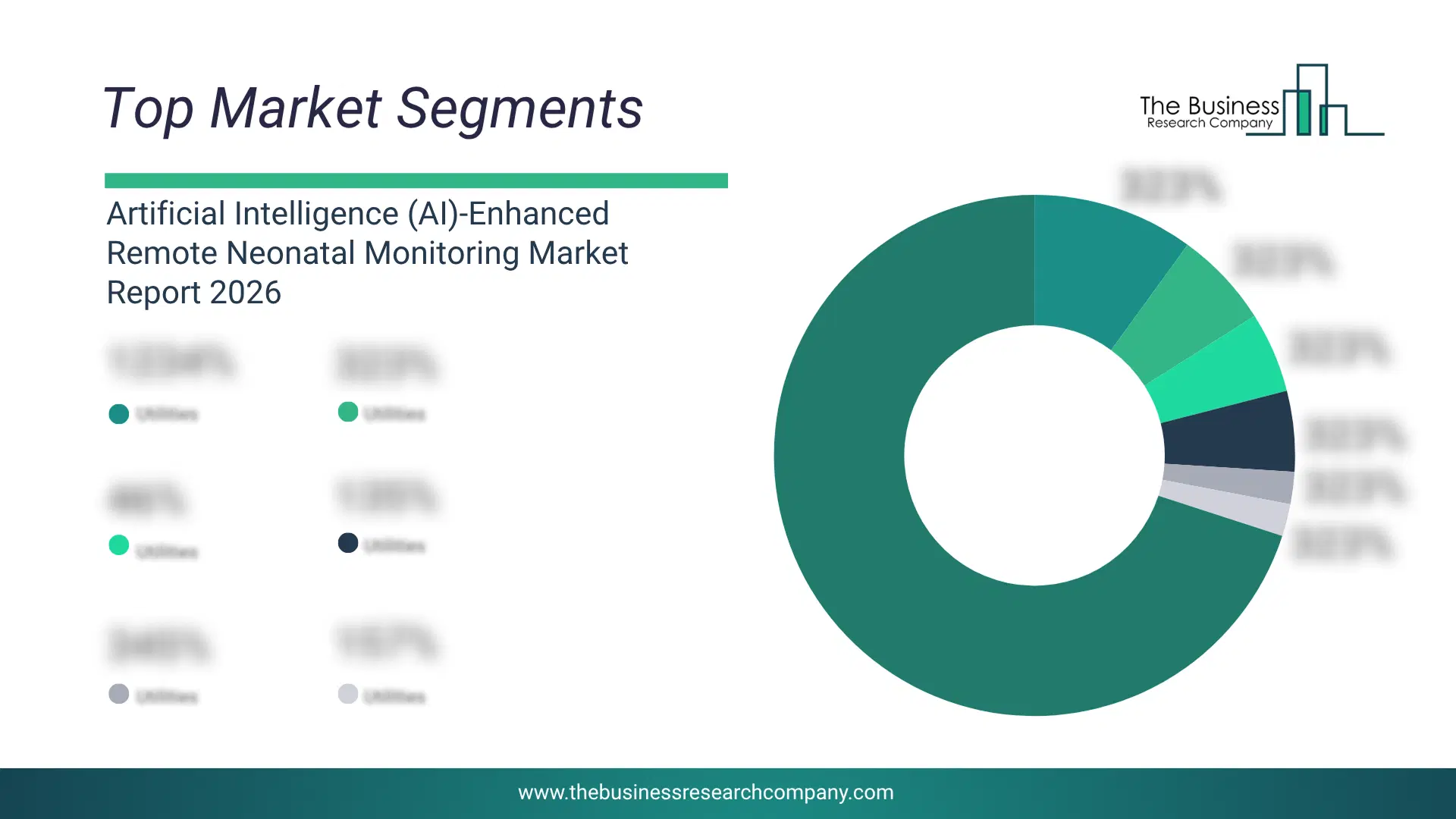
1) By Component: Hardware, Software, Services 2) By Monitoring Type: Vital Signs Monitoring, Respiratory Monitoring, Cardiac Monitoring, Other Monitoring Types 3) By Deployment Mode: Cloud-Based, On-Premises 4) By End User: Hospitals, Neonatal Intensive Care Units, Homecare Settings, Clinics, Other End Users Subsegments: 1) By Hardware: Monitoring Devices, Wearable Sensors, Imaging Equipment, Communication Modules, Data Storage Units 2) By Software: Analytics Platforms, Patient Management Systems, Predictive Algorithms, Visualization Tools, Alert And Notification Systems 3) By Services: Remote Monitoring Support, Technical Maintenance, Training And Education, Consulting Services, Integration ServicesWhat Is The Driver Of The Artificial Intelligence (AI)-Enhanced Remote Neonatal Monitoring Market?
The rising incidence of preterm births is expected to propel the growth of the artificial intelligence (AI)-enhanced remote neonatal monitoring market going forward. Preterm birth refers to infants born before 37 completed weeks of gestation, often requiring specialized medical care due to underdeveloped organs, and is a major factor affecting neonatal health outcomes. The incidence of preterm births is rising as more women are having children at an older age, which increases the risk of pregnancy complications and early delivery. Artificial intelligence (AI)-enhanced remote neonatal monitoring helps manage preterm births by continuously analyzing vital signs to detect early signs of complications, enabling timely interventions and safer post-discharge care. For instance, in March 2025, according to the report published by the Centers for Disease Control and Prevention (CDC), a US-based nonprofit organization, the U.S. preterm birth rate rose to 10.41% in 2023, up slightly from 10.38% in 2022. Therefore, the rising incidence of preterm births is driving the growth of the artificial intelligence (AI)-enhanced remote neonatal monitoring industry.Key Players In The Global Artificial Intelligence (AI)-Enhanced Remote Neonatal Monitoring Market
Major companies operating in the artificial intelligence (AI)-enhanced remote neonatal monitoring market are Philips Healthcare, GE HealthCare Technologies Inc., Mount Sinai Health System Inc., Mindray Medical International Limited, Drägerwerk AG & Co. KGaA, Hill-Rom Company Inc., Masimo Corporation, Sheba Medical Center, Natus Medical Incorporated, Spacelabs Healthcare Inc., Aver Information Inc., Owlet Inc., Nanit Inc., AngelEye Health Inc., Raybaby Inc., Zoundream Inc., Sempulse Inc., Kriba Inc., Luscii B.V., Bloomlife Inc.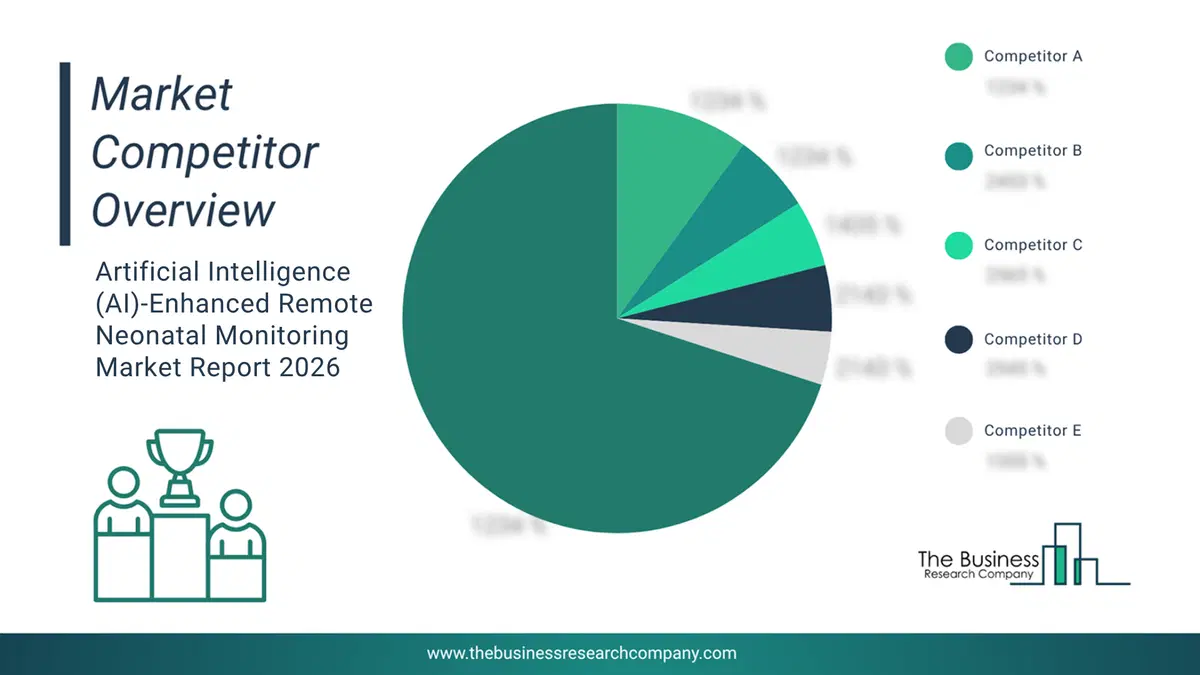
This chart is for illustrative purposes; the full report includes a detailed competitor analysis and comprehensive overview of the top 10 companies in the market.
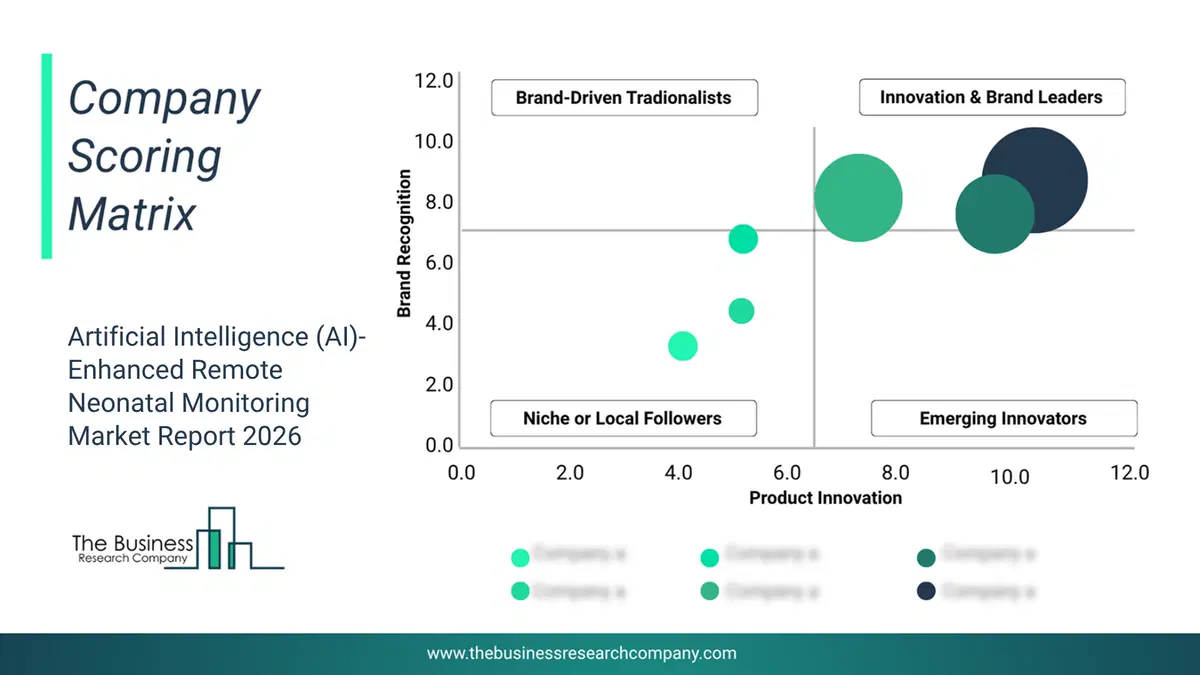
This chart maps companies by product innovation and brand strength, with bubble size indicating relative revenue, helping identify market leaders, challengers, and niche players. This is an illustrative chart; the full report provides a complete and accurate competitive analysis.
Global Artificial Intelligence (AI)-Enhanced Remote Neonatal Monitoring Market Trends and Insights
Major companies operating in the artificial intelligence (AI)-enhanced remote neonatal monitoring market are focusing on developing advanced solutions, such as AI-driven neonatal and pediatric care monitoring platforms, to enhance early detection of health complications, improve clinical decision-making, and support continuous, real-time monitoring of newborns. AI-driven neonatal and pediatric care monitoring platforms are systems that use artificial intelligence to continuously track and analyze newborns’ and children’s health data, detect anomalies, and provide actionable insights for timely medical intervention. For instance, in April 2025, AngelEye Health, a US-based provider of neonatal and pediatric family engagement technology, launched AIVision, a groundbreaking enhancement integrating artificial intelligence (AI) and computer vision into neonatal intensive care units (NICUs) and pediatric units. This platform transforms existing bedside cameras into intelligent clinical tools that provide proactive, data-driven insights to clinical teams. Key features include AI-powered motion analysis for early detection of neuromotor risks, video EEG synchronization, respiratory status monitoring to detect early signs of distress, AI-assisted pain and sedation assessment, and crash/coding event recording to support clinical training.What Are Latest Mergers And Acquisitions In The Artificial Intelligence (AI)-Enhanced Remote Neonatal Monitoring Market?
In September 2024, Samsung Medison, a South Korea-based provider of diagnostic ultrasound systems and medical imaging solutions, acquired Sonio SAS for approximately $92.4 million. With this acquisition, Samsung Medison aims to enhance its prenatal care offerings by integrating Sonio's advanced AI-assisted ultrasound reporting and workflow solutions into its ultrasound systems, thereby improving clinical accuracy and efficiency in maternal healthcare. Sonio SAS is a France-based provider of AI-driven ultrasound software solutions designed to assist clinicians in evaluating and documenting obstetric and gynecological ultrasound exams, including AI-enhanced remote neonatal monitoring.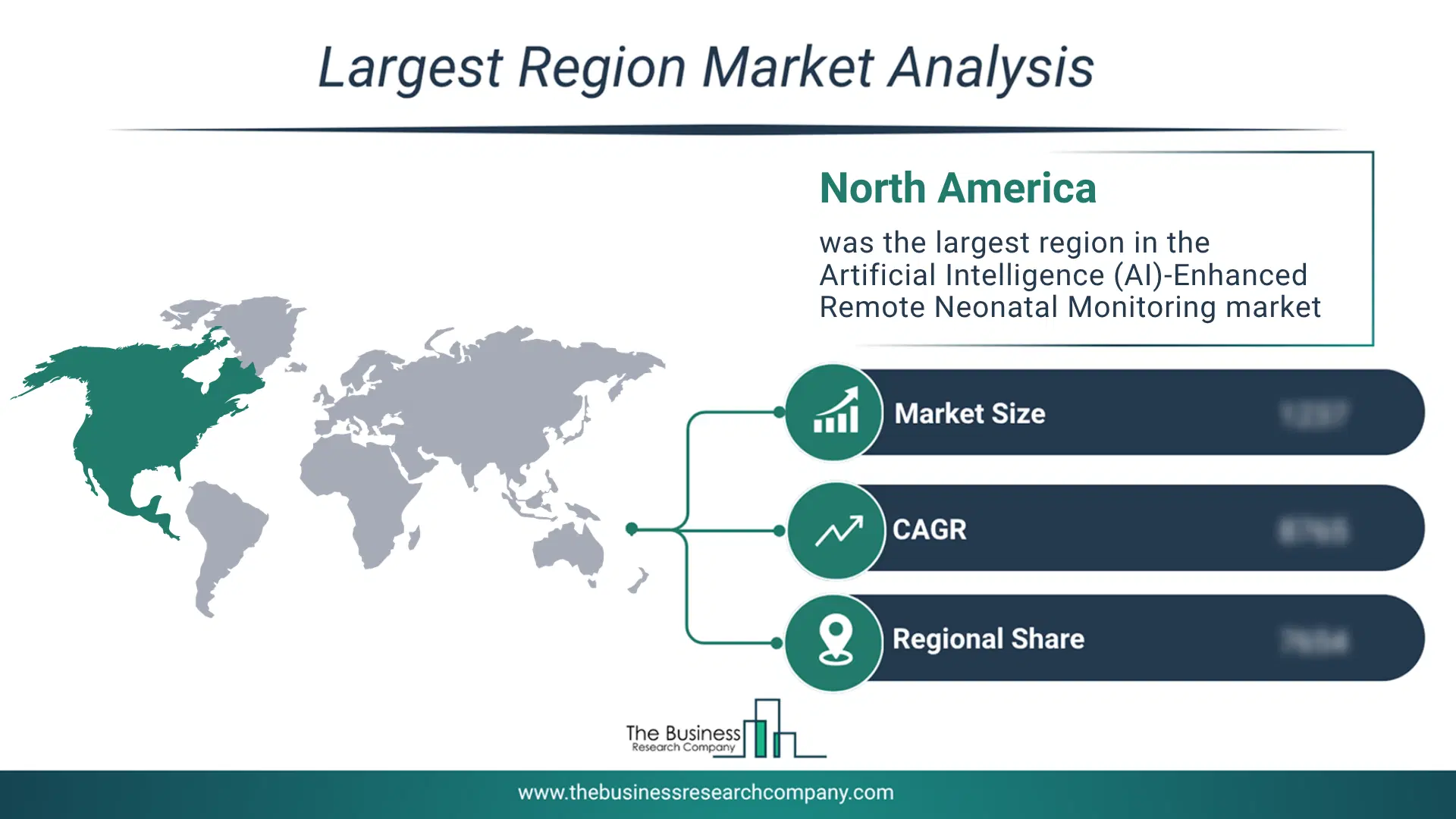
Regional Outlook
North America was the largest region in the artificial intelligence (AI)-enhanced remote neonatal monitoring market in 2025. Asia-Pacific is expected to be the fastest-growing region in the forecast period. The regions covered in this market report are Asia-Pacific, South East Asia, Western Europe, Eastern Europe, North America, South America, Middle East, Africa. The countries covered in this market report are Australia, Brazil, China, France, Germany, India, Indonesia, Japan, Taiwan, Russia, South Korea, UK, USA, Canada, Italy, Spain.What Defines the Artificial Intelligence (AI)-Enhanced Remote Neonatal Monitoring Market?
The artificial intelligence (AI)-enhanced remote neonatal monitoring market consists of revenues earned by entities by providing services such as continuous vital signs monitoring, predictive health analytics, remote data transmission, personalized care recommendations, and trend analysis and reporting. The market value includes the value of related goods sold by the service provider or included within the service offering. The artificial intelligence (AI)-enhanced remote neonatal monitoring market also includes sales of smart wearables for neonates, nutrition monitors, and neonatal imaging systems. Values in this market are ‘factory gate’ values, that is, the value of goods sold by the manufacturers or creators of the goods, whether to other entities (including downstream manufacturers, wholesalers, distributors, and retailers) or directly to end customers. The value of goods in this market includes related services sold by the creators of the goods.How is Market Value Defined and Measured?
The market value is defined as the revenues that enterprises gain from the sale of goods and/or services within the specified market and geography through sales, grants, or donations in terms of the currency (in USD unless otherwise specified). The revenues for a specified geography are consumption values that are revenues generated by organizations in the specified geography within the market, irrespective of where they are produced. It does not include revenues from resales along the supply chain, either further along the supply chain or as part of other products.
This chart presents market attractiveness based on a quantitative evaluation of growth, competition, strategic alignment, and risk, offering a clear view of opportunity areas for decision-making. This chart is for illustrative purposes; the full report contains the complete analysis.

This chart highlights the Total Addressable Market (TAM) by estimating the maximum revenue opportunity using an assumption-driven approach, supporting strategic planning and opportunity sizing across markets. The chart is illustrative; the full report provides a more comprehensive analysis.
What Key Data and Analysis Are Included in the Artificial Intelligence (AI)-Enhanced Remote Neonatal Monitoring Market Report 2026?
The artificial intelligence (ai)-enhanced remote neonatal monitoring market research report is one of a series of new reports from The Business Research Company that provides market statistics, including industry global market size, regional shares, competitors with the market share, detailed market segments, market trends and opportunities, and any further data you may need to thrive in the artificial intelligence (ai)-enhanced remote neonatal monitoring industry. The market research report delivers a complete perspective of everything you need, with an in-depth analysis of the current and future state of the industry.Artificial Intelligence (AI)-Enhanced Remote Neonatal Monitoring Market Report Forecast Analysis
| Report Attribute | Details |
|---|---|
| Market Size Value In 2026 | $1.51 billion |
| Revenue Forecast In 2030 | $2.98 billion |
| Growth Rate | CAGR of 18.6% from 2026 to 2030 |
| Base Year For Estimation | 2025 |
| Actual Estimates/Historical Data | 2020-2025 |
| Forecast Period | 2026 - 2030 |
| Market Representation | Revenue in USD Billion and CAGR from 2026 to 2030 |
| Segments Covered | Component, Monitoring Type, Deployment Mode, End User |
| Regional Scope | Asia-Pacific, Western Europe, Eastern Europe, North America, South America, Middle East, Africa |
| Country Scope | The countries covered in the report are Australia, Brazil, China, France, Germany, India, Indonesia, Japan, Taiwan, Russia, South Korea, UK, USA, Canada, Italy, Spain |
| Key Companies Profiled | Philips Healthcare, GE HealthCare Technologies Inc., Mount Sinai Health System Inc., Mindray Medical International Limited, Drägerwerk AG & Co. KGaA, Hill-Rom Company Inc., Masimo Corporation, Sheba Medical Center, Natus Medical Incorporated, Spacelabs Healthcare Inc., Aver Information Inc., Owlet Inc., Nanit Inc., AngelEye Health Inc., Raybaby Inc., Zoundream Inc., Sempulse Inc., Kriba Inc., Luscii B.V., Bloomlife Inc. |
| Customization Scope | Request for Customization |
| Pricing And Purchase Options | Explore Purchase Options |