
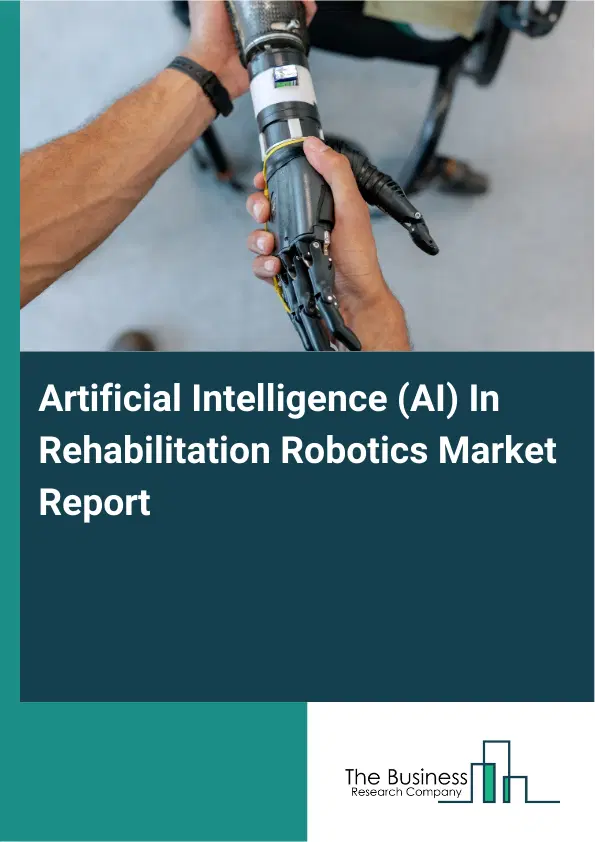
Artificial Intelligence (AI) In Rehabilitation Robotics Market Report 2026
Global Outlook – By Component (Hardware, Software, Services), By Therapy Type (Physical Therapy, Occupational Therapy, Speech Therap, Other Therapy Types), By Application (Neurological Rehabilitation, Orthopedic Rehabilitation, Geriatric Rehabilitation, Other Applications), By End-User (Hospitals, Rehabilitation Centers, Home Care Settings, Clinics, Other End-Users) – Market Size, Trends, Strategies, and Forecast to 2030
Artificial Intelligence (AI) In Rehabilitation Robotics Market Overview
• Artificial Intelligence (AI) In Rehabilitation Robotics market size has reached to $3.12 billion in 2025 • Expected to grow to $9.72 billion in 2030 at a compound annual growth rate (CAGR) of 25.5% • Growth Driver: Increasing Demand For Automation In Rehabilitation Fueling The Growth Of The Market Due To Need For Efficient, Personalized, And Scalable Therapy Solutions • Market Trend: AI?Driven Adaptive Gait Rehabilitation Software Improves Personalized Therapy Efficiency • North America was the largest region in 2025 and Asia-Pacific is the fastest growing region.What Is Covered Under Artificial Intelligence (AI) In Rehabilitation Robotics Market?
Artificial intelligence (AI) in rehabilitation robotics refers to the integration of AI algorithms into robotic systems used for physical rehabilitation. They enable robots to adapt therapy programs in real time based on patient performance, movement patterns, and recovery progress. These robots are used to deliver personalized, effective rehabilitation and improve motor recovery outcomes. This technology enhances therapy efficiency, patient engagement, and clinical decision-making. The main components of artificial intelligence in rehabilitation robotics are hardware, software, and services. Hardware includes robotic rehabilitation devices, sensors, and actuators integrated with intelligent control systems to support therapy delivery. These solutions are used across physical therapy, occupational therapy, speech therapy, and others, applied in neurological rehabilitation, orthopedic rehabilitation, geriatric rehabilitation, and others, among end users including hospitals, rehabilitation centers, home care settings, clinics, and others.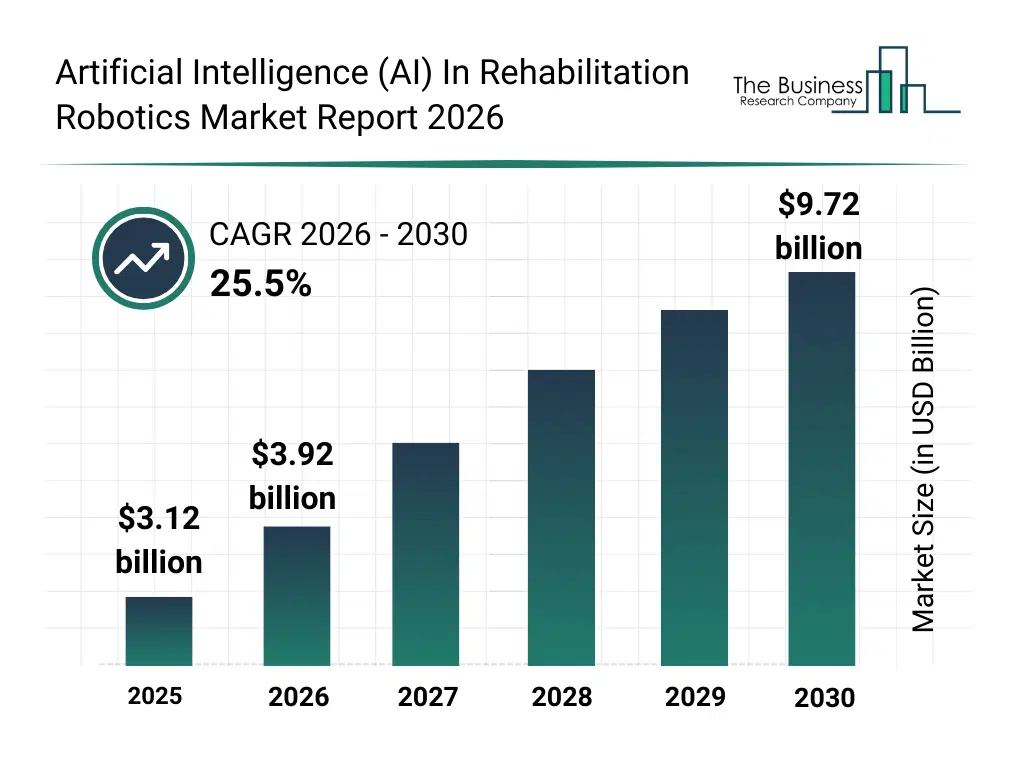
What Is The Artificial Intelligence (AI) In Rehabilitation Robotics Market Size and Share 2026?
The artificial intelligence (AI) in rehabilitation robotics market size has grown exponentially in recent years. It will grow from $3.12 billion in 2025 to $3.92 billion in 2026 at a compound annual growth rate (CAGR) of 25.7%. The growth in the historic period can be attributed to increasing adoption of robotic-assisted therapy, growing prevalence of neurological disorders, rising demand for personalized rehabilitation, expanding investments in ai-based healthcare technologies, increasing use of sensor-based patient monitoring.What Is The Artificial Intelligence (AI) In Rehabilitation Robotics Market Growth Forecast?
The artificial intelligence (AI) in rehabilitation robotics market size is expected to see exponential growth in the next few years. It will grow to $9.72 billion in 2030 at a compound annual growth rate (CAGR) of 25.5%. The growth in the forecast period can be attributed to growing need for home-based rehabilitation solutions, rising integration of ai with robotic hardware, increasing investments in digital health ecosystems, expanding clinical adoption of data-driven therapy models, growing geriatric population requiring long-term rehabilitation and Major trends in the forecast period include technology advancements in ai-driven rehabilitation systems, innovations in human-robot interaction and motion analysis, developments in cloud-based and remote therapy platforms, research and developments in soft robotics and adaptive control, growing adoption of virtual and augmented reality-enabled rehabilitation.
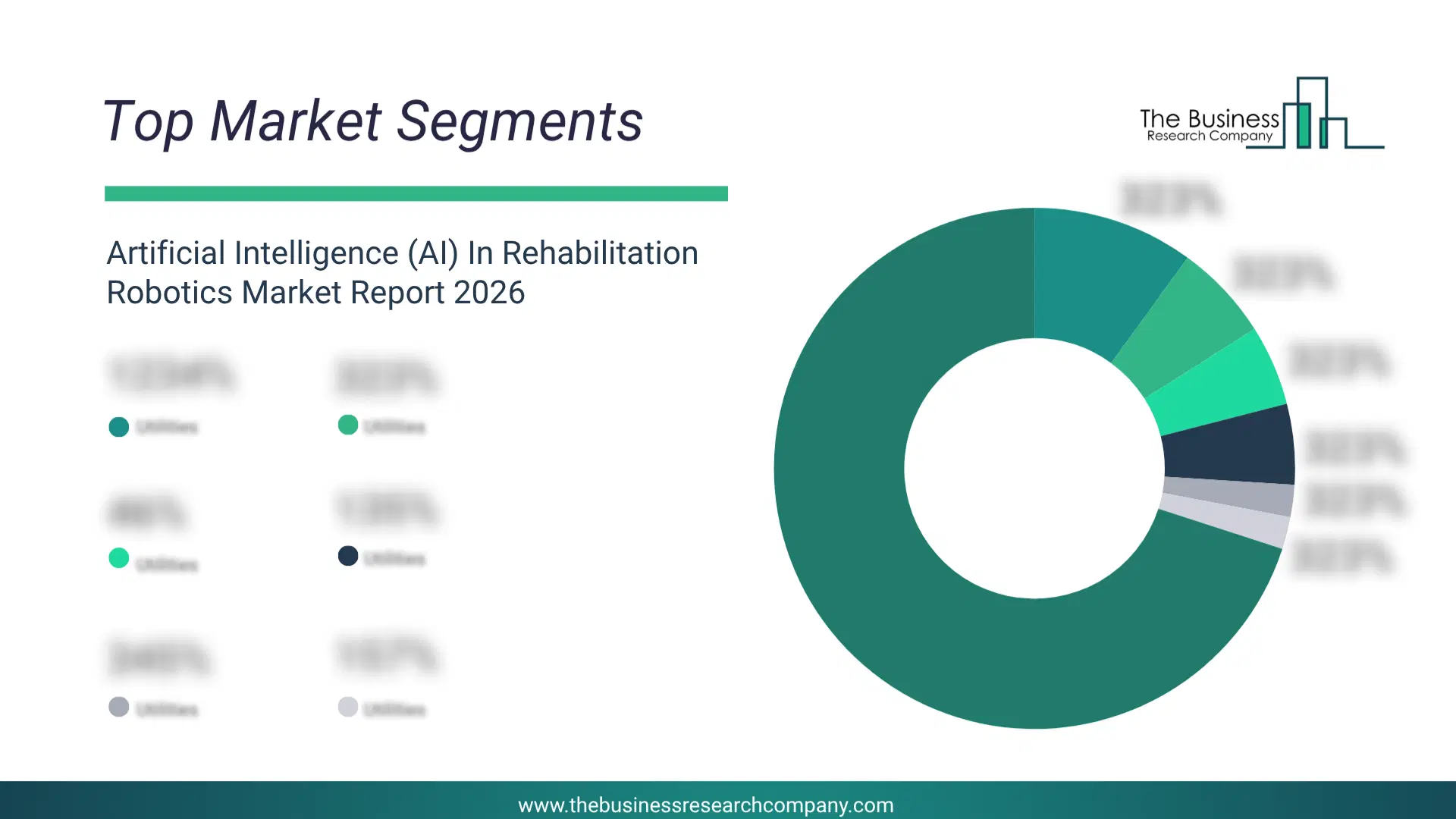
Global Artificial Intelligence (AI) In Rehabilitation Robotics Market Segmentation
1) By Component: Hardware, Software, Services 2) By Therapy Type: Physical Therapy, Occupational Therapy, Speech Therap, Other Therapy Types 3) By Application: Neurological Rehabilitation, Orthopedic Rehabilitation, Geriatric Rehabilitation, Other Applications 4) By End-User: Hospitals, Rehabilitation Centers, Home Care Settings, Clinics, Other End-Users Subsegments: 1) By Hardware: Sensors, Actuators, Control Units, Power Systems, Embedded Processing Modules 2) By Software: Motion Analysis Software, Rehabilitation Planning Software, Patient Monitoring Software, Artificial Intelligence Algorithms, User Interface Software 3) By Services: Installation Services, Maintenance Services, Training Services, Technical Support Services, System Integration ServicesWhat Is The Driver Of The Artificial Intelligence (AI) In Rehabilitation Robotics Market?
The increasing demand for automation in rehabilitation is expected to propel the growth of the artificial intelligence (AI) in rehabilitation robotics market going forward. Automation in rehabilitation refers to the use of robotic devices, AI-driven systems, and computer vision to monitor, guide, and deliver precise physical therapy exercises for improved patient recovery and progress tracking. Demand for automation in rehabilitation is rising as aging populations and chronic conditions increase the need for consistent, high-intensity therapy that robotic systems deliver more efficiently than traditional methods, enabling personalized sessions with real-time feedback and remote monitoring. AI in Rehabilitation Robotics supports automation in rehabilitation by enabling adaptive robotic systems to analyze patient movements, adjust therapy intensity in real time, and deliver customized rehabilitation support. For instance, in October 2024, according to the International Federation of Robotics, a Germany-based robotics industry organization, sales of medical robots increased by 36% to around 6,100 units in 2023, while sales of rehabilitation and non-invasive therapy robots rose by 128%, reflecting strong growth in healthcare robotics adoption. Therefore, the increasing demand for automation in rehabilitation is driving the growth of the artificial intelligence (AI) in rehabilitation robotics industry.Key Players In The Global Artificial Intelligence (AI) In Rehabilitation Robotics Market
Major companies operating in the artificial intelligence (AI) in rehabilitation robotics market are Ottobock SE & Co. KGaA, Fourier Intelligence Co. Ltd., Neura Robotics GmbH, Kinova Inc., Myomo Inc., Wandercraft SAS, Cyberdyne Inc., EGZOTech Sp. z o.o., Hocoma AG , Ekso Bionics Holdings Inc., Tyromotion GmbH, Lifeward Ltd., ReWalk Robotics Ltd., AlterG Inc., DIH Medical Group, Rehab-Robotics Co. Ltd., Able Human Motion SL, B-Temia Inc., Reha Technology AG, Moterum Technologies Inc., INROBICS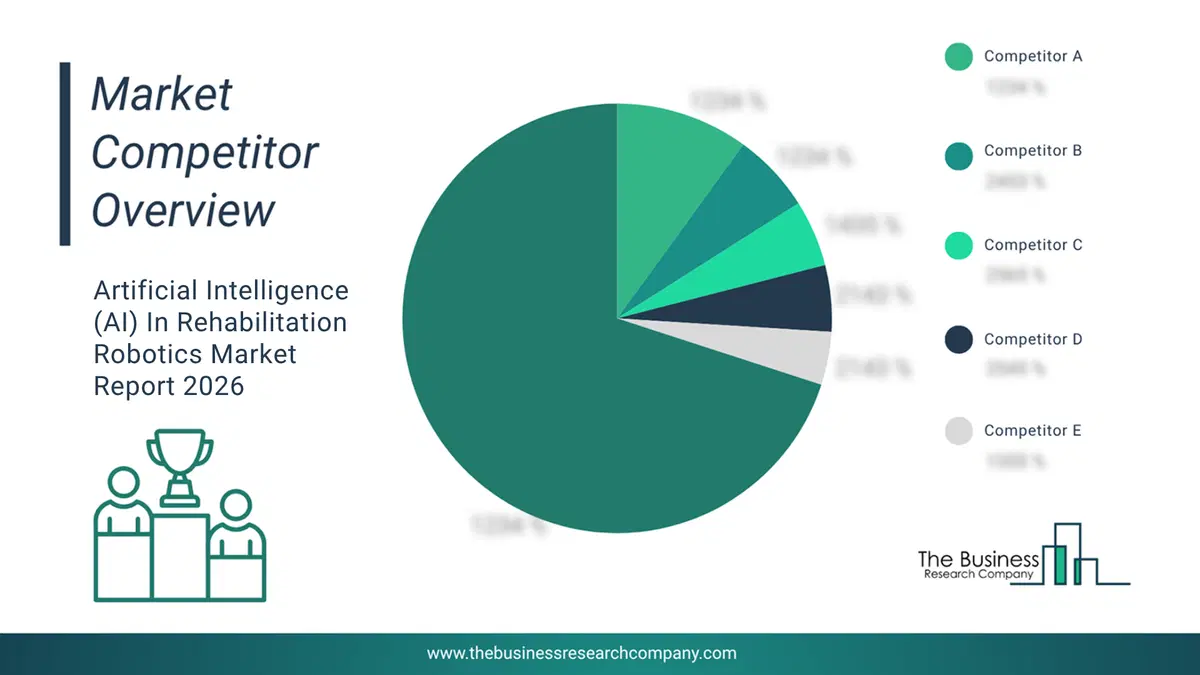
This chart is for illustrative purposes; the full report includes a detailed competitor analysis and comprehensive overview of the top 10 companies in the market.
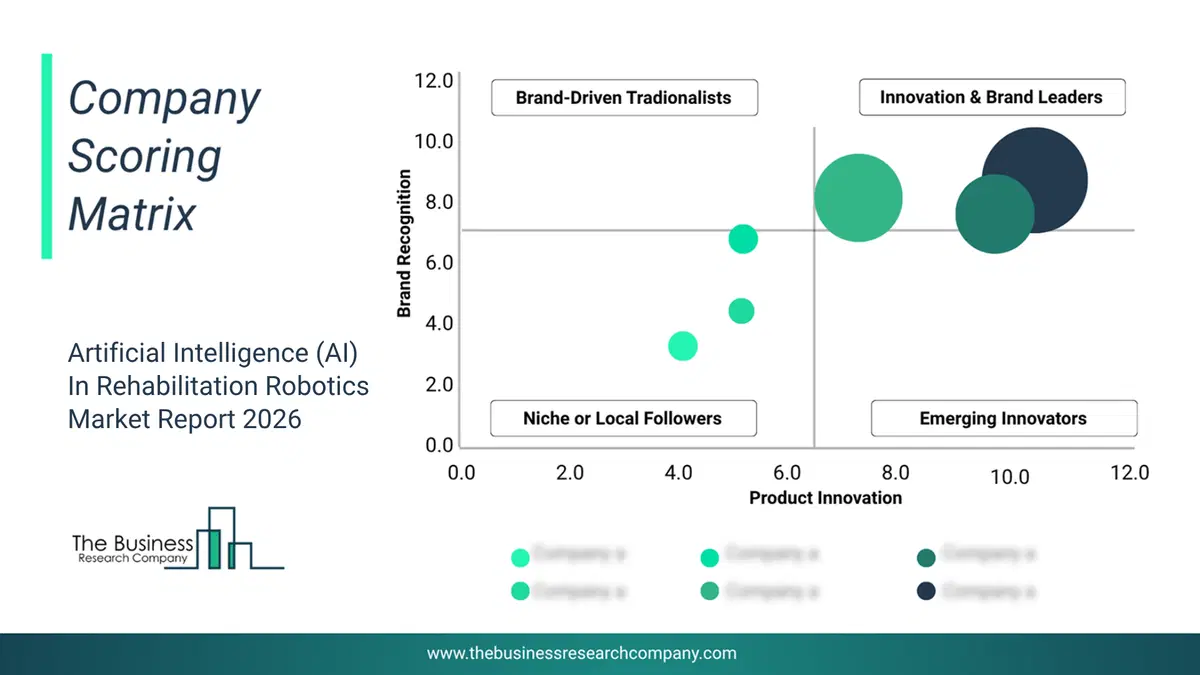
This chart maps companies by product innovation and brand strength, with bubble size indicating relative revenue, helping identify market leaders, challengers, and niche players. This is an illustrative chart; the full report provides a complete and accurate competitive analysis.
Global Artificial Intelligence (AI) In Rehabilitation Robotics Market Trends and Insights
Major companies operating in the artificial intelligence (AI) in rehabilitation robotics market are focusing on developing advanced systems, such as intelligent gait therapy systems, to analyze patient movement and provide real‑time feedback to support tailored rehabilitation plans and enhance clinical outcomes. Intelligent gait therapy systems in this context refer to software integrated with robotic exoskeletons that use machine learning algorithms to interpret gait patterns, adjust support levels dynamically, and deliver actionable insights to clinicians to optimize walking therapy. For instance, in January 2024, Ekso Bionics Holdings Inc., a US‑based medical robotics company, launched GaitCoach software for EksoNR device. This comprehensive software is engineered to simplify the use of robotics, aiming to improve user trust, provide dynamic feedback, and offer specific guidance that acts as an extra set of clinical eyes.What Are Latest Mergers And Acquisitions In The Artificial Intelligence (AI) In Rehabilitation Robotics Market?
In June 2025, Bioness Medical Inc., a US-based provider of neuro-rehabilitation technologies and robotic therapeutic systems, acquired Harmonic Bionics Inc. for an undisclosed amount. With this acquisition, Bioness Medical aims to strengthen its next-generation rehabilitation robotics portfolio by integrating Harmonic Bionics’ advanced bilateral upper extremity robotic exoskeleton technology, enhancing patient upper limb mobility and functional recovery following neurological impairments, and expanding its competitive reach in AI-enabled rehabilitation solutions. Harmonic Bionics Inc. is a US-based rehabilitation robotics company focused on creating robotic exoskeleton systems to assist patients with neurological and musculoskeletal movement impairments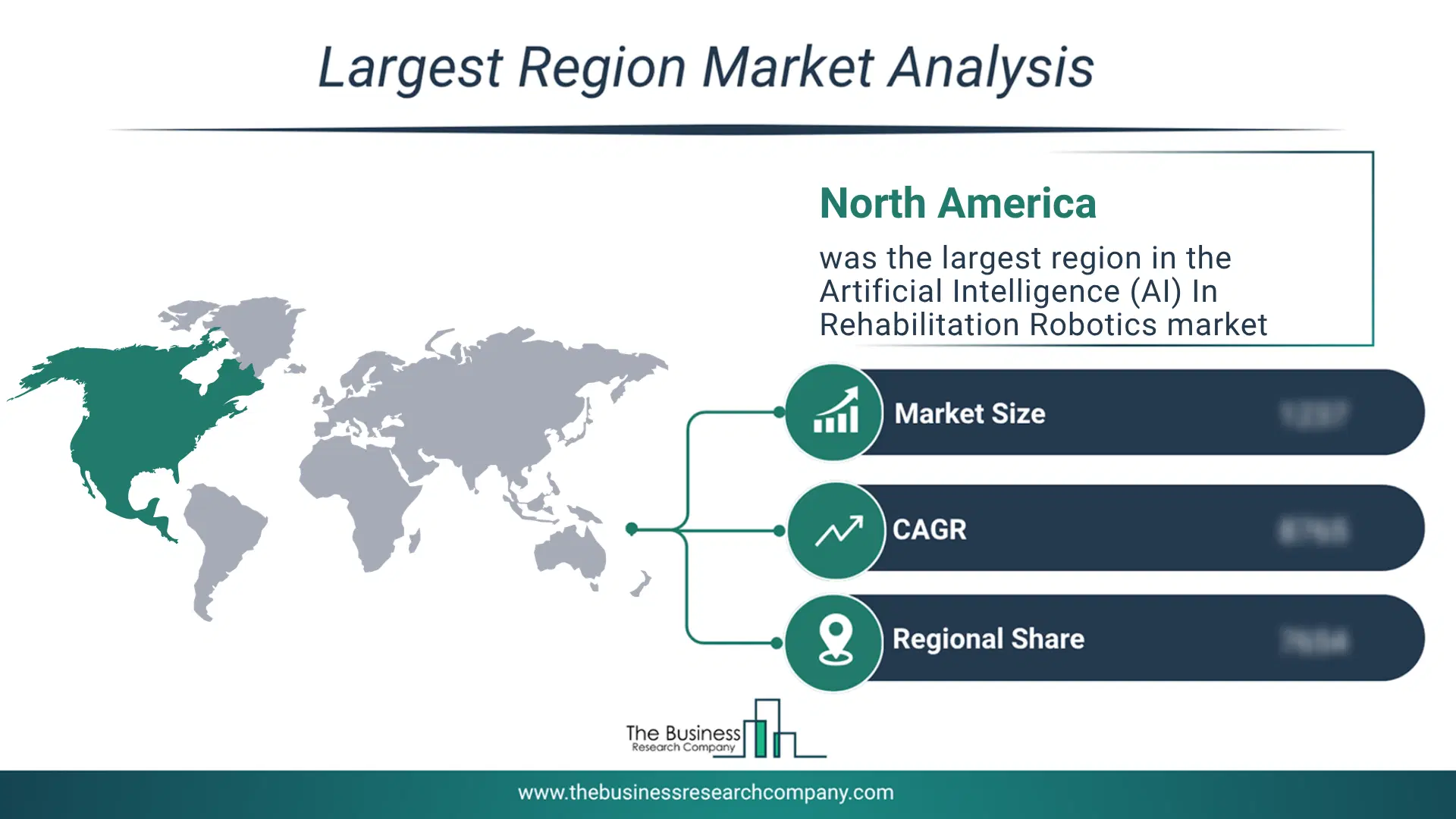
Regional Insights
North America was the largest region in the artificial intelligence (AI) in rehabilitation robotics market in 2025. Asia-Pacific is expected to be the fastest-growing region in the forecast period. The regions covered in this market report are Asia-Pacific, South East Asia, Western Europe, Eastern Europe, North America, South America, Middle East, Africa. The countries covered in this market report are Australia, Brazil, China, France, Germany, India, Indonesia, Japan, Taiwan, Russia, South Korea, UK, USA, Canada, Italy, Spain.What Defines the Artificial Intelligence (AI) In Rehabilitation Robotics Market?
The artificial intelligence (AI) in rehabilitation robotics market consists of revenues earned by entities by providing services such as robot-assisted therapy, virtual reality-based rehabilitation, remote rehabilitation monitoring, cognitive training support, and personalized therapy planning. The market value includes the value of related goods sold by the service provider or included within the service offering. The artificial intelligence (AI) in rehabilitation robotics market also includes sales of rehabilitation robots, robotic exoskeletons, intelligent therapy devices, sensor-integrated robotic systems, machine learning–based control software, and human–robot interaction platforms. Values in this market are ‘factory gate’ values, that is, the value of goods sold by the manufacturers or creators of the goods, whether to other entities (including downstream manufacturers, wholesalers, distributors, and retailers) or directly to end customers. The value of goods in this market includes related services sold by the creators of the goods.How is Market Value Defined and Measured?
The market value is defined as the revenues that enterprises gain from the sale of goods and/or services within the specified market and geography through sales, grants, or donations in terms of the currency (in USD unless otherwise specified). The revenues for a specified geography are consumption values that are revenues generated by organizations in the specified geography within the market, irrespective of where they are produced. It does not include revenues from resales along the supply chain, either further along the supply chain or as part of other products.
This chart presents market attractiveness based on a quantitative evaluation of growth, competition, strategic alignment, and risk, offering a clear view of opportunity areas for decision-making. This chart is for illustrative purposes; the full report contains the complete analysis.

This chart highlights the Total Addressable Market (TAM) by estimating the maximum revenue opportunity using an assumption-driven approach, supporting strategic planning and opportunity sizing across markets. The chart is illustrative; the full report provides a more comprehensive analysis.
What Key Data and Analysis Are Included in the Artificial Intelligence (AI) In Rehabilitation Robotics Market Report 2026?
The artificial intelligence (ai) in rehabilitation robotics market research report is one of a series of new reports from The Business Research Company that provides market statistics, including industry global market size, regional shares, competitors with the market share, detailed market segments, market trends and opportunities, and any further data you may need to thrive in the artificial intelligence (ai) in rehabilitation robotics industry. The market research report delivers a complete perspective of everything you need, with an in-depth analysis of the current and future state of the industry.Artificial Intelligence (AI) In Rehabilitation Robotics Market Report Forecast Analysis
| Report Attribute | Details |
|---|---|
| Market Size Value In 2026 | $3.92 billion |
| Revenue Forecast In 2030 | $9.72 billion |
| Growth Rate | CAGR of 25.5% from 2026 to 2030 |
| Base Year For Estimation | 2025 |
| Actual Estimates/Historical Data | 2020-2025 |
| Forecast Period | 2026 - 2030 |
| Market Representation | Revenue in USD Billion and CAGR from 2026 to 2030 |
| Segments Covered | Component, Therapy Type, Application, End-User |
| Regional Scope | Asia-Pacific, Western Europe, Eastern Europe, North America, South America, Middle East, Africa |
| Country Scope | The countries covered in the report are Australia, Brazil, China, France, Germany, India, Indonesia, Japan, Taiwan, Russia, South Korea, UK, USA, Canada, Italy, Spain. |
| Key Companies Profiled | Ottobock SE & Co. KGaA, Fourier Intelligence Co. Ltd., Neura Robotics GmbH, Kinova Inc., Myomo Inc., Wandercraft SAS, Cyberdyne Inc., EGZOTech Sp. z o.o., Hocoma AG , Ekso Bionics Holdings Inc., Tyromotion GmbH, Lifeward Ltd., ReWalk Robotics Ltd., AlterG Inc., DIH Medical Group, Rehab-Robotics Co. Ltd., Able Human Motion SL, B-Temia Inc., Reha Technology AG, Moterum Technologies Inc., INROBICS |
| Customization Scope | Request for Customization |
| Pricing And Purchase Options | Explore Purchase Options |