
Artificial Intelligence (AI) In Synthetic Data Market Report 2026
Global Outlook – By Component (Services, Software), By Data Type (Tabular Data, Image Data, Text Data, Video Data), By Application (Data Augmentation, Model Training And Testing, Data Privacy And Security, Fraud Detection), By End-User (Government, Information Technology (IT) And Telecommunications, Retail And E-commerce, Automotive, Healthcare, Banking, Financial Services And Insurance (BFSI) ) – Market Size, Trends, Strategies, and Forecast to 2030
Artificial Intelligence (AI) In Synthetic Data Market Overview
• Artificial Intelligence (AI) In Synthetic Data market size has reached to $1.97 billion in 2025 • Expected to grow to $10.48 billion in 2030 at a compound annual growth rate (CAGR) of 39.7% • Growth Driver: Increasing Unstructured Data Volume From Internet Of Things (IoT) Fueling The Growth Of The Market Due To Expansion Of High-Velocity Sensor, Telemetry, And Device Data • Market Trend: AI Platform Generates High-Fidelity Synthetic Data From Complex Databases • North America was the largest region in 2025 and Asia-Pacific is the fastest growing region.Market Gains By 2030 – Top Opportunities By Segment
Market Gain identifies the most promising market opportunities by highlighting the segments or products expected to generate the highest incremental revenue growth over the next five years.
What Is Covered Under Artificial Intelligence (AI) In Synthetic Data Market?
Artificial intelligence (AI) in synthetic data refers to the use of advanced algorithms and machine learning techniques to generate realistic and high-quality artificial data that mimics real-world datasets. It enables the creation of diverse, scalable, and privacy-compliant data without relying on sensitive or limited real data. This technology helps accelerate data-driven research, testing, and development by providing consistent and controllable datasets for analysis and model training. The main components of artificial intelligence (AI) in synthetic data include services and software. Services refer to AI-driven solutions that provide generation, management, and optimization of synthetic datasets to support secure and efficient data usage for training and testing AI models. There are data types such as tabular data, image data, text data, and video data. The applications include data augmentation, model training and testing, data privacy and security, and fraud detection, and they are used by several end-users such as government, information technology (IT) and telecommunications, retail and e-commerce, automotive, healthcare, and banking, financial services and insurance (BFSI).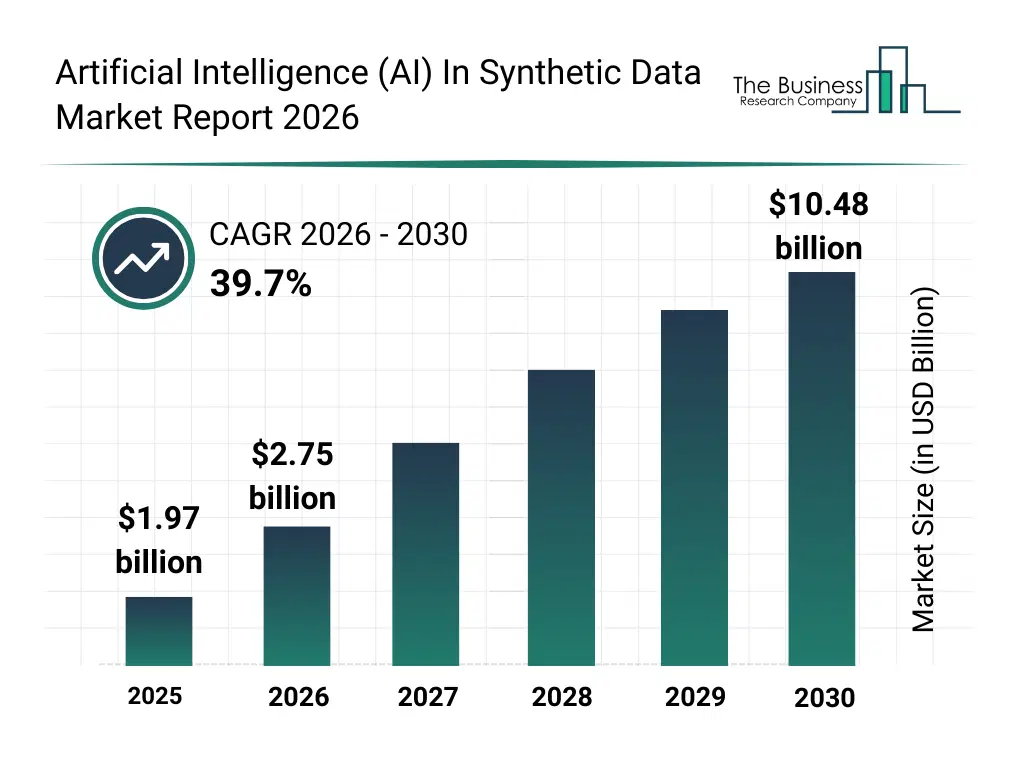
What Is The Artificial Intelligence (AI) In Synthetic Data Market Size and Share 2026?
The artificial intelligence (AI) in the synthetic data market size has grown exponentially in recent years. It will grow from $1.97 billion in 2025 to $2.75 billion in 2026 at a compound annual growth rate (CAGR) of 40.0%. The growth in the historic period can be attributed to increasing demand for data-driven insights, growing awareness of privacy risks associated with using real data, rising regulatory emphasis on data protection and governance, shortage of high-quality annotated datasets, and the need to reduce data collection and labeling costs.What Is The Artificial Intelligence (AI) In Synthetic Data Market Growth Forecast?
The artificial intelligence (AI) in the synthetic data market size is expected to see exponential growth in the next few years. It will grow to $10.48 billion in 2030 at a compound annual growth rate (CAGR) of 39.7%. The growth in the forecast period can be attributed to increasing enterprise adoption of synthetic data for model development and testing, growing demand for privacy-preserving data-sharing mechanisms, rising requirements for synthetic datasets in regulated industries such as healthcare and finance, expanding commercialization of synthetic data services and managed offerings, and increasing need for cross-border collaborative research data that does not expose personal records. Major trends in the forecast period include advancements in generative adversarial networks, development of diffusion-based generative models, integration of synthetic data with federated learning approaches, improvements in evaluation metrics for data fidelity and utility, and automation of end-to-end synthetic data generation pipelines.
Global Artificial Intelligence (AI) In Synthetic Data Market Segmentation
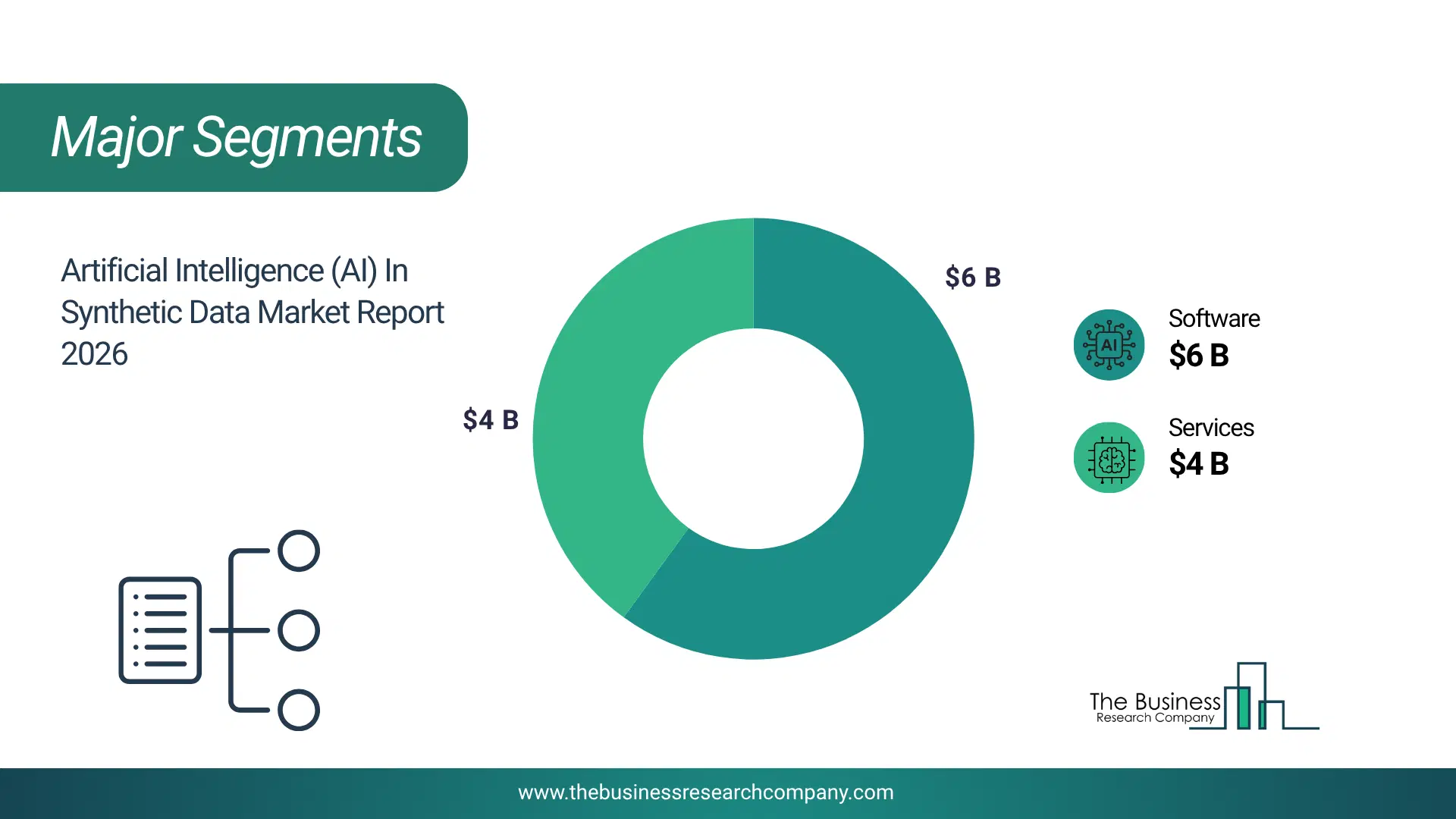
1) By Component: Services, Software 2) By Data Type: Tabular Data, Image Data, Text Data, Video Data 3) By Application: Data Augmentation, Model Training And Testing, Data Privacy And Security, Fraud Detection 4) By End-User: Government, Information Technology (IT) And Telecommunications, Retail And E-commerce, Automotive, Healthcare, Banking, Financial Services And Insurance (BFSI) Subsegments: 1) By Services: Data Annotation, Data Verification, Data Labeling, Synthetic Data Generation, Consulting 2) By Software: Data Synthesis Platforms, Simulation Engines, Data Augmentation Tools, Privacy Preserving Tools, Model Training And Testing Tools The top segments in the artificial intelligence (ai) in synthetic data market will be: • Software will reach $5.52 Billion by 2030. • Services will reach $3.83 Billion by 2030.What Is The Driver Of The Artificial Intelligence (AI) In Synthetic Data Market?
The increasing unstructured data volume from internet of things (IoT) is expected to propel the growth of the artificial intelligence (AI) in synthetic data market going forward. Increasing unstructured data volume refers to the expanding amount of schema-less outputs such as sensor logs, telemetry data, images, and free-form device signals generated continuously by IoT systems. This volume is increasing because global broadband usage has expanded sharply, driven by growing numbers of connected devices producing high-velocity data streams. Artificial intelligence (AI) in synthetic data strengthens data ecosystems by efficiently processing expanding unstructured data volume from internet of things (IoT) sources. It improves data usability by converting high-velocity sensor signals, logs, and device outputs into structured, synthetic datasets, enhancing analytics, automation, and decision-making across connected environments. For instance, in May 2025, according to the Organisation for Economic Co-operation and Development, a France-based intergovernmental body, the average monthly data usage per mobile broadband subscription in OECD countries surged 65% in one year and more than doubled over two years, increasing from 8 GB in June 2022 to 17 GB by June 2024. Therefore, the increasing unstructured data volume from IoT is driving the growth of the artificial intelligence (AI) in synthetic data industry.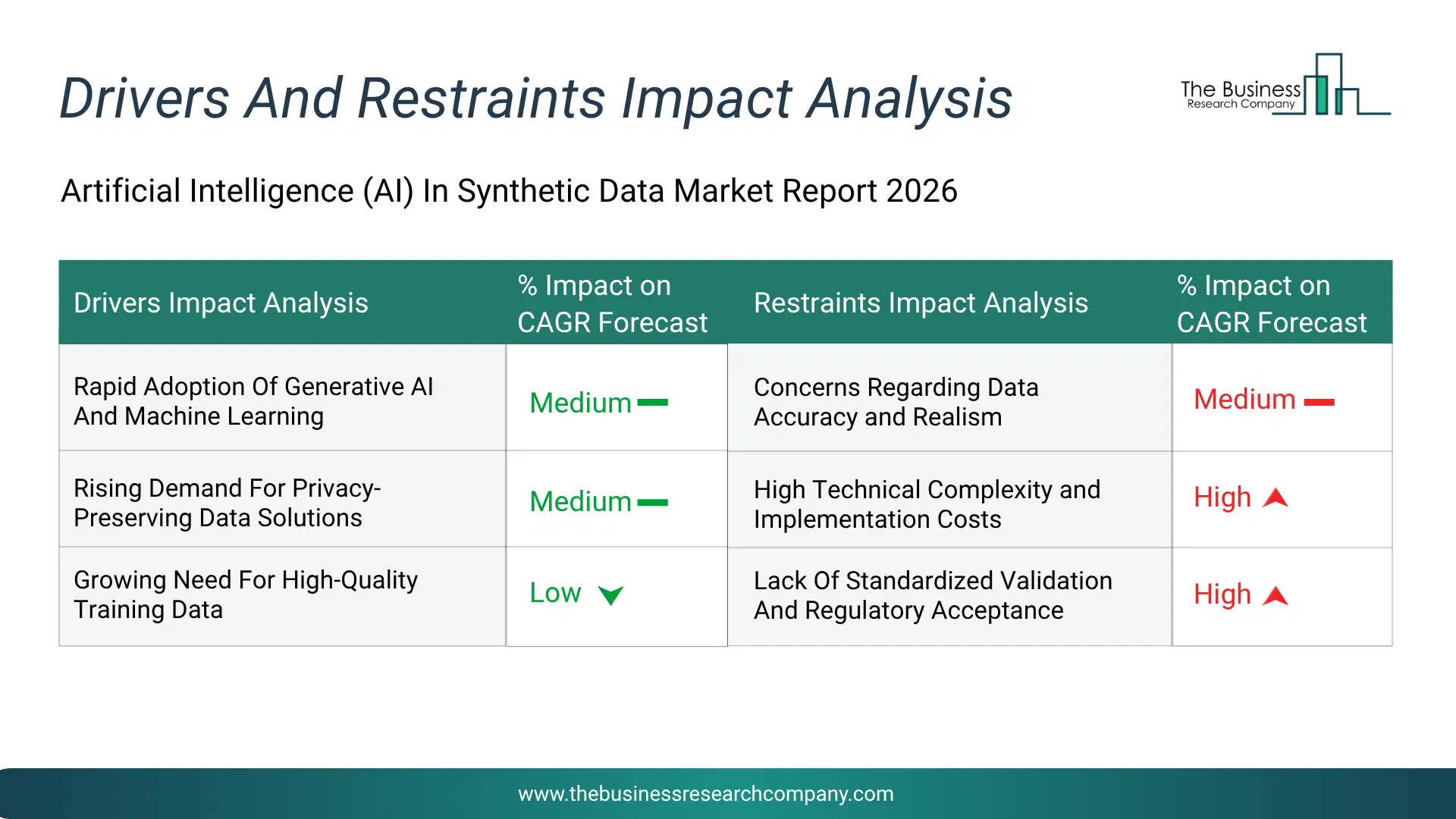
Infographic Chart Showing Key Market Drivers Analysis And Restraints For Artificial Intelligence (Ai) In Synthetic Data Market
The chart presents an impact analysis of key drivers and restraints, quantifying their relative influence on the market's growth rate and helping assess the balance between growth enablers and limiting factors. This chart offers a high-level perspective; the full report contains more detailed insights.
How Will The Drivers Impact Growth In The Global Artificial Intelligence (AI) In Synthetic Data Market?
• Rapid Adoption Of Generative AI And Machine Learning (Medium) – During the forecast period, the rapid adoption of generative AI and machine learning is expected to become a key growth driver for the artificial intelligence (AI) in synthetic data market by 2030. The expansion of large language models, computer vision systems, and autonomous AI applications is creating substantial demand for scalable synthetic datasets that support continuous model development. Organizations are increasingly using AI-generated data to simulate complex scenarios that are difficult or expensive to capture in real-world environments. Synthetic data also enables faster experimentation while improving model accuracy and reducing development bottlenecks. This growing reliance on AI-ready datasets is reinforcing strong market expansion. • Rising Demand For Privacy-Preserving Data Solutions (Medium) – During the forecast period, the rising demand for privacy-preserving data solutions is expected to emerge as a major factor driving the expansion of the artificial intelligence (AI) in synthetic data market by 2030. Enterprises are increasingly adopting synthetic data to securely share information across teams, partners, and research organizations without exposing confidential or personally identifiable data. The ability to preserve statistical accuracy while minimizing privacy risks is encouraging wider implementation across highly regulated sectors. Businesses are also incorporating synthetic data into governance frameworks to strengthen responsible AI deployment and data management strategies. • Growing Need For High-Quality Training Data (Low) – During the forecast period, the growing need for high-quality training data is expected to act as a key growth catalyst for the artificial intelligence (AI) in synthetic data market by 2030. AI developers require balanced, diverse, and accurately labeled datasets to improve the reliability of predictive models and reduce algorithmic bias. Synthetic data generation enables the creation of targeted datasets that include rare events, edge cases, and controlled environments that are often unavailable through conventional data collection methods. This capability supports faster AI deployment while enhancing testing consistency across multiple use cases.How Will The Restraints Impact Growth In The Global Artificial Intelligence (AI) In Synthetic Data Market?
• Concerns Regarding Data Accuracy and Realism (Medium) – During the forecast period, the although synthetic data closely mimics real-world information, it may not always capture complex relationships and rare events accurately. Poorly generated synthetic datasets can introduce biases or reduce model effectiveness. Organizations often require extensive validation to ensure dataset quality and reliability. This increases implementation complexity and may limit adoption in highly sensitive applications. Concerns over data authenticity remain a significant market restraint. • High Technical Complexity and Implementation Costs (Medium) – During the forecast period, the developing and managing advanced synthetic data generation systems requires specialized AI expertise and computational resources. Many organizations face challenges in integrating synthetic data platforms into existing workflows. Initial investments in software, infrastructure, and skilled personnel can be substantial. Small and medium-sized enterprises may find these costs difficult to justify. The technical and financial barriers associated with deployment can therefore slow market growth. • Lack Of Standardized Validation And Regulatory Acceptance (Low) – During the forecast period, the lack of standardized validation and regulatory acceptance is expected to restrain the growth of the synthetic data generation market. Organizations across industries increasingly rely on synthetic data to train artificial intelligence models, test software applications, and support analytics while protecting sensitive information. However, the absence of universally accepted standards for validating the quality, representativeness, and reliability of synthetic datasets creates uncertainty regarding their use in critical applications. Regulatory authorities in sectors such as healthcare, financial services, and autonomous systems often require rigorous evidence demonstrating that synthetic data accurately reflects real-world scenarios without introducing bias or compromising model performance. In addition, inconsistent validation methodologies across vendors and industries can reduce user confidence and complicate cross-organizational collaboration. These challenges increase implementation complexity, prolong deployment timelines, and require additional verification efforts before synthetic data can be used in production environments. Consequently, the lack of standardized validation and regulatory acceptance remains a significant restraint on the growth of the synthetic data generation market.Key Players In The Global Artificial Intelligence (AI) In Synthetic Data Market
Major companies operating in the artificial intelligence (AI) in synthetic data market are Shaip Inc., Kinetic Vision Inc., Parallel Domain Inc., Datagen Technologies Inc., Sky Engine Ltd., MDClone Ltd., Synthesis AI Inc., Cvedia Inc., Mostly AI GmbH, YData Ltd., Epistemix Inc., GenRocket Inc., Rendered.ai Inc., Syntho B.V., Betterdata Inc., Anyverse AI, Neurolabs Inc., Coohom Cloud Inc., Zumo Labs Inc., Cognata Ltd.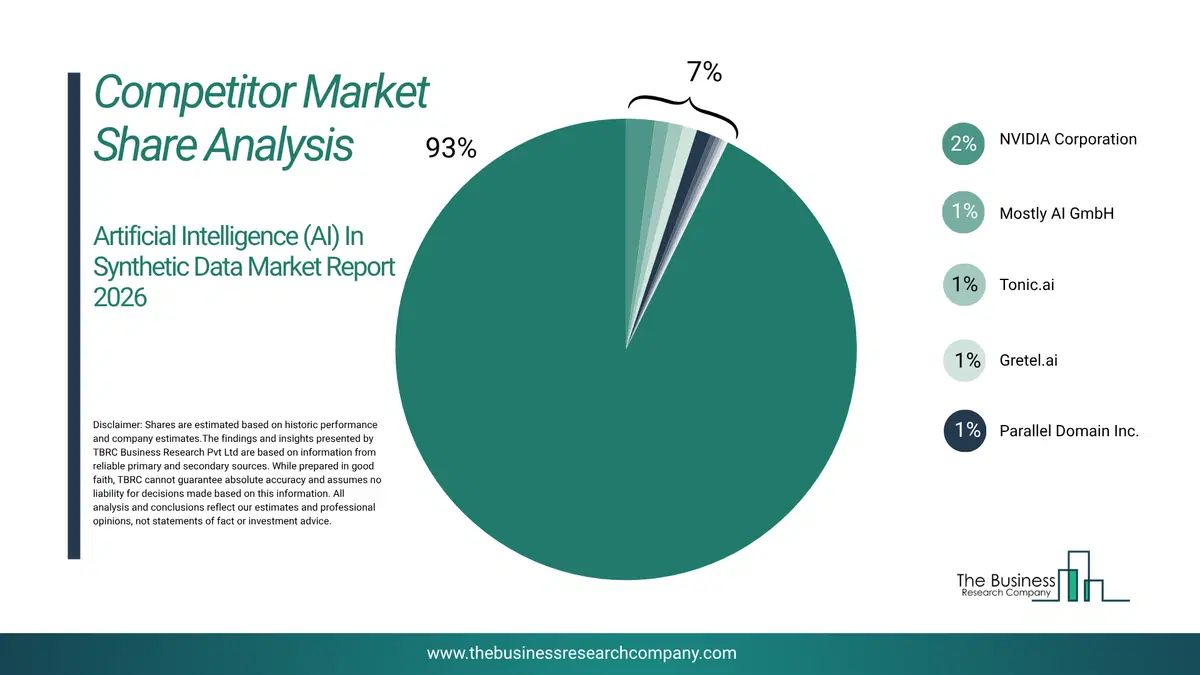
This chart is for illustrative purposes; the full report includes a detailed competitor analysis and comprehensive overview of the top 10 companies in the market.
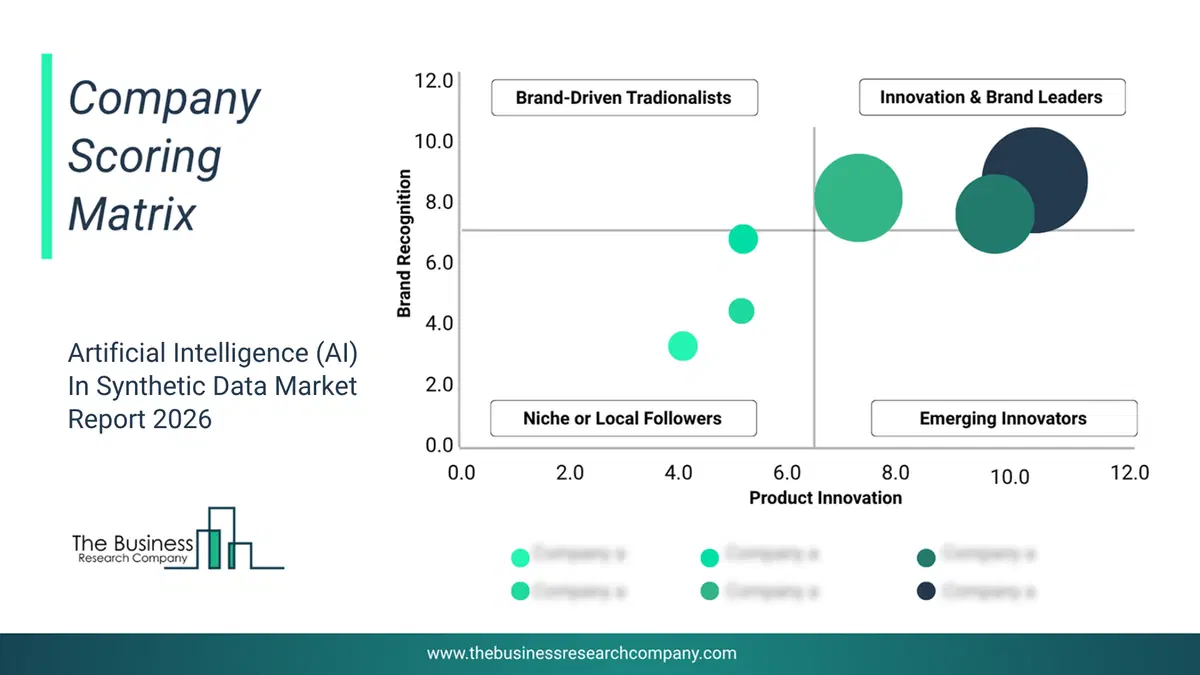
This chart maps companies by product innovation and brand strength, with bubble size indicating relative revenue, helping identify market leaders, challengers, and niche players. This is an illustrative chart; the full report provides a complete and accurate competitive analysis.
Global Artificial Intelligence (AI) In Synthetic Data Market Trends and Insights
Major companies operating in the artificial intelligence (AI) in synthetic data market are focusing on developing enterprise-grade synthetic data platforms, such as high-fidelity tabular and relational data synthesizers, to improve data accessibility, accelerate model training, and strengthen privacy compliance. High-fidelity tabular and relational data synthesizers refer to AI-powered tools that generate artificial datasets mirroring the statistical properties and relationships of real-world structured data while preserving confidentiality. For instance, in December 2023, DataCebo, a US-based AI software company, launched Synthetic Data Vault. This high-fidelity tabular and relational data synthesizer is a fully scalable system that can build custom generative AI models on-premises to create synthetic data from complex relational databases, drastically reducing the risk of exposing sensitive information. It includes the ability to handle up to 100 tables and allows users to simply describe the data they need, enabling seamless data generation for testing and development without operator intervention. It also incorporates proven core algorithms validated by an active open-source community of over a million downloads, extending the utility and reliability of synthetic data for ground operators in finance, healthcare, and other sectors.What Are Latest Mergers And Acquisitions In The Artificial Intelligence (AI) In Synthetic Data Market?
In November 2024, SAS Institute, a US-based provider of analytics and AI software, acquired the principal software assets of Hazy Ltd. for an undisclosed amount. With this acquisition, SAS aims to integrate Hazy’s synthetic-data capabilities into its analytics stack to enable customers to create privacy-preserving synthetic datasets for production analytics, testing, and governance. Hazy Ltd. is a UK-based provider of AI-powered synthetic data solutions for privacy-safe analytics.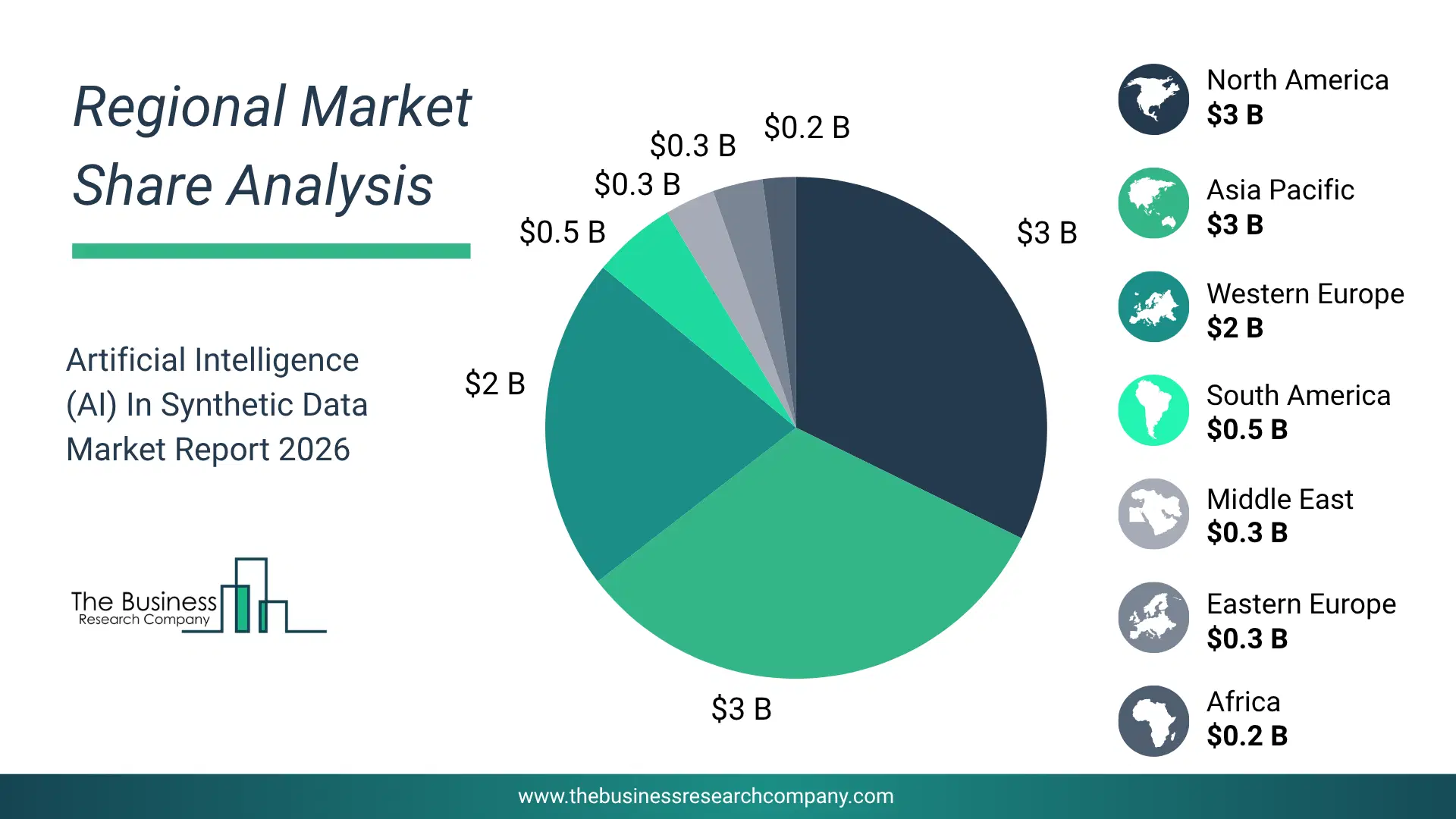
Regional Insights
North America was the largest region in the artificial intelligence (AI) in the synthetic data market in 2025. Asia-Pacific is expected to be the fastest-growing region in the forecast period. The regions covered in this market report are Asia-Pacific, South East Asia, Western Europe, Eastern Europe, North America, South America, Middle East, Africa. The countries covered in this market report are Australia, Brazil, China, France, Germany, India, Indonesia, Japan, Taiwan, Russia, South Korea, UK, USA, Canada, Italy, Spain.What Defines the Artificial Intelligence (AI) In Synthetic Data Market?
The artificial intelligence (AI) in synthetic data market consists of revenues earned by entities by providing services such as quality assurance services, synthetic dataset management services, and artificial intelligence model training and testing services. The market value includes the value of related goods sold by the service provider or included within the service offering. The artificial intelligence in synthetic data market includes sales of data anonymization tools, synthetic image generators, synthetic video generators, and synthetic voice and audio generators. Values in this market are ‘factory gate’ values, that is, the value of goods sold by the manufacturers or creators of the goods, whether to other entities (including downstream manufacturers, wholesalers, distributors, and retailers) or directly to end customers. The value of goods in this market includes related services sold by the creators of the goods.How is Market Value Defined and Measured?
The market value is defined as the revenues that enterprises gain from the sale of goods and/or services within the specified market and geography through sales, grants, or donations in terms of the currency (in USD unless otherwise specified). The revenues for a specified geography are consumption values that are revenues generated by organizations in the specified geography within the market, irrespective of where they are produced. It does not include revenues from resales along the supply chain, either further along the supply chain or as part of other products.
This chart presents market attractiveness based on a quantitative evaluation of growth, competition, strategic alignment, and risk, offering a clear view of opportunity areas for decision-making. This chart is for illustrative purposes; the full report contains the complete analysis.

This chart highlights the Total Addressable Market (TAM) by estimating the maximum revenue opportunity using an assumption-driven approach, supporting strategic planning and opportunity sizing across markets. The chart is illustrative; the full report provides a more comprehensive analysis.
What Key Data and Analysis Are Included in the Artificial Intelligence (AI) In Synthetic Data Market Report 2026?
The artificial intelligence (ai) in synthetic data market research report is one of a series of new reports from The Business Research Company that provides market statistics, including industry global market size, regional shares, competitors with the market share, detailed market segments, market trends and opportunities, and any further data you may need to thrive in the artificial intelligence (ai) in synthetic data industry. The market research report delivers a complete perspective of everything you need, with an in-depth analysis of the current and future state of the industry.Artificial Intelligence (AI) In Synthetic Data Market Report Forecast Analysis
| Report Attribute | Details |
|---|---|
| Market Size Value In 2026 | $2.75 billion |
| Revenue Forecast In 2030 | $10.48 billion |
| Growth Rate | CAGR of 40.0% from 2026 to 2030 |
| Base Year For Estimation | 2025 |
| Actual Estimates/Historical Data | 2020-2025 |
| Forecast Period | 2026 - 2030 |
| Market Representation | Revenue in USD Billion and CAGR from 2026 to 2030 |
| Segments Covered | Component, Data Type, Application, End-User |
| Regional Scope | Asia-Pacific, Western Europe, Eastern Europe, North America, South America, Middle East, Africa |
| Country Scope | The countries covered in the report are Australia, Brazil, China, France, Germany, India, Indonesia, Japan, Taiwan, Russia, South Korea, UK, USA, Canada, Italy, Spain. |
| Key Companies Profiled | Shaip Inc., Kinetic Vision Inc., Parallel Domain Inc., Datagen Technologies Inc., Sky Engine Ltd., MDClone Ltd., Synthesis AI Inc., Cvedia Inc., Mostly AI GmbH, YData Ltd., Epistemix Inc., GenRocket Inc., Rendered.ai Inc., Syntho B.V., Betterdata Inc., Anyverse AI, Neurolabs Inc., Coohom Cloud Inc., Zumo Labs Inc., Cognata Ltd. |
| Customization Scope | Request for Customization |
| Pricing And Purchase Options | Explore Purchase Options |