
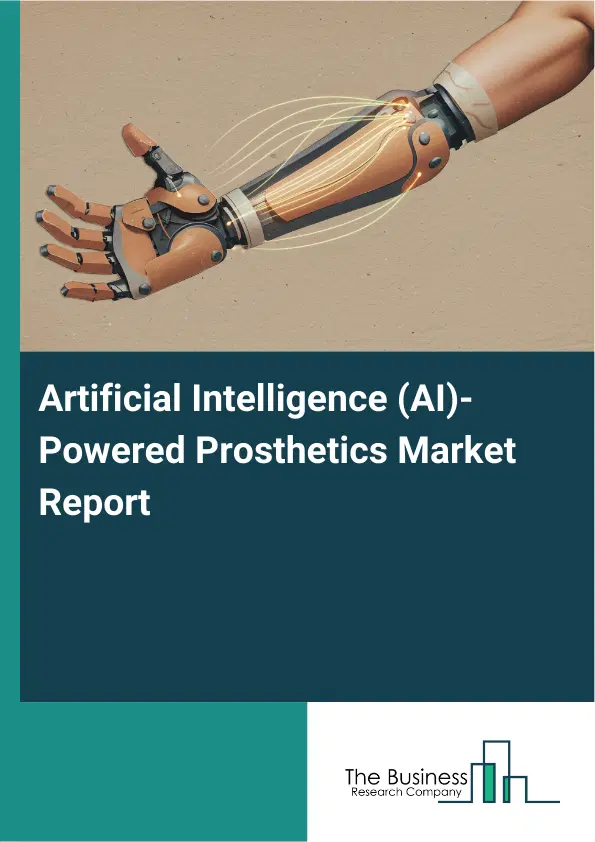
Artificial Intelligence (AI)-Powered Prosthetics Market Report 2026
Global Outlook – By Type (Implantable Prosthesis, Non-Implantable Prosthesis), By Technology (Microprocessor-Controlled Prosthetics, Myoelectric Prosthetics, Robotic Prosthetics, Electric-Powered Prosthetics, Hybrid Technologies), By Application (Amputee Mobility, Rehabilitation, Sports Prosthetics, Military, Daily Activities), By End User (Hospitals, Prosthetic Clinics, Rehabilitation Centers, Other End Users) – Market Size, Trends, Strategies, and Forecast to 2030
Artificial Intelligence (AI)-Powered Prosthetics Market Overview
• Artificial Intelligence (AI)-Powered Prosthetics market size has reached to $1.71 billion in 2025 • Expected to grow to $3.56 billion in 2030 at a compound annual growth rate (CAGR) of 15.7% • Growth Driver: Rising Diabetes Cases Driving The Growth Of The Market Due To Increasing Amputation-Related Needs • Market Trend: AI-Driven Enhancements in Assistive Limb Technology • North America was the largest region in 2025 and Asia-Pacific is the fastest growing region.What Is Covered Under Artificial Intelligence (AI)-Powered Prosthetics Market?
Artificial intelligence (AI)-powered prosthetics are advanced artificial limbs that use artificial intelligence (AI) to enhance mobility, adaptability, and user control, eliminating reliance on pre-programmed movements. Their primary goal is to restore near-natural functionality for amputees by learning and responding to muscle signals, neural inputs, and environmental cues. The main types of artificial intelligence (AI)-powered prosthetics include implantable prosthesis and non-implantable prosthesis. An implantable prosthesis is a medical device surgically placed inside the body to replace or support a missing or damaged organ, joint, or tissue. These prosthetics utilize various technologies, including microprocessor-controlled prosthetics, myoelectric prosthetics, robotic prosthetics, electric-powered prosthetics, and hybrid technologies, and they are used in different applications, including amputee mobility, rehabilitation, sports prosthetics, military, and daily activities. The key end users are hospitals, prosthetic clinics, rehabilitation centers, and others.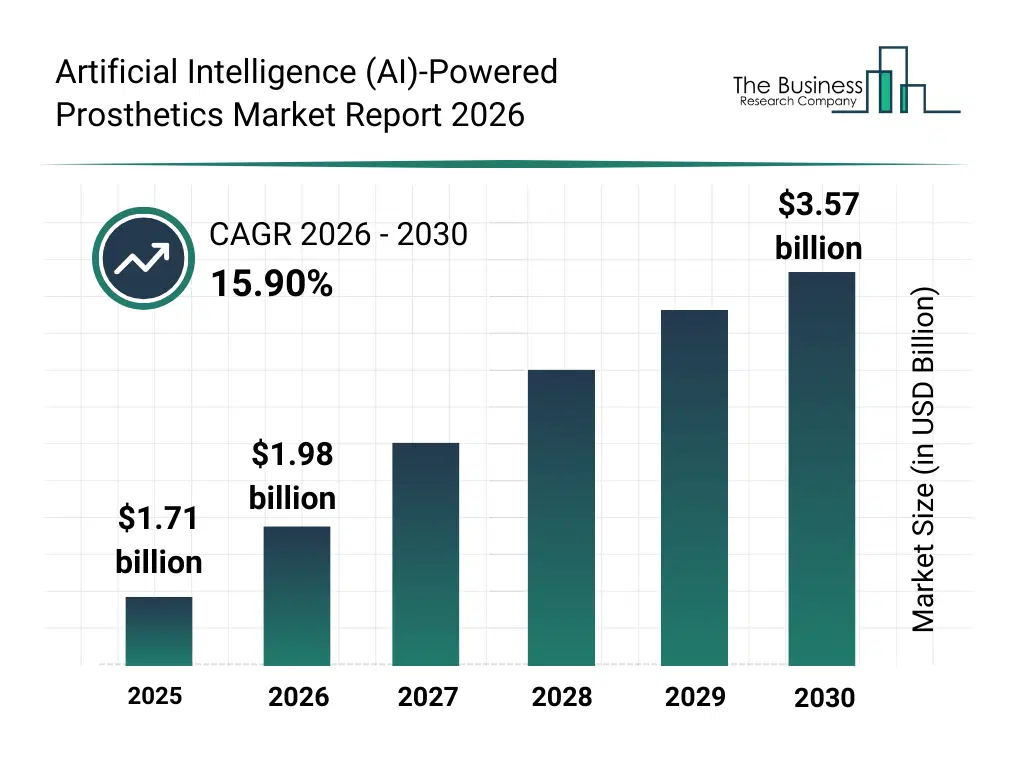
What Is The Artificial Intelligence (AI)-Powered Prosthetics Market Size and Share 2026?
The artificial intelligence (ai)-powered prosthetics market size has grown rapidly in recent years. It will grow from $1.71 billion in 2025 to $1.99 billion in 2026 at a compound annual growth rate (CAGR) of 16.0%. The growth in the historic period can be attributed to limited AI technology in prosthetics, high cost of prosthetic devices, lack of awareness about advanced prosthetics, traditional rehabilitation practices, low adoption in emerging regions.What Is The Artificial Intelligence (AI)-Powered Prosthetics Market Growth Forecast?
The artificial intelligence (AI)-powered prosthetics market size is expected to see rapid growth in the next few years. It will grow to $3.56 billion in 2030 at a compound annual growth rate (CAGR) of 15.7%. The growth in the forecast period can be attributed to advancements in ai and machine learning algorithms, growing investment in robotic and myoelectric prosthetics, increasing demand from sports and military applications, expansion of prosthetic clinics and rehabilitation centers, rising healthcare infrastructure and insurance coverage. Major trends in the forecast period include rising demand for personalized prosthetics, integration of sensor-based feedback systems, expansion of rehabilitation and mobility programs, growing adoption of sports and military prosthetics, increasing focus on cosmetic and aesthetic prosthetics.
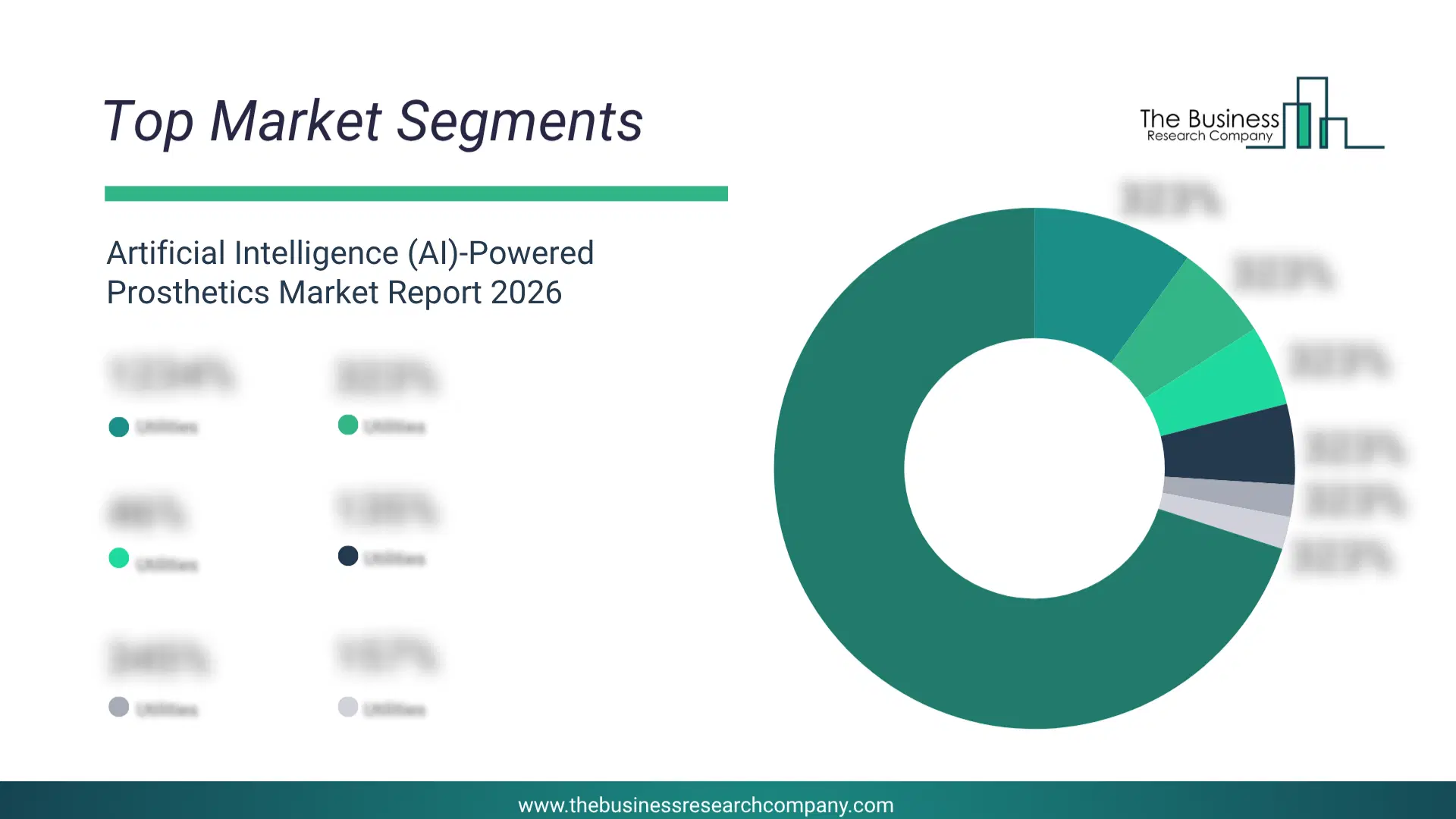
Global Artificial Intelligence (AI)-Powered Prosthetics Market Segmentation
2) By Technology: Microprocessor-Controlled Prosthetics, Myoelectric Prosthetics, Robotic Prosthetics, Electric-Powered Prosthetics, Hybrid Technologies 3) By Application: Amputee Mobility, Rehabilitation, Sports Prosthetics, Military, Daily Activities 4) By End User: Hospitals, Prosthetic Clinics, Rehabilitation Centers, Other End Users Subsegments: 1) By Implantable Prosthesis: Cochlear Implants, Retinal Implants, Deep Brain Stimulation Implants, Artificial Heart Valves, Dental Implants, Orthopedic Joint Implants 2) By Non-Implantable Prosthesis: Upper Limb Prosthetics, Lower Limb Prosthetics, Exoskeletons, Cosmetic Prosthetics, Prosthetic Liners And SocketsWhat Is The Driver Of The Artificial Intelligence (AI)-Powered Prosthetics Market?
The increasing incidences of diabetes are expected to propel the growth of the artificial intelligence (AI)-powered prosthetics market going forward. Diabetes is a long-term condition in which blood sugar levels remain high due to the body not making enough insulin or not using it efficiently. The incidence of diabetes is increasing largely due to sedentary lifestyles, as reduced physical activity slows metabolism and contributes to weight gain, which heightens the risk of insulin resistance. Complications of diabetes, such as poor circulation and nerve damage, can result in limb amputations, driving the demand for AI-powered prosthetics that restore mobility and enhance the quality of life for patients. For instance, in June 2024, according to the National Health Service, a UK-based publicly funded healthcare system, in 2023, the number of individuals identified by the NHS in England as having pre-diabetes rose to 3,615,330, marking an 18% increase from 3,065,825 in 2022. Additionally, among those under 40, cases surged nearly 25%, growing from 173,166 in 2022 to 216,440 in 2023. Therefore, the increasing incidence of diabetes is driving the growth of the artificial intelligence (AI)-powered prosthetics industry.Key Players In The Global Artificial Intelligence (AI)-Powered Prosthetics Market
Major companies operating in the artificial intelligence (AI)-powered prosthetics market are Ottobock SE & Co. KGaA, Össur hf, Blatchford Limited, BrainCo Inc., BrainRobotics Inc., Open Bionics Ltd., Point Designs Inc., Ambionics Ltd., Coapt LLC, Vincent Systems GmbH, PSYONIC Inc., BionIT Labs Ltd., Aether Biomedical Inc., BionicM Inc., Esper Bionics Inc., Mobius Bionics LLC, Covvi Limited, Unlimited Tomorrow Inc., Prensilia S.r.l., Bioniks Pvt. Ltd.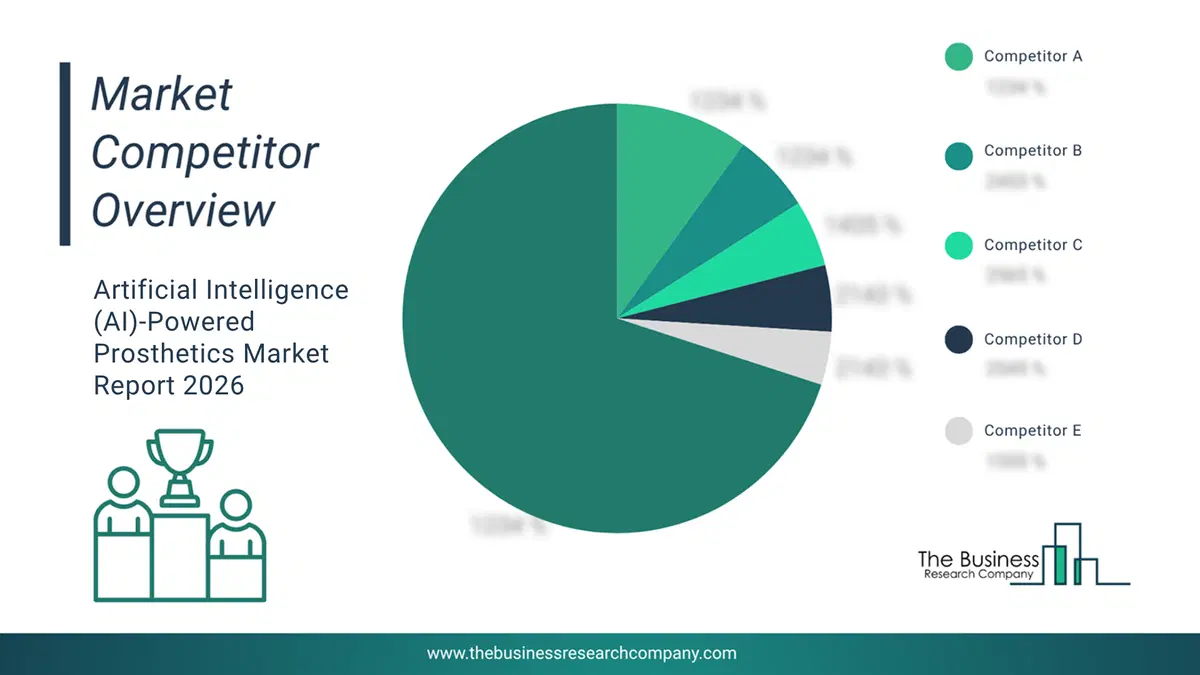
This chart is for illustrative purposes; the full report includes a detailed competitor analysis and comprehensive overview of the top 10 companies in the market.
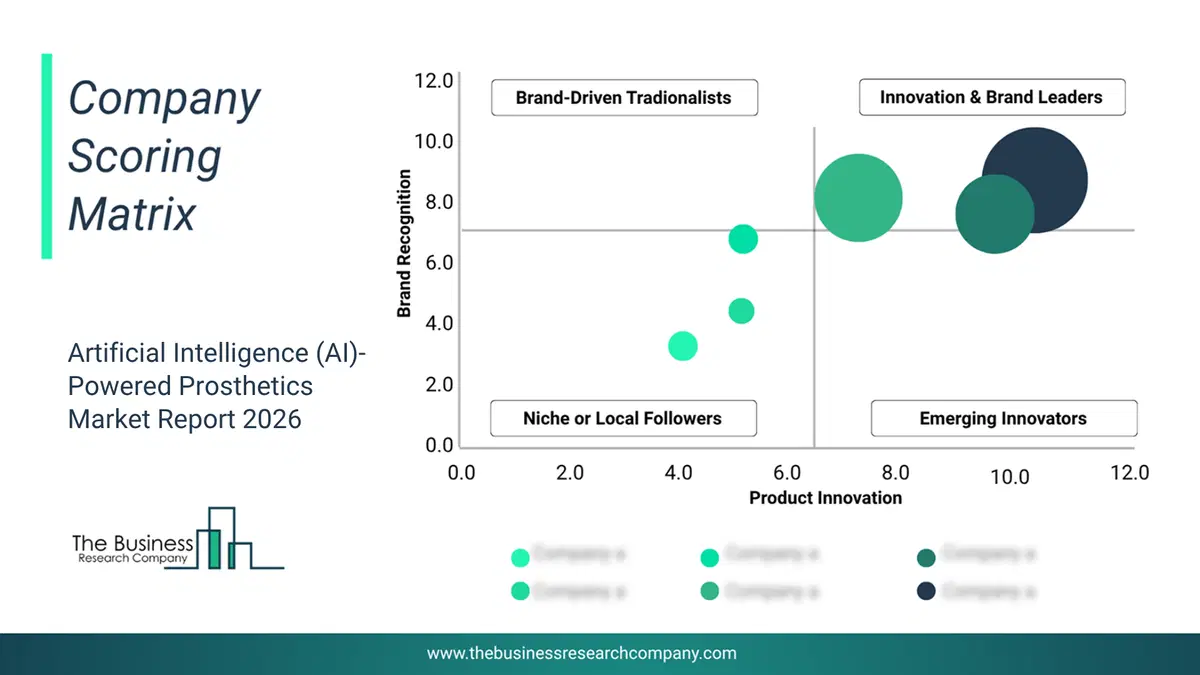
This chart maps companies by product innovation and brand strength, with bubble size indicating relative revenue, helping identify market leaders, challengers, and niche players. This is an illustrative chart; the full report provides a complete and accurate competitive analysis.
Global Artificial Intelligence (AI)-Powered Prosthetics Market Trends and Insights
Major companies operating in the artificial intelligence (AI)-powered prosthetics market are focusing on developing innovative approaches, such as neural interface integration, to enhance limb functionality, improve user adaptability, and provide amputees with near-natural mobility across daily and specialized activities. Neural interface integration refers to AI-driven systems that decode brain or muscle signals through machine learning algorithms and sensor networks, designed to enable real-time, intuitive control of prosthetic limbs with life-like qualities such as precision and responsiveness. For instance, in May 2025, Esper Bionics, a Ukraine-based bionic prosthetics company, launched its Esper Hand 2, a waterproof, AI-powered prosthetic hand that adapts to user behavior, enables advanced grip strength, and operates efficiently in challenging environments, including rain. This launch marks a significant advancement in assistive prosthetic technology, offering users an intelligent, durable solution designed to enhance real-world functionality and daily life performance.What Are Latest Mergers And Acquisitions In The Artificial Intelligence (AI)-Powered Prosthetics Market?
In February 2024, Nippon Express Holdings, a Japan-based logistics and transportation company, acquired an equity stake in Instalimb Inc. for an undisclosed amount. With this acquisition, Nippon Express aims to support Instalimb’s global expansion and improve access to affordable, AI-driven 3D-printed prosthetic solutions in emerging markets through enhanced logistics capabilities. Instalimb Inc. is a Japan-based startup specializing in ultra-low-cost, high-quality 3D-printed prosthetic devices, leveraging 3D printing and AI to expand access to prosthetics.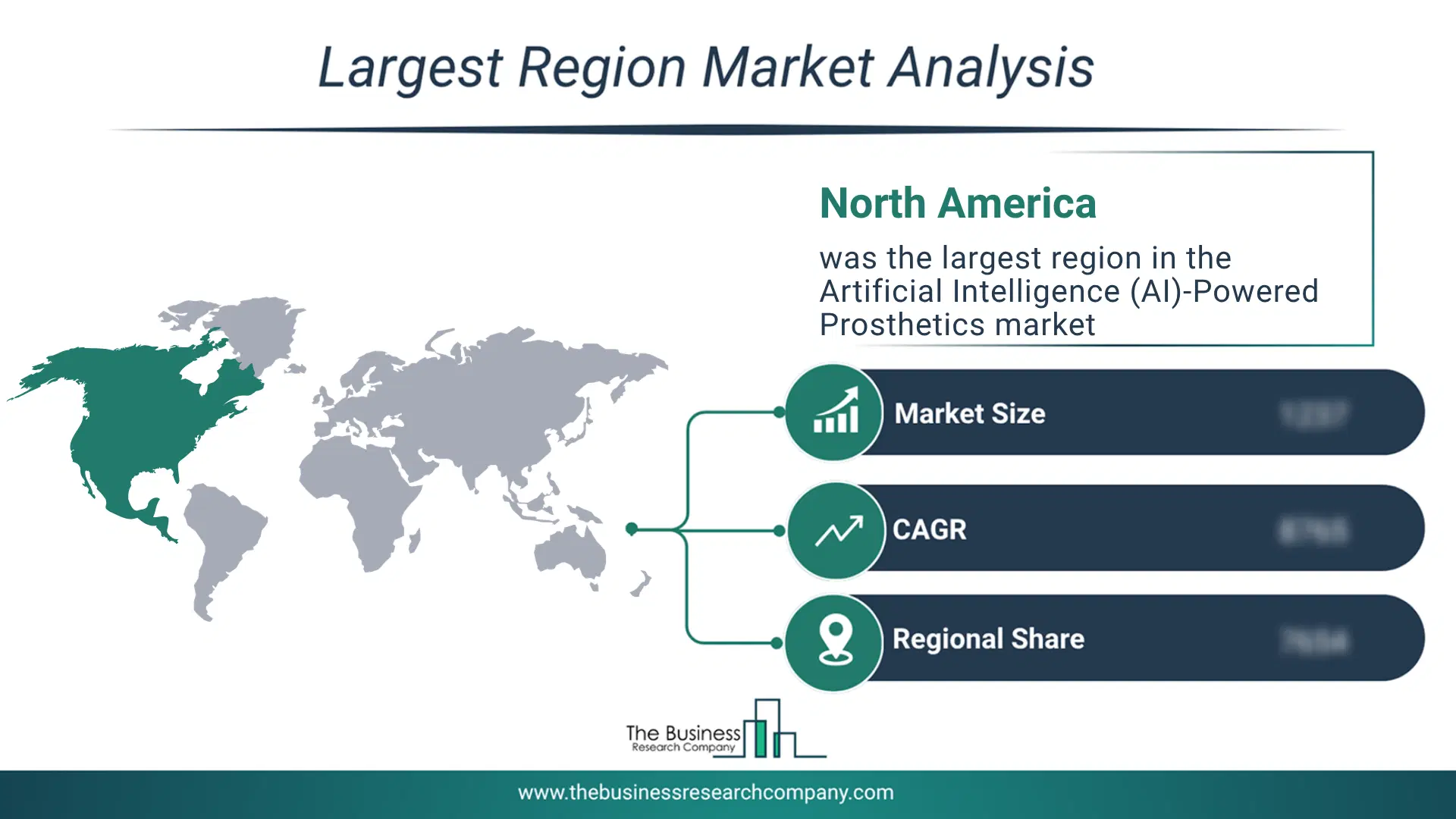
Regional Outlook
North America was the largest region in the artificial intelligence (AI)-powered prosthetics market in 2025. Asia-Pacific is expected to be the fastest-growing region in the forecast period. The regions covered in this market report are Asia-Pacific, South East Asia, Western Europe, Eastern Europe, North America, South America, Middle East, Africa. The countries covered in this market report are Australia, Brazil, China, France, Germany, India, Indonesia, Japan, Taiwan, Russia, South Korea, UK, USA, Canada, Italy, Spain.What Defines the Artificial Intelligence (AI)-Powered Prosthetics Market?
The artificial intelligence (AI)-powered prosthetics market consists of revenues earned by entities by providing services such as bionic limb manufacturing, neural interface integration, rehabilitation support, and training. The market value includes the value of related goods sold by the service provider or included within the service offering. The artificial intelligence (AI)-powered prosthetics market also includes sales of bionic limbs, neural sensors, advanced prosthetic materials, and AI-driven control systems. Values in this market are ‘factory gate’ values, that is, the value of goods sold by the manufacturers or creators of the goods, whether to other entities (including downstream manufacturers, wholesalers, distributors, and retailers) or directly to end customers. The value of goods in this market includes related services sold by the creators of the goods.How is Market Value Defined and Measured?
The market value is defined as the revenues that enterprises gain from the sale of goods and/or services within the specified market and geography through sales, grants, or donations in terms of the currency (in USD unless otherwise specified). The revenues for a specified geography are consumption values that are revenues generated by organizations in the specified geography within the market, irrespective of where they are produced. It does not include revenues from resales along the supply chain, either further along the supply chain or as part of other products.
This chart presents market attractiveness based on a quantitative evaluation of growth, competition, strategic alignment, and risk, offering a clear view of opportunity areas for decision-making. This chart is for illustrative purposes; the full report contains the complete analysis.

This chart highlights the Total Addressable Market (TAM) by estimating the maximum revenue opportunity using an assumption-driven approach, supporting strategic planning and opportunity sizing across markets. The chart is illustrative; the full report provides a more comprehensive analysis.
What Key Data and Analysis Are Included in the Artificial Intelligence (AI)-Powered Prosthetics Market Report 2026?
The artificial intelligence (ai)-powered prosthetics market research report is one of a series of new reports from The Business Research Company that provides market statistics, including industry global market size, regional shares, competitors with the market share, detailed market segments, market trends and opportunities, and any further data you may need to thrive in the artificial intelligence (ai)-powered prosthetics industry. The market research report delivers a complete perspective of everything you need, with an in-depth analysis of the current and future state of the industry.Artificial Intelligence (AI)-Powered Prosthetics Market Report Forecast Analysis
| Report Attribute | Details |
|---|---|
| Market Size Value In 2026 | $1.99 billion |
| Revenue Forecast In 2030 | $3.56 billion |
| Growth Rate | CAGR of 15.7% from 2026 to 2030 |
| Base Year For Estimation | 2025 |
| Actual Estimates/Historical Data | 2020-2025 |
| Forecast Period | 2026 - 2030 |
| Market Representation | Revenue in USD Billion and CAGR from 2026 to 2030 |
| Segments Covered | Type, Technology, Application, End User |
| Regional Scope | Asia-Pacific, Western Europe, Eastern Europe, North America, South America, Middle East, Africa |
| Country Scope | The countries covered in the report are Australia, Brazil, China, France, Germany, India, Indonesia, Japan, Taiwan, Russia, South Korea, UK, USA, Canada, Italy, Spain. |
| Key Companies Profiled | Ottobock SE & Co. KGaA, Össur hf, Blatchford Limited, BrainCo Inc., BrainRobotics Inc., Open Bionics Ltd., Point Designs Inc., Ambionics Ltd., Coapt LLC, Vincent Systems GmbH, PSYONIC Inc., BionIT Labs Ltd., Aether Biomedical Inc., BionicM Inc., Esper Bionics Inc., Mobius Bionics LLC, Covvi Limited, Unlimited Tomorrow Inc., Prensilia S.r.l., Bioniks Pvt. Ltd. |
| Customization Scope | Request for Customization |
| Pricing And Purchase Options | Explore Purchase Options |