
Artificial Intelligence (AI)-Powered Rare Disease Diagnosis Market Report 2026
Global Outlook – By Component (Software, Hardware, Services), By Technology (Machine Learning, Deep Learning, Natural Language Processing, Computer Vision, Other Technologies), By Deployment Mode (Cloud-Based, On-Premises), By Diagnosis Type (Genetic Disorders, Autoimmune Disorders, Metabolic Disorders, Infectious Diseases, Other Diagnosis Types), By End-User (Hospitals, Diagnostic Centers, Research Institutes, Specialty Clinics, Other End-Users) - Market Size, Trends, Strategies, and Forecast to 2030
Artificial Intelligence (AI)-Powered Rare Disease Diagnosis Market Overview
• Artificial Intelligence (AI)-Powered Rare Disease Diagnosis market size has reached to $1.99 billion in 2025 • Expected to grow to $7.08 billion in 2030 at a compound annual growth rate (CAGR) of 28.9% • Growth Driver: Increasing Prevalence Of Autoimmune Disorders Is Fueling The Growth Of The Market Due To Rising Demand For Early Diagnosis And Personalized Treatment • Market Trend: Advancements In Artificial Intelligence (AI)-Powered Rare Disease Diagnosis Unified Genomic Diagnostics And Innovative Solutions • North America was the largest region in 2025 and Asia-Pacific is the fastest growing region.What Is Covered Under Artificial Intelligence (AI)-Powered Rare Disease Diagnosis Market?
Artificial intelligence (AI)-powered rare disease diagnosis refers to the use of advanced algorithms and machine learning techniques to identify uncommon medical conditions with high accuracy. These systems analyze complex patient data, including genetic, clinical, and imaging information, to detect patterns that may be missed by traditional diagnostic methods. The main components of artificial intelligence (AI)-powered rare disease diagnosis are software, hardware, and services. Software is a collection of programs, data, and instructions that tell a computer or device how to perform specific tasks or operations. The multiple technologies are machine learning, deep learning, natural language processing, computer vision, and others. The different deployment modes are cloud-based and on-premises solutions. The various diagnosis types are genetic disorders, autoimmune disorders, metabolic disorders, infectious diseases, and others, and they are used by several end-users such as hospitals, diagnostic centers, research institutes, specialty clinics, and others.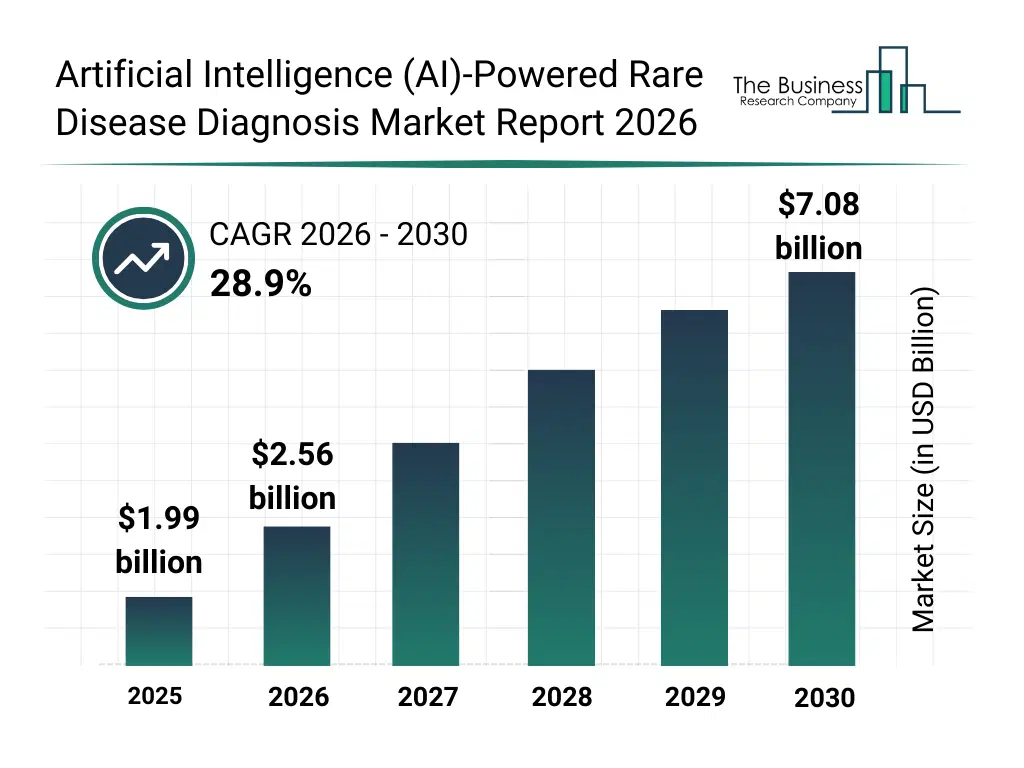
What Is The Artificial Intelligence (AI)-Powered Rare Disease Diagnosis Market Size and Share 2026?
The artificial intelligence (ai)-powered rare disease diagnosis market size has grown exponentially in recent years. It will grow from $1.99 billion in 2025 to $2.56 billion in 2026 at a compound annual growth rate (CAGR) of 28.9%. The growth in the historic period can be attributed to increasing diagnostic challenges for rare conditions, expansion of genetic testing availability, rising investments in rare disease research, growing use of data analytics in healthcare, early adoption of ai-driven diagnostic tools.What Is The Artificial Intelligence (AI)-Powered Rare Disease Diagnosis Market Growth Forecast?
The artificial intelligence (ai)-powered rare disease diagnosis market size is expected to see exponential growth in the next few years. It will grow to $7.08 billion in 2030 at a compound annual growth rate (CAGR) of 28.9%. The growth in the forecast period can be attributed to increasing focus on personalized medicine, rising deployment of ai-assisted clinical decision support, expansion of genomic sequencing integration, growing investment in rare disease screening programs, increasing demand for diagnostic efficiency. Major trends in the forecast period include increasing use of ai for pattern recognition in rare diseases, rising adoption of genomic data analytics platforms, growing integration of multi-modal patient data, expansion of cloud-based diagnostic solutions, enhanced focus on early and accurate diagnosis.
Global Artificial Intelligence (AI)-Powered Rare Disease Diagnosis Market Segmentation
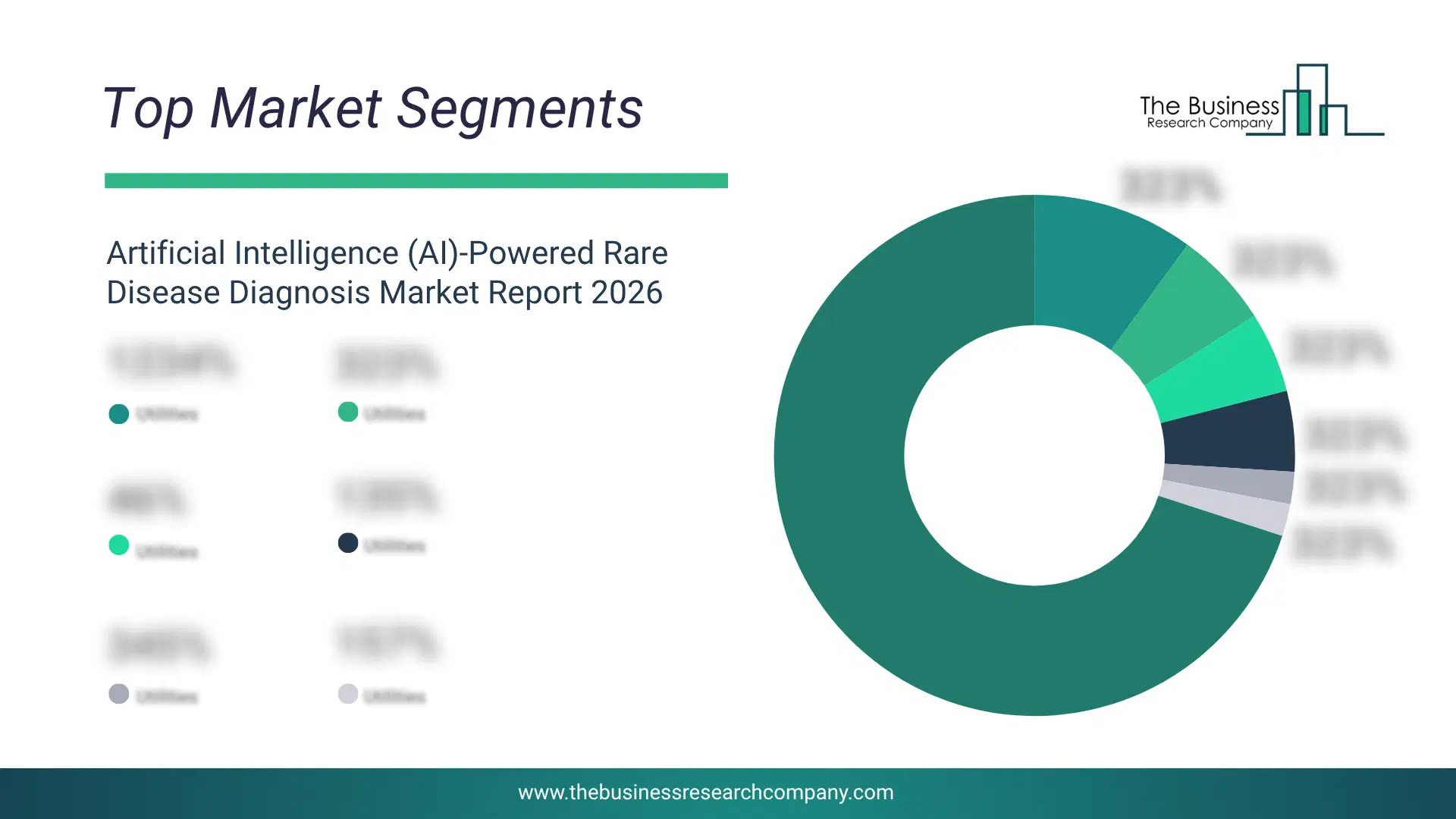
1) By Component: Software, Hardware, Services 2) By Technology: Machine Learning, Deep Learning, Natural Language Processing, Computer Vision, Other Technologies 3) By Deployment Mode: Cloud-Based, On-Premises 4) By Diagnosis Type: Genetic Disorders, Autoimmune Disorders, Metabolic Disorders, Infectious Diseases, Other Diagnosis Types 5) By End-User: Hospitals, Diagnostic Centers, Research Institutes, Specialty Clinics, Other End-Users Subsegments: 1) By Software: Clinical Decision Support, Data Analytics Platforms, Genomic Interpretation Tools, Machine Learning Algorithms, Diagnostic Reporting Software 2) By Hardware: Sequencing Instruments, Imaging Devices, Laboratory Equipment, Computational Servers, Diagnostic Sensors 3) By Services: Consulting Services, Implementation And Integration, Training And Support, Data Management Services, Maintenance And UpgradesWhat Is The Driver Of The Artificial Intelligence (AI)-Powered Rare Disease Diagnosis Market?
The increasing prevalence of autoimmune disorders is expected to propel the growth of the artificial intelligence (AI)-powered rare disease diagnosis market going forward. Autoimmune disorders are conditions where the immune system mistakenly attacks the body’s own healthy cells and tissues, causing inflammation and damage. The prevalence of autoimmune disorders is due to the growing number of individuals experiencing immune system dysfunctions, leading to higher demand for early diagnosis, advanced treatments, and continuous monitoring to manage symptoms effectively. Artificial intelligence (AI)-powered rare disease diagnosis supports autoimmune disorder management by rapidly identifying complex conditions, supporting personalized treatment decisions, and improving overall diagnostic accuracy. For instance, in January 2025, according to the Mayo Clinic, a US-based nonprofit academic medical center, reports that about 15 million people are estimated to have one or more of 105 autoimmune diseases. Therefore, the increasing prevalence of autoimmune disorders drives the growth of the artificial intelligence (AI)-powered rare disease diagnosis industry.Key Players In The Global Artificial Intelligence (AI)-Powered Rare Disease Diagnosis Market
Major companies operating in the artificial intelligence (AI)-powered rare disease diagnosis market are Ambry Genetics Corporation, MedGenome Inc., Sophia Genetics SA, Variantyx Inc., Atropos Health Inc., Congenica Ltd., Saventic Care Sp. z o.o., Rapid Innovation LLC, Centogene N.V., Impilo AB, ThinkGenetic Inc., ClairLabs Ltd., 3billion Inc., OpenEvidence Inc., GenomeUp S.R.L., Mendel.ai Inc., RareSum GmbH, DeepRare AI Solutions, Zebra-Llama Project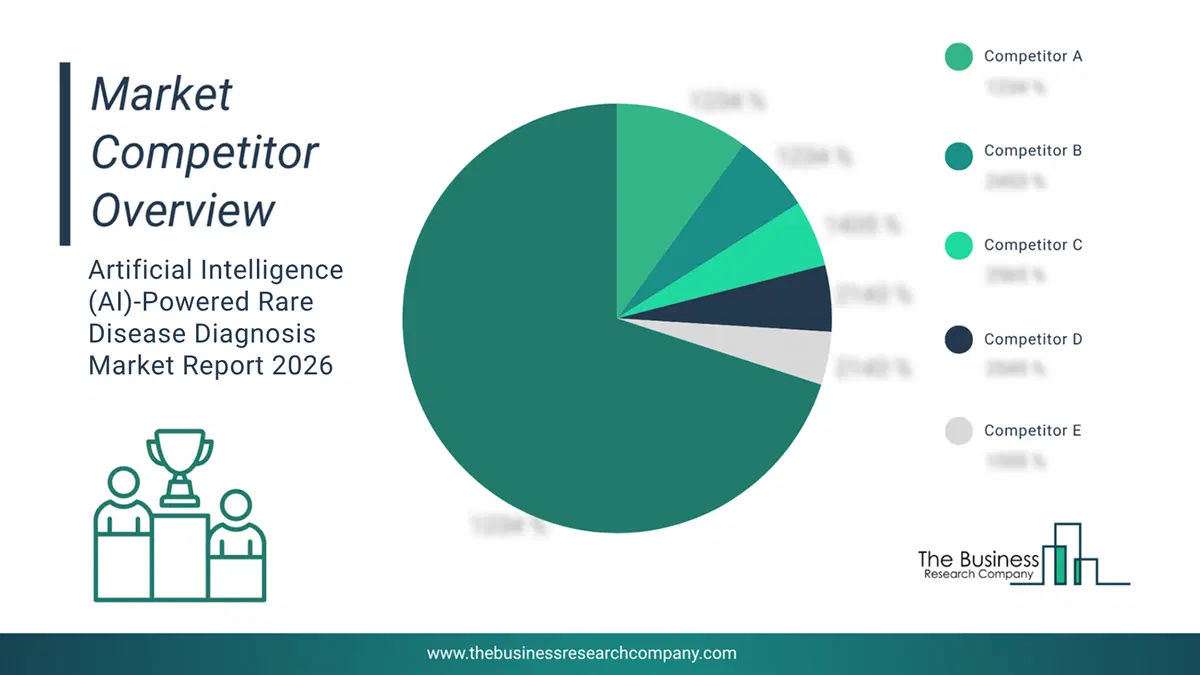
This chart is for illustrative purposes; the full report includes a detailed competitor analysis and comprehensive overview of the top 10 companies in the market.
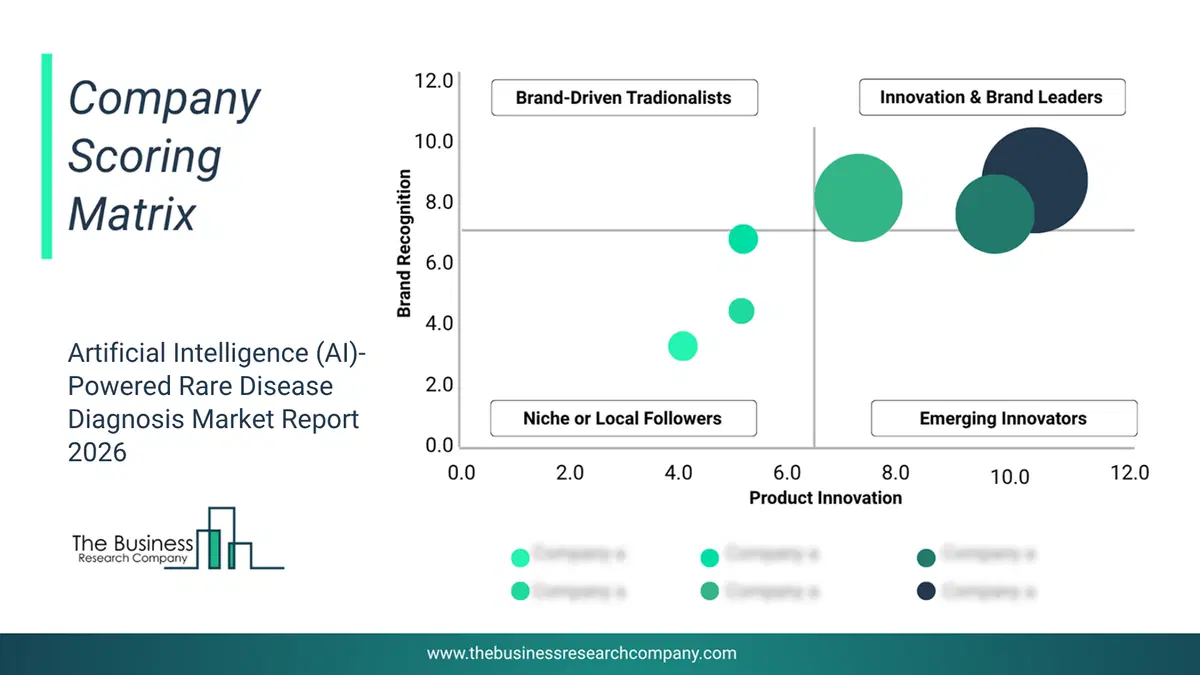
This chart maps companies by product innovation and brand strength, with bubble size indicating relative revenue, helping identify market leaders, challengers, and niche players. This is an illustrative chart; the full report provides a complete and accurate competitive analysis.
Global Artificial Intelligence (AI)-Powered Rare Disease Diagnosis Market Trends and Insights
Major companies operating in the artificial intelligence (AI)-powered rare disease diagnosis market are focusing on developing innovative technology, such as unified genomic diagnostics solutions, to enhance diagnostic accuracy, reduce turnaround time, and provide more comprehensive insights into complex genetic disorders. A unified genomic diagnostics solution is an integrated system combining whole-genome sequencing and artificial intelligence (AI)-driven analysis to deliver complete genetic insights. For instance, in October 2023, Oxford Nanopore Technologies plc, a UK-based biotechnology company, and Fabric Genomics Inc., a US-based artificial intelligence (AI)-based company, launched an integrated whole-genome sequencing solution that aims to accelerate rare disease diagnosis by combining rapid sequencing with AI-driven variant interpretation for more accurate and actionable clinical insights. The launch integrates real-time nanopore sequencing with artificial intelligence (AI)-powered genomic analysis to rapidly identify rare genetic variants. It delivers comprehensive, actionable insights to clinicians, enhancing diagnostic speed and accuracy for pediatric care.What Are Latest Mergers And Acquisitions In The Artificial Intelligence (AI)-Powered Rare Disease Diagnosis Market?
In September 2025, SeqOne, a France-based provider of AI powered genomic analysis and clinical decision support tools, acquired Congenica for an undisclosed amount. With this acquisition, SeqOne aims to merge its AI-driven next generation sequencing (NGS) platform with Congenica’s clinical interpretation expertise and decision support software, enhancing its capacity for rare disease and inherited disease diagnostics, expanding its global reach, and creating a software pure leader in clinical genomics. Congenica is a UK-based provider of genomic data analysis and interpretation solutions, offering clinical decision support and variant interpretation services for rare, inherited, and genetic diseases.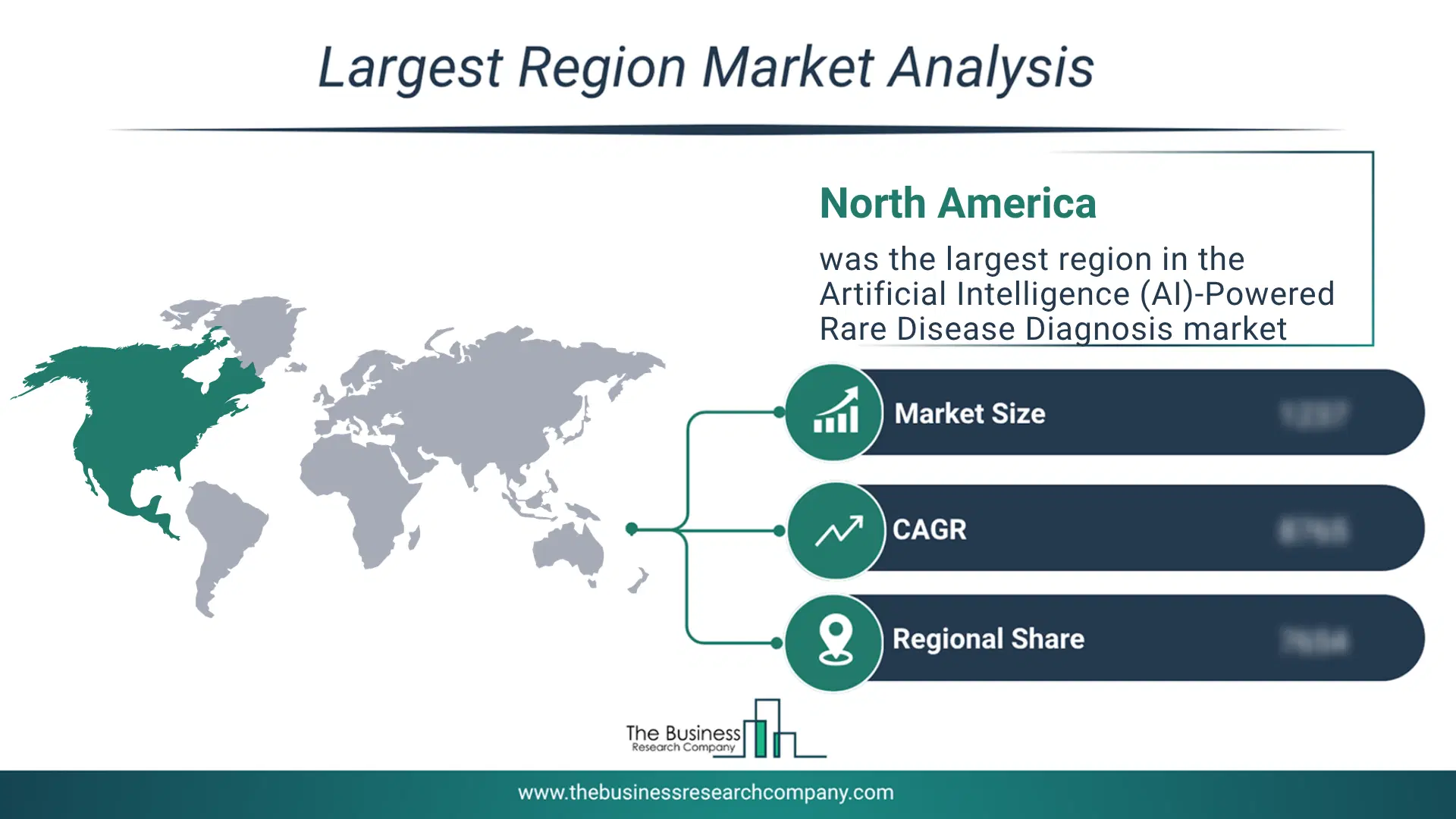
Regional Outlook
North America was the largest region in the artificial intelligence (AI)-powered rare disease diagnosis market in 2025. Asia-Pacific is expected to be the fastest-growing region in the forecast period. The regions covered in this market report are Asia-Pacific, South East Asia, Western Europe, Eastern Europe, North America, South America, Middle East, Africa. The countries covered in this market report are Australia, Brazil, China, France, Germany, India, Indonesia, Japan, Taiwan, Russia, South Korea, UK, USA, Canada, Italy, Spain.What Defines the Artificial Intelligence (AI)-Powered Rare Disease Diagnosis Market?
The artificial intelligence (AI)-powered rare disease diagnosis market includes revenues earned by entities by providing services such as genomic sequencing analysis, clinical data integration, artificial intelligence (AI)-based imaging interpretation, predictive analytics for rare diseases, and personalized treatment recommendations. The market value includes the value of related goods sold by the service provider or included within the service offering. The artificial intelligence (AI)-powered rare disease diagnosis market also includes sales of genetic testing kits, imaging scanners, biosensors, lab automation instruments, point-of-care testing devices, wearable health monitors, sequencing machines, microfluidic chips, and pathology slide scanners. Values in this market are ‘factory gate’ values, that is the value of goods sold by the manufacturers or creators of the goods, whether to other entities (including downstream manufacturers, wholesalers, distributors and retailers) or directly to end customers. The value of goods in this market includes related services sold by the creators of the goods.How is Market Value Defined and Measured?
The market value is defined as the revenues that enterprises gain from the sale of goods and/or services within the specified market and geography through sales, grants, or donations in terms of the currency (in USD unless otherwise specified). The revenues for a specified geography are consumption values that are revenues generated by organizations in the specified geography within the market, irrespective of where they are produced. It does not include revenues from resales along the supply chain, either further along the supply chain or as part of other products.
This chart presents market attractiveness based on a quantitative evaluation of growth, competition, strategic alignment, and risk, offering a clear view of opportunity areas for decision-making. This chart is for illustrative purposes; the full report contains the complete analysis.

This chart highlights the Total Addressable Market (TAM) by estimating the maximum revenue opportunity using an assumption-driven approach, supporting strategic planning and opportunity sizing across markets. The chart is illustrative; the full report provides a more comprehensive analysis.
What Key Data and Analysis Are Included in the Artificial Intelligence (AI)-Powered Rare Disease Diagnosis Market Report 2026?
The artificial intelligence (ai)-powered rare disease diagnosis market research report is one of a series of new reports from The Business Research Company that provides market statistics, including industry global market size, regional shares, competitors with the market share, detailed market segments, market trends and opportunities, and any further data you may need to thrive in the artificial intelligence (ai)-powered rare disease diagnosis industry. The market research report delivers a complete perspective of everything you need, with an in-depth analysis of the current and future state of the industry.Artificial Intelligence (AI)-Powered Rare Disease Diagnosis Market Report Forecast Analysis
| Report Attribute | Details |
|---|---|
| Market Size Value In 2026 | $2.56 billion |
| Revenue Forecast In 2030 | $7.08 billion |
| Growth Rate | CAGR of 28.9% from 2026 to 2030 |
| Base Year For Estimation | 2025 |
| Actual Estimates/Historical Data | 2020-2025 |
| Forecast Period | 2026 - 2030 |
| Market Representation | Revenue in USD Billion and CAGR from 2026 to 2030 |
| Segments Covered | Component, Technology, Deployment Mode, Diagnosis Type, End-User |
| Regional Scope | Asia-Pacific, Western Europe, Eastern Europe, North America, South America, Middle East, Africa |
| Country Scope | The countries covered in the report are Australia, Brazil, China, France, Germany, India, Indonesia, Japan, Taiwan, Russia, South Korea, UK, USA, Canada, Italy, Spain |
| Key Companies Profiled | Ambry Genetics Corporation, MedGenome Inc., Sophia Genetics SA, Variantyx Inc., Atropos Health Inc., Congenica Ltd., Saventic Care Sp. z o.o., Rapid Innovation LLC, Centogene N.V., Impilo AB, ThinkGenetic Inc., ClairLabs Ltd., 3billion Inc., OpenEvidence Inc., GenomeUp S.R.L., Mendel.ai Inc., RareSum GmbH, DeepRare AI Solutions, Zebra-Llama Project |
| Customization Scope | Request for Customization |
| Pricing And Purchase Options | Explore Purchase Options |