
Artificial Intelligence (AI) Protein Structure Prediction Market Report 2026
Global Outlook – By Component (Software, Hardware, Services), By Deployment Mode (On-Premise Systems, Hybrid Infrastructure, Cloud-Connected Hardware Platforms), By Organization Size (Large Enterprises, Small and Medium-Sized Enterprises), By Application (Drug Discovery, Disease Diagnosis, Personalized Medicine, Academic Research, Biotechnology, Other Applications), By End-User (Pharmaceutical and Biotechnology Companies, Academic and Research Institutes, Healthcare Providers, Other End Users) – Market Size, Trends, Strategies, and Forecast to 2030
Artificial Intelligence (AI) Protein Structure Prediction Market Overview
• Artificial Intelligence (AI) Protein Structure Prediction market size has reached to $1.8 billion in 2025 • Expected to grow to $6.62 billion in 2030 at a compound annual growth rate (CAGR) of 29.8% • Growth Driver: Rising Demand For Precision Medicine Driving The Market Growth Due To Advances In Genomics And Targeted Drug Design • Market Trend: Advancements In AI-Driven Structure-Based Computational Biology For Enhanced Drug Discovery • North America was the largest region in 2025 and Asia-Pacific is the fastest growing region.What Is Covered Under Artificial Intelligence (AI) Protein Structure Prediction Market?
Artificial intelligence (AI) protein structure prediction refers to the use of artificial intelligence algorithms and machine learning models to predict the three-dimensional shapes of proteins from their amino acid sequences, enabling faster and more accurate insights into protein folding and function. It leverages computational methods to model protein structures, which is crucial for drug discovery, enzyme design, and understanding disease mechanisms. The main components of artificial intelligence (AI) protein structure prediction include software, hardware, and services. Software refers to platforms that use AI algorithms to analyze protein sequences and predict three-dimensional structures with high accuracy. These solutions are deployed through on-premise systems, hybrid infrastructure, and cloud-connected hardware platforms and are adopted by large enterprises and small and medium-sized enterprises. The various applications involved are drug discovery, disease diagnosis, personalized medicine, academic research, biotechnology, and other applications, and they are used by several end users such as pharmaceutical and biotechnology companies, academic and research institutes, healthcare providers, and other end users.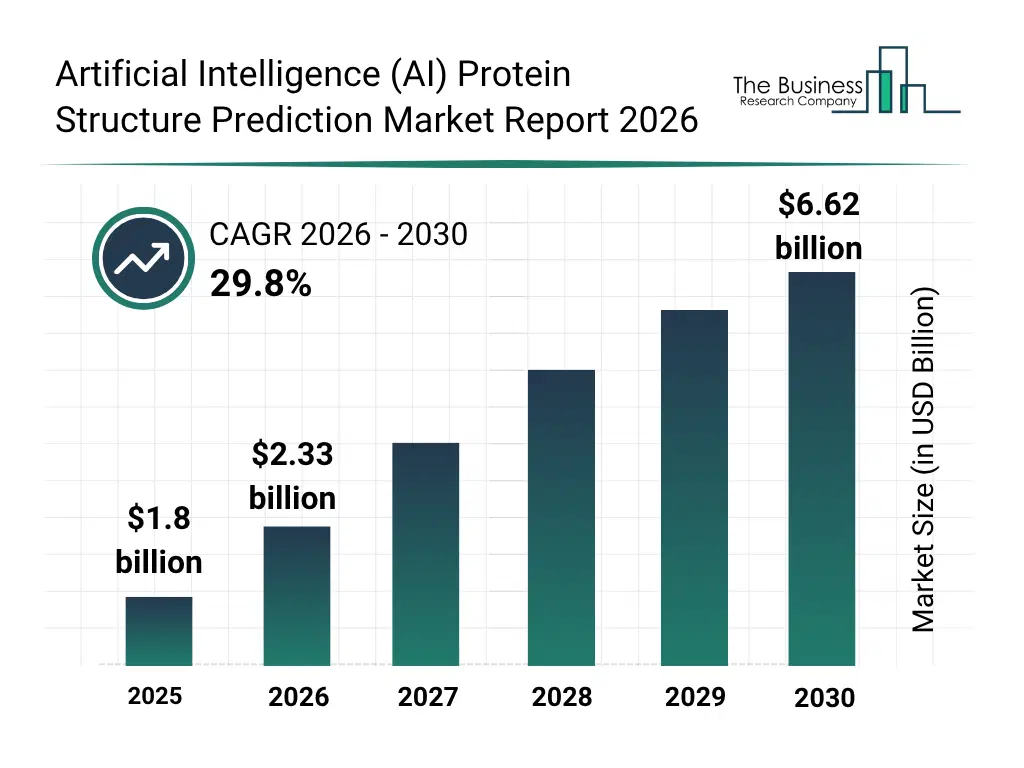
What Is The Artificial Intelligence (AI) Protein Structure Prediction Market Size and Share 2026?
The artificial intelligence (AI) protein structure prediction market size has grown exponentially in recent years. It will grow from $1.8 billion in 2025 to $2.33 billion in 2026 at a compound annual growth rate (CAGR) of 29.6%. The growth in the historic period can be attributed to growth of genomic and proteomic research, adoption of AI-based bioinformatics tools, increasing drug discovery initiatives, rising computational biology applications, expansion of academic and research institutes.What Is The Artificial Intelligence (AI) Protein Structure Prediction Market Growth Forecast?
The artificial intelligence (AI) protein structure prediction market size is expected to see exponential growth in the next few years. It will grow to $6.62 billion in 2030 at a compound annual growth rate (CAGR) of 29.8%. The growth in the forecast period can be attributed to growing demand for personalized medicine solutions, increasing integration of cloud and hybrid infrastructure, rising focus on AI-driven disease diagnosis, expansion of biotechnology and pharmaceutical R&D, adoption of high-throughput protein analysis platforms. Major trends in the forecast period include increasing adoption of cloud-connected protein prediction platforms, rising demand for high-performance computing systems, growing integration of molecular modeling and simulation software, expansion of bioinformatics workflow and data management solutions, rising focus on consulting, implementation, and managed services.
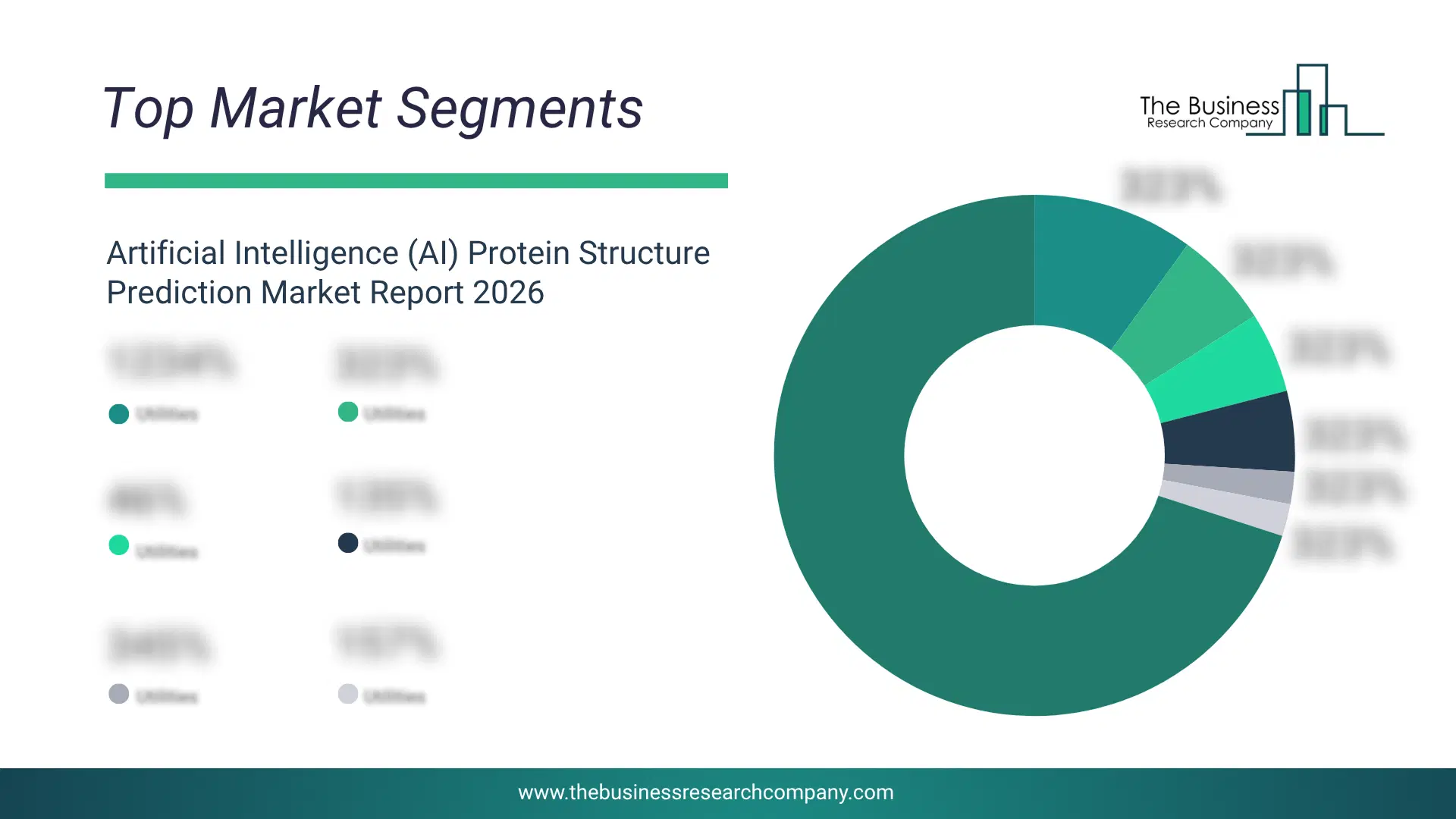
Global Artificial Intelligence (AI) Protein Structure Prediction Market Segmentation
1) By Component: Software, Hardware, Services 2) By Deployment Mode: On-Premise Systems, Hybrid Infrastructure, Cloud-Connected Hardware Platforms 3) By Organization Size: Large Enterprises, Small and Medium-Sized Enterprises 4) By Application: Drug Discovery, Disease Diagnosis, Personalized Medicine, Academic Research, Biotechnology, Other Applications 5) By End-User: Pharmaceutical and Biotechnology Companies, Academic and Research Institutes, Healthcare Providers, Other End Users Subsegments: 1) By Software: Protein Structure Prediction Platforms, Molecular Modeling And Simulation Software, Sequence Analysis And Alignment Tools, Visualization And Structural Analysis Software, Data Management And Bioinformatics Workflow Software 2) By Hardware: High Performance Computing Systems, Graphics Processing Unit Based Computing Systems, Dedicated Bioinformatics Workstations, Data Storage And Memory Systems, Networking And Data Transfer Infrastructure 3) By Services: Consulting And Implementation Services, Cloud Infrastructure And Platform Services, Integration And Deployment Services, Maintenance And Technical Support Services, Training And Managed ServicesWhat Is The Driver Of The Artificial Intelligence (AI) Protein Structure Prediction Market?
The rising demand for precision medicine is expected to propel the growth of the artificial intelligence (AI) protein structure prediction market going forward. Precision medicine focuses on tailoring disease prevention and treatment based on an individual’s genetic, environmental, and lifestyle factors. Its growing adoption is driven by advances in genomic technologies that enable the identification of disease-relevant molecular targets and patient-specific genetic variants. As precision medicine increasingly relies on structure-based drug discovery and molecular-level insights, AI protein structure prediction tools play a critical role by rapidly determining the three-dimensional structures of therapeutically relevant proteins and assessing the impact of genetic variations on protein function. For instance, in February 2024, according to the Personalized Medicine Coalition, a US-based non-profit organization, in 2023 the US Food and Drug Administration approved 16 new personalized treatments for rare disease patients, up from six in 2022. Therefore, the rising demand for precision medicine is driving the growth of the artificial intelligence (AI) protein structure prediction industry.Key Players In The Global Artificial Intelligence (AI) Protein Structure Prediction Market
Major companies operating in the artificial intelligence (AI) protein structure prediction market are Schrödinger Inc., XtalPi Inc., Generate:Biomedicines Inc., Isomorphic Labs Limited, Recursion Pharmaceuticals Inc., Relay Therapeutics Inc., Arzeda Inc., BigHat Biosciences Inc., Levitate Bio Inc., Terray Therapeutics Inc., PostEra Inc., ProteinQure Inc., Genesis Therapeutics Inc., Profluent Bio Inc., Insitro Inc., Absci Corporation, Cyrus Biotechnology Inc., Cloud Pharmaceuticals Inc., Iambic Therapeutics Inc., Insilico Medicine Inc., Latent Labs, and Neoncorte Bio Inc.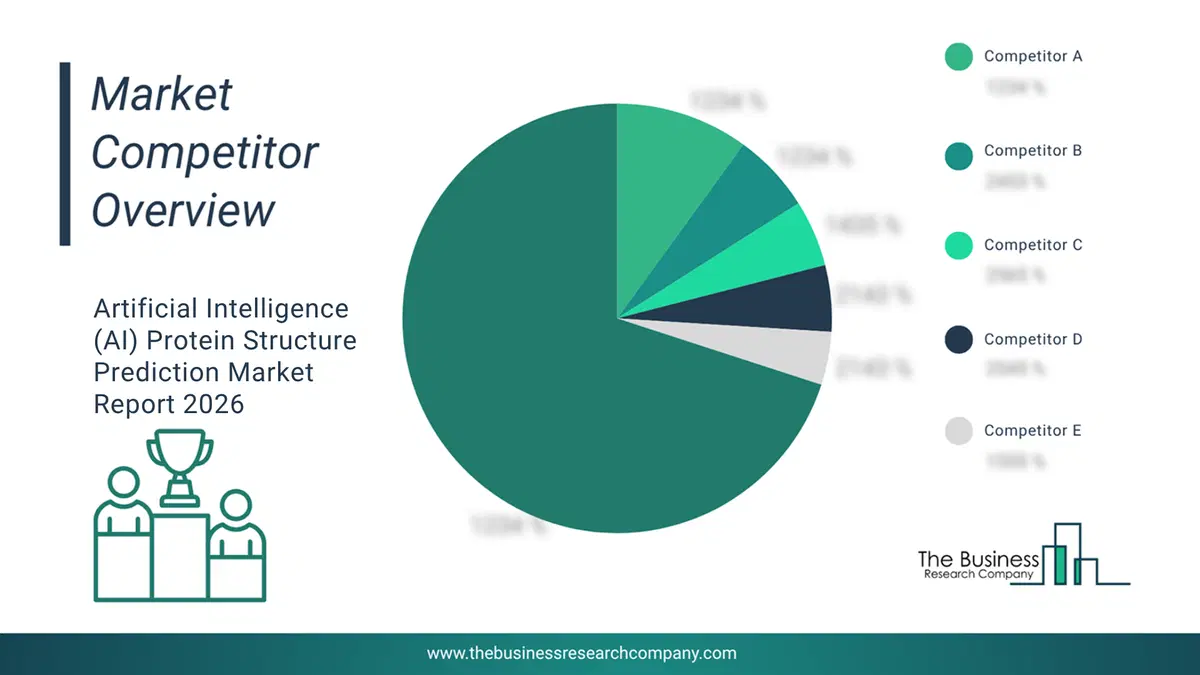
This chart is for illustrative purposes; the full report includes a detailed competitor analysis and comprehensive overview of the top 10 companies in the market.
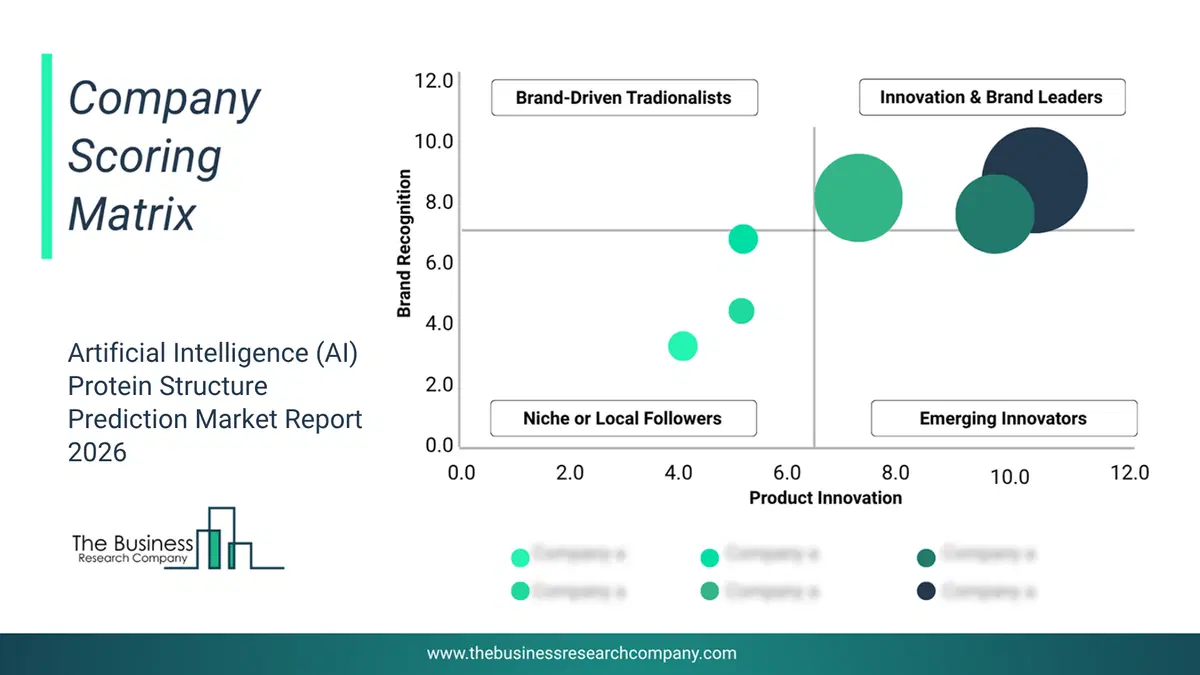
This chart maps companies by product innovation and brand strength, with bubble size indicating relative revenue, helping identify market leaders, challengers, and niche players. This is an illustrative chart; the full report provides a complete and accurate competitive analysis.
Global Artificial Intelligence (AI) Protein Structure Prediction Market Trends and Insights
Major companies operating in the artificial intelligence (AI) protein structure prediction market are focusing on developing innovative solutions such as, structure-based computational biology platforms to accelerate drug discovery, enable accurate protein modeling, and enhance target identification through advanced molecular simulations and AI-driven structural analysis. A structure-based computational biology platform refers to a digital system that uses three-dimensional protein structure data, molecular modeling, and simulation algorithms to analyze biomolecular interactions and support rational drug design and target validation. For instance, in March 2024, Basecamp Research, a UK-based AI company, launched BaseFold as a deep learning model that significantly advances 3D protein structure prediction for large, complex proteins. By augmenting AlphaFold2 with its proprietary BaseGraph dataset from global biodiversity sources, it achieves up to 6-fold higher accuracy and 3-fold better small molecule docking. This breakthrough accelerates AI-driven drug discovery by enabling precise modeling of challenging protein structures previously underrepresented in public data.What Are Latest Mergers And Acquisitions In The Artificial Intelligence (AI) Protein Structure Prediction Market?
In January 2026, Insitro Inc., a US-based biotechnology company, acquired CombinAbleAI Ltd. for an undisclosed amount. Through this acquisition, Insitro aims to enhance its AI-powered drug discovery platform by integrating CombinAbleAI’s advanced combinatorial biology and machine learning capabilities, enabling more efficient identification of therapeutic candidates and accelerated drug development. CombinAbleAI Ltd. is a Isreal-based biotechnology company specializing in AI-driven combinatorial biology solutions for drug discovery.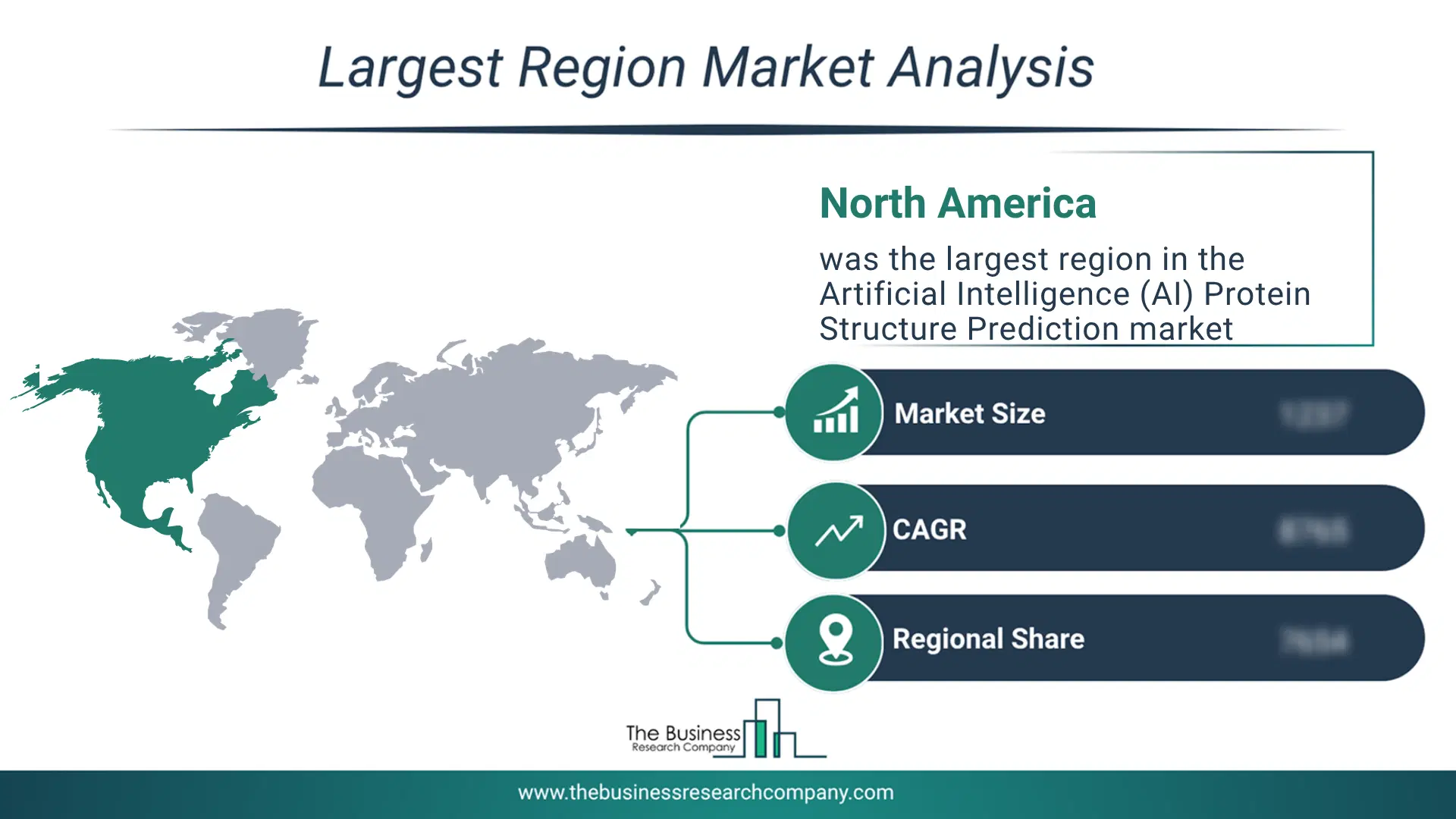
Regional Insights
North America was the largest region in the artificial intelligence (AI) protein structure prediction market in 2025. Asia-Pacific is expected to be the fastest-growing region in the forecast period. The regions covered in this market report are Asia-Pacific, South East Asia, Western Europe, Eastern Europe, North America, South America, Middle East, Africa. The countries covered in this market report are Australia, Brazil, China, France, Germany, India, Indonesia, Japan, Taiwan, Russia, South Korea, UK, USA, Canada, Italy, Spain.What Defines the Artificial Intelligence (AI) Protein Structure Prediction Market?
The artificial intelligence (AI) protein structure prediction market consists of revenues earned by entities by providing services such as 3D protein structure modeling, structure-based drug design support, and mutation impact analysis. The market value includes the value of related goods sold by the service provider or included within the service offering. The artificial intelligence (AI) protein structure prediction market also includes sales of protein-ligand interaction models, structure-based drug design tools, and predicted 3D protein structures. Values in this market are ‘factory gate’ values; that is, the value of goods sold by the manufacturers or creators of the goods, whether to other entities (including downstream manufacturers, wholesalers, distributors, and retailers) or directly to end customers. The value of goods in this market includes related services sold by the creators of the goods.How is Market Value Defined and Measured?
The market value is defined as the revenues that enterprises gain from the sale of goods and/or services within the specified market and geography through sales, grants, or donations in terms of the currency (in USD unless otherwise specified). The revenues for a specified geography are consumption values that are revenues generated by organizations in the specified geography within the market, irrespective of where they are produced. It does not include revenues from resales along the supply chain, either further along the supply chain or as part of other products.
This chart presents market attractiveness based on a quantitative evaluation of growth, competition, strategic alignment, and risk, offering a clear view of opportunity areas for decision-making. This chart is for illustrative purposes; the full report contains the complete analysis.

This chart highlights the Total Addressable Market (TAM) by estimating the maximum revenue opportunity using an assumption-driven approach, supporting strategic planning and opportunity sizing across markets. The chart is illustrative; the full report provides a more comprehensive analysis.
What Key Data And Analysis Are Included In The Artificial Intelligence (AI) Protein Structure Prediction Market Report 2026?
The artificial intelligence (ai) protein structure prediction market research report is one of a series of new reports from The Business Research Company that provides market statistics, including industry global market size, regional shares, competitors with the market share, detailed market segments, market trends and opportunities, and any further data you may need to thrive in the artificial intelligence (ai) protein structure prediction industry. The market research report delivers a complete perspective of everything you need, with an in-depth analysis of the current and future state of the industry.Artificial Intelligence (AI) Protein Structure Prediction Market Report Forecast Analysis
| Report Attribute | Details |
|---|---|
| Market Size Value In 2026 | $2.33 billion |
| Revenue Forecast In 2030 | $6.62 billion |
| Growth Rate | CAGR of 29.8% from 2026 to 2030 |
| Base Year For Estimation | 2025 |
| Actual Estimates/Historical Data | 2020-2025 |
| Forecast Period | 2026 - 2030 |
| Market Representation | Revenue in USD Billion and CAGR from 2026 to 2030 |
| Segments Covered | Component, Deployment Mode, Organization Size, Application, End-User |
| Regional Scope | Asia-Pacific, Western Europe, Eastern Europe, North America, South America, Middle East, Africa |
| Country Scope | The Countries Covered In This Market Report Are Australia, Brazil, China, France, Germany, India, Indonesia, Japan, Taiwan, Russia, South Korea, Uk, Usa, Canada, Italy, Spain. |
| Key Companies Profiled | Schrödinger Inc., XtalPi Inc., Generate:Biomedicines Inc., Isomorphic Labs Limited, Recursion Pharmaceuticals Inc., Relay Therapeutics Inc., Arzeda Inc., BigHat Biosciences Inc., Levitate Bio Inc., Terray Therapeutics Inc., PostEra Inc., ProteinQure Inc., Genesis Therapeutics Inc., Profluent Bio Inc., Insitro Inc., Absci Corporation, Cyrus Biotechnology Inc., Cloud Pharmaceuticals Inc., Iambic Therapeutics Inc., Insilico Medicine Inc., Latent Labs, and Neoncorte Bio Inc. |
| Customization Scope | Request for Customization |
| Pricing And Purchase Options | Explore Purchase Options |