
Artificial Intelligence In Cardiology Market Report 2026
Global Outlook – By Component (Hardware, Software Solutions, Services), By Application (Cardiac Arrhythmia, Stroke, Ischemic Heart Disease Or Coronary Artery Disease (CAD), Other Applications), By End-Use (Lifescience Companies, Healthcare Payers, Healthcare Providers) – Market Size, Trends, Strategies, and Forecast to 2030
Artificial Intelligence In Cardiology Market Overview
• Artificial Intelligence In Cardiology market size has reached to $2.72 billion in 2025 • Expected to grow to $15.19 billion in 2030 at a compound annual growth rate (CAGR) of 41.2% • Growth Driver: Artificial Intelligence In Cardiology Addresses The Global Burden Of Cardiovascular Diseases • Market Trend: Innovative Collaboration For Cardiovascular Advancements • North America was the largest region in 2025 and Asia-Pacific is the fastest growing region.What Is Covered Under Artificial Intelligence In Cardiology Market?
Artificial intelligence in cardiology refers to techniques used to forecast cardiovascular outcomes, detect malignant arrhythmias, and diagnose coronary artery disease non-invasively. Artificial intelligence in cardiology is used for detecting heart disease, treating strokes quickly, and enhancing diagnostic radiology capabilities. The main components of artificial intelligence in cardiology are hardware, software solutions, and services. Hardware describes the parts or delivery mechanisms that store and execute the written instructions given by a specific piece of software, and artificial intelligence hardware in cardiology is used in the treatment of various cardiovascular diseases. They are applied in cardiac arrhythmia, stroke, ischemic heart disease, coronary artery disease (CAD), and others by life science companies, healthcare payers, and healthcare providers.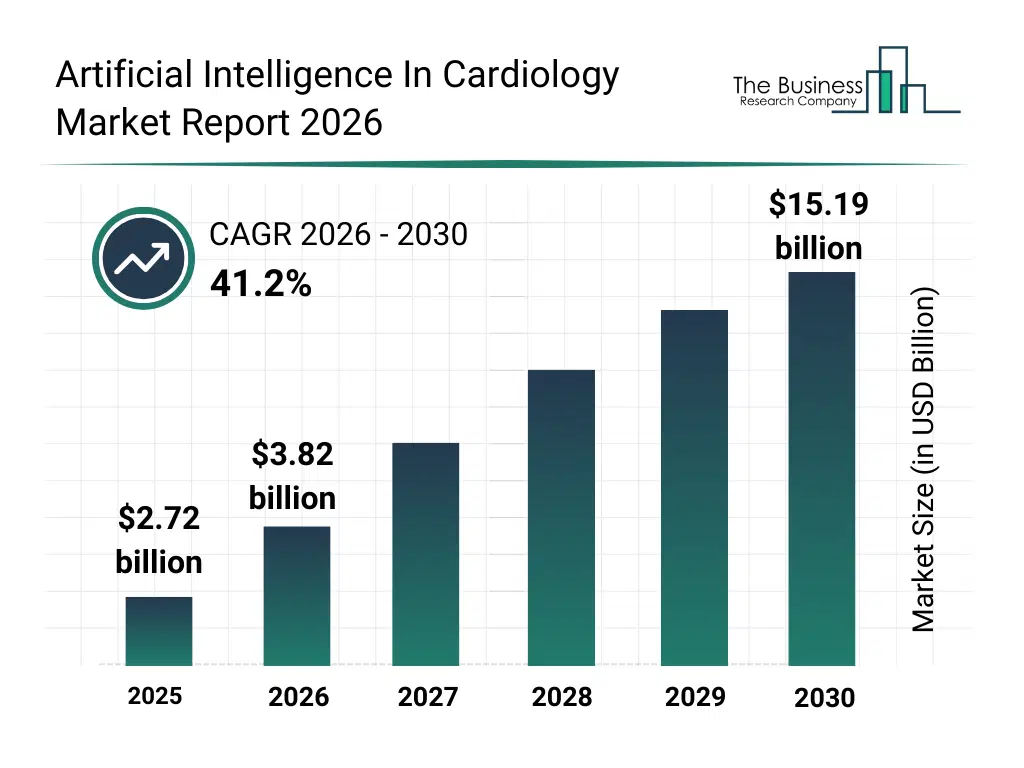
What Is The Artificial Intelligence In Cardiology Market Size and Share 2026?
The artificial intelligence in cardiology market size has grown exponentially in recent years. It will grow from $2.72 billion in 2025 to $3.82 billion in 2026 at a compound annual growth rate (CAGR) of 40.7%. The growth in the historic period can be attributed to rising cardiovascular disease prevalence, early adoption of cardiac imaging software, growth of wearable medical devices, demand for faster diagnosis, expansion of digital healthcare infrastructure.What Is The Artificial Intelligence In Cardiology Market Growth Forecast?
The artificial intelligence in cardiology market size is expected to see exponential growth in the next few years. It will grow to $15.19 billion in 2030 at a compound annual growth rate (CAGR) of 41.2%. The growth in the forecast period can be attributed to remote patient monitoring adoption, AI driven clinical decision support, personalized cardiology treatments, integration of telecardiology platforms, focus on preventive cardiac care. Major trends in the forecast period include AI based cardiac imaging analysis, growth of predictive cardiology analytics, integration of wearable heart monitoring, automation of arrhythmia detection, expansion of remote cardiac care solutions.
Global Artificial Intelligence In Cardiology Market Segmentation
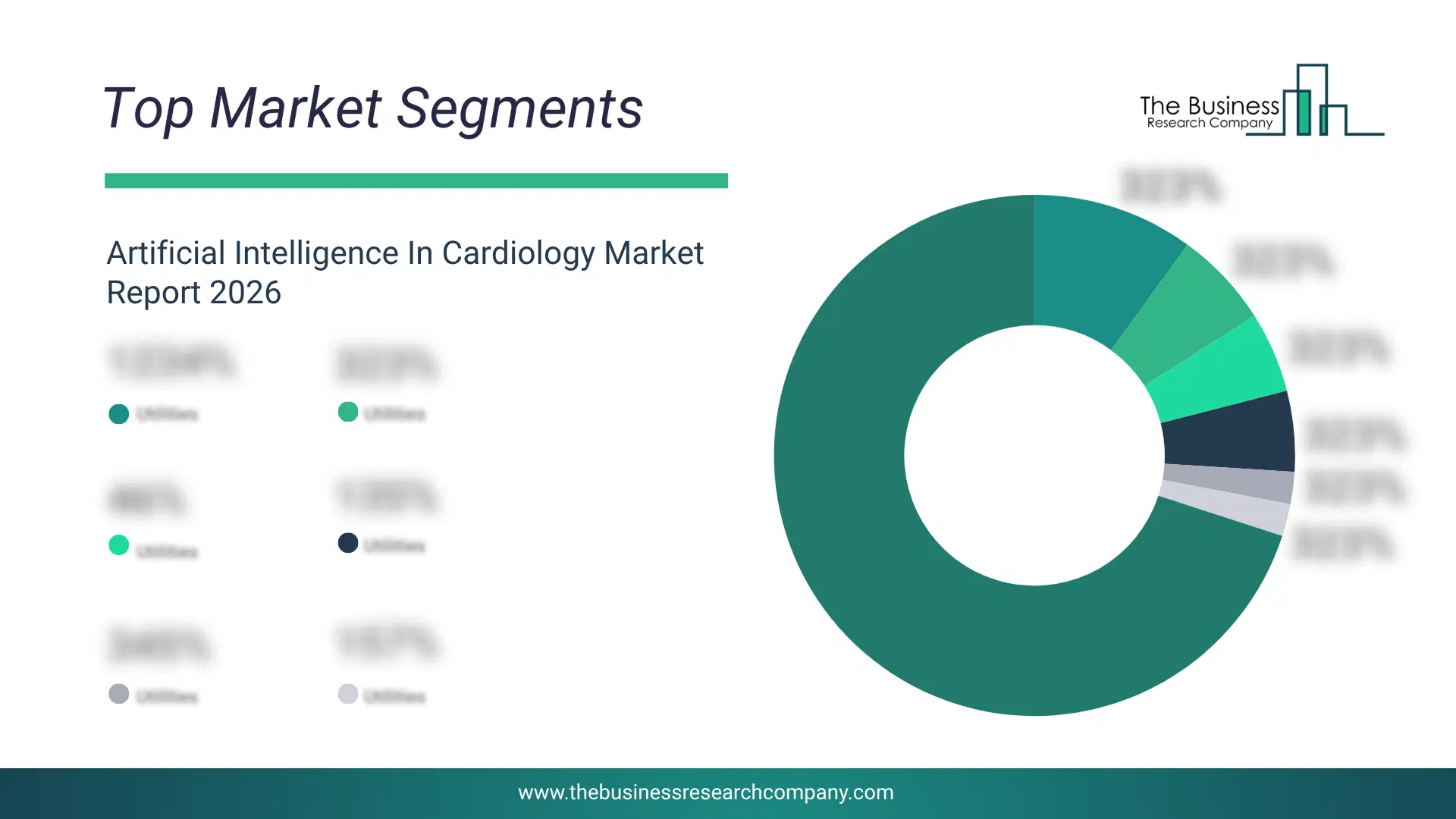
1) By Component: Hardware, Software Solutions, Services 2) By Application: Cardiac Arrhythmia, Stroke, Ischemic Heart Disease Or Coronary Artery Disease (CAD), Other Applications 3) By End-Use: Lifescience Companies, Healthcare Payers, Healthcare Providers Subsegments: 1) By Hardware: Imaging Devices, Wearable Devices, Diagnostic Equipment 2) By Software Solutions: Cardiac Imaging Analysis Software, Predictive Analytics Tools, Patient Management Systems, Telemedicine Platforms 3) By Services: Consulting Services, Integration And Implementation Services, Maintenance And Support Services, Training And Education ServicesWhat Is The Driver Of The Artificial Intelligence In Cardiology Market?
The high burden of cardiovascular diseases is expected to propel the growth of artificial intelligence in the cardiology market going forward. Cardiovascular diseases are all diseases that can affect the heart and blood vessels. In cardiology, AI is used to detect cardiovascular diseases by helping with electrocardiogram (ECG) interpretation and helping spot diseases like long QT syndrome and atrial fibrillation. Also, AI can evaluate vast amounts of data from electronic health records, mobile health devices, and imaging data. For instance, in August 2025, according to the American Cancer Society, a US-based non-profit organization, between 2025 and 2050, a 90.0% increase in cardiovascular prevalence. Furthermore, in October 2024, according to the Centres for Disease Control and Prevention (CDC), a US-based federal health agency, 919,032 people died from cardiovascular disease in the United States in 2023, equivalent to 1 in every 3 deaths. Therefore, the high burden of cardiovascular diseases is driving the growth of Artificial intelligence (AI) in Cardiology.Key Players In The Global Artificial Intelligence In Cardiology Market
Major companies operating in the artificial intelligence in cardiology market are Microsoft Corporation; International Business Machines Corporation; Siemens Healthineers; Koninklijke Philips; Ultromics Ltd; Bay Labs; Cleerly Inc.; RSIP Vision Ltd.; Idoven; Cardiologs Technologies Inc.; Viz.ai; Aidoc; Arterys Inc.; Zebra Medical Vision; AliveCor; DiA Imaging Analysis; Eko Health Inc.; Cardiomatics; UltraSight; Anumana Inc.; CardiAI Inc.; Caption Health Inc.; HeartFlow Inc.; iRhythm Technologies Inc.; Biofourmis Inc.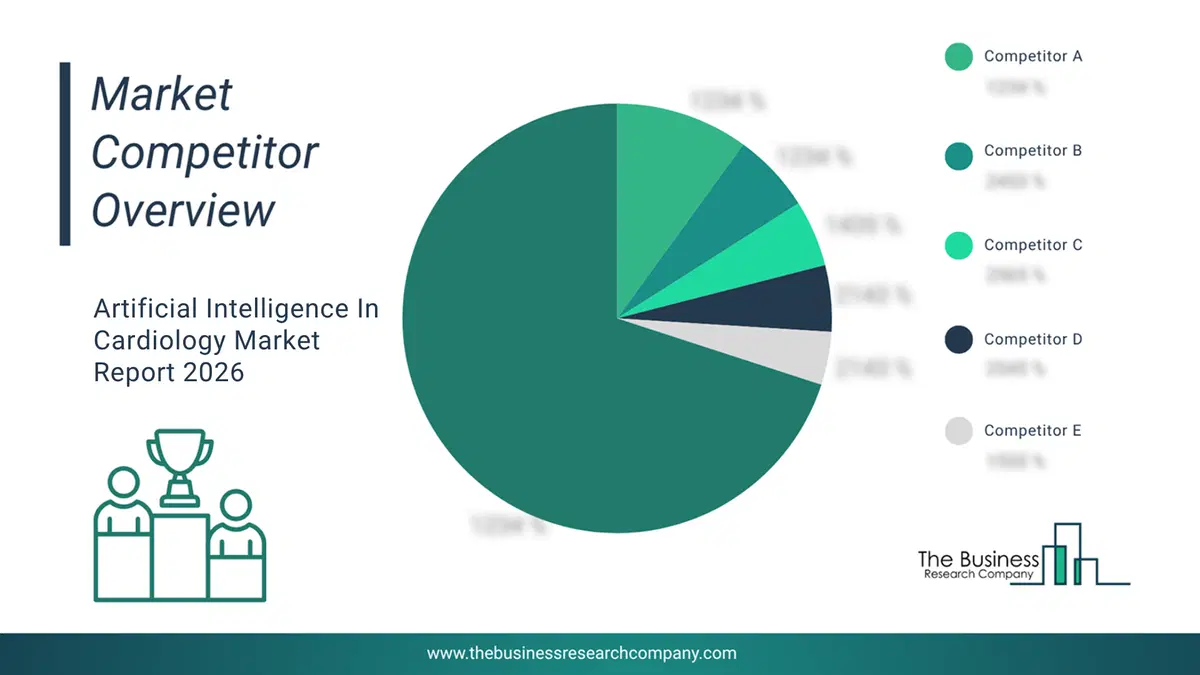
This chart is for illustrative purposes; the full report includes a detailed competitor analysis and comprehensive overview of the top 10 companies in the market.
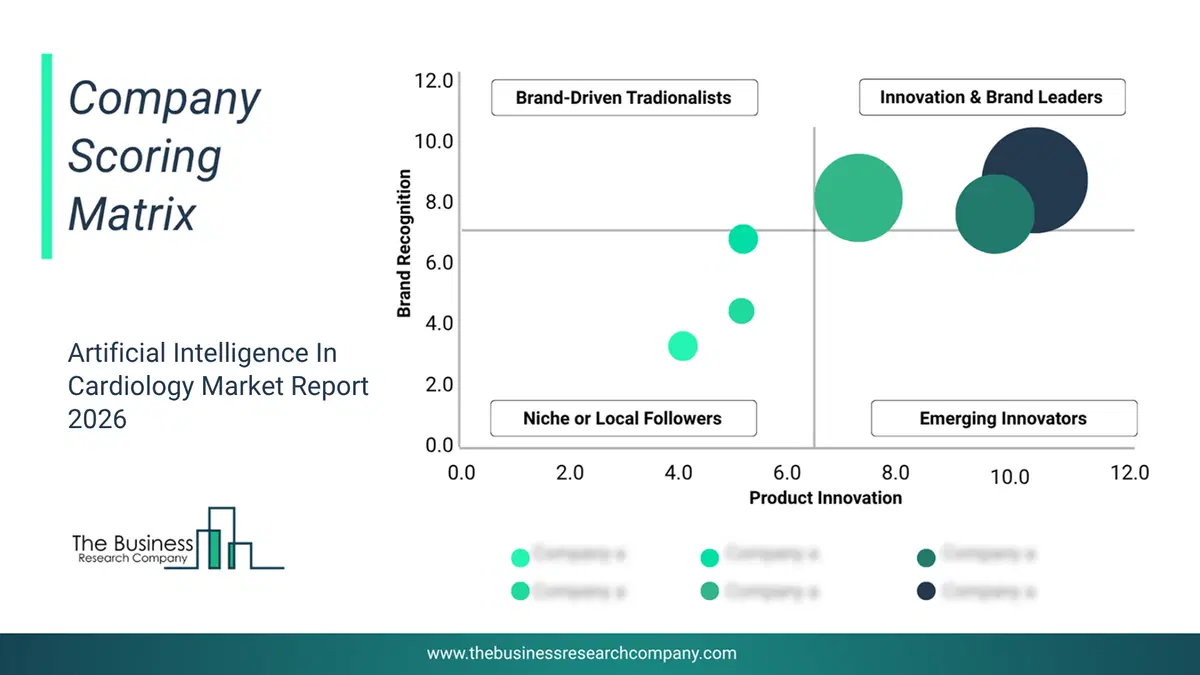
This chart maps companies by product innovation and brand strength, with bubble size indicating relative revenue, helping identify market leaders, challengers, and niche players. This is an illustrative chart; the full report provides a complete and accurate competitive analysis.
Global Artificial Intelligence In Cardiology Market Trends and Insights
Major companies operating in the artificial intelligence in cardiology market are focusing on strategic collaboration to revolutionise heart research. Strategic partnerships refer to a process in which companies leverage each other's strengths and resources to achieve mutual benefits and success. For instance, in October 2023, the Icahn School of Medicine at Mount Sinai, a US-based medical school, announced a collaboration with Chiba Institute of Technology (CIT), a Japan-based private university. The two universities' collaboration seeks to improve knowledge, mitigation, and management of cardiovascular disease, as well as create novel methods to tackle this global health concern. Mount SinAI and CIT will collaborate to establish worldwide clinical studies using artificial intelligence and interventional cardiology, heart failure, cardiac electrophysiology, cardiac imaging, and preventive cardiology. The research will also focus on minimizing gender and race prejudice at the junction of artificial intelligence and cardiovascular research to improve patient care and results.What Are Latest Mergers And Acquisitions In The Artificial Intelligence In Cardiology Market?
In August 2024, Stryker Corporation, a US-based medical technology company, acquired Care.AI for an undisclosed amount. Through this acquisition, Stryker aims to strengthen its digital healthcare ecosystem by integrating Care.ai’s AI-enabled sensors and virtual-care workflow technologies into its connected medical device portfolio. Care.AI is a US-based healthcare technology company that leverages artificial intelligence to enhance patient monitoring and clinical decision-making in cardiology and other medical fields.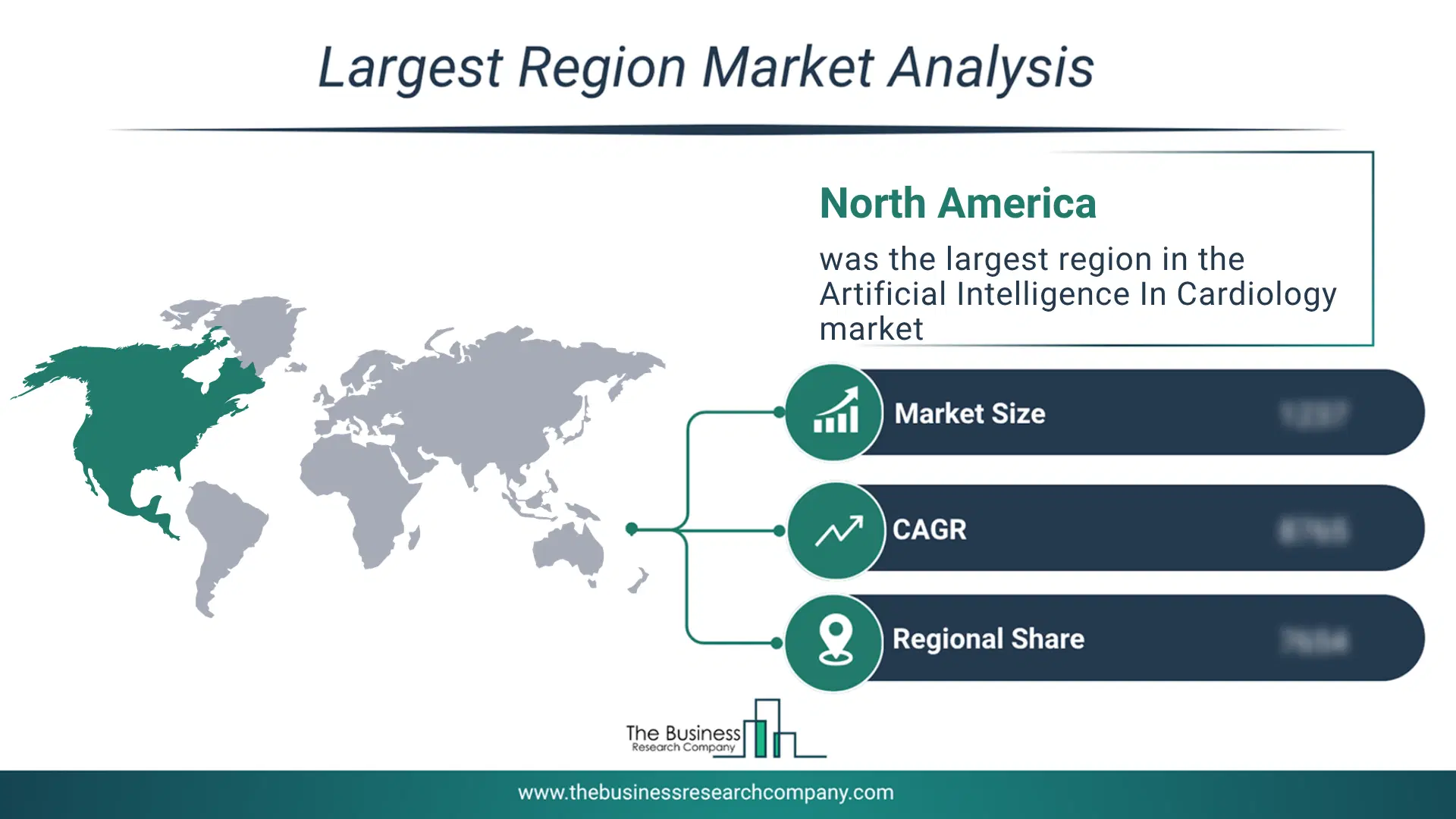
Regional Insights
North America was the largest region in the artificial intelligence in cardiology market in 2025. Asia-Pacific is expected to be the fastest-growing region in the forecast period. The regions covered in this market report are Asia-Pacific, South East Asia, Western Europe, Eastern Europe, North America, South America, Middle East, Africa. The countries covered in this market report are Australia, Brazil, China, France, Germany, India, Indonesia, Japan, Taiwan, Russia, South Korea, UK, USA, Canada, Italy, SpainWhat Defines the Artificial Intelligence In Cardiology Market?
The artificial intelligence in cardiology market consists of revenues earned by entities by providing disease prediction, disease diagnosis, and automation services. The market value includes the value of related goods sold by the service provider or included within the service offering. The artificial intelligence market in cardiology also includes sales of smart robots and imaging tools. Values in this market are ‘factory gate’ values, that is, the value of goods sold by the manufacturers or creators of the goods, whether to other entities (including downstream manufacturers, wholesalers, distributors and retailers) or directly to end customers. The value of goods in this market includes related services sold by the creators of the goods.How is Market Value Defined and Measured?
The market value is defined as the revenues that enterprises gain from the sale of goods and/or services within the specified market and geography through sales, grants, or donations in terms of the currency (in USD unless otherwise specified). The revenues for a specified geography are consumption values that are revenues generated by organizations in the specified geography within the market, irrespective of where they are produced. It does not include revenues from resales along the supply chain, either further along the supply chain or as part of other products.
This chart presents market attractiveness based on a quantitative evaluation of growth, competition, strategic alignment, and risk, offering a clear view of opportunity areas for decision-making. This chart is for illustrative purposes; the full report contains the complete analysis.

This chart highlights the Total Addressable Market (TAM) by estimating the maximum revenue opportunity using an assumption-driven approach, supporting strategic planning and opportunity sizing across markets. The chart is illustrative; the full report provides a more comprehensive analysis.
What Key Data and Analysis Are Included in the Artificial Intelligence In Cardiology Market Report 2026?
The artificial intelligence in cardiology market research report is one of a series of new reports from The Business Research Company that provides market statistics, including industry global market size, regional shares, competitors with the market share, detailed market segments, market trends and opportunities, and any further data you may need to thrive in the artificial intelligence in cardiology industry. The market research report delivers a complete perspective of everything you need, with an in-depth analysis of the current and future state of the industry.Artificial Intelligence In Cardiology Market Report Forecast Analysis
| Report Attribute | Details |
|---|---|
| Market Size Value In 2026 | $3.82 billion |
| Revenue Forecast In 2030 | $15.19 billion |
| Growth Rate | CAGR of 41.2% from 2026 to 2030 |
| Base Year For Estimation | 2025 |
| Actual Estimates/Historical Data | 2020-2025 |
| Forecast Period | 2026 - 2030 |
| Market Representation | Revenue in USD Billion and CAGR from 2026 to 2030 |
| Segments Covered | Component, Application, End-Use |
| Regional Scope | Asia-Pacific, Western Europe, Eastern Europe, North America, South America, Middle East, Africa |
| Country Scope | The Countries Covered In This Market Report Are Australia, Brazil, China, France, Germany, India, Indonesia, Japan, Taiwan, Russia, South Korea, Uk, Usa, Canada, Italy, Spain. |
| Key Companies Profiled | Microsoft Corporation, International Business Machines Corporation, Siemens Healthineers, Koninklijke Philips, Ultromics Ltd, Bay Labs, Cleerly Inc., RSIP Vision Ltd., Idoven, Cardiologs Technologies Inc., Viz.ai, Aidoc, Arterys Inc., Zebra Medical Vision, AliveCor, DiA Imaging Analysis, Eko Health Inc., Cardiomatics, UltraSight, Anumana Inc., CardiAI Inc., Caption Health Inc., HeartFlow Inc., iRhythm Technologies Inc., Biofourmis Inc. |
| Customization Scope | Request for Customization |
| Pricing And Purchase Options | Explore Purchase Options |