

Artificial Intelligence in Diabetes Management Market Report 2026
Global Outlook – By Device (Diagnostic Devices, Glucose Monitoring Devices, Insulin Delivery Devices), By Techniques (Case-Based Reasoning, Intelligent Data Analysis), By End-Use (Hospitals, Clinics, Home Care Settings, Research Institutes) – Market Size, Trends, Strategies, and Forecast to 2030
Artificial Intelligence in Diabetes Management Market Overview
• Artificial Intelligence in Diabetes Management market size has reached to $0.8 billion in 2025 • Expected to grow to $3.4 billion in 2030 at a compound annual growth rate (CAGR) of 33.7% • Growth Driver: AI Revolution Is Transforming Diabetes Management In Response To Soaring Prevalence • Market Trend: Advancements In Ai-Powered Diabetes Management By Launching Next-Gen G7 CGM System With Wearable Glucose Monitoring Device • North America was the largest region in 2025.What Is Covered Under Artificial Intelligence in Diabetes Management Market?
Artificial intelligence in diabetes management refers to using AI technologies and algorithms to spot patterns in behavior that lead to either high or low blood sugar levels in diabetes patients. Artificial intelligence in diabetes management improves various aspects of diabetes care, including decision support, prediction, lifestyle guidance, and treatment management. The main devices included in artificial intelligence in diabetes management are diagnostic devices, glucose monitoring devices, insulin delivery devices, and others. Diagnostic devices refer to the devices that are used to determine the nature or reason behind specific phenomena, usually ones that are connected to a health issue. The various techniques involved are case-based reasoning and intelligent data analysis, which are used by several end-users, such as hospitals, clinics, home care settings, and research institutes.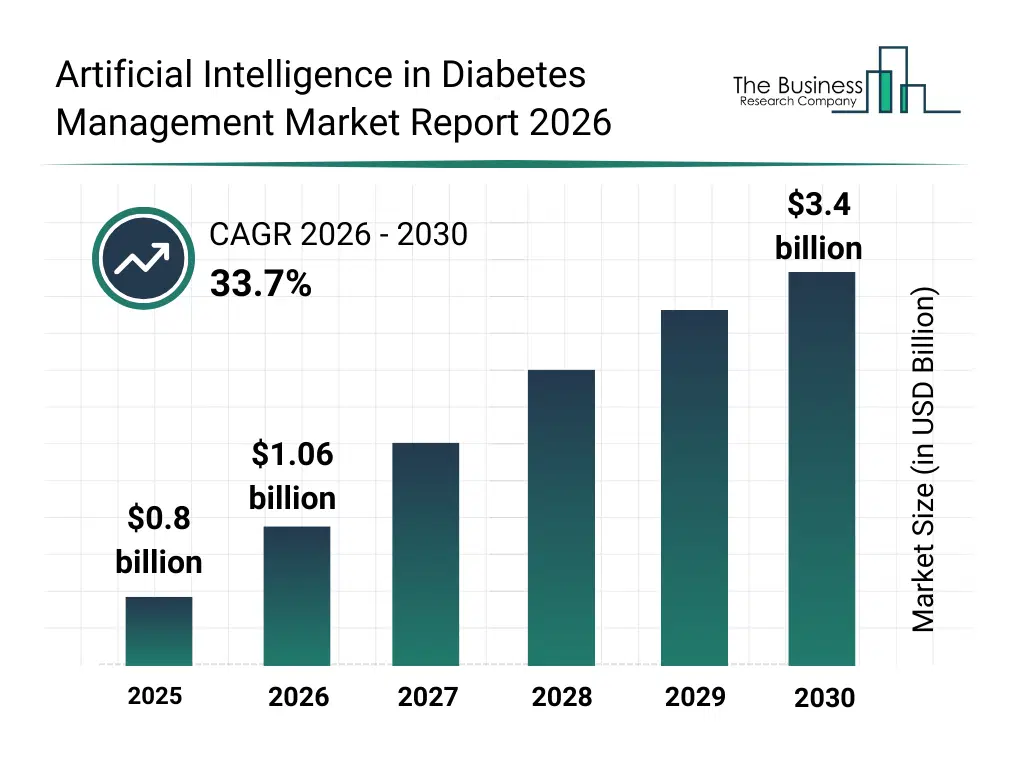
What Is The Artificial Intelligence in Diabetes Management Market Size and Share 2026?
The artificial intelligence in diabetes management market size has grown exponentially in recent years. It will grow from $0.8 billion in 2025 to $1.06 billion in 2026 at a compound annual growth rate (CAGR) of 33.2%. The growth in the historic period can be attributed to rising global diabetes prevalence, early adoption of glucose monitoring devices, growth of digital health applications, increased patient self management awareness, expansion of wearable health technologies.What Is The Artificial Intelligence in Diabetes Management Market Growth Forecast?
The artificial intelligence in diabetes management market size is expected to see exponential growth in the next few years. It will grow to $3.4 billion in 2030 at a compound annual growth rate (CAGR) of 33.7%. The growth in the forecast period can be attributed to demand for personalized treatment plans, AI driven decision support adoption, integration of connected medical devices, growth of home based care models, focus on preventive diabetes management. Major trends in the forecast period include AI powered glucose monitoring systems, growth of personalized diabetes care, integration of smart insulin delivery, expansion of predictive glycemic analytics, adoption of remote diabetes management.
Global Artificial Intelligence in Diabetes Management Market Segmentation
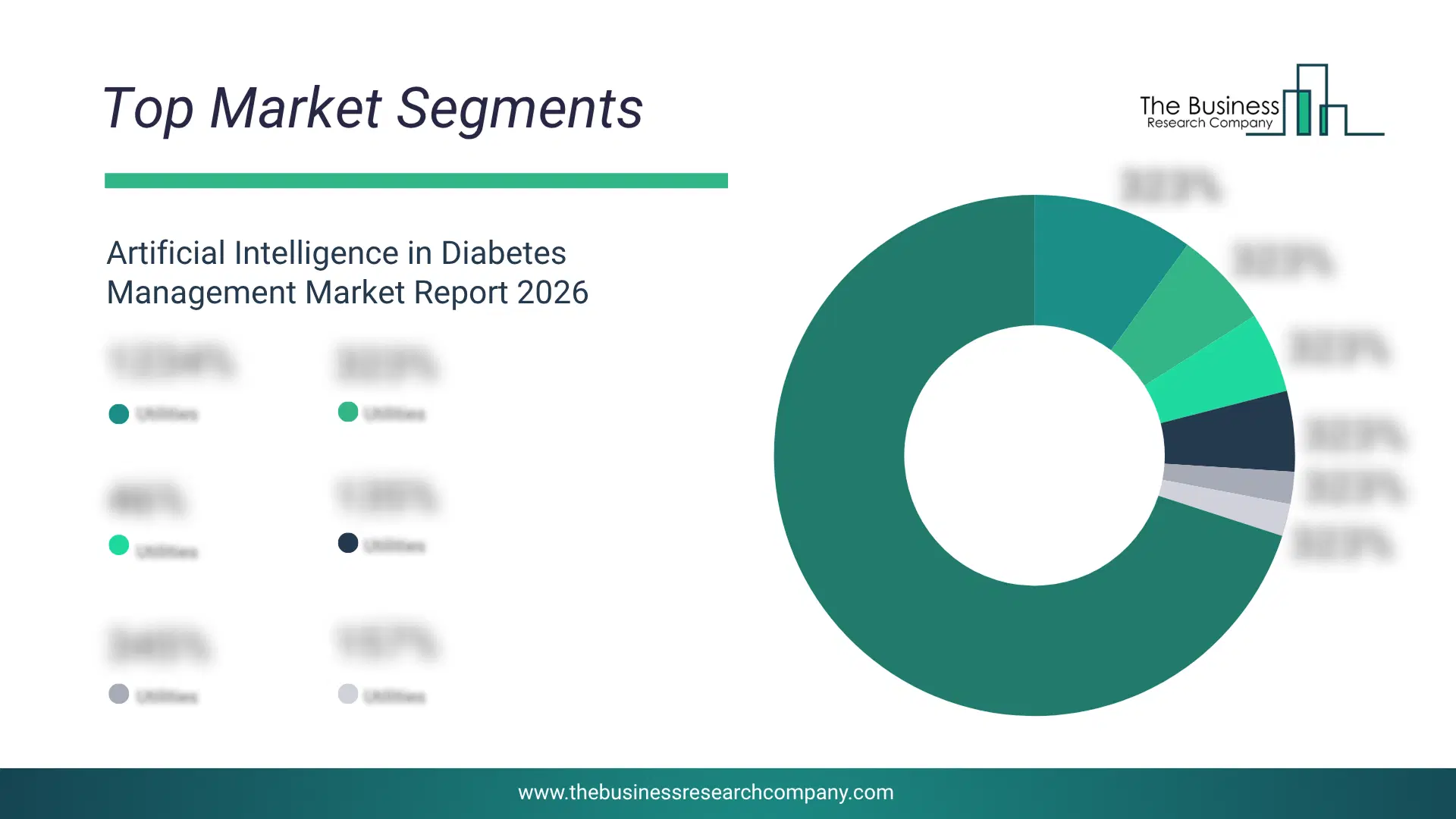
1) By Device: Diagnostic Devices, Glucose Monitoring Devices, Insulin Delivery Devices 2) By Techniques: Case-Based Reasoning, Intelligent Data Analysis 3) By End-Use: Hospitals, Clinics, Home Care Settings, Research Institutes Subsegments: 1) By Diagnostic Devices: Blood Glucose Meters, Continuous Glucose Monitors (CGMs), A1C Testing Devices, Urine Testing Devices 2) By Glucose Monitoring Devices: Continuous Glucose Monitors (CGMs), Flash Glucose Monitoring Systems, Smart Glucose Meters 3) By Insulin Delivery Devices: Insulin Pens, Insulin Pumps, Insulin Jet Injectors, Smart Insulin Delivery SystemsWhat Is The Driver Of The Artificial Intelligence in Diabetes Management Market?
The rising prevalence of diabetes is expected to propel artificial intelligence in the diabetes management market going forward. Diabetes occurs when the blood glucose, or blood sugar, is too high. Diabetes is a condition that causes various conditions such as eye problems, heart attacks and strokes, kidney problems, and others. Artificial intelligence is used to manage diabetes as it provides information about high or low blood sugar levels in a diabetic patient and collects data that has not been used previously. For instance, in June 2024, according to the National Health Service (NHS England), a UK-based publicly funded healthcare system, 3,615,330 people registered with a GP were found to have non-diabetic hyperglycaemia – also known as pre-diabetes -in 2023, compared to 3,065,825 in 2022 – an increase of almost a fifth (18%). Therefore, the rising prevalence of diabetes is driving the growth of artificial intelligence in the diabetes management market.Key Players In The Global Artificial Intelligence in Diabetes Management Market
Major companies operating in the artificial intelligence in diabetes management market are Alphabet; F. Hoffmann-La Roche; Abbott Laboratories; Medtronic; Dexcom; Insulet; Tandem Diabetes Care; LifePlus; Livongo Health; Xeris Pharmaceuticals; Virta Health; Informed Data Systems; Bigfoot Biomedical; Lark Technologies; Smart Meter; Diabeloop; Quin Technology; Wellthy Therapeutics; Admetsys; DreaMed Diabetes; Eyenuk; Glooko; PKvitality; Glytec; Hygieia; TypeZero Technologies; Nemaura Medical; GlucoMe; PredictBGL; Voluntis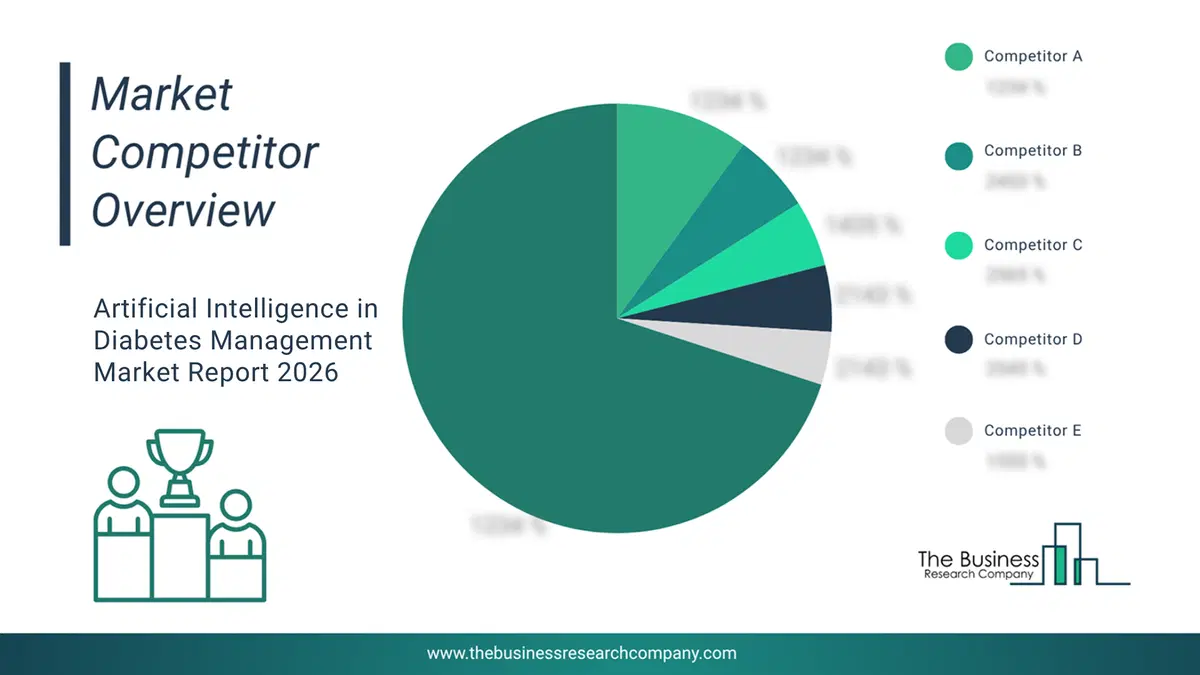
This chart is for illustrative purposes; the full report includes a detailed competitor analysis and comprehensive overview of the top 10 companies in the market.
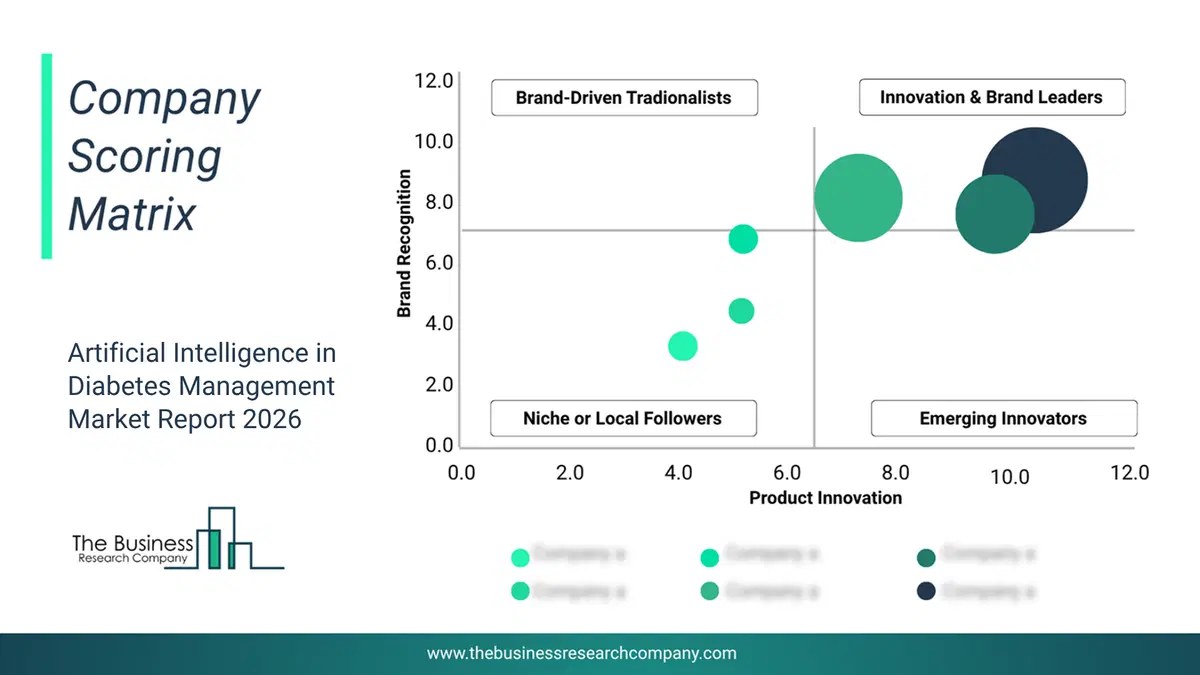
This chart maps companies by product innovation and brand strength, with bubble size indicating relative revenue, helping identify market leaders, challengers, and niche players. This is an illustrative chart; the full report provides a complete and accurate competitive analysis.
Global Artificial Intelligence in Diabetes Management Market Trends and Insights
Major companies operating in the artificial intelligence in diabetes management market are developing new products, such as wearable devices to monitor glucose levels, to gain a competitive edge in the market. A wearable device to monitor glucose levels is a compact and often technologically advanced device designed to continuously or intermittently measure and track glucose levels in the blood of an individual. For instance, in October 2023, Dexcom Inc., a US-based company that manufactures medical devices, launched the next-generation G7 continuous glucose monitoring (CGM) system. This system covers all diabetics in the nation, including those who are pregnant and who are two years of age or older. By alerting users to severe hypoglycemia up to 20 minutes in advance, the Dexcom CGM device takes the uncertainty out of treating diabetes. Sensor replacement is made more straightforward with a 12-hour grace period, and remote monitoring allows glucose data exchange with up to 10 followers.What Are Latest Mergers And Acquisitions In The Artificial Intelligence in Diabetes Management Market?
In July 2024, GE HealthCare, a US-based provider of medical imaging and AI solutions, acquired the clinical artificial intelligence business of Intelligent Ultrasound for an undisclosed amount. Through this acquisition, GE HealthCare aims to accelerate its AI-enabled diagnostic platforms by integrating Intelligent Ultrasound’s real-time image analysis software with its global imaging footprint and enterprise services. Intelligent Ultrasound Group plc is a UK-based developer of AI-driven ultrasound tools that provide real-time image analysis to improve diagnostic accuracy.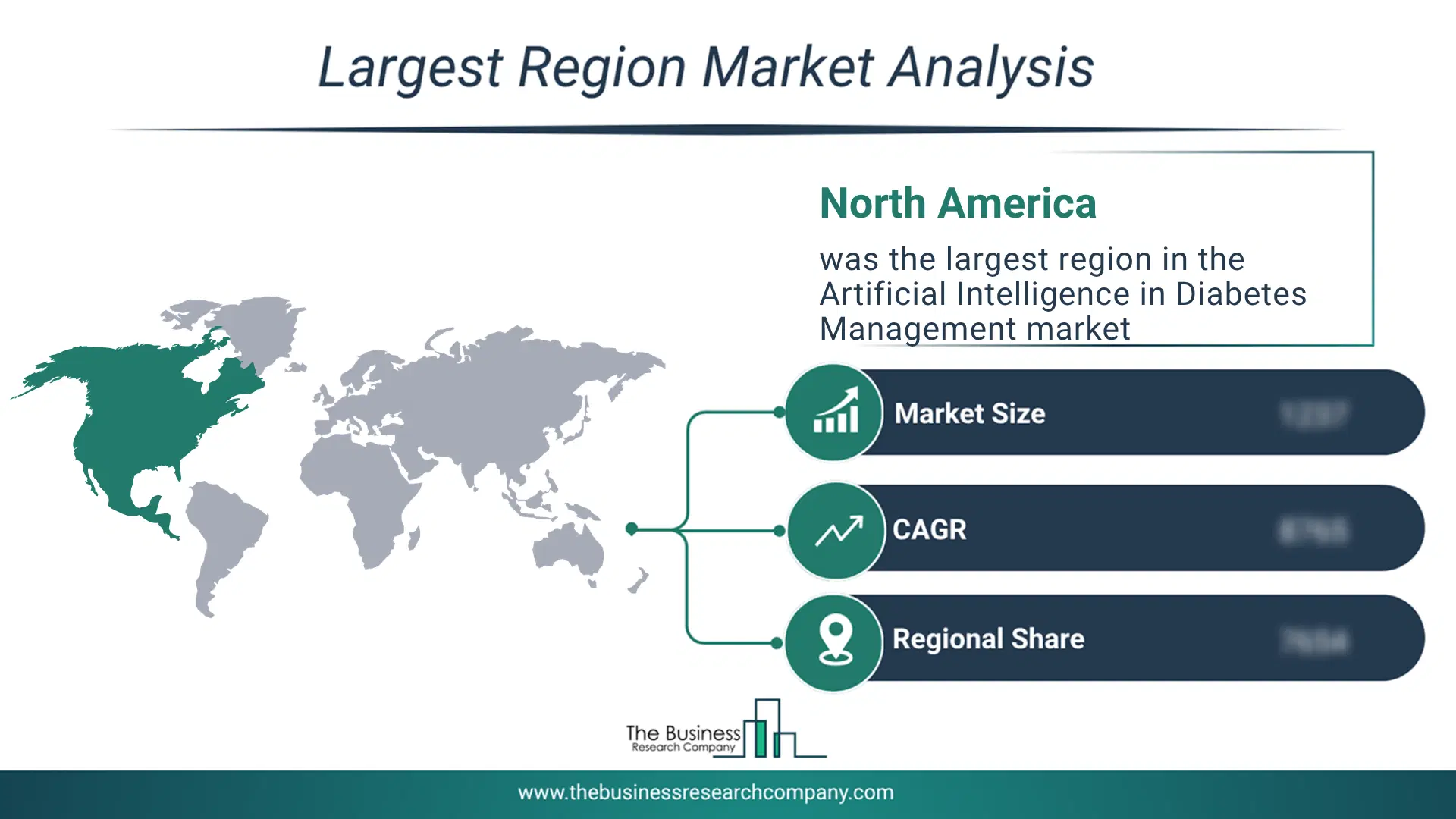
Regional Insights
North America was the largest region in the artificial intelligence (AI) in diabetes management market in 2025. The regions covered in this market report are Asia-Pacific, South East Asia, Western Europe, Eastern Europe, North America, South America, Middle East, Africa. The countries covered in this market report are Australia, Brazil, China, France, Germany, India, Indonesia, Japan, Taiwan, Russia, South Korea, UK, USA, Canada, Italy, SpainWhat Defines the Artificial Intelligence in Diabetes Management Market?
The artificial intelligence in diabetes management market consists of revenues earned by entities by provide automated retinal screening, clinical decision support, disease prediction, and treatment management. The market value includes the value of related goods sold by the service provider or included within the service offering. The artificial intelligence in the diabetes management market also includes sales of glucose monitors, support vector machines, and smart wearables. Values in this market are ‘factory gate’ values, that is the value of goods sold by the manufacturers or creators of the goods, whether to other entities (including downstream manufacturers, wholesalers, distributors and retailers) or directly to end customers. The value of goods in this market includes related services sold by the creators of the goods.How is Market Value Defined and Measured?
The market value is defined as the revenues that enterprises gain from the sale of goods and/or services within the specified market and geography through sales, grants, or donations in terms of the currency (in USD unless otherwise specified). The revenues for a specified geography are consumption values that are revenues generated by organizations in the specified geography within the market, irrespective of where they are produced. It does not include revenues from resales along the supply chain, either further along the supply chain or as part of other products.
This chart presents market attractiveness based on a quantitative evaluation of growth, competition, strategic alignment, and risk, offering a clear view of opportunity areas for decision-making. This chart is for illustrative purposes; the full report contains the complete analysis.

This chart highlights the Total Addressable Market (TAM) by estimating the maximum revenue opportunity using an assumption-driven approach, supporting strategic planning and opportunity sizing across markets. The chart is illustrative; the full report provides a more comprehensive analysis.
What Key Data and Analysis Are Included in the Artificial Intelligence in Diabetes Management Market Report 2026?
The artificial intelligence in diabetes management market research report is one of a series of new reports from The Business Research Company that provides market statistics, including industry global market size, regional shares, competitors with the market share, detailed market segments, market trends and opportunities, and any further data you may need to thrive in the artificial intelligence in diabetes management industry. The market research report delivers a complete perspective of everything you need, with an in-depth analysis of the current and future state of the industry.Artificial Intelligence in Diabetes Management Market Report Forecast Analysis
| Report Attribute | Details |
|---|---|
| Market Size Value In 2026 | $1.06 billion |
| Revenue Forecast In 2030 | $3.4 billion |
| Growth Rate | CAGR of 33.7% from 2026 to 2030 |
| Base Year For Estimation | 2025 |
| Actual Estimates/Historical Data | 2020-2025 |
| Forecast Period | 2026 - 2030 |
| Market Representation | Revenue in USD Billion and CAGR from 2026 to 2030 |
| Segments Covered | Device, Techniques, End-Use |
| Regional Scope | Asia-Pacific, Western Europe, Eastern Europe, North America, South America, Middle East, Africa |
| Country Scope | The Countries Covered In This Market Report Are Australia, Brazil, China, France, Germany, India, Indonesia, Japan, Taiwan, Russia, South Korea, Uk, Usa, Canada, Italy, Spain. |
| Key Companies Profiled | Alphabet, F. Hoffmann-La Roche, Abbott Laboratories, Medtronic, Dexcom, Insulet, Tandem Diabetes Care, LifePlus, Livongo Health, Xeris Pharmaceuticals, Virta Health, Informed Data Systems, Bigfoot Biomedical, Lark Technologies, Smart Meter, Diabeloop, Quin Technology, Wellthy Therapeutics, Admetsys, DreaMed Diabetes, Eyenuk, Glooko, PKvitality, Glytec, Hygieia, TypeZero Technologies, Nemaura Medical, GlucoMe, PredictBGL, Voluntis |
| Customization Scope | Request for Customization |
| Pricing And Purchase Options | Explore Purchase Options |