
Artificial Intelligence In The Diagnostic Market Report 2026
Global Outlook – By Component (Hardware, Software, Services), By Technology (Machine Learning, NLP (Natural Language Processing), Context-Aware Computing, Computer Vision), By Diagnosis Type (Radiology, Pathology, Cardiology, Oncology, Neurology, Chest And Lung, Other Diagnosis Types) - Market Size, Trends, Strategies, and Forecast to 2030
Artificial Intelligence In The Diagnostic Market Overview
• Artificial Intelligence In The Diagnostic market size has reached to $5.97 billion in 2025 • Expected to grow to $31.31 billion in 2030 at a compound annual growth rate (CAGR) of 39.3% • Growth Driver: Transforming Healthcare Through AI's Vital Role In Diagnosing And Managing Chronic Diseases • Market Trend: Advancements In AI Computing Platforms For Diagnostic Solutions • North America was the largest region in 2025 and Asia-Pacific is the fastest growing region.What Is Covered Under Artificial Intelligence In The Diagnostic Market?
AI in diagnostics refers to the application of artificial intelligence (AI) technologies in medical diagnosis, which involves the use of advanced algorithms, machine learning, and data analysis techniques to interpret medical data, images, and clinical information. The implementation of AI in diagnostics aims to improve the accuracy, speed, and efficiency of medical diagnoses. The main components of artificial intelligence in the diagnostic market are hardware, software, and services. Hardware refers to the actual parts of a computer system or other electronic device. The hardware in AI in diagnostics improves processing power, real-time analysis, scalability, integration with imaging devices, energy efficiency, security, interoperability, customization, and reliability, and all these factors collectively contribute to more effective and efficient diagnostic processes in healthcare. The various technologies include machine learning, NLP (natural language processing), context-aware computing, and computer vision used in various diagnosis types such as radiology, pathology, cardiology, oncology, neurology, chest and lung, and other diagnosis types.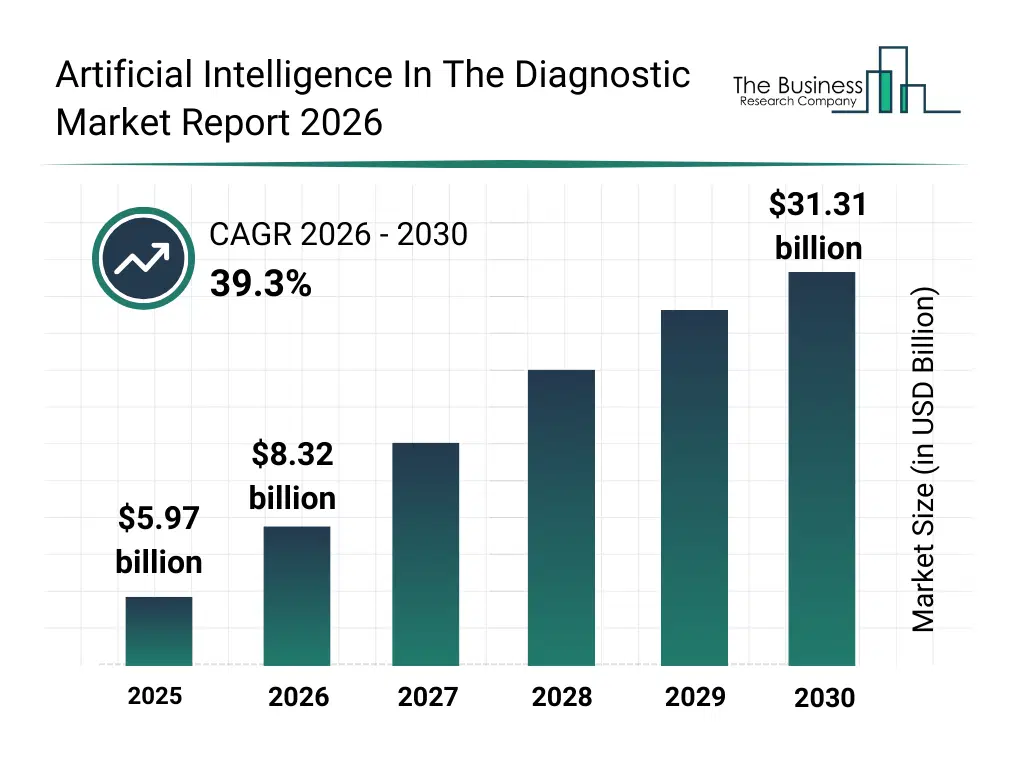
What Is The Artificial Intelligence In The Diagnostic Market Size and Share 2026?
The artificial intelligence in the diagnostic market size has grown exponentially in recent years. It will grow from $5.97 billion in 2025 to $8.32 billion in 2026 at a compound annual growth rate (CAGR) of 39.5%. The growth in the historic period can be attributed to growing availability of medical imaging data, increasing digitization of healthcare records, rising shortage of skilled diagnosticians, early adoption of computer vision in radiology, expansion of healthcare IT infrastructure.What Is The Artificial Intelligence In The Diagnostic Market Growth Forecast?
The artificial intelligence in the diagnostic market size is expected to see exponential growth in the next few years. It will grow to $31.31 billion in 2030 at a compound annual growth rate (CAGR) of 39.3%. The growth in the forecast period can be attributed to increasing demand for early disease detection, rising investments in ai-driven healthcare solutions, expansion of personalized medicine initiatives, growing integration of ai diagnostics in clinical workflows, increasing regulatory approvals for ai-based tools. Major trends in the forecast period include increasing adoption of AI-based diagnostic imaging tools, rising use of machine learning in clinical decision support, growing integration of ai with radiology and pathology workflows, expansion of predictive analytics in disease detection, enhanced focus on diagnostic accuracy and speed.
Global Artificial Intelligence In The Diagnostic Market Segmentation
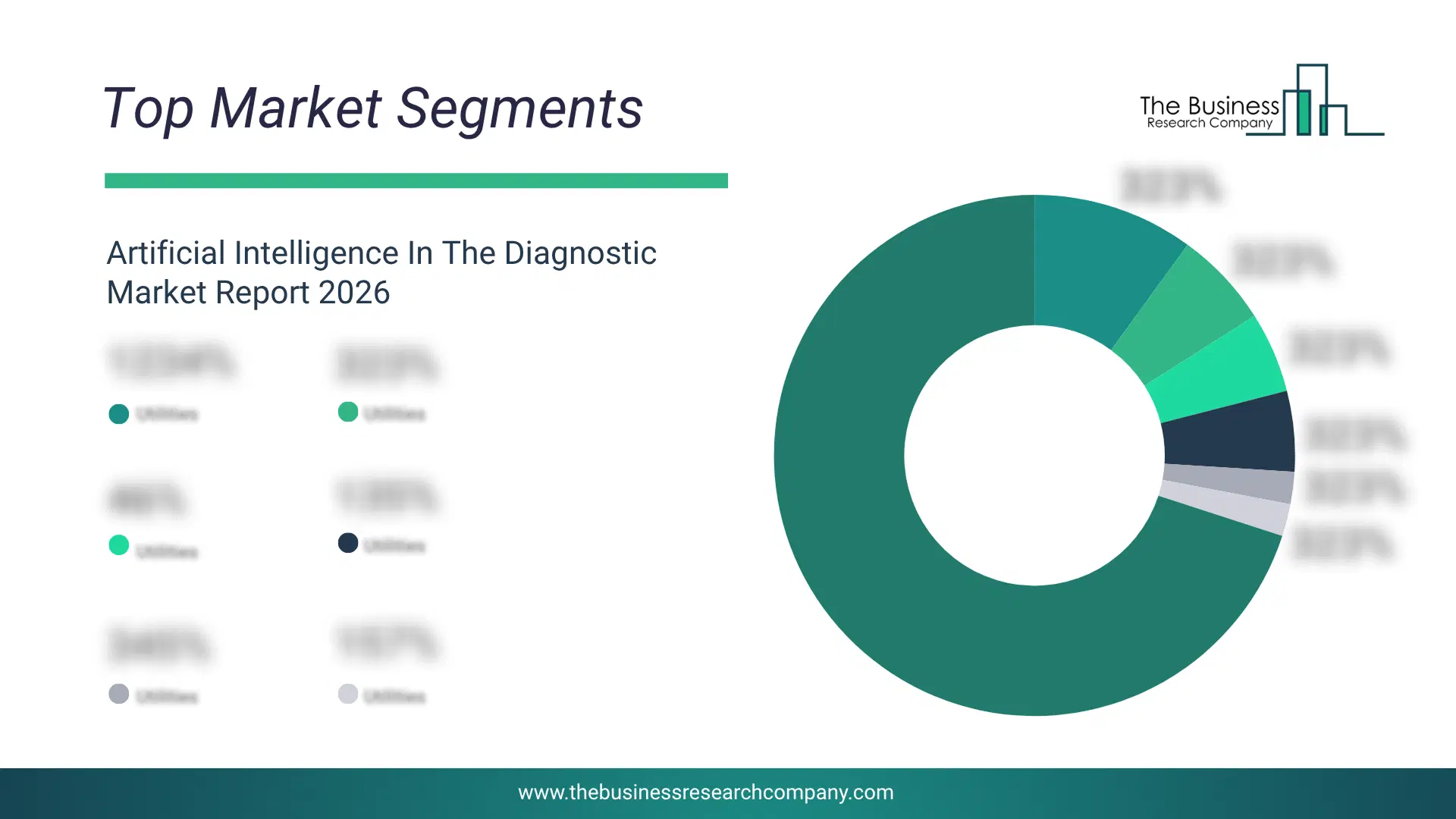
1) By Component: Hardware, Software, Services 2) By Technology: Machine Learning, NLP (Natural Language Processing), Context-Aware Computing, Computer Vision 3) By Diagnosis Type: Radiology, Pathology, Cardiology, Oncology, Neurology, Chest And Lung, Other Diagnosis Types Subsegments: 1) By Hardware: Imaging Devices, Diagnostic Equipment, Wearable Devices 2) By Software: Diagnostic Imaging Software, Data Analytics Software, Machine Learning Algorithms, Clinical Decision Support Systems 3) By Services: Consulting Services, Integration Services, Maintenance And Support Services, Training ServicesWhat Is The Driver Of The Artificial Intelligence In The Diagnostic Market?
The rising prevalence of chronic diseases is expected to propel the growth of AI in the diagnostics market going forward. Chronic diseases are long-term health conditions that persist over an extended period, often for a person's lifetime. The incorporation of AI-based diagnostic processes in chronic diseases enables early detection, prediction, and enhanced decision support systems, remote monitoring of patients, cost reduction, and tailoring treatments to individual patients by analyzing their genetic makeup and disease progression. For instance, in September 2023, according to the World Health Organization, a Switzerland-based specialized agency of the United Nations, there were 41 million fatalities annually, constituting 74% of non-communicable disease (NCD) or chronic disease-related deaths worldwide. Further, around 17.9 million deaths are attributed to cardiovascular diseases, 9.3 million deaths from cancer, 4.1 million deaths from chronic respiratory diseases, and 2.0 million deaths from diabetes. Therefore, the rising prevalence of chronic diseases is driving the growth of AI in the diagnostics market.Key Players In The Global Artificial Intelligence In The Diagnostic Market
Major companies operating in the artificial intelligence in the diagnostic market are Siemens Healthineers, Koninklijke Philips N.V., GE Healthcare Technologies Inc., Paige.AI Inc., HeartFlow Inc., Aidoc Medical Ltd., AliveCor Inc., Butterfly Network Inc., Imagen Technologies, Digital Diagnostics Inc., Brainomix Ltd., NovaSignal Corp., Enlitic Inc., Nano-X Imaging LTD., EchoNous Inc., Zebra Medical Vision Ltd., Aidence B.V., Neural Analytics Inc., IDx Technologies Inc., icometrix N.V., Vuno Inc.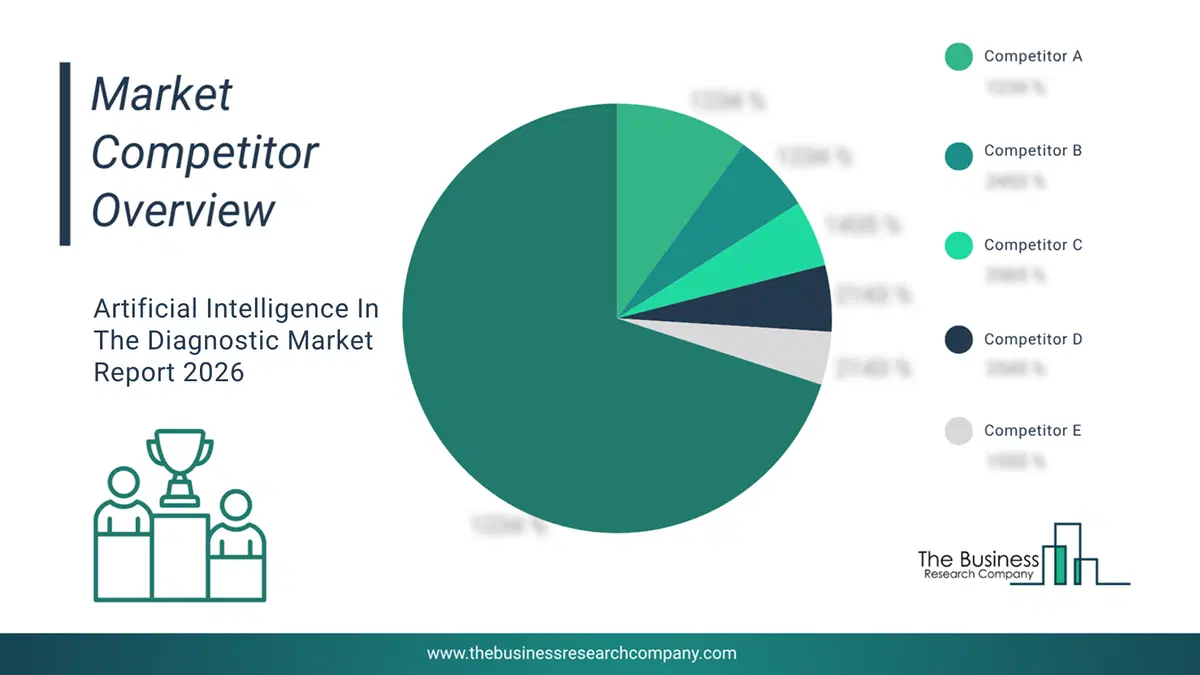
This chart is for illustrative purposes; the full report includes a detailed competitor analysis and comprehensive overview of the top 10 companies in the market.
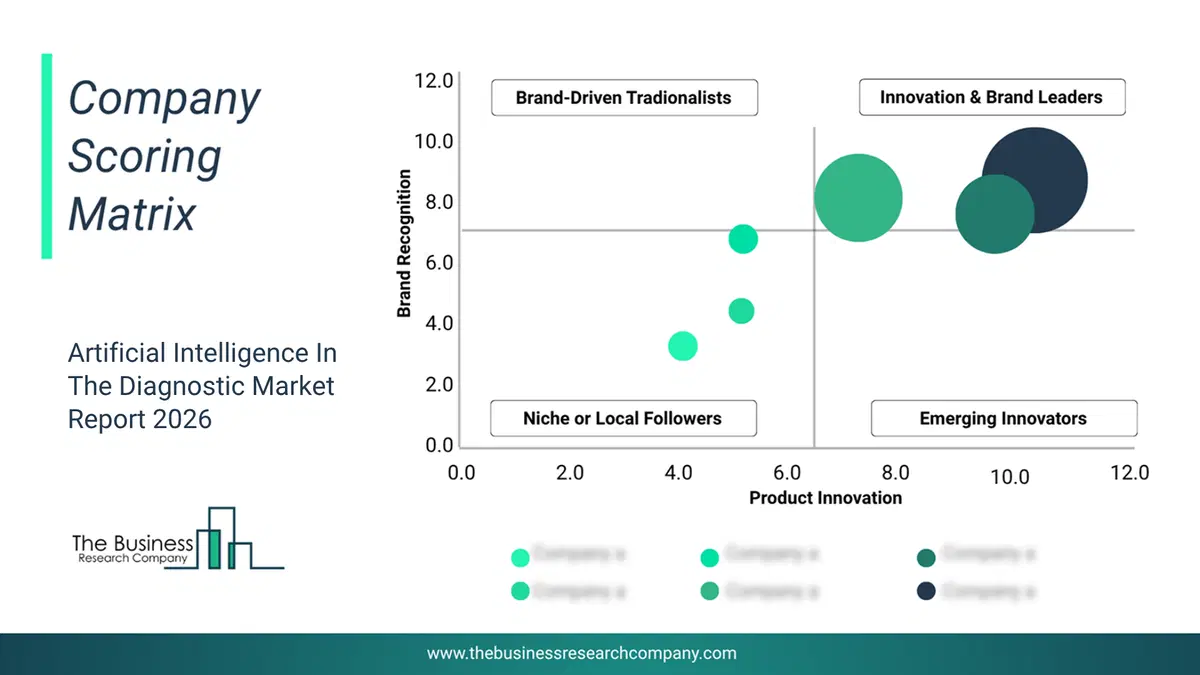
This chart maps companies by product innovation and brand strength, with bubble size indicating relative revenue, helping identify market leaders, challengers, and niche players. This is an illustrative chart; the full report provides a complete and accurate competitive analysis.
Global Artificial Intelligence In The Diagnostic Market Trends and Insights
Major companies operating in the AI in diagnostics market are developing new technologies, such as AI modules, to gain a competitive edge in the market. An AI module is a self-contained software component that encapsulates specific AI capabilities or functionalities. For instance, in March 2023, Qritive, a Singapore-based provider of AI-powered solutions, launched QAi Prostate for prostate cancer diagnosis. QAi Prostate can efficiently recognize the most common form of prostate cancer, potentially improving diagnostic accuracy and reducing false positives. The tool helps pathologists distinguish cancerous from non-cancerous tissue areas, aiding in informed treatment decisions. QAi Prostate can prioritize cases for faster diagnosis and reporting, improving efficiency and patient care.What Are Latest Mergers And Acquisitions In The Artificial Intelligence In The Diagnostic Market?
In June 2024, Quest Diagnostics Inc., a US-based provider of diagnostic information services, acquired assets of PathAI Diagnostics for an undisclosed amount. This acquisition allows Quest to enhance its capabilities in AI and digital pathology, particularly in cancer diagnosis, by integrating PathAI's innovative technologies with its existing services. PathAI Inc. is a US-based provider of advanced AI and digital pathology solutions for biopharmaceutical companies and pathology laboratories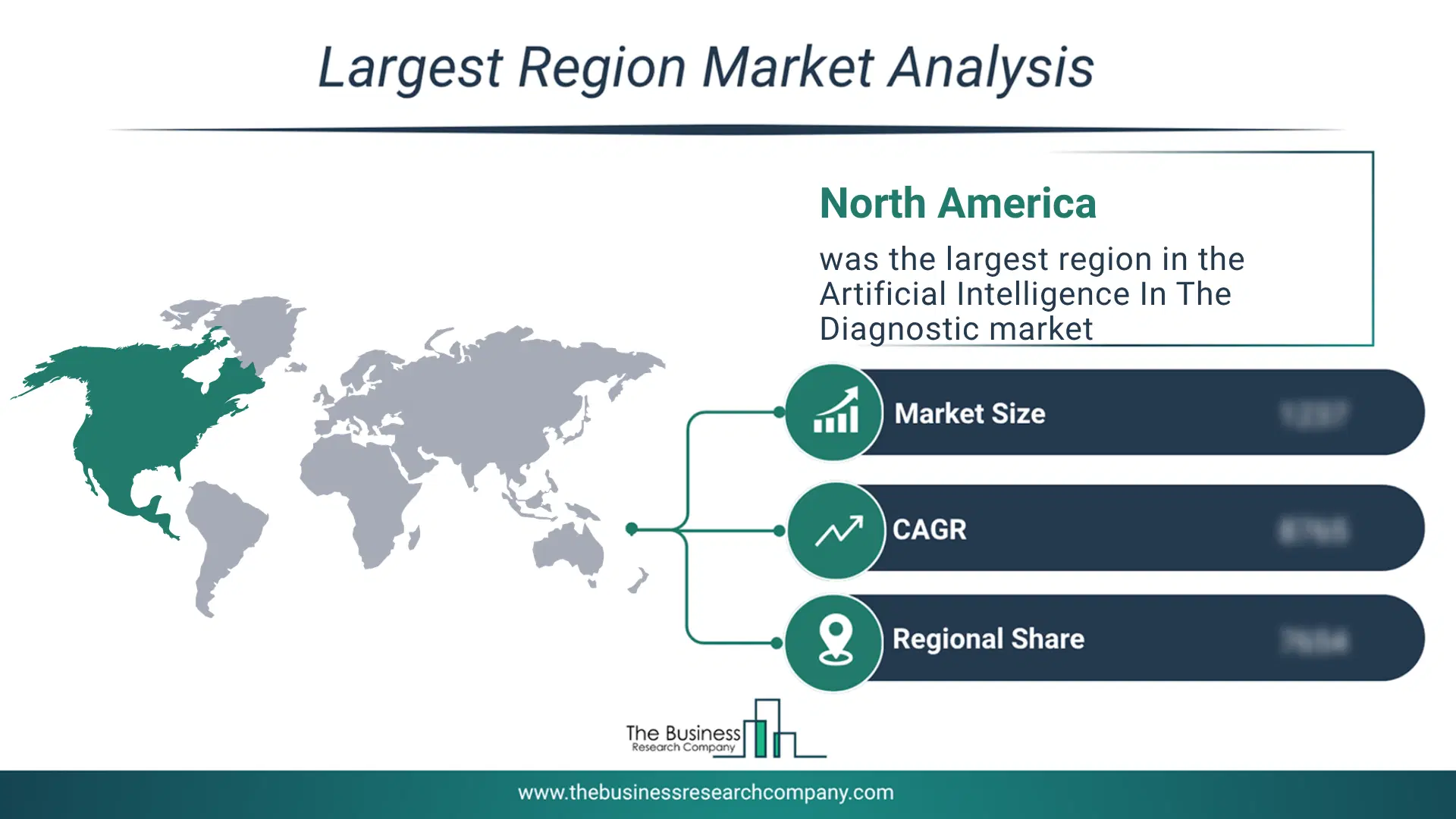
Regional Outlook
North America was the largest region in the artificial intelligence in diagnostics market in 2025. Asia-Pacific is expected to be the fastest-growing region in the forecast period. The regions covered in this market report are Asia-Pacific, South East Asia, Western Europe, Eastern Europe, North America, South America, Middle East, Africa. The countries covered in this market report are Australia, Brazil, China, France, Germany, India, Indonesia, Japan, Taiwan, Russia, South Korea, UK, USA, Canada, Italy, Spain.What Defines the Artificial Intelligence In The Diagnostic Market?
The AI in diagnostics market consists of revenues earned by entities by providing services such as medical imaging analysis, disease prediction, and genomic sequencing analysis. The market value includes the value of related goods sold by the service provider or included within the service offering. AI in diagnostics market also includes sales of AI-powered imaging systems, AI-driven pathology tools, and point-of-care diagnostic devices Values in this market are ‘factory gate’ values, that is the value of goods sold by the manufacturers or creators of the goods, whether to other entities (including downstream manufacturers, wholesalers, distributors, and retailers) or directly to end customers. The value of goods in this market includes related services sold by the creators of the goods.How is Market Value Defined and Measured?
The market value is defined as the revenues that enterprises gain from the sale of goods and/or services within the specified market and geography through sales, grants, or donations in terms of the currency (in USD unless otherwise specified). The revenues for a specified geography are consumption values that are revenues generated by organizations in the specified geography within the market, irrespective of where they are produced. It does not include revenues from resales along the supply chain, either further along the supply chain or as part of other products.
This chart presents market attractiveness based on a quantitative evaluation of growth, competition, strategic alignment, and risk, offering a clear view of opportunity areas for decision-making. This chart is for illustrative purposes; the full report contains the complete analysis.

This chart highlights the Total Addressable Market (TAM) by estimating the maximum revenue opportunity using an assumption-driven approach, supporting strategic planning and opportunity sizing across markets. The chart is illustrative; the full report provides a more comprehensive analysis.
What Key Data and Analysis Are Included in the Artificial Intelligence In The Diagnostic Market Report 2026?
The artificial intelligence in the diagnostic market research report is one of a series of new reports from The Business Research Company that provides market statistics, including industry global market size, regional shares, competitors with the market share, detailed market segments, market trends and opportunities, and any further data you may need to thrive in the artificial intelligence in the diagnostic industry. The market research report delivers a complete perspective of everything you need, with an in-depth analysis of the current and future state of the industry.Artificial Intelligence In The Diagnostic Market Report Forecast Analysis
| Report Attribute | Details |
|---|---|
| Market Size Value In 2026 | $8.32 billion |
| Revenue Forecast In 2030 | $31.31 billion |
| Growth Rate | CAGR of 39.3% from 2026 to 2030 |
| Base Year For Estimation | 2025 |
| Actual Estimates/Historical Data | 2020-2025 |
| Forecast Period | 2026 - 2030 |
| Market Representation | Revenue in USD Billion and CAGR from 2026 to 2030 |
| Segments Covered | Component, Technology, Diagnosis Type |
| Regional Scope | Asia-Pacific, Western Europe, Eastern Europe, North America, South America, Middle East, Africa |
| Country Scope | The countries covered in the report are Australia, Brazil, China, France, Germany, India, Indonesia, Japan, Taiwan, Russia, South Korea, UK, USA, Canada, Italy, Spain |
| Key Companies Profiled | Siemens Healthineers, Koninklijke Philips N.V., GE Healthcare Technologies Inc., Paige.AI Inc., HeartFlow Inc., Aidoc Medical Ltd., AliveCor Inc., Butterfly Network Inc., Imagen Technologies, Digital Diagnostics Inc., Brainomix Ltd., NovaSignal Corp., Enlitic Inc., Nano-X Imaging LTD., EchoNous Inc., Zebra Medical Vision Ltd., Aidence B.V., Neural Analytics Inc., IDx Technologies Inc., icometrix N.V., Vuno Inc. |
| Customization Scope | Request for Customization |
| Pricing And Purchase Options | Explore Purchase Options |