
Artificial Lift System Market Report 2026
Global Outlook – By Type (ESP, PCP, Gas Lift, Rod lift, Other Types), By Mechanism (Pump Assisted, Gas Assisted), By Application (Onshore, Offshore), By Well Type (Horizontal, Vertical) – Market Size, Trends, Strategies, and Forecast to 2030
Artificial Lift System Market Overview
• Artificial Lift System market size has reached to $12.18 billion in 2025 • Expected to grow to $18.68 billion in 2030 at a compound annual growth rate (CAGR) of 8.9% • Growth Driver: Rising Oil Demand To Drive Market Growth • Market Trend: Product Innovations Transforming The Artificial Lift Systems Market • North America was the largest region in 2025.Market Gains By 2030 – Top Opportunities By Segment
Market Gain identifies the most promising market opportunities by highlighting the segments or products expected to generate the highest incremental revenue growth over the next five years.
What Is Covered Under Artificial Lift System Market?
Artificial lift system refers to the system that run on artificial methods and is used to withdraw crude oil or water from production wells by increasing pressure within the reservoir. The artificial lift system aims to extract greater output by increasing production, output, and recovery. The main types of artificial lift systems include ESP, PCP, gas lift, rod lift, and others. The electric submersible pumps (ESP) refer to a multi-stage centrifugal pumps used to lift moderate and high volumes of liquids from wellbores. The electric power supply is supplied to ESP systems inside the well through electric cables. ESPs are particularly effective in wells with low bottom-hole pressure, a low gas/oil ratio, a low bubble point, a high water cut, or fluids with a low API gravity. They are used in both horizontal and vertical wells located onshore and offshore. They operate on two different mechanisms, which include pump assisted and gas assisted.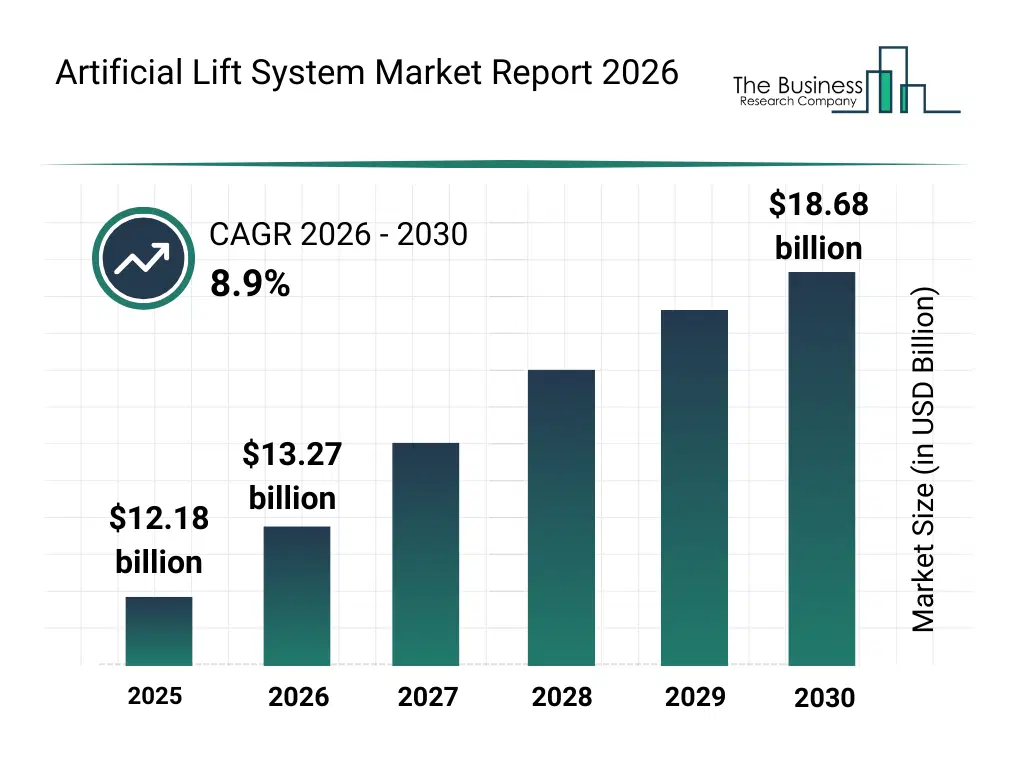
What Is The Artificial Lift System Market Size and Share 2026?
The artificial lift system market size has grown strongly in recent years. It will grow from $12.18 billion in 2025 to $13.27 billion in 2026 at a compound annual growth rate (CAGR) of 8.9%. The growth in the historic period can be attributed to growth in mature oilfield redevelopment activities, increased adoption of esp and rod lift systems, rising demand for enhanced oil recovery techniques, expansion of offshore production operations, improvements in pump and motor reliability.What Is The Artificial Lift System Market Growth Forecast?
The artificial lift system market size is expected to see strong growth in the next few years. It will grow to $18.68 billion in 2030 at a compound annual growth rate (CAGR) of 8.9%. The growth in the forecast period can be attributed to increasing integration of ai-driven production optimization, rising focus on reducing lifting costs, expansion of unconventional oil and gas extraction, growing deployment of remote monitoring systems, increased demand for low-emission lift solutions. Major trends in the forecast period include increasing adoption of smart artificial lift monitoring systems, rising deployment of high-efficiency electric submersible pumps, growing use of digital well optimization technologies, expansion of artificial lift systems in mature fields, enhanced focus on energy-efficient lift mechanisms.
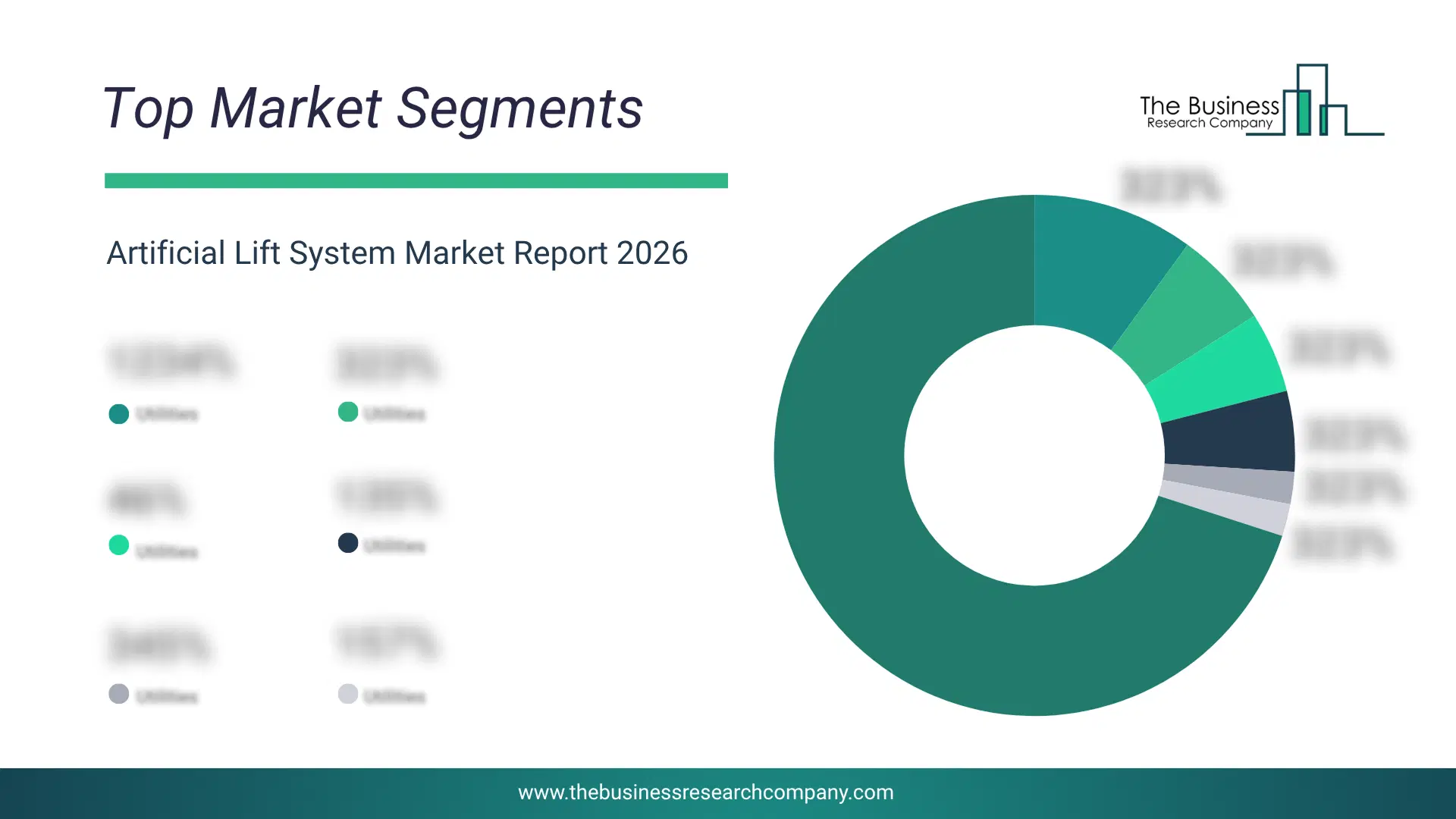
Global Artificial Lift System Market Segmentation
1) By Type: ESP, PCP, Gas Lift, Rod lift, Other Types 2) By Mechanism: Pump Assisted, Gas Assisted 3) By Application: Onshore, Offshore 4) By Well Type: Horizontal, Vertical Subsegments: 1) By Electric Submersible Pump (ESP): Standard ESP Systems, High-Temperature ESP Systems, Offshore ESP Systems 2) By Progressing Cavity Pump (PCP): Standard PCP Systems, High-Viscosity PCP Systems, Offshore PCP Systems 3) By Gas Lift: Continuous Gas Lift, Intermittent Gas Lift, Dual Gas Lift Systems 4) By Rod Lift: Beam Pumping Systems, Pump Jack Systems, Variable Speed Rod Pumping Systems 5) By Other Types: Hydraulic Lift Systems, Pneumatic Lift Systems, Jet Pump Systems The top segments in the artificial lift system market will be: • ESP (Electric Submersible Pump) will reach $6.03 Billion by 2030. • Rod Lift will reach $5.2 Billion by 2030. • Gas Lift will reach $3.88 Billion by 2030. • PCP (Progressing Cavity Pump) will reach $2.15 Billion by 2030. • Other Types will reach $1.2 Billion by 2030.What Is The Driver Of The Artificial Lift System Market?
The increase in production of oil is expected to propel the growth of the artificial lift systems market going forward. Artificial lift systems are used in oil wells to increase the pressure within the reservoirs and increase the movement of oil to the surface. These systems are extensively used in oil production wells when natural drive energy is insufficient to increase the movement of oil to the surface. Though the oil wells possess required natural pressure during the initial stages of production, the pressure decreases over time and increases the demand for artificial lift systems for effective production. For instance, in November 2023, according to the International Energy Agency, a France-based intergovernmental organisation, the global oil demand will increase by 1.5 million barrels per day in 2024, reaching approximately 102.4 million barrels per day. Therefore, the increase in the production of oil is driving the artificial lift systems industry.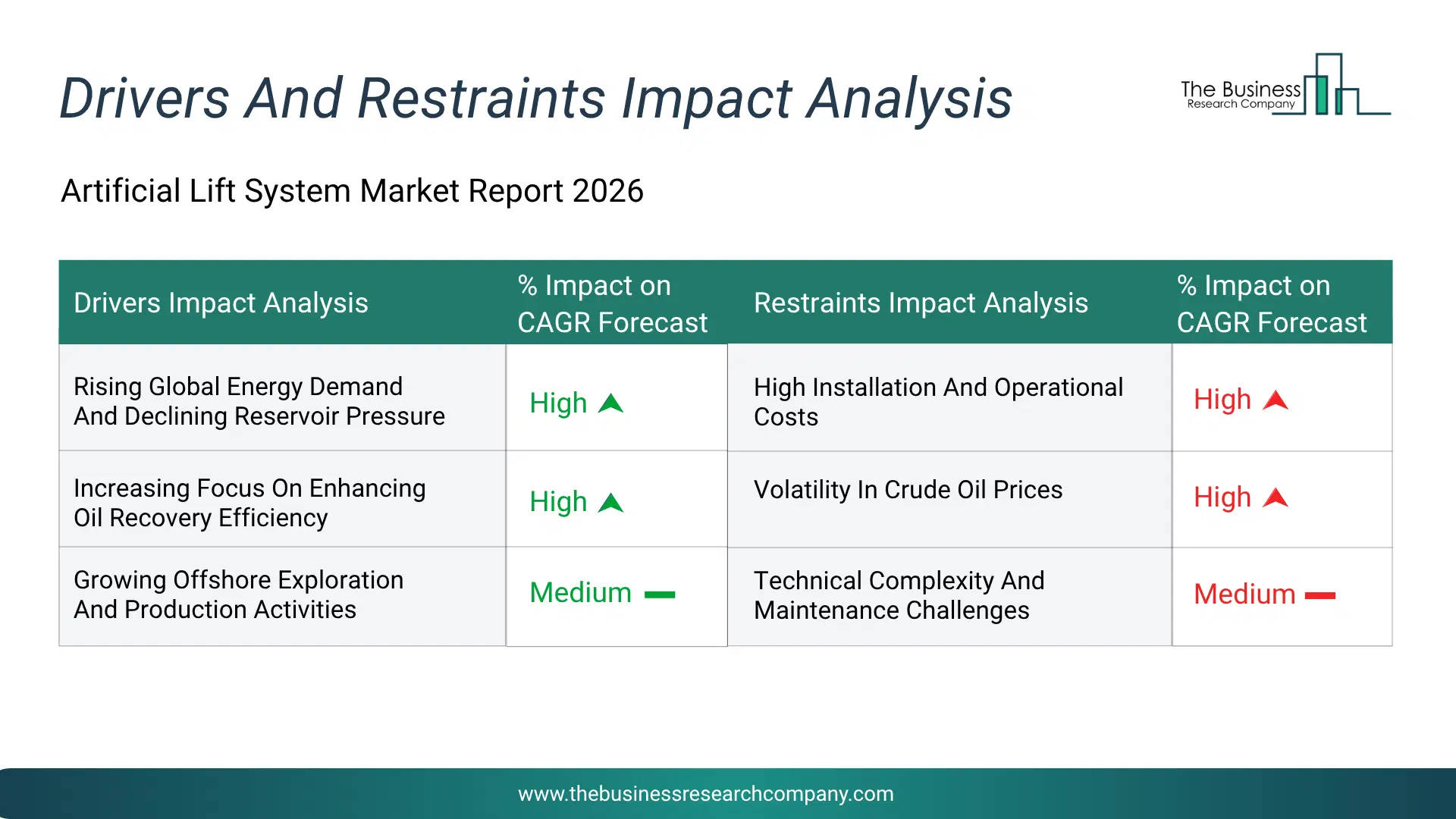
Infographic Chart Showing Key Market Drivers Analysis And Restraints For Artificial Lift System Market
The chart presents an impact analysis of key drivers and restraints, quantifying their relative influence on the market's growth rate and helping assess the balance between growth enablers and limiting factors. This chart offers a high-level perspective; the full report contains more detailed insights.
How Will The Drivers Impact Growth In The Global Artificial Lift System Market?
• Rising Global Energy Demand And Declining Reservoir Pressure (High) – During the forecast period, the rising global energy demand and declining reservoir pressure is expected to become a key growth driver for the artificial lift system market by 2030. Rising global energy demand and declining reservoir pressure acts as a major driver for the artificial lift system market because mature oil fields are experiencing reduced natural pressure, making it difficult to extract hydrocarbons efficiently. As easily accessible reserves deplete, operators increasingly rely on artificial lift technologies to maintain and enhance production rates. This ensures continued output from aging wells while meeting the growing global demand for energy. Artificial lift systems help optimize recovery rates and extend the operational life of wells. This growing dependency significantly boosts the adoption of advanced lifting solutions across oilfields. • Increasing Focus On Enhancing Oil Recovery Efficiency (High) – During the forecast period, the increasing focus on enhancing oil recovery efficiency is expected to emerge as a major factor driving the expansion of the artificial lift system market by 2030. Increasing focus on enhancing oil recovery efficiency acts as a major driver for the artificial lift system market because oil and gas companies aim to maximize extraction from existing reserves rather than investing heavily in new exploration. Artificial lift technologies enable operators to improve production efficiency and recover a higher percentage of hydrocarbons from wells. This is especially important in cost-sensitive environments where profitability depends on optimized output. Advanced lifting solutions reduce operational inefficiencies and improve flow rates. • Growing Offshore Exploration And Production Activities (Medium) – During the forecast period, the growing offshore exploration and production activities is expected to act as a key growth catalyst for the artificial lift system market by 2030. Growing offshore exploration and production activities acts as a major driver for the artificial lift system market because increasing investments in deepwater and ultra-deepwater reserves require efficient lifting technologies to ensure stable production. Offshore wells often face complex conditions and pressure limitations, making artificial lift systems essential for continuous extraction. These systems support secure and efficient oil recovery in challenging environments. Expansion of offshore projects across regions creates sustained demand for advanced lifting solutions.How Will The Restraints Impact Growth In The Global Artificial Lift System Market?
• High Installation And Operational Costs (High) – During the forecast period, the high installation and operational costs act as a major restraint on the artificial lift system market because these systems require significant capital investment for equipment procurement, installation, and infrastructure development. Advanced artificial lift technologies such as electric submersible pumps and gas lift systems involve expensive components and specialized engineering support. In addition to initial setup costs, ongoing expenses related to maintenance, monitoring, power consumption, and repairs further increase the operational burden on oilfield operators. Smaller exploration and production companies often face financial limitations, restricting their ability to adopt advanced lifting solutions. The cost challenge becomes more severe in low-producing or marginal wells where return on investment may be uncertain. Harsh operating environments also increase wear and tear, leading to frequent servicing requirements and higher lifecycle costs. Furthermore, fluctuations in crude oil prices make companies cautious about investing in high-cost production enhancement technologies. The requirement for skilled labor and technical expertise additionally adds to operational expenditure. As a result, high installation and operational costs limit large-scale adoption and slow the overall growth of the artificial lift system market. • Volatility In Crude Oil Prices (High) – During the forecast period, the volatility in crude oil prices significantly restrains the artificial lift system market by creating uncertainty in upstream investment decisions. When oil prices decline, exploration and production companies tend to reduce capital expenditure, including spending on artificial lift installations and upgrades. This directly impacts demand for lifting systems, as operators delay or cancel projects to maintain profitability. Frequent price fluctuations also make long-term planning difficult, discouraging investments in advanced or high-cost lift technologies. Consequently, inconsistent demand patterns hinder steady market expansion and revenue generation. • Technical Complexity And Maintenance Challenges (Medium) – During the forecast period, the technical complexity and maintenance challenges act as restraints by increasing operational risks and downtime in artificial lift systems. These systems require skilled personnel for installation, monitoring, and troubleshooting, which may not be readily available in all regions. Frequent maintenance needs, especially in harsh well conditions, can lead to production interruptions and increased operational costs. Equipment failures or inefficiencies can also reduce overall recovery rates, impacting profitability. As a result, operators may hesitate to adopt or upgrade systems, thereby limiting market growth potential.Key Players In The Global Artificial Lift System Market
Major companies operating in the artificial lift system market are Lufkin Industries, Harbison-Fischer, Liberty Lift Solutions LLC, Accudyne Industries, Weatherford Rod Lift Systems, Apergy Artificial Lift Technologies, Oiltools International Services, Levare Artificial Lift Services, Valiant Artificial Lift Solutions LLC, Upwing Energy Inc., Production Lift Companies, Alkhorayef Petroleum Company, Ambyint Inc., ZILift Ltd., Aker Solutions ASA, Hess Services Inc., Mustang Pump Services Ltd., JJ Tech, Petroleum Lift Systems, Graco Oilfield Services, MHWirth AS, PCM Artificial Lift Solutions, NETZSCH Pumps & Systems, Schlumberger REDA HPS Division, Novomet FWR Division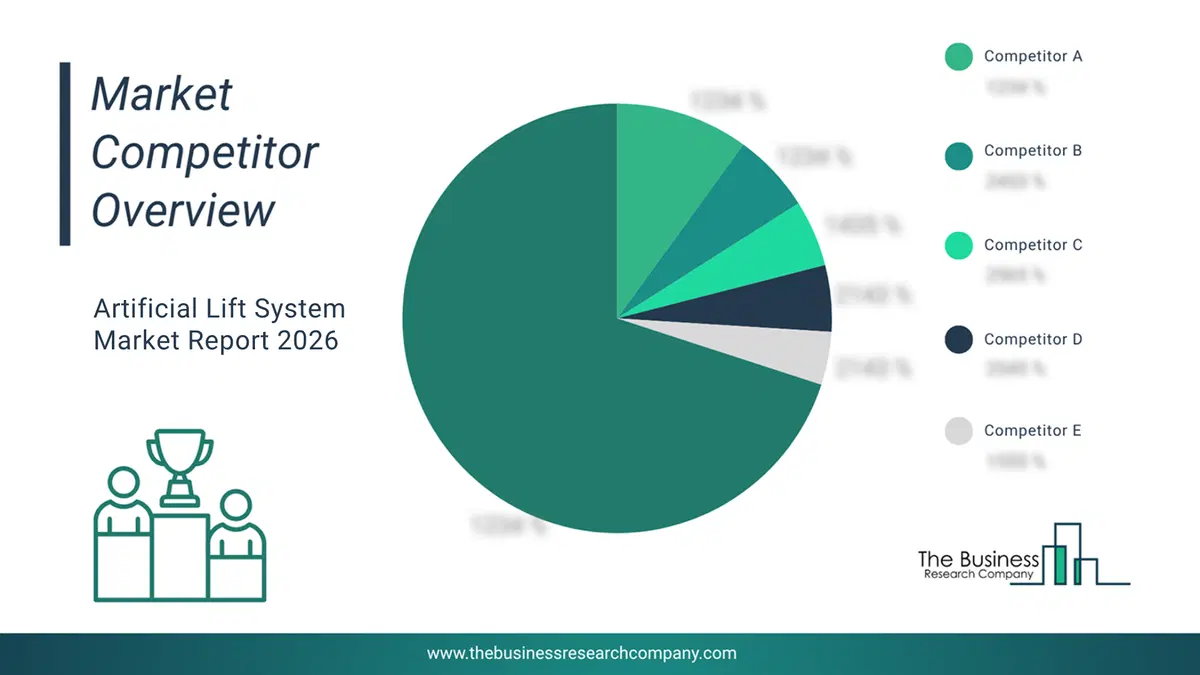
This chart is for illustrative purposes; the full report includes a detailed competitor analysis and comprehensive overview of the top 10 companies in the market.
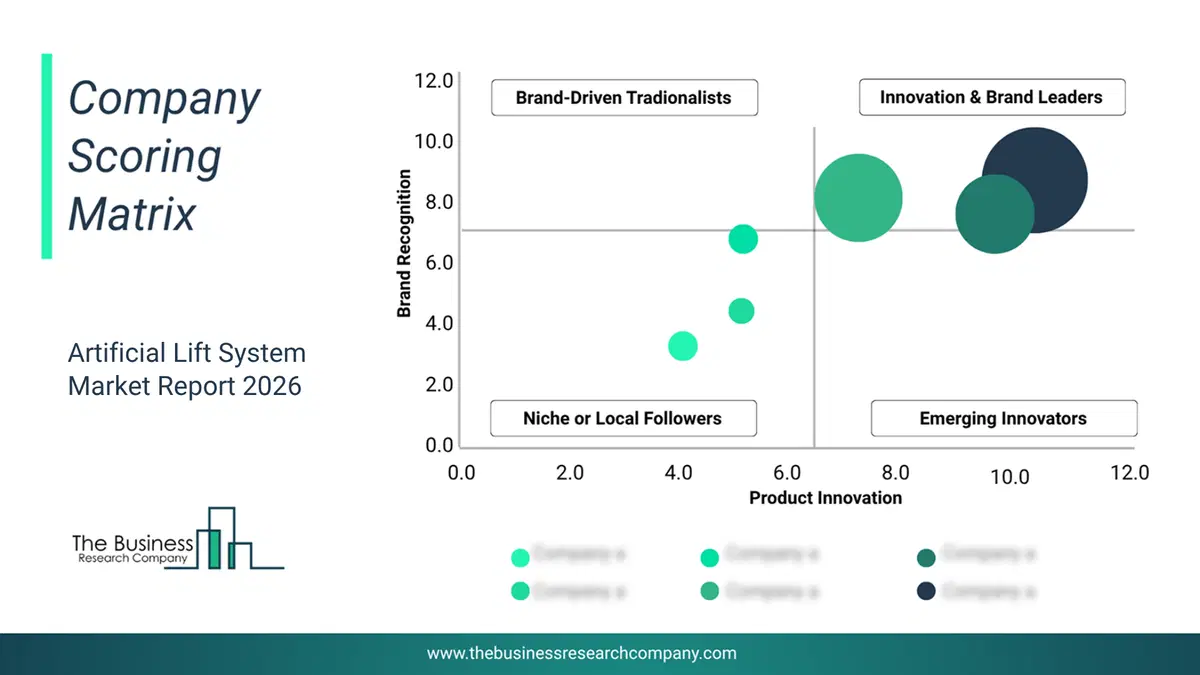
This chart maps companies by product innovation and brand strength, with bubble size indicating relative revenue, helping identify market leaders, challengers, and niche players. This is an illustrative chart; the full report provides a complete and accurate competitive analysis.
Global Artificial Lift System Market Trends and Insights
Major companies operating in the artificial lift systems market are focusing on developing advanced products and technologies to improve operational efficiency, reduce costs, and enhance well performance. For instance, in April 2024, Schlumberger Limited, a US-based technology company, launched two advanced artificial lift systems: the Reda Agile compact wide-range electric submersible pump (ESP) system and the rodless Reda PowerEdge electric submersible progressing cavity pump (ESPCP) system. Linked to digital services for live monitoring and real-time optimization, these systems enhance operational stability, allow quicker installation and production, and reduce power consumption, operating costs, and CO2 emissions. Utilizing a single PowerEdge ESPCP system for the remaining life of a well, instead of traditional rod lift installations in unconventional wells, minimizes workovers and production delays.What Are Latest Mergers And Acquisitions In The Artificial Lift System Market?
In June 2025, Baker Hughes, a US-based manufacturer of artificial lift systems, partnered with Repsol to deploy new AI-powered functionality in the Leucipa automated field production solution. Through this collaboration, Baker Hughes aims to enhance its artificial lift solutions by integrating a generative AI virtual assistant and the Leucipa Lift Optimizer, which streamlines plunger lift well operations, reduces monitoring time for engineers, and improves production efficiency for oil and gas operators. Repsol is a Spain-based energy and petrochemical company.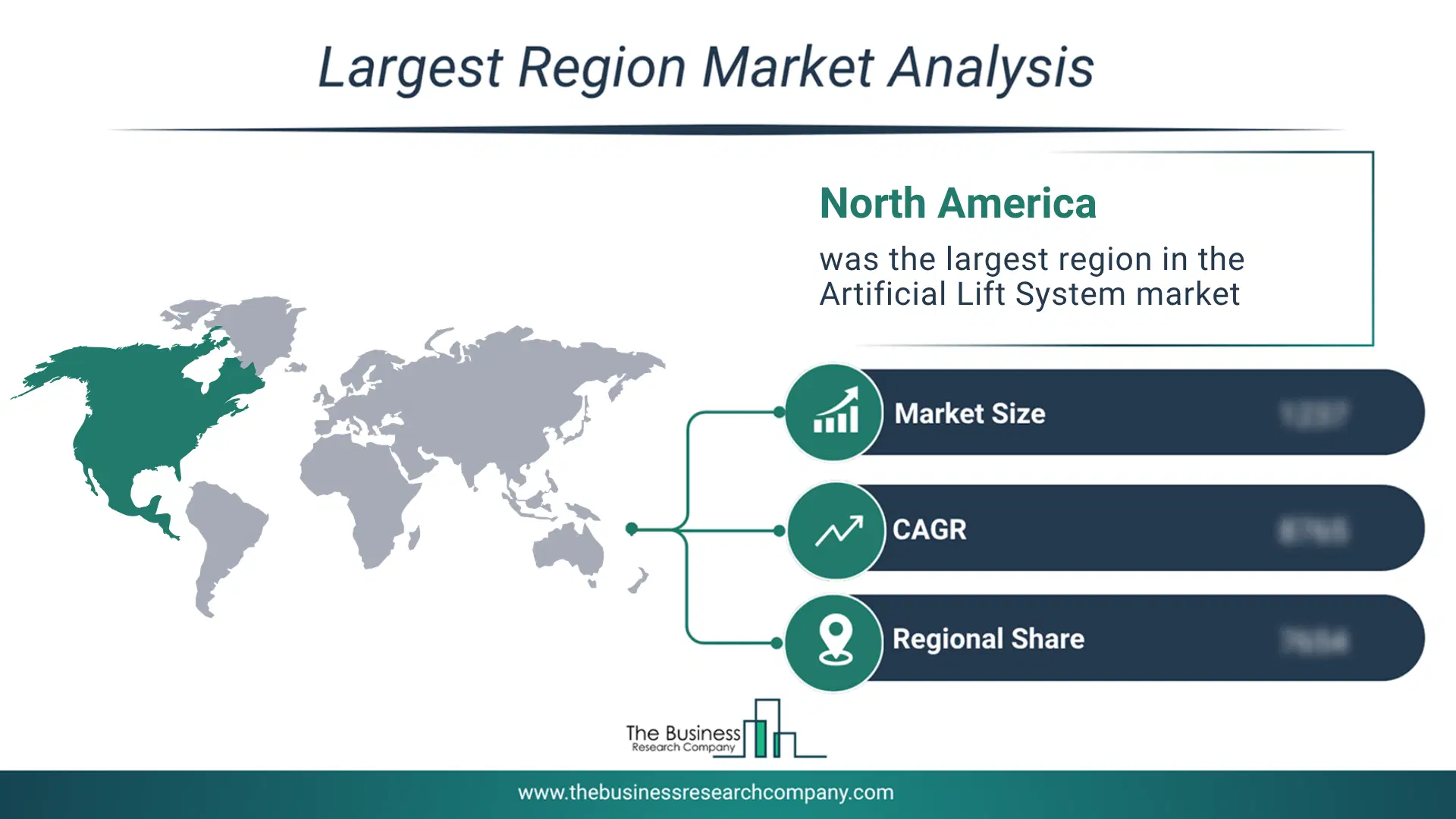
Regional Outlook
North America was the largest region in the artificial lift systems market in 2025. The regions covered in this market report are Asia-Pacific, South East Asia, Western Europe, Eastern Europe, North America, South America, Middle East, Africa The countries covered in this market report are Australia, Brazil, China, France, Germany, India, Indonesia, Japan, Taiwan, Russia, South Korea, UK, USA, Canada, Italy, Spain.What Defines the Artificial Lift System Market?
The artificial lift systems market consists of revenues earned by entities by providing lifting services such as sucker-rod (beam) pumping, gas lift and intermittent gas lift, reciprocating and jet hydraulic pumping systems, plunger lift, and others. The market value includes the value of related goods sold by the service provider or included within the service offering. The artificial lift systems market also includes sales of pump jack, plunger lift, high pressure control valve, pipeline, injection tubing, downhole assembly, and positive displace or jet pump, which are used in providing lifting services. Values in this market are ‘factory gate’ values, that is the value of goods sold by the manufacturers or creators of the goods, whether to other entities (including downstream manufacturers, wholesalers, distributors and retailers) or directly to end customers. The value of goods in this market includes related services sold by the creators of the goods.How is Market Value Defined and Measured?
The market value is defined as the revenues that enterprises gain from the sale of goods and/or services within the specified market and geography through sales, grants, or donations in terms of the currency (in USD unless otherwise specified). The revenues for a specified geography are consumption values that are revenues generated by organizations in the specified geography within the market, irrespective of where they are produced. It does not include revenues from resales along the supply chain, either further along the supply chain or as part of other products.
This chart presents market attractiveness based on a quantitative evaluation of growth, competition, strategic alignment, and risk, offering a clear view of opportunity areas for decision-making. This chart is for illustrative purposes; the full report contains the complete analysis.

This chart highlights the Total Addressable Market (TAM) by estimating the maximum revenue opportunity using an assumption-driven approach, supporting strategic planning and opportunity sizing across markets. The chart is illustrative; the full report provides a more comprehensive analysis.
What Key Data and Analysis Are Included in the Artificial Lift System Market Report 2026?
The artificial lift system market research report is one of a series of new reports from The Business Research Company that provides market statistics, including industry global market size, regional shares, competitors with the market share, detailed market segments, market trends and opportunities, and any further data you may need to thrive in the artificial lift system industry. The market research report delivers a complete perspective of everything you need, with an in-depth analysis of the current and future state of the industry.Artificial Lift System Market Report Forecast Analysis
| Report Attribute | Details |
|---|---|
| Market Size Value In 2026 | $13.27 billion |
| Revenue Forecast In 2030 | $18.68 billion |
| Growth Rate | CAGR of 8.9% from 2026 to 2030 |
| Base Year For Estimation | 2025 |
| Actual Estimates/Historical Data | 2020-2025 |
| Forecast Period | 2026 - 2030 |
| Market Representation | Revenue in USD Billion and CAGR from 2026 to 2030 |
| Segments Covered | Type, Mechanism, Application, Well Type |
| Regional Scope | Asia-Pacific, Western Europe, Eastern Europe, North America, South America, Middle East, Africa |
| Country Scope | The countries covered in the report are Australia, Brazil, China, France, Germany, India, Indonesia, Japan, Taiwan, Russia, South Korea, UK, USA, Canada, Italy, Spain. |
| Key Companies Profiled | Lufkin Industries, Harbison-Fischer, Liberty Lift Solutions LLC, Accudyne Industries, Weatherford Rod Lift Systems, Apergy Artificial Lift Technologies, Oiltools International Services, Levare Artificial Lift Services, Valiant Artificial Lift Solutions LLC, Upwing Energy Inc., Production Lift Companies, Alkhorayef Petroleum Company, Ambyint Inc., ZILift Ltd., Aker Solutions ASA, Hess Services Inc., Mustang Pump Services Ltd., JJ Tech, Petroleum Lift Systems, Graco Oilfield Services, MHWirth AS, PCM Artificial Lift Solutions, NETZSCH Pumps & Systems, Schlumberger REDA HPS Division, Novomet FWR Division |
| Customization Scope | Request for Customization |
| Pricing And Purchase Options | Explore Purchase Options |