
Ascorbic Acid Market Report 2026
Global Outlook – By Type (Calcium Ascorbate, Sodium Ascorbate, Magnesium Ascorbate, Potassium Ascorbate, D-Isoascorbic Ascorbate), By Grade (Pharmaceuticals Grade, Food Grade, Other Grades), By Distribution Channel (Online, Offline), By Application (Food And Beverages, Pharmaceutical, Cosmetics, Chemicals, Agriculture, Other Applications) – Market Size, Trends, Strategies, and Forecast to 2030
Ascorbic Acid Market Overview
• Ascorbic Acid market size has reached to $1.68 billion in 2025 • Expected to grow to $2.34 billion in 2030 at a compound annual growth rate (CAGR) of 6.9% • Growth Driver: Addressing Chronic Diseases And Enhancing Global Health • Market Trend: Unveiling Fiber Interlaced Liposomal Technology For Enhanced Ascorbic Acid Delivery And Bioavailability In The Market • Asia-Pacific was the largest region and fastest growing region.Market Gains By 2030 – Top Opportunities By Segment
Market Gain identifies the most promising market opportunities by highlighting the segments or products expected to generate the highest incremental revenue growth over the next five years.
What Is Covered Under Ascorbic Acid Market?
Ascorbic acid, also known as vitamin C, is a white, crystalline, water-soluble organic compound obtained from plants of the citrus family that resembles carbohydrates and is used as a class of medications called antioxidants in food and beverages, among others. The main types of ascorbic acid include calcium ascorbate, sodium ascorbate, magnesium ascorbate, potassium ascorbate, and D-isoascorbic ascorbate. Calcium ascorbate is a calcium salt of ascorbic acid that is a white or yellow crystalline powder, used as a preservative in food, enhancing immunological performance, healing tissues, and others. The different grades include pharmaceutical grades, food grades, and others, produced in forms such as tablets, tonics, and injections. The distribution channels included are online and offline, applied in food and beverages, pharmaceuticals, cosmetics, chemicals, agriculture, and other.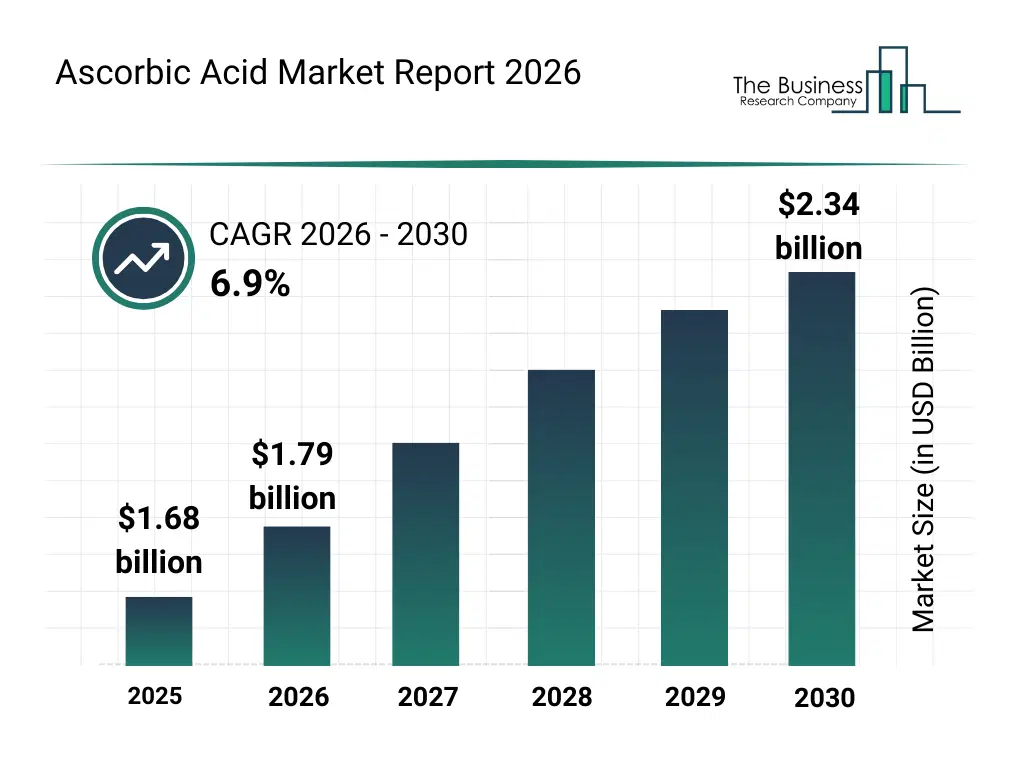
What Is The Ascorbic Acid Market Size and Share 2026?
The ascorbic acid market size has grown strongly in recent years. It will grow from $1.68 billion in 2025 to $1.79 billion in 2026 at a compound annual growth rate (CAGR) of 6.9%. The growth in the historic period can be attributed to expansion of food and beverage fortification, growth of pharmaceutical manufacturing, increasing awareness of vitamin supplements, rising use in antioxidant formulations, availability of fermentation-based production methods.What Is The Ascorbic Acid Market Growth Forecast?
The ascorbic acid market size is expected to see strong growth in the next few years. It will grow to $2.34 billion in 2030 at a compound annual growth rate (CAGR) of 6.9%. The growth in the forecast period can be attributed to increasing demand for dietary supplements, rising focus on preventive healthcare, expansion of cosmetic anti-aging products, growing use in agricultural applications, increasing investments in nutraceutical manufacturing. Major trends in the forecast period include increasing use of ascorbic acid in functional foods, rising demand from pharmaceutical formulations, growing adoption in cosmetic applications, expansion of stabilized vitamin c derivatives, enhanced focus on immune health products.
Global Ascorbic Acid Market Segmentation
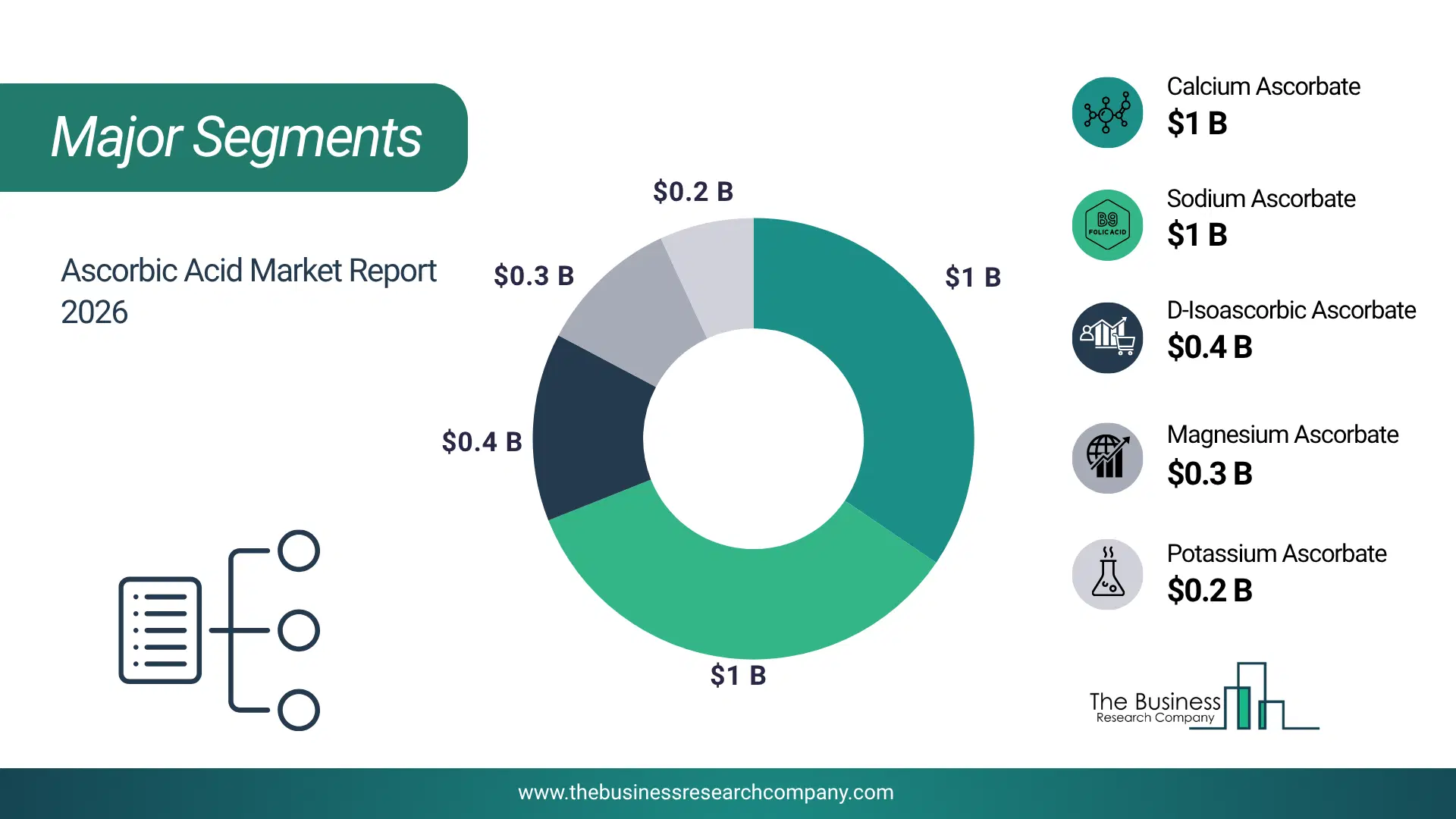
1) By Type: Calcium Ascorbate, Sodium Ascorbate, Magnesium Ascorbate, Potassium Ascorbate, D-Isoascorbic Ascorbate 2) By Grade: Pharmaceuticals Grade, Food Grade, Other Grades 3) By Distribution Channel: Online, Offline 4) By Application: Food And Beverages, Pharmaceutical, Cosmetics, Chemicals, Agriculture, Other Applications Subsegments: 1) By Calcium Ascorbate: Powdered Calcium Ascorbate, Granulated Calcium Ascorbate 2) By Sodium Ascorbate: Powdered Sodium Ascorbate, Granulated Sodium Ascorbate 3) By Magnesium Ascorbate: Powdered Magnesium Ascorbate, Granulated Magnesium Ascorbate 4) By Potassium Ascorbate: Powdered Potassium Ascorbate, Granulated Potassium Ascorbate 5) By D-Isoascorbic Ascorbate: Powdered D-Isoascorbic Ascorbate, Granulated D-Isoascorbic Ascorbate The top segments in the ascorbic acid market will be: • Calcium Ascorbate will reach $0.77 Billion by 2030. • Sodium Ascorbate will reach $0.64 Billion by 2030. • D-Isoascorbic Ascorbate will reach $0.43 Billion by 2030. • Magnesium Ascorbate will reach $0.33 Billion by 2030. • Potassium Ascorbate will reach $0.23 Billion by 2030.What Is The Driver Of The Ascorbic Acid Market?
The rising need to reduce the risk of chronic diseases is expected to propel the growth of the ascorbic acid market going forward. Chronic diseases are long-term illnesses that can usually be treated but not cured, including cardiovascular diseases, cancers, chronic respiratory diseases, and diabetes. The consumption of ascorbic acid and related products can help slow the progression of chronic diseases and improve patients’ overall health. For instance, in November 2023, according to the World Health Organization (WHO), a Switzerland-based global health agency, non-communicable diseases (NCDs) remained the world’s leading causes of death in 2023, accounting for 41 million deaths each year, equivalent to 74% of all global deaths. Therefore, the rising need to reduce the risk of chronic diseases is driving the growth of the ascorbic acid industry.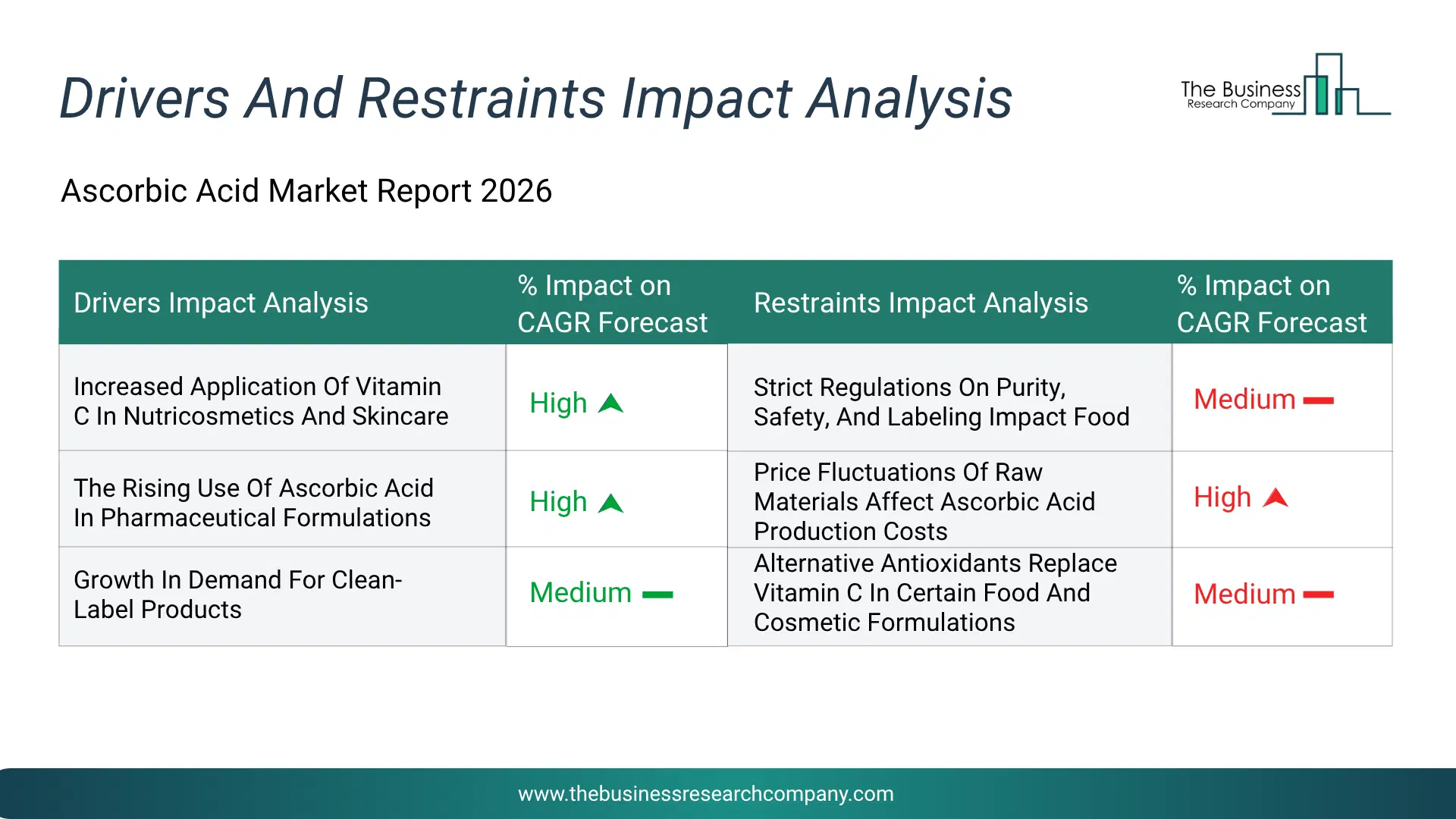
Infographic Chart Showing Key Market Drivers Analysis And Restraints For Ascorbic Acid Market
The chart presents an impact analysis of key drivers and restraints, quantifying their relative influence on the market's growth rate and helping assess the balance between growth enablers and limiting factors. This chart offers a high-level perspective; the full report contains more detailed insights.
How Will The Drivers Impact Growth In The Global Ascorbic Acid Market?
• Increased Application Of Vitamin C In Nutricosmetics And Skincare (High) – During the forecast period, the increased application of vitamin c in nutricosmetics and skincare is expected to become a key growth driver for the ascorbic acid market by 2030. Manufacturers are increasingly incorporating ascorbic acid into beauty supplements, serums, creams, and anti-aging formulations due to its antioxidant properties and role in collagen synthesis. Growing consumer preference for products that support skin health, radiance, and protection against environmental stressors is accelerating product adoption. Cosmetic and personal care companies are also expanding their portfolios with vitamin c-enriched offerings to address evolving beauty and wellness demands. • The Rising Use Of Ascorbic Acid In Pharmaceutical Formulations (High) – During the forecast period, the rising use of ascorbic acid in pharmaceutical formulations is expected to emerge as a major factor driving the expansion of the ascorbic acid market by 2030. Pharmaceutical manufacturers are increasingly utilizing ascorbic acid in tablets, capsules, injectable products, and combination therapies due to its nutritional and therapeutic benefits. The growing focus on immune support, preventive healthcare, and nutritional deficiency management is supporting wider incorporation of vitamin c across healthcare products. Additionally, ongoing product development activities aimed at improving patient wellness and recovery outcomes are strengthening demand. • Growth In Demand For Clean-Label Products (Medium) – During the forecast period, the growth in demand for clean-label products is expected to act as a key growth catalyst for the ascorbic acid market by 2030. Consumers are increasingly seeking recognizable and naturally derived ingredients in food, beverage, and nutritional products, encouraging manufacturers to utilize ascorbic acid as a trusted functional ingredient. The shift toward transparency, simplified ingredient lists, and minimally processed formulations is creating new opportunities for vitamin c applications. Food producers are also leveraging ascorbic acid for its antioxidant and preservation functions while maintaining clean-label positioning.How Will The Restraints Impact Growth In The Global Ascorbic Acid Market?
• Strict Regulations On Purity, Safety, And Labeling Impact Food (High) – During the forecast period, the strict regulations on purity, safety, and labeling are restraining the ascorbic acid market by increasing compliance complexity for manufacturers. Regulatory authorities impose stringent standards on the quality and composition of vitamin C used in food, pharmaceuticals, and cosmetics. Companies must invest in advanced testing, certification, and documentation processes to meet these requirements, which raises operational costs. Any deviation from prescribed norms can lead to product recalls, penalties, or market restrictions. These regulatory pressures can delay product approvals and limit the speed of new product launches. Smaller manufacturers, in particular, face challenges in meeting global compliance standards. Consequently, it impacts the market by increasing barriers to entry and restricting flexible production and distribution. • Price Fluctuations Of Raw Materials Affect Ascorbic Acid Production Costs (High) – During the forecast period, the price fluctuations of raw materials are restraining the ascorbic acid market by creating instability in production costs and profit margins. The manufacturing of ascorbic acid depends on key raw materials such as glucose and sorbitol, whose prices are influenced by agricultural output and supply chain conditions. Variations in raw material costs directly impact overall production expenses, making pricing strategies challenging for manufacturers. This uncertainty can reduce profitability and discourage long-term investment in production expansion. Additionally, sudden cost increases may be passed on to end users, affecting product affordability and demand. Supply chain disruptions and geopolitical factors can further intensify price volatility. Consequently, it impacts the market by introducing cost pressures and limiting consistent growth. • Alternative Antioxidants Replace Vitamin C In Certain Food And Cosmetic Formulations (Medium) – During the forecast period, the availability of alternative antioxidants is restraining the ascorbic acid market by offering substitute solutions in various applications. Ingredients such as tocopherols (vitamin E), polyphenols, and synthetic antioxidants are increasingly used in food preservation and cosmetic formulations. These alternatives may provide longer stability, better compatibility, or cost advantages in certain use cases. Manufacturers may shift toward these substitutes to enhance product performance or reduce formulation challenges associated with ascorbic acid. In cosmetics, stability issues of vitamin C can lead to preference for more stable derivatives or alternative compounds. This substitution trend reduces the exclusive dependence on ascorbic acid across industries. Consequently, it impacts the market by limiting demand growth and increasing competitive pressure from alternative ingredients.Key Players In The Global Ascorbic Acid Market
Major companies operating in the ascorbic acid market are Koninklijke DSM N.V., Northeast Pharmaceutical Group Co. Ltd., CSPC Pharmaceutical Group, Bactolac Pharmaceutical Inc., BASF SE, LabChem Inc., Muby Chemicals Pvt. Ltd., Foodchem International Corporation, Bayer AG, North China Pharmaceutical Group, Sigma-Aldrich Corporation, The Bountiful Company, Homart Pharmaceuticals Pty Ltd., Archer-Daniels-Midland Company, Amway Corporation, Tirlán Co-operative Society Limited, Changsha Natureway Co. Ltd., DSM Nutritional Products AG, Glanbia PLC, Gujchem Biotech, Hangzhou Go Top Peptide Biotech Co. Ltd., Hebei Welcome Pharmaceutical Co. Ltd., Huachang Pharmaceuticals, LGM Pharma LLC, Nutrilo GmbH, Shaanxi Iknow Biotechnology Co. Ltd., Shandong Luwei Pharmaceutical, Sichuan Tongsheng Amino Acid Co. Ltd.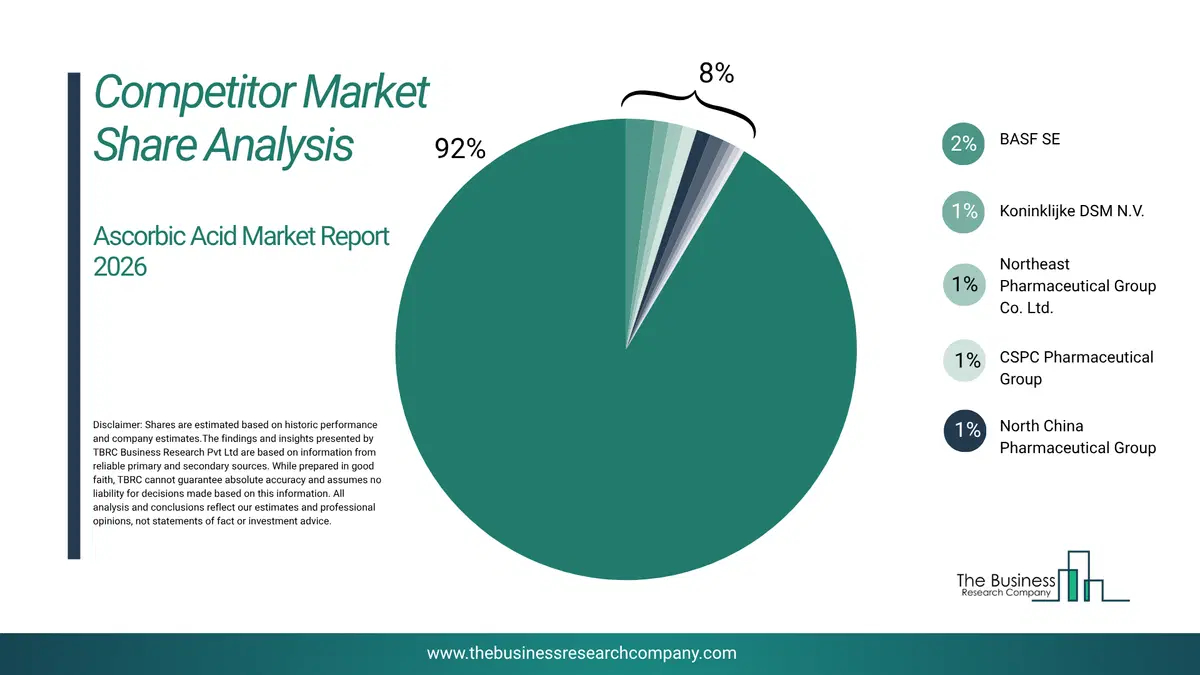
This chart is for illustrative purposes; the full report includes a detailed competitor analysis and comprehensive overview of the top 10 companies in the market.
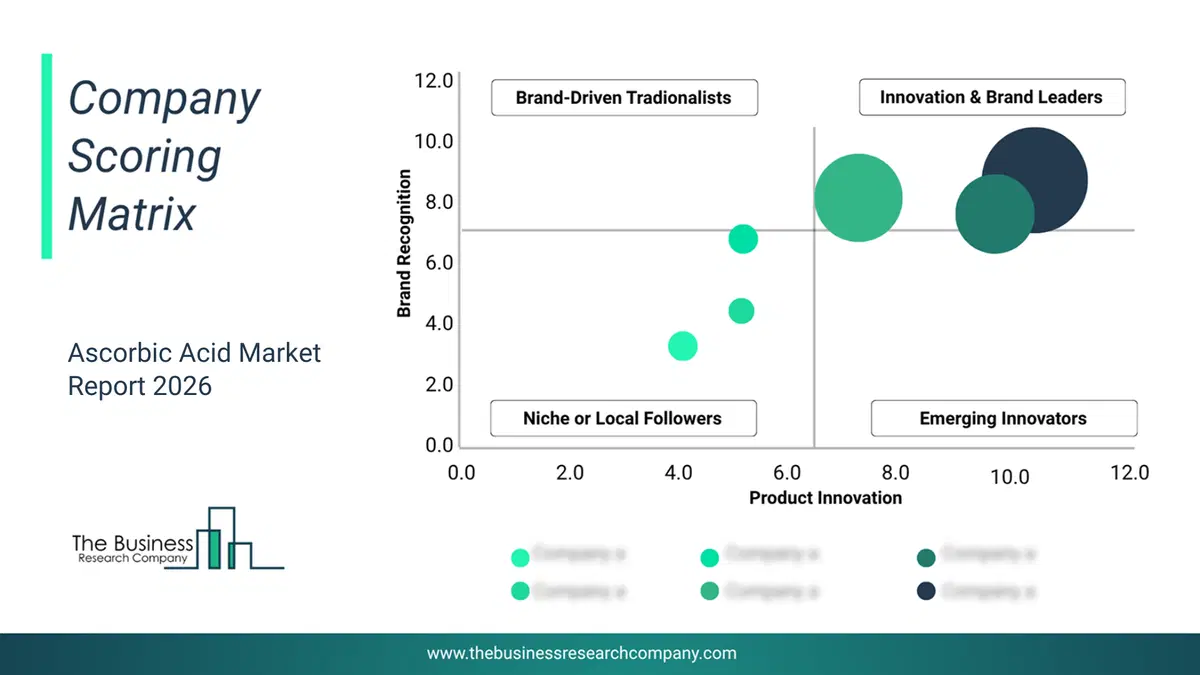
This chart maps companies by product innovation and brand strength, with bubble size indicating relative revenue, helping identify market leaders, challengers, and niche players. This is an illustrative chart; the full report provides a complete and accurate competitive analysis.
Global Ascorbic Acid Market Trends and Insights
Major companies operating in the ascorbic acid market are launching new technologies such as the Fiber Interlaced Liposomal to sustain their position in the market. Fiber Interlaced Liposomal technology is a type of technology that can convert the liquid liposomes to a novel stabilized form of powdered liposomes. For instance, in May 2023, Vidya Herbs, an India-based manufacturers of plant extracts and essential oils has launched a new technology to optimize the vitamin C through a Fiber Interlaced Liposomal (FIL) technology. Because of this technology, the dietary fibers and lecithin are well-integrated, and the spherical core structure of the powder is maintained, increasing the activity of the liposomes. The delivery vehicles for FIL slow down the release of VC, improve absorption, and lessen its breakdown in the gastrointestinal tract. Enhancing bioavailability and efficacy while ensuring prolonged release of biomolecules is the goal of equilibrium optimization.What Are Latest Mergers And Acquisitions In The Ascorbic Acid Market?
In February 2024, Shiseido Americas Corporation, a US-based company that offers revolutionary beauty products for skincare, acquired DDG Skincare Holdings LLC for an undisclosed amount. This strategic initiative seeks to strengthen Shiseido's portfolio by integrating a dermatologist-developed skincare line recognized for its innovative, science-driven products. DDG Skincare Holdings is a US-based company that provides ascorbic acid in its skincare products.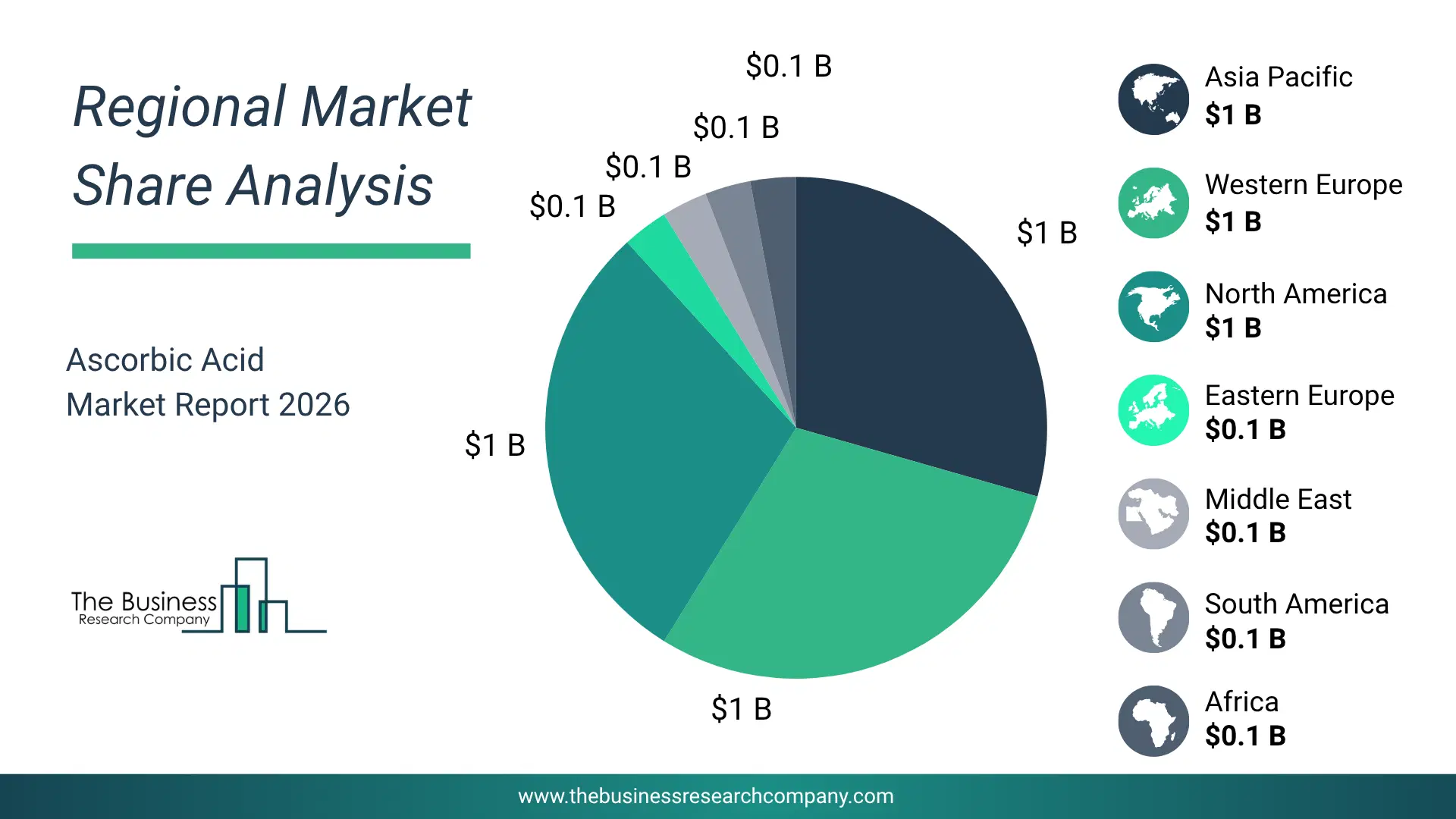
Regional Insights
Asia-Pacific was the largest region in the ascorbic acid market in 2025. Europe is expected to be the fastest-growing region in the forecast period. The regions covered in this market report are Asia-Pacific, South East Asia, Western Europe, Eastern Europe, North America, South America, Middle East, Africa The countries covered in this market report are Australia, Brazil, China, France, Germany, India, Indonesia, Japan, Taiwan, Russia, South Korea, UK, USA, Canada, Italy, SpainWhat Defines the Ascorbic Acid Market?
The ascorbic acid market consists of sales of dehydroascorbate, calcium threonate, xylonate, lyxonate, and L-ascorbic acid, industrial grade, cosmetic grade, and liquid and powder form. Values in this market are ‘factory gate’ values, that is the value of goods sold by the manufacturers or creators of the goods, whether to other entities (including downstream manufacturers, wholesalers, distributors, and retailers) or directly to end customers. The value of goods in this market includes related services sold by the creators of the goods.How is Market Value Defined and Measured?
The market value is defined as the revenues that enterprises gain from the sale of goods and/or services within the specified market and geography through sales, grants, or donations in terms of the currency (in USD unless otherwise specified). The revenues for a specified geography are consumption values that are revenues generated by organizations in the specified geography within the market, irrespective of where they are produced. It does not include revenues from resales along the supply chain, either further along the supply chain or as part of other products.
This chart presents market attractiveness based on a quantitative evaluation of growth, competition, strategic alignment, and risk, offering a clear view of opportunity areas for decision-making. This chart is for illustrative purposes; the full report contains the complete analysis.

This chart highlights the Total Addressable Market (TAM) by estimating the maximum revenue opportunity using an assumption-driven approach, supporting strategic planning and opportunity sizing across markets. The chart is illustrative; the full report provides a more comprehensive analysis.
What Key Data and Analysis Are Included in the Ascorbic Acid Market Report 2026?
The ascorbic acid market research report is one of a series of new reports from The Business Research Company that provides market statistics, including industry global market size, regional shares, competitors with the market share, detailed market segments, market trends and opportunities, and any further data you may need to thrive in the ascorbic acid industry. The market research report delivers a complete perspective of everything you need, with an in-depth analysis of the current and future state of the industry.Ascorbic Acid Market Report Forecast Analysis
| Report Attribute | Details |
|---|---|
| Market Size Value In 2026 | $1.79 billion |
| Revenue Forecast In 2030 | $2.34 billion |
| Growth Rate | CAGR of 6.9% from 2026 to 2030 |
| Base Year For Estimation | 2025 |
| Actual Estimates/Historical Data | 2020-2025 |
| Forecast Period | 2026 - 2030 |
| Market Representation | Revenue in USD Billion and CAGR from 2026 to 2030 |
| Segments Covered | Type, Grade, Distribution Channel, Application |
| Regional Scope | Asia-Pacific, Western Europe, Eastern Europe, North America, South America, Middle East, Africa |
| Country Scope | The countries covered in the report are Australia, Brazil, China, France, Germany, India, Indonesia, Japan, Taiwan, Russia, South Korea, UK, USA, Canada, Italy, Spain. |
| Key Companies Profiled | Koninklijke DSM N.V., Northeast Pharmaceutical Group Co. Ltd., CSPC Pharmaceutical Group, Bactolac Pharmaceutical Inc., BASF SE, LabChem Inc., Muby Chemicals Pvt. Ltd., Foodchem International Corporation, Bayer AG, North China Pharmaceutical Group, Sigma-Aldrich Corporation, The Bountiful Company, Homart Pharmaceuticals Pty Ltd., Archer-Daniels-Midland Company, Amway Corporation, Tirlán Co-operative Society Limited, Changsha Natureway Co. Ltd., DSM Nutritional Products AG, Glanbia PLC, Gujchem Biotech, Hangzhou Go Top Peptide Biotech Co. Ltd., Hebei Welcome Pharmaceutical Co. Ltd., Huachang Pharmaceuticals, LGM Pharma LLC, Nutrilo GmbH, Shaanxi Iknow Biotechnology Co. Ltd., Shandong Luwei Pharmaceutical, Sichuan Tongsheng Amino Acid Co. Ltd. |
| Customization Scope | Request for Customization |
| Pricing And Purchase Options | Explore Purchase Options |