
Atypical Hemolytic Uremic Syndrome Treatment Market Report 2026
Global Outlook – By Treatment Type (Complement Inhibitors, Plasma Exchange Therapy, Supportive Care, Antibiotics), By Route of Administration (Intravenous, Subcutaneous, Oral), By Technology (Genetic Testing And Diagnostic Tools, Realtime Monitoring And Complement Activation Technologies, Treatment Delivery Systems, Digital Health Solutions), By End User (Hospital, Speciality Clinics, Home care Settings, Ambulatory Care Centres) – Market Size, Trends, Strategies, and Forecast to 2030
Atypical Hemolytic Uremic Syndrome Treatment Market Overview
• Atypical Hemolytic Uremic Syndrome Treatment market size has reached to $1.73 billion in 2025 • Expected to grow to $2.46 billion in 2030 at a compound annual growth rate (CAGR) of 7.2% • Growth Driver: Rising Demand For Targeted Therapies Fuelling The Growth Of The Market Due To Enhanced Treatment Precision And Patient Outcomes • Market Trend: Targeted Antibody Therapies Gain Momentum In Fight Against Rare Immune Disorders • North America was the largest region in 2025 and Asia-Pacific is the fastest growing region.What Is Covered Under Atypical Hemolytic Uremic Syndrome Treatment Market?
Atypical hemolytic uremic syndrome (aHUS) refers to a rare, life-threatening condition characterized by abnormal blood clotting, leading to damage in small blood vessels and resulting in hemolytic anemia, low platelet count, and kidney injury. It is typically caused by genetic mutations or dysregulation in the complement system, which can lead to uncontrolled inflammation and vascular damage. The main types of atypical hemolytic uremic syndrome treatment are complement inhibitors, plasma exchange therapy, supportive care, and antibiotics. Complement inhibitors refers to therapeutic agents that block or modulate the activation of the complement system, a key component of the immune system involved in inflammation, immune response, and cell lysis. These are used for various routes of administration, including intravenous, subcutaneous, and oral. The various technologies include genetic testing and diagnostic tools, real-time monitoring and complement activation technologies, treatment delivery systems, and digital health solutions and are used by various end users such as specialty clinics, home care settings, and ambulatory care centers.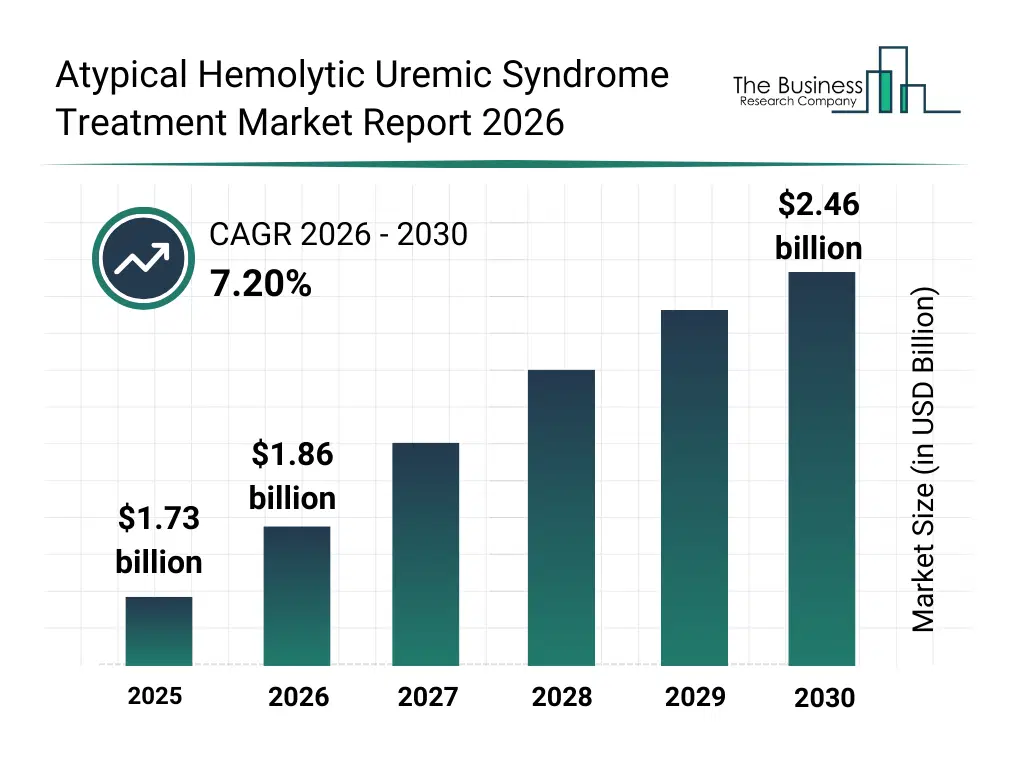
What Is The Atypical Hemolytic Uremic Syndrome Treatment Market Size and Share 2026?
The atypical hemolytic uremic syndrome treatment market size has grown strongly in recent years. It will grow from $1.73 billion in 2025 to $1.86 billion in 2026 at a compound annual growth rate (CAGR) of 7.2%. The growth in the historic period can be attributed to rare disease diagnosis growth, plasma exchange adoption, kidney failure cases, biologic drug approvals, hospital nephrology expansion.What Is The Atypical Hemolytic Uremic Syndrome Treatment Market Growth Forecast?
The atypical hemolytic uremic syndrome treatment market size is expected to see strong growth in the next few years. It will grow to $2.46 billion in 2030 at a compound annual growth rate (CAGR) of 7.2%. The growth in the forecast period can be attributed to precision medicine adoption, complement pathway research, orphan drug incentives, genetic screening programs, biologics innovation. Major trends in the forecast period include increased use of complement inhibitor therapy, growth of genetic diagnostic testing, expansion of long-term disease management, rising adoption of targeted biologics, focus on rare disease treatment access.
Global Atypical Hemolytic Uremic Syndrome Treatment Market Segmentation
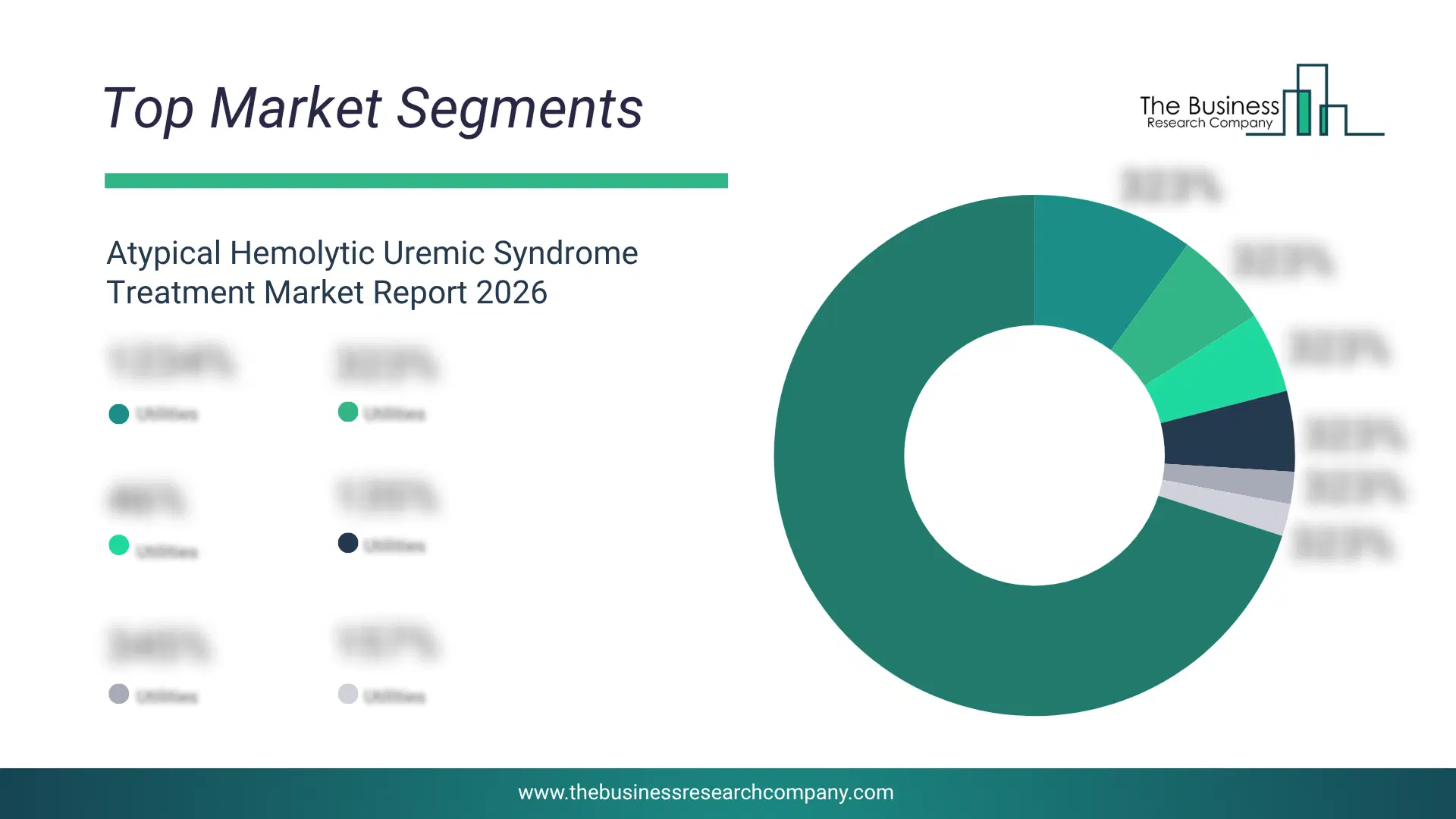
1) By Treatment Type: Complement Inhibitors, Plasma Exchange Therapy, Supportive Care, Antibiotics 2) By Route of Administration: Intravenous, Subcutaneous, Oral 3) By Technology: Genetic Testing And Diagnostic Tools, Realtime Monitoring And Complement Activation Technologies, Treatment Delivery Systems, Digital Health Solutions 4) By End User: Hospital, Speciality Clinics, Home care Settings, Ambulatory Care Centres Subsegments: 1) By Complement Inhibitors: Eculizumab, Ravulizumab, C5 Inhibitors, Factor H Inhibitors 2) By Plasma Exchange Therapy: Fresh Frozen Plasma (FFP) Exchange, Therapeutic Plasma Exchange (TPE), Plasma Filtration 3) By Supportive Care: Dialysis, Kidney Transplantation, Red Blood Cell Transfusions, Platelet Transfusions, Anticoagulants 4) By Antibiotics: Broad-Spectrum Antibiotics, Targeted Antibiotics, Prophylactic AntibioticsWhat Is The Driver Of The Atypical Hemolytic Uremic Syndrome Treatment Market?
The rising demand for targeted therapies is expected to propel the growth of the atypical hemolytic uremic syndrome treatment market going forward. Targeted therapies refer to the medical treatments that specifically target and interfere with molecular pathways involved in the growth and spread of diseases. The rising demand for targeted therapies is due to their ability to provide more precise treatments with fewer side effects, improve patient outcomes, and offer alternatives to traditional, less specific therapies. Atypical hemolytic uremic syndrome (aHUS) treatment supports targeted therapies by specifically blocking the overactivation of the complement system, which is the root cause of the disease, allowing for precise intervention that minimizes damage to blood vessels and kidneys. For instance, in October 2023, according to NHS England, a UK-based government agency, in England, 11 million hormone replacement therapy (HRT) items were prescribed, up 47% from 2021–22, with around 2.3 million patients receiving prescriptions, marking a 29% year-on-year increase. Therefore, the rising demand for targeted therapies is driving growth in the atypical hemolytic uremic syndrome treatment industry.Key Players In The Global Atypical Hemolytic Uremic Syndrome Treatment Market
Major companies operating in the atypical hemolytic uremic syndrome treatment market are F. Hoffmann-La Roche Ltd., Bristol-Myers Squibb Company, AstraZeneca plc, Novartis AG, Amgen Inc., Teva Pharmaceutical Industries Ltd., Chugai Pharmaceutical Co. Ltd., Alnylam Pharmaceuticals Inc., Vifor Pharma Ltd., Samsung Bioepis Co. Ltd., Fuji Pharma Co. Ltd., Aevitas Therapeutics Inc., Pharmasyntez JSC, Omeros Corporation, ChemoCentryx Inc., ISU Abxis Co. Ltd., Greenovation Biotech GmbH, Akari Therapeutics plc, NovelMed Therapeutics Inc., Eleva GmbH.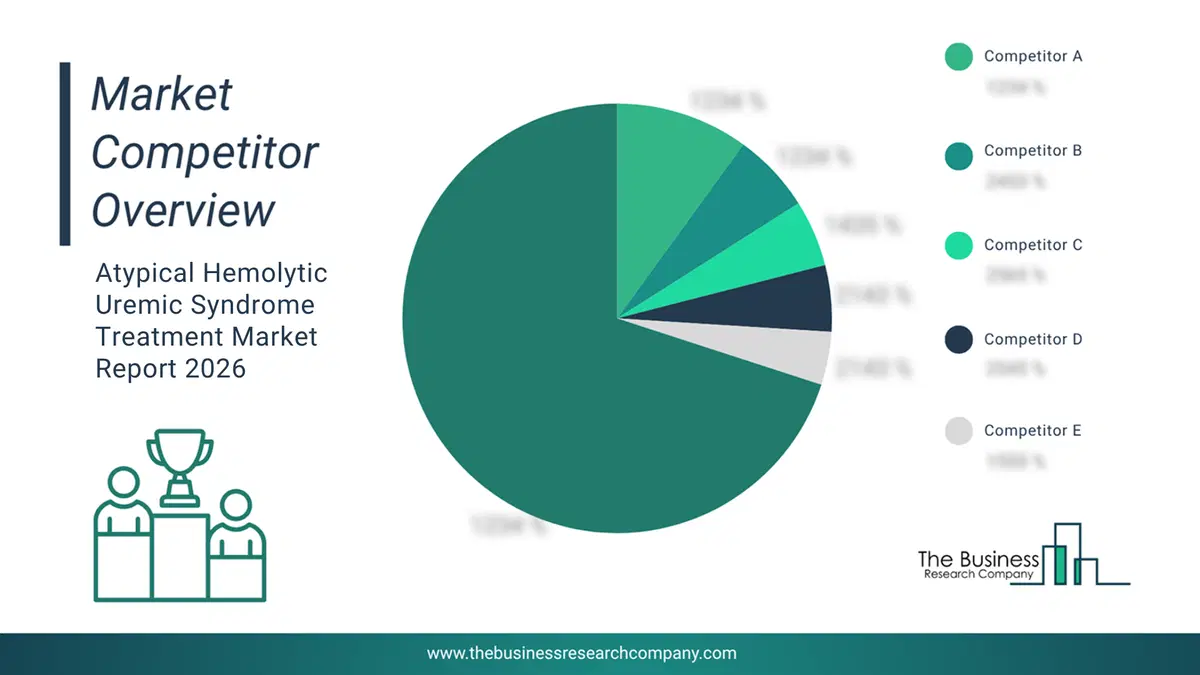
This chart is for illustrative purposes; the full report includes a detailed competitor analysis and comprehensive overview of the top 10 companies in the market.
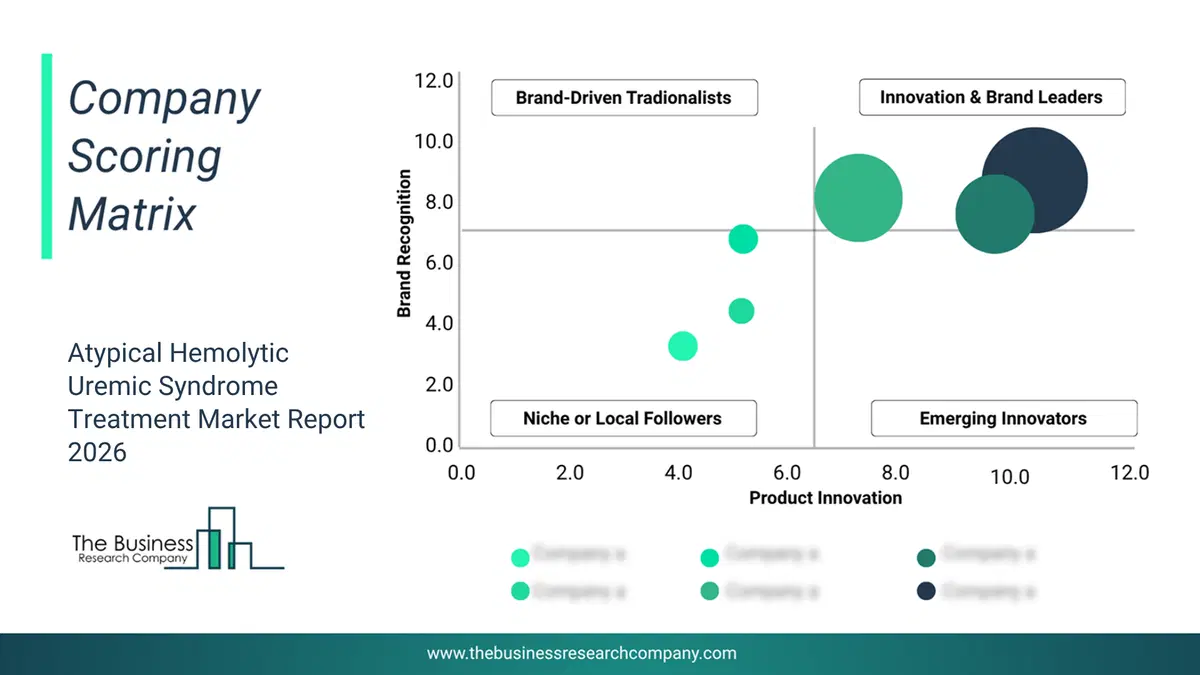
This chart maps companies by product innovation and brand strength, with bubble size indicating relative revenue, helping identify market leaders, challengers, and niche players. This is an illustrative chart; the full report provides a complete and accurate competitive analysis.
Global Atypical Hemolytic Uremic Syndrome Treatment Market Trends and Insights
Major companies operating in the atypical hemolytic uremic syndrome treatment market are focusing on developing innovative therapies, such as monoclonal antibody drugs, to enhance targeted complement inhibition and improve patient outcomes. Monoclonal antibody drugs are laboratory-made proteins that mimic the immune system's ability to fight harmful pathogens by specifically targeting and binding to certain proteins involved in disease processes. For instance, in January 2025, AstraZeneca Pharma India Limited, an India-based biopharmaceutical company, received approval from the Central Drugs Standard Control Organisation (CDSCO) to import, sell, and distribute eculizumab (marketed as Soliris) in India. These monoclonal antibodies specifically bind to complement protein C5, inhibiting its cleavage and thus blocking the formation of the terminal complement complex involved in immune-mediated cell destruction. It is used to treat rare and severe conditions such as paroxysmal nocturnal hemoglobinuria (PNH), atypical hemolytic uremic syndrome (aHUS), generalized myasthenia gravis, and neuromyelitis optica spectrum disorder by preventing complement-mediated damage.What Are Latest Mergers And Acquisitions In The Atypical Hemolytic Uremic Syndrome Treatment Market?
In October 2024, 3billion Inc., a South Korea-based precision medicine and genetic diagnostics company, entered into a partnership with AstraZeneca Korea, to revolutionize genetic diagnosis for atypical hemolytic uremic syndrome (aHUS). With this partnership, 3billion aims to leverage its advanced whole genome sequencing and AI-driven variant interpretation platform alongside AstraZeneca Korea's clinical expertise to improve early detection, accurate diagnosis, and treatment decision-making for aHUS patients. AstraZeneca Korea is a South Korea-basedcompany that offers medication for atypical hemolytic uremic syndrome.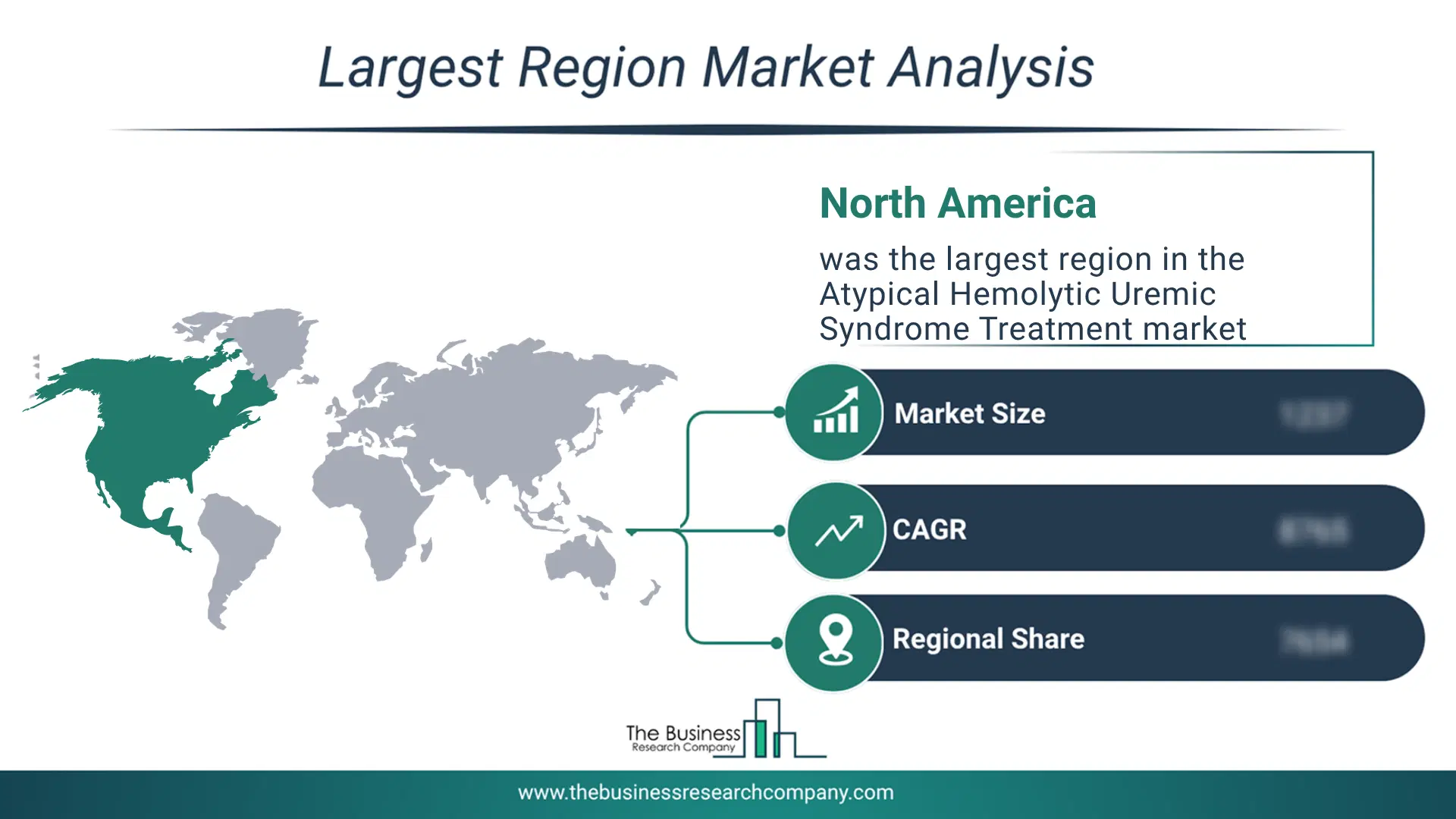
Regional Insights
North America was the largest region in the atypical hemolytic uremic syndrome treatment market in 2025. Asia-Pacific is expected to be the fastest-growing region in the forecast period. The regions covered in this market report are Asia-Pacific, South East Asia, Western Europe, Eastern Europe, North America, South America, Middle East, Africa. The countries covered in this market report are Australia, Brazil, China, France, Germany, India, Indonesia, Japan, Taiwan, Russia, South Korea, UK, USA, Canada, Italy, Spain.What Defines the Atypical Hemolytic Uremic Syndrome Treatment Market?
The atypical hemolytic uremic syndrome (aHUS) market consists of revenues earned by entities by providing services such as renal support and dialysis, genetic testing and counseling, long-term monitoring and follow-up. The market value includes the value of related goods sold by the service provider or included within the service offering. The atypical hemolytic uremic syndrome (aHUS) market also includes sales of immunosuppressive therapies, plasma exchange equipment, dialysis machines, and supportive care medications. Values in this market are ‘factory gate’ values, that is the value of goods sold by the manufacturers or creators of the goods, whether to other entities (including downstream manufacturers, wholesalers, distributors and retailers) or directly to end customers. The value of goods in this market includes related services sold by the creators of the goods.How is Market Value Defined and Measured?
The market value is defined as the revenues that enterprises gain from the sale of goods and/or services within the specified market and geography through sales, grants, or donations in terms of the currency (in USD unless otherwise specified). The revenues for a specified geography are consumption values that are revenues generated by organizations in the specified geography within the market, irrespective of where they are produced. It does not include revenues from resales along the supply chain, either further along the supply chain or as part of other products.
This chart presents market attractiveness based on a quantitative evaluation of growth, competition, strategic alignment, and risk, offering a clear view of opportunity areas for decision-making. This chart is for illustrative purposes; the full report contains the complete analysis.

This chart highlights the Total Addressable Market (TAM) by estimating the maximum revenue opportunity using an assumption-driven approach, supporting strategic planning and opportunity sizing across markets. The chart is illustrative; the full report provides a more comprehensive analysis.
What Key Data and Analysis Are Included in the Atypical Hemolytic Uremic Syndrome Treatment Market Report 2026?
The atypical hemolytic uremic syndrome treatment market research report is one of a series of new reports from The Business Research Company that provides market statistics, including industry global market size, regional shares, competitors with the market share, detailed market segments, market trends and opportunities, and any further data you may need to thrive in the atypical hemolytic uremic syndrome treatment industry. The market research report delivers a complete perspective of everything you need, with an in-depth analysis of the current and future state of the industry.Atypical Hemolytic Uremic Syndrome Treatment Market Report Forecast Analysis
| Report Attribute | Details |
|---|---|
| Market Size Value In 2026 | $1.86 billion |
| Revenue Forecast In 2030 | $2.46 billion |
| Growth Rate | CAGR of 7.2% from 2026 to 2030 |
| Base Year For Estimation | 2025 |
| Actual Estimates/Historical Data | 2020-2025 |
| Forecast Period | 2026 - 2030 |
| Market Representation | Revenue in USD Billion and CAGR from 2026 to 2030 |
| Segments Covered | Treatment Type, Route of Administration, Technology, End User |
| Regional Scope | Asia-Pacific, Western Europe, Eastern Europe, North America, South America, Middle East, Africa |
| Country Scope | The countries covered in the report are Australia, Brazil, China, France, Germany, India, Indonesia, Japan, Taiwan, Russia, South Korea, UK, USA, Canada, Italy, Spain. |
| Key Companies Profiled | F. Hoffmann-La Roche Ltd., Bristol-Myers Squibb Company, AstraZeneca plc, Novartis AG, Amgen Inc., Teva Pharmaceutical Industries Ltd., Chugai Pharmaceutical Co. Ltd., Alnylam Pharmaceuticals Inc., Vifor Pharma Ltd., Samsung Bioepis Co. Ltd., Fuji Pharma Co. Ltd., Aevitas Therapeutics Inc., Pharmasyntez JSC, Omeros Corporation, ChemoCentryx Inc., ISU Abxis Co. Ltd., Greenovation Biotech GmbH, Akari Therapeutics plc, NovelMed Therapeutics Inc., Eleva GmbH. |
| Customization Scope | Request for Customization |
| Pricing And Purchase Options | Explore Purchase Options |