
Audiology Devices Market Report 2026
Global Outlook – By Product (Hearing Aids, In-The-Ear Hearing Aids (ITE), Receiver-In-The-Ear Hearing Aids (RITE), Behind-The-Ear Hearing Aids (BTE), Canal Hearing Aids (CHA), Cochlear Implants, Bone Anchored Healing Aids, Diagnostic Devices), By Technology (Digital, Analog, Wireless & Bluetooth-Enabled Devices), By Diseases Type (Otosclerosis, Meniere's Disease, Acoustic Tumors, Otitis Media, Other Diseases), By End User (Hospitals,ENT Clinics & Audiology Clinics, Research Institutes) – Market Size, Trends, Strategies, and Forecast to 2030
Audiology Devices Market Overview
• Audiology Devices market size has reached to $11.21 billion in 2025 • Expected to grow to $16.11 billion in 2030 at a compound annual growth rate (CAGR) of 7.6% • Growth Driver: Rising Prevalence Of Hearing Loss Fuels Growth In Audiology Devices Market • Market Trend: Pioneer Innovation With Hearing-In-Noise Aids In Audiology Devices Market • North America was the largest region in 2025 and Asia-Pacific is the fastest growing region.What Is Covered Under Audiology Devices Market?
Audiology devices are specialized tools or instruments used in diagnosing, treating, and managing hearing and balance disorders. These devices are intended to assist persons with hearing and balance issues in overcoming difficulties and improving their quality of life. The main types of audiology devices are hearing aids, in-the-ear hearing aids (ITE), receiver-in-the-ear hearing aids (RITE), behind-the-ear hearing aids (BTE), canal hearing aids (CHA), cochlear implants, bone-anchored healing aids, and diagnostic devices. Hearing aids are electronic devices that amplify sound to assist individuals with hearing loss. They are manufactured with several technologies, such as digital and analog, that are used to treat and manage disease types, including otosclerosis, meniere's disease, acoustic tumors, otitis media, and others. It is used by end users, including hospitals, ambulatory surgical centers (ASCs), and research institutes.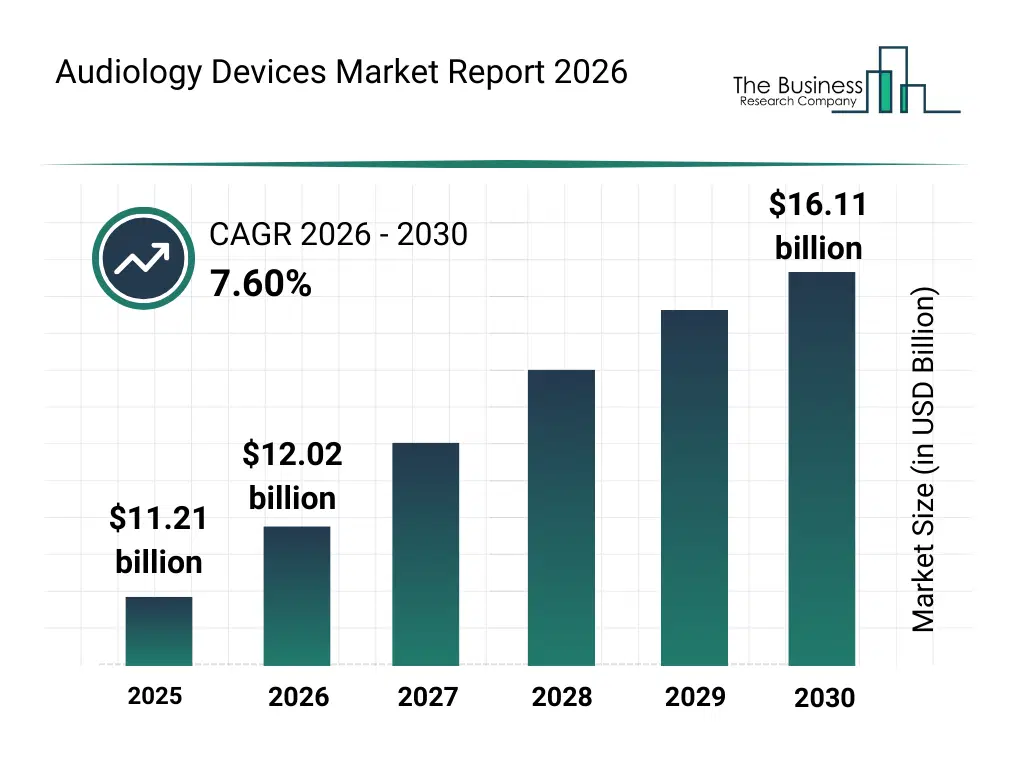
What Is The Audiology Devices Market Size and Share 2026?
The audiology devices market size has grown strongly in recent years. It will grow from $11.21 billion in 2025 to $12.02 billion in 2026 at a compound annual growth rate (CAGR) of 7.2%. The growth in the historic period can be attributed to rising prevalence of hearing loss disorders, increasing aging population, wider availability of digital hearing aids, expansion of audiology clinics, growing awareness of early hearing diagnosis.What Is The Audiology Devices Market Growth Forecast?
The audiology devices market size is expected to see strong growth in the next few years. It will grow to $16.11 billion in 2030 at a compound annual growth rate (CAGR) of 7.6%. The growth in the forecast period can be attributed to increasing demand for wireless and app-enabled devices, rising adoption of pediatric hearing solutions, expansion of cochlear implant procedures, growing focus on home-based hearing care, continuous innovation in audiology software platforms. Major trends in the forecast period include increasing adoption of smart and connected hearing devices, rising demand for rechargeable hearing aids, growing use of ai-based sound processing, expansion of minimally invasive implant technologies, enhanced focus on personalized hearing solutions.
Global Audiology Devices Market Segmentation
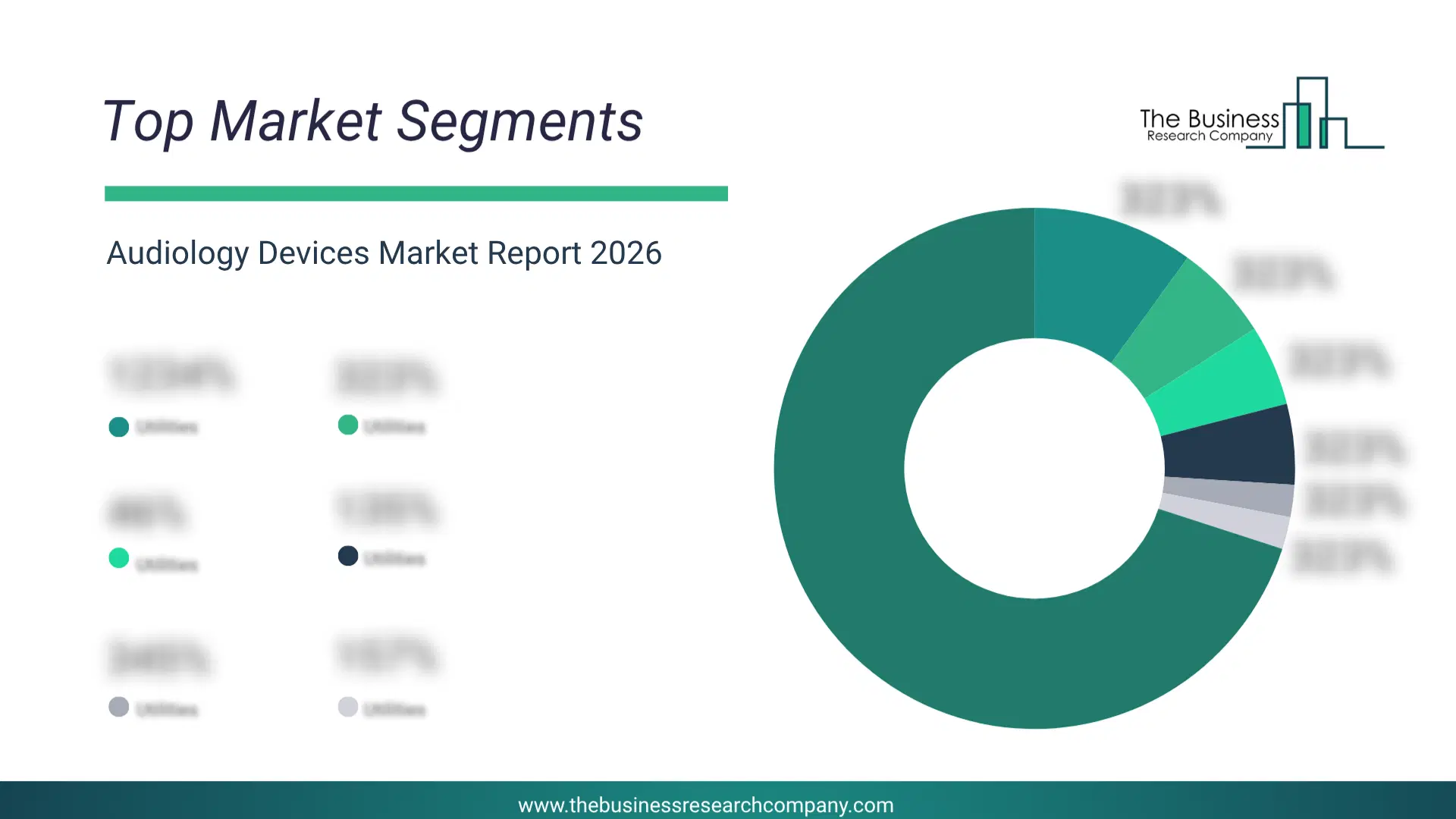
1) By Product: Hearing Aids, In-The-Ear Hearing Aids (ITE), Receiver-In-The-Ear Hearing Aids (RITE), Behind-The-Ear Hearing Aids (BTE), Canal Hearing Aids (CHA), Cochlear Implants, Bone Anchored Healing Aids, Diagnostic Devices 2) By Technology: Digital, Analog, Wireless & Bluetooth-Enabled Devices 3) By Diseases Type: Otosclerosis, Meniere's Disease, Acoustic Tumors, Otitis Media, Other Diseases 4) By End User: Hospitals,ENT Clinics & Audiology Clinics, Research Institutes Subsegments: 1) By Hearing Aids: Digital Hearing Aids, Analog Hearing Aids, Wireless Hearing Aids, Rechargeable Hearing Aids, Pediatric Hearing Aids, High-Gain Hearing Aids, Low-Noise Hearing Aids 2) By In-The-Ear (ITE) Hearing Aids: Full Shell ITE, Half Shell ITE, Mini ITE, Wireless ITE, Rechargeable ITE, Directional Microphone ITE 3) By Receiver-In-The-Ear (RITE) Hearing Aids: Mini RITE, Power RITE, Rechargeable RITE, RITE with Telecoil, Wireless RITE, Invisible RITE 4) By Behind-The-Ear (BTE) Hearing Aids: Standard BTE, Mini BTE, Power BTE, Open-Fit BTE, Rechargeable BTE, Wireless BTE, Water-Resistant BTE 5) By Canal Hearing Aids (CHA): Completely-in-the-Canal (CIC), Invisible-in-the-Canal (IIC), Low Profile CHA, Wireless CIC/IIC, Directional Microphone CHA, Rechargeable CHA 6) By Cochlear Implants: Single-Sided Cochlear Implants, Bilateral Cochlear Implants, Hybrid Cochlear Implants, Fully Implantable Cochlear Implants, Pediatric Cochlear Implants, Advanced Cochlear Implants 7) By Bone Anchored Hearing Aids (BAHA): Percutaneous BAHA, Transcutaneous BAHA, Active Bone Conduction Implant, Non-Surgical BAHA, Pediatric BAHA, Rechargeable BAHA 8) By Diagnostic Devices: Audiometers, Otoacoustic Emission (OAE) Devices, TympanometersWhat Is The Driver Of The Audiology Devices Market?
The surging prevalence of hearing loss is expected to propel the growth of the audiology devices market going forward. Hearing loss is a partial or total inability to hear sounds in one or both ears caused by various factors, including genetics, aging, noise exposure, injury or trauma to the ear, infections, and certain medications or illnesses. Audiology devices are used in managing and treating hearing loss by improving speech intelligibility and enhancing communication abilities; as a result, the surging prevalence of hearing loss increases the demand for the audiology devices market. For instance, in February 2023, according to an article published by the World Health Organization, a Switzerland-based public health organization, a total of 430 million people, or more than 5% of the world's population (432 million adults and 34 million children), will need rehabilitation for their incapacitating hearing loss. In addition, over 25% of people over the age of 60 have a hearing loss, and nearly 80% of those with permanent hearing loss reside in developing or underdeveloped nations. Moreover, over 700 million individuals are predicted to have hearing loss by 2050. Therefore, the surging prevalence of hearing loss is driving the growth of the audiology devices industry.Key Players In The Global Audiology Devices Market
Major companies operating in the audiology devices market are Sonova Holding AG, Demant A/S, GN Store Nord A/S, Cochlear Ltd., MED-EL Medical Electronics, Starkey Laboratories Inc., WS Audiology A/S, RION Co. Ltd., Natus Medical Incorporated, MedRx Inc., Inventis s.r.l., MAICO Diagnostics GmbH, Benson Medical Instruments, Horentek Hearing Diagnostic, Zhejiang Nurotron Biotechnology Co. Ltd., Audina Hearing Instruments Inc., Elkon Pvt. Ltd., Eargo Inc., SeboTek Hearing Systems LLC, BHM-Tech Produktionsgesellschaft mbH, Earlens Corporation, Austar Hearing Science and Technology (Xiamen) Co. Ltd.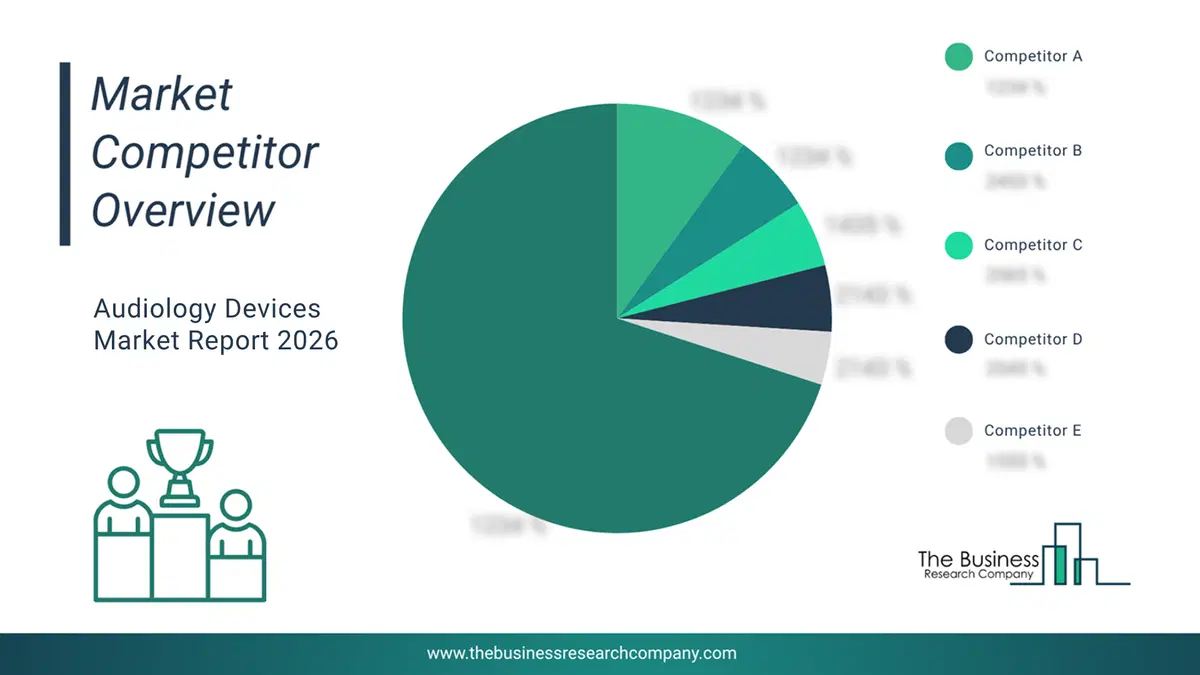
This chart is for illustrative purposes; the full report includes a detailed competitor analysis and comprehensive overview of the top 10 companies in the market.
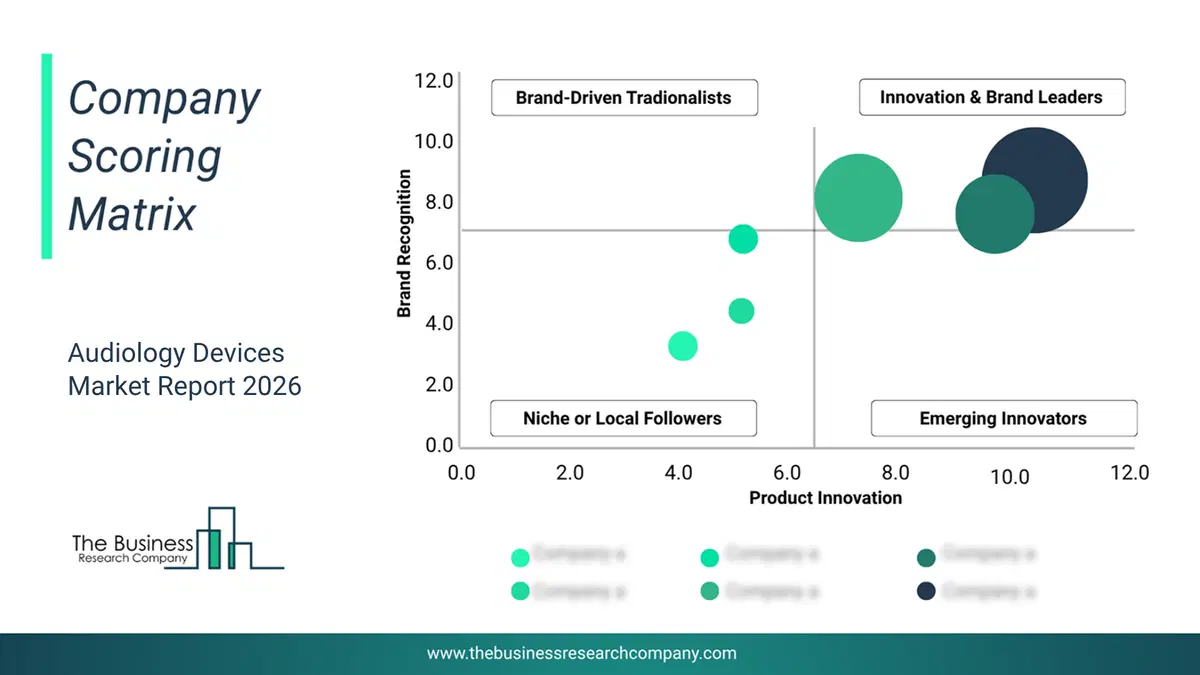
This chart maps companies by product innovation and brand strength, with bubble size indicating relative revenue, helping identify market leaders, challengers, and niche players. This is an illustrative chart; the full report provides a complete and accurate competitive analysis.
Global Audiology Devices Market Trends and Insights
Major companies operating in the audiology devices market are focused on developing innovative products, such as hearing-in-noise aids, to gain a competitive edge in the market. Hearing-in-noise aids are a specific type of hearing aid designed to improve a person's ability to understand speech in noisy environments. For instance, in September 2023, ReSound, a Denmark-based provider of innovative hearing solutions, launched Nexia Hearing Aids. It is designed with Auracast broadcast audio technology that allows Nexia users to effortlessly connect to public sound systems in places like airports, theaters, and restaurants. Imagine never missing an announcement or important information again. With Auracast and Bluetooth LE Audio, Nexia hearing aids connect seamlessly to devices, providing a truly wireless experience. The Nexia hearing aids are completely dustproof and water-resistant, so the customers can wear them with confidence in any weather.What Are Latest Mergers And Acquisitions In The Audiology Devices Market?
In March 2025, Eargo, a US-based hearing aid manufacturer, merged with hearXto form LXE Hearing. Through this merger, Eargo and hearX aim to combine their expertise in consumer-focused hearing aids and mobile-first hearing-health technology to expand access to affordable and innovative hearing solutions globally. hearX is a South Africa-based hearing technology company that provides mobile-enabled hearing assessment tools and over-the-counter hearing aid solutions under the Lexie Hearing brand.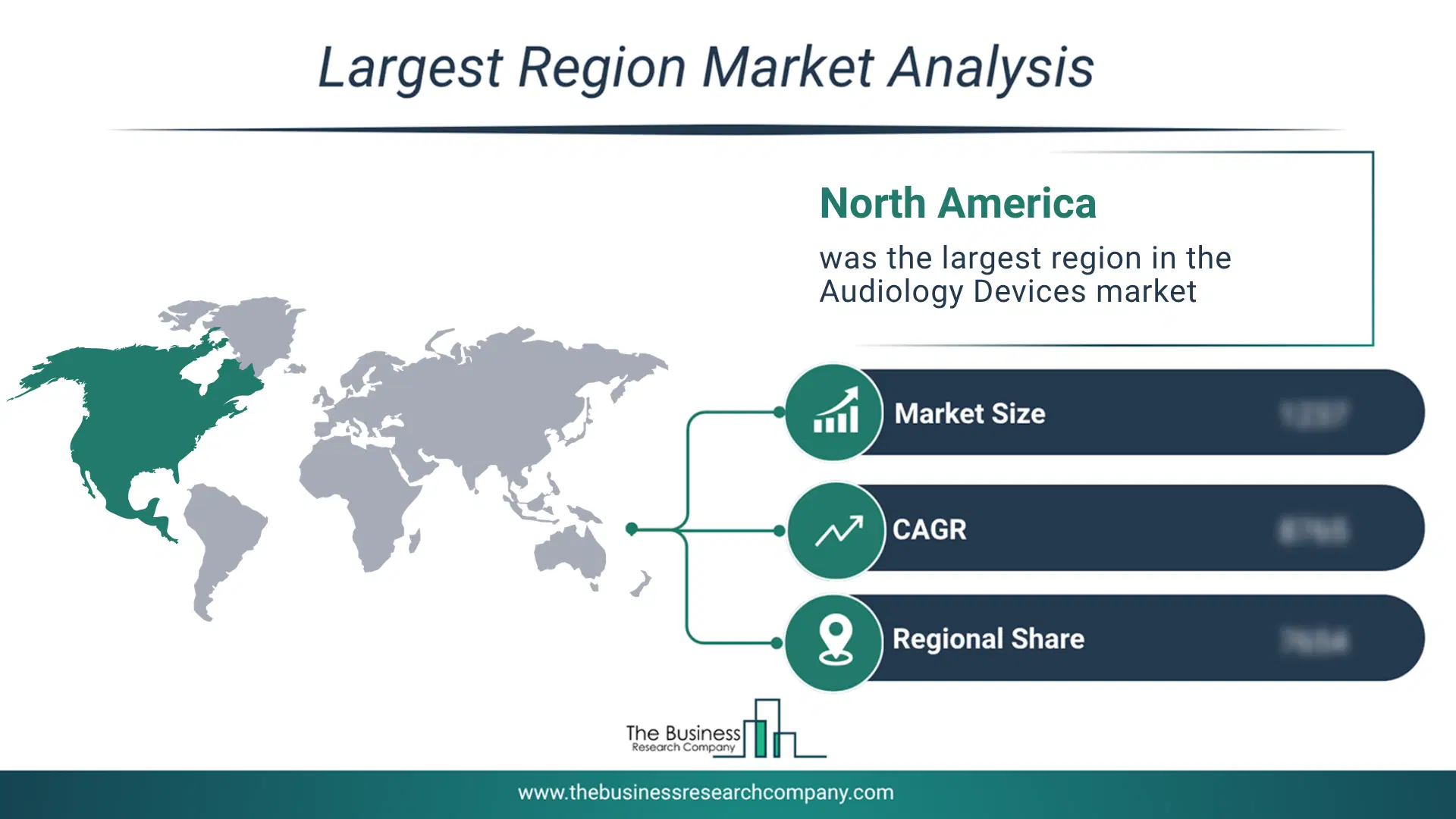
Regional Outlook
North America was the largest region in the audiology devices market in 2025. Asia-Pacific is expected to be the fastest-growing region in the global audiology devices market report during the forecast period. The regions covered in this market report are Asia-Pacific, South East Asia, Western Europe, Eastern Europe, North America, South America, Middle East, Africa. The countries covered in this market report are Australia, Brazil, China, France, Germany, India, Indonesia, Japan, Taiwan, Russia, South Korea, UK, USA, Canada, Italy, SpainWhat Defines the Audiology Devices Market?
The audiology devices market consists of sales of audiology devices, including auditory brainstem implants (ABIs), assistive listening devices (ALDs), and low-gain hearing aids. Values in this market are ‘factory gate’ values, that is the value of goods sold by the manufacturers or creators of the goods, whether to other entities (including downstream manufacturers, wholesalers, distributors, and retailers) or directly to end customers. The value of goods in this market includes related services sold by the creators of the goods.How is Market Value Defined and Measured?
The market value is defined as the revenues that enterprises gain from the sale of goods and/or services within the specified market and geography through sales, grants, or donations in terms of the currency (in USD unless otherwise specified). The revenues for a specified geography are consumption values that are revenues generated by organizations in the specified geography within the market, irrespective of where they are produced. It does not include revenues from resales along the supply chain, either further along the supply chain or as part of other products.
This chart presents market attractiveness based on a quantitative evaluation of growth, competition, strategic alignment, and risk, offering a clear view of opportunity areas for decision-making. This chart is for illustrative purposes; the full report contains the complete analysis.

This chart highlights the Total Addressable Market (TAM) by estimating the maximum revenue opportunity using an assumption-driven approach, supporting strategic planning and opportunity sizing across markets. The chart is illustrative; the full report provides a more comprehensive analysis.
What Key Data and Analysis Are Included in the Audiology Devices Market Report 2026?
The audiology devices market research report is one of a series of new reports from The Business Research Company that provides market statistics, including industry global market size, regional shares, competitors with the market share, detailed market segments, market trends and opportunities, and any further data you may need to thrive in the audiology devices industry. The market research report delivers a complete perspective of everything you need, with an in-depth analysis of the current and future state of the industry.Audiology Devices Market Report Forecast Analysis
| Report Attribute | Details |
|---|---|
| Market Size Value In 2026 | $12.02 billion |
| Revenue Forecast In 2030 | $16.11 billion |
| Growth Rate | CAGR of 7.6% from 2026 to 2030 |
| Base Year For Estimation | 2025 |
| Actual Estimates/Historical Data | 2020-2025 |
| Forecast Period | 2026 - 2030 |
| Market Representation | Revenue in USD Billion and CAGR from 2026 to 2030 |
| Segments Covered | Product, Technology, Diseases Type, End User |
| Regional Scope | Asia-Pacific, Western Europe, Eastern Europe, North America, South America, Middle East, Africa |
| Country Scope | The countries covered in the report are Australia, Brazil, China, France, Germany, India, Indonesia, Japan, Taiwan, Russia, South Korea, UK, USA, Canada, Italy, Spain. |
| Key Companies Profiled | Sonova Holding AG, Demant A/S, GN Store Nord A/S, Cochlear Ltd., MED-EL Medical Electronics, Starkey Laboratories Inc., WS Audiology A/S, RION Co. Ltd., Natus Medical Incorporated, MedRx Inc., Inventis s.r.l., MAICO Diagnostics GmbH, Benson Medical Instruments, Horentek Hearing Diagnostic, Zhejiang Nurotron Biotechnology Co. Ltd., Audina Hearing Instruments Inc., Elkon Pvt. Ltd., Eargo Inc., SeboTek Hearing Systems LLC, BHM-Tech Produktionsgesellschaft mbH, Earlens Corporation, Austar Hearing Science and Technology (Xiamen) Co. Ltd. |
| Customization Scope | Request for Customization |
| Pricing And Purchase Options | Explore Purchase Options |