
Aurora Kinase B Market Report 2026
Global Outlook – By Type (AZD-2811, CS-2164, Danusertib, Ilorasertib, NMI-900, Other Types), By Application (Anaplastic Large Cell Lymphoma, Kidney Cancer, Lung Cancer, Prostate Cancer, Other Applications), By End-User (Hospitals, Research Institutes, Diagnostic Laboratories, Other End-Users) – Market Size, Trends, Strategies, and Forecast to 2030
Aurora Kinase B Market Overview
• Aurora Kinase B market size has reached to $1.27 billion in 2025 • Expected to grow to $2.22 billion in 2030 at a compound annual growth rate (CAGR) of 11.7% • Growth Driver: Rising Cancer Incidence Drives Growth In The Aurora Kinase B Market • Market Trend: Innovations In Aurora Kinase B Market • North America was the largest region in 2025 and Asia-Pacific is the fastest growing region.What Is Covered Under Aurora Kinase B Market?
Aurora kinase B is a protein enzyme that plays a critical role in cell division, particularly during mitosis. It is involved in regulating chromosome alignment, segregation, and the proper distribution of genetic material to daughter cells. Aurora kinase B is essential for maintaining genomic stability, and its dysregulation is often associated with various cancers. The main types of aurora kinase B are AZD-2811, CS-2164, danusertib, ilorasertib, NMI-900, and others. AZD-2811 is a nanoparticle formulation of a potent Aurora Kinase B inhibitor designed for the treatment of solid tumors and hematologic malignancies. It is applied for anaplastic large cell lymphoma, kidney cancer, lung cancer, prostate cancer, and others and is used by various end-users such as hospitals, research institutes, diagnostic laboratories, and others.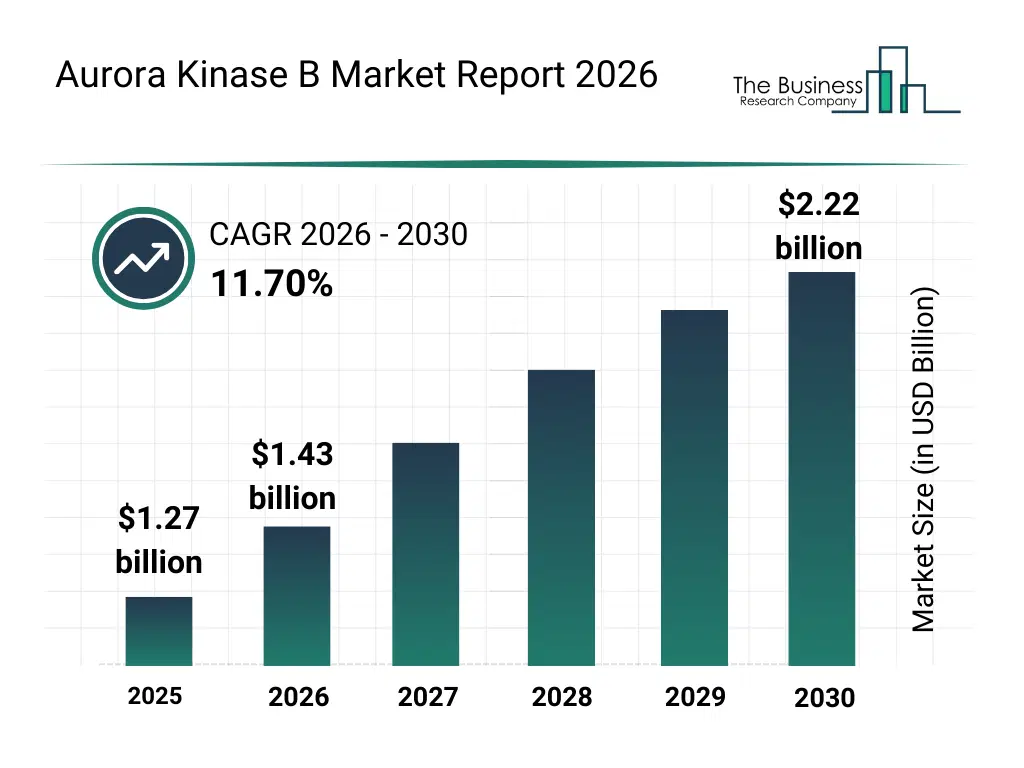
What Is The Aurora Kinase B Market Size and Share 2026?
The aurora kinase b market size has grown rapidly in recent years. It will grow from $1.27 billion in 2025 to $1.43 billion in 2026 at a compound annual growth rate (CAGR) of 12.0%. The growth in the historic period can be attributed to advancements in molecular oncology research, identification of aurora kinase b as a cancer target, expansion of clinical trial infrastructure, increasing investment in targeted cancer therapies, progress in kinase inhibitor development.What Is The Aurora Kinase B Market Growth Forecast?
The aurora kinase b market size is expected to see rapid growth in the next few years. It will grow to $2.22 billion in 2030 at a compound annual growth rate (CAGR) of 11.7%. The growth in the forecast period can be attributed to increasing demand for precision cancer therapeutics, expansion of personalized medicine approaches, rising oncology clinical trial activity, growing investments in novel kinase inhibitors, improved regulatory support for targeted oncology drugs. Major trends in the forecast period include increasing development of selective aurora kinase b inhibitors, growing emphasis on combination oncology therapies, expansion of precision oncology drug pipelines, rising focus on mitotic targeted therapies, improved biomarker-based patient stratification.
Global Aurora Kinase B Market Segmentation
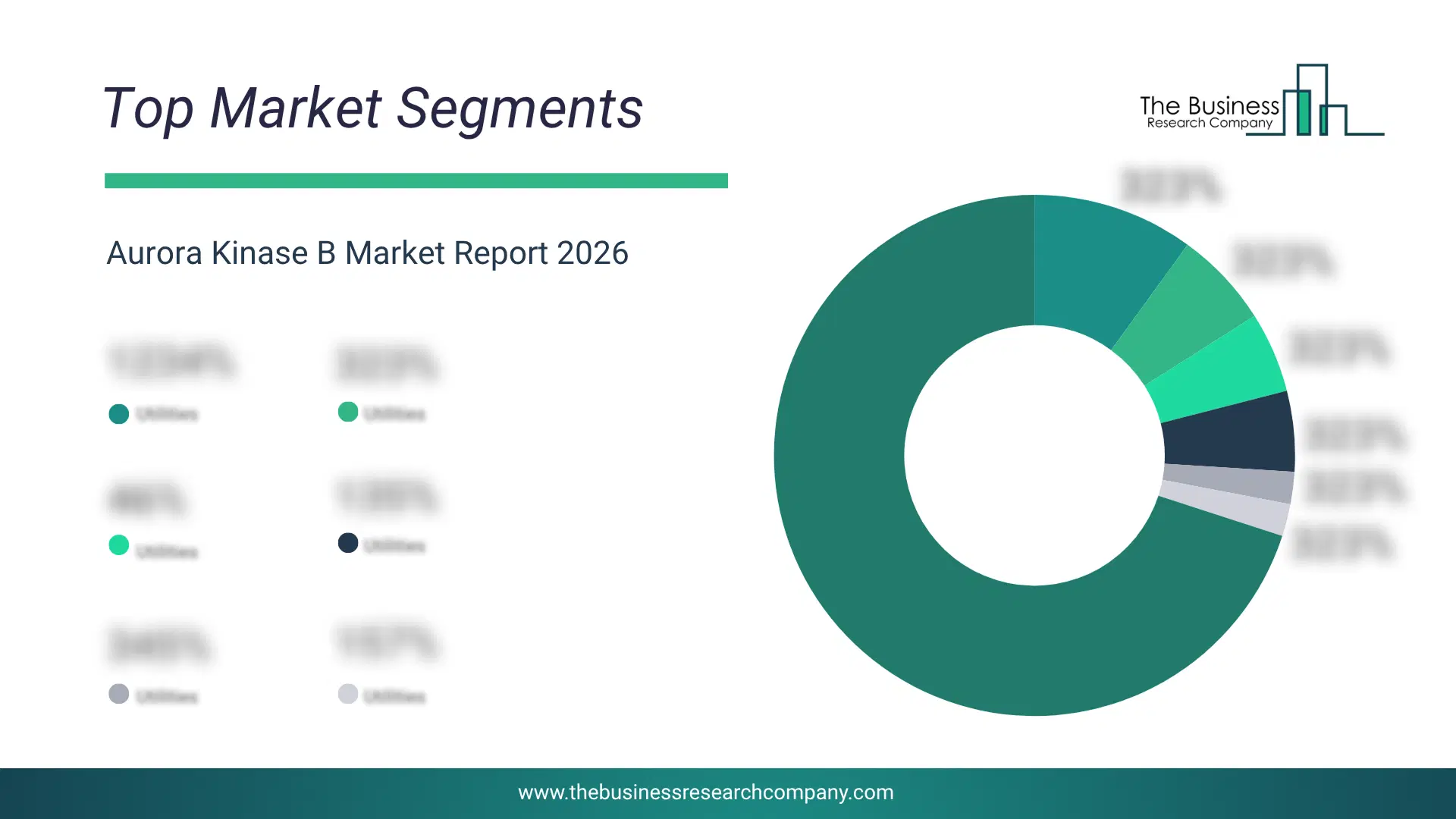
1) By Type: AZD-2811, CS-2164, Danusertib, Ilorasertib, NMI-900, Other Types 2) By Application: Anaplastic Large Cell Lymphoma, Kidney Cancer, Lung Cancer, Prostate Cancer, Other Applications 3) By End-User: Hospitals, Research Institutes, Diagnostic Laboratories, Other End-Users Subsegments: 1) By AZD-2811: Phase I Clinical Trials AZD-2811, Preclinical Development of AZD-2811, AZD-2811 in Combination Therapy, Targeted Cancer Treatment with AZD-2811 2) By CS-2164: Phase II Clinical Trials CS-2164, Preclinical Development of CS-2164, CS-2164 in Targeted Cancer Therapy, CS-2164 Combination Therapy in Clinical Studies 3) By Danusertib: Phase III Clinical Trials Danusertib, Danusertib for Hematological Malignancies, Danusertib for Solid Tumors, Combination Therapy with Danusertib 4) By Ilorasertib: Preclinical Development of Ilorasertib, Ilorasertib in Solid Tumor Treatment, Phase I and II Clinical Trials of Ilorasertib, Ilorasertib in Combination with Chemotherapies 5) By NMI-900: NMI-900 in Early-Stage Clinical Trials, NMI-900 for Targeted Cancer Therapy, Preclinical Studies of NMI-900, NMI-900 Combination Therapy Trials 6) By Other Types: Other Aurora Kinase B Inhibitors in Development, Novel Targeted Aurora Kinase B Drugs, Combination Therapies Involving Aurora Kinase B Inhibitors, Investigational Aurora Kinase B Inhibitors in OncologyWhat Is The Driver Of The Aurora Kinase B Market?
The rising incidence of cancer is expected to propel the growth of the aurora kinase B market going forward. Cancer is a group of diseases characterized by the uncontrolled growth and spread of abnormal cells that can invade surrounding tissues and metastasize to other parts of the body. Cancer cases are rising due to factors such as an aging population, lifestyle changes, environmental exposures, and improved detection and diagnosis. Aurora kinase B plays a critical role in mitosis, and its overexpression is linked to chromosomal instability and cancer progression. It is often targeted in cancer therapies due to its involvement in tumor cell division. For instance, in February 2024, according to the World Health Organization, a Switzerland-based intergovernmental organization, an estimated 20 million new cancer cases were reported in 2022, along with 9.7 million deaths. By 2050, new cancer cases are expected to exceed 35 million, representing a 77% increase from 2022. Therefore, the rising incidence of cancer is driving the growth of the aurora kinase B industry.Key Players In The Global Aurora Kinase B Market
Major companies operating in the aurora kinase b market are Pfizer Inc., Johnson & Johnson, Roche Holding AG, Merck & Co. Inc., AbbVie Inc., Sanofi SA, Bristol-Myers Squibb Company, AstraZeneca PLC, Novartis AG, GlaxoSmithKline plc, Takeda Pharmaceutical Company Limited, Boehringer Ingelheim International GmbH, Amgen Inc., Astellas Pharma Inc., Promega Corporation, Rigel Pharmaceuticals Inc., Tocris Bioscience, BPS Bioscience Inc., Advenchen Laboratories LLC, Shenzhen Chipscreen Biosciences Co. Ltd., Cyclacel Pharmaceuticals Inc., Sareum Holdings plc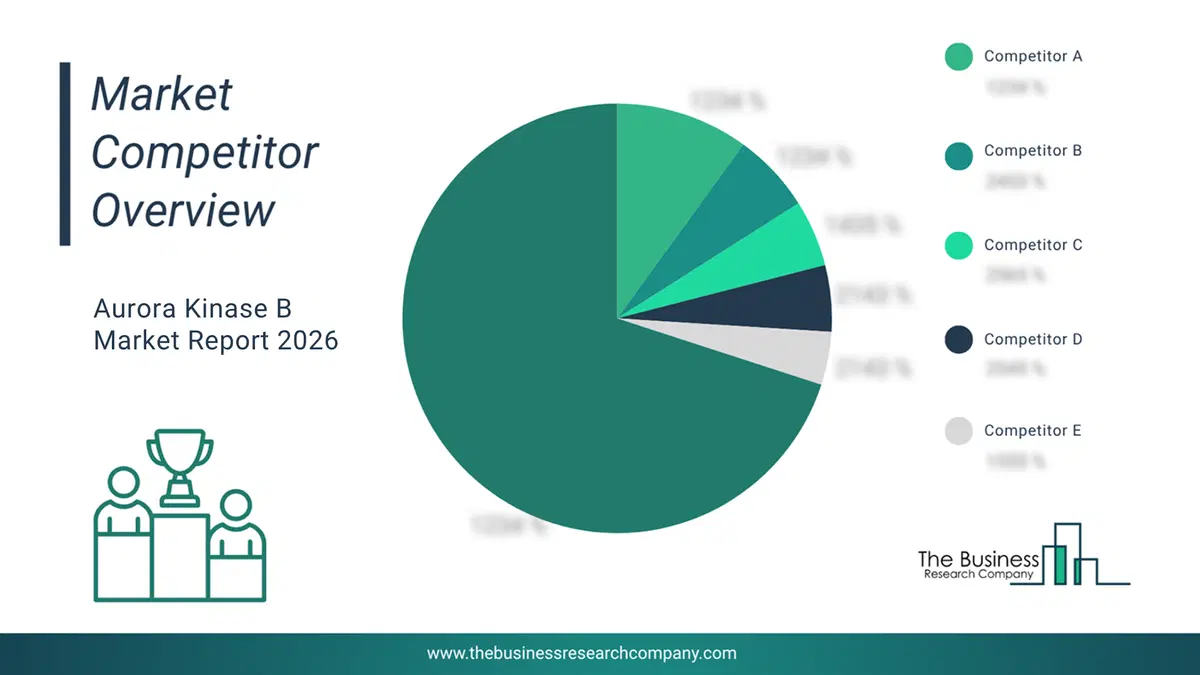
This chart is for illustrative purposes; the full report includes a detailed competitor analysis and comprehensive overview of the top 10 companies in the market.
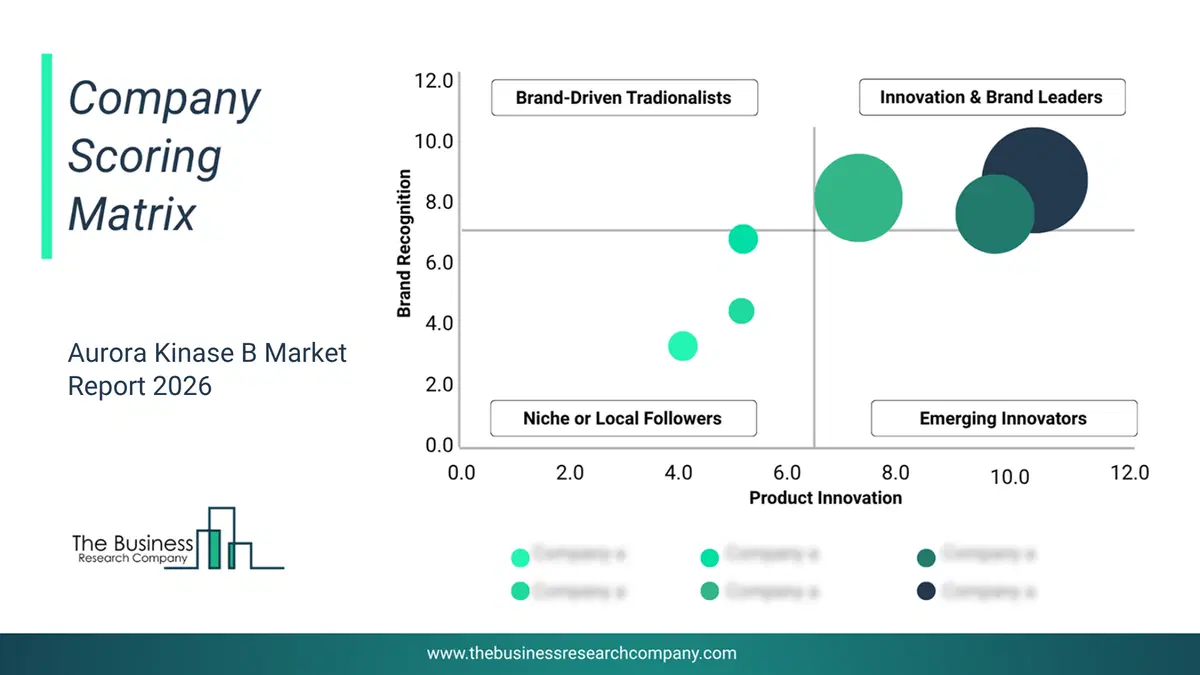
This chart maps companies by product innovation and brand strength, with bubble size indicating relative revenue, helping identify market leaders, challengers, and niche players. This is an illustrative chart; the full report provides a complete and accurate competitive analysis.
Global Aurora Kinase B Market Trends and Insights
Major companies operating in the aurora kinase B market are developing innovative products, such as aurora kinase inhibitors, to specifically target and disrupt crucial processes in cell division. Aurora kinase inhibitors are drugs designed to block the activity of Aurora kinases, which are critical for cell division, thereby disrupting the proliferation of cancer cells and potentially reducing tumor growth. For instance, in June 2023, Ellipses Pharma, a UK-based biotechnology company, announced the U.S. Food and Drug Administration (FDA) approval for its EP0042, a dual FLT-3 and Aurora kinase inhibitor. EP0042 is being developed as a treatment for acute myeloid leukemia (AML) and acts as an inhibitor targeting both FLT3 and Aurora kinase. This approach is specifically designed for AML patients who have developed resistance to FLT3 inhibitors. Research has demonstrated that dual inhibition of FLT3 and Aurora kinase can overcome acquired resistance to selective FLT3 inhibition both in vitro and in vivo.What Are Latest Mergers And Acquisitions In The Aurora Kinase B Market?
In June 2024, Gedeon Richter Plc., a Hungary-based pharmaceutical company, acquired BCI Pharma for $13.3 million. This acquisition enhances Richter's ability to develop targeted treatments in this therapeutic area, particularly for conditions such as cancer and endometriosis. BCI Pharma is a Belgium-based manufacturer of aurora kinase B inhibitors.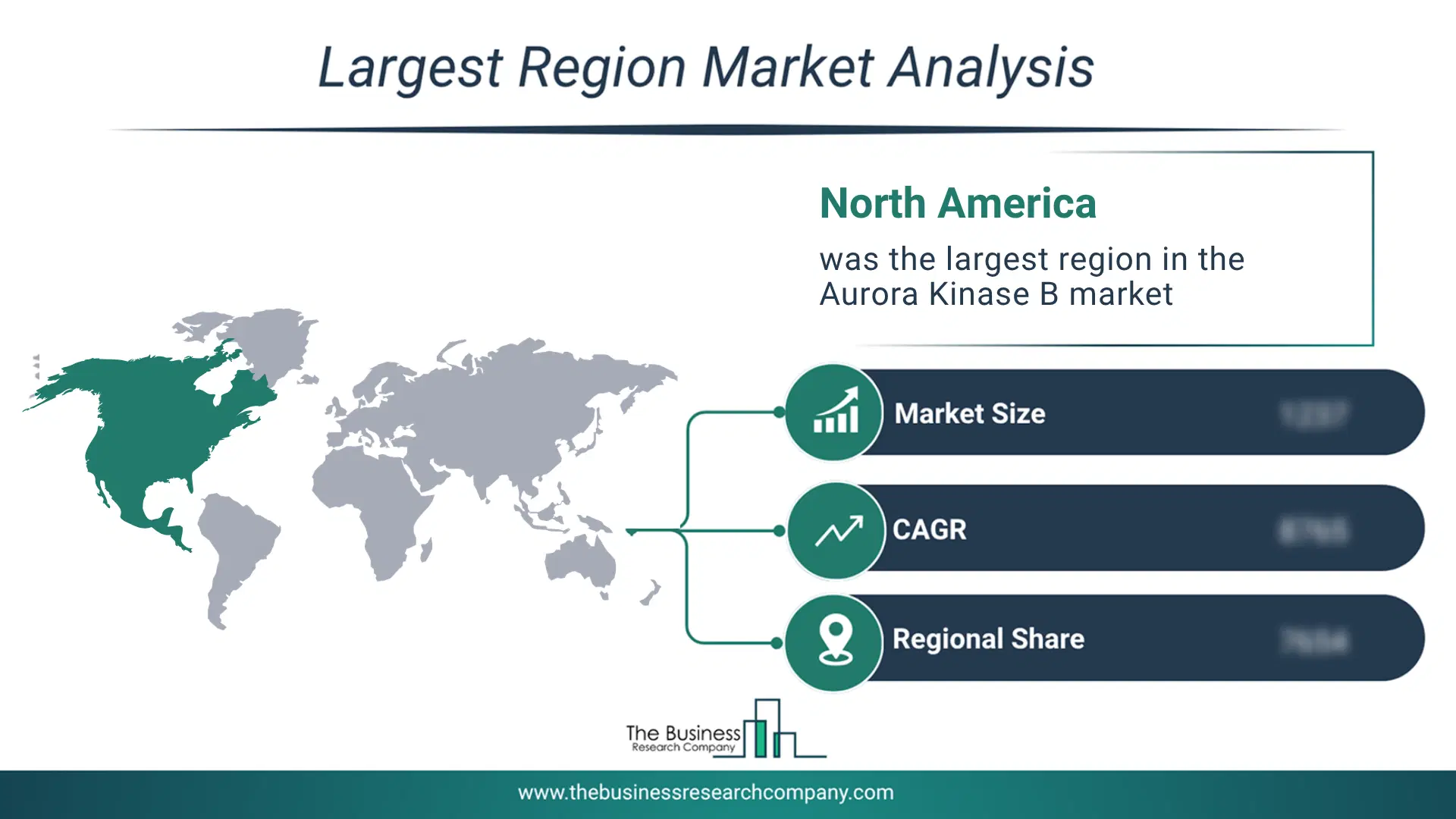
Regional Insights
North America was the largest region in the aurora kinase B market in 2025. Asia-Pacific is expected to be the fastest-growing region in the forecast period. The regions covered in this market report are Asia-Pacific, South East Asia, Western Europe, Eastern Europe, North America, South America, Middle East, Africa. The countries covered in this market report are Australia, Brazil, China, France, Germany, India, Indonesia, Japan, Taiwan, Russia, South Korea, UK, USA, Canada, Italy, Spain.What Defines the Aurora Kinase B Market?
The aurora kinase B market consists of sales of aurora kinase B inhibitors, antibodies, diagnostic kits, assay kits, and recombinant proteins. Values in this market are ‘factory gate’ values, that is the value of goods sold by the manufacturers or creators of the goods, whether to other entities (including downstream manufacturers, wholesalers, distributors and retailers) or directly to end customers. The value of goods in this market includes related services sold by the creators of the goods.How is Market Value Defined and Measured?
The market value is defined as the revenues that enterprises gain from the sale of goods and/or services within the specified market and geography through sales, grants, or donations in terms of the currency (in USD unless otherwise specified). The revenues for a specified geography are consumption values that are revenues generated by organizations in the specified geography within the market, irrespective of where they are produced. It does not include revenues from resales along the supply chain, either further along the supply chain or as part of other products.
This chart presents market attractiveness based on a quantitative evaluation of growth, competition, strategic alignment, and risk, offering a clear view of opportunity areas for decision-making. This chart is for illustrative purposes; the full report contains the complete analysis.

This chart highlights the Total Addressable Market (TAM) by estimating the maximum revenue opportunity using an assumption-driven approach, supporting strategic planning and opportunity sizing across markets. The chart is illustrative; the full report provides a more comprehensive analysis.
What Key Data and Analysis Are Included in the Aurora Kinase B Market Report 2026?
The aurora kinase b market research report is one of a series of new reports from The Business Research Company that provides market statistics, including industry global market size, regional shares, competitors with the market share, detailed market segments, market trends and opportunities, and any further data you may need to thrive in the aurora kinase b industry. The market research report delivers a complete perspective of everything you need, with an in-depth analysis of the current and future state of the industry.Aurora Kinase B Market Report Forecast Analysis
| Report Attribute | Details |
|---|---|
| Market Size Value In 2026 | $1.43 billion |
| Revenue Forecast In 2030 | $2.22 billion |
| Growth Rate | CAGR of 12.0% from 2026 to 2030 |
| Base Year For Estimation | 2025 |
| Actual Estimates/Historical Data | 2020-2025 |
| Forecast Period | 2026 - 2030 |
| Market Representation | Revenue in USD Billion and CAGR from 2026 to 2030 |
| Segments Covered | Type, Application, End-User |
| Regional Scope | Asia-Pacific, Western Europe, Eastern Europe, North America, South America, Middle East, Africa |
| Country Scope | The countries covered in the report are Australia, Brazil, China, France, Germany, India, Indonesia, Japan, Taiwan, Russia, South Korea, UK, USA, Canada, Italy, Spain. |
| Key Companies Profiled | Pfizer Inc., Johnson & Johnson, Roche Holding AG, Merck & Co. Inc., AbbVie Inc., Sanofi SA, Bristol-Myers Squibb Company, AstraZeneca PLC, Novartis AG, GlaxoSmithKline plc, Takeda Pharmaceutical Company Limited, Boehringer Ingelheim International GmbH, Amgen Inc., Astellas Pharma Inc., Promega Corporation, Rigel Pharmaceuticals Inc., Tocris Bioscience, BPS Bioscience Inc., Advenchen Laboratories LLC, Shenzhen Chipscreen Biosciences Co. Ltd., Cyclacel Pharmaceuticals Inc., Sareum Holdings plc |
| Customization Scope | Request for Customization |
| Pricing And Purchase Options | Explore Purchase Options |