
Autoimmune Gastrointestinal Dysmotility Market Report 2026
Global Outlook – By Treatment Type (Medications, Surgical Interventions, Dietary Management, Physical Therapy), By Drug Class (Prokinetic Agents, Anti-Inflammatory Drugs, Immunosuppressive Drugs, Antibiotics), By Disease Type (Gastroparesis, Chronic Intestinal Pseudo-Obstruction (Cipo), Functional Dyspepsia, Irritable Bowel Syndrome (Ibs)), By Distribution Channel (Hospital Pharmacy, Retail Pharmacy, Online Pharmacies, Other Distribution Channels), By End User (Hospitals, Clinics, Home Care Settings, Research Institutions) – Market Size, Trends, Strategies, and Forecast to 2030
Autoimmune Gastrointestinal Dysmotility Market Overview
• Autoimmune Gastrointestinal Dysmotility market size has reached to $1.82 billion in 2025 • Expected to grow to $2.63 billion in 2030 at a compound annual growth rate (CAGR) of 8.2% • Growth Driver: Rising Clinical Trial Activity Drives Growth Of The Market Due To Expanding Research Investment And Advancements In Novel Therapeutics • North America was the largest region in 2025.What Is Covered Under Autoimmune Gastrointestinal Dysmotility Market?
Autoimmune gastrointestinal dysmotility (AGID) is a rare disorder where the immune system attacks the nerves controlling digestive tract movement. This disorder leads to slowed or abnormal motility, causing symptoms such as nausea, bloating, constipation, or intestinal blockage. Autoimmune gastrointestinal dysmotility (AGID) is often associated with autoimmune conditions or may occur as a paraneoplastic syndrome. The main treatment types for autoimmune gastrointestinal dysmotility include medications, surgical interventions, dietary management, and physical therapy. Medications are prescribed to help manage autoimmune gastrointestinal dysmotility by reducing inflammation and improving digestive tract motility. The drug classes include prokinetic agents, anti-inflammatory drugs, immunosuppressive drugs, and antibiotics. The diseases associated with autoimmune gastrointestinal dysmotility include gastroparesis, chronic intestinal pseudo-obstruction (CIPO), functional dyspepsia, irritable bowel syndrome (IBS), and celiac disease. These drugs are distributed through various channels such as hospital pharmacies, retail pharmacies, online pharmacies, and other distribution channels. They are used by various end-users, including hospitals, clinics, home care settings, and research institutions.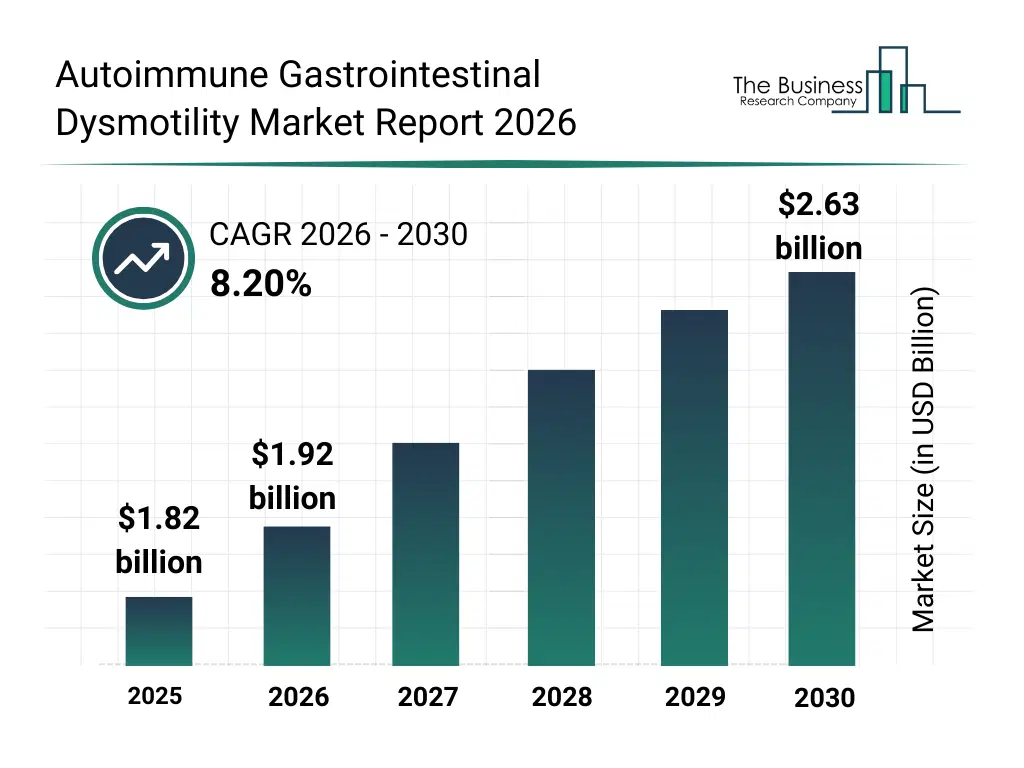
What Is The Autoimmune Gastrointestinal Dysmotility Market Size and Share 2026?
The autoimmune gastrointestinal dysmotility market size has grown strongly in recent years. It will grow from $1.82 billion in 2025 to $1.92 billion in 2026 at a compound annual growth rate (CAGR) of 5.5%. The growth in the historic period can be attributed to autoimmune disease diagnosis growth, gastroparesis prevalence, hospital gastroenterology expansion, immunosuppressive drug usage, rare disease awareness.What Is The Autoimmune Gastrointestinal Dysmotility Market Growth Forecast?
The autoimmune gastrointestinal dysmotility market size is expected to see strong growth in the next few years. It will grow to $2.63 billion in 2030 at a compound annual growth rate (CAGR) of 8.2%. The growth in the forecast period can be attributed to early diagnostic improvements, personalized treatment approaches, long-term care demand, home-based nutrition therapy, autoimmune research expansion. Major trends in the forecast period include increased recognition of rare gastrointestinal disorders, growth in immunosuppressive treatment use, expansion of nutritional and dietary management, rising adoption of multidisciplinary care approaches, focus on long-term symptom management.
Global Autoimmune Gastrointestinal Dysmotility Market Segmentation
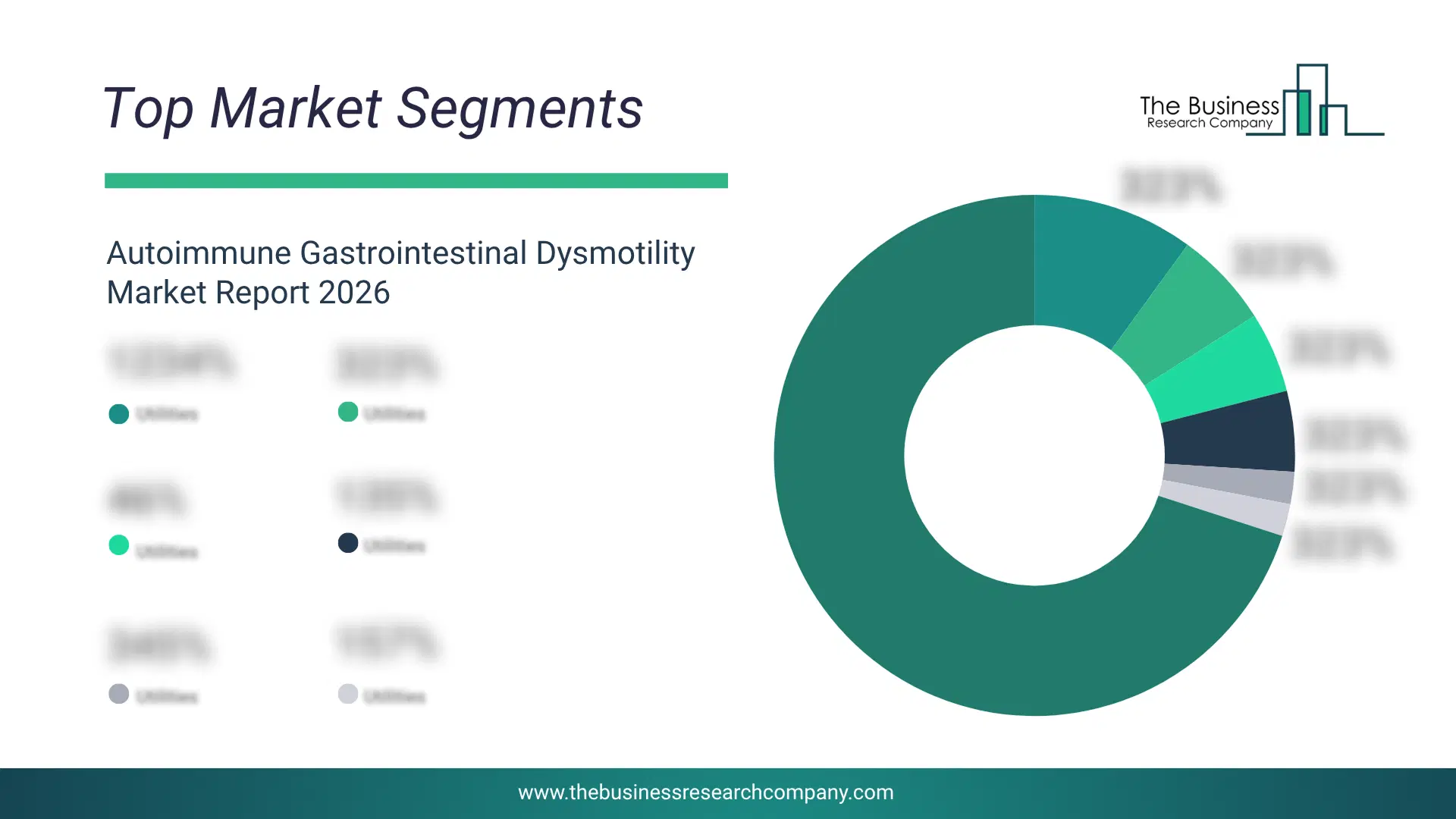
1) By Treatment Type: Medications, Surgical Interventions, Dietary Management, Physical Therapy 2) By Drug Class: Prokinetic Agents, Anti-Inflammatory Drugs, Immunosuppressive Drugs, Antibiotics 3) By Disease Type: Gastroparesis, Chronic Intestinal Pseudo-Obstruction (Cipo), Functional Dyspepsia, Irritable Bowel Syndrome (Ibs) 4) By Distribution Channel: Hospital Pharmacy, Retail Pharmacy, Online Pharmacies, Other Distribution Channels 5) By End User: Hospitals, Clinics, Home Care Settings, Research Institutions Subsegments: 1) By Medications: Immunosuppressants, Corticosteroids, Prokinetic Agents, Antiemetics, Antispasmodics, Antibiotics 2) By Surgical Interventions: Gastrostomy, Jejunostomy, Colostomy, Ileostomy, Pyloroplasty, Colectomy 3) By Dietary Management: Enteral Nutrition, Parenteral Nutrition, Gluten-Free Diet, Elemental Diet, Small Frequent Meals 4) By Physical Therapy: Pelvic Floor Therapy, Abdominal Massage Therapy, Neuromuscular Electrical Stimulation (NMES), Biofeedback Therapy, Respiratory Muscle Training, Postural TrainingWhat Are The Drivers Of The Autoimmune Gastrointestinal Dysmotility Market?
The increasing number of clinical trials is expected to propel the growth of the autoimmune gastrointestinal dysmotility market going forward. Clinical trials are research studies that evaluate the safety, efficacy, and optimal use of medical interventions, including drugs, biologics, devices, and treatment protocols in human participants to advance medical knowledge and improve patient care. The increasing number of clinical trials is primarily due to expanded regulatory frameworks requiring trial registration, growing investment in pharmaceutical research and development, and the accelerating pace of innovation in novel therapeutic modalities such as immunotherapies and biologics that treat autoimmune conditions affecting gastrointestinal motility. Clinical trials for autoimmune gastrointestinal dysmotility help advance treatment options by systematically evaluating new immunosuppressive therapies, prokinetic agents, and biologics, identifying optimal treatment protocols for managing gastrointestinal motility disorders, and establishing evidence-based approaches that enable regulatory approvals and clinical adoption of breakthrough therapies targeting autoimmune-mediated gastrointestinal dysfunction. For instance, in November 2025, according to ClinicalTrials.gov, a US-based clinical trials registry managed by the National Institutes of Health, the total number of registered clinical studies reached 477,203 at the end of 2023 (comprising 437,493 cumulative and 39,710 new registrations) and increased to 520,877 at the end of 2024 (comprising 477,203 cumulative and 43,674 new registrations), representing a 9.1% year-on-year increase in total registered studies. Therefore, the increasing number of clinical trials is driving the growth of the autoimmune gastrointestinal dysmotility industry. The increasing focus on personalized medicine is expected to propel the growth of the autoimmune gastrointestinal dysmotility market going forward. Personalized medicine refers to a medical approach that tailor’s treatment and prevention strategies to an individual’s unique genetic makeup, lifestyle, and environment. The rise of personalized medicine is primarily due to advancements in genomics, which enable precise identification of genetic variations and tailored treatments for individuals. Personalized medicine aids in the treatment of autoimmune gastrointestinal dysmotility by tailoring therapies to an individual's genetic makeup and specific disease characteristics. This approach improves treatment efficacy and minimizes side effects, offering more targeted solutions for managing complex gastrointestinal disorders. For instance, in February 2024, according to the Personalized Medicine Coalition (PMC), a US-based nonprofit organization, the U.S. Food and Drug Administration (FDA) approved 26 new personalized medicines in 2023, a significant increase from the 12 approved in 2022. Therefore, the increasing focus on personalized medicine is driving the growth of autoimmune gastrointestinal dysmotility industry. The rising prevalence of autoimmune disorders is expected to propel the growth of the autoimmune gastrointestinal dysmotility market going forward. Autoimmune diseases are conditions in which the body’s immune system mistakenly attacks its healthy cells, tissues, or organs instead of protecting them from infections and foreign substances. The rising prevalence of autoimmune disorders is primarily due to a combination of genetic susceptibility and environmental triggers, which together disrupt immune system regulation and increase the likelihood of the body attacking its own tissues. Autoimmune gastrointestinal dysmotility helps identify and manage underlying autoimmune disorders by revealing immune-mediated damage to the enteric nervous system, linking gastrointestinal symptoms to systemic autoimmune activity. For instance, In October 2024, according to a comprehensive review published by Signal Transduction and Targeted Therapy, a journal published by Nature, a UK-based peer-reviewed scientific publisher, approximately 8.4 million patients suffer from rheumatoid arthritis worldwide, with the total incidence rate increasing by 2-3% annually; according to the Markov model approach, the affected populations are predicted to reach approximately 13.5-17.4 million by 2040. Therefore, the rising prevalence of autoimmune disorders is driving the growth of the autoimmune gastrointestinal dysmotility industry.Key Players In The Global Autoimmune Gastrointestinal Dysmotility Market
Major companies operating in the autoimmune gastrointestinal dysmotility market are AbbVie Inc., GlaxoSmithKline plc, Takeda Pharmaceutical Company Limited, Teva Pharmaceutical Industries Ltd., Chugai Pharmaceutical Co. Ltd., Zeria Pharmaceutical Co. Ltd., Ironwood Pharmaceuticals Inc., Vanda Pharmaceuticals Inc., Dr. Falk Pharma GmbH, Rose Pharma LLC, Parvus Therapeutics Inc., CinDome Pharma Inc., Neurogastrx Inc., Renexxion LLC, ISOThrive Inc., Ambrose Healthcare Inc., AnTolRx Inc., Enteralia Bioscience S.r.l., Immunic Inc., Mozart Therapeutics Inc.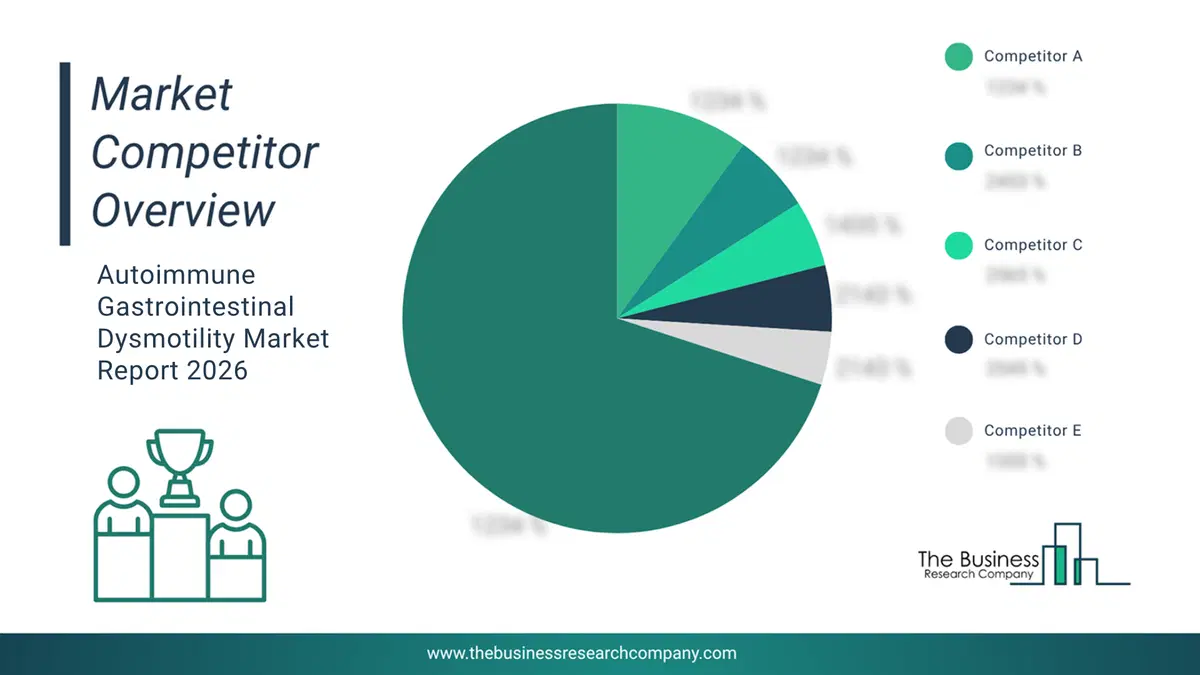
This chart is for illustrative purposes; the full report includes a detailed competitor analysis and comprehensive overview of the top 10 companies in the market.
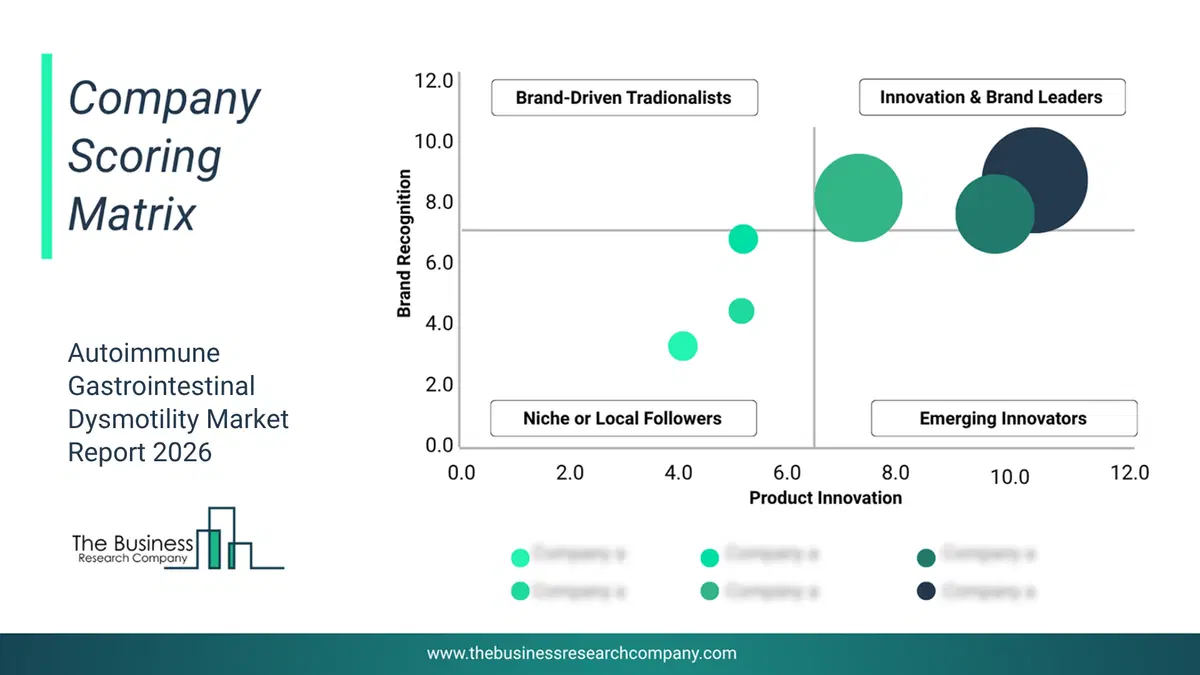
This chart maps companies by product innovation and brand strength, with bubble size indicating relative revenue, helping identify market leaders, challengers, and niche players. This is an illustrative chart; the full report provides a complete and accurate competitive analysis.
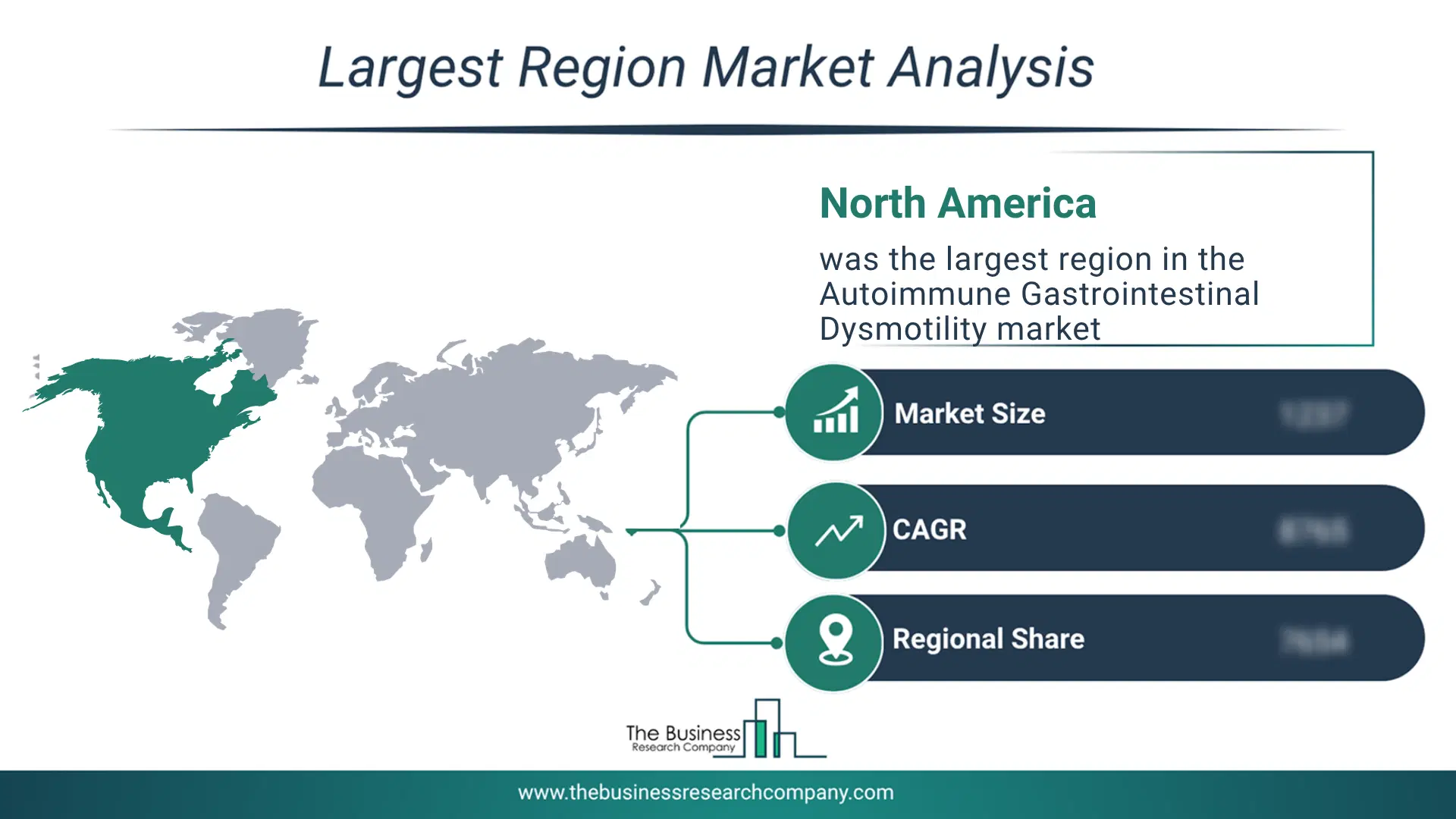
Regional Insights
North America was the largest region in the autoimmune gastrointestinal dysmotility market in 2025. The regions covered in this market report are Asia-Pacific, South East Asia, Western Europe, Eastern Europe, North America, South America, Middle East, Africa. The countries covered in this market report are Australia, Brazil, China, France, Germany, India, Indonesia, Japan, Taiwan, Russia, South Korea, UK, USA, Canada, Italy, Spain.What Defines the Autoimmune Gastrointestinal Dysmotility Market?
The autoimmune gastrointestinal dysmotility market consists of revenues earned by entities by providing services such as diagnostic testing, therapeutic treatments, clinical consultations, surgical interventions, rehabilitation and support services. The market value includes the value of related goods sold by the service provider or included within the service offering. The autoimmune gastrointestinal dysmotility market also includes sales of diagnostic kits, immunomodulatory drugs, prokinetic agents, and intravenous immunoglobulin (IVIG) therapies. Values in this market are ‘factory gate’ values, that is the value of goods sold by the manufacturers or creators of the goods, whether to other entities (including downstream manufacturers, wholesalers, distributors and retailers) or directly to end customers. The value of goods in this market includes related services sold by the creators of the goods.How is Market Value Defined and Measured?
The market value is defined as the revenues that enterprises gain from the sale of goods and/or services within the specified market and geography through sales, grants, or donations in terms of the currency (in USD unless otherwise specified). The revenues for a specified geography are consumption values that are revenues generated by organizations in the specified geography within the market, irrespective of where they are produced. It does not include revenues from resales along the supply chain, either further along the supply chain or as part of other products.
This chart presents market attractiveness based on a quantitative evaluation of growth, competition, strategic alignment, and risk, offering a clear view of opportunity areas for decision-making. This chart is for illustrative purposes; the full report contains the complete analysis.

This chart highlights the Total Addressable Market (TAM) by estimating the maximum revenue opportunity using an assumption-driven approach, supporting strategic planning and opportunity sizing across markets. The chart is illustrative; the full report provides a more comprehensive analysis.
What Key Data and Analysis Are Included in the Autoimmune Gastrointestinal Dysmotility Market Report 2026?
The autoimmune gastrointestinal dysmotility market research report is one of a series of new reports from The Business Research Company that provides market statistics, including industry global market size, regional shares, competitors with the market share, detailed market segments, market trends and opportunities, and any further data you may need to thrive in the autoimmune gastrointestinal dysmotility industry. The market research report delivers a complete perspective of everything you need, with an in-depth analysis of the current and future state of the industry.Autoimmune Gastrointestinal Dysmotility Market Report Forecast Analysis
| Report Attribute | Details |
|---|---|
| Market Size Value In 2026 | $1.92 billion |
| Revenue Forecast In 2030 | $2.63 billion |
| Growth Rate | CAGR of 5.5% from 2026 to 2030 |
| Base Year For Estimation | 2025 |
| Actual Estimates/Historical Data | 2020-2025 |
| Forecast Period | 2026 - 2030 |
| Market Representation | Revenue in USD Billion and CAGR from 2026 to 2030 |
| Segments Covered | Treatment Type, Drug Class, Disease Type, Distribution Channel, End User |
| Regional Scope | Asia-Pacific, Western Europe, Eastern Europe, North America, South America, Middle East, Africa |
| Country Scope | The countries covered in the report are Australia, Brazil, China, France, Germany, India, Indonesia, Japan, Taiwan, Russia, South Korea, UK, USA, Canada, Italy, Spain. |
| Key Companies Profiled | AbbVie Inc., GlaxoSmithKline plc, Takeda Pharmaceutical Company Limited, Teva Pharmaceutical Industries Ltd., Chugai Pharmaceutical Co. Ltd., Zeria Pharmaceutical Co. Ltd., Ironwood Pharmaceuticals Inc., Vanda Pharmaceuticals Inc., Dr. Falk Pharma GmbH, Rose Pharma LLC, Parvus Therapeutics Inc., CinDome Pharma Inc., Neurogastrx Inc., Renexxion LLC, ISOThrive Inc., Ambrose Healthcare Inc., AnTolRx Inc., Enteralia Bioscience S.r.l., Immunic Inc., Mozart Therapeutics Inc. |
| Customization Scope | Request for Customization |
| Pricing And Purchase Options | Explore Purchase Options |