

Autologous Hematopoietic Stem Cell Gene Therapy Market Report 2026
Global Outlook – By Therapy Type (Gene Addition Therapy, Gene Editing Therapy, Viral Vector Based Therapy, Non Viral Vector Based Therapy), By Disease Area (Rare Blood Disorders, Primary Immunodeficiency, Lysosomal Storage Disorders, Hemoglobinopathies), By End User (Hospitals, Specialty Clinics, Research Institutes, Cell And Gene Therapy Centers) – Market Size, Trends, Strategies, and Forecast to 2030
Autologous Hematopoietic Stem Cell Gene Therapy Market Overview
• Autologous Hematopoietic Stem Cell Gene Therapy market size has reached to $5.23 billion in 2025 • Expected to grow to $13.44 billion in 2030 at a compound annual growth rate (CAGR) of 20.8% • Growth Driver: The Increasing Healthcare Investment In Rare Diseases Fuels The Market Growth Due To Rising Unmet Medical Needs • Market Trend: Next-Generation Gene Therapy Approaches Targeting Root Causes Of Blood Disorders • North America was the largest region in 2025 and Asia-Pacific is the fastest growing region.What Is Covered Under Autologous Hematopoietic Stem Cell Gene Therapy Market?
Autologous hematopoietic stem cell gene therapy is a highly advanced therapeutic approach in which a patient’s own hematopoietic stem cells are collected, genetically modified outside the body, and then reintroduced to correct or treat genetic and acquired disorders. It combines principles of gene editing, cell therapy, and regenerative medicine to enable long-term or potentially curative treatment outcomes by restoring or modifying cellular function at the genetic level. The main therapy types of autologous hematopoietic stem cell gene therapy include gene addition therapy, gene editing therapy, viral vector based therapy, and non viral vector based therapy. Gene addition therapy refers to a treatment approach in which functional genes are introduced into a patient's own hematopoietic stem cells to correct underlying genetic defects. These therapies are used across disease areas including rare blood disorders, primary immunodeficiency, lysosomal storage disorders, and hemoglobinopathies and they are utilized by end users including hospitals, specialty clinics, research institutes, and cell and gene therapy centers.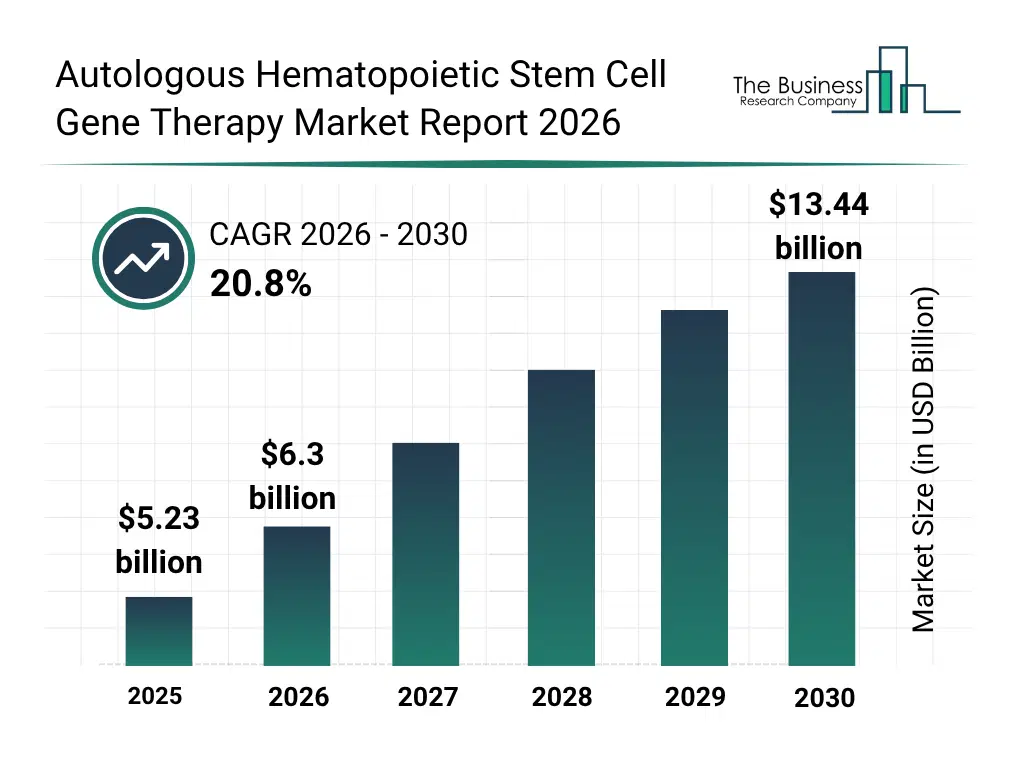
What Is The Autologous Hematopoietic Stem Cell Gene Therapy Market Size and Share 2026?
The autologous hematopoietic stem cell gene therapy market size has grown exponentially in recent years. It will grow from $5.23 billion in 2025 to $6.3 billion in 2026 at a compound annual growth rate (CAGR) of 20.6%. The growth in the historic period can be attributed to advancements in viral vector technologies, increasing prevalence of rare genetic disorders, growth in stem cell transplantation procedures, rising clinical success of ex vivo therapies, expansion of regenerative medicine research.What Is The Autologous Hematopoietic Stem Cell Gene Therapy Market Growth Forecast?
The autologous hematopoietic stem cell gene therapy market size is expected to see exponentially grown in the next few years. It will grow to $13.44 billion in 2030 at a compound annual growth rate (CAGR) of 20.8%. The growth in the forecast period can be attributed to expanding commercialization of gene editing therapies, increasing regulatory approvals for advanced therapies, growth in personalized medicine adoption, rising investment in cell and gene therapy infrastructure, development of next generation non viral delivery platforms. Major trends in the forecast period include autologous stem cell engineering platform advancement, expansion of ex vivo hematopoietic stem cell modification therapies, increasing adoption of personalized curative treatments for rare genetic disorders, development of next generation viral and non viral gene delivery systems, growing clinical pipeline for hematopoietic stem cell based regenerative therapies.
Global Autologous Hematopoietic Stem Cell Gene Therapy Market Segmentation
1) By Therapy Type: Gene Addition Therapy; Gene Editing Therapy; Viral Vector Based Therapy; Non Viral Vector Based Therapy 2) By Disease Area: Rare Blood Disorders; Primary Immunodeficiency; Lysosomal Storage Disorders; Hemoglobinopathies 3) By End User: Hospitals; Specialty Clinics; Research Institutes; Cell And Gene Therapy Centers Subsegments: 1) By Gene Addition Therapy: Ex Vivo Gene Addition Therapy; Retroviral Gene Addition Therapy; Stable Gene Transfer Therapy; Corrective Gene Replacement Therapy 2) By Gene Editing Therapy: Clustered Regularly Interspaced Short Palindromic Repeats Gene Editing; Zinc Finger Nuclease Gene Editing; Transcription Activator Like Effector Nuclease Gene Editing; Base Editing Therapy 3) By Viral Vector Based Therapy: Lentiviral Vector Therapy; Adenoviral Vector Therapy; Adeno Associated Viral Vector Therapy; Retroviral Vector Therapy 4) By Non Viral Vector Based Therapy: Electroporation Based Gene Delivery; Lipid Nanoparticle Gene Delivery; Plasmid Deoxyribonucleic Acid Delivery; Polymer Based Gene DeliveryWhat Is The Driver Of The Autologous Hematopoietic Stem Cell Gene Therapy Market?
The increasing healthcare investment in rare diseases is expected to propel the growth of the autologous hematopoietic stem cell gene therapy market going forward. Rare diseases refer to disorders that affect fewer than 1 in 2,000 people, often involving complex symptoms and limited treatment options. Healthcare investment in rare diseases is rising due to increasing government incentives such as orphan drug policies, tax credits, and regulatory support, which encourage pharmaceutical companies to invest in the development of treatments for small and underserved patient populations. Healthcare investment in rare diseases is accelerating the development and adoption of autologous hematopoietic stem cell gene therapy by funding advanced research, enabling clinical trials, and improving access to high-cost personalized treatments that address the underlying genetic causes of rare blood and immune disorders. For instance, in April 2024, according to Global Genes, a US-based nonprofit organization, in the first quarter of 2024, companies developing drugs for rare diseases raised $7.1 billion through public equity and debt financings, a 307% surge compared to the $1.8 billion raised in the same period of 2023. Therefore, the increasing healthcare investment in rare diseases is driving the growth of the autologous hematopoietic stem cell gene therapy industry.Key Players In The Global Autologous Hematopoietic Stem Cell Gene Therapy Market
Major companies operating in the autologous hematopoietic stem cell gene therapy market are Novartis AG; Vertex Pharmaceuticals Incorporated; CSL Behring LLC; Orchard Therapeutics; Genetix Biotherapeutics; Crispr Therapeutics AG; Rocket Pharmaceuticals; Editas Medicine Inc.; Sangamo Therapeutics Inc.; Beam Therapeutics Inc.; Prime Medicine Inc.Global Autologous Hematopoietic Stem Cell Gene Therapy Market Trends and Insights
Major companies operating in the autologous hematopoietic stem cell gene therapy market are focusing on developing innovative therapies, such as CRISPR/Cas9-based gene-edited treatments to address rare genetic blood disorders and improve long-term disease modification. CRISPR/Cas9-based gene-edited treatments are advanced therapies that use the CRISPR gene-editing system and Cas9 enzyme to precisely modify faulty DNA in a patient’s cells, helping by correcting the genetic cause of disease so the body can produce healthy cells or proteins, potentially reducing symptoms long-term or providing a one-time curative treatment instead of ongoing therapy. For instance, in February 2024, Vertex Pharmaceuticals Inc., a US-based biotechnology company, received conditional marketing authorization from the European Commission for CASGEVY (exagamglogene autotemcel), a CRISPR/Cas9 gene-edited therapy developed in collaboration with CRISPR Therapeutics, for the treatment of patients aged 12 years and older with severe sickle cell disease and transfusion-dependent beta thalassemia. The therapy is designed to edit hematopoietic stem cells outside the body and reinfuse them to enable sustained production of functional hemoglobin, thereby reducing or eliminating vaso-occlusive crises and the need for regular blood transfusions.What Are Latest Mergers And Acquisitions In The Autologous Hematopoietic Stem Cell Gene Therapy Market?
In October 2025, AGC Biologics Inc., a US-based contract development and manufacturing organization (CDMO), partnered with Rarity Public Benefit Corporation to support the development and Good Manufacturing Practice (GMP) manufacturing of its gene therapy program RDP-101 for Adenosine Deaminase Severe Combined Immunodeficiency Disorder. With this partnership, AGC Biologics, Inc. will provide comprehensive development and GMP manufacturing services to help advance Rarity Public Benefit Corporation’s gene therapy program toward clinical use, leveraging its expertise in integrated cell and gene therapy production to support treatment development for rare genetic conditions. Rarity Public Benefit Corporation (Rarity PBC) is a US-based biotechnology research company specializing in ex vivo autologous hematopoietic stem cell (HSC) gene therapy, including its RDP-101 program.Regional Outlook
North America was the largest region in the autologous hematopoietic stem cell gene therapy market in 2025. Asia-Pacific is expected to be the fastest-growing region in the forecast period. The regions covered in this market report are Asia-Pacific, South East Asia, Western Europe, Eastern Europe, North America, South America, Middle East, Africa. The countries covered in this market report are Australia, Brazil, China, France, Germany, India, Indonesia, Japan, Taiwan, Russia, South Korea, UK, USA, Canada, Italy, Spain.What Defines the Autologous Hematopoietic Stem Cell Gene Therapy Market?
The autologous hematopoietic stem cell gene therapy market consists of revenues earned by entities by providing services such as stem cell collection, genetic modification of hematopoietic stem cells, viral vector development, cell processing, gene-editing procedures, cryopreservation, and personalized regenerative therapy administration. The market value includes the value of related goods sold by the service provider or included within the service offering. The autologous hematopoietic stem cell gene therapy market also includes sales of stem cell transplantation kits, cell culture media, bioprocessing equipment, and therapeutic cell products. Values in this market are ‘factory gate’ values, that is the value of goods sold by the manufacturers or creators of the goods, whether to other entities (including downstream manufacturers, wholesalers, distributors and retailers) or directly to end customers. The value of goods in this market includes related services sold by the creators of the goods.How is Market Value Defined and Measured?
The market value is defined as the revenues that enterprises gain from the sale of goods and/or services within the specified market and geography through sales, grants, or donations in terms of the currency (in USD unless otherwise specified). The revenues for a specified geography are consumption values that are revenues generated by organizations in the specified geography within the market, irrespective of where they are produced. It does not include revenues from resales along the supply chain, either further along the supply chain or as part of other products.What Key Data and Analysis Are Included in the Autologous Hematopoietic Stem Cell Gene Therapy Market Report 2026?
The autologous hematopoietic stem cell gene therapy market research report is one of a series of new reports from The Business Research Company that provides market statistics, including industry global market size, regional shares, competitors with the market share, detailed market segments, market trends and opportunities, and any further data you may need to thrive in the autologous hematopoietic stem cell gene therapy industry. The market research report delivers a complete perspective of everything you need, with an in-depth analysis of the current and future state of the industry.Autologous Hematopoietic Stem Cell Gene Therapy Market Report Forecast Analysis
| Report Attribute | Details |
|---|---|
| Market Size Value In 2026 | $6.3 billion |
| Revenue Forecast In 2030 | $13.44 billion |
| Growth Rate | CAGR of 20.8% from 2026 to 2030 |
| Base Year For Estimation | 2025 |
| Actual Estimates/Historical Data | 2020-2025 |
| Forecast Period | 2026 - 2030 |
| Market Representation | Revenue in USD Billion and CAGR from 2026 to 2030 |
| Segments Covered | Therapy Type, Disease Area, End User |
| Regional Scope | Asia-Pacific, Western Europe, Eastern Europe, North America, South America, Middle East, Africa |
| Country Scope | The countries covered in the report are Australia, Brazil, China, France, Germany, India, ... |
| Key Companies Profiled | Novartis AG; Vertex Pharmaceuticals Incorporated; CSL Behring LLC; Orchard Therapeutics; Genetix Biotherapeutics; Crispr Therapeutics AG; Rocket Pharmaceuticals; Editas Medicine Inc.; Sangamo Therapeutics Inc.; Beam Therapeutics Inc.; Prime Medicine Inc. |
| Customization Scope | Request for Customization |
| Pricing And Purchase Options | Explore Purchase Options |